
MEXC Card review: a USDT-funded Visa that is easy to fund and hard to call safe
 Available in US
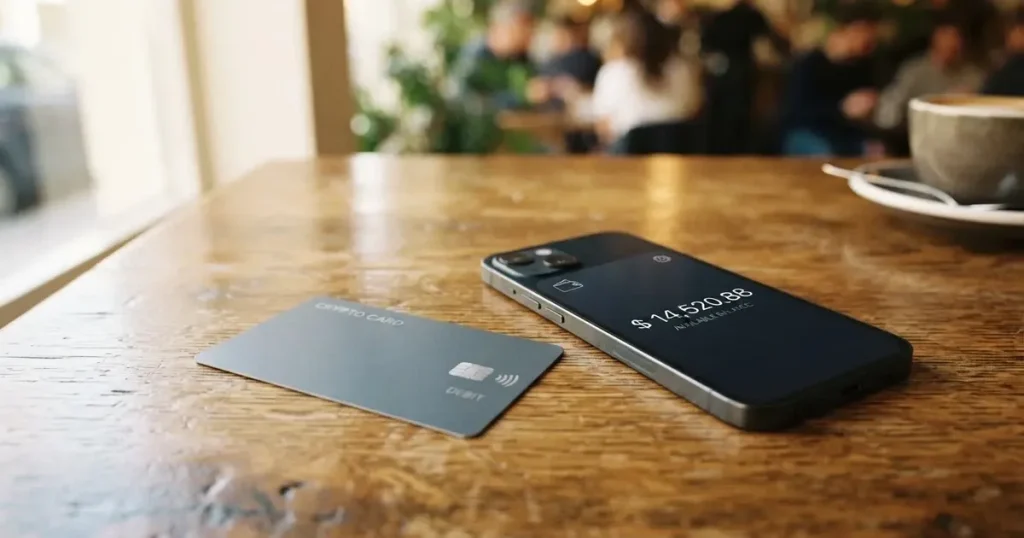
The MEXC card is a Visa Platinum that you fund with USDT, spend through Apple Pay or Google Pay, and top up only via a transfer to the exchange’s Fiat account. There is no physical card, no ATM, no monthly fee, and — for now — no spending fee on the Global Card until 1 October 2026. Those are the things the company shouts about. What it does not shout about, and what matters more in practice, is that the issuer is unnamed, the balance sits with the exchange rather than an e-money institution, and the wider platform has a one-star-heavy review profile. In this review I walk through who can actually get one, what it costs in real transactions, how the top-up flow works, and where the risk sits if something goes wrong.
Conditions are current as of October 28, 2026.
Verdict
The MEXC Global Card scores 5.6 out of 10 on my scale. That is a middling result, dragged down by two things the card’s marketing pages gloss over: a narrow funding path that accepts only USDT, and a custody model in which the unnamed issuer and the exchange hold your spending balance. Cost-wise it is genuinely competitive while the 1% transaction fee is waived. Reliability is the weak link.
| Criterion | Mark | Why |
|---|---|---|
| Who can get it | 8 / 10 | Global Card is closed to residents of 69 countries and territories; the rest qualify by country of proof of address. Unofficial sources list 110 countries. |
| Cost | 7 / 10 | Global Card: 20 USD issuance (waived for now), zero annual fee, 0% crypto conversion, Visa rate with no MEXC markup, 1% transaction fee from 1 Oct 2026. |
| Top-up options | 4 / 10 | USDT only; transferred to the Fiat account, then onto the card. The supported networks are not named. |
| Reliability and complaints | 3 / 10 | The issuer is not named; the exchange holds the balance. The wider MEXC Trustpilot profile has no rating, 88% of reviews are one star, and the platform appears on the Hong Kong SFC suspicious-platforms alert list. |
| Everyday use | 4 / 10 | Virtual Visa Platinum only, Apple Pay and Google Pay on the Global Card, no physical card and no ATM. |
Who the card suits: USDT holders in Asia who want to spend a stablecoin balance through a phone wallet, are comfortable with the exchange holding their money, and do not need cash. Who it does not suit: anyone who needs a physical card, an ATM, multi-currency balances, or a clearly identified issuer.
Who they will give the card to
The MEXC Global Card is closed to residents of 69 countries and territories. The application page names a few — “The Philippines, Taiwan, Thailand…” — with a Details link to the full list, but the page I checked did not show the full list inline. The unofficial DefiLlama catalogue, however, lists the card in 110 countries, and SpendNode says the rollout covers Southeast Asia, Latin America, Africa, the Caribbean, the Gulf, Central Asia, plus Japan, South Korea, New Zealand and Israel. The official list excludes Russia and Turkey, and as of August 2026 the application blacklist included the United States, China, India, Indonesia, Turkey and Russia among others. The Philippines, Taiwan, Vietnam and Thailand are not on the blacklist.
Eligibility is decided by the country on your proof of address, not by citizenship, and the blacklist changes. The MEXC Card (APAC) is a separate, older product for selected Asia-Pacific markets with a different fee structure, and it is the one to look at if you live in a market the Global Card has not yet reached.
What this means for you in practice: if you live in a country on the blacklist, you will not get a card even if you have an address elsewhere. If you are a citizen of a blacklisted country but resident somewhere else, your proof of address is what counts — but you should expect the issuer’s risk team to look again if anything else about your profile looks unusual. The list is not stable, so a “no” today is not a permanent no, and a “yes” today is not a permanent yes.
How to get the MEXC card
You start by completing MEXC’s Advanced KYC — government ID plus face verification — before you ever see the card application. There is no stated minimum age, and no income proof is asked for. The process is: finish Advanced KYC, apply on the My MEXC Card page, transfer USDT into your Fiat account on the exchange, and then load the card.
Only the virtual card is available. A physical card is “not yet available” on the card page, so there is no delivery step, no shipping country and no waiting period — what you receive is a card number and a token for your phone wallet. The network is Visa and the card currency is USD on the Global Card. On the APAC Card the network is also Visa, but only Google Pay is supported; Apple Pay is Global Card only.
What this means for you: if you are weighing the MEXC card against, say, a Bybit physical card that takes a week to arrive, the MEXC’s “no shipping” is a feature, not a bug, provided you are happy using a phone wallet. If you are the kind of person who taps a physical card, this product is not for you yet. Processing time and the specific reasons MEXC might reject an application are not stated on the public pages.
What the MEXC card really costs: Fees
Cost is the part of the MEXC card that reads well. The Global Card has zero annual fee, zero top-up fee, zero inactivity fee, zero termination fee, and 0% crypto conversion at the MEXC end. The exchange rate is the Visa rate with no MEXC markup. From 1 October 2026, the Global Card adds a 1% spending fee — so a 100 USD purchase deducts 101 USDT from your Fiat account. Until that date, the spending fee is waived. Issuance is 20 USD, also currently waived for a limited time.

The APAC Card is the older product: issuance is 0, transaction fee is 0%, but crypto conversion is 1%, and the FX rate is the Visa rate plus 1% on non-USD purchases. So the APAC Card is more expensive for anyone buying in anything other than dollars, and slightly cheaper in raw transaction fees.
| Fee or limit | Global Card | APAC Card |
|---|---|---|
| Issuance | 20 USD (waived for now) | 0 |
| Annual fee | 0 | not stated |
| Monthly fee | not stated | not stated |
| Top-up fee | 0 | 0 |
| Inactivity / termination | 0 / 0 | not stated |
| Crypto conversion | 0% | 1% |
| FX on non-USD | Visa rate, no markup | Visa rate + 1% |
| Transaction fee | 0% until 30 Sep 2026, 1% from 1 Oct 2026 | 0% |
| ATM withdrawal | not applicable (no physical card) | not applicable |
| Spend cap per transaction | 80,000 USD | 50,000 USD |
| Spend cap per day | 1,000,000 USD | 50,000 USD |
| Spend cap per month | not stated (support article: 2,500 tx/month) | not stated (1,040 tx/year) |
| Spend cap per year | not stated (support article: 25,000 tx/year) | 1,000,000 USD |
A few everyday examples to make the table land. Buying a 5 USD coffee in a US-dollar country with the Global Card after 1 October 2026: 5 USD purchase, 5.05 USDT deducted. Same coffee in euros on the Global Card: 5 EUR at the Visa rate, plus 1% transaction fee, so 5.05 EUR of USDT debited at the spot rate. Same coffee on the APAC Card in euros: 5 EUR at Visa rate plus 1% FX, plus 1% crypto conversion — about 5.10 EUR’s worth of USDT. Monthly fee, ATM fee and physical-card replacement fee: there is no physical card, so the last two do not apply.
What this means for you: the headline number to watch is the 1% transaction fee on the Global Card. While it is waived, the card is genuinely cheap to run. Once it kicks in on 1 October 2026, it is still cheaper than most competitor cards I have looked at, but the saving shrinks and the math starts to depend on cashback. If you would earn more than 1% back on most of your spend, the fee is paid for; if not, look at alternatives that charge 0% on transactions.
How to top up the MEXC card: Top up
The funding path is the same on both products: send USDT to your MEXC Fiat account on the exchange, then fund the card from that Fiat account on the My MEXC Card page. The exchange does not publish which networks it accepts for this transfer, and it does not publish a separate on-chain guide for the card top-up. The Global Card guide cites a top-up range of 1 to 1,000,000 USDT, while an older MEXC post says 100 USDT minimum — the two numbers conflict and the card page does not resolve it.
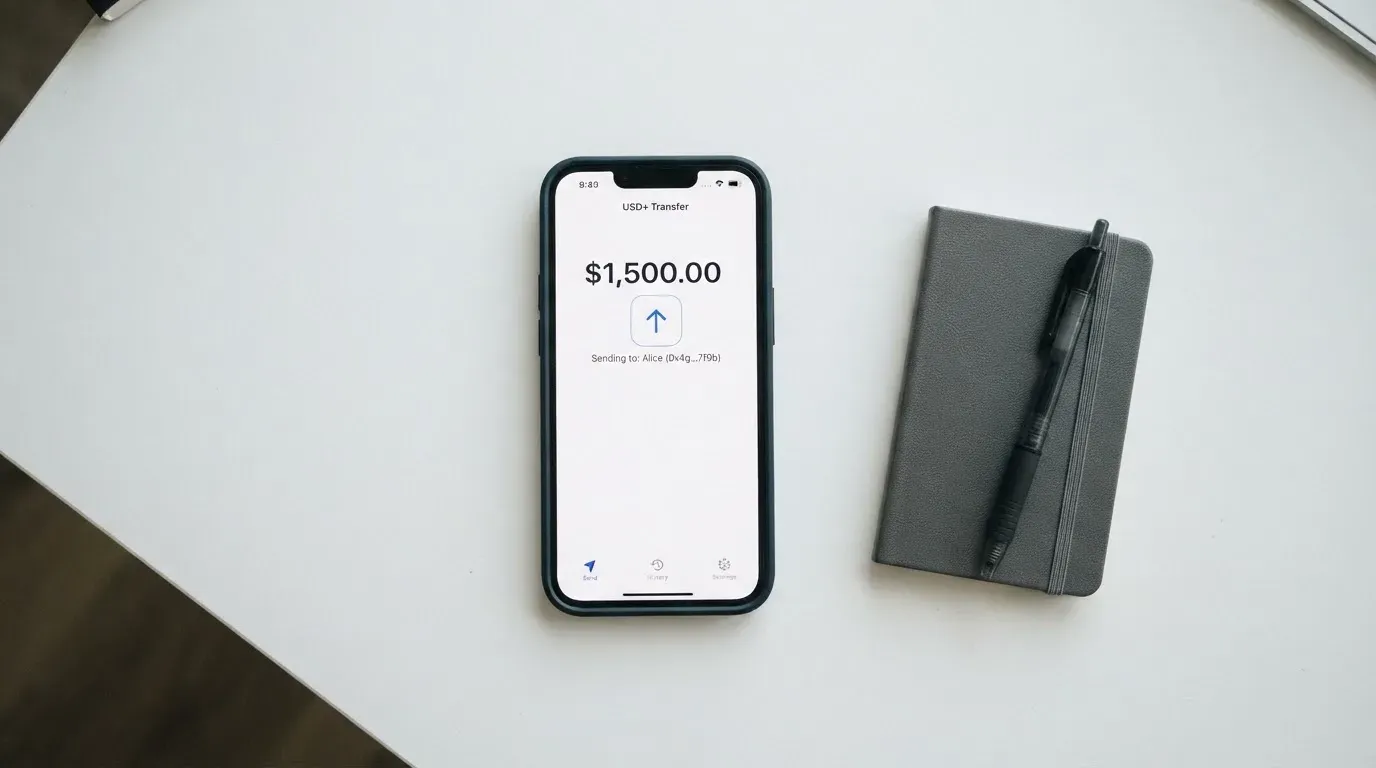
The top-up itself is free: no MEXC fee on the move from your exchange account onto the card. There is no stated way to fund the card directly from an external wallet in any other token. There is no stated fiat top-up route. The card does not hold a multi-currency balance — the underlying balance is USDT, and the card itself is denominated in USD, so any other currency you spend in is converted at the Visa rate.
What this means for you: if you do not already hold USDT on MEXC, this card adds an extra step — buy USDT, transfer it, then fund the card — and an extra layer of on-chain risk on the way in. The blockchain network fee is paid by you, not by MEXC, and MEXC’s published pages do not say which networks are supported, which is a real gap if you are used to cards that publish a clear “send USDT on TRC-20, Polygon or Arbitrum” list. If you send USDT on a network MEXC does not support, or to an address for the wrong network, the funds can be lost or stranded with no guarantee of manual recovery — the same risk that applies to any on-chain transfer to an exchange. The card does not have a stated process for moving the remaining balance back to the exchange account on closure, which is worth noting before you load a large amount.
Paying with the MEXC card every day
In daily use, the MEXC card behaves like a prepaid Visa Platinum. The Global Card supports Apple Pay and Google Pay; the APAC Card supports Google Pay only. You can also enter the card number online. There is no physical card, no contactless tap with a plastic card, and no ATM access — the support page says ATM withdrawal fees are “not applicable to virtual cards”, which is the polite way of saying there is nothing to withdraw from.
Cashback is paid by the 15th of the next month and is tiered by your M-Score on the exchange:
- Standard: 4% cashback, capped at 100 USDT a month.
- Premier (M-Score 600–799): 6% cashback, capped at 300 USDT a month.
- Elite (M-Score 800+): 10% cashback, capped at 800 USDT a month.
Referral: 20 USDT to the referrer, 10 USDT to the new cardholder. Cashback on a refunded purchase is deducted from later cashback.
Disputes go through MEXC Customer Service, not a third-party bank. The flow is: contact the merchant first, then open a ticket with the reason and evidence. Windows are 90 days for duplicate charges and 120 days for suspected fraud, goods not received, or goods not as described. Filing is free, but if your evidence is incomplete and the dispute is rejected, a review fee may apply. Refunds usually take 1–7 days, travel-related refunds up to 30 days. There is a 0.50 USD fee per refund if your refund rate is “excessively high” — a term MEXC does not define on the card page.
3-D Secure is supported: a one-time code is sent to your email (valid for 4 minutes) or generated inside the MEXC app. There is no statement on which merchant categories are blocked.
What this means for you in practice: the cashback tiers are the most generous numbers in this review, but they are tied to M-Score, which is MEXC’s internal measure of trading activity — you earn it by trading, not by spending. If you are a USDT-heavy user who does not trade, you will probably sit in the Standard tier and the card is still a 4%-cashback USDT card with a 1% spending fee coming in October 2026. The dispute path is unusual for a Visa in that it runs through the exchange’s customer service rather than a bank — a meaningful difference if you are used to chargebacks being handled by a card issuer you can name.
What can go wrong
The hard part of the MEXC card is not the fees, the limits or the cashback. It is the question of who is actually on the other side of your transaction.
Custody. The card page does not name the issuer. SpendNode’s 2026 review says the documents it looked at do not identify an issuer or a safeguarding arrangement, and that the exchange itself holds the spending balance. There is no e-money institution, no segregation statement, no insurance. That is the model: your USDT is on the exchange, the exchange credits a USD balance to your card, the card spends that balance. If the exchange has a bad day, the card stops working and getting your money back is the same exercise as getting any other exchange balance back.
Platform reputation. Trustpilot removed MEXC’s overall score and put the page behind a “breach of our guidelines” notice after fake reviews were taken down; the 1,368 reviews that remain are 88% one-star, read on 2026-10-20. The recurring themes in those reviews: accounts flagged as “risk” with no reason given, withdrawals frozen or delayed for months, generic support replies that do not resolve tickets, hard account deletion, and a 0.50 USD fee charged on a declined Apple Pay transaction in one report. FinTelegram also reports that MEXC appeared on the Hong Kong SFC’s alert list of suspicious platforms. The exchange says it is a “global card” — but if you cannot name the issuer and the regulator behind the card, you should treat the card as a feature of the exchange, not as a standalone product.
Third-party catalogues disagree on the product. DefiLlama lists the card as Visa, 110 countries; CryptoCardHub in February 2026 described a Mastercard EUR product restricted to inner test users. Those are not consistent pictures, and the official page currently shows a USD Visa Platinum virtual card. The exchange’s catalogue of cards has changed, and it may change again.
Card-level risk controls. The card can be frozen instantly from Card Management if it is lost, and 3-D Secure one-time codes are sent by email (valid 4 minutes) or inside the MEXC app. Repeated failed payments can trigger a risk review and the card can be terminated. The exchange can therefore close your card without going through a court, and the criteria for that are not public.
What is not stated. The card page does not publish: a list of blocked merchant categories, a list of supported blockchain networks for the USDT top-up, the process for closing the card and getting your remaining USDT back, the issuer’s name, the issuer’s regulator, the M-Score formula, or live chat hours for card support. MEXC does run a help centre in Russian (mexc.com/ru-RU/…), so the lack of information is not a translation gap — it is what the company has chosen to publish.
What this means for you: the most likely way this card hurts you is not a fee surprise. It is that you load USDT, the card works for a while, and then your account is flagged or the platform changes terms or pauses withdrawals, and you are stuck with the same recourse as any other MEXC customer. The card amplifies that risk because the spending balance is at the same custodian as your trading balance.
What to take instead
Three cards come up repeatedly in the same price bracket as MEXC. None is a like-for-like replacement, because none of them offers USDT-only funding with no physical card. They are worth a look if MEXC’s gaps are deal-breakers for you.
| Card | Score | Funding | Cashback | Notable |
|---|---|---|---|---|
| MEXC Global Card | 5.6 / 10 | USDT only | 4% / 6% / 10% by M-Score | Virtual Visa, no issuer named |
| Young Card | 5.7 / 10 | not stated officially | 0.1% / 1.8% / 3.6% in YNG tokens by Club tier | Pays cashback in a token, not USDT |
| MSX | 6.4 / 10 | not stated | not stated | Higher overall score, details not on the public page |
| Bybit Card | 6.0 / 10 | Crypto (BTC, ETH, XRP, USDT, USDC, GRAM) and fiat | 2%–10% by tier, from 5 Oct 2026 crypto-funded only | Virtual and physical, multi-region, clearer issuer |
Bybit Card is the closest functional alternative if you want both virtual and physical options and a clearer programme structure. It runs in Argentina (Mastercard prepaid, ARS), AIFC/Kazakhstan, Georgia, Australia, Mexico (Mastercard credit, USD or local), Brazil and Peru (Visa prepaid, BRL or PEN/USD) and Asia Pacific (Visa credit, USD). Virtual issuance is free “until further notice”. Physical card issuance is 29.99 USD in Australia and Kazakhstan AIFC, 5 USD/USDT in Argentina and Asia Pacific, none in Brazil and Mexico, and free for VIPs in Australia, Kazakhstan AIFC, Georgia and Asia Pacific. Crypto conversion is 0.9% over the One-Click Sell rate (0.5% in Argentina), FX is 2% on top of the network rate in most regions. From 5 October 2026, only crypto-funded transactions earn cashback — fiat-funded spending does not — and cashback tiers run from Base 2% (5 USD cap) to Infinite 10% (600 USD cap), with a welcome offer of 10% up to 110 USDT in the first 30 days. Bybit’s cards page also says “This product is not meant for European Economic Area customers. All European Economic Area customer participation is strictly prohibited”, and its fiat-service restricted list includes Belarus, Russia, Serbia, China and the United States, so the card is not a global product.
Young Card is the cheaper cashback option if you do not mind being paid in YNG tokens rather than USDT: 0.1% (Essential), 1.8% (Gold), 3.6% (Platinum), with the Bronze and Silver tiers not stated. The card details — funding, fees, regions — are not on the public page I could read, so it is harder to compare like for like.
MSX sits at 6.4 / 10 on my scale but I could not find an official page listing its funding, fees or cashback structure, so I cannot tell you where it wins on the things that matter to MEXC users.
What this means for you: if your priority is “I want to spend USDT through a phone wallet, cheaply, and I already trust the exchange”, MEXC is the option. If your priority is “I want a card from a programme I can describe — issuer, regulator, region, network — without reading between the lines”, Bybit is the more transparent pick. If you are in the Asia-Pacific region and the Global Card’s blacklist covers you, look at the APAC Card and at MSX as alternative routes before defaulting to MEXC.
Who I would recommend the MEXC card to
I would recommend the MEXC Global Card to a narrow, specific reader: a USDT holder in an Asia-Pacific or Latin American market not on the blacklist, who is already an active MEXC user, who trades enough to be in Premier or Elite on M-Score, and who is comfortable having their spending balance held by the exchange rather than by a named e-money institution. For that person, the card is genuinely cheap while the 1% transaction fee is waived, the Apple Pay and Google Pay experience is fine, and the cashback at 6% or 10% covers the fee and then some. The four-percent Standard tier is also acceptable as long as the reader knows it requires no trading activity to keep.
I would not recommend the MEXC card to anyone who needs a physical card, who needs to withdraw cash, who needs to fund the card in anything other than USDT, who is in a country on the blacklist, who treats the card as a savings vehicle, or who cannot name a regulator behind the issuer. I would also not recommend it to anyone whose main worry is the safety of the funds rather than the convenience of the card — because on that axis, the MEXC card inherits every risk of holding USDT on the exchange, plus a layer of card-specific rules on top.
If the MEXC card is the first crypto card you have ever used, the things to check first are: which USDT network you are about to send on (because the card page does not say), what the M-Score requirement is for the cashback tier you expect, and whether your country is on the blacklist this month.
Frequently asked questions
What is the MEXC card?
The MEXC card is a virtual Visa Platinum that you fund with USDT from your MEXC exchange account. It works through Apple Pay and Google Pay on the Global Card, or Google Pay on the APAC Card, and there is no physical version and no ATM access at the moment.
How does the MEXC card work?
You complete MEXC’s Advanced KYC, apply on the My MEXC Card page, transfer USDT from your exchange wallet to your Fiat account, and load the card from that fiat balance. The card spends the balance in USD; non-USD purchases are converted at the Visa rate. A 1% transaction fee applies from 1 October 2026 on the Global Card.
Is MEXC a bank?
No. MEXC is a cryptocurrency exchange. The card page does not name a card issuer, and the reviewed documents do not identify an e-money institution or a safeguarding arrangement. Your spending balance is held by the exchange, the same as your trading balance.
Who owns MEXC?
The card page does not say, and the exchange’s public materials do not name a card issuer. Treat the card as a feature of the exchange rather than a product of a separate company.
Is the MEXC card available in my country?
It depends. The Global Card is closed to residents of 69 countries and territories, and the application blacklist as of August 2026 includes the United States, China, India, Indonesia, Turkey and Russia. Unofficial catalogues list 110 countries, but the official page is the one that decides.
How do I get the MEXC card?
Finish Advanced KYC (government ID plus face verification), apply on the My MEXC Card page, transfer USDT to your Fiat account, and fund the card. There is no physical card to wait for — you receive a card number and a token for your phone wallet.
Does the MEXC card require KYC?
Yes. Advanced KYC is required before you can apply for the card. Your proof of address must be from an eligible country, but no income proof is asked for and the minimum age is not stated on the card page.
How do I top up the MEXC card?
Transfer USDT from your exchange wallet to your Fiat account on the MEXC app, then load the card from the My MEXC Card page. The exchange does not publish which blockchain networks it accepts for that transfer, and there is no fiat top-up route.
How do I add the MEXC card to Apple Wallet or Google Pay?
Open the card in the MEXC app and follow the prompt to add it to Apple Pay (Global Card) or Google Pay (Global and APAC). The card token is generated by the app, not by entering the number manually, and 3-D Secure one-time codes are sent by email or inside the app.
Is the MEXC card safe?
It is as safe as the exchange that holds your USDT, and no safer. The card’s issuer is not named, there is no stated safeguarding or insurance, and the exchange’s Trustpilot page is behind a “breach of guidelines” notice with 88% of remaining reviews at one star. The card adds convenience, not a separate layer of protection, and you should size the balance accordingly.
Exchange card fees – cryptocardfacts
Content created by the «cryptocardfacts» team