
KuCard, the EEA-only Visa debit from KuCoin EU
 Available in US
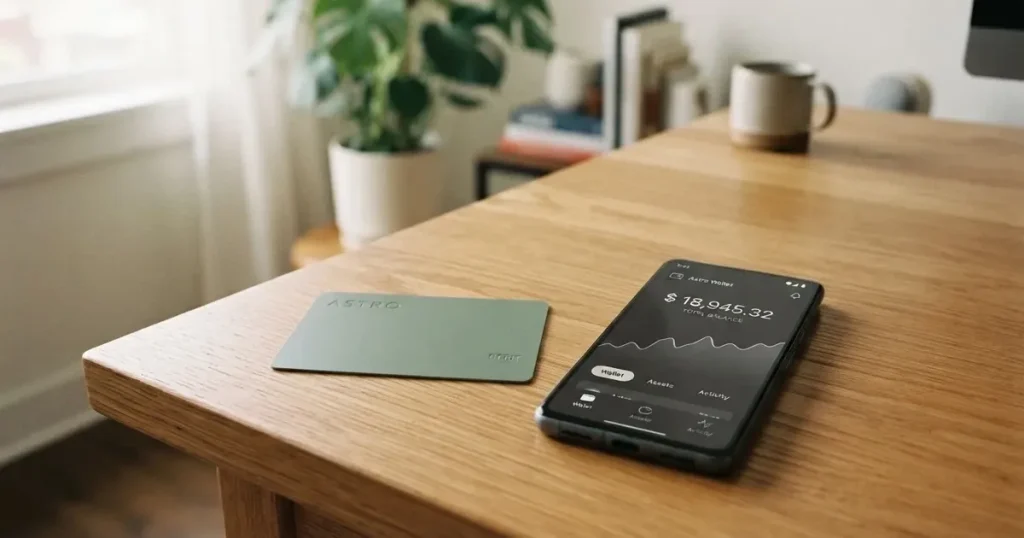
KuCard is a Visa debit card run by the KuCoin EU platform, with Wallester AS in Estonia as the licensed issuer. The pitch is straightforward: keep your crypto on KuCoin, spend it through a Visa card that converts to euro at the till, and avoid the dance of selling coins first and then paying by bank transfer. Whether that pitch lands for you depends on where you live, what you want from a card, and how comfortable you are leaving your funds on a custodial exchange.
I spent time with the KuCard terms, the fee schedule, the help articles and the third-party pages that collect card data, and the picture I came away with is mixed. The card works for a narrow audience — EEA residents who already use KuCoin — and trips up on some basics, like the FX fee on non-euro purchases and the fact that the most useful details (which coins, which networks, which limits) are not in the public documents. My overall score is 6.0 out of 10, and the rest of this page walks through why, section by section.
Conditions on this page are current as of October 28, 2026.
Verdict
KuCard earns a 6.0 out of 10 in my scoring. The breakdown below shows where the marks come from and where they go.
| Criterion | Mark | Why it scores the way it does |
|---|---|---|
| Who can get it | 5 / 10 | EEA citizens and residents only, with an EEA-issued ID, and the card is not available in Malta. |
| Cost | 6 / 10 | The first virtual card is free, the next ones are about €9.90 each, and euro payments are free, but anything in a non-euro currency costs 2%. |
| Top-up options | 4 / 10 | The default funding source is crypto on your KuCard account, set to USDT, but the supported coins and networks are not publicly listed. |
| Reliability and complaints | 7 / 10 | The issuer is a regulated Estonian e-money institution with a Visa principal membership; complaints specifically about KuCard are rare. |
| Everyday use | 8 / 10 | Visa acceptance is wide, the virtual card arrives instantly, the physical card has a chip and PIN, and mobile wallets work on third-party reports. |
The audience KuCard is built for is narrow but real: people living in the EU/EEA who already hold funds on the KuCoin exchange and want a way to spend that balance in shops and online without first cashing out to a bank. If you are outside the EEA, you are not eligible. If you already have a bank card and a normal euro account, KuCard does not add much, because euro spending is free only because you are paying with what is, in effect, your exchange balance converted at KuCoin’s rate. The card’s edge is convenience for KuCoin users, not a lower cost than a regular debit card.
Who can get the card
The eligibility rule is tight and the card states it plainly. The terms say KuCard is “only available to citizens and residents of the European Economic Area (EEA)”, and the list of permitted jurisdictions is the EU member states plus Iceland, Liechtenstein and Norway. A separate help page adds that Malta is excluded. You also need an EEA-issued identity document, which means a national ID card or passport from one of those countries.
The age rule is the standard 18+ you would expect from a regulated card programme. There is one level of verification: full KYC with a supported EEA-issued ID, address verification, and confirmation that you are at least 18. The application asks for nothing exotic beyond that, and you apply through the KuCoin EU platform, not in person.
What this means in practice is that KuCard is not a card for someone looking for a crypto-funded Visa in a country that traditional banks avoid. If you are in, say, Belarus, Russia, the United States, the United Kingdom or anywhere else outside the EEA, the terms simply rule you out, and the platform will not let you complete the application. If you are in the EEA but your ID is from somewhere else, you also do not qualify, because the document has to be issued by an EEA state. If you are an EEA resident in Malta, even that door is closed, for reasons KuCoin does not explain in the documents I read.
There is one practical wrinkle worth flagging. KuCard is not its own company, and that shapes who you are really dealing with. The platform is KuCoin, the issuer is Wallester AS, and a Lithuanian entity, UAB EURLITA, handles the virtual currency exchange side. That structure is normal for this kind of card, and I will come back to it in the section on risks, but it is worth knowing up front: you are applying to a licensed programme, and the licence that matters is Wallester’s in Estonia.
How to get the card
The signup path is short and runs entirely through KuCoin EU. The steps are: open a KuCoin EU account, complete KYC with an EEA-issued ID, have your address verified, and then apply for the card on the platform. There is no separate KuCard website or app to install — it lives inside the KuCoin app and site you already use.
When your application is in, KuCoin may reject it for a handful of stated reasons: an invalid phone number, an incorrect name or date of birth, an invalid 3-D Secure password, insufficient balance to pay the card fee, or a risk-control hit. The terms do not say how long approval takes, and I could not find an average in the public help articles either, so the realistic answer is that it depends.
Once approved, you can hold a virtual card or a physical Chip&Pin card, with a maximum of five cards in total on one account. The virtual card is usable at once, which is the single best thing about the signup flow, but it expires at the end of the month it was issued, so you reapply for a new one if you want to keep using the virtual form. The physical card is posted to the address you gave in KYC, and you activate it in the KuCoin app or on the site.
Delivery has two options as far as the documents show. Standard delivery to an EEA address is mentioned but its cost and time are not stated in the terms or in the help article I read. Express delivery is clearly priced: €30 per card, on top of the card fee. A replacement card, which is what you would order if yours is lost, stolen or damaged, costs €9.90.
One last thing worth knowing before you start: because the card is funded from your KuCoin exchange balance, you need to hold the supported crypto on the platform before you apply, or at least before you try to spend. A blank KuCoin EU account cannot load a card.
Fees: what it really costs
The headline number for KuCard’s pricing is friendly: the first virtual card is free, and euro payments are free. Once you move outside that narrow zone, the fees appear. Below is a table of what the documents actually say, with the gaps called out.

| Fee or limit | Amount |
|---|---|
| First virtual card | Free |
| Further virtual cards | €9.90 per card (fee schedule); an older support article lists €9.99 |
| Physical card | €9.90 (the first); a second value of €19.90 is shown in places — the documents are inconsistent |
| Card replacement | €9.90 |
| Cancellation | Free |
| Express delivery | €30 per card |
| Standard delivery cost and time | Not stated |
| Euro payments | Free |
| Non-euro payments | 2% of the transaction total |
| ATM withdrawal, Europe | €2 per withdrawal |
| ATM withdrawal, international | 2% of transaction total + €2 |
| Daily and monthly spending limits | Not stated in the public documents |
| ATM allowance | Not stated |
| Crypto-to-EUR conversion | Rate set by KuCoin |
| Inactivity fee (virtual card, 90 days no transaction) | €2 per month, per third-party reports |
A few things stand out from that table. The first is the gap between what the fee schedule says and what older help articles say: the fee schedule reads €9.90 for further virtual cards and the first physical, but an older support article quotes €9.99 for further virtual cards and €19.90 for the physical. I treated the fee schedule as the more current document, because it is dated 29 September 2026 and the support article is older, but the fact that two official pages disagree is itself a small warning sign about how tidy the pricing is.
The second is what the FX fee looks like in everyday use. A euro payment inside the eurozone is free at the point of sale, which is the same as most bank cards. The moment you pay in another currency — pounds, dollars, Swiss francs, Swedish krona — the 2% non-euro fee kicks in, on top of the conversion spread KuCoin builds into the rate. A regular bank-issued Visa or Mastercard debit card typically charges between 0% and 1.5% for the same purchase, so the 2% is on the expensive side. If you travel often or buy from non-euro websites, the difference adds up.
The third is the ATM side. At €2 per European withdrawal, the fee is reasonable for an occasional cash need but becomes irritating if you use the ATM often. International withdrawals are heavier at 2% plus €2, and you should also expect the ATM operator to add its own surcharge, which the documents flag explicitly.
To put this in real-life terms, here is how a few common payments shake out.
- Coffee in Berlin, paid in euros, virtual card: the €3.50 you spend goes through at no extra cost, because euro payments are free. You only lose money to the spread between the USDT rate and the EUR rate, which is built into the conversion.
- A £40 train ticket from a UK rail app, paid with the physical card: the non-euro fee adds 2% on top of whatever Visa’s wholesale rate is, so you are paying roughly 80p extra. If the app supports Apple Pay or Google Pay (and reports suggest both work), the same transaction is still 2% — the fee is on the currency, not the rail.
- A €100 ATM withdrawal in Spain on the physical card: you pay €2 to KuCard, plus whatever your ATM operator charges, which can be another €1.50 to €3 depending on the bank. Plan on €3.50 to €5 total.
A note on rewards, since this often decides whether a card “feels” cheap. The terms mention “different benefits or rewards from time to time” but do not publish a rate. Third-party pages describe a tiered cashback programme in USDC with levels from 1% to 8% based on monthly spend, with caps, but those figures are not on the official site. I have not built them into the costs above because they are unofficial, and the documents themselves do not commit to them.
Top up: how the card is funded
The card’s funding model is the part that most clearly separates it from a bank card, and it is also the part with the thinnest official documentation. The terms say the card is funded from supported cryptocurrency in your KuCard account, and the default spending currency is USDT, which is converted to euro at the till. The terms do not list which coins are supported or which blockchain networks you can deposit from, and the fee schedule has no row for a top-up fee.
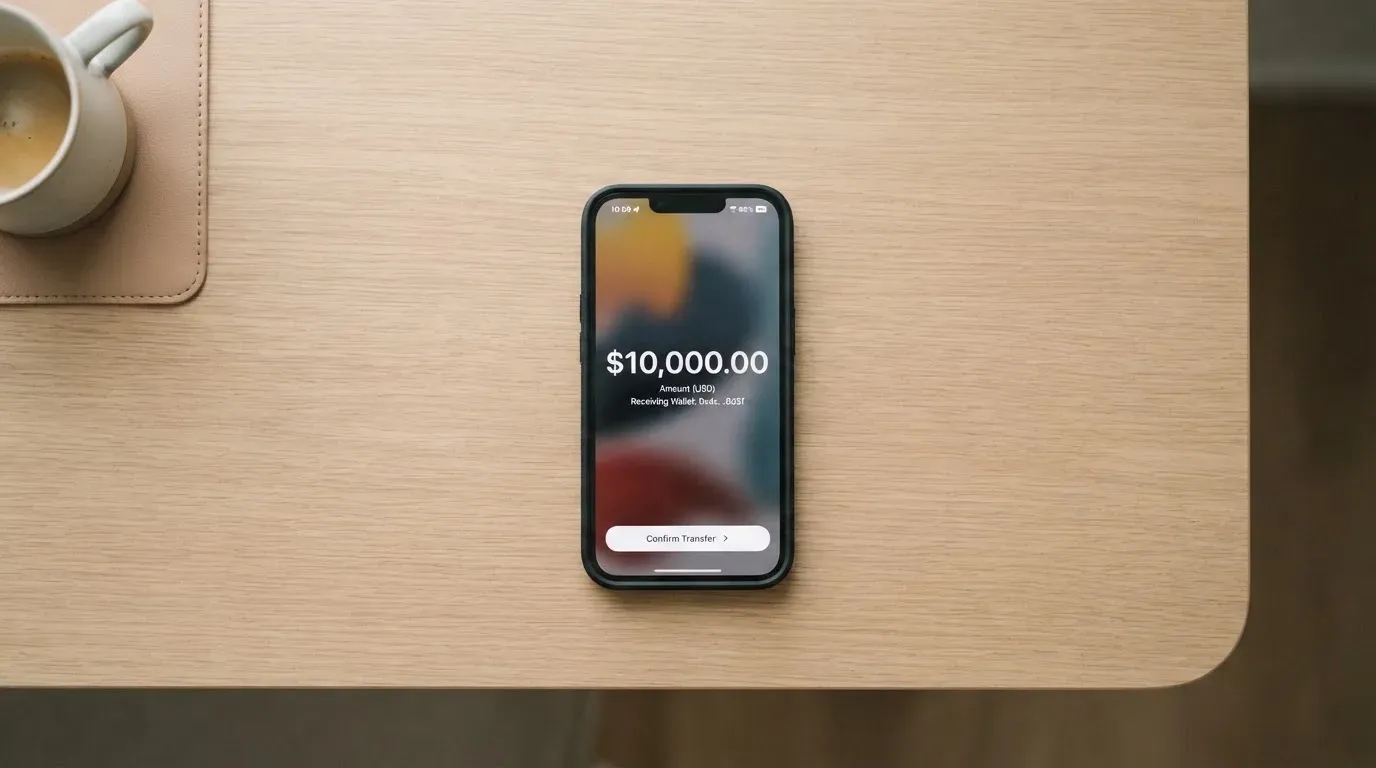
What that means in practice is that you fund the card by holding supported crypto on the KuCoin EU platform, and the platform takes care of converting it to euro at the moment of payment. The conversion rate is, in the terms’ own words, “solely determined by” KuCoin, and the fee schedule warns that a “conversion spread” may apply on top. There is no fiat top-up path through a bank transfer or card load that I could find, no minimum top-up, and no statement on who pays the blockchain network fee when you move crypto in.
The third-party pages I read did not add much beyond “USDT is the default”, and did not publish a complete list of supported coins. That is a real gap. Most crypto cards spell out the supported assets and networks in their help center, because sending USDT on the wrong network is one of the most common ways users lose money in this space, and a stablecoin sent on an unsupported chain is usually not recoverable.
There is also no clear path for moving the card balance back out. The terms do not say whether you can withdraw the euro balance to a bank account, and they do not say whether you can move it back into crypto. They do say that cancelling the card is free, that refunds always come back in fiat, and that an unactivated card may be closed after three months without a refund of the fees you paid. They also say the card may be terminated after four consecutive months of being closed or blocked, or after six months of non-use, with the balance handling not specified. In short, the funding flow is one-way in the documents: crypto in, euro out at the till, with the exit path not clearly described.
Paying with it every day
For an EEA resident already in the KuCoin app, the day-to-day experience is one of the stronger parts of KuCard. The card is a Visa debit, which means it works at any terminal that takes Visa, online or in person. The virtual form is instant, the physical form is a chip-and-PIN card that you activate in the app, and the third-party reports I read say both Apple Pay and Google Pay work, which is the part you most often miss on smaller crypto card programmes. The official terms do not mention mobile wallets at all, so I would test before relying on it, but the reports are consistent.
A few practical points are worth knowing for everyday use.
- The virtual card expires at the end of the month, so if you have it saved as a payment method on subscriptions, expect to re-enter the new one at the start of each month.
- Spending happens in euro by default, with USDT converted at the till. The conversion is in real terms custodial: the crypto sits on the platform, and the platform runs the conversion when you pay.
- 3-D Secure (Visa Secure) is in play, because the terms require Strong Authentication with two independent elements. Online checkouts will sometimes push a one-time code or app confirmation through to you.
- The terms tell you to report an unauthorised transaction within 60 days, or it is treated as correct. That window is generous, but it is also a hard cutoff.
- Refunds come back in fiat, valued at the euro amount at the time of the original transaction, and the terms do not give a processing time. Fees are not refundable.
There are also some things the card does not give you. There is no published merchant category blocklist, no rewards rate on the official pages, and no separate benefits programme you can read. Online reviews of the wider KuCoin exchange, which I will come back to in the next section, sometimes mention difficulties logging in or accessing funds, and any such friction at the platform level would show up as a payment problem on the card.
A practical note on declined payments. The terms do not publish daily or monthly spending limits, and the third-party pages I read note that KuCoin does not publish a universal limit table for KuCard. This means the limits exist and are set by the issuer, but you only find out what they are by trying, or by asking support. A declined authorisation can leave a temporary hold on funds for several days, which is normal across the card industry, so a near-miss on a large purchase can briefly tie up part of your balance.
What can go wrong
This is the section I weighed most carefully when scoring reliability at 7 out of 10. The KuCard-specific news is thin, which is good, but the wider KuCoin picture is more textured, and you should know both.
The positives first. The issuer is Wallester AS, an Estonian e-money institution that is a Visa principal member, supervised by the Estonian Financial Supervision Authority. The company registration number is on the terms page. Wallester describes itself as KuCoin’s card-issuing partner for Visa cards in the EU, and the fee schedule is dated 29 September 2026. There is no licence loss or public fine I could find against Wallester or the KuCard programme, and there are no KuCard-specific incidents reported.
On KuCard specifically, the picture is quiet. I did not find Reddit threads complaining about the card, I did not find a KuCard-specific Trustpilot profile, and the only card-related review I found was a single one on the broader kucoin.com exchange profile from July 2026, where the user said about $120 was stuck after the card on file expired and KuCoin asked for an old bank statement before releasing it, with the reviewer flagging about €110 in fees. That is one data point, not a pattern, but it is a reminder that the platform behind the card is an exchange, and exchange support can be slow.
The wider exchange picture is louder. The kucoin.com Trustpilot profile, which I read on 20 October 2026, did not display a TrustScore because of a “breach of guidelines” flag, with 1,597 reviews and 78% rated one star. The themes are familiar from exchange complaints: withdrawal and account restrictions in August to October 2026, dormancy fees and repeated ID demands just to log in during September and October 2026, P2P disputes in August and September 2026, and deposits not credited from June to September 2026. These are about the exchange, not the card, but the same KYC and platform infrastructure handles both, and a slow support response to an exchange issue can also delay a card support issue.
A few structural risks are worth understanding, because they apply to any card of this type and KuCard is not unusual in carrying them.
- Custodial risk. The crypto that funds the card sits on the KuCoin platform, and KuCoin holds the credentials. The terms describe the account as being “on the Platform” without using the word “custodial”, but in practice the funds are not in your own wallet. The history of custodial platforms is not reassuring, with major failures at Mt. Gox, Coincheck, and Ronin Network. EU rules require the licensed e-money side to safeguard customer funds, but safeguarding is not the same as deposit insurance, and exchange-side crypto balances are not covered by deposit guarantee schemes.
- Conversion risk. The crypto-to-euro rate is set by KuCoin, with a spread on top, so the price you effectively pay is whatever KuCoin quotes. The spread is the card’s quiet margin.
- Stablecoin risk. The default funding is USDT, a Tether-issued stablecoin. Tether and Circle together hold the bulk of stablecoin market value, and stablecoins have depegged before: TerraUSD in May 2022, USDC briefly in March 2023. A depeg during a payment would be visible as a sudden drop in what your balance can buy.
- Sanctions and freeze risk. Tether says it disables tokens in wallets on sanctions lists and has frozen funds tied to illicit activity, so a stablecoin balance is not censorship-proof. KuCard’s eligibility already excludes most sanctioned jurisdictions, but the freeze risk applies at the wallet level too.
- Loss and theft. The terms cap your liability for unauthorised use at €50 unless there is fraud or gross negligence on your part, which is in line with EU card rules. The card’s loss response is to freeze the account on the platform immediately. Two-factor authentication is not specifically called out in the terms I read, even though the platform as a whole supports it.
The support channel for KuCard is the KuCoin EU help center, with a “Submit a Ticket” option and Russian-language articles under kucoin.com/ru-eu/support. There is no published chat or Telegram channel for card support, and no published support hours in the documents I read.
What to take instead
If KuCard does not fit — and for most readers it will not, because of the EEA-only rule — three alternatives cover similar ground, with different trade-offs. The scores below are from the same scoring approach used for KuCard, on the same scale.
| Card | Score | Where it works | Funding model | Where it shines, where it does not |
|---|---|---|---|---|
| Young Card | 5.7 / 10 | Not publicly stated in the materials I read | Not publicly stated for the card itself | Cashback in YNG tokens, tiered by Club level up to 3.6% at Platinum; details on availability, fees and limits were not available. |
| MSX | 6.4 / 10 | Official figures not publicly available | Official figures not publicly available | Solid mid-range score; specific fee and reward numbers are not officially published. |
| Bybit Card | 6.0 / 10 | Argentina, AIFC (Kazakhstan), Georgia, Kazakhstan, Australia, Mexico, Brazil, Peru, Asia Pacific. EEA customers are explicitly excluded, with the cards page saying “All European Economic Area customer participation is strictly prohibited”. | Crypto in the Bybit Funding Account and Easy Earn, sold at the Bybit One-Click Sell rate plus a conversion fee | Tiered cashback in USDT up to 10% at the Infinite level, with monthly caps, but FX fees are 1% to 2% and Argentina carries VAT and provincial taxes. |
The right choice depends on where you are. Bybit Card is the strongest alternative if you are outside the EEA, especially in Latin America, the CIS or Australia, because it explicitly serves those regions and the rewards structure is more developed than KuCard’s. Young Card and MSX are options for readers whose specific region or platform fit I could not confirm from the materials available, and I would check the current official pages before committing.
The most important point in the comparison is that KuCard’s narrow EEA focus is also its main disadvantage for non-European readers and a real advantage for European KuCoin users: the alternatives do not necessarily serve your region either, and the one that does (Bybit) is the one that does not serve the EEA at all.
Who I would recommend it to
I would recommend KuCard to a fairly specific person: an adult resident of an EEA country (not Malta) who already has a verified KuCoin EU account with a crypto balance, and who wants a Visa card that draws on that balance for everyday euro spending inside the eurozone. For that reader, the card does what it says on the tin. The first virtual card is free, euro payments are free at the point of sale, the virtual form is instant, and the physical form is a standard chip-and-PIN card.
I would not recommend KuCard if you live outside the EEA, because you will not pass the eligibility check. I would not recommend it if your main use case is non-euro spending, because the 2% non-euro fee plus the conversion spread is more expensive than a regular travel debit card. I would not recommend it if you do not already use KuCoin, because the card adds friction (a custodial balance, a third-party platform) without giving you anything you would not get from a normal bank card for euro spending. And I would not recommend it if the size of your balance is meaningful to your financial security, because the funds sit on an exchange, and exchange risk is real even when regulated.
If you are a KuCoin user in the EEA with a small crypto balance you want to spend flexibly, KuCard is a reasonable tool. If you are everyone else, the answer is probably to keep your crypto on a wallet you control and use a bank card for daily payments, with the two only meeting when you deliberately sell.
Frequently asked questions
What is KuCard?
KuCard is a Visa debit card issued by Wallester AS in Estonia and distributed through the KuCoin EU platform. It is funded from a crypto balance held on the platform, with USDT as the default spending currency, and the card converts crypto to euro at the point of payment.
Is KuCard a bank?
No. KuCard is a Visa debit card programme run by a licensed e-money institution (Wallester AS) and fronted by the KuCoin exchange. The funds on the platform side are not bank deposits and are not covered by deposit guarantee schemes.
Who owns KuCard?
The card programme is run by KuCoin on the platform side and issued by Wallester AS, an Estonian e-money institution that is a Visa principal member. A separate Lithuanian entity, UAB EURLITA, operates the virtual currency exchange and deposit side.
Is KuCard available in my country?
Only if you are a citizen or resident of an EEA country (the EU plus Iceland, Liechtenstein and Norway) and you hold an EEA-issued identity document. Malta is excluded. Outside the EEA the application will not go through.
How do I apply for KuCard?
Open a KuCoin EU account, complete KYC with an EEA-issued ID, have your address verified, and apply for a virtual or physical card inside the KuCoin app or on the site. You can have up to five cards on one account.
How do I top up KuCard?
You fund the card by holding supported crypto on the KuCoin EU platform. The default spending currency is USDT, which is converted to euro at the till. The supported coins and networks are not listed in the public documents, and there is no fiat top-up path through a bank transfer that I could find.
Does KuCard work with Apple Pay or Google Pay?
The official terms do not mention mobile wallets. Third-party reports say both Apple Pay and Google Pay work, but because the support is not documented officially, I would test with a small payment before relying on it.
How much does KuCard cost?
The first virtual card is free. Each further virtual card is €9.90, the first physical card is €9.90, a replacement is €9.90, and express delivery is €30. Euro payments are free, non-euro payments are 2%, and European ATM withdrawals are €2 each, with international withdrawals at 2% plus €2.
Is KuCard safe?
The issuer is regulated in Estonia, the programme is on the Visa network, and KuCard-specific complaints are rare. The risk profile is dominated by the fact that the funds sit on the KuCoin exchange rather than in your own wallet, which is a custodial risk, and by the fact that the crypto-to-euro rate is set by KuCoin with a spread on top.
How do I report a lost or stolen KuCard?
Freeze the card on the KuCoin EU platform immediately, then contact support. The terms cap your liability for unauthorised use at €50 unless there is fraud or gross negligence on your part, and you have 60 days from the transaction to report an unauthorised payment.
Exchange card fees – cryptocardfacts
Content created by the «cryptocardfacts» team