
The Exodus Card spends crypto like a prepaid card, and its issuer is being rebuilt underneath it
 Available in US
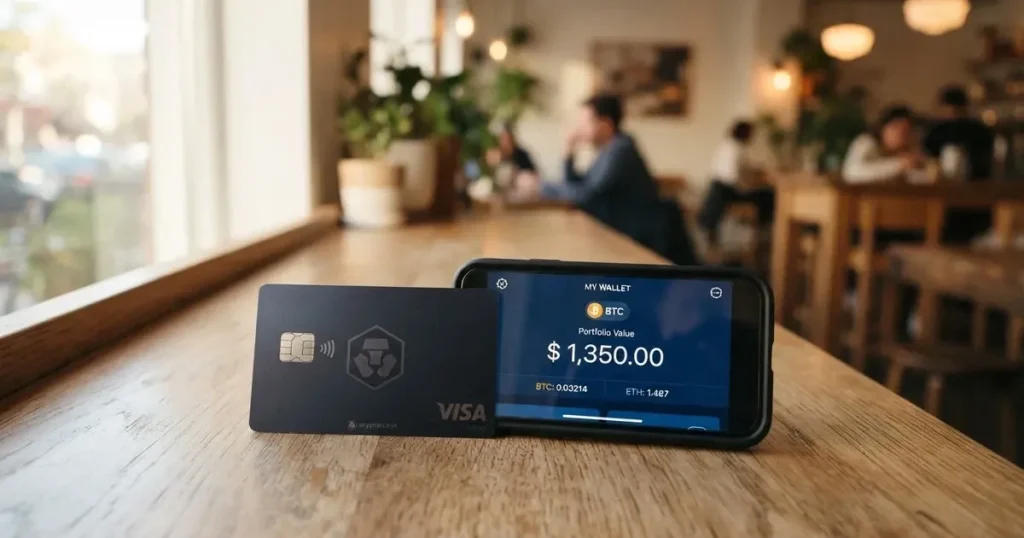
The Exodus Card is a prepaid debit card that spends the balance held in your own Exodus wallet, converted to dollars at the moment of payment. That sounds ordinary, and in most of the world it behaves ordinarily: it is a Mastercard, it works at shops, it has virtual and physical versions, and topping it up is a stablecoin transfer rather than a bank transfer. What makes it worth an hour of reading is everything around that: a country list that runs from Iceland to Uruguay with a conspicuous gap, a Metal tier at $199 a year, and an issuer that Exodus itself bought out of receivership in May 2026 while reportedly telling customers it can no longer issue cards to new European clients. That is the tension this review is about.
The conditions described below are current as of October 28, 2026.
Verdict: 6.8 out of 10, with the caveat above the card itself
I scored this card 6.8 / 10. The score is not a verdict on the plastic — on that, the card is unremarkable and works as advertised. It is a verdict on the whole arrangement: a good top-up story, ordinary costs, a country list that leaves some people out, and an issuing bank that is being restructured underneath a product that depends on it. If you are already an Exodus wallet user in Europe or Latin America, this card makes your existing balance spendable and little more. If you are choosing a crypto card for the first time, you have better-documented alternatives.
| Criterion | Mark | Why |
|---|---|---|
| Who can get it | 7 / 10 | Supported in 42 countries: Europe, Canada, USA (except Vermont), Mexico, Brazil, Argentina, Colombia and others |
| Cost | 7 / 10 | Free tier $0 a year; use outside the cardholder’s country 1% on Free; ATM 2%; a stablecoin in a currency that is not the cardholder’s 0.5% |
| Top-up options | 9 / 10 | USDT and USDC across several networks, plus a bank card and Apple Pay |
| Reliability and complaints | 5 / 10 | Issuer Monavate Ltd (FCA) and operator Baanx, both bought by Exodus on 1 May 2026; Monavate reportedly cannot issue cards to new European clients; workforce cut of 25%; Trustpilot Exodus 4 out of 5 across thousands of reviews |
| Everyday use | 6 / 10 | Virtual and Metal plastic, ATM at a 2% rate, Apple Pay described for top-ups, wallet support for paying with the card not disclosed, and the card does not support a PIN |
| Total | 6.8 / 10 |
Who this suits: someone who already holds USDT or USDC, already trusts the Exodus wallet model, lives in one of the supported countries, and wants the balance in that wallet to be spendable without selling it to an exchange first. Who it does not suit: anyone who needs a card in a country outside the list, anyone who needs a card that works reliably in gambling or high-risk merchants, and anyone who needs a PIN, a predictable chargeback process, or an issuer whose future they can read from a public document.
Will they give you the card?
Yes, but only in one of a specific set of places. Exodus Pay itself works in most jurisdictions; the Exodus Card is not the same thing and has a much shorter list. The supported countries are Andorra, Argentina, Austria, Belgium, Bosnia and Herzegovina, Brazil, Bulgaria, Canada, Colombia, Croatia, Cyprus, Denmark, Finland, France, Germany, Gibraltar, Greece, Guatemala, Hungary, Iceland, Ireland, Isle of Man, Italy, Jersey, Liechtenstein, Lithuania, Luxembourg, Malta, Mexico, Netherlands, Niger, Norway, Poland, Portugal, Romania, Slovakia, Slovenia, Spain, Sweden, Switzerland, USA (excluding Vermont) and Uruguay.
Read that list carefully rather than scanning it. It is a list of countries, not a statement about you: nationality, residence and document type are separate questions the issuer will ask. Note the absences — no UK, no Australia, no India, no Nigeria, and the US is present but excludes Vermont. Note too that the list has oddities in it: Niger and Guatemala sit alongside the EU member states, which usually signals a per-jurisdiction licensing arrangement rather than a single regional programme.
One thing to check first, if you are in the US: newer Exodus Pay help material says new US card issuance is not open. So being inside the country list is necessary but not sufficient.
How to get it
The route is the normal one for a regulated product, and the identity checks are the part worth understanding before you start rather than after.
Identity verification is required for the card, for cash deposits, and for redeeming points. The account needs a phone number that receives a code over WhatsApp or SMS; then email verification; then an ID check inside the app. Former Spend Card users migrate without re-verifying.
So the order is: phone number, code, email, then documents in the app. The card’s public pages do not set out the verification levels, how long processing takes, or the reasons a check might be rejected — that is not stated, and you should not assume the flow you experience will be a single step.
After approval you get a virtual card straight away and can order the physical Metal card alongside it. On the card itself: the public pages did not describe it in detail, and older Spend Card material described it as virtual and Mastercard-based. What is confirmed is the arrangement underneath — it is a debit card, not credit, usable wherever Mastercard is accepted, available as a virtual card and as a physical Metal card, issued by Monavate Ltd, an FCA-authorised e-money issuer, with Baanx as programme manager under the EU and UK terms.
Delivery is where the Metal tier gets slower and more expensive:
- Free tier physical card replacement: not applicable.
- Metal replacement fee: $99.
- Metal card delivery: expected 6–8 weeks after purchase.
- Delivery countries: the same list above.
Six to eight weeks is not a small thing if you are planning around having the card in hand. The virtual card, if your country and situation allow it, is the part that arrives immediately.
Fees: what it really costs
The costs are not hidden, but they are split across the terms, a help article and a fee table, and the honest answer is that the annual cost is the least of it.
Two tiers, per the “Exodus Card EU+UK Terms”: Free at $0 a year and Metal at $199 a year, which auto-renews and can be cancelled within 14 days for a refund. Metal is a physical metal card (currently a waitlist, expected 6–8 weeks), with 3% cashback on the first $10,000 spent per year and 1% after that, no foreign transaction fees under fair use, and higher limits.
| Fee or limit | Free | Metal |
|---|---|---|
| Annual subscription | $0 | $199 (auto-renews, cancel within 14 days for refund) |
| Purchase limit per transaction | $10,000 | $20,000 |
| Purchase limit per day | $15,000 | $30,000 |
| Daily card purchase limit (global) | 9,500 USD | 9,500 USD |
| Daily card purchase limit (United States) | 15,000 USD | 15,000 USD |
| Use outside the cardholder’s country | 1% | none (fair usage) |
| ATM fee | 2% | no fee up to $1,200 a month, then 2% |
| ATM limit per transaction | $1,000 | $1,000 |
| ATM limit per day | $1,000 | $5,000 |
| Physical card replacement | not applicable | $99 |
| Cashback | none stated | 3% on first $10,000 per year, then 1% |
The terms also state, for the UK, £1,000 per ATM withdrawal and £10,000 per purchase / £15,000 per day. Those UK figures sit alongside the dollar figures rather than replacing them, and it is worth knowing which set you are actually held to.
Two fee questions the pages leave open. Purchases in other currencies are converted from USD at the card network’s and the payment processor’s rate at the time of purchase, and the amounts charged are not stated. The ATM withdrawal fee is 2%, and the ATM operator may charge extra on top. And on the conversion question the terms are explicit: Mastercard converts at its wholesale rate, and “neither Baanx nor Exodus will charge an additional currency conversion fee” — with the newer help article consistent with that, saying other currencies are converted from USD at the network rate.
Three everyday payments, and which fees bite:
Coffee in your own country, paid from USDC held on Solana. No foreign transaction fee, because you are in your own country. The 0.5% stablecoin fee applies only where a stablecoin is in a currency that is not the cardholder’s or the merchant’s country, which is not this case. Effectively nothing on the card side; you eat the Solana network gas, typically $0.01.
A hotel in another country, paid from USDT. This is the cross-border case, and on the Free tier it costs 1% on top of the network conversion. On Metal the fee is waived under fair use. The network conversion rate is applied at wholesale and the provider adds nothing, which is the friendliest thing in this whole table.
Withdrawing cash from an ATM abroad. 2% on Free, plus whatever the ATM operator charges you, on Metal nothing until you pass $1,200 in a month and 2% after that. There is also a $1,000 per withdrawal cap everywhere. Two percent plus a foreign ATM’s own surcharge is one of the more expensive habits a traveller can have, and it is the one the free tier punishes hardest.
How to Top up the card
This is the strongest part of the product and the reason the top-up score is the highest single mark I gave it. Two stablecoins, several networks each, and two ordinary payment methods on top.
USDC on Solana, Ethereum, Arbitrum One, Base, BNB Smart Chain and Polygon. USDT on Arbitrum One, Solana, Ethereum, BNB Smart Chain and Polygon. Plus a debit card and Apple Pay on iOS.
Note that they are not the same list. USDC has Base and Solana; the USDT list has Solana, Arbitrum One, Ethereum, BNB Smart Chain and Polygon. Sending on a network the card does not support is a genuinely expensive mistake — blockchain transfers are irreversible, and recovery is a manual support request with no guarantee. Pick the network from the card’s list, not from what your exchange happens to prefer.
The fees on topping up are low and specific:
- Deposit: no fee, no minimum balance.
- A stablecoin in a currency that is not the cardholder’s or the merchant’s country: 0.5%.
- DeFi or yield tokens: no fee up to $1,200 a month, then 0.5%.
- Other cryptocurrencies, for example wETH: 0.875%.
- Network gas: small and variable, typically $0.01.
Two further mechanics matter more than the fee percentages. First, the card draws from the Exodus Pay balance on Solana in a fixed order — USDT, then USDC, then XO Cash — and a purchase must be covered by a single asset. If you hold mostly USDC and a purchase costs more USDC than you have, the balance in the other asset does not top it up. Second, the model is self-custody: your funds stay in the linked wallet, so there is nothing to withdraw from the card. Refunds are credited back to the Card Account and may be unavailable for up to five days, and closing the Card Account means asking for a check of the balance for a fee.
Apple Pay and a debit card as deposit methods are described; their own fees are not stated.
Paying with it every day
It is a prepaid card drawing on a stored balance, so it cannot overdraw. That is the whole design in one sentence, and it explains both the appeal and the friction.
What works: it is accepted wherever Mastercard is accepted, you can hold both a virtual card and the Metal card, you can set a spending limit, you can freeze the card in the card dashboard, and you can add and remove wallets. If a card is lost or stolen you report it immediately.
What does not, or is not clear:
- No PIN. The card does not currently support a PIN. At terminals that ask for one, you may be able to confirm without it — that is how the card is described, and it is a real limitation if you draw cash often or shop somewhere that insists.
- Apple Pay is described for top-ups. Whether you can push the card itself into a mobile wallet for payments is not the same question, and the pages do not confirm the wallets you can pay with in. Treat Apple Pay here as a deposit method unless you have seen otherwise in your own app.
- Gambling and similar merchants. Merchants can see which institution and country issued a card from its number, and some decline prepaid or foreign-issued cards. Gambling is the most common category blocked by policy rather than law, and the list varies by issuer. This is not a card problem you can fix.
- Declines that hold money. A declined authorisation can leave a hold on your funds for several days, sometimes up to seven. A gas station or hotel pre-authorisation can therefore tie up real balance for a week.
- Address checks. Address verification compares parts of the billing address with issuer records and is mainly a US, Canadian and UK thing; it is generally unavailable on foreign-issued cards, which can cause declines online.
Two things you can bank on for context. The app sits at 4.6 out of 5 on the App Store from 38K ratings for iPhone, iPad and Vision. And from 1 July 2026, card holders in Argentina, Brazil, Mexico, Colombia and Uruguay can pay DGO and SKY+ subscriptions, with new customers in those countries able to get a 25% cashback offer subject to terms; the general rate is not stated.
What can go wrong
Two risks live outside the card: the issuer, and your own keys. I will take the issuer first, because it is the one you cannot manage.
The issuer is being rebuilt while the card is running. Exodus Movement completed its acquisition of Monavate Holdings — the issuer Monavate Ltd, FCA-authorised — and Baanx on 1 May 2026. The shares came from receivers after a W3C loan default; $175M was announced in November 2025. Q2 2026 results mention a 25% workforce cut. The Bank of Lithuania inspected Monavate UAB in late 2025, and the CEO reportedly said Monavate cannot issue cards for new European clients. A card that cannot be issued to new customers is a card in wind-down, whatever the marketing says.
Complaints: thin where it matters. On Trustpilot, the Exodus website sits at about 4 out of 5 from roughly 4,380 reviews, and the company replies to 93% of negative reviews. I searched for card-specific complaint threads and Reddit results and found none, which is mildly reassuring and also means there is no body of evidence either way. One review describes a debit card validation failure that was fixed after escalation. The negative themes that do exist are wallet themes, not card themes: blocked transactions, high fees, unresponsive support. One user’s report, unofficial and not confirmed by the card’s own material, attributes that to support response times and a support-analysis of user feedback — treat it as a pointer, not a finding.
Self-custody is the other side of the coin. The terms describe a self-custody model: the card spends value from a wallet you control, and you can freeze and limit it. That means the network cannot reverse a stolen-key transfer, and there is no seed-phrase recovery if you lose it. The newer Exodus Pay balance sits on Solana and the custody wording there is not stated, so which of the two descriptions governs your money is something to ask.
Card disputes are the arbitration clause. Unauthorised-transaction liability is limited to the face amount plus fees. Disputes with the programme manager go to arbitration under Delaware law with a class-action waiver — not a court. Chargeback time frames are not stated. In the US, prepaid-card coverage varies and should not be assumed.
Insurance is not stated. Whether any balance is safeguarded, segregated or insured is not something the pages I read say. In the EU an e-money institution must safeguard customer funds by segregating them in dedicated accounts or insuring them, and such funds are not bank deposits and may not sit under a deposit guarantee scheme. Ask.
Missing information, plainly. Not stated on the public pages: what the card physically looks like, the full fee schedule including conversion amounts, the ATM fee detail beyond the 2% rate, verification levels and rejection reasons, chargeback time frames, insurance, the crypto company structure, and how to delete an Exodus account.
Contacts, for the record: the card terms give the Exodus support team for Metal and replacement matters, the issuer Monavate provides a contact email, and there is a toll-free number printed on the back of the card.
What to take instead
I want to be careful here. All three of these are card products with their own rough edges, and none of them is a bank account. I am comparing them on the things I could actually check, not recommending one.
| Exodus | MetaMask | KAST | TokenPocket | |
|---|---|---|---|---|
| Score | 6.8 / 10 | 7.1 / 10 | 6.1 / 10 | 5.8 / 10 |
| Card | Mastercard debit, virtual + Metal | Mastercard, virtual first, Metal pre-order | Visa, virtual and physical, up to 10 cards | Visa or Mastercard debit, virtual |
| Annual cost | $0 free, $199 Metal | Virtual free, Metal $199/year | Standard 0, Premium $1,000, Private $10,000 | Not stated |
| Who | 42 countries, EU-heavy plus LatAm | 45 listed countries, others waitlist; US/UK sign-ups temporarily closed | Residence list shown at KYC; residency and document country both matter | European list for Visa, wider list for Mastercard |
| Funding | USDT/USDC, many networks, card, Apple Pay | Wallet directly; Linea, Base, Monad, Solana; mUSD, wETH, EURe, GBPe, USDC, USDT | USDT, USDC, PYUSD, RLUSD on Ethereum, Solana, Polygon, Arbitrum, TRON | Crypto from the TokenPocket wallet; coins and networks not listed |
| Rewards | Metal 3% then 1% | Cashback in mUSD, Virtual 1%, Metal 3% capped at first $10,000 | USD cashback 1.5% / 2% / 3% by tier, monthly caps | 1% deposit fee said to be refunded later via rewards |
| Notable catch | No PIN; issuer in transition | Minimal per-transaction fee, amount not stated on pages read | High Premium and Private tiers; terms conflict on accepted tokens | 1% fee on crypto deposits; Americas listed as planned |
Three things stand out. MetaMask scores slightly higher, has no annual fee on the virtual card, and names its issuer — Monavate again, so it shares that counterparty risk — but it pays from the connected wallet directly rather than a pre-funded balance, and it names four networks and a token list explicitly, which is the single most useful thing a card page can do. KAST publishes the most complete fee table of the four: stablecoin top-up 0%, card spend 0%, transaction fee 0%, Apple and Google Pay 0%, with a non-USD FX fee of 0.5%–1.75% depending on where you live and which card programme you hold, a $0.10 charge on non-USD transactions under $25, and $0.50 for a declined transaction. That transparency is worth something on its own, whatever you think of a $10,000-a-year membership. TokenPocket charges 1% to deposit crypto and does not list its coins or networks in its FAQ, which is the least usable arrangement for a self-custody card.
KAST is also the only one of the four that names the KYC gate honestly: if your country is not on its list it is not available there, and living in a supported country while holding an ID from a restricted region may still fail. Read that as a warning about what every provider reserves the right to do, not as a workaround.
Who I would recommend it to
If you already keep USDT or USDC in an Exodus wallet in one of the 42 supported countries, and you want to spend it without going through an exchange, this card does that job at a reasonable cost. The Free tier is genuinely free, the top-up network choice is the best in this comparison, and the ATM and cross-border maths is at least clearly written down. Add Metal only if you will actually use the foreign transaction waiver or the cashback; at $199 a year, most people who buy it are paying for the card rather than the cashback.
If you are not already an Exodus user, I would look at MetaMask first for wallet-level transparency and at KAST if published fees matter most to you, and I would read the issuer’s own regulatory status before signing up for any of them. If you need a PIN, if you are outside the country list, or if new-client issuance is closing where you are, none of this applies.
Most of all: check whether your country can still get new cards before you plan around one.
Frequently asked questions
What is the Exodus Card?
It is a prepaid Mastercard debit card that spends the balance in your own Exodus wallet rather than a bank account. Crypto is converted and loaded as a balance, and each payment draws that balance down. Because it is a stored-balance card it cannot overdraw. It comes as a virtual card and, on the Metal tier, a physical metal card. It is issued by Monavate Ltd with Baanx as programme manager.
Is Exodus a bank?
No. Exodus is a crypto wallet company, and the card is issued by a separate licensed institution — Monavate Ltd, an FCA-authorised e-money issuer in the UK, with Baanx as programme manager under the EU and UK terms. An e-money institution can issue cards and wallets but cannot lend you money. Customer funds must be safeguarded, though safeguarded funds are not bank deposits and may not be covered by a deposit guarantee scheme.
Who owns Exodus, and who issues the card?
Exodus Movement is the company behind the wallet, and it acquired Monavate Holdings and Baanx on 1 May 2026. The shares came from receivers after a W3C loan default; $175M was announced in November 2025. Exodus is therefore now the owner of the body that issues its own card, which removes one dependency and creates another.
Which countries is the Exodus Card available in?
Andorra, Argentina, Austria, Belgium, Bosnia and Herzegovina, Brazil, Bulgaria, Canada, Colombia, Croatia, Cyprus, Denmark, Finland, France, Germany, Gibraltar, Greece, Guatemala, Hungary, Iceland, Ireland, Isle of Man, Italy, Jersey, Liechtenstein, Lithuania, Luxembourg, Malta, Mexico, Netherlands, Niger, Norway, Poland, Portugal, Romania, Slovakia, Slovenia, Spain, Sweden, Switzerland, the USA excluding Vermont, and Uruguay. New US card issuance is not open at present.
Does the Exodus Card require KYC, and how do I apply?
Yes — identity verification is required for the card, cash deposits and redeeming points. You need a phone number that takes a WhatsApp or SMS code, then email verification, then an ID check in the app. The public pages do not describe verification levels, processing times or rejection reasons, so allow for a process longer and less predictable than the outline suggests.
How do I top up the Exodus Card?
Send USDC on Solana, Ethereum, Arbitrum One, Base, BNB Smart Chain or Polygon, or USDT on Arbitrum One, Solana, Ethereum, BNB Smart Chain or Polygon. You can also deposit with a debit card or Apple Pay on iOS. Deposits carry no fee and no minimum balance, network gas is typically $0.01, and a purchase must be covered by a single asset — the balance draws USDT, then USDC, then XO Cash.
What does the Exodus Card cost to use?
The Free tier costs $0 a year. Use outside your own country costs 1% on Free and nothing on Metal under fair use, ATM withdrawals cost 2% plus whatever the ATM charges, and a stablecoin in a currency that is not yours or the merchant’s costs 0.5%. Foreign currency is converted at the network rate with no added provider fee. Metal costs $199 a year and auto-renews, cancellable within 14 days for a refund.
Can I use the Exodus Card at ATMs?
Yes, at a 2% fee on the Free tier, or free on Metal up to $1,200 a month and 2% thereafter, with the ATM operator free to charge extra on top. Limits are $1,000 per withdrawal and $1,000 per day on Free, $5,000 per day on Metal. Remember that the card itself does not support a PIN, so expect friction at machines that insist on one.
Is the Exodus Card safe?
The card is designed as self-custody: funds stay in your wallet, you set a spending limit, and you can freeze the card in the dashboard — but that also means no reversal if keys are lost. The card is issued by an FCA-authorised e-money issuer that Exodus acquired on 1 May 2026 amid a reported 25% workforce cut and a statement that it cannot issue cards to new European clients. Check your own regulator’s register before relying on it.
Is the Exodus Card worth it?
For an existing Exodus wallet user in a supported country spending in that country, the Free tier is hard to argue with: no annual fee, sensible limits, and the widest network choice for topping up. It is worth less if you travel, because cross-border use and ATMs cost real money on Free, and worth less still if you are choosing a first crypto card, since the issuer’s restructuring and the absence of a PIN are the two things you will notice first.
Wallet card fees and costs – cryptocardfacts
Content created by the «cryptocardfacts» team