
A Costa Rica-issued Mastercard that takes crypto, colons and dollars on one card — but with little public fee detail
 Available in US
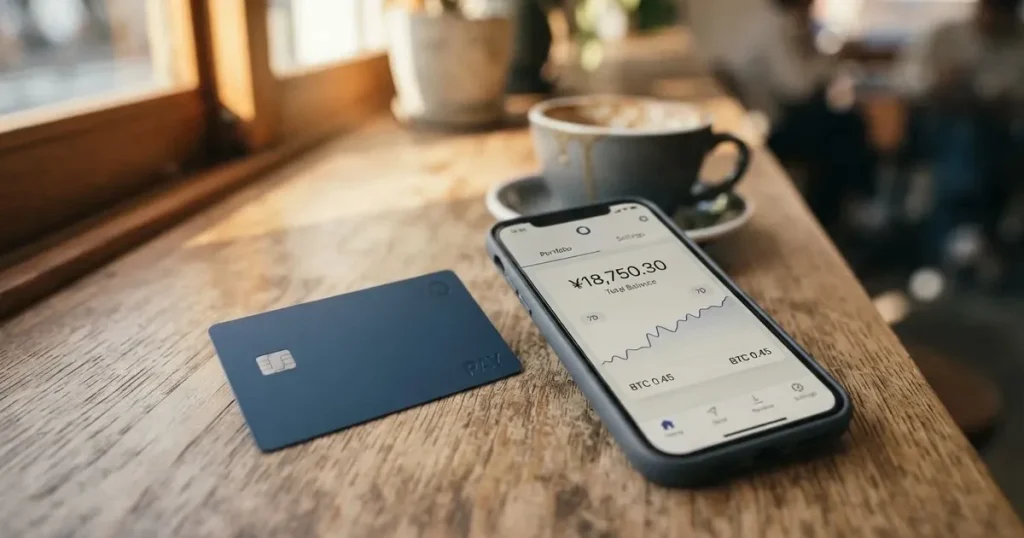
CoinPay issues a Mastercard debit card that draws on a balance held in cryptocurrencies, US dollars, Costa Rican colones or other supported fiat. The company behind it, Raw Industries CCM S.R.L., is a Costa Rica-based technology operator, and the card sits inside a broader app that also handles bank-like “reception and withdrawal” services. Mastercard acceptance gives it wide reach, and the dual crypto-and-fiat balance is unusual: you can hold dollars and spend them directly, or keep crypto on the platform and let the card convert at the moment of payment.
What makes the CoinPay card worth a closer look is also what makes it hard to evaluate. The site and terms do not state issuance fees, monthly fees, conversion fees, ATM fees, FX markups, daily or monthly limits, supported coins or supported networks. The company holds a Costa Rican Virtual Asset Service Provider registration, but the card issuer is not named in public materials. There are no public Trustpilot or Reddit pages dedicated to CoinPay.cr, so there is essentially no third-party track record to lean on either way. After weighing what is stated and what is not, the card lands at 5.3 out of 10.
Conditions are current as of October 28, 2026.
Verdict
The card suits people in Costa Rica and other parts of Latin America who want a single balance mixing crypto and local fiat, and who already trust the CoinPay app for payments. It also suits anyone who can get verified and who simply needs a Mastercard where ordinary banking has been hard to get. It does not suit people who need a publicly known issuer, who want to see the full fee schedule before they commit, or who depend on Apple Pay, Google Pay, cashback or any structured rewards — none of which the card confirms.
The strongest pulls are the Mastercard network, the choice of a physical or virtual card, ATM access and an in-app control panel that lets you freeze the card, change the PIN, set your own spending limits and see real-time notifications. The strongest drags are the silence on fees and limits, the lack of a named card issuer, the absence of a public complaints record, and a restricted-country list that excludes the United States, Canada and several other major markets from onboarding.
Score
| Criterion | Mark | Why it earns that mark |
|---|---|---|
| Who can get it | 6 / 10 | Mastercard works wherever Mastercard is taken, but onboarding is closed to residents of the US, Canada, Cuba, Pakistan, Russia, Belarus, Serbia, and others; the rule’s exact basis (citizenship vs residence) is not specified |
| Cost | 5 / 10 | The site says only that “service costs are charged” without listing issuance, monthly, conversion, FX or ATM fees |
| Top-up options | 4 / 10 | Balance accepts crypto, USD, colones and other fiat, but the supported coins and networks are not named |
| Reliability and complaints | 5 / 10 | The operator is a registered Costa Rican VASP; the card issuer is not named; no public complaints record was found |
| Everyday use | 6 / 10 | Physical and virtual Mastercard plus ATM access, but no confirmation of Apple Pay, Google Pay, cashback or rewards |
| Total | 5.3 / 10 | A workable Mastercard with a mixed crypto/fiat balance, weighed down by missing fee detail and a thin public track record |
Who will give you the card
CoinPay’s card is an international Mastercard debit card, so it works at any merchant that takes Mastercard, online or in person, with no per-country card list published. That is the headline, and it matters: if you are somewhere ordinary banking is restricted, a Mastercard from a non-traditional issuer can be the only practical way to pay.
The detail that filters who actually gets one is onboarding. CoinPay does not accept verification requests from people in a specific set of countries. The list the site names is: Cuba, Pakistan, North Korea, Iran, Syria, Crimea, the United States, Canada, Ethiopia, Iraq, Serbia, Sri Lanka, Trinidad & Tobago, Tunisia, Vanuatu, Yemen, Russia and Belarus. If you live in or hold citizenship of one of those, the application is refused at the KYC stage. The site does not specify whether the rule is applied by citizenship, by country of residence, or by both, so the safe reading is that any of those three can disqualify you.
Beyond the country filter, every applicant goes through identity, source-of-funds and risk checks. Level 1, the lighter tier, has no preset monetary limits but cannot order a card. Level 2 is the card-issuing tier and requires enhanced due diligence: identity, residence, and income or fund origin, all subject to CoinPay’s approval. Age, accepted documents and proof-of-address rules are not stated in public materials, which is itself a sign that you should be ready to provide more than the minimum if asked. The processing time and the specific reasons a Level 2 application might be rejected are also not stated.
If you are in Costa Rica or a neighbouring country, if you can document your income, and if you are outside the restricted list, the path looks open. If you are in the United States or Canada, the path is closed by policy. If you are in the European Union, the path is technically open, but the absence of a named EU-licensed issuer is worth factoring in.
How to get it
The signup path is shaped around the two verification levels described above. You install the app — it is distributed as an installable progressive web app rather than through a rated App Store or Google Play listing — create an account, and start at Level 1, which has no preset spending cap but does not include the card. To order a card you have to reach Level 2, which means completing the enhanced KYC review: identity, residence and income or fund origin, with CoinPay approving the file. The site does not list accepted documents, so plan to have a passport or national ID, a recent proof of address and some form of income or source-of-funds evidence ready.
Once Level 2 is approved, you can request a virtual card from within the app, and order the physical card. The physical card is delivered to the address you registered; delivery country, time, cost and replacement are not stated. The card itself is described only as an “international Mastercard debit card” — the card’s settlement currency is not stated, so it is not clear whether the card settles in dollars, colones, euros or some other currency, which has real consequences for FX exposure on every cross-border purchase.
There is no published timeline for KYC, no published card-production timeline, and no published delivery timeline. The most you can take from the public materials is that support replies “within a few minutes” over WhatsApp, Instagram, Facebook Messenger and in-app chat, which is a useful backstop if you are stuck at any step but not a guarantee of turnaround on verification.
What it really costs
This is the section where the review has to slow down and tell you what the card does and does not say. The official position is short: the site says only that “service costs are charged, including sending and distribution of cards,” without listing what those costs are. Issuance, monthly, conversion, FX, ATM, daily and monthly limits are not stated in the public materials we checked.
What that means in practice is that you cannot tell, before signing up, what a typical card payment will cost you. The fee page and the terms do not publish a conversion fee on crypto-to-fiat payments, do not publish an FX margin on cross-border Mastercard transactions, and do not publish an ATM withdrawal fee or an ATM allowance. The site also does not state whether the card carries a foreign-transaction fee on top of the Mastercard wholesale rate.
The only piece of public information is structural. Level 1 has no preset monetary limits; Level 2 is the card tier and CoinPay “may adjust operational limits” per user, while users can also set their own spending limits in the app. That gives you a soft ceiling but not a published one, and it tells you nothing about the floor — what you pay to use the card at all.
Fees and limits at a glance
| Fee or limit | What CoinPay says |
|---|---|
| Card issuance | not stated |
| Monthly or annual fee | not stated |
| Conversion (crypto to fiat at payment) | not stated |
| Foreign exchange (cross-currency) | not stated |
| ATM withdrawal fee | not stated |
| ATM allowance | not stated |
| Daily spending limit | not stated (user can set their own in the app) |
| Monthly spending limit | not stated (CoinPay may adjust per user) |
Because the public fee schedule is empty, the practical advice is to do the math on a real payment before you commit. Take a small amount, fund the card, make one in-store and one online payment, take one ATM withdrawal in your home currency, and read the receipt against the displayed rate at the time. The site is in Spanish, English and Portuguese, and in-app support is reachable, so asking the operator for a written schedule before you load a significant balance is a reasonable first step.
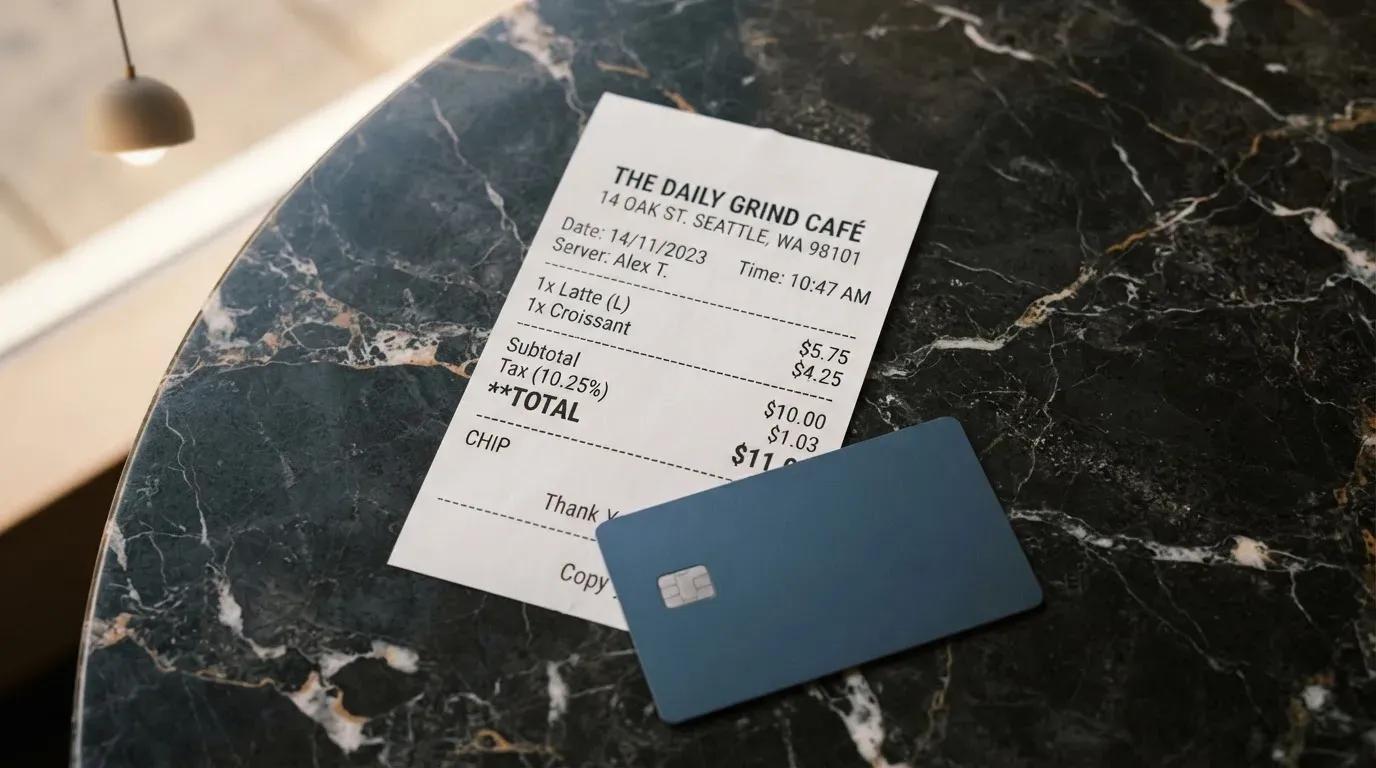
To put that in everyday terms: a coffee at a local café paid in colones will only be interesting if the card’s settlement currency happens to be colones too, otherwise a conversion is layered on top. A flight booked online in dollars from a Costa Rica-issued card could trigger a Mastercard cross-border rate plus whatever CoinPay’s FX margin turns out to be. A cash withdrawal from an ATM abroad has, in the worst case, three layers: the ATM operator’s fee, the card’s own ATM fee (not stated), and the FX margin (not stated). Without the schedule, none of those can be quantified in advance.
How to top up the CoinPay card
Top-up starts from the in-app account balance, which CoinPay says can hold cryptocurrencies, US dollars, Costa Rican colones or other supported fiat. The card then spends from that balance. The specific coins supported, the specific networks accepted, the minimum top-up, the time to credit, and the fee schedule for funding are not stated in the public materials.
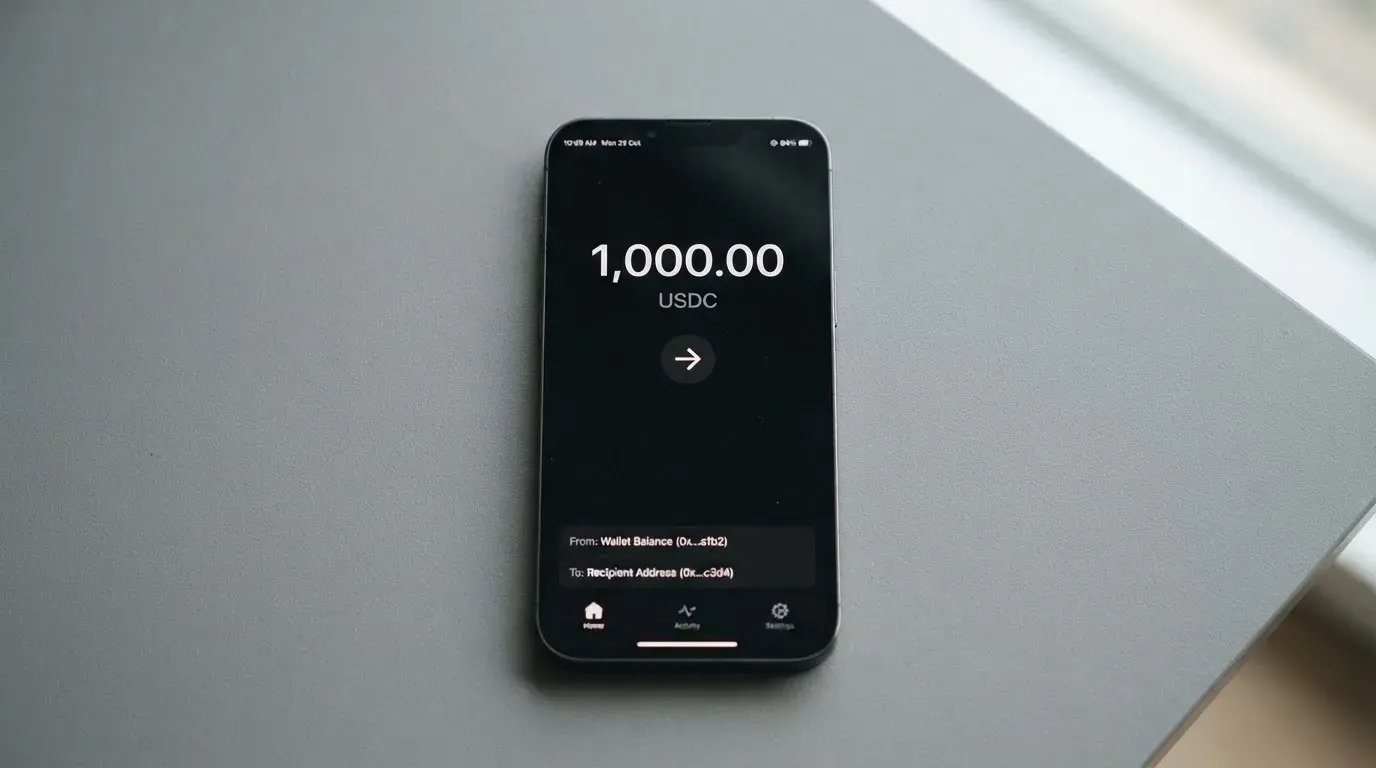
That last point is worth pausing on. In the broader crypto-card category, blockchain network fees for deposits are charged by the network itself, not by the card provider, but the choice of network still matters: a USDC transfer on a cheap chain costs a few cents, a USDT transfer on Ethereum can cost several dollars during busy periods, and sending on a chain the operator does not support can mean a permanently lost deposit with no built-in recovery, because on-chain transfers are typically irreversible. Because CoinPay does not list which coins on which networks it accepts, the safe working assumption is that you confirm the network in the app or with support before you send.
A separate “Reception and withdrawal” bank-style service is advertised on the site, with its own terms. Its conditions and fees are not stated in the public materials either, and it is distinct from the card. Treat it as a different product with its own onboarding.
For a typical user, the practical top-up routine looks like: open the app, find the funding section, pick a coin or a fiat rail, send to the deposit address the app gives you, and wait for confirmation. The confirmation time depends on the network. If the operator does not natively support the network you used, you will need to recover through support with no guarantee of success.
Paying with CoinPay every day
Once the card is in your wallet, the everyday experience is built around capabilities including: in-store and online Mastercard payments, ATM cash withdrawals, an in-app control panel for card management, and a real-time notification feed. The physical card is delivered to your address; a virtual card can be issued on request from the app for online use, and is also useful if you want to keep the physical card at home and only load a smaller virtual balance for subscription services.
What the public materials do not confirm matters as much as what they do. There is no statement that CoinPay supports Apple Pay or Google Pay, no cashback or rewards structure, and no published merchant category restrictions. The rewards question is open: the site does not state any cashback, points or “spend-to-earn” mechanism for the card, so the only return on spending is whatever you would have earned anyway by holding the underlying crypto or stablecoin.
The in-app controls are the most concrete everyday feature. You can block the card instantly, change the PIN, set your own spending limits, and see real-time transaction notifications. Those are standard safeguards for the category and they are useful, especially if the card number is exposed in a merchant database breach. A compromised card number can be re-issued; a compromised password on a custodial account is harder to undo.
A practical note for online checkout: international Mastercard debit cards sometimes get declined by merchants who treat the card as foreign, or by AVS checks that only work in the US, Canada and the UK, or by 3-D Secure challenges when the issuer is unfamiliar. The card sits in that risk surface without a named issuer to point at, so the first few online payments are worth testing with small amounts.
What can go wrong
Reading the risks section means being honest about what is published and what is missing. The positives: there are no public CoinPay-specific incidents, scam reports or programme suspensions, and no Trustpilot or Reddit thread dedicated to CoinPay.cr turned up in a search. The negatives: the absence of a public complaints record is not the same as a clean record, and the company structure raises real questions.
The operator is Raw Industries CCM S.R.L., a Costa Rican technology operator. Financial services are provided by JPC Solutions S.R.L. The group operates as a Virtual Asset Service Provider under Costa Rican law; no licence numbers are published on the public site. The card issuer is not named, which is a non-trivial gap. In a category where Visa and Mastercard themselves do not issue cards to consumers but license issuers, an unnamed issuer is the single largest unknown. If something goes wrong with the programme — a network suspension, a regulator action, a partner bank ending the relationship — the user’s only recourse is to the Costa Rican operator, with all the cross-border friction that implies.
Funds custody is split: per the operator’s own terms, it does not hold or custody user funds; financial providers do. That is the better outcome for users, but it shifts the counterparty risk to a financial provider whose identity and jurisdiction are not fully public. In practical terms, your balance sits with an entity that is not the brand you signed up with, and that entity’s stability is what matters in a worst case.
Operational risks cluster around the unknowns:
- Fee risk. Because the fee schedule is not published, the realised cost of a payment can only be measured after the fact. Over a year of regular use, the difference between a low and a high effective rate on a crypto-funded card is meaningful.
- Limit risk. Level 1 has no preset monetary limits but excludes the card; Level 2 is the card tier, and CoinPay “may adjust operational limits” without publishing a baseline. A user who expected a certain throughput can find it quietly lowered.
- Network risk. Sending a deposit on the wrong chain, or to an address of another chain, can mean the funds are lost or stranded in manual recovery with no guarantee of return, because on-chain transfers are typically irreversible.
- Sanctions and freeze risk. Tether has documented freezing funds tied to illicit activity, and Circle has done the same; stablecoins are not censorship-proof at the issuer level. For most users this is a non-issue, but it is a reminder that the asset is not the same as cash.
- Programme risk. Crypto card programmes have been wound down before — Visa’s termination of its FTX agreements in November 2022 is a category case study, and WaveCrest’s 2018 suspension in Europe closed every WaveCrest-issued Visa programme overnight. The pattern is: notice period, then a stop on new loads, then a stop on spending, then a request to withdraw the remaining balance.
- Country-of-issuance risk. A card issued in Costa Rica will look “foreign” to merchants in many countries, and AVS checks are typically only available in the US, Canada and the UK. Some merchants decline foreign-issued cards outright, especially for prepaid or high-risk categories. There is no indication that CoinPay has arrangements to mitigate this.
On the safety side, the published safeguards are: an installable PWA rather than a phone-store app, in-app 2FA (standard for the category), instant card block, PIN change, customisable spending limits, real-time notifications, and the option to use a virtual card to keep the physical card’s number off merchant sites. None of that is unusual, and none of it is enough on its own to offset the unknowns above.
What to take instead
CoinPay is one of several crypto-funded cards aimed at users who want a Mastercard or Visa without going through a traditional bank. The alternatives below are not direct substitutes, but they are useful reference points if CoinPay’s missing fee schedule, unnamed issuer or country restrictions are deal-breakers for you.
| Card | Network and form | Score | Best fit |
|---|---|---|---|
| CoinPay | Mastercard, physical and virtual | 5.3 / 10 | Costa Rica and Latin America users with a mixed crypto and fiat balance |
| International Visa Card | U.S.-issued Platinum Visa, virtual only (physical “coming soon”) | 6.7 / 10 | USDC/USDT-funded USD spending with a published fee schedule |
| UNi Card | Mastercard multicurrency, account-funded | 6.1 / 10 | Users who want a multicurrency balance with live OTC conversion and a 3% spend-to-earn rate |
| Whop Cards | Visa, online and in stores | 5.2 / 10 | US-based users in 31 supported states who want 5% cashback at selected merchants |
International Visa Card is the more transparent option for someone who wants to fund a card with USDC or USDT, pay in dollars, and see the fees upfront. The trade-off is geography: it is closed to residents of a long list of countries, including Belarus, mainland China, India, Russia, Turkey, Ukraine, Venezuela, Vietnam, and several others, and it is currently virtual-only. Its published fee schedule is the differentiator — a $5 one-time issuance for the virtual card, a free Classic plan, and a 2% FX fee on non-USD spending, with USD spending free on all plans. That kind of clarity is what CoinPay does not yet publish.
UNi Card is the option to look at if multicurrency and a return on spending matter. It advertises no annual fee, no foreign-transaction fee, and up to 3% spend-to-earn rewards, with assets converted at live OTC rates. The card spends from a UNi.Global account balance, and the published material is more forthcoming than CoinPay’s. The cost of that transparency is that the supporting details — accepted countries, document list, exact cashback conditions — are also not stated in the public research.
Whop Cards sits in a similar place to CoinPay in terms of completeness but in a very different regulatory context. It is available to consumers in 31 US states and to businesses in 41, and closed to residents of a different long list of countries. Spending draws on a Whop balance that is backed by stablecoin collateral from a linked wallet. The headline feature is 5% cashback at selected merchants, currently Uber, with more planned. The fee schedule is not stated, the supported coins and networks are not stated, and the card form (physical, virtual, or both) is not stated.
The honest read of the alternatives table is that the category as a whole is still uneven on published fees. CoinPay’s 5.3 is not an outlier so much as a typical score for a card that has the network, the form factor and the basic controls but does not publish the cost of using it. International Visa Card is the cleanest of the four for a USDC-funded user, and that is mostly because of the fee schedule, not because the product is otherwise more capable.
Who I would recommend the CoinPay card to
I would recommend CoinPay to a user who already lives in Costa Rica or another supported Latin American market, who has a mix of crypto and colones or dollars to manage in one place, who can document income and source of funds without friction, and who is comfortable with a Costa Rican operator and an unnamed card issuer. For that user, the combination of a Mastercard that works wherever Mastercard is taken, an in-app balance that holds crypto and fiat together, and a control panel for freezing the card and setting limits is genuinely useful.
I would not recommend CoinPay to a user who needs to know the cost of a payment before making it, who is in the United States or Canada (the onboarding filter excludes them outright), who relies on Apple Pay or Google Pay, who expects cashback or any structured rewards, who is unwilling to use a custodial balance with an unnamed financial provider, or who needs a card backed by a named EU- or US-licensed issuer.
For most people reading this in Europe, the US or Canada, the better path is to wait for CoinPay to publish its fee schedule, its card issuer and a public complaints record, and to compare it against International Visa Card, UNi Card and the local market in the meantime. For most people reading this in Costa Rica or a neighbouring country, the card is a reasonable option to test with a small balance, with the understanding that the cost of every payment will only be clear after the first one.
Frequently asked questions
What is the CoinPay card?
The CoinPay card is a Mastercard debit card issued through the CoinPay app, available in physical and virtual form, that spends from an in-app balance which can hold cryptocurrencies, US dollars, Costa Rican colones and other supported fiat. The card is run by Raw Industries CCM S.R.L., a Costa Rica-based technology operator, with financial services provided by a separate Costa Rican entity.
How does the CoinPay card work?
You fund the in-app balance with crypto or supported fiat, request the card once you reach Level 2 verification, and spend at any merchant that accepts Mastercard. The card converts your balance at the point of payment, and you can also withdraw cash from ATMs. The conversion fee, FX margin and ATM fee are not published in the public materials.
Is CoinPay a bank?
No. CoinPay describes itself as a Costa Rican Virtual Asset Service Provider, not a bank. Per its own terms, the operator does not custody user funds; financial providers do. That structure is common in the category but means the financial provider’s identity and jurisdiction matter as much as the brand on the card.
Who owns CoinPay?
The technology operator is Raw Industries CCM S.R.L., based in Costa Rica. Financial services are provided by JPC Solutions S.R.L. The card issuer is not named in the public materials, which is one of the larger gaps in what is published about the programme.
Is the CoinPay card available in my country?
The card works wherever Mastercard is accepted, but onboarding is closed to people in Cuba, Pakistan, North Korea, Iran, Syria, Crimea, the United States, Canada, Ethiopia, Iraq, Serbia, Sri Lanka, Trinidad & Tobago, Tunisia, Vanuatu, Yemen, Russia and Belarus. The basis (citizenship versus residence) is not specified, so the practical rule is: if any of those apply to you, the application is refused at KYC.
How do I apply for the CoinPay card?
Install the CoinPay progressive web app, create an account, complete Level 1 onboarding, then complete the Level 2 enhanced due diligence covering identity, residence and source of funds. Once approved, request a virtual card in the app and order the physical card, which is delivered to your registered address.
Does the CoinPay card require KYC?
Yes. Every applicant goes through identity, source-of-funds and risk checks. Level 1 is the lighter tier with no preset limits but no card. Level 2 is the card-issuing tier and requires enhanced KYC, with CoinPay approving the file before the card is issued.
How do I top up the CoinPay card?
You top up from the in-app account balance, which accepts crypto, US dollars, Costa Rican colones and other supported fiat. The specific coins, networks, minimum top-up, time to credit and any funding fees are not published, so confirm the network in the app before sending any crypto deposit, because sending on the wrong chain can mean a permanent loss.
Is the CoinPay card free?
The public materials do not state whether the card is free. The site says only that “service costs are charged, including sending and distribution of cards,” without listing issuance, monthly, conversion, FX or ATM fees. Treat the cost as unknown until you can confirm a written schedule with the operator, and test the card with a small balance before loading a significant amount.
Is the CoinPay card safe?
The published safeguards are standard for the category: in-app 2FA, instant card block, PIN change, customisable spending limits and real-time notifications. The unknown is the card issuer’s identity and the financial provider’s jurisdiction, both of which determine what happens in a worst case such as a programme suspension or an insolvency. There is no public complaints record, and that is not the same as a clean record.
App and neobank card fees – cryptocardfacts
Content created by the «cryptocardfacts» team