
HexaCard review: a prepaid crypto card with quiet risks
 Available in US

HexaCard is a virtual and physical prepaid crypto card you load with cryptocurrency or fiat and then spend like an ordinary bank card. On paper it is a sensible idea for anyone who wants to move between a crypto balance and everyday spending without a traditional bank account. My overall score for it is 4.6 out of 10. It works, it supports a decent list of cryptocurrencies, and it has virtual and physical cards — but the picture is undercut by what the company does not publish, by a very thin track record of published rules, and by a stream of serious user complaints that line up around one specific region. This review tells you who it suits, what it really costs, how to top it up, and — just as important — what can go wrong.
These conditions are current as of October 28, 2026.
Verdict: HexaCard card review score
My overall score is 4.6 / 10. That number is not a vibe; it is a weighted read of six criteria, each judged on what the card actually publishes and what real users report. A prepaid crypto card is not automatically a bad idea, but HexaCard in particular asks you to trust it on several points it never spells out, and the complaints are specific enough that I cannot wave them away. Who it suits: people in Georgia, Turkey and Canada who need a working card quickly and are comfortable treating it as a spending tool rather than a place to hold money. Who it does not suit: anyone who needs published fees, clear limits, a named regulated issuer, or a track record of not having their balance frozen.
| Criterion | Mark | Reason |
|---|---|---|
| Who can get it | 4 / 10 | Official FAQ names six countries (Georgia, Canada, Germany, United Kingdom, Turkey, United States); the site claims “over 25 BINs in various GEOs” |
| Cost | 5 / 10 | Virtual $14.99 + $10 first top-up; physical $29.99 + $10; top-up fees called “various and low” without amounts; reviews mention $15–$25 to replace a card |
| Top-up options | 7 / 10 | USDT, ETH, BTC, LTC, SOL and more; fiat via Apple Pay, Google Pay, Visa, Mastercard |
| Reliability and complaints | 2 / 10 | Company and issuer not named; Trustpilot 2.0 from 17 reviews, 82% one-star: closed cards, zeroed balances, silent support, a Turkey/Papara link |
| Everyday use | 6 / 10 | Virtual and physical cards, ATM on the physical card; Apple Pay and Google Pay named as top-up methods, not clearly as wallet provisioning |
| Total | 4.6 / 10 | A usable product wrapped in thin disclosure and real regional risk |
Let me be fair about the strong side first, because there is one. The top-up line is the best part of HexaCard: you can fund the card with a wide spread of crypto — USDT, ETH, BTC, LTC, SOL and more — or with plain fiat through Apple Pay, Google Pay, Visa and Mastercard. That flexibility is genuinely useful, and it is why the card scores 7 on funding. Virtual and physical options, cashback on the physical card, and ATM withdrawals round out a reasonable everyday feature set. Where it falls down is everything around trust: costs are described but never quantified, limits are set silently, the issuer is not named on the pages a normal user reads, and the review record is dominated by people whose money stopped moving. A prepaid card can be a good tool. This one asks for more blind faith than most, and at a moment when its largest complaint cluster is unresolved, I would not make it my only card.
Will they give you the card?
Eligibility is where HexaCard is clearest, and it is still thin. The official FAQ lists six countries where the card is available: Georgia (spelled “Gerogia” on the page), Canada, Germany, United Kingdom, Turkey, and the United States. The site also claims “over 25 BINs in various GEOs” — BINs being the issuer-identification numbers at the front of every card number, which is how a merchant’s system recognises the issuing institution. More BINs in more regions sounds reassuring on the surface, but it is a technical claim about infrastructure, not a promise that residents of those other regions will be approved. The only eligibility list I can find is those six countries. Whether the card is actually issued to residents or only works in those countries is exactly the sort of thing this review cannot tell you, because the card’s own pages do not say.
Two things make eligibility murkier than it looks. First, the eligibility list and the BIN footprint are not the same thing, and the site conflates them by dropping the “over 25 BINs in various GEOs” line right after the country list. Second, what HexaCard does not publish matters here: the specific countries where onboarding is currently open, any exclusions, and the age or residency thresholds. So if you are reading this from somewhere not on the six-country list, the honest answer is that I cannot confirm from the card’s own materials whether you will be approved — you would have to try and find out. That uncertainty, rather than a clear “no,” is itself part of why this section scores 4.
How to get it
The signup path is not documented on the public pages, and I want to be straight about that rather than inventing steps. What the card does publish is a Card Agreement describing the information it collects at onboarding: your name, street address, date of birth and other identifying information, and it may request a driver’s licence or other identity documents. Processing times are not stated, and neither are the rejection reasons — so if you are declined, you will not find a published explanation of why.
The product itself comes in two forms. There is a virtual card and a physical card, running on “Visa and MasterCard or American Express networks” — note that the site names American Express alongside the two big networks, which is worth keeping in mind when you look at acceptance. The card supports a long list of currencies: the pages variously claim “28 currencies,” “+28,” and “32 different currency units.” Those three figures are not quite the same claim, and which currency the card itself is denominated in is not stated. On delivery, the card gives you the price and little else — countries served, delivery time, delivery cost and replacement cost are all absent from what is published. So the practical answer to “how do I get it” is: sign up, prove who you are, and expect the specifics to be discovered in the app rather than in advance.
Fees: what HexaCard really costs
Sticker price is the easy part. A virtual card costs $14.99 plus a $10 initial top-up, so $24.99 to start. A physical card costs $29.99 plus a $10 top-up, so $39.99 to start. The physical card is the one that adds cashback and ATM withdrawals. There is no tier ladder — just the two products. What is not stated is the monthly fee, so I cannot tell you whether a dormant card costs anything to keep.
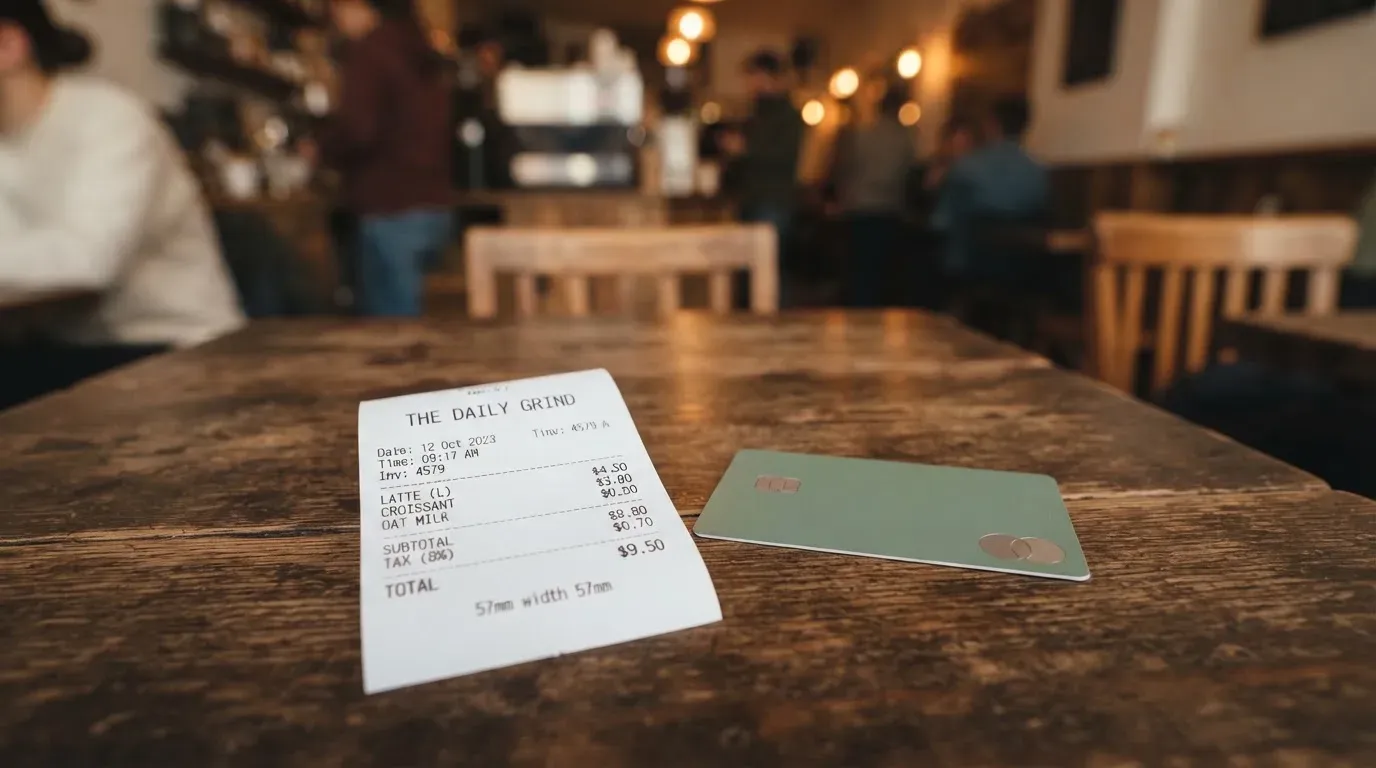
Here is the honest cost picture. Where HexaCard publishes a number, I give the number; where it publishes only a phrase, I say so rather than guess.
| Fee or limit | What HexaCard states |
|---|---|
| Issuance — virtual | $14.99, plus $10 initial top-up ($24.99 to start) |
| Issuance — physical | $29.99, plus $10 initial top-up ($39.99 to start) |
| Monthly fee | Not stated |
| Crypto conversion fee | “Various and low fees” — amount not stated |
| Foreign-exchange (FX) fee | Not stated; which currency the card is denominated in is also not stated |
| ATM fee / withdrawal allowance | Physical cards can withdraw at ATMs worldwide — fee and allowance not stated |
| Daily limit | Not stated |
| Monthly limit | Not stated |
| Card replacement | $15 or $25, according to user reports (not an official published figure) |
| Top-up fee | “Various and low fees for charging” — amounts not stated |
To make that concrete, here are three everyday payments and which fees actually bite.
- Buying something online in the same currency the card holds. The merchant charge itself is the cost. If no conversion happens, you avoid the conversion and FX fees — which is exactly why you cannot skip the currency question: the card does not say which currency it holds, and the FX fee if you spend across currencies is not stated.
- Paying a bill or subscription in a different currency from your balance. This is where the unquantified conversion and FX fees hit you. You are told they are “low,” but “low” is not a rate, and the card does not publish the percentage.
- Taking cash out at an ATM with the physical card. Withdrawals are supported worldwide, but the per-withdrawal fee, the daily and monthly cash allowance, and whether the ATM’s own surcharge applies on top are all unstated.
The two “$10” details deserve a note, because they are not consistent. The home page says a $10 initial top-up is required, but the FAQ says “The minimum amount to top up your balance is $20.” Two official pages, two different minimums. Which one applies to you at the moment you try? The card does not reconcile this. Add to that the missing monthly fee, the missing FX rate and the missing ATM terms, and the true running cost of a HexaCard is something you discover by spending money, not by reading the price list.
How to Top up HexaCard
Topping up is the part of HexaCard I like most, and the part with the sharpest edge. The card accepts USDT, ETH, BTC, LTC, SOL and more in cryptocurrency, and fiat through Apple Pay, Google Pay, Visa and Mastercard. The FAQ also lists bank cards, direct transfer, wire transfer and cryptocurrency as deposit methods, “depending on region.” So on the surface the funding menu is the widest part of the product.
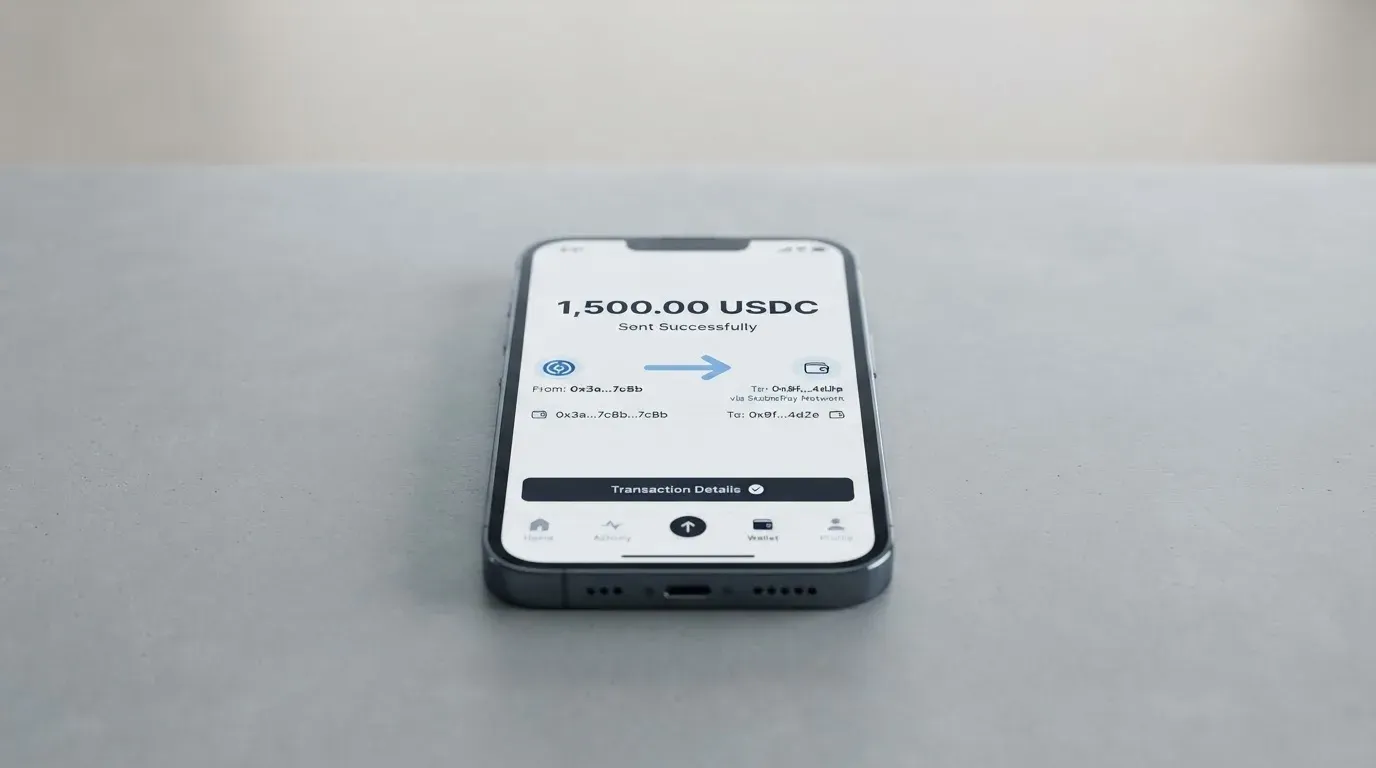
The edge is the network. For every crypto deposit you make a choice that the card does not help you with: the networks are not specified. When you send crypto, the network you pick must match what the provider supports, and blockchain transfers are irreversible. Send an asset on a network the card does not support, or to an address belonging to another network, and the deposit can be lost or need manual support recovery — with no guarantee. This is the single most common way people lose money with crypto cards, and HexaCard makes it harder by not naming the supported chains up front. It also does not state who pays the network fee (gas) for your deposit; that is charged by the blockchain, not by the card provider, so be aware it comes out of your deposit on top of the card’s own “low” fee.
The fiat route is more forgiving but region-dependent: which deposit methods are live “depends on region,” and the card’s own Trustpilot replies acknowledge that some top-up methods may be limited by region. One more boundary: the card states the card fee cannot be refunded after purchase, and it does not publish a process for withdrawing your balance back to crypto or to a bank account. So the money goes in easily; getting it back out again is a question the public pages leave open.
Paying with it every day
Day-to-day use is the HexaCard’s middle ground — workable, with some gaps.
The cards and cash. You get a virtual card and a physical card, and the physical one works at ATMs. Cashback is offered on physical cards only, for Spotify, Steam and Google Play Store — but the cashback rate is not stated, so I cannot tell you whether it is worth redirecting your spending. That is a shame, because it is the sort of perk that, if real, could soften the costs above.
Wallets. Apple Pay and Google Pay are mentioned on the site, but in the context of topping up, not clearly as a place to add the card itself. Whether you can provision the HexaCard card number into Apple Wallet or Google Wallet is not stated. If “add HexaCard to Apple Wallet” is on your list, the card does not confirm it works.
At the checkout. Merchants can look up a card’s BIN to see which institution and country issued it, and some apply extra scrutiny — or decline the payment — when the issuer country differs from your billing address. This is the general reason a prepaid or foreign-BIN card can fail at a shop that would happily take a local card, and it applies to HexaCard like any other. The card does not publish a list of blocked merchant categories (gambling, for example, is blocked on many cards by policy), so you do not know in advance what will be refused. On a declined online payment, 3-D Secure may step in with a one-time code; a declined authorisation can also leave a temporary hold on your funds that lingers for several days. Between the foreign-BIN lookups, the unstated blocked categories and the 3-D Secure prompts, expect the occasional failed payment and treat it as a cost of using this card rather than a sign it is broken.
If something goes wrong with a charge, the User Agreement (last updated 4 January 2024) sends disputes first to an informal resolution stage with a 30-day window, and then to binding individual arbitration under AAA rules in New York, with no class actions — and you can opt out within 30 days of accepting. During a third-party provider’s disruption, the agreement says refunds “cannot be processed.” Time frames for chargebacks are not stated. This is a lot of structure to lean on when the thing that actually matters — getting your money back — is what the complaints say is hardest.
What can go wrong
This is the section that pulls the score down, so I will not soften it.
The complaint record is bad and specific. On Trustpilot, HexaCard has a TrustScore of 2.0 from 17 reviews, with 82% one-star. The recurring themes, spanning late 2025 into 2026, are: cards or balances blocked or closed and top-ups failing; support going silent for weeks; funds caught up in a dispute involving the Turkish issuer and Papara, with reported individual losses of roughly $60–$100; being charged $15 or $25 for a replacement card; and a burst of ten five-star reviews within hours that one reviewer suspected were fake. The company replies to 61% of negative reviews. On the company’s side, it has said the Turkish-linked issue is “not directly controlled by us” and blames decisions by Turkish authorities — a claim that remains unverified — and more recently that the Turkey/Papara disruption is on the provider’s side, with restoration dependent on that provider.
The company and issuer are not clearly named. No company name, issuer or licences appear on the pages a normal user reads. The User Agreement names “Hexacard Business Corporation” under New York law, and the Card Agreement points to a “Celtic Bank Privacy Policy” for issuer data without naming the issuer directly; the contact address is in Manchester, UK. The App Store seller is shown (via a third-party source, so unofficial) as TransferEasy Limited. An unofficial listing, a New York corporation, a privacy policy from a named bank, and a UK contact address — that is a lot of pieces, and not one clean, verifiable chain telling you exactly who is issuing your card and under whose licence. No licences are claimed on the pages I read, and I found no regulator warning against the company — but the absence of a warning is not the presence of a licence.
Custody is not stated. Whether your balance is custodial or self-custody is not clarified. That matters more than it might sound. With a custodial wallet, the provider holds the credentials and you must trust them completely; custodial platforms have a real history of failure (Mt. Gox, Coincheck, Ronin). With self-custody you keep sole responsibility for key loss and scams. The card says transactions are monitored “24/7” and that 3-D Secure codes come via app or SIM, and a testimonial says a card can be deactivated in the app — reassuring gestures, but they do not tell you who actually holds the funds. Safeguarding and insurance are not stated.
The card can be restricted, and balances can get stuck. The Card Agreement says limits are set by the account holder’s administrator or by Hexacard, with no amounts published. It also says Hexacard may cancel or restrict a card at any time, that some cancellations are “automatic and irreversible,” and that cards are auto-cancelled after six consecutive failed transactions or three consecutive failed withdrawals. What happens to your balance when a card is closed is not explained. That is the scenario the complaints describe: a card closes, the balance shows 0.00, and support goes quiet.
Where the money actually sits. Prepaid and e-money funds are not the same as bank deposits. Where a provider is an electronic money institution, it must safeguard customer funds by segregating them or insuring them, but such funds may not sit under a deposit-guarantee scheme. HexaCard does not state which regime applies to it, so you should not assume your balance is bank-protected just because it spends like a bank card. Nor should you assume crypto transfers are censorship-proof — stablecoin issuers do disable tokens and freeze funds tied to illicit activity, which is another reason a balance parked in a card provider can be affected by decisions above your head.
Set against that: the card itself cannot promise safety or anonymity, and nothing here is advice on how to get around identity checks, sanctions or country rules. Identity checks are part of how these products are regulated, and I have no interest in helping anyone route around them. If you use a crypto card, use it openly and within the rules that apply to you.
What to take instead
If you are deciding between prepaid crypto cards, HexaCard is not alone, and the alternatives below have their own trade-offs. None is perfect; the point is to compare rather than default.
| Card | Score | Who it targets | Cost | Networks / networks support | Fees & rewards |
|---|---|---|---|---|---|
| HexaCard | 4.6 / 10 | Six named countries: Georgia, Canada, Germany, UK, Turkey, US | Virtual $14.99 + $10; physical $29.99 + $10 | USDT, ETH, BTC, LTC, SOL and more; networks not named | Fees “various and low”, unquantified; cashback on physical for Spotify/Steam/Google Play, rate not stated |
| Cardex | 5.6 / 10 | “One crypto card, 200+ countries” | Not stated | Debit card on VERVE, Visa, Mastercard, UnionPay; virtual and physical; app listing is Naira-focused | Real-time crypto-to-fiat conversion at payment, “AI-Powered Conversion Rate”; no fee % stated; rewards not stated |
| CardFlow | 4.9 / 10 | “Nigeria’s smartest fintech card platform”; Nigerians and global users | Virtual card free to create; monthly fee not stated | Virtual USD Mastercard in about 3 minutes; funded with BTC, USDT, ETH or Naira bank transfer; networks not named | Fees not stated; rewards not stated |
| HyperCard | 4.7 / 10 | Official pages list no country; app says works in “more than 176 countries” (acceptance, not eligibility) | Not stated; app lists no fees | Prepaid card, network not stated on app page; balance in USD or EUR; fund with USDT, BTC, ETH in the app; networks not named | Fees not stated on readable pages; rewards not stated |
A few honest comparisons. Cardex scores slightly higher and is the most interesting of the four: it is described as a debit crypto card across the big networks plus VERVE and UnionPay, with virtual and physical options, and it converts crypto to fiat in real time at the moment of payment, claiming to pick the best rate. Its own gaps mirror HexaCard’s — fees are not quantified, networks are not named, and the app is Naira-focused — but “200+ countries” is a broader stated reach than six, and a real-time conversion model is worth understanding before you commit. CardFlow is built around Nigeria: a free-to-create virtual USD Mastercard, funded with crypto or a Naira bank transfer, created in 3 minutes. That is a narrower, clearer proposition, and “completely free” to create is one of the few unambiguous cost statements in this whole category. HyperCard is a prepaid card in USD or EUR funded with crypto in the app, marketed as accepted in “more than 176 countries” — but note that is acceptance, not a promise you are eligible, and its app page names neither a network nor any fee.
Across all four, the pattern is the same and it is worth naming: almost none of them publish what you actually need to predict your cost — FX rates, monthly fees, limits — and most leave the crypto networks unnamed. That is a property of this corner of the market, not a HexaCard failing alone. So when you compare, do not just compare scores; ask each provider the four questions this review kept failing to get answered: what is the FX fee, what are the limits, which networks do you support, and who is the issuer?
Who I would recommend it to
After reading everything above, here is who I would actually hand this card to, and who I would not.
I would recommend HexaCard to someone in Georgia, Turkey or Canada who needs a working prepaid card quickly, is comfortable topping it up with a stablecoin like USDT, and is treating it as a disposable spending tool rather than a place to keep money. If your plan is: load a modest amount, spend it, understand it may not always work at every till, and you have another way to pay — that is a defensible use of this card.
I would not recommend it as your only card, and I would be cautious recommending it at all if you fall into any of these groups: you need published fees and limits before committing money; you are holding a meaningful balance you cannot afford to have frozen; you need to know exactly who issues the card and under which licence; you are in a region where the Turkey/Papara-style disruption might reach you; or you are planning to rely on chargebacks, which route you into arbitration with no clear time frames. The 2.0 Trustpilot score, the “not directly controlled by us” defence, and the unnamed issuer are not abstractions; they are reasons to keep your exposure small.
The bottom line: HexaCard is a competent top-up-and-spend tool wrapped in thin disclosure and unresolved regional risk. It scores 4.6 / 10 not because the idea is bad, but because the information you need to trust it is the information it withholds. If you proceed, keep the balance small, prefer the coins and networks it clearly supports, and treat it as one card among several — not your financial foundation.
Frequently asked questions
What is HexaCard?
HexaCard is a prepaid payment card that you load with cryptocurrency or fiat and then spend at ordinary merchants. It comes in virtual and physical versions running on Visa, Mastercard or American Express networks, and the card supports many currencies. You are spending a balance you have already funded, not drawing on a bank account. It is a spending tool, not a bank, and not somewhere to hold savings.
How does HexaCard work?
You buy either a virtual card ($14.99) or a physical card ($29.99), add an initial top-up, and load the balance — with crypto such as USDT, ETH, BTC, LTC or SOL, or with fiat via Apple Pay, Google Pay, Visa or Mastercard. The card then spends that balance at shops, online, and (physical card) at ATMs. Behind the scenes your card number is looked up by merchants to identify the issuer, which is why acceptance can vary by country.
Is HexaCard a bank?
No. HexaCard is a card programme, not a bank account. The User Agreement names “Hexacard Business Corporation” under New York law, and the issuer is not named directly on the pages a user reads. A prepaid card draws on a balance you have loaded; it does not give you a bank account or deposit protection. Treat the balance as money sitting with a provider, not in an insured account.
Who owns HexaCard?
The card’s own pages do not clearly name a single owner. The User Agreement names “Hexacard Business Corporation” (New York law), the Card Agreement refers to a “Celtic Bank Privacy Policy” for issuer data, and the contact address is in Manchester, UK. The App Store seller is shown, via a third-party source, as TransferEasy Limited. These pieces do not form one clean, verifiable chain of ownership. No licences are claimed on the pages I read.
Is HexaCard available in my country?
The official FAQ names six countries: Georgia, Canada, Germany, the United Kingdom, Turkey and the United States. The site also claims “over 25 BINs in various GEOs,” but that is a statement about card infrastructure, not an eligibility promise. If your country is not on the six-country list, the card does not publish whether you can register, so you would have to try. Availability in a country and eligibility to open an account there are two different things.
Does HexaCard require KYC?
Yes, to the usual extent. The Card Agreement says HexaCard asks for your name, street address, date of birth and other identifying information, and may request a driver’s licence or other ID documents. The specific KYC levels, how long processing takes, and why an application might be rejected are not stated. I am not going to explain how to get around identity checks — they are part of how these services are regulated.
How much does HexaCard cost?
A virtual card is $14.99 plus a $10 initial top-up ($24.99 to start); a physical card is $29.99 plus a $10 top-up ($39.99 to start). Beyond that, the monthly fee is not stated, and conversion and FX fees are described only as “various and low” without amounts. There is also an inconsistency on the minimum top-up: the home page says $10, the FAQ says $20. So the running cost is something you discover by spending, not by reading.
How do I top up HexaCard?
You can top up with crypto — USDT, ETH, BTC, LTC, SOL and more — or with fiat through Apple Pay, Google Pay, Visa and Mastercard; the FAQ also lists bank cards, direct transfer and wire transfer “depending on region.” One important caution: the supported blockchain networks are not specified. Sending an asset on the wrong network, or to an address for a different network, can lose the deposit, because crypto transfers are irreversible.
How do I add HexaCard to Apple Wallet or Google Wallet?
The card’s site mentions Apple Pay and Google Pay, but in the context of topping up with fiat — not clearly as a way to add the card itself to a phone wallet. Whether you can provision the HexaCard card number into Apple Wallet or Google Wallet is not stated. So I cannot confirm wallet provisioning works; check inside the app when you sign up, and treat the feature as unconfirmed until you see it.
Is HexaCard safe to use?
It is usable, but I would not call it low-risk. Custody is not clarified, the issuer is not clearly named, and safeguards or insurance are not stated, so you cannot confirm your balance is protected the way a bank deposit would be. The Trustpilot record is poor (2.0 from 17 reviews, 82% one-star), with reports of closed cards, zeroed balances and silent support, many tied to a Turkey/Papara dispute. Use it for small, disposable spending — not as your only card.
How do I withdraw money from HexaCard?
Withdrawals at ATMs are supported on the physical card, worldwide. But how to get your balance back out to crypto or to a bank account is not stated on the public pages. The Card Agreement also says the card fee cannot be refunded after purchase, and Hexacard may cancel or restrict a card at any time, sometimes automatically and irreversibly. So do not load more than you are comfortable having locked in the card.
Virtual card fees – cryptocardfacts
Content created by the «cryptocardfacts» team