
The Ledger-branded card is neat for people already holding crypto. Everyone else should read the fee table twice.
 Available in US

The CL card is a spending card that draws on a crypto balance, sold under the Ledger brand and managed inside the Ledger Wallet app. If that sentence sounds circular to you, it is worth reading on: the card is not really a bank account, and the crypto does not sit on the card. You keep control of the coins, and the card converts value as you spend. That is the whole idea, and it is either exactly what you want or completely beside the point for how you live.
My verdict up front: 6.9 out of 10. That is not a grade of failure. It is a card with a genuinely good idea, a weak fee picture, thin documentation, and a real pile of unresolved complaints. Let me show you the parts before I ask you to decide.
The information below reflects the card’s stated conditions as of October 28, 2026.
The score, broken down
| Criterion | Mark | Why |
|---|---|---|
| Who can get it | 7 / 10 | Available in the EEA, the UK, the US, Canada, Switzerland, Colombia, Mexico and Brazil; the excluded countries are not named |
| Cost | 7 / 10 | Virtual card is free, servicing is 0 EUR, foreign-currency payment is 0%, card replacement 5 EUR, cash machine outside the UK 3 EUR plus 1.5%; unofficially, conversion 1.75% and FX 1.75% |
| Top-up options | 7 / 10 | BTC, ETH, SOL, stablecoins and more, from a signing device; the networks are not named |
| Reliability and complaints | 5 / 10 | Baanx programme, Ledger SAS brand, issuers UAB Monavate, Monavate Ltd and Cross River Bank are named; Trustpilot 3.0/5 from 263 reviews, 35% one-star, account restrictions without warning |
| Everyday use | 9 / 10 | Free virtual card, Apple Pay and Google Pay, cash withdrawal at ATMs worldwide; unofficially, a physical card on request |
| Total | 6.9 / 10 |
Two of those marks deserve a word now, before the sections fill in the detail. The everyday-use score is the highest thing about this card, and it is high for a reason that has nothing to do with crypto: a free virtual card in a wallet you already manage, tap to pay, cash out when you need it. The reliability mark is the lowest, and it is not a rounding error — it is the number I would most want a person to sit with before opening the app.
The audience note in my own words: this is a card for Ledger owners who already spend crypto from a hardware wallet. If you do not own a hardware signer, one whole dimension of the appeal is missing, because the card’s defining safety property is that your keys never leave your device. If you are looking for a plain debit card with a crypto top-up option, this is the wrong shape of product.
Will they give you the card
They will if you are in one of the places the card names. The card’s own page says it is “currently available in the EEA, the UK, the US, Canada, Switzerland, Colombia, Mexico, and Brazil”. That is eight regions, which is broad for a crypto card.
Now the question a reader actually has, which is narrower than it sounds: does it depend on where you *live* or where you are a *citizen*? The card’s public pages do not say. I want to be plain about that rather than guess. What they also do not say is which countries are excluded. Those two omissions are the ones to watch, because a card that lists its eligible regions without listing its excluded ones leaves the unhappy surprise entirely in the future.
There is one further wrinkle I can only pass on from a third-party source. Unofficial material and reviewer comments — not the card’s own pages, and not confirmed by Ledger — say that identity checks are handled through a provider called Veriff. That detail comes from a company-side reply on Trustpilot and a one-star reviewer’s account in 2026. Treat it as a signpost rather than a specification. Also unofficial: reviewers in October 2026 describe being asked for utility bills and tax returns after their accounts had already been restricted. Whether that is standard practice or a response to a specific trigger, I cannot tell you from what the card publishes.
Why does any of this matter to you so much? Because these cards sit inside anti-money-laundering law, and that law has teeth. Under EU rules, customer due diligence covers your name, address, date of birth, nationality and identity document, plus a sanctions check and a politically-exposed-person determination. In the US the customer identification programme requires name, date of birth, address and an identification number, with electronic systems also checking proof of address. Nationality is recorded and screened separately from residence, because sanctions screening and issuer risk policy are applied to citizenship and country of birth as well as to where you live. If the checks cannot be completed, EU rules require the institution to refrain from the transaction or the relationship, and where necessary to end an existing one. That is the mechanism behind the account-freeze stories I come back to below.
How to get it
The card page is short, and the honest summary is that it tells you less than you would expect.
A free virtual card is listed. A physical card is not mentioned on that page. For the US card it is described as a Visa debit card; for other regions the card page does not specify Visa or Mastercard. The crypto is converted to fiat at the time of purchase — not held as crypto on the card, but drawn down as you pay.
On what the paperwork says about joining: the KYC level is not stated on the page. I did not read the US account-opening disclosures PDF or the full cardholder terms, so I am not going to paraphrase them for you. What the public page does not give you is the document list, the verification levels, or how long approval takes.
Where I can be concrete is the money side of the fee information document: issuing a debit card is EUR 0.00, replacing a debit card is EUR 5.00, and cancelling a card is EUR 3.50 if cancelled within the first 14 days after a card was ordered. Delivery countries and delivery time are not stated.
So the short version of “how to get it”: the card is managed through the Ledger Wallet app, and the application itself goes through the app rather than a branch or a paper form. The card page mentions only the free virtual card. Unofficially, per a third-party review site dated 3 August 2026, a physical Visa-branded card is “available upon request” and the virtual card is issued instantly through Ledger Live, with Apple Pay and Google Pay supported. Nothing in that contradicts the official page — it sits alongside it — but it is not the card speaking.
If your question is “can I activate it and start paying today”, the parts I can confirm are the virtual card and the mobile wallets. Everything beyond that — physical delivery, activation steps, time to first payment — is not on the public page, and I would rather say so than narrate a process the card has not published.
Fees: what it really costs
This is the section I would read twice if I were you, because the fee story here has three layers that do not agree with each other.

The official layer comes from the fee information document issued by UAB Monavate, dated 03/11/2023:
| Item | Fee |
|---|---|
| Monthly maintenance | EUR 0.00 |
| Debit card payment in a foreign currency | EUR 0.00 plus 0% of the transaction value |
| Debit card payment in pounds | EUR 0.00 (the document mixes pound and euro wording) |
| Replacement card | EUR 5.00 |
| Card cancellation | EUR 3.50 within the first 14 days after ordering |
| Cash withdrawal in pounds in the UK | EUR 2.50 per withdrawal |
| Cash withdrawal in foreign currency outside the UK | EUR 3.00 plus 1.5% of the transaction value |
| ATM balance enquiry | EUR 0.35 |
The unofficial layer, from a third-party review site dated 3 August 2026: crypto-to-fiat conversion at 1.75% on a manual conversion, 2% on a crypto-funded card spend, and an FX fee of 1.75% on non-base-currency transactions. The same site’s overview lists a flat 1.5% ATM fee instead of the EUR 3.00 plus 1.5% above, and another aggregator snippet lists a 1.5% FX surcharge.
And that unofficial layer sits in direct tension with the official one. The 2023 fee document says 0% on foreign-currency payment; the third-party numbers say 1.75%. Both cannot be current. I am not going to resolve it for you by picking whichever I find more plausible — the 2023 document is old, and fee documents do get replaced, so the most likely reading is that the third-party figure is closer to what you would actually pay today. But “most likely” is not the same as “confirmed”, and a 1.75% foreign-exchange fee on every foreign purchase is a real number on real spending.
What makes this more awkward is that the card page itself says nothing about fees or limits. It points to the fee information document at the company’s legal pages instead. The full breakdowns live in two places: the CL platform fees page for the European side and the US customer fees page for the American one. A reader who wants the real figure has to go and read a document dated 2023, and then reconcile it with a review site.
Now let me walk three ordinary payments through it, because that is where fees stop being abstract.
A coffee in your home city. Suppose you are paying in the card’s own currency, with no conversion and no foreign exchange. The foreign-currency line is 0%, monthly servicing is EUR 0.00. The cost here is not the card’s fee — it is the crypto-to-fiat conversion that happens at the moment of purchase. If the unofficial 1.75% manual conversion figure is the one that applies to your route, that is what you pay for the coffee. On a small purchase it will round away to nothing; on a large one it will not.
A meal abroad, or an online purchase in dollars. Here the official document says EUR 0.00 plus 0% of the transaction value, and the unofficial sources say 1.75% FX plus, on the crypto-funded route, a further 2%. On a EUR 100 dinner those two scenarios differ by something in the region of EUR 3 to EUR 4. This is exactly the transaction where the difference between the two versions of the fee document actually costs you something.
Cash from a machine in Spain. Foreign currency outside the UK: EUR 3.00 plus 1.5% of the transaction value, per the official document, with an ATM balance enquiry at EUR 0.35 if you check your balance first. So EUR 100 in cash costs EUR 3.00 plus EUR 1.50. The unofficial source agrees on this one. Note also that you can “withdraw local currencies at ATMs worldwide” as the card puts it, but the fee and any free allowance are not stated on the card page.
One more thing that belongs in this section because it affects cost: spending limits. The card page does not state them. Unofficially, one site dated 3 August 2026 gives a monthly spending cap of $15,000 and a daily ATM cap of $500, while another review site, undated, gives a default daily point-of-sale limit of EUR 15,000, a daily ATM limit of EUR 2,000, an initial cap of EUR/$1,000 until extra proof of funds is approved, and manual review for single top-ups or withdrawals of EUR 10,000 or more. Those two sources disagree with each other, and one of them is undated. Treat both as questions to ask the company, not as facts to plan around.
There are no tiers. It is a single card, and “free virtual card” is the only version described.
Top up: how the money gets in
The card is topped up with crypto, not with bank transfers. The card states it takes “BTC, ETH, SOL, stablecoins and more”. The networks are not named, and that omission is worth pausing on, because network choice is not a detail here — it is the difference between a working deposit and a lost one.
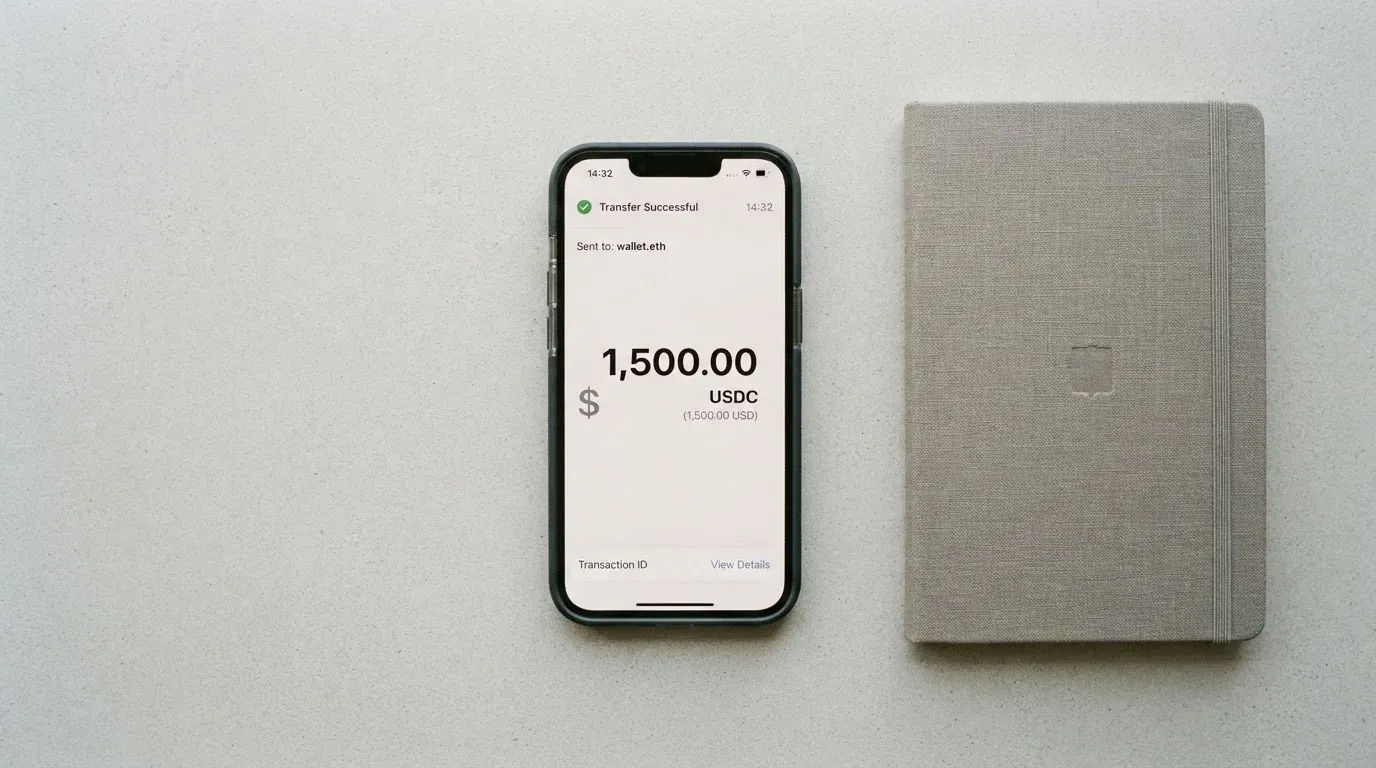
How it happens: the funding is signed by a Ledger device through the Ledger Wallet app. This is the part that makes the card different from most of its category. Most crypto cards take your coins onto their own books and hope you trust them; here the card never holds the private key, because the signature happens on your hardware. The card’s page says the crypto is “protected by the industry’s leading hardware and software” when used with a Ledger signer. Self-custody as a formal feature is not stated — but that is what the signing device does in practice.
On fees for loading: the fee information document’s “Receiving money” lines read “Not applicable”. The crypto top-up fee and the minimum top-up are not stated.
Taking money back out: bank or crypto withdrawal of a balance is not stated. What is stated is that you can “withdraw local currencies at ATMs worldwide”, and the fee information document confirms monthly maintenance at EUR 0.00. What happens to a balance if you close the account — the closure payout — is not stated either.
And here is the practical warning that follows from the network question above. Blockchain transfers are irreversible. A deposit sent on a network the card provider does not support, or to an address belonging to a different network, can be lost, or need manual support recovery with no guarantee attached. Before you send anything, the network has to be right. That is not a formality; it is the most common way money disappears in this whole category.
If you want to understand why the network choice is so load-bearing, it helps to know that gas on Ethereum is paid only in ETH, so a wallet holding USDT with no ETH cannot send. That is a small illustration of a general point: the mechanics differ per network, and the help pages assume you know them.
Paying with it every day
The everyday-use mark of 9 out of 10 is the one I am most confident in, and it is the easiest part of this card to like.
- Apple Pay and Google Pay are supported.
- A free virtual card, usable without a physical card in hand.
- Cash withdrawal at ATMs worldwide.
- Rewards: “1% cashback in BTC or USDC in the US and 1% cashback in BTC or USDT, in other countries”, calculated monthly on total card transactions.
That cashback detail is the quiet best feature of the card, and almost nobody will find it. Spending money, and getting part of it back in crypto, means the card pays for itself in a way that a pure conversion card does not. Whether the 1% survives the unofficial 2% crypto-funded spend fee is the question I would put to the company, because if you net 1% back against a 2% cost, you are still losing money, just more comfortably.
Everything is managed in the Ledger Wallet app. Platforms and app ratings are not stated on the card page, which is a strange omission for an app-centred product.
Not stated on the pages I read: blocked merchant categories, and how disputes work. I did not read the cardholder terms PDF, so I will not guess at either. If a dispute is something you care about being covered for, that gap is exactly where to look first.
Two everyday friction points come from the category rather than from this card, and they are worth knowing so you do not blame the card for them. A declined authorisation can leave a hold on your money for several days — typically up to seven. And some merchants simply decline prepaid or foreign-issued cards, because the card’s first six or eight digits identify the issuing institution and country, and a card issued in one country can look foreign to a shop in another. Address verification also matters: the system that compares the street number and postcode you type against issuer records is mainly offered in the US, Canada and the UK, and is generally unavailable for foreign-issued cards — which can cause declines. None of that is CL’s fault specifically. All of it is what using a crypto card feels like on an ordinary Tuesday.
What can go wrong
This is the section where I slow down.
First, the structural picture, because complaints make more sense when you know who is who. The card is provided by Baanx. The brand belongs to Ledger SAS, based in Paris, France. EU cards are operated by UAB Monavate, UK cards by Monavate Ltd, and the US Visa debit card is issued with Cross River Bank, a Member FDIC. That is a real chain of named, licensed counterparties — several of which you could, in principle, hold responsible, which is better than the usual arrangement where the brand is a front end and nobody is answerable.
Second, and this is the part that matters most: self-custody is not stated as a feature, and the page says nothing about card freeze or two-factor authentication. Those absences are worth noticing given what the card is for.
Third, the complaints. Official incidents: none found. That is worth saying because it is genuinely different from the opposite finding. But user reports are another matter, and I will not soften them.
Trustpilot for CL Card, as I read it on 20 October 2026, sits at 3.0 out of 5 from 263 reviews, with 35% one-star. My own earlier reading of the same page, in the days around it, put it between 3.5 and 4 out of 5 from 247 to 256 reviews — so the score moves, which is normal for a live page and worth keeping in mind. The themes that repeat: accounts disabled or restricted without warning, followed by requests for documents — cases from May to October 2026 with funds held for weeks. Withdrawals delayed, from roughly 15 hours to a week across April to June 2026, and about 1,990 USDT unavailable after a “maintenance” notice in October 2026 before being received. Card and app failures, including UK customers unable to get replacement cards in September and October 2026. Slow, templated support across May to October 2026. Reviewers making insolvency claims in May and September 2026, which remain unverified. And a July 2026 loss of 15,300 XRP from a memo or tag error — which is the most instructive item in the list, because it was not the company’s fault and still cost the user everything. The company replied to 31% of negative reviews.
Now, a claim I want to handle carefully because it is easy to pass on uncritically. A Chinese-language aggregator site is the single source for a claim that Baanx and Monavate entered insolvency proceedings in April to May 2026. That claim is uncorroborated. Another source, dated 3 August 2026, shows no insolvency or enforcement news. I am not going to tell you it is true, and I am not going to tell you it is false — I am telling you that a single unverified source repeating something alarming is exactly the kind of thing that travels fastest and settles slowest. Treat it as unverified.
There is also a Reddit thread, undated, where people say Baanx can block the card balance. That is anecdotal, but it is consistent with the Trustpilot theme of frozen or unreturned funds — including a reviewer who could not withdraw XRP after a month of emails.
Where does this leave you? The category has form for this. A card programme closure typically gives notice, then stops spending and loading, then asks users to withdraw remaining balances. One 2026 closure reported by a secondary source ended new loads on 8 July 2026 and spending on 8 August 2026. That is what a closure looks like in practice, and it is the reason to keep a working balance somewhere else.
Support itself: a Ledger Help Center article called “CL Card FAQs” plus general Ledger support. Languages and hours are not stated. Slow templated replies are among the most common review themes, which is worth knowing if you are the kind of person who needs a human on a bad day.
One reassurance that is real, and narrow. Electronic money institutions must safeguard customer funds, by segregating them in dedicated accounts or insuring them — but such funds are not the same as bank deposits and may not be covered by a deposit guarantee scheme. That is a fact about the structure, not about how well Baanx or Monavate are currently doing.
What to take instead
I want to be useful here rather than fair-to-a-fault. Three cards come up repeatedly when people compare, and each fails differently.
MetaMask Card — 7.1 / 10, the highest-scoring of the three. Sign-up is open in 45 listed countries and territories, with proof of residency required; other regions join a waitlist, and ineligible regions limit sign-ups rather than spending. The citizenship rule is not stated. US and UK sign-ups are temporarily closed per the FAQ. It is a Mastercard; a virtual card is issued instantly first, a metal card can be pre-ordered in the app after that approval, and it is one card per user. Issuer Monavate, card provider Crypto Life. The virtual card is free with no annual or maintenance fee; the metal card is $199 a year. Fees are described as a “minimal fee for each transaction” with the amount not stated on the pages read, no additional MetaMask fees, no foreign transaction fee, and the Mastercard rate used. It spends directly from the connected wallet, on Linea, Base, Monad and Solana, with tokens including mUSD, wETH, EURe, GBPe, USDC and USDT — the page says nine. Cashback is paid in mUSD: 1% on Virtual, and for Metal a headline 3% limited by a footnote to the first $10,000 spent and 1% after that, plus a $FLY bonus of 5X or 7X via the Blackbird dining app.
KAST — 6.1 / 10. The country list is not published, though a Restricted Locations list is referenced without names, and it does publish an unusually honest citizenship rule: if you live in a supported country but hold an ID from a restricted region, you may still be ineligible; dual citizens with an ID from a supported country may pass; only the account holder’s own ID is accepted; VPN does not bypass. An account can be created in an unsupported country but KYC stays locked. It offers virtual and physical cards, up to ten per user, in Visa Platinum, Visa Infinite metal, Visa Infinite gold-plated and themed designs, with the balance in USD and stablecoin deposits converted 1:1 at 0% spread. The pricing is the differentiator: Standard 0 USD a year, Premium 1,000 USD a year, Private 10,000 USD a year, billed annually upfront; extra virtual card 2 USD; Standard physical card 0 USD card fee plus 40 USD delivery; an inactivity fee of 1 USD a month after 12 months. Fees: stablecoin top-up 0%, USD card spend 0%, transaction fee 0%, Apple and Google Pay 0%, non-USD FX 0.5% to 1.75% depending on where you live, where the transaction happens and which programme; 0.10 USD on non-USD transactions under 25 USD; 0.50 USD for a declined transaction on insufficient balance. Cashback runs 1.5% on the first 2,000 USD a month at Standard, 2% on the first 10,000 at Premium, 3% on the first 40,000 at Private, plus KAST Points of none, +1% or +2%.
TokenPocket — 5.8 / 10. Visa debit across a list of European countries and territories, Mastercard debit for Australia, Canada, Hong Kong, Japan, Taiwan, New Zealand, Singapore, South Korea and the UK, with the Americas “planned for Q2 2025”. It runs on Arbitrum, the cards are virtual, and balances are in EUR24 and USD24. There is an NFT creation fee partly covered by TokenPocket where the user pays “a small portion”, and the card itself charges nothing additional. But a 1% fee is charged when depositing cryptocurrency, to be refunded later through rewards or reduced transaction fees. It takes deposits from the TokenPocket wallet, with specific coins and networks not listed in the FAQ.
| CL | MetaMask | KAST | TokenPocket | |
|---|---|---|---|---|
| Score | 6.9 / 10 | 7.1 / 10 | 6.1 / 10 | 5.8 / 10 |
| Card | Virtual free (US: Visa debit) | Virtual free, metal $199/year | Virtual and physical, up to 10 | Virtual |
| Cashback | 1% in BTC, USDC (US) or USDT (elsewhere) | 1% Virtual in mUSD | 1.5% / 2% / 3% by tier | None stated |
| Crypto source | BTC, ETH, SOL, stablecoins, via Ledger signer | Connected wallet: Linea, Base, Monad, Solana | USDT, USDC, PYUSD, RLUSD | TokenPocket wallet |
| Main catch | 3.0/5 on Trustpilot, 35% one-star | Fee amount not stated; US/UK sign-ups closed | $1,000/year for Premium | 1% deposit fee |
Read that table one way and a picture emerges. KAST publishes the most complete fee schedule of the four and the clearest rules about who qualifies — and charges heavily for its upper tiers. MetaMask publishes the least about its transaction fee but has the best score and a spend-from-your-own-wallet model that is structurally closest to CL. TokenPocket sits lowest and asks for a cut on the way in. CL is the only one of the four that ties you to a hardware device, and that is simultaneously its best security property and its most serious lock-in.
If you are comparing on cashback alone, KAST wins at the top tier by a distance that has nothing to do with crypto. If you are comparing on freedom from the vendor, MetaMask is the better fit.
Who I would recommend this to
To the person already holding a Ledger device who pays in crypto on a weekly basis, travels occasionally, and has read the limits section and accepted the complaint history. The 1% cashback, the free virtual card, Apple Pay, and the fact that your keys never leave your device make this a good companion card for spending — and “companion” is the right word, because I would not make it your only card.
I would not recommend it to you if any of these are true. You need a card you can rely on when your balance is restricted, because that is precisely the scenario the reviews describe. You want a physical card in the post and the card page does not promise one. You are outside the named regions, or your citizenship rules are unclear to you, because the card does not settle the question and the excluded-country list is not published. You are planning a large foreign purchase and cannot resolve whether the foreign-exchange fee is 0% or 1.75%, because on a large purchase that gap is real money. Or you want one card for everything, because 3.0 out of 5 from 263 reviews with 35% one-star is not a foundation for that.
If you own no hardware wallet at all, keep reading past this card. The thing it does best — spending from coins only you can move — is the thing you currently cannot do, and there are other ways to do it.
One last structural point, which is not tax or legal advice but is the kind of thing people forget until the statement arrives. The IRS treats digital assets as property, so exchanging them for goods, services or dollars generally produces a taxable gain or loss. For personal holdings the result is a capital gain or loss, short-term if held a year or less, and the gain is measured in local fiat currency using the fair market value on the date of the transaction. That last clause means every card payment funded from crypto may be its own separate disposal. Work out what your own rules require with a qualified professional.
Frequently asked questions
What is the CL card?
The CL card is a payment card sold under the Ledger brand that spends from a crypto balance. You keep the crypto in your own wallet, and the card converts value to fiat at the moment of purchase. It is a virtual card by default, supports Apple Pay and Google Pay, and is managed through the Ledger Wallet app. The brand belongs to Ledger SAS, and the card is provided by Baanx.
How does the CL card actually work?
Your crypto stays where it is and is signed on your own Ledger device, so the card never holds your private key. When you pay, crypto is converted to fiat at the time of purchase and the card is charged like an ordinary debit card. The card page does not describe the conversion rate or mechanism in detail, and unofficial sources put a manual conversion fee at 1.75%.
Is CL a bank, and who owns it?
No, CL is not a bank. The brand belongs to Ledger SAS of Paris, France, and the card programme is provided by Baanx. EU cards are operated by UAB Monavate, UK cards by Monavate Ltd, and the US Visa debit card is issued with Cross River Bank, a Member FDIC. You are dealing with a card programme manager and licensed issuers, not with a bank account.
Who can get one?
The card’s page says it is currently available in the EEA, the UK, the US, Canada, Switzerland, Colombia, Mexico and Brazil. Which countries are excluded is not stated, and neither is whether eligibility follows residence or citizenship. That is a real gap if you are near a border or hold more than one nationality.
Does the CL card require identity checks?
The public card page does not state the KYC requirements or the documents needed. In practice, identity verification runs through anti-money-laundering rules, which in the EU cover name, address, date of birth, nationality, identity documentation, sanctions screening and politically-exposed-person status. Unofficial sources name Veriff as the verification provider. I did not read the US disclosures or cardholder terms.
What does it cost to use?
The official fee document from 2023 shows monthly maintenance at EUR 0.00, foreign-currency payment at EUR 0.00 plus 0%, a replacement card at EUR 5.00, and cash withdrawal outside the UK at EUR 3.00 plus 1.5%. Unofficial sources add a 1.75% conversion, 2% on crypto-funded spend, and 1.75% FX, which contradicts the 0% line. The card page itself states no fees.
How do I top it up?
You fund it with crypto — the card names BTC, ETH, SOL, stablecoins and more — signed by a Ledger device through the Ledger Wallet app. The networks are not named on the card page, and that matters more than it looks: blockchain transfers are irreversible, so a deposit on the wrong network can be lost or need manual support recovery with no guarantee.
Can I add it to Apple Wallet?
Apple Pay is supported, and Google Pay too, so the card can go into a mobile wallet on the usual terms. In Apple Pay the card number is replaced by a device-specific number stored in the Secure Element, and each payment uses a one-time dynamic code. Unofficially, the virtual card is issued instantly through Ledger Live.
Where can I use it, and can I get cash?
The card says you can withdraw local currencies at ATMs worldwide. Cash withdrawal in pounds in the UK is EUR 2.50 per withdrawal, and in a foreign currency outside the UK it is EUR 3.00 plus 1.5%, with an ATM balance enquiry at EUR 0.35. Some merchants decline prepaid or foreign-issued cards, and a failed authorisation can leave a hold on your money for up to seven days.
Is the CL card safe, and is it worth it?
The design is sound for people with a hardware device: your keys stay with you, so a compromise of the card provider does not hand over your coins. But self-custody is not stated as a feature, and freeze and two-factor controls are not stated either. Trustpilot showed 3.0 out of 5 from 263 reviews with 35% one-star, and reports of accounts restricted without warning, so treat it as a spending companion rather than your only card.
Wallet card fees and costs – cryptocardfacts
Content created by the «cryptocardfacts» team