
A tiered Visa debit card from a US exchange, built around ZOOM holdings
 Available in US
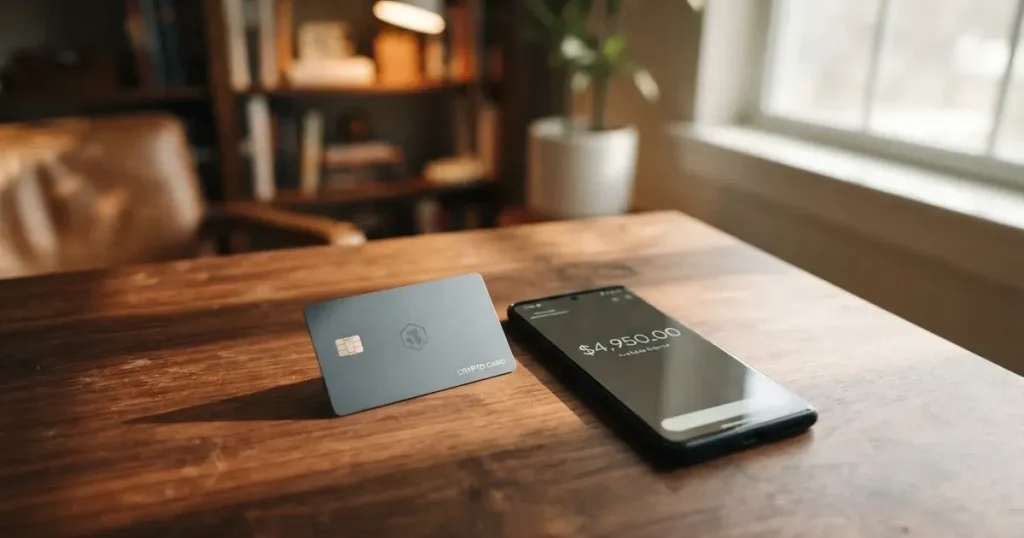
The CoinZoom card is a Visa debit tied to a US crypto exchange, and the defining feature is that rewards and limits scale with how much ZOOM you hold. That is what you buy into: five Prime tiers, a virtual card on approval, a physical card by mail, and crypto-to-fiat spending at the till. It is not the cheapest card on the market, and it does not work in every country, but for the right reader it lines up neatly with a ZOOM-heavy portfolio.
Conditions are current as of October 28, 2026.
Verdict
The CoinZoom card scores 5.9 out of 10. The mark reflects a real product with some strong points (no annual fee, no CoinZoom foreign-transaction fee, free ATM withdrawals at the network’s locations) balanced against gaps and risks that show up in the details: an unnamed card issuer on the official page, a Washington money-transmitter licence surrendered in February 2026, and a Trustpilot score that sits low because of slow support and stuck withdrawals.
The table below breaks the score down. Numbers and reasons are based on official information where available and unofficial reports where specific figures are not published.
| Criterion | Score | Reason |
|---|---|---|
| Who can get it | 7 / 10 | CoinZoom says it serves 169 countries at company level, but the actual card list is narrower, and the US excludes New York and Washington. |
| Cost | 5 / 10 | $0 annual fee and no CoinZoom foreign-transaction fee are positives, but the card deposit fee is 3.99% on most tiers, and unofficial figures point to a 1.49% crypto liquidation fee plus inactivity charges after six months. |
| Top-up options | 7 / 10 | Any wallet asset converts to USD at the till, and the app supports USDT on ERC-20 and TRC-20. ZOOM cannot be spent. |
| Reliability and complaints | 3 / 10 | Trustpilot is 2.5/5 across 66 reviews, with 61% one-star ratings; the Washington licence was surrendered in February 2026; the card issuer is not named on the official page. |
| Everyday use | 8 / 10 | Virtual card on approval, physical card by mail, and free ATM access at the network’s locations. Google Pay is documented; Apple Pay is not confirmed. |
Who the card suits: holders of ZOOM who want tiered crypto rewards and a debit card that scales with their holdings, and readers in the 48 US states or in one of the 123 reportedly open countries who can tolerate a non-bank-issued Visa.
Who it does not suit: readers in New York, Washington, Canada, Australia, the UK, France, or Germany, and anyone who needs Apple Pay, a published dispute process, or a named issuing bank on the front of the cardholder agreement.
Who will give you the card
CoinZoom says on its home page that the exchange is “available in 169 countries”, but the card itself follows a narrower list. According to unofficial reporting, the card is available in 123 countries and restricted in 81. The restricted list includes Canada, Australia, the UK, France, and Germany. In the US the card is live in 48 states, and New York and Washington are excluded.
A few points worth sitting with:
- “Available in 169 countries” is a company-level claim, not a card-level one. The card page narrows it down, but the precise current list is not published in one place.
- If you are an EU resident, an unofficial source notes you cannot order the card even though the card may technically work if you are travelling.
- The reader in New York, Washington, Canada, Australia, the UK, France, or Germany should treat the card as not available. There is no point applying.
The card is a Visa debit, and the only card currency is US dollars. The app handles the conversion at the point of sale, so the balance you see in your wallet is converted into USD on each transaction. Multi-currency balances are not stated on the card’s public pages.
How to get it
Sign-up happens in the CoinZoom app. You create an account, complete identity verification, and the virtual card is issued on approval. The physical card ships free from the Silver tier and above, and Non-Prime shipping is $5 standard, according to the help centre.
A few details that matter:
- Identity verification is required before any card is issued, and it happens in the app. Unofficial sources describe the check as covering legal name, date of birth, tax or national ID, phone number, government photo ID, and liveness or biometrics. Occupation, source of funds, and sanctions screening may also be requested.
- The virtual card is immediate on approval. You can start using it in a wallet or online before the physical card arrives.
- The physical card needs at least a $10 account value and, for Non-Prime, the $5 shipping fee. From Silver the shipping is free.
- Card delivery time, replacement cost, and the exact verification processing time are not stated on the card’s public pages.
The practical reading: get the app, complete KYC, expect the virtual card instantly, and expect the physical card within the help centre’s stated shipping window once you have either paid the $5 or moved into Silver.
Fees and what it really costs
CoinZoom’s headline fees are friendly: $0 annual fee on every tier, no CoinZoom foreign-transaction fee, and no CoinZoom fee on ATM withdrawals. The catch is that the cost shows up elsewhere, and the table below pulls the official figures together.

| Fee or limit | Amount |
|---|---|
| Annual fee | $0 (all tiers) |
| Card currency | USD |
| CoinZoom foreign-transaction fee | None (“standard network conversion rates may apply”) |
| Crypto conversion fee (official) | Not stated |
| Card (debit) deposit fee | 3.99% ($1.99 min) on Non-Prime through Diamond; 2.99% ($1.99 min) on Black |
| Wire deposit fee | $12 (free on Black) |
| Wire withdrawal fee | $35 US / $50 international (free on Black) |
| ATM withdrawal fee | None at “1 million+ ATM locations” |
| Daily POS limit | Non-Prime $700, Gold $2,500, Black $10,000; Silver and Diamond not stated in the same table |
| Daily ATM limit | Non-Prime $100, Silver and Gold $250, Diamond $500, Black $1,000 |
| Daily ZoomMe limit (P2P) | Non-Prime $500, Silver $1,000, Gold $2,500, Diamond $5,000, Black $10,000 |
A few everyday scenarios help anchor those numbers:
- Buying a $50 coffee abroad. No CoinZoom foreign-transaction fee. “Standard network conversion rates may apply” is the card’s wording for what other issuers call an FX margin, and it is the part the card page does not quantify.
- Withdrawing $200 from an ATM. The card page says no CoinZoom ATM fee, but the per-transaction and per-day limits differ by tier. Non-Prime is capped at $200 a day, Silver and Gold at $500, Diamond at $1,000, and Black at $2,000.
- Funding the card with a $100 debit-card deposit. The fee is $3.99 on most tiers and $2.99 on Black.
Unofficial figures add detail the card’s public pages leave out: a 1.49% liquidation fee when crypto is sold to USD, an instant debit-card transfer fee of 1.75% ($1.50 min), an ACH withdrawal with a $1 minimum and a $40,000 maximum, an inactivity fee of $4.99 a month after six months and $9.99 a month after twelve, a $100 account-closure fee at thirty-six months, and a $5 / $12 / $60 split between standard, expedited US, and expedited international shipping. Virtual-card reissue is 1,000 ZOOM; physical replacement is listed as free. None of these are confirmed by the card itself, so treat them as unofficial.
Top up
The card spends any asset sitting in your CoinZoom wallet, and the app converts it to USD at the moment of payment. The card’s public pages do not list supported coins or networks, so a reader needs to check the app to see what is loadable.
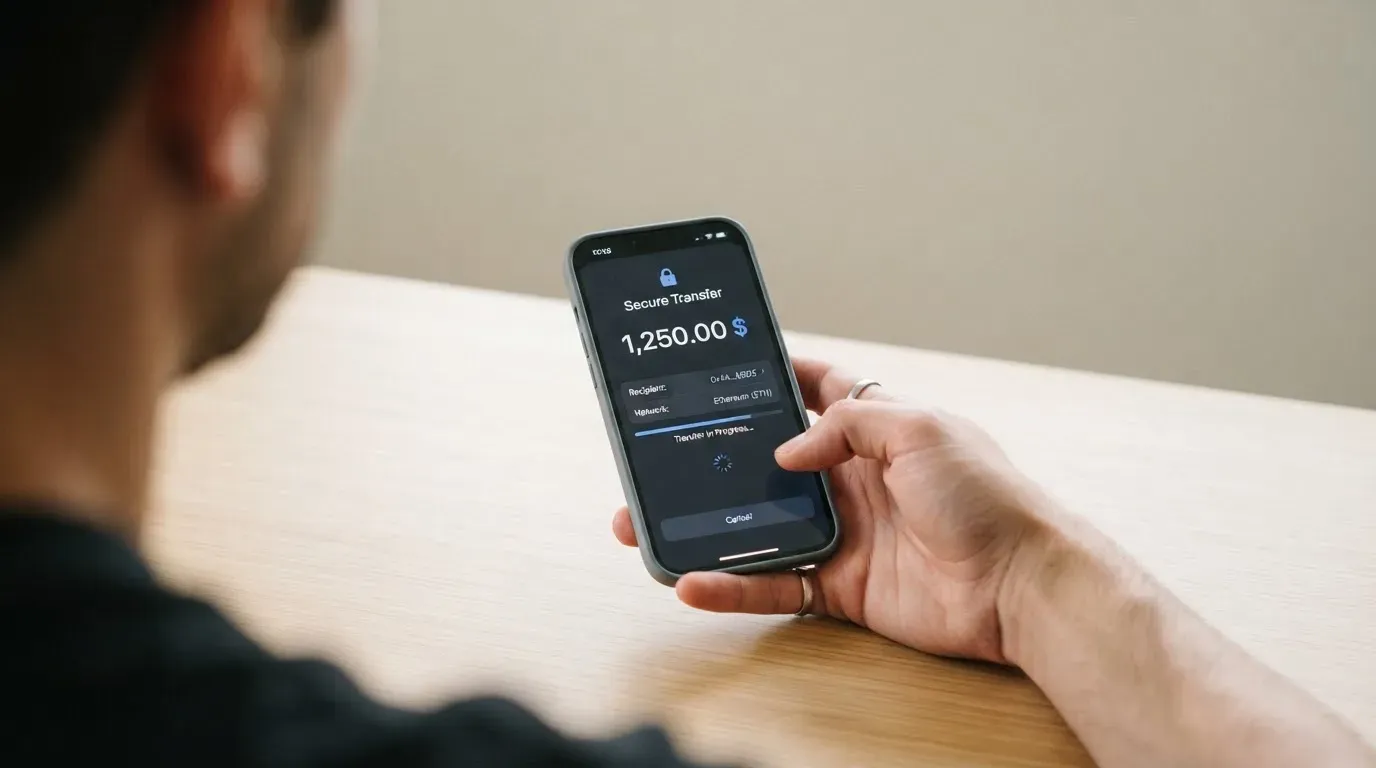
Unofficial reporting fills in some of the blanks: USDT is supported on ERC-20 and TRC-20, and the ZOOM token itself cannot be spent. That last point is worth pausing on, because the rewards structure is denominated in ZOOM and a reader might assume the token is also the spending token. It is not.
The funding options, in plain terms:
- Existing wallet balance. Anything held in the CoinZoom wallet converts to USD on each tap or swipe. This is the everyday path.
- Debit-card deposit. 3.99% on most tiers, 2.99% on Black, with a $1.99 minimum. Fast, but the percentage is the highest in the official fee table.
- Wire deposit. $12, free on Black. The right answer for large amounts if you are not on Black.
- ACH withdrawal. Free, with a $1 minimum and a $40,000 maximum, per unofficial sources.
- Crypto from another wallet. Send USDT (or another supported token) to the deposit address the app gives you, on a network the app supports. Sending on the wrong network is a real risk: blockchain transfers are irreversible, and tokens sent to an address of a different network can be lost or stuck in support.
One practical note: the card page does not state who pays the network fee on a crypto deposit. On Ethereum that gas fee is paid in ETH, so a wallet that holds USDT but no ETH cannot send. Sending on Tron is cheaper, but Tron uses bandwidth and energy, often burning TRX.
Paying with it every day
The card is a Visa debit, and the app is the place to manage it. You get a virtual card on approval, a physical card by mail, and the Spend tab lets you lock and unlock the card instantly. Google Pay is documented for active cards, unofficial; Apple Pay is not confirmed for the card, which matters if your phone is the wallet you actually use.
The rewards structure is the headline feature, and it is what ties the card to ZOOM:
| Tier | ZOOM held | Crypto back on card spend |
|---|---|---|
| Non-Prime | 0 | 0.5% |
| Silver | 10,000 | 1% |
| Gold | 50,000 | 2% |
| Diamond | 150,000 | 3% |
| Black | 300,000 | 5% |
Rewards are paid in crypto, and the specific coin is not stated on the card page. The page also reminds readers that “rewards program terms apply”, which is the polite version of “read the small print before you optimise your spending around a 5% number”.
Three other daily-use points worth noting:
- Blocked merchants. The card page does not list blocked merchant categories. Some crypto cards block gambling or specific MCCs by policy rather than by law, and the CoinZoom list is not published.
- Disputes. The card page says to report unauthorised or fraudulent charges to support “promptly”, and the official process stops there. Time frames, evidence, and outcomes are not stated.
- App. The whole card is run from the CoinZoom app, and unofficial App Store and Google Play ratings are 4.7/5 (about 774 ratings) and 3.9/5 (about 479 reviews, 100,000+ downloads) for the wider exchange app.
The reality of paying with it is that a Visa debit works anywhere Visa is taken. The friction sits in funding, FX wording, and how the rewards tiers actually feel in practice.
What can go wrong
A few risks are worth being clear-eyed about, and they come straight from the facts.
- Trustpilot. The CoinZoom Trustpilot page sits at 2.5/5 from 66 reviews, and 61% of those are one-star. Common themes: funds withheld or sent to a closed account, no live support and bot tickets going unanswered, deposits not arriving, registration and verification stuck, and fees higher than advertised. CoinZoom replies to around 70% of negative reviews.
- Licence. On 9 February 2026 CoinZoom surrendered its Washington money-transmitter licence under a consent order, with a $150,000 fine ($50,000 stayed). The order bars CoinZoom from resuming Washington money transmission before 9 February 2029. The figure is from a third-party summary, not read from the DFI.
- Issuer. The card issuer is not named on the official card page. Unofficial reporting attributes issuance to Zenus Bank, with CoinZoom as programme manager, Cross River Bank holding fiat in non-MTL states, BitGo for wallet technology, and NMLS 1735216. None of that is confirmed on the card’s public materials.
- Security. The Spend tab lets you lock or freeze the card instantly. The Visa Zero Liability Policy applies if you report unauthorised transactions promptly. CoinZoom is FinCEN-registered as a money services business. “ZoomMe is not an FDIC-insured bank product”, and the same applies to the card balance.
- Customer support. The published phone is 1-866-286-8054, and the help centre sits at support.coinzoom.com. The card page does not list a chat or a live-agent channel, and user reports describe bot loops and multi-day escalations.
- Funds at rest. The card balance is held by the issuer, not by you. Crypto in the wallet sits on a custodial platform, and the keys are not yours. That is the standard crypto-card trade-off, and it is the reason the failure history of custodians matters for the reader.
The cumulative picture: a card with a working product, a low support reputation, a licence event in Washington, and a missing issuer name. None of that is a reason not to use the card, but it is the reason to keep the balance small and to know where the dispute process stops.
What to take instead
Three other crypto cards sit within reach of a reader cross-shopping the CoinZoom card. They are not exact substitutes, and the table below puts them side by side based on available public information.
| Card | Score | Headline fit |
|---|---|---|
| Young Card | 5.7 / 10 | Cashback paid in YNG tokens; rate by Club tier: Essential 0.1%, Gold 1.8%, Platinum 3.6% (Bronze and Silver not stated). |
| MSX | 6.4 / 10 | Limited public information; score reflects what is and is not stated on the official pages. |
| Bybit Card | 6.0 / 10 | Tiered points and cashback up to 10% at the top tier; fiat-funded spending does not earn from 5 October 2026. |
A short walk through each:
Young Card. A club-tier card that pays cashback in the YNG token. The higher the club, the higher the rate: 0.1% at Essential, 1.8% at Gold, 3.6% at Platinum. Bronze and Silver rates are not officially stated, so the picture is incomplete. Compared with CoinZoom, the rewards are token-specific and the headline rates look lower at the top end, but the comparison is not apples-to-apples because the card’s country list, fees, and funding options are not fully detailed on official pages.
MSX. A 6.4-out-of-10 alternative whose public materials do not state a country list, card type, fees, or funding paths in the form I could verify. It lands above CoinZoom in the score because the absence of a clear issue is not the same as a known problem, but a reader who wants certainty should look at the card’s own page before applying.
Bybit Card. The most fully-spelled-out alternative. It is a regional card with virtual and physical options, fiat and crypto funding, and a tiered points-and-cashback scheme that runs from 2% (Base) to 10% (Infinite), with monthly caps that scale alongside. The card is not offered to European Economic Area customers, and the cards page says EEA participation is “strictly prohibited”. From 5 October 2026 only crypto-funded transactions earn, which is a meaningful change for anyone who funded with fiat and expected to keep earning. Compared with CoinZoom, Bybit is more transparent on fees and rewards, narrower on geography, and explicitly designed for non-EEA readers.
A practical tie-breaker: if ZOOM holdings are the reason you are here, none of the three substitutes do what CoinZoom does. If you want a more transparent fee table, Bybit is the cleanest read.
Who I would recommend it to
The card is a fit for a specific reader, and the fit is narrow enough to name.
- A ZOOM holder who wants the card to scale with their stack. The Prime tiers exist for that reader, and the jump from 0.5% to 5% rewards is the reason to think about this card at all.
- A US resident outside New York and Washington who wants a Visa debit with no annual fee, no CoinZoom foreign-transaction fee, and free ATM withdrawals.
- A reader in one of the 123 reportedly open countries who can live without Apple Pay, a published dispute process, and a card-issuer name on the front page.
The card is not a fit for:
- A reader in New York, Washington, Canada, Australia, the UK, France, or Germany, where the card is restricted or unavailable.
- A reader who needs Apple Pay. Google Pay is documented; Apple Pay is not confirmed.
- A reader who wants a named issuing bank on the cardholder agreement. CoinZoom’s official card page does not name one, and the unofficial attribution to Zenus Bank is not a substitute for the card saying it.
- A reader with a large balance who wants strong support, fast dispute resolution, and a public incident history. The Trustpilot score and the Washington licence event both point the other way.
If you do not hold ZOOM, the card is harder to recommend. The 0.5% base rate is below the cashback on most mainstream debit cards, and the official fee table has gaps (FX wording, crypto conversion fee) that other providers fill in. The honest answer for a non-ZOOM reader is to look at the alternatives first.
Frequently asked questions
What is the CoinZoom card?
The CoinZoom card is a Visa debit card issued through the CoinZoom exchange. You get a virtual card on approval and a physical card by mail, and the card spends any asset in your CoinZoom wallet, converting to US dollars at the point of sale.
How does the CoinZoom card work?
You fund your CoinZoom wallet with crypto or fiat, and the app converts the balance to USD when you tap, swipe, or check out online. Rewards are paid in crypto, and the rate scales with the ZOOM you hold in the Prime tier system.
Is CoinZoom a bank?
No. CoinZoom, Inc. is a FinCEN-registered money services business and a licensed money transmitter in applicable jurisdictions. The card issuer is not named on the official card page, and unofficial reporting attributes issuance to Zenus Bank, with fiat held by Cross River Bank in non-MTL states.
Who owns CoinZoom?
CoinZoom, Inc. is the parent entity behind the card. The exchange is registered as a money services business with FinCEN and is licensed as a money transmitter in applicable US states, with the Washington licence surrendered in February 2026.
Is the CoinZoom card available in the United Kingdom?
According to unofficial reporting, the UK is on the restricted list. If the card is not available in your country, the right answer is to look at the alternatives in the section above rather than to apply.
How do I get the CoinZoom card?
Download the CoinZoom app, create an account, complete identity verification, and the virtual card is issued on approval. The physical card is mailed for free from the Silver tier and above, and Non-Prime shipping is $5.
Does the CoinZoom card require KYC?
Yes. Identity verification is required in the app before any card is issued. Unofficial sources describe the check as covering legal name, date of birth, tax or national ID, phone number, government photo ID, and liveness or biometrics, with possible follow-up on occupation, source of funds, and sanctions screening.
How do I top up the CoinZoom card?
You fund the CoinZoom wallet, and the card spends that balance converted to USD. Funding options include a debit-card deposit (3.99% on most tiers), a wire deposit ($12, free on Black), and a crypto deposit from another wallet, with USDT supported on ERC-20 and TRC-20 according to unofficial reporting.
Is the CoinZoom card free?
There is no annual fee and no CoinZoom ATM fee. Costs sit in the debit-card deposit fee (3.99% on most tiers), the unofficial 1.49% crypto liquidation fee, and the inactivity fee of $4.99 a month after six months, which is unofficial and not stated on the card’s public pages.
How do I add the CoinZoom card to Apple Wallet?
Unofficial reporting does not confirm Apple Pay for the CoinZoom card. Google Pay is documented for active cards, unofficial. If your phone wallet is the way you actually pay, check the card page in the app before relying on it.
Exchange card fees – cryptocardfacts
Content created by the «cryptocardfacts» team