
The Fasset card on paper, with the pieces the public pages do not show
 Available in US
Fasset sells a Visa card that spends in US dollars from a crypto balance, and that one-line description is, today, almost the whole story you can read in public. The card’s own page returned an access error when I checked it, the company describes its app as a way to “save, send, spend, invest” in stablecoins and tokenised gold, and the announcement that brought the card into view was a joint press release with Tether. So this review is what I can honestly say after a careful look at what Fasset publishes, what is reported about it, and where the public record simply goes quiet. The score I came away with is 5.3 out of 10, and the headline finding is that the product exists, the headline numbers look competitive, and almost every practical question a cardholder would ask is unanswered in the public material.
The conditions described below are current as of October 28, 2026.
Verdict
The Fasset card earns 5.3 out of 10, and the score reflects an unusual imbalance: the things Fasset does say in public are mostly good, and the things it does not say are exactly the things a cardholder needs to know. On the plus side, it is a Visa, it spends in USD anywhere Visa is taken, it advertises a tiered cashback scheme that goes up to 6% in XAU₮ (Tether Gold), and the company points to a regulated footprint in several markets, including the EU, the UAE, Indonesia, Malaysia, Turkey and Pakistan. On the minus side, the card page I tried to read came back with an error, so I could not see fees, limits, top-up networks, ATM terms, KYC requirements, dispute procedures, or even whether a physical card or Apple Pay or Google Pay exist. I had to rely on Tether’s press release and on a few third-party summaries that are not the same thing as the card’s own terms.
| Criterion | Mark | Why |
|---|---|---|
| Who can get it | 6 / 10 | The starting list covers about 36 countries across Asia, Africa, the Caribbean and Latin America, but the public card page did not load to confirm it. |
| Cost | 5 / 10 | Issuance, monthly, conversion, FX and ATM terms are not disclosed. |
| Top-up options | 5 / 10 | USDT from the Fasset wallet is confirmed; XAUt (Tether Gold) can be converted to USDT and then spent; the networks and any on-chain fees are not named. |
| Reliability and complaints | 6 / 10 | Fasset Labuan Limited is named, with approvals in the UAE, Indonesia, Malaysia, the EU, Turkey and Pakistan, but the card issuer and licence numbers are not. No complaints surfaced. |
| Everyday use | 4 / 10 | A Visa in USD is broad, but the physical card, Apple Pay, Google Pay and ATM use are not described. |
| Total | 5.3 / 10 | A real product on a real network, with too many blanks to recommend without hesitation. |
In plain terms, this is a card for someone who already keeps USDT in the Fasset wallet, lives in one of the listed countries, and is comfortable with the fact that the published details are thin. It is not a card to take a chance on if you just want a Visa debit for everyday spending and need to know what it will cost you at a restaurant abroad. The most likely reader is a Fasset account holder in Asia or Africa who is paying with USDT and would like the option to put that balance behind a plastic card, and for that reader the card may make sense, once the missing details are filled in by asking Fasset directly.
Will they give you the card
The country list in the public data is the longest piece of the Fasset story that you can read, so I will lay it out before I tell you what is not in it. Fasset’s starting information lists 36 countries where the card is aimed: Australia, Bangladesh, Hong Kong, Japan, Malaysia, New Zealand, the Philippines, Singapore and Pakistan in Asia-Pacific; Egypt, Ghana, Kenya, Morocco, South Africa, Uganda, Zambia, Côte d’Ivoire and Senegal in Africa; and Antigua and Barbuda, the Bahamas, Barbados, Belize, the Cayman Islands, Costa Rica, the Dominican Republic, El Salvador, Grenada, Guatemala, Honduras, Mexico, Panama, Saint Kitts and Nevis, Saint Lucia, Saint Vincent and the Grenadines, Trinidad and Tobago, and the Turks and Caicos Islands in the Caribbean and Central America. The geography is striking: strong in South and Southeast Asia, a stretch across Anglophone and Francophone Africa, the whole of Central America, and a near-complete sweep of the Caribbean, with Australia, Japan and Singapore as the high-income outposts.
The Fasset card page did not load, so verifying the list against live terms and checking if the card is offered in countries not on the starting list was not possible. Second, the basis for eligibility is not stated. With most cards of this kind the rule is residence or registration, not citizenship. If you are a citizen of a country not on the list but live in one that is, the eligibility rules depend on which rule Fasset applies.
The other “will they give you the card” facts that you would normally want before you apply are also not in the public material. The KYC requirements are not stated, the tiered identity checks (basic versus enhanced) are not stated, and what the card actually is in your hand is described as a Visa that spends in USD at any merchant on the Visa network. The card name suggests a virtual card, and there is no public description of a physical card, a metal card, or mobile wallet support, all of which I will come back to in the daily-use section.
How to get it
The signup flow is a gap in the available information. The KYC requirements, card delivery times, and identity-verification tiers are not stated. Fasset is described as a US-founded neobanking and investment platform whose app is built around stablecoins and tokenised gold, and the card is positioned as a way to spend that balance. The practical reading is that you start by opening the Fasset account, complete whatever verification the app asks for, fund the wallet, and from there opt in to the card.
The company behind the card is named in the starting data as Fasset Labuan Limited, which points to Labuan, the Malaysian federal offshore financial centre, and the founders named in third-party summaries are Mohammad Raafi Hossain and Daniel Ahmed, with Daniel Ahmed listed as CEO. The press side of the business lists regulatory approvals in the UAE, Indonesia, Malaysia, the EU, Turkey, Pakistan and “others”, which is a respectable footprint, but the card issuer is not named in the public material I could read and no licence numbers are shown. For a card product, the issuer is the bank or e-money institution that actually puts the Visa BIN behind the card and that holds the regulatory permission to do so, and the absence of that name is a real gap.
The cleanest summary of the signup section is therefore a list of things to ask Fasset before you commit, rather than a step-by-step guide: which documents are needed, which countries are confirmed versus aspirational, what tier of KYC unlocks the card, whether a physical card is part of the deal, and what the issuer behind the card is. The information is almost certainly there once you are inside the app; the public material just does not give it to you.
Fees
The card’s own page did not load. The press release announces a “gold-backed Visa card” without showing the price of getting one, the monthly or annual cost, the cost of spending in a foreign currency, the ATM fee and allowance, the daily and monthly limits, or the FX margin. Public data on tier names and prices is also not stated, although Fasset discusses a tiered cashback scheme.
The cashback is tiered, rising with spending. A fee schedule to compare against the cashback is not stated. Comparing a 6% reward against undisclosed FX margins and conversion fees is not possible without the inputs.
| Fee or limit | Amount |
|---|---|
| Issuance fee | not stated |
| Monthly or annual fee | not stated |
| Conversion fee | not stated |
| Foreign-exchange (FX) margin | not stated |
| ATM fee and allowance | not stated |
| Daily spending limit | not stated |
| Monthly spending limit | not stated |
The honest thing to say is that this is the part of the review where I would normally walk you through three or four everyday situations and show you what the card costs in each, and I cannot do that for Fasset with any honesty, because the inputs are not in the public material. The Visa line in USD that Fasset does confirm narrows the FX question (you are not paying a card-network FX margin on top of a card-issuer FX margin in the way you would with a multi-currency card) but it does not tell you what the conversion from USDT to USD costs, or what the FX margin is when you spend in a currency other than USD. The “currency” line in the public data says simply that the card spends in USD at Visa merchants worldwide.
Three everyday situations are worth thinking about even without the fee schedule, because they frame the questions to ask Fasset. The first is paying for a coffee in your home country: if your balance is in USDT, the card has to convert USDT to USD at the moment of payment, and the question is what rate and what fee that conversion carries. The second is paying for a meal in a foreign currency while travelling: even if the underlying balance is in USDT and the card settles in USD, the merchant’s bank or your card’s network will apply an FX rate to the non-USD transaction, and Fasset’s margin on top of that is the number you want. The third is withdrawing cash from an ATM: the press release headline mentions ATMs, but the body of the release does not give the fee or the allowance, so the question is whether there is a free allowance and what the surcharge is after it.
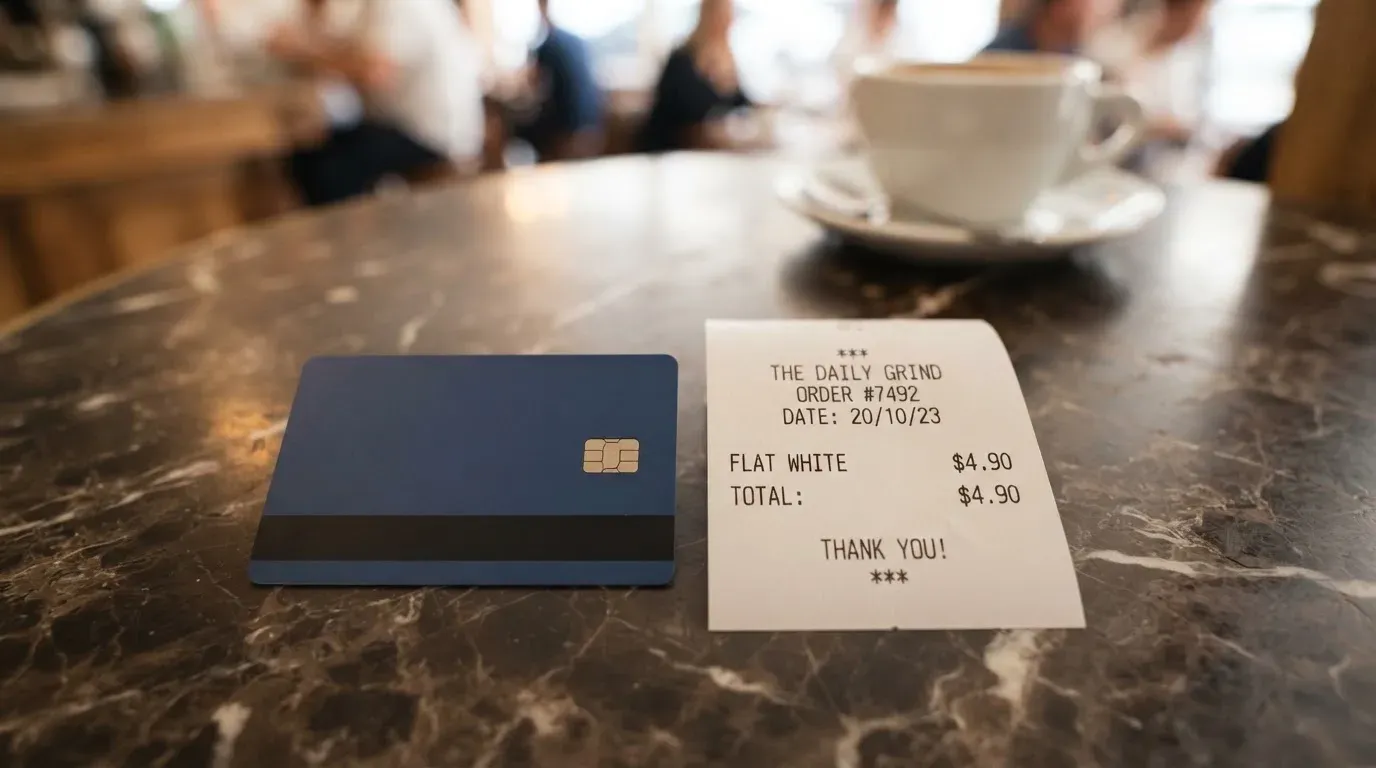
The image to keep in mind here is a receipt and a card on a café table: the number on the receipt is what you see, the number on the card statement is what you pay, and the difference between the two is the bundle of fees that Fasset has not published. Until those fees are public, the cost score has to stay where it is, even if the cashback looks generous.
Top up
Topping up the Fasset card starts in the Fasset wallet, and that is the part of the flow that the public material does describe. The card is funded with USDT, the dollar-pegged Tether stablecoin, drawn from your Fasset balance. The starting data also says that XAUt, Tether’s gold-backed token, can be converted to USDT inside the Fasset app and then spent through the card, which is the link between the gold-investment side of Fasset’s product and the card side.
Supported networks for USDT deposits, minimum and maximum top-up amounts, deposit fees, top-up clearing times, and withdrawal processes from the card back out to a wallet or bank account are not stated. On-chain transfers in the stablecoin world are typically paid for in the network’s own asset. Fasset does not specify which network it expects, and sending on the wrong network can lead to loss.
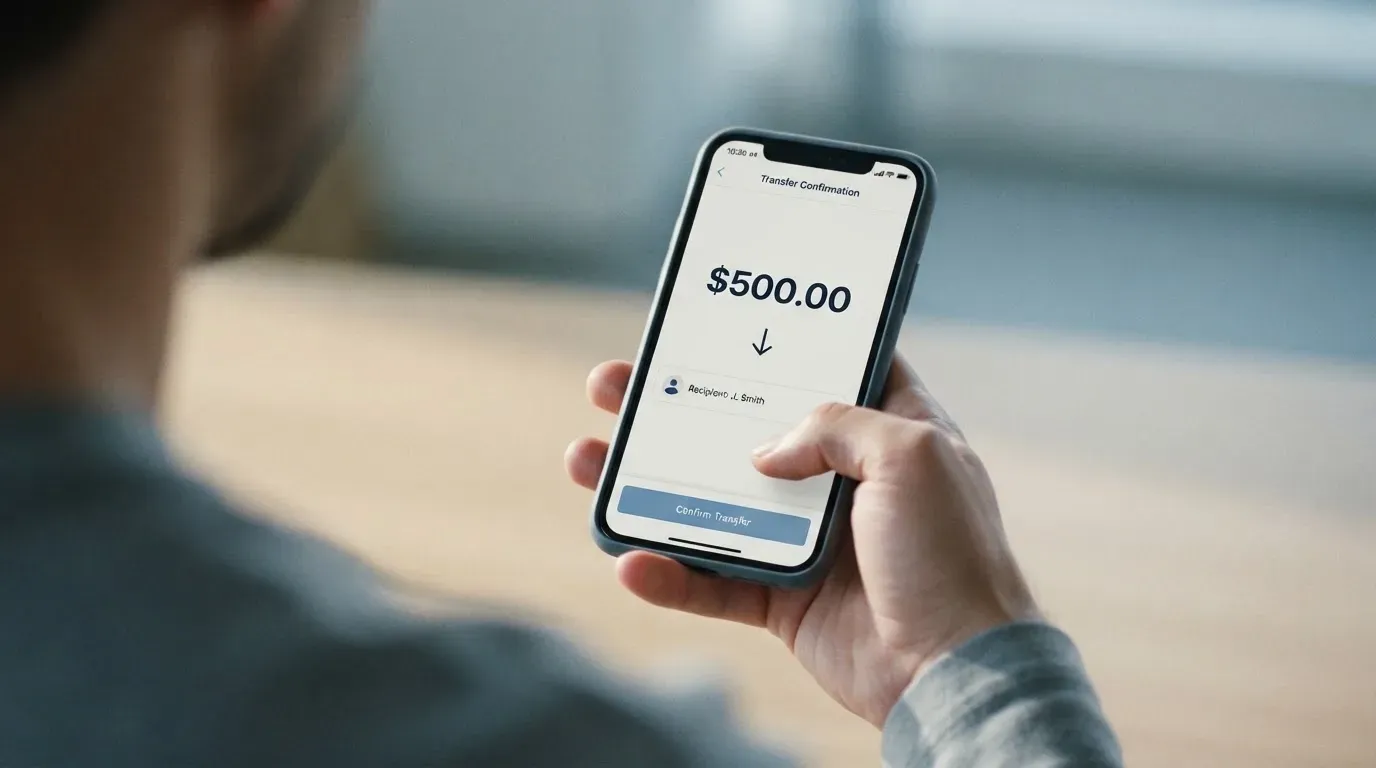
The image to keep in mind here is a phone showing a stablecoin transfer screen: the network selector is the line that matters most, the address is the line that matters second most, and the rest is timing and fees. For Fasset, the network selector is a question I could not answer from the public material, and that is the kind of question you want answered before you send a non-trivial amount.
A reasonable rule of thumb is to send a small test amount first, to confirm the network and the address, and only then send the full top-up. The rate and the fee on the conversion of XAUt to USDT inside the Fasset app are not stated.
Paying with it every day
On paper, the Fasset card is a Visa, and a Visa is the broadest card network on the planet. A USD-denominated Visa works at any merchant that takes Visa, online and offline, and the card is described in the public material as a virtual card by name, which means the most likely everyday form is a card number you enter at checkout or save in a wallet. That part of the picture is straightforward.
The harder part is the rest. A physical card is not confirmed: whether one is offered, what it costs, what it looks like, or how long it takes to arrive is not stated. Apple Pay and Google Pay are not described, and the absence is meaningful because a virtual-only card without mobile wallet support is harder to use at a physical terminal. The mobile app experience, which is the surface most cardholders actually touch, is not described, and a Fasset card listing is not found in the App Store or in the standard search results. ATM use is mentioned in the press release headline, but the body of the release does not describe the fee, the allowance, or the daily and monthly ATM limits, and the cost section above sets out why that matters.
The rewards side is the bright spot in the everyday-use picture, and it is worth a paragraph of its own. Fasset advertises a tiered cashback scheme of up to 6% back in XAU₮ on eligible transactions, with the percentage rising as spending rises, and the cashback is credited to the wallet in real time. Tether is said to have committed up to US$1 million in XAU₮ to fund the rewards pool. Fasset also describes a round-up feature that invests the spare change to the nearest dollar in XAU₮, so a $4.60 coffee becomes a $5.00 charge with $0.40 going into tokenised gold.
The cashback is paid in XAU₮ rather than in USDT or in USD, and that detail is the practical one. XAU₮ is Tether’s gold-backed token, and the value of the reward is therefore a function of the gold price as well as the reward rate, and converting XAU₮ back to spendable USDT or USD carries its own cost inside the Fasset app, which is not in the public material. The other side of “up to 6%” is the tier structure: the public material says cashback is tiered and the tier names and prices are not stated, so a reader cannot tell from outside how much spending unlocks the 6% headline rate.
Two more everyday details are not in the public material. The dispute procedure (how to contest a charge, how long it takes, whether chargeback is offered) is not stated. The customer-support channels (in-app chat, email, phone, hours) are not stated, and for a card product, the quality of support is part of the everyday experience. None of this is unusual in itself; what is unusual is the volume of it in one product, in a single review.
What can go wrong
The risks of a card like this fall into three groups, and I will walk through each in turn. The first is the company risk. Fasset is described as a US-founded neobanking and investment platform, with founders Mohammad Raafi Hossain and Daniel Ahmed (CEO), and the operating entity in the public data is Fasset Labuan Limited, registered in Labuan, Malaysia. The company lists regulatory approvals in the UAE, Indonesia, Malaysia, the EU, Turkey, Pakistan and “others”, which is a real regulatory footprint, but the card issuer is not named in the public material and no licence numbers are shown. The wider crypto-card industry has seen programmes closed by networks rather than by regulators: in November 2022 Visa terminated its global agreements with FTX after FTX’s collapse, and in 2018 WaveCrest, a Visa card issuer in Europe, was suspended by Visa, which closed all WaveCrest-issued Visa programmes. A card that depends on a single, unnamed issuer is more exposed to that kind of event than a card whose issuer is on the front page of the terms.
The second is the fund risk. The card is funded with USDT, a dollar-pegged stablecoin, and the wallet that holds the USDT is a Fasset wallet, not a self-custody wallet. That means the user’s USDT sits with a custodian between top-up and spend, and the history of custodial crypto platforms includes Mt. Gox (about US$350 million reported stolen 2011-2014), Coincheck (about US$400 million in 2018) and the Ronin Network bridge (US$625 million in 2022). Tether itself has said it disables tokens in wallets on the OFAC sanctions list and has frozen funds tied to illicit activity, so even stablecoins are not censorship-proof, and a custodian that holds USDT is in turn holding an asset that an upstream issuer can freeze.
The third is the operational risk, which is closer to the user’s day-to-day. On-chain transfers in stablecoins are typically irreversible, so a deposit sent on a network the card provider does not support, or to an address on another network, can be lost or, at best, recovered only through manual support with no guarantee. The public material does not name Fasset’s supported network, so this is a real risk for a first-time top-up. A merchant that declines a card because the BIN looks foreign is a real risk for a Visa issued in a jurisdiction the merchant does not recognise, and address-verification systems that are mainly offered in the US, Canada and the UK can struggle with foreign-issued cards. A 3-D Secure challenge at checkout is a real risk for online shopping if the cardholder’s mobile number or app is not the one the issuer has on file. None of these are Fasset-specific, but they are the texture of using a card in this category, and they are not addressed in the public material.
The fourth, and the one most readers search for, is the complaint record. I could not find a Fasset page on Trustpilot or a Fasset thread on Reddit in the searches I ran, which is consistent with a small user base or with a regional product that has not yet drawn the English-language complaint economy around it. The absence of complaints is not the same as a clean record, and the presence of a complaint record is not the same as a bad product, so the right reading is that the complaint history is, at the time of writing, too thin to be informative either way.
A reasonable way to think about the risks is to ask, before you load a non-trivial amount, which of the three layers is the one that worries you most, and to size your top-up to the answer. A reader who is comfortable with Fasset as a company and is only worried about the fund risk can top up just before a planned spend, and keep the float in USDT small. A reader who is comfortable with both but worried about the operational risk can test the top-up with a small amount first, and check the network twice. A reader who is worried about the company risk is, in the end, not in the right product, and the alternatives section is the place to start.
What to take instead
The Fasset card sits in a category that has more competition than it used to, and three of the alternatives are worth a closer look. The first is the International Visa Card from a programme that markets itself to users outside the United States. It is open in a long list of countries but blocks residents or legal registrants of Belarus, mainland China, North Korea, Cuba, India, Iraq, Iran, Israel, Myanmar, Nepal, Nicaragua, Russia, Syria, Turkey, Ukraine, Venezuela and Vietnam, with FATF grey-list countries reviewed case by case; it blocks purchases in North Korea, Cuba, Iran, Russia, Syria, Ukraine and Venezuela. The card is a US-issued Platinum Visa, virtual at launch with a physical card marked “coming soon”, and it pays in USD. The fee structure is published: the virtual card is $5 one-time, there is no maintenance fee, and the plans are Classic (free), Pro ($9.00 a month) and Max ($19.00 a month); card use in USD is free on every plan, foreign currency carries the Visa exchange rate plus a 2% FX fee, and deposits of any kind are free. The funding model is USDC or USDT into a USD account at 1:1, with USD, EUR, SEPA, SWIFT and FedNow deposits also available, and no cashback is published. Its overall score in the comparison is 6.7 out of 10, and the case for it over Fasset is a published fee schedule, a published country list and a known US issuer behind the card.
The second is the UNi Card from UNi, which is a multicurrency card on the Mastercard network that spends from a UNi.Global account balance. The published fees are “no annual fee” and “no foreign transaction fee”, with assets converted at “live OTC (Over-the-Counter) rates” and “no hidden exchange fees”; the issuance fee is not stated, the funding path is not stated, and the card form (physical or virtual) is not stated. The published reward is “Spend-to-Earn rewards” of up to 3% with UNi Card. Its overall score is 6.1 out of 10, and the case for it is the multicurrency angle and the simple fee promise, with the trade-off that the public detail is thinner than the International Visa Card.
The third is Whop Cards from Whop, which is a Visa that works anywhere Visa is accepted online and in stores, with cards that can also be issued to team members. On the consumer side the supported list is 31 US states (Alabama, Alaska, Arkansas, California, Colorado, Connecticut, Florida, Hawaii, Illinois, Indiana, Iowa, Kansas, Kentucky, Maine, Massachusetts, Michigan, Minnesota, Montana, Nebraska, New Hampshire, New Jersey, New York, North Carolina, Oklahoma, Pennsylvania, South Carolina, Texas, Utah, Virginia, West Virginia and Wyoming), with businesses covered in 41 states; the unsupported consumer list is Belarus, China (Mainland), Cuba, Hong Kong, India, Iran, Iraq, Israel, Myanmar, Nepal, Nicaragua, North Korea, Russia, Syria, Turkey, Ukraine, Venezuela and Vietnam, and the basis (citizenship or residence) is not stated. The published fees are “no extra fees” with no issuance or monthly amounts listed, the conversion and FX fees are not stated, the card form and card currency are not stated, and the funding model is a Whop balance (with starting data that the balance is backed by stablecoin collateral from a linked wallet, with coins and networks not stated). The published reward is 5% cashback at select merchants, currently Uber, with more planned, and the payout currency is not stated. Its overall score is 5.2 out of 10, and the case for it is the 5% cashback and the team-issuance feature, with the trade-off that the country list is heavily US-centric.
| Card | Network | Card currency | Published fees | Rewards | Score |
|---|---|---|---|---|---|
| Fasset | Visa | USD | not stated | up to 6% in XAU₮ (tiered) | 5.3 / 10 |
| International Visa Card | Visa | USD | $5 issuance, plans from free, FX 2% | not stated | 6.7 / 10 |
| UNi Card | Mastercard | multicurrency | no annual fee, no FX fee | up to 3% | 6.1 / 10 |
| Whop Cards | Visa | not stated | “no extra fees” | 5% at select merchants | 5.2 / 10 |
The honest summary of this section is that two of the three alternatives publish a fee schedule that Fasset does not, and that matters more for most readers than the difference in headline cashback. The 6% in XAU₮ looks generous next to the 2% FX fee plus the no-fee card-use on the International Visa Card, but the comparison is incomplete without the Fasset fee schedule.
Who I would recommend it to
The Fasset card is the right card for a narrow reader. If you are already a Fasset account holder in one of the listed countries (Australia, Bangladesh, Hong Kong, Japan, Malaysia, New Zealand, the Philippines, Singapore, Pakistan, Egypt, Ghana, Kenya, Morocco, South Africa, Uganda, Zambia, Côte d’Ivoire, Senegal, the Caribbean or Central American countries), you keep a USDT balance in the Fasset wallet, and you are comfortable that the cashback is paid in XAU₮ rather than in USDT, then the card is a sensible way to spend that balance at a Visa terminal. The XAUt-to-USDT conversion path inside the Fasset app gives the same card a second use case for a Fasset user who holds tokenised gold, and the round-up feature is a small but real way to build a gold position from everyday spending. For that reader, the missing fee schedule is annoying but not disqualifying, because the practical thing to do is top up just before a planned spend, keep the float small, and ask Fasset the questions in this review before loading a larger amount.
The Fasset card is the wrong card for a reader who wants a Visa debit for everyday spending and needs to know what it will cost. The absence of a published fee schedule, the absence of a named card issuer, the absence of a published KYC process, the absence of any description of a physical card, Apple Pay, Google Pay or ATM use, and the absence of a public complaint record add up to a card that is hard to evaluate on its own terms. A reader in that position is better served by the International Visa Card, which publishes a fee schedule and a known US issuer, or by the UNi Card, which publishes a no-FX-fee promise, even at the cost of a less generous headline reward.
The right way to treat this review is as a snapshot of a product whose public surface is thinner than its marketing, with a score that reflects both the things Fasset does well (a real Visa, a real network, a real regulatory footprint, a real reward) and the things Fasset has not yet put in writing (fees, limits, issuer, top-up networks, support). If Fasset publishes the missing pieces, the score should move; if it does not, the score should not.
Frequently asked questions
What is the Fasset card?
The Fasset card is a Visa-branded payment card that spends in US dollars from a balance in the Fasset app. Fasset describes its product as a neobanking and investment platform built around stablecoins and tokenised gold, and the card is positioned as a way to spend that balance at any merchant on the Visa network.
How does the Fasset card work?
The card is funded with USDT, the dollar-pegged Tether stablecoin, drawn from your Fasset wallet. At the point of payment, USDT is converted to USD and the card settles in USD at the merchant. Fasset also describes a path where XAUt (Tether Gold) is converted to USDT inside the app and then spent, and a round-up feature that invests spare change in XAU₮.
Is Fasset a bank?
Fasset is not described as a bank in the public material. It is described as a neobanking and investment platform, with Fasset Labuan Limited named as the operating entity, and regulatory approvals listed in the UAE, Indonesia, Malaysia, the EU, Turkey, Pakistan and other markets; the card issuer is not named and no licence numbers are published.
Who owns Fasset?
The starting data names the founders as Mohammad Raafi Hossain and Daniel Ahmed, with Daniel Ahmed listed as CEO. The operating entity is Fasset Labuan Limited, registered in Labuan, Malaysia. Fasset is described as US-founded, and no parent company is named in the public material I could read.
Is the Fasset card available in my country?
The starting list covers about 36 countries: Australia, Bangladesh, Hong Kong, Japan, Malaysia, New Zealand, the Philippines, Singapore, Pakistan, Egypt, Ghana, Kenya, Morocco, South Africa, Uganda, Zambia, Côte d’Ivoire, Senegal, the Caribbean nations and the Central American countries named above. The card page I tried to read returned an error, so the live list may be longer or shorter, and the basis for eligibility (residence versus citizenship) is not stated.
How do I apply for the Fasset card?
The public material does not describe the application flow. The practical reading is that you open the Fasset account, complete whatever verification the app asks for, fund the wallet, and opt in to the card from inside the app. The KYC requirements (documents, checks, timing) are not stated in the public material I could read.
Does the Fasset card require KYC?
The public material does not state the KYC requirements. The Fasset platform is described as regulated in several markets, which in practice means the card has KYC behind it, but the specific documents, tiers and timing are not stated, and the right thing to do is to ask Fasset directly before you apply.
How do I top up the Fasset card?
The card is topped up with USDT from the Fasset wallet. The starting data also says XAUt (Tether Gold) can be converted to USDT inside the Fasset app and then spent. The supported networks, the minimum and maximum top-up amounts, the deposit fee and the clearing time are not stated in the public material I could read.
Is the Fasset card free?
The issuance fee, the monthly or annual fee, the conversion fee, the FX margin, the ATM fee or the spending limits are not stated. “Free” cannot be confirmed, and the right reading is to assume there is a cost until Fasset publishes the fee schedule.
Is the Fasset card safe?
The card is a Visa, and Visa is a real network with real dispute and 3-D Secure processes behind it. The card’s safety also depends on the safety of the Fasset wallet that holds the USDT between top-up and spend (a custodial balance, not a self-custody balance), on the safety of USDT itself (a dollar-pegged stablecoin that has depegged in the past), and on the continuity of the card programme (a real risk in the wider crypto-card industry, as the FTX and WaveCrest closures show). The complaint record I could find was too thin to be informative.
App and neobank card fees – cryptocardfacts
Content created by the «cryptocardfacts» team