
Moon card review: a prepaid Visa that takes Bitcoin and stablecoins, with costs hidden in the small print
 Available in US

Moon is a payment card that turns crypto into a USD balance you can spend. The pitch is simple: send Bitcoin or a stablecoin, get a Visa, and pay online. The reality, once you sit down with the numbers and read the complaint threads, is more complicated. This review walks through who Moon is for, what it actually costs, where it works, and what tends to go wrong.
The conditions described here are current as of October 28, 2026.
Verdict
Moon earns 5.6 out of 10. That score reflects a card that does the basic job, a crypto balance becomes a Visa, but trips on everyday details: transaction fees, complaint volume, and a corporate structure the company does not publish. The card is best understood as a niche tool for someone who needs a USD-denominated Visa online, who is comfortable holding their crypto on the Moon platform while they spend, and who is willing to live with the limitations that come with it.
Here is the score broken down by criterion.
| Criterion | Mark | Reason |
|---|---|---|
| Who can get it | 8 / 10 | Unofficial sources say “over 130 countries” for Moon X, but no public country list and sanctioned regions are off-limits. |
| Cost | 6 / 10 | First Moon X card is free, but a 1% per-transaction fee with a $1 minimum bites on small purchases. |
| Top-up options | 8 / 10 | BTC, Lightning, USDT on TRC-20, USDC on ERC-20, and ETH are all listed. |
| Reliability and complaints | 2 / 10 | Trustpilot sits at 2.5 out of 5 across 276 reviews, with frozen accounts and withheld funds recurring. |
| Everyday use | 3 / 10 | Virtual only, ready instantly, but Apple Pay, Google Pay and Samsung Pay are not supported yet. |
The audience this fits is narrow: someone making quick small online payments in USD with crypto, in a country where Moon is not blocked, who is willing to pay the 1% per transaction in exchange for a Visa number on demand. If you want a card for travel, ATM withdrawals, or large balances, Moon is the wrong tool. If you want a backup Visa for online subscriptions, the cheap first card and the stablecoin funding paths make it worth a look, with eyes open.
Who will they give you the card
Unofficial sources, citing Moon’s terms, put eligibility at “over 130 countries” for the Moon X product, with the usual caveat that not all products are available in all places. Moon does not publish a public list of supported countries. The terms also bar sanctioned regions, and purchases from disallowed countries will not go through at the merchant.
That is the long and short of it. There is no country-by-country matrix on the Moon site, so eligibility is something you discover when you sign up or when a payment declines. If you are in a sanctioned jurisdiction, the answer is straightforward: the card is not for you. If you are anywhere else, the official line is “try and see,” which is not the same as a clear yes.
Age is set at 18 and above. Beyond that, Moon’s published terms do not list which identity documents it accepts or what its KYC tiers are. The user-facing flow is email and password with two-factor codes sent by email, and reviewers on Trustpilot report being asked for ID before a refund is released, so KYC does happen, even if it is not spelled out in advance.
For a reader who cannot get an ordinary bank card, this openness matters. Moon’s lack of a country list is a frustration, but the willingness to serve “over 130” is also the feature. The trade-off is that you may find out your country is excluded only after you have signed up and loaded funds.
How to get it
Signup is email and password, with a two-factor code delivered by email. There is no published list of identity documents, but the terms reserve the right to ask for proof of eligibility, and some blocked merchants will start working once verification is complete. The point is that KYC is on demand, not necessarily up front.
Once you are in, Moon offers two products. Moon X is a reloadable card tied to a Moon Credit balance, valid for three years from purchase. Moon 1X is a single-load card built for US merchants. Both are Visa-branded. The first Moon X card is free; additional Moon X cards are $2.99 each, and each Moon 1X is $1.49.
Whether you receive a physical or virtual card, and how long delivery takes, is not stated on the pages that were read. What is confirmed is that a virtual card is ready instantly, which is the main reason to choose Moon for online use in the first place.
The application flow is closer to a crypto app than a bank: sign up, pass an email confirmation, then buy Moon Credit with crypto and the card is there. If you want a number right now, Moon delivers. If you want a card that arrives in the post, you are reading the wrong product.
What it really costs: Fees
Cost is the section where the headline numbers diverge from the receipt. The first Moon X card is free, and the first Moon 1X is $1.49. There is no monthly fee. So far, so good.
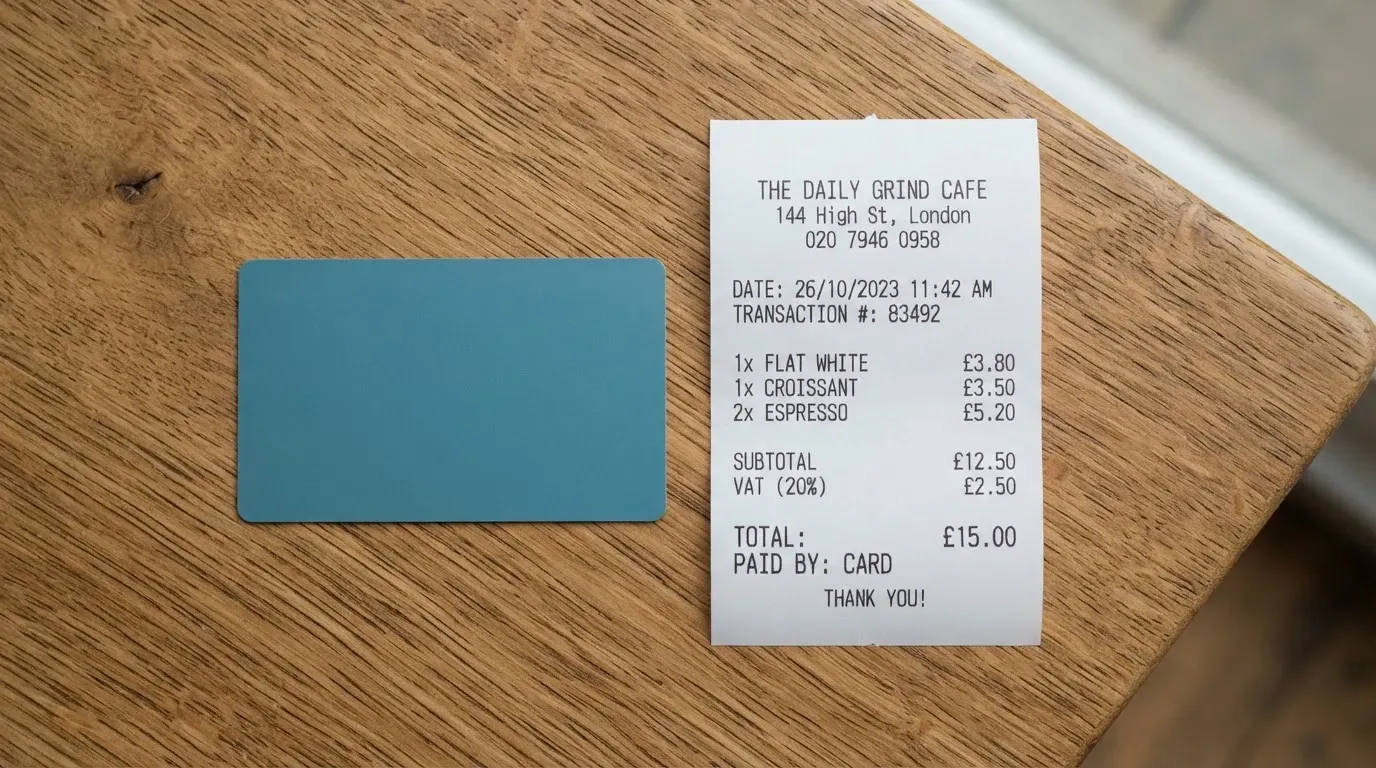
Then you spend. Moon X charges 1% on every transaction, with a $1.00 minimum per transaction. That means a $3 purchase costs you $1 in fee, not three cents. A $30 purchase costs thirty cents. The fee only hurts at small sizes, but small online purchases are the use case Moon is built for, so the fee hurts precisely where you would notice it.
Moon 1X, the single-load card, has no transaction fee. That is its selling point. If you load $100 once and spend it down, the 1% does not apply.
Moon also states it does not charge any FX or foreign transaction fees. Cards are loaded in USD, so a payment in euros or pounds runs through Visa’s conversion at the network rate, and Moon does not layer a fee on top. The 1% on Moon X still applies to the USD value of whatever you buy.
Then come the less obvious charges. Per third-party data, a decline, reversal or refund costs $0.50 after the first 20 in a month. An excess refund costs $40. Overdrawing the account costs $25. Filing a chargeback dispute costs $17.50, and Moon charges it only if Moon decides to proceed. An unused balance left on the card when it expires is treated as a fee, not a refund.
Here is the full picture.
| Item | Amount |
|---|---|
| First Moon X card | Free |
| Additional Moon X card | $2.99 |
| Moon 1X card | $1.49 |
| Moon X transaction fee | 1%, $1.00 minimum |
| Moon 1X transaction fee | None |
| FX or foreign transaction fee | None charged by Moon |
| Decline, reversal or refund | $0.50 after 20 per month (per third-party data) |
| Excess refund | $40 (per third-party data) |
| Overdraw | $25 (per third-party data) |
| Chargeback dispute | $17.50 (if Moon proceeds, per third-party data) |
| Unused balance at expiry | Charged as a fee |
| ATM withdrawal | Not stated |
| Moon X monthly spend cap | $4,000 across all cards (per third-party data) |
| Card creation | 10 per day, 30 per month |
| Moon Credit purchase | $10,000 daily, $30,000 monthly (per third-party data) |
| Moon 1X load | $5 minimum, $1,000 maximum per card (per third-party data) |
To make those numbers feel real, three everyday payments help. A $4 in-app purchase on Moon X: the 1% fee is well below the $1 minimum, so you pay $1 in fees on a $4 spend. A $50 online subscription on Moon X: the 1% fee is $0.50, which is reasonable. A $9.99 single-load data top-up on Moon 1X: no transaction fee, but you paid $1.49 for the card itself, so the effective fee on a one-off is real. Per third-party data, fees for declines, reversals, or refunds are $0.50 after 20 per month.
If the card is being used for many small online payments, the $1 minimum on Moon X is the number to watch.
How to top it up: Top up
Top-up is the strongest part of Moon. The platform accepts BTC, the Lightning Network, USDT on TRC-20, USDC on ERC-20, and ETH. That covers the two stablecoins most people hold and three networks between them, plus Bitcoin and its second-layer network.
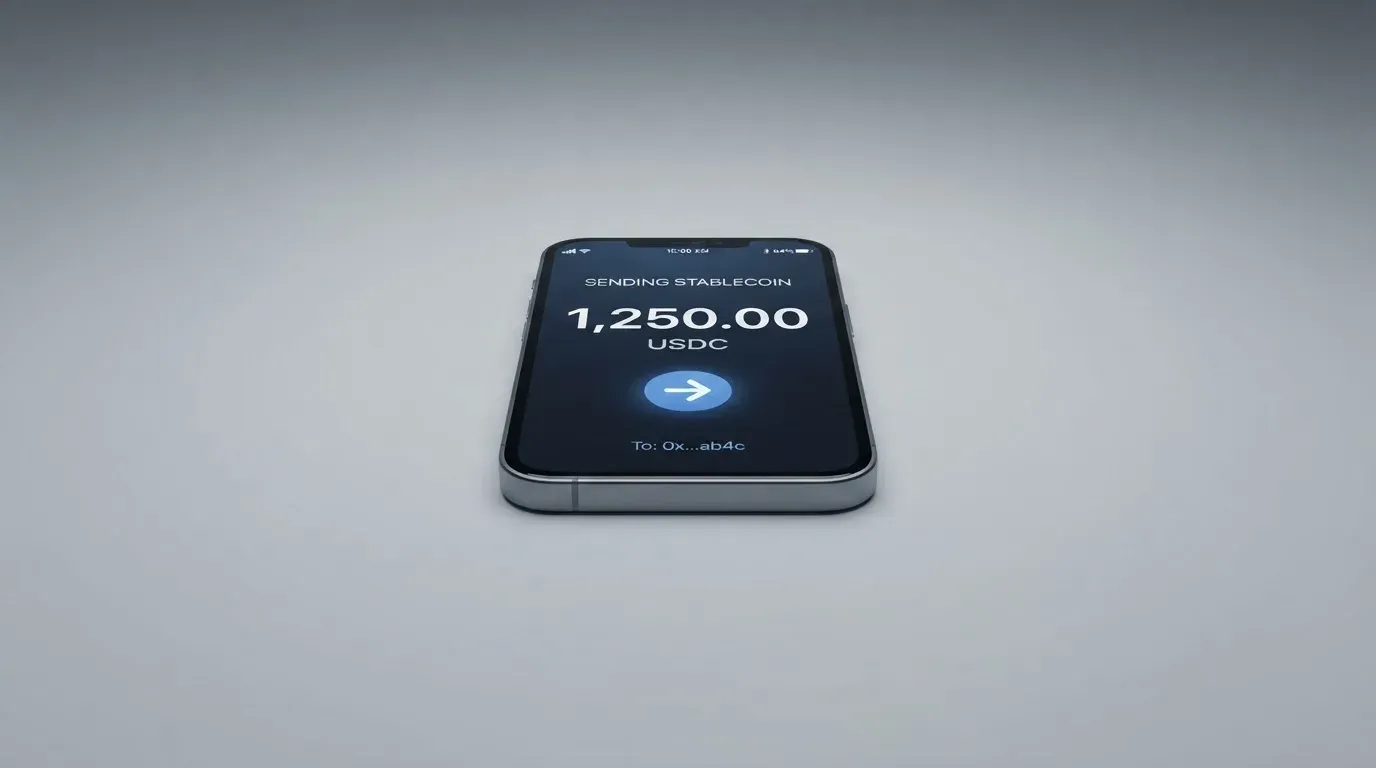
The process is buy Moon Credit with the asset, then spend. Per third-party data, the Moon 1X minimum load is $5. The deposit fee is not stated, nor is the question of who pays the network fee, the user or Moon. Fiat top-up is also not stated. Refunds go out in Bitcoin, minus network and partner fees. The remaining balance at card expiry is treated as a fee, not a refund.
For someone who already holds USDT on Tron or USDC on Ethereum, the top-up path is straightforward: send to the address Moon gives you, and the balance appears. Network choice matters. Send USDT on TRC-20 to a Moon USDC address and the tokens are likely lost. Send USDC on a network Moon does not support, and again the deposit is at risk. The deposit experience is the area where users who are not careful lose money, because blockchain transfers are irreversible.
The lack of a stated deposit fee, and a fiat top-up, is a gap. Someone who wants to load the card from a bank account has no published option. The crypto-only top-up is also the assumption behind Moon’s positioning, but it should be stated clearly, and it is not.
Paying with it every day
Day-to-day use is where Moon is least impressive. The virtual card is ready instantly, which is the feature that matters most. Apple Pay, Google Pay and Samsung Pay are listed as “on the way” but not currently supported, so tap-to-pay on a phone is not an option. Some merchants are blocked, though the list is not published.
Rewards are not stated. There is no published cashback, staking yield, or points scheme on the pages that were read, so the card is a straight spend tool, not a rewards product.
The app’s features and support hours are not officially published. Reviewers describe the experience of dealing with support when something goes wrong, which feeds into the complaints section below.
ATM access is the area with the least published information. ATM fees, ATM limits, and even whether the card can be used at an ATM are not stated on Moon’s public pages. If you need cash from the card, the answer is that Moon has not told anyone.
The everyday picture is mixed. For a small online subscription in USD, Moon works. For paying a phone in a shop, it does not. For travel or ATM cash, it is not the right product.
What can go wrong
The biggest risk is operational, not financial. Moon’s Trustpilot score is 2.5 out of 5 across 276 reviews, with 47% giving it five stars and 44% giving it one. The themes that come up over and over are frozen or restricted accounts with funds held, refunds delayed or tied to identity verification, support tickets that go unanswered, and platform outages where cards stop working.
There is no official shutdown on record, but users report a multi-day outage in early December 2025 and another in January 2026 where the platform was offline and cards were cancelled. The dates cluster: complaints about frozen accounts run from January to August 2026, refund delays from December 2025 to September 2026, unresponsive support from November 2025 to May 2026.
The company behind Moon is not fully disclosed. The footer says “Moon LLC” and the brand is “Pay with Moon.” The legal entity, registration, issuer bank, and licences are not published on the pages that were read. The card is issued by partner financial institutions under a Visa licence, but Moon does not name them. For a reader comparing cards, that opacity is itself a risk factor: if the issuer changes, or if the programme is suspended, the user has limited visibility.
Moon’s own terms say “Moon is not a custodial service,” which is a meaningful claim in the crypto world. A non-custodial product is one where the user holds the keys, and the platform cannot freeze the funds. The complaint pattern, accounts frozen with money inside, suggests that whatever Moon means by “not custodial,” users experience the platform as a place that can hold their funds. The contradiction between the marketing and the experience is worth noting.
Sanctions and compliance are also live. Moon does not support sanctioned regions, and the platform reserves the right to request proof of eligibility, block merchants, and delay refunds for verification. None of that is unusual for a regulated product, but on a card where the issuer is not named, the user has no obvious place to escalate.
What to take instead
The comparison set is small because the segment is small. Three alternatives show up in the same bracket, and each makes a different trade.
Cardex
Cardex scores 5.6 out of 10, the same as Moon, but covers a wider ground. The platform advertises one crypto card across “200+ countries,” with no public country list either. The interesting part is the network spread: VERVE, Visa, Mastercard, and UnionPay, with virtual and physical cards. The app store listing is Naira-focused, so the card currency is the Nigerian Naira, and the pricing model is an “AI-Powered Conversion Rate” that picks the best rate at the moment of payment. Fees are not stated in the published materials.
CardFlow
CardFlow scores 4.9 out of 10 and is positioned for Nigeria, with the tagline “Nigeria’s smartest fintech card platform.” It also serves “Nigerians and global users,” with no country exclusions. The product is a virtual USD Mastercard that is created in 3 minutes and is free to create. Funding is Bitcoin, USDT, ETH, or Naira bank transfer, with networks not stated. Fees are not stated.
HyperCard
HyperCard scores 4.7 out of 10. There is no official country list; the app store says the card works in “more than 176 countries,” but that is acceptance, not eligibility. The card is a prepaid HyperCard with no stated network, balance in USD or EUR, and funding via USDT, BTC, or ETH converted in the app. Networks and fees are not stated.
The choice between Moon and these three comes down to geography and stablecoin access. If you are outside Nigeria and want a Visa denominated in USD, Moon is closer to what you need. If you are in Nigeria, Cardex and CardFlow are built around you. If you want a Mastercard with a USD or EUR balance and do not need Apple Pay, HyperCard is worth a look.
Who I would recommend it to
Moon is a tool for a specific use case, and the use case is small online payments in USD funded by stablecoins or Bitcoin. The first Moon X card is free, the virtual card is ready instantly, and the transaction fee of 1% with a $1 minimum is acceptable on purchases of $50 and up. On smaller purchases, the fee stings.
It is not a card for travel. There is no published ATM access, no Apple Pay or Google Pay, and no rewards. It is not a card for large balances. Per third-party data, the monthly spend cap on Moon X is $4,000 across all cards, and the Moon Credit purchase limit is $10,000 a day or $30,000 a month. It is not a card for someone who wants to know who their issuer is. Moon does not name the bank.
If you are outside the sanctioned regions, hold USDT on TRC-20 or USDC on ERC-20, want a Visa number online today, and can live with the complaint pattern, Moon does the job. If you want a card for daily spending, a card for travel, or a card with a published, regulated issuer, look elsewhere.
The honest summary: Moon is a quick crypto-to-Visa, useful as a backup payment method, priced like one, and you should not load more than you can afford to wait for if the support queue gets long.
Frequently asked questions
What is Moon card?
Moon is a prepaid Visa that draws on a crypto-funded balance. You buy Moon Credit with Bitcoin, Lightning, USDT on TRC-20, USDC on ERC-20, or ETH, and spend that balance through a Visa number. The first Moon X card is free and virtual, ready as soon as you sign up.
How does Moon card work?
You sign up with email and a password, confirm a two-factor code by email, send crypto to a Moon address, and the equivalent USD shows up as Moon Credit. The card spends that balance. Refunds are paid back in Bitcoin, minus network and partner fees. Cards are valid for three years from purchase, and an unused balance at expiry is treated as a fee, not a refund.
Is Moon a bank?
No. Moon’s footer says “Moon LLC,” and the cards are issued by partner financial institutions under a Visa licence. Moon does not publish the issuer’s name, registration, or licences on the pages that were read. The platform describes itself as “not a custodial service,” though user reports describe accounts being frozen and funds being held, which can look custodial in practice.
Is Moon card available in my country?
Unofficial sources, citing Moon’s terms, say “over 130 countries” for Moon X, with no public list and no per-country detail. Sanctioned regions are excluded, and purchases from disallowed countries will not go through. If you are not in a sanctioned region, the practical answer is to sign up and try, because the country list is not published anywhere.
Does Moon card require KYC?
The signup flow is email and password, with no published list of identity documents and no published KYC tiers. The terms reserve the right to ask for proof of eligibility, and Trustpilot reviewers report being asked for ID before a refund is released, so identity checks do happen, usually at the refund or withdrawal stage rather than at sign-up.
How do I top up Moon card?
Send BTC, Lightning, USDT on TRC-20, USDC on ERC-20, or ETH from a wallet you control to the address Moon gives you. The platform converts the deposit into USD-denominated Moon Credit. Per third-party data, the Moon 1X minimum load is $5, and the Moon X monthly spend cap is $4,000 across all cards. The network you use has to match what Moon expects: USDT on TRC-20 is not the same as USDC on ERC-20, and a mismatched deposit is likely lost.
Is Moon card free?
The first Moon X card is free, and additional Moon X cards are $2.99 each. Moon 1X is $1.49 per card. Moon X charges 1% on every transaction, with a $1.00 minimum. There is no monthly fee and no FX fee charged by Moon, but per third-party data, a $0.50 fee applies to declines, reversals and refunds after 20 in a month, and an unused balance at expiry is treated as a fee.
Can I add Moon card to Apple Wallet?
No. Unofficial sources say Apple Pay, Google Pay and Samsung Pay are listed as “on the way” but are not currently supported. Until tokenisation is added, the Moon card is a number you type in at checkout, not a tap-to-pay option.
Is Moon card safe?
Moon does not name its issuer, registration, or licences, and a Trustpilot score of 2.5 out of 5 across 276 reviews is a clear signal that users have had problems. The recurring complaint pattern is frozen accounts, withheld refunds, and unresponsive support. The crypto side of the platform is non-custodial in its own description, but the practical experience, money held while KYC runs, is closer to custodial. Treat the balance as money you can wait for, not money you can move at will.
How do I delete my Moon account?
The published pages do not describe an account-closure flow. If you want to leave, the practical path is to spend or withdraw the balance, then contact support. Refunds on remaining balance are paid in Bitcoin, minus network and partner fees, and an unused balance at card expiry is treated as a fee rather than returned.
Virtual card fees – cryptocardfacts
Content created by the «cryptocardfacts» team