
Ethena Pay Card Review — What 6.7/10 Looks Like in Practice
 Available in US
Ethena Pay scores 6.7 out of 10 in our assessment. That is not a failure — it is a service with a genuinely free virtual card, no monthly fee, and one of the more generous cashback bands in the crypto card category, wrapped in a beta that is not licensed as a financial institution and is limited to 48 countries. The card is built for a specific person: someone already holding USDe or other crypto collateral who wants to spend it without first converting everything to fiat in a traditional bank account. If that is you, there is real value here. If you are simply looking for an ordinary debit card with a bank behind it, this is the wrong product, and the reasons why run deeper than the marketing page suggests.
Below is what I checked, what I found, and where I would tell you to look before you commit.
The conditions described here are current as of October 28, 2026.
Verdict: 6.7/10, and who it suits
The single most useful thing about Ethena Pay is that the virtual card is free to open, free to keep, and free to replace, with no minimum balance and no inactivity fee. Spend in USD costs nothing. That is a cleaner baseline than most cards in this category, which often attach a monthly charge or a minimum holding requirement to unlock anything. Add cashback paid daily in AVAX and a Daily Boost that pays 6% a year on balances up to $100,000, and the arithmetic is genuinely attractive for someone who spends steadily.
The other side of that is the company’s own admission. Ethena Pay Ltd. is a Maltese limited company (number C114576) that states plainly it is “not licensed, registered, authorized, or otherwise approved” by financial regulators, and it works through third-party providers. The official terms do not name a card issuer. That is not automatically disqualifying — plenty of legitimate programmes run through licensed partners — but it means the party responsible for your money is not obvious from the paperwork, and you are the one carrying the risk when something goes wrong.
So: suits you if you already hold USDe or crypto collateral, you spend in a country on the list, and you are comfortable with a beta product run by an unlicensed programme manager. Does not suit you if you need a card with a named bank behind it, if you need Android, if you want to hold several currencies at once, or if you are somewhere the service simply is not available.
Here is the score broken down, criterion by criterion:
| Criterion | Mark | Why |
|---|---|---|
| Who can get it | 7 / 10 | Invite-only beta across 48 countries in Latin America, the Caribbean, Asia, the Middle East, Africa and Oceania. US persons are not eligible. |
| Cost | 8 / 10 | Virtual card, account opening and maintenance are free. FX on non-USD is “typically around 1.0%” at network rate; ATM withdrawal is $1.00 plus 0.65%. |
| Top-up options | 5 / 10 | Self-custody wallet with USDe and other assets as collateral; spending debits USDe. Partners MoonPay and Iron are named, but no coins or networks are listed. |
| Reliability and complaints | 5 / 10 | Ethena Pay Ltd. in Malta, C114576, states it is unlicensed; the issuer is unnamed in the terms. Unofficial sources name Third National and Signify (Rain). A 400-user beta, no complaints found. |
| Everyday use | 8 / 10 | Virtual card in about a minute with Apple Pay; physical cards listed in Standard, Pro and VIP tiers; ATMs available; Google Pay “available soon”. Unofficial reports say virtual only. |
| Total | 6.7 / 10 | Free to run, well-rewarded, but young, unlicensed at the programme level, and narrow in geography and top-up detail. |
A word on where those limits come from. The Daily Boost caps — Standard $5,000, Pro $100,000, VIP $1,000,000 — are the only hard numbers published for how much the system will work with. No spending limits are listed, but the terms reserve the right to impose transaction limits and change them without notice. Third-party reporting describes spending limits as dynamic, tied to collateral value, and capable of dropping to zero. I treat that as unofficial, since it comes from a review site rather than the card’s own pages, but it is the kind of thing that shapes day-to-day experience more than any fee.
Will they give you the card
They will, if you live in one of 48 countries and are over 18, and you pass identity verification. You will not, if you are a US person, or if you are located in, ordinarily resident in, or established in a restricted jurisdiction.
The list breaks down by region:
- Latin America (17): Argentina, Belize, Bolivia, Brazil, Colombia, Costa Rica, Ecuador, El Salvador, Guatemala, Guyana, Honduras, Mexico, Panama, Paraguay, Peru, Suriname, Uruguay
- Caribbean (12): twelve countries, not individually named on the pages I checked
- Asia and the Middle East (8): Hong Kong, Japan, Malaysia, Pakistan, Philippines, Singapore, Thailand, UAE
- Africa (9): Cote d’Ivoire, Egypt, Ghana, Kenya, Morocco, Senegal, South Africa, Uganda, Zambia
- Oceania (2): Australia, New Zealand
The United States is excluded, and the terms list the US, EU, UK, Canada, Switzerland, Taiwan and South Korea as “coming soon” rather than available now. That is the single largest limitation for many readers, and it is worth being blunt about it: if you are in a country not on that list, no amount of reading this review will change your answer.
One clarification that matters, because people conflate it constantly. The restricted jurisdictions in Terms 4.6 — which include Belarus and Russia — restrict anyone “located in, ordinarily resident in, established in, or accessing the Services from” them. That is a statement about residence and physical location, not citizenship. A citizen of one of those countries living legally in, say, Mexico is in a supported country. A citizen of a supported country who is sitting in Moscow is not.
How to get it
Three steps, and the slow part is the verification, not the card.
- Register an account in the app or on the site.
- Complete identity verification.
- Generate your virtual card — about a minute — and add it to Apple Pay.
Verification is handled by Ethena Pay or by third parties including Sumsub. The terms give them a wide berth: they may request “government-issued photo identification, proof of address, source of funds information”, plus tax details and biometric or liveness data. One account per person, minimum age 18.
That list of documents is the part to prepare for in advance. “Source of funds information” is the one that catches people out — if you have been buying crypto steadily from an exchange, be ready to show statements. And a note that third-party reviewers keep repeating: passing the checks does not guarantee approval. Assume the possibility of a refusal and keep your fallback funding route open.
The card itself is virtual, generated in about a minute, on the Visa network, denominated in USD, with spending in USD free of charge. Physical cards exist in the Standard, Pro and VIP tiers — where they ship, how long they take and what they cost is not stated on the public pages. One third-party site (CryptoCardHub, September 2026) says the card is virtual only with no physical option at all, which contradicts the official tier pages. I would treat the official pages as more likely correct and the single third-party claim as an early snapshot of the beta, but the point is unresolved.
Fees: what a payment actually costs
Here is the honest summary: opening the account is free, keeping it is free, the virtual card is free to issue, replace and activate, there is no minimum balance, and there is no inactivity fee. There is no cross-border fee, no domestic USD purchase fee, and 0.00% interest on purchases. On the everyday path — hold USDe, spend USD — you pay nothing beyond the network’s own conversion of your collateral into the balance.
The fees and limits that do exist:
| Fee or limit | Value |
|---|---|
| Virtual card issuance | Free |
| Card replacement and activation | Free |
| Account opening | Free |
| Monthly maintenance | Free |
| Minimum balance | None |
| Inactivity fee | None |
| FX on non-USD transactions | “Typically around 1.0%”, passed through from the card network at cost — not a cap, not a guarantee |
| Domestic USD purchase | No fee |
| Cross-border fee | None |
| Interest on purchases | 0.00% |
| Cash withdrawal (ATM) | $1.00 plus 0.65% of the amount, plus any ATM operator surcharge |
| Late payment fee | Up to $40 |
| Returned payment fee | Up to $29 |
| Third-party fees | Gas and funding partner charges, billed separately |
| Crypto conversion fee | Not stated |
| Physical card fee | By tier, not listed |
Two everyday payments, so the abstract numbers mean something.
Buying a $60 lunch abroad. The USD card converts at the network rate, with the “typically around 1.0%” passed through. If you had expected no conversion cost at all because the card is “free”, this is the line item that catches people. And “typically around” is doing real work in that sentence — it is neither a cap nor a guarantee, so a month where the network rate is worse costs more, and nothing in the terms caps it.
Withdrawing $200 in cash. That is $1.00 plus 0.65% of $200 — and the ATM operator may add its own surcharge on top, plus whatever your own bank charges for the cash advance. Availability depends on your eligibility, so confirm before you rely on it.
A third case worth naming because it is the one people find out about late: a purchase of under $1.00 earns no cashback at all. Small daily transactions — a coffee, a transit top-up — quietly earn nothing.
And the one number that does not fit the pattern: an unofficial report from a Philippines user (CryptoCardHub, September 2026) that the app quoted a $10 charge for a first card. The official pages say the virtual card is free. Either the user hit a physical-card fee, a tier upsell, or something that has since changed. It is a single isolated report, but if a fee appears at signup, check what it is for before paying it.
Top up: how the money gets in
The model is self-custodial. Your wallet holds USDe and supported digital assets as collateral, and when you spend, the card debits your USDe balance. Nobody holds your keys — Ethena Pay states it “doesn’t hold your funds, keys, or seed phrases” and provides no custodial or safeguarding service.
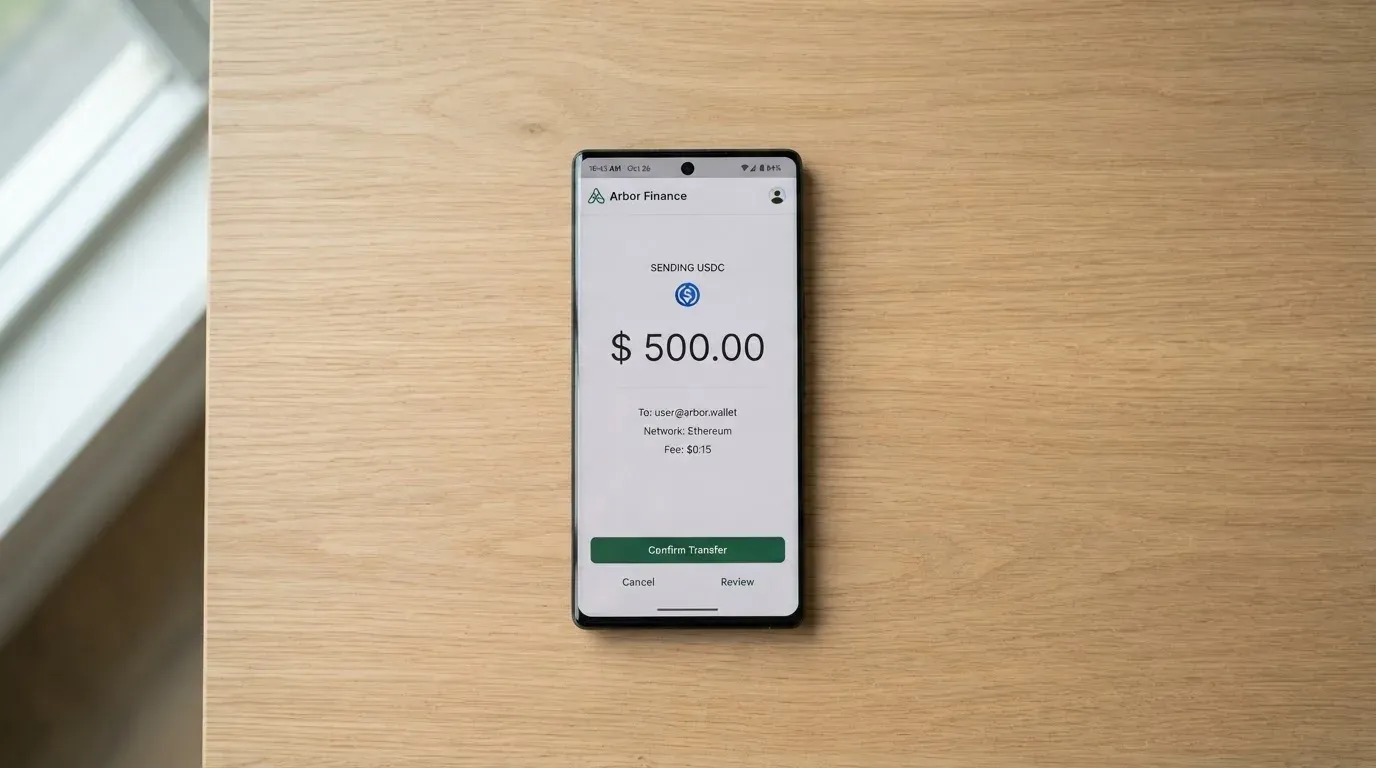
There are funding partners. MoonPay and Iron are both named. Beyond that, the specifics are thin: no coins and no networks are listed on the public pages. The app launched on Avalanche, per a headline in The Defiant, which suggests that is a supported network — but a headline is not a specification, so treat Avalanche as a lead rather than a fact.
What I can tell you plainly:
- Sending to another Ethena Pay user is free.
- No deposit fee is published.
- No minimum top-up is stated.
- Third-party funding fees — MoonPay, Iron, gas — are charged separately and are not included in the card’s own pricing.
Those points together are the whole of the funding story, and they are why this card scored 5 out of 10 for top-up options. You are funding from your own wallet, which is a genuine benefit if you are already self-custody, and a non-starter if you are not. There is no bank transfer path, no debit card top-up, and no exchange-deposit-and-spend flow documented on the public pages.
One caution that applies to any self-custody top-up, not just this card: blockchain transfers are irreversible. A deposit sent on a network the provider does not support, or to an address belonging to another network, can be lost outright or need manual support recovery with no guarantee. Check the network before you send, every time.
Paying with it every day
Set expectations in order of how much they will matter to you.
Apple Pay works today. The card generates in about a minute and goes straight into Apple Wallet. Google Pay is “available soon” — not available now, so if you are on Android, that is a real gap. The app is an iPhone app in beta; Android was planned per one third-party report, and an Australian App Store listing showed two ratings, both 5.0, as of 2 September 2026 — a sample too small to mean much.
Cashback is the strongest part of the offer. It pays daily after settlement, in AVAX:
| Tier | Band 1 | Band 2 | Band 3 | Band 4 |
|---|---|---|---|---|
| Standard | 4% on the first $2,500 monthly | 1% on $2,500–$4,000 | 0% above $4,000 | — |
| Pro | 4.5% to $8,000 | 2% | 1% | 0.5% |
| VIP | 5% to $20,000 | 2% | 1% | 0.5% |
Read the top band carefully. Standard pays 4% on the first $2,500 and then falls to 1%, and to nothing above $4,000. If you spend heavily, Pro and VIP are where the cashback is real, and Pro is reached by subscription or referrals.
Several things are excluded from cashback: cash advances, ATM withdrawals, crypto, stablecoin, NFT and securities purchases, gambling, gift cards, peer-to-peer payments, and account funding. Transactions under $1.00 earn nothing. Refunds reverse the cashback, and refunded, charged-back or ineligible purchases drop out of your monthly spend total — which can push you back into a lower band for that month.
The Daily Boost is a separate layer on top: 5% a year on balances up to $5,000 for Standard, and 6% a year up to $100,000 for Pro and $1,000,000 for VIP, requiring one card transaction per month. The condition worth noting is that last clause — one transaction a month to keep it alive.
Card currency is USD. Spending in another currency converts at the network rate. Multi-currency balances are not offered.
If a purchase goes wrong: disputes are handled by email to [email protected], acknowledged within five business days with a final response targeted within fifteen. No time frames for chargeback decisions are stated. Chargebacks can be deducted from your balance, and a negative balance remains your liability.
What can go wrong
Grouped roughly by how much each is likely to affect you.
The programme is unlicensed at the top. Ethena Pay Ltd. states it is “not licensed, registered, authorized, or otherwise approved” by financial regulators and operates through third-party providers. The official terms name no card issuer. Third-party sources — CryptoCardHub and The Defiant, September 2026 — report the Visa card is issued by Puerto Rico-chartered Third National and managed by Signify Holdings (Rain). Treat the issuer as unconfirmed until you see it in your own account documents.
The beta is small and young. Launched on Avalanche as an iOS beta with 400 early users, per The Defiant. An invite-gated beta launched 1 September 2026 in 49 countries, per CryptoCardHub, whose page was updated 24 September 2026. Version 1.3.0 improved notifications, limits, cashback and verification. Four hundred users is a very small pool from which to judge how the service behaves when a payment network has an outage.
Limits can move without warning. The terms reserve the right to impose and change transaction limits without notice. Third-party reporting describes spending limits as dynamic and tied to collateral value, reducible even to zero. If your USDe collateral falls, your spending capacity may fall with it — that is the structural feature of a collateral-backed card, and it is worth internalising before you rely on it.
Self-custody means self-responsibility. Ethena Pay does not hold your funds, keys or seed phrases. Lost keys cannot be recovered, because no one else has them. You carry the full weight of phishing, seed phrase compromise, and clipboard-hijacking malware that swaps a copied address between the moment you copy and the moment you send.
Chargebacks can leave you in the red. If a dispute is decided against you, the amount can be deducted from your balance, and a negative balance stays your liability.
The card can look foreign. A Visa number carries a 6- or 8-digit issuer identification number that merchants can look up. When the issuer’s country differs from the billing address on file, some merchants apply extra scrutiny or decline — which is why a card issued in one country can behave oddly in another. Address verification is generally unavailable for foreign-issued cards, which is a common cause of declined online payments.
Declines can leave a hold. A declined authorisation may place a hold on funds that can sit for several days, typically up to seven. If your balance is your spending money, that is a liquidity problem, not just an inconvenience.
Small transactions earn nothing. Under $1.00, no cashback. A wallet of micro-payments is a wallet of nothing.
On the other side of the ledger: no official incidents found, no Trustpilot or Reddit pages surfaced in one search, and the only editorial rating I found was SpendNode at 3.9 out of 5 in September 2026. That is a thin record, and thin is not the same as clean. There is not enough history here for me to have an opinion about how this service behaves in a bad month.
What to take instead
If Ethena Pay’s geography does not reach you, or an unlicensed programme manager makes you uneasy, these are the other crypto cards with published information. I have not tested any of them; this is a comparison of what their pages state.
| Card | Score | Card and fees | Funding and rewards |
|---|---|---|---|
| Sponge | 4.9 / 10 | Virtual card, described as a Rain credit card on Visa; no costs, fees, eligibility or currency stated | USDC collateral moved from the Sponge wallet; no rewards stated |
| Nexo | 6.3 / 10 | Virtual and physical; issuer DiPocket UAB; no monthly, annual or inactivity fee; virtual card needs at least $50 to activate; FX 0.2% (EEA/UK/CH) on weekdays and 2% rest of world, 0.7% and 2.5% at weekends | Spends from the Nexo account across 100+ assets; cashback in NEXO or Bitcoin only in Credit Mode with $5,000+ held, from 2% (Platinum) down to 0.5% (Base) |
| Xplace | 7.7 / 10 | Visa; virtual instant, physical Silver live and Gold/Platinum coming soon at 7–14 business days; annual fee Basic free, Silver $99, Gold $249, Platinum $999; 0% FX on Platinum | Deposits BTC, ETH, SOL, JitoSOL, USDC, USDT, xStocks on Solana; Cash mode spends stablecoin balance, Credit mode borrows against holdings; credit-mode cashback 0.5%–2% paid in USDC |
Where each one wins and loses against Ethena Pay:
- Xplace is the closest comparison and the one I would look at hardest. It charges an annual fee where Ethena Pay charges nothing, but it names its tiers and its numbers, and the 0% FX on Platinum is a real edge if you spend outside the US. It does not publish an eligibility country list.
- Nexo is the established name, with a named issuer and a clear fee schedule, and the only one of the three whose cashback structure is fully published down to the tier rates. Its geographic scope is different — residents and citizens of selected European countries including the EEA and the UK — and its FX outside that zone is far steeper. Worth knowing, though it is a news report rather than an official statement: Cointelegraph reported a 2025-era Bulgarian police raid on Nexo’s Sofia office over alleged sanctions and anti-money-laundering violations, with no official statement from Nexo about Russians found on the premises.
- Sponge publishes the least. No fees, no eligibility, no rewards, no currency. I would not choose it over Ethena Pay on that basis alone.
Note what all three share with Ethena Pay: each is a card programme run by a company, routed through a licensed issuer, spending collateral you hold. None of them removes the underlying risk. What differs is how much each one tells you, and how much it costs when it does not.
Who I would recommend it to
I would recommend Ethena Pay to someone in this specific position: you hold USDe or other crypto collateral in your own wallet, you are in one of the 48 supported countries, you spend mostly in USD or are comfortable with a network-rate conversion, and you want cashback paid daily in a token you already hold rather than a statement credit. You are comfortable with an invite-gated beta run by a company that tells you it is not licensed. You use Apple Pay. You will not be devastated if a transaction under a dollar earns nothing, and you will not be surprised if your spending limit shrinks when your collateral does.
I would not recommend it to you if any of these are true:
- You are in the United States, the EU, the UK, Canada, Switzerland, Taiwan or South Korea — none of these are available to you today.
- You are on Android and need Google Pay.
- You need a named, regulated bank behind the card. Ethena Pay does not put one there.
- You want to hold balances in more than one currency.
- You are new to self-custody. There is no one to recover your keys but you, and no support path that can do it for you.
The honest summary is that this is a good product with a thin safety net. The economics are better than most of what I have read in this category — free card, free account, daily cashback in AVAX, 6% on balances if you use the card monthly. The governance is weaker than most of them — an unlicensed programme manager, an unnamed issuer on the official terms, a 400-user beta, and a payout token whose price you are exposed to. Those two sentences are the whole review. Everything above is detail.
Frequently asked questions
What is the Ethena Pay card?
Ethena Pay is a Visa payment card that spends crypto collateral held in your own self-custodial wallet. You hold USDe and other supported assets; when you pay, the card debits your USDe balance. It is run by Ethena Pay Ltd., a Maltese company, with virtual and physical options across Standard, Pro and VIP tiers, and cashback paid daily in AVAX. It is currently an invite-gated beta.
How does the Ethena Pay card work?
You register, pass identity verification, and generate a virtual card in about a minute, which you can add to Apple Pay. Your wallet holds assets as collateral, and spending debits the USDe balance. Card payments run on the Visa network in USD; non-USD purchases convert at the network rate with about 1.0% passed through. Apple Pay works now; Google Pay is listed as available soon.
Is Ethena Pay a bank?
No. Ethena Pay Ltd. states in its terms that it is “not licensed, registered, authorized, or otherwise approved” by financial regulators and works through third-party providers. Its own terms do not name a card issuer. Third-party reporting names Third National, a Puerto Rico-chartered issuer, with Signify Holdings (Rain) managing the programme — but that is not confirmed on the official pages, and you should verify it in your own account documents.
Who owns Ethena Pay?
Ethena Pay Ltd. is a Maltese limited company, number C114576, registered in Ta’ Xbiex, Malta. It is the company behind the card programme rather than a bank holding deposits. The card is on the Visa network, and the issuer behind that Visa programme is not named in the official terms.
Is the Ethena Pay card available in my country?
It is offered in 48 countries across Latin America, the Caribbean, Asia, the Middle East, Africa and Oceania. The United States is excluded, and the EU, UK, Canada, Switzerland, Taiwan and South Korea are listed as coming soon. Terms 4.6 restrict anyone located in, ordinarily resident in, or accessing the services from Belarus or Russia — that is about residence and location, not citizenship.
How do I get the Ethena Pay card?
It is an invite-gated beta, so registration depends on an invitation. Once in, you register an account, complete identity verification through Ethena Pay or third parties including Sumsub, and generate your virtual card in about a minute. Verification may request government photo ID, proof of address and source-of-funds information. You must be 18 or over, and one account per person is allowed.
Does the Ethena Pay card require KYC?
Yes. Verification is required and may be carried out by Ethena Pay or by third parties including Sumsub. Under Terms 4.8 they can ask for government-issued photo identification, proof of address, source of funds information, tax data and biometric or liveness checks. Note that passing the checks does not guarantee approval, according to third-party reviewers — so keep a fallback funding route open.
Is the Ethena Pay card free?
The virtual card is free to issue, replace and activate, and there is no monthly maintenance fee, no minimum balance and no inactivity fee. Spending in USD is free. Costs appear elsewhere: non-USD conversion runs at about 1.0% passed through at network rate, ATM withdrawals cost $1.00 plus 0.65% plus any operator surcharge, and a late payment fee can reach $40. One unofficial report from a Philippines user cited a $10 first-card charge.
How do I top up the Ethena Pay card?
You fund from your own self-custodial wallet, which holds USDe and supported digital assets as collateral. Funding partners MoonPay and Iron are named, but no coins and no networks are published on the card’s pages — the app launched on Avalanche per a press headline. Sending to another Ethena Pay user is free, no deposit fee is published, and third-party funding and gas charges are separate.
Is the Ethena Pay card safe and worth it?
Safe is the wrong question; the honest one is where the risk sits. Your keys stay with you, which means nobody can spend your funds but also nobody can recover them for you. The programme itself is unlicensed at the top level, the beta has 400 early users, and third-party reporting says spending limits can shrink with your collateral. Worth it if you already hold USDe and spend steadily. Not worth it if you need a regulated bank behind the card.
Credit and cashback card costs – cryptocardfacts
Content created by the «cryptocardfacts» team