
A self-custody crypto card priced for the curious, with questions a careful reader should still ask
 Available in US
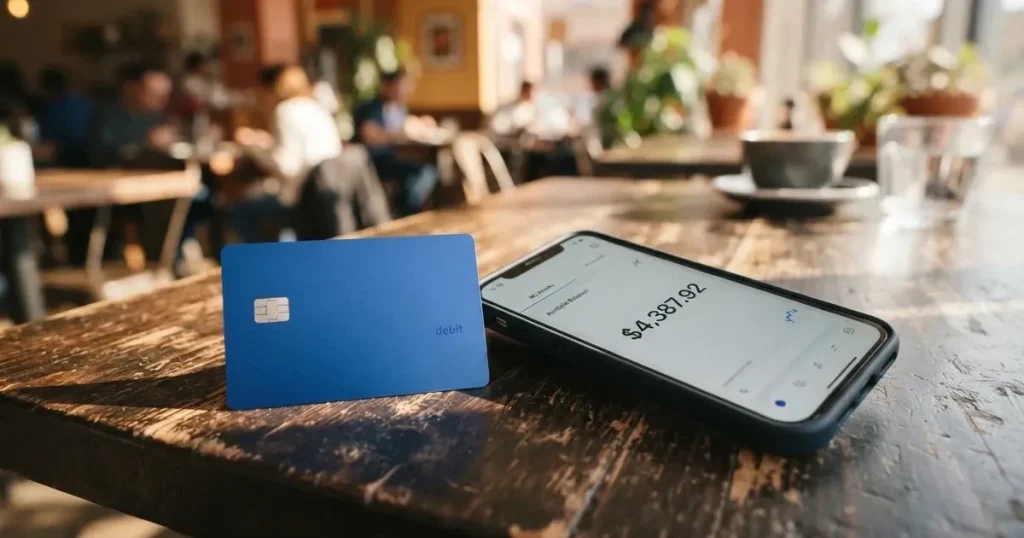
XHYPE pitches itself as a payment card for people who already keep their crypto in their own wallet. The product wraps that idea into a prepaid card you can load with stablecoins, top up from a self-custody Superwallet and spend through Apple Pay or Google Pay, or pull from an ATM on the paid tiers. It is not a bank, it does not lend, and the company behind it, XHYPE FZCO in Dubai, is explicit that it does not issue the card itself; an unnamed third-party issuer does. That structure shapes almost everything about it: where the card is available, what the fees look like, and what kind of reader it actually fits.
This review walks through who can get the card, how the sign-up works, what the real costs are, how the top-up process plays out, how it feels in daily use, where the risks sit, and what the alternatives are if you decide XHYPE is not quite right. The score at the end of the verdict section reflects the trade-offs I found in the card’s public pages and in third-party profiles that read the same product differently.
The conditions described here are current as of October 28, 2026.
Verdict
XHYPE lands at 7.0 out of 10 in my reading. That is a respectable score for a card that has been around long enough to gather both an official story and a parallel third-party profile that disagrees with parts of it. The breakdown below shows where the marks came from and where they did not.
| Criterion | Mark | Reason |
|---|---|---|
| Who can get it | 9/10 | Cards can be ordered from 203 countries and territories; eligibility is decided by country of residence and nationality at sign-up. A third-party profile narrows this to 184 countries and lists 9 restricted jurisdictions. |
| Cost | 5/10 | The official prices are reasonable for a self-custody card: Essential $10 a year, Premium $58 a year, Whale $70 a year. A third-party profile lists much higher annual figures ($108/$228/$588) and higher reload fees (4.5%/3.5%/2.3%), which conflicts with the official site. |
| Top-up options | 9/10 | Official: USDT, USDC or the native coin on BNB Smart Chain, Ethereum, Base, Polygon and Arbitrum. A third-party profile limits top-up to USDT on Tron and BNB Chain, which conflicts with the official list. |
| Reliability and complaints | 4/10 | XHYPE FZCO is registered in Dubai; the Terms say “We are not a card issuer”. The third-party profile reports a June–July 2025 HKD Visa recharge disruption that was later marked resolved, and gives a KYCnot.me average of about 2.9/5 from 7 ratings. |
| Everyday use | 9/10 | Virtual card on every tier, physical on Premium and Whale, Apple Pay and Google Pay everywhere, ATM up to $1,500 a day on physical cards. |
If you already run a self-custody wallet, want a card you can load from that wallet, and live in a country the card serves, XHYPE does the job without dragging you into a custodial exchange. If you are a heavier spender looking for cashback, well-published FX rates, or a card whose issuer, fees and dispute process are spelled out in black and white, you will find the public pages thinner than you would like. The card is also not a good match if you need a credit line, a bank account, or a debit card tied to a fiat balance that earns interest; XHYPE is a prepaid product, full stop.
Will they give you the card
The eligibility rules are written in two layers. The first is geographic: the official page says cards can be ordered from 203 countries and territories, with a single carve-out that you must not use the services “in jurisdictions where such services are restricted”. The second is personal: eligibility is decided by your country of residence and your nationality when you apply, and the standard age floor is 18.
A third-party profile of the same product (CryptoCardHub, August 2026) gives a tighter reading: 184 countries available, with 9 specifically named as restricted: Afghanistan, Cuba, Iran, North Korea, Somalia, South Sudan, Sudan, Syria and Yemen. This list is unofficial, so treat it as a useful indication of which countries the card may struggle with rather than a definitive blacklist. The takeaway, in either case, is that the card covers most of the world but not all of it, and that your nationality and where you actually live are both screened at sign-up.
XHYPE runs what it calls “Private KYC” through a third-party verification provider called Verinex. The official description says only that XHYPE receives the result of the check, not the documents themselves. The Terms set the age bar at 18 but do not publish the full document list or proof-of-address requirements, so I cannot tell you in advance exactly which ID you will need. A third-party profile (cryptocards.so, 2026) describes the sign-up as “No KYC”, which conflicts with the Terms; another third-party profile (CryptoCardHub, August 2026) says routine ID checks are not advertised at signup but every deposit is screened for anti-money-laundering risk and flagged funds may be rejected. The most reliable reading is the one the Terms actually give you: a verification step happens, and what is checked is not publicly detailed.
If you are in a country the card supports, the path looks straightforward: you sign up through the web app at superwallet.xhype.io, you verify, you pick a tier, you deposit crypto, and you load the card. If your country or your passport is on a restricted list, you will not get past verification, and the company does not publish the full list of reasons a check can fail.
How to get it
The sign-up flow runs entirely in the browser, not in a phone app. There is nothing to download: the Superwallet lives at superwallet.xhype.io and you do everything from there. No App Store or Google Play listing exists for the wallet, and there is no native rating to compare it against. That is a deliberate design choice, and it matters for what the card is and is not.
You start by creating an account, then you run through the Private KYC step with Verinex. Once verification comes back, you pick a plan, deposit crypto, and load that crypto onto the card. The card itself is prepaid, not a debit card against a bank account, and there is no credit line and no overdraft. Virtual cards are available on every tier; physical cards come with Premium and Whale, not with Essential.
Delivery is described in the public pages as follows: the virtual Essential card is delivered instantly. Physical cards on Premium and Whale take about 15 days from the moment a correct address is entered. The card network (Visa or Mastercard) is not stated on the official page; a third-party profile advertises both Visa and Mastercard programmes, and the same source describes them as virtual-only with no physical card, which conflicts with what the official tier table shows about physical cards on Premium and Whale. I have not been able to confirm the network from the card’s own pages, so treat that detail as not confirmed.
KYC levels, processing times and the full list of rejection reasons are not stated in the public materials. The Terms set 18 as the age floor and that is as specific as it gets. If your verification fails, the reason you are given (if any) is the only signal you will have about whether to re-apply.
A practical point worth raising before you commit: sign-up and the first deposit are AML-screened. That means even if your country is on the supported list, the source of your funds can still be a reason for a hold or a decline. There is no public schedule for how long such reviews take.
What it really costs: fees, limits and the real-world bill
This is where the third-party profile and the official site disagree most loudly, and where the reader has to decide which set of numbers to plan around. I am laying out both below because both are circulating publicly.

The costs at a glance
| Fee or limit | Essential | Premium | Whale |
|---|---|---|---|
| Annual fee (official) | $10 / year | $58 / year, or $118 / 3 years | $70 / year, or $148 / 3 years |
| Annual fee (third-party profile, Aug 2026) | $108 / year | $228 / year | $588 / year |
| Top-up fee (official) | 2.1% | 1.8% | 1.2% |
| Top-up fee (third-party profile, Aug 2026) | 4.5% | 3.5% | 2.3% |
| Foreign-exchange fee | Not stated | Not stated | Not stated |
| ATM fee | Not stated | Not stated | Not stated |
| ATM limit per transaction | — | $1,500 | $1,500 |
| ATM limit per day | — | $1,500 | $1,500 |
| ATM operations per day | — | 30 | 30 |
| ATM limit per month | — | $15,000 | $15,000 |
| Annual card limit | $50,000 | $250,000 | $1,000,000 |
| Virtual cards | 1 | 1 | 2 |
| Physical cards | 0 | 1 | 1 |
The official page also says the app shows current prices, which is a polite way of saying the public page may not be the last word on what you will be charged.
A few observations for someone budgeting realistically. The first is that the top-up fee is the figure that will hit you most often, because every load of the card carries it. On Essential at the official 2.1%, a $500 top-up costs you about $10.50 before you have bought anything. On Premium at 1.8%, the same $500 costs $9. On Whale at 1.2%, it costs $6. If you are a heavier spender moving toward the $1,000,000 annual ceiling, those percentage points add up to a real difference between tiers, and the third-party profile’s higher reload numbers would make that gap much wider.
The second is that the FX fee is not stated. If you spend in a currency other than the one your balance is held in, you will pay an FX fee, and you will not know in advance what it is. The third-party profile describes it only as a “standard fee” with no percentage published, which means the honest answer is that the FX cost is not transparent in the public materials. For someone who travels, that is a meaningful gap.
The third is the ATM. Physical cards on Premium and Whale work at ATMs, with a $1,500 per-transaction and per-day cap, a 30-transaction daily limit, and a $15,000 monthly cap. The ATM fee itself is not stated, and neither is the conversion fee that the ATM operator may apply on top. Cash, in other words, is the most expensive part of the card to use, and the published numbers cover only the issuer side.
The fourth is the annual card limits: $50,000 on Essential, $250,000 on Premium, $1,000,000 on Whale. The third-party profile reports lower annual recharge ceilings ($25,000 / $50,000 / $100,000) and no universal daily or monthly spend cap; that conflicts with the official limits, but it is worth keeping in mind if you are planning around a large annual spend.
Three everyday payments and what they cost
To make the numbers less abstract, here is how the fees work for three common situations, using the official top-up percentages and the published limits. The FX line is left open because the card does not publish an FX percentage.
- A $200 grocery run on Essential, paid in your balance currency with a debit-style tap. You top up $200 first, paying 2.1% ($4.20) in the top-up fee, and then the card debits $200. Total cost of the load: $4.20, or about 2.1% of the spend. If you reload several times a month, those small loads stack up against the annual $10 fee.
- A $40 dinner paid through Apple Pay on Premium, in a foreign currency. You top up $40 at 1.8% ($0.72). The transaction itself also carries an FX conversion, and the FX fee is not stated publicly, so the true cost is the $0.72 plus whatever percentage the issuer charges on the conversion. If the third-party profile’s “standard fee” sits anywhere in the 0.5%–2% range typical of crypto cards, you are paying roughly $0.20 to $0.80 on top.
- A $300 ATM withdrawal on Whale. ATM withdrawals are limited to $1,500 per day on Premium and Whale, and a $300 withdrawal sits well under that. The ATM fee is not stated, and many ATM operators add their own surcharge for a foreign-card withdrawal, which is not an XHYPE fee. The conversion fee on the foreign currency leg is again not published. A reasonable budget for this transaction is the network’s gas, the ATM operator’s fee, and an unknown FX margin.
If you are the kind of user who reloads small amounts frequently, the top-up percentage is the cost that will dominate your year. If you load once a month in a lump sum, the annual fee is the larger line item.
Top up
The top-up flow is the part of XHYPE that has the cleanest story on the official site, and the part that a third-party profile most directly contradicts.
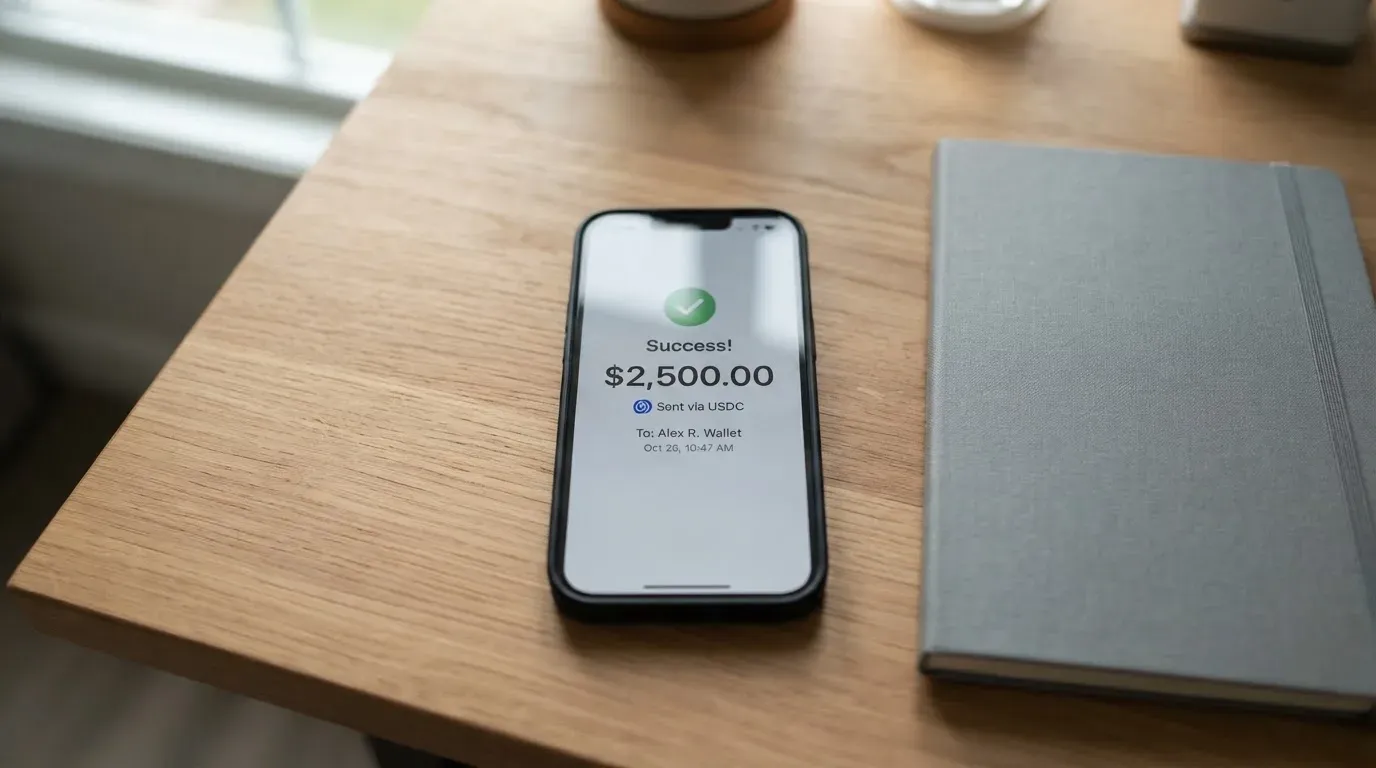
Officially, you fund the card from the XHYPE Superwallet. The wallet accepts USDT, USDC, or the native coin of the network you choose, on BNB Smart Chain, Ethereum, Base, Polygon and Arbitrum. You send the crypto to the Superwallet, the wallet credits the balance, and you then load the card from that balance. The Superwallet is self-custody: you control the authentication factors and you can export the private key to wallets like MetaMask or Trust Wallet. That is a meaningful design choice, and it is the reason the card exists in the first place: the funds stay in your own wallet until the moment of payment, rather than sitting in an exchange’s hot wallet.
A third-party profile (CryptoCardHub, August 2026) describes a much narrower set of options: USDT only, on Tron (TRC20) and BNB Chain (BEP20). That conflicts directly with the official list of networks, and it also excludes USDC and the native-coin option. I have not been able to confirm the narrower list against the card’s own pages, so I would plan around the wider official list and not assume the third-party restrictions are accurate.
The minimum deposit, the network-fee payer (you, or the wallet) and whether fiat top-up is supported at all are not stated. The same third-party profile gives a minimum crypto deposit of 15 USDT based on a user guide, which I have not been able to verify. The official Terms are silent on refunds, account closure and balance withdrawal, which is the kind of detail a careful reader notices because it is also the kind of detail that matters if the programme changes.
A practical point on networks: blockchain transfers are irreversible. If you send USDT on a network XHYPE does not support, or to an address that belongs to a different network, the funds can be lost or stuck in a manual recovery that has no guarantee. Circle stopped supporting USDC on Tron in February 2024, so “USDC on TRC20” is not a native option for anyone in 2026. Tether has issued USDT on Ethereum, Tron, Solana, Polygon, Avalanche and others, but the card’s official networks remain the five listed above.
A note on stablecoin risk. Stablecoins aim to hold a stable value, but “despite the name, stablecoins are not necessarily stable”. TerraUSD collapsed in May 2022, and USDC temporarily lost its peg in March 2023 during the US banking crisis. Tether says it disables tokens in wallets on the OFAC sanctions list and has frozen funds tied to illicit activity; the implication is that a stablecoin is not the same as a euro or a dollar in a regulated bank account, and the difference shows up most clearly in stress events. Circle publishes monthly reserve attestations and says USDC is redeemable 1:1 for USD; the same standard does not apply to every token on every network.
You can also buy gift cards and eSIMs through the wallet, payable in crypto. That is a separate flow from card top-up and not part of the card fees, but it is worth knowing the option exists if you prefer to spend crypto directly without loading a card at all.
Paying with it every day
The card behaves like a prepaid card: you load a balance, you spend that balance, and the card cannot overdraw. Virtual cards are available on every tier; physical cards on Premium and Whale. Apple Pay and Google Pay are supported on all virtual and physical cards, which means the most common ways to pay in 2026 (a phone tap at the till, an in-app card) are covered.
The card’s network is not stated on the official page. A third-party profile says both Visa and Mastercard programmes are advertised. Because the network is the thing that determines whether a given shop or website accepts the card, the gap in the official description is real, not cosmetic. If you need a specific network, the only reliable check is to look at the card detail in the app after the card is issued.
Cash works on physical cards (Premium and Whale) at the limits in the table above. The ATM fee is not published, which means budgeting for cash requires a buffer for whatever the operator charges. The ATM daily cap of $1,500 is enough for most personal use, but it is not a corporate-card figure, and it is paired with a $15,000 monthly ceiling that tighter-budget households will never reach and heavier users will feel.
There is no cashback on the official page. A third-party profile reports that the welcome credit is $5 / $10 / $40 by tier, that XTraveler points are 290 / 690 / 2,490, and that there is a 15% referral commission on the reload fees of referred users, paid in USDT. None of that is on the official page, and the same source notes that the “no cashback” reading is consistent with the absence of a cashback line in the public materials. If rewards matter to you, treat the official silence as the truth and the third-party profile as a marketing-led add-on that may or may not still apply.
Blocked merchant categories are not stated. Many issuers block gambling (MCC 7995) by policy rather than by law, and a few block other categories as well; the public materials do not name any. If you intend to use the card at a specific kind of merchant, the safest assumption is to assume nothing is blocked until you have tested it, and to keep a backup card in case the merchant category is on a list you cannot see.
Two technical points worth raising because they affect daily experience. The first is 3-D Secure: many online merchants now require a 3-D Secure step (Visa Secure, Mastercard Identity Check) for online payments, and the card supports the standard flow because it runs on a major network. The second is address verification: AVS is mainly offered in the US, Canada and the UK, and is generally unavailable for foreign-issued cards, which can cause declines on US-facing sites even when the card is otherwise valid. If you are a non-US resident, expect occasional declines on US merchants and have a backup ready.
A last point on tokenised wallets. The card can be added to Apple Pay or Google Pay, which replaces the card number with a device-specific account number stored in the Secure Element. Each payment uses a one-time dynamic security code, which is the strongest form of in-person payment available on a phone. The card issuer can restrict a tokenised number (for example block it on magnetic-stripe transactions or website use), and the card does not publish which restrictions apply.
What can go wrong
A crypto card with a self-custody wallet, an unnamed issuer and a “Private KYC” flow carries four main classes of risk: programme risk, KYC/AML risk, custody risk on the card side, and dispute risk. I will walk through each, and what the public materials actually say.
Programme risk. XHYPE FZCO is registered in Dubai Silicon Oasis, in the United Arab Emirates. The Terms say “We are not a card issuer”, and the issuer is not named. A third-party profile says the issuer is reportedly a licensed provider in jurisdictions including Hong Kong. The Terms are governed by UAE law, with Dubai courts as the venue. Licences held by XHYPE FZCO are not stated on the public pages. The reason this matters is that card programmes can be suspended: Visa terminated its global agreements with FTX on 13 November 2022 and the FTX US debit card was wound down by its issuer. In 2018, Visa suspended a card issuer called WaveCrest in Europe and closed every WaveCrest-issued Visa programme. The pattern is that a programme change at the network or issuer level can end a card for everyone on it, with a notice period, a stop on new loads, a stop on spending, and then a request to withdraw remaining balances. XHYPE’s public pages do not explain what would happen in such a case, who you would deal with, or how quickly you would get your balance back.
KYC/AML risk. The card screens every deposit and can reject flagged funds. If your verification cannot be completed, the institution can refuse the transaction or end the relationship. Nationality is screened separately from residence, which means a passport from a restricted country can block sign-up even if you live somewhere the card supports. Refunds, disputes and chargebacks are not specified in the Terms, which leaves the dispute process undefined in writing. If something goes wrong, the path back to your money is whatever the support team is willing to do, not a published procedure.
Custody risk on the card side. The Superwallet is self-custody, so your crypto stays in your own wallet until the moment of payment. Once you load the card, the fiat balance is held by the unnamed third-party issuer, not by XHYPE and not by you. That balance is not the same as a bank deposit and may not be covered by a deposit guarantee scheme. The card balances are not insured by the public materials, and the safeguarding arrangements are not described.
Custody risk on the wallet side. Self-custody means the user is the only person who can recover the wallet. If you lose the seed phrase, lose access to the authentication factors, fall for a phishing page, or have clipboard-hijacking malware swap an address you copied, the loss is final. Cryptocurrency transfers are typically irreversible, and a stolen private key has no built-in recovery. Custodial platforms have a record of failures (Mt. Gox around US$350 million stolen between 2011 and 2014, Coincheck around US$400 million in 2018, Ronin Network US$625 million in 2022). Self-custody removes the counterparty risk that comes with a custodian, and replaces it with personal operational risk.
Operational and reliability risk. The third-party profile (CryptoCardHub, August 2026) reports a June–July 2025 disruption that affected HKD Visa recharge and spending, later marked resolved with balances reportedly refunded. The same source cites themes of high combined costs, AML-related restrictions, refunds missing for months, and slow support. KYCnot.me shows about 2.9/5 from 7 ratings via that source. No official incident is described on the card’s own site, and I have not been able to corroborate the specific incident on a primary news source. The Terms were last updated on 4 June 2025, which is the most recent dated material in the public record. There is no Trustpilot page for the card brand (the Trustpilot hit that comes up is for XKODE, a different service), and no Reddit thread on the card.
Support. Help runs 24/7 in English and Spanish on Telegram, at the handle @xhype_support. Telegram-only support is a deliberate choice, and it is worth deciding in advance whether that fits how you like to be helped. There is no email, no phone line and no in-app ticketing system described in the public materials.
A note on safety features. The card’s public pages do not describe app-based two-factor authentication, instant card freeze, spending limits in the app, or 3-D Secure enrolment. The Superwallet supports standard self-custody practices, but the card-side controls are not detailed. If any of those matter to you, the most reliable check is the in-app card detail screen once the card is issued.
What to take instead
If XHYPE’s gaps (the unnamed issuer, the unpublished FX fee, the no-cashback model, the Telegram-only support) are the reason you hesitate, there are three comparable cards to weigh against it. They are not the only options, but they illustrate the trade-offs the market is currently offering. The scores below are based on the same kind of reading I have done above.
| Card | Score | Where it works | Cost | Top-up | Cashback |
|---|---|---|---|---|---|
| XHYPE | 7.0 / 10 | 203 countries officially; 184 per a third-party profile; 9 named restricted | $10 / $58 / $70 per year on Essential / Premium / Whale | USDT, USDC or native coin on BNB Smart Chain, Ethereum, Base, Polygon, Arbitrum | None on official page |
| MetaMask Card | 7.1 / 10 | 45 listed countries; other regions on a waitlist; US/UK sign-ups temporarily closed | Virtual free, Metal $199/year | Spends from the connected wallet; Linea, Base, Monad, Solana; mUSD, wETH, EURe, GBPe, USDC, USDT and others | Virtual 1%, Metal 3% on first $10,000 then 1%, in mUSD; $FLY bonus 5X / 7X via Blackbird |
| KAST | 6.1 / 10 | Residence-based list at KYC, not published; citizenship also matters | Standard $0, Premium $1,000/year, Private $10,000/year (annual upfront) | USDT, USDC, PYUSD, RLUSD on Ethereum, Solana, Polygon, Arbitrum, Tron | Standard 1.5% on first $2,000/mo, Premium 2% on first $10,000/mo, Private 3% on first $40,000/mo, plus KAST Points |
| TokenPocket (TP Card) | 5.8 / 10 | Visa debit for a list of European countries; Mastercard debit for Australia, Canada, Hong Kong, Japan, Taiwan, New Zealand, Singapore, South Korea, UK; Americas “planned for Q2 2025” | NFT creation fee partly covered by user; “Apart from these, TP Card does not charge any additional fees” | Crypto deposits from the TokenPocket wallet on Arbitrum; specific coins/networks not in the FAQ | 1% on crypto deposit, refunded later via rewards / reduced transaction fees |
MetaMask Card is the closest match for someone who already lives in a self-custody wallet. It spends directly from the connected wallet on Linea, Base, Monad and Solana, supports named tokens including mUSD, wETH, EURe, GBPe, USDC and USDT, and the virtual tier is free. The Metal tier at $199 a year is in XHYPE’s territory for the very top of XHYPE’s range, but the published cashback (Virtual 1%, Metal 3% on the first $10,000, then 1%) is materially better than what XHYPE’s official page describes. The trade-off is geography: 45 countries are listed, the rest are waitlist-only, and US/UK sign-ups are temporarily closed. If your country is on the list, this is a stronger everyday card on the rewards side and a weaker one on the support side if you live outside the supported list.
KAST is the option for a heavier spender who wants published cashback and a non-USD FX fee that is actually written down (0.5%–1.75% depending on residence, transaction country and card programme). The trade-off is the cost of entry: Premium is $1,000 a year and Private is $10,000 a year, billed annually upfront, which puts it in a different category from XHYPE. The country list is not published, and citizenship also matters, so the “is it available where I am” question is answered at KYC time rather than before. For someone who already spends heavily on a card and wants cashback in USD on every transaction, this is the strongest rewards case in the table.
TokenPocket (TP Card) is the lightest option in the list. It is virtual-only, runs on Arbitrum, and the published fees are essentially “a 1% fee on crypto deposits, refunded later through rewards or reduced transaction fees”. The cost structure is unusual enough that the headline “no additional fees” should be read alongside the deposit fee. Geography is the binding constraint: a defined list of European countries for Visa debit, a defined list for Mastercard debit, and the Americas “planned for Q2 2025”. If you are in the right country and you already use TokenPocket as your wallet, the friction is low.
The honest read across the three is that none of them is a clean replacement for XHYPE on every axis. MetaMask Card is the closest on the self-custody story, with better rewards but tighter geography. KAST is the strongest on rewards and published FX, with a much higher cost of entry. TokenPocket is the simplest in cost terms, with the narrowest footprint. XHYPE’s specific edge is the combination of broad official availability, self-custody design and a low entry price; the specific cost of that combination is the parts of the offer the public pages do not spell out.
Who I would recommend it to
If you already run a self-custody wallet, want to keep your funds there until the moment of payment, and live in a country XHYPE serves, the card does what it says. The annual fees on Essential and Premium are low enough to justify a card you use for everyday spending without thinking about it, and the top-up options on the official page are wide enough to fit most self-custody setups. The reload fee is the cost you should plan around, not the annual fee.
If you are a heavier spender, the math moves. Premium and Whale drop the reload percentage, raise the annual card limit, and add a physical card with ATM access. The official pricing on those tiers is reasonable; the third-party profile’s much higher numbers should not be assumed until you see them in the app. The annual fee and the reload fee together are the budget you should plan around, because the FX fee is not published.
If you are choosing a card primarily for rewards, XHYPE is not the right pick. The official page does not describe cashback, and the third-party profile’s “no cashback” reading is consistent with that silence. MetaMask Card, KAST and most bank-issued cards publish cashback in a way XHYPE does not.
If you are choosing a card because the issuer, the licence and the dispute process are spelled out in writing, XHYPE is also not the right pick. The Terms say “We are not a card issuer” and the issuer is not named; the licences XHYPE holds are not stated; the dispute process is not specified. The card is a product of an unnamed third-party issuer wrapped in a Dubai-registered front company, and the reader who needs more transparency than that will not find it in the public materials.
For the reader who fits the first profile (self-custody user, supported country, comfortable with the gaps), the card is a reasonable choice. For everyone else, the alternatives above are a better starting point.
Frequently asked questions
What is the XHYPE card?
The XHYPE card is a prepaid payment card that draws on a balance loaded from a self-custody crypto wallet called the XHYPE Superwallet. The card company, XHYPE FZCO, is based in Dubai and is explicit that it does not issue the card itself; an unnamed third-party issuer does. The card is sold in three tiers: Essential, Premium and Whale.
How does the XHYPE card work?
You sign up at superwallet.xhype.io, complete a Private KYC check through Verinex, pick a plan, deposit crypto into the Superwallet and load the card from that balance. The card then behaves like any prepaid card at the till or online, and on Apple Pay and Google Pay on every tier. The Superwallet is self-custody, so the crypto stays in your own wallet until the moment of payment.
Is XHYPE a bank?
No. XHYPE FZCO is a company registered in Dubai Silicon Oasis, and the Terms say “We are not a card issuer”. It does not hold a banking licence, does not lend, and does not offer deposit accounts. The card is a prepaid product, not a debit card linked to a bank account and not a credit card.
Who owns XHYPE?
XHYPE FZCO is the legal entity behind the product, registered in Dubai Silicon Oasis, United Arab Emirates. The card itself is issued by an unnamed independent third party, per the Terms. Ownership of XHYPE FZCO beyond the registered entity is not described in the public materials I have read.
Is the XHYPE card available in my country?
Officially, the card can be ordered from 203 countries and territories, with eligibility decided by country of residence and nationality. A third-party profile of the same product narrows the live list to 184 countries and names 9 as restricted: Afghanistan, Cuba, Iran, North Korea, Somalia, South Sudan, Sudan, Syria and Yemen. I have not been able to confirm that specific list against XHYPE’s own page, so treat it as an indication rather than a definitive blacklist. The only reliable check is to start sign-up and see whether your country passes.
Does the XHYPE card require KYC?
Yes. The Terms describe a “Private KYC” check through Verinex, with XHYPE receiving only the result, and the standard age floor of 18. The full document list and proof-of-address requirements are not published, and the processing time is not stated. A third-party profile describes the sign-up as “No KYC”, which conflicts with the Terms; the more reliable reading is that verification happens, what is checked is not public, and every deposit is screened for AML risk.
How do I top up the XHYPE card?
You fund the Superwallet with USDT, USDC or the native coin on BNB Smart Chain, Ethereum, Base, Polygon or Arbitrum, then load the card from that balance. A third-party profile limits top-up to USDT on Tron and BNB Chain, which conflicts with the official list. The minimum deposit, the network-fee payer, and whether fiat top-up is supported are not stated in the public materials I have read. Blockchain transfers are irreversible, so sending on a network the card does not support can mean a loss.
How do I add the XHYPE card to Apple Wallet or Google Pay?
Apple Pay and Google Pay are supported on all XHYPE virtual and physical cards. The flow is the standard tokenisation one: open the wallet app, scan or enter the card detail, and complete the issuer’s verification step. Once the card is tokenised, the device stores a device-specific account number in the Secure Element and each tap uses a one-time dynamic security code.
How do I withdraw money from XHYPE?
The Terms are silent on refunds, account closure and balance withdrawal. The card can be spent at the till, online, in Apple Pay or Google Pay, and (on Premium and Whale) at ATMs. The ATM limit is $1,500 per day on physical cards, with a $15,000 monthly ceiling, and the ATM fee itself is not stated. There is no published procedure for cashing out the card balance back to a bank account, which is a gap worth noting before you load a large amount.
Is the XHYPE card safe?
The card is built on a self-custody wallet, which removes the custodian as a point of failure for the funds that have not been loaded onto the card. The card balance itself is held by the unnamed third-party issuer and is not the same as a bank deposit. The Terms do not specify a dispute or chargeback process, support runs on Telegram only, and the issuer is not named, so the safety story is partly a question of how comfortable you are with those gaps. As with any crypto product, the published terms matter less than the operational reality once something goes wrong.
Wallet card fees and costs – cryptocardfacts
Content created by the «cryptocardfacts» team