
Chep to issue, costly to fill: an independent read on PayWide
 Available in US
A virtual card that costs nothing to open but charges a percentage every time you put money on it is not the card most people picture when they imagine a cheap way to spend crypto. Yet that is the shape of this one, and the shape is the main reason to read the small print before you apply. PayWide is a virtual, USD-denominated card in the Visa and Mastercard ranges, filled from your own Web3 wallet with more than forty tokens across six networks, and the top-up percentage is where the real cost sits. Add to that the fact that the operator, the issuing bank and the regulator are not named on the public pages, and that the service runs on an invitation code handed out through Telegram, and you get a product that is easy to start and hard to trust blindly.
This review is written from what PayWide’s own pages say and what third-party reviewers report, with the two kept clearly apart. A lot of what circulates about this card comes from third-party sites rather than from PayWide, and I mark every one of those lines as unofficial. Where the card’s public pages say nothing at all, I say that plainly rather than filling the gap from someone else’s description.
The conditions described here are current as of October 28, 2026.
Verdict: 4.6 out of 10
The score is not a verdict on crypto cards as a category. It is a verdict on this card, against the question a reader actually has: does this do what I need, at a cost I can live with, from a company I can find? On the last of those, PayWide does not yet earn much confidence.
| Criterion | Mark | Why |
|---|---|---|
| Who can get it | 6 / 10 | Unofficial sources report 150 countries open and 35 restricted, including the United States, United Kingdom, Germany, France and most EU members; an invitation code is required |
| Cost | 2 / 10 | Unofficial figures put top-up at 5% on Visa and 4% on Mastercard, plus $0.35 per attempt and 1.25% per purchase on Mastercard; issuance is free |
| Top-up options | 8 / 10 | 40+ cryptocurrencies across Ethereum, Polygon, Arbitrum One, OP Mainnet, BNB Smart Chain and Avalanche, straight from a Web3 wallet |
| Reliability and complaints | 3 / 10 | Unofficial: no operator, bank or regulator named; Trustpilot 3.4 out of 5 from 2 reviews (card not received, 2023); aggregator rating 2.3/5 |
| Everyday use | 5 / 10 | Unofficial: virtual Visa and Mastercard; Apple Pay and Google Pay only on Mastercard 5258 and 5395; no ATMs |
| Total | 4.6 / 10 | The best score here goes to what you can load; the worst goes to who is behind it |
Who this suits, in plain terms: someone already living in a Web3 wallet who wants a virtual card to spend a balance they are converting anyway, in a country the unofficial maps show as open, and who is comfortable with an invitation code and a Telegram-based support channel as the front door. For that person the top-up breadth is genuinely strong, and 8 out of 10 is not generous — forty-plus tokens on six chains is more than most cards in this category offer.
Who this does not suit: anyone who needs a card they can defend in a dispute, anyone who needs a physical card, anyone in the United States, the United Kingdom, Germany, France or most of the EU, and anyone for whom an unnamed operator and an unnamed issuing bank is a dealbreaker. It also does not suit a first crypto payment. The cost section below shows why: a typical top-up on Visa costs you more than the fee on some mainstream cards charge for an entire month.
The deepest problem is not the fees, which are high but visible. It is the absence of names. The card’s own public pages do not state who the legal operator is, who the issuing bank is, who sponsors the BIN, which regulator licenses the operation, or which jurisdiction safeguards the balance. That is the reliability section in one sentence, and it is why three of ten is the mark it gets.
Will they give you the card?
The card’s own public pages do not state the eligibility rules. The site page covering this was empty when it was checked, so the following comes from third-party sources and is unofficial throughout.
According to those unofficial maps, 150 countries appear as “Available” and 35 as “Restricted”. Among the restricted ones are the United States, the United Kingdom, Germany, France and most EU members. Two caveats sit right next to that number, and both matter if you are outside the EU. The exact countries from which PayWide will accept an applicant are not published, and the lists themselves “do not establish residence eligibility” — in other words, a map that says “Available” tells you the card can be spent somewhere, not that a resident of that country can get one.
The other half of the answer is the invitation code. Access runs through PayWide’s Telegram channel, and one wallet is allowed per code. That is the gate. It is not an approval process with a published standard; it is as many codes as PayWide decides to issue. If you are trying to work out whether this card is for you, the practical test is not your passport — it is whether you can get a code.
So the eligibility picture, unofficial but coherent, is: invitation code first, then a country that is not on the restricted list, then a set of rules nobody has written down. For a reader in, say, Nigeria, Argentina, Kazakhstan or Vietnam, this may be an open door. For a reader in Frankfurt or Manchester, it looks shut.
How to get it
Again, the official pages are silent here, so unofficial sources carry this whole section.
The public application flow, as third parties describe it, does not request identity or address documents. You may be able to enter an alias and an existing address on the card. The card’s own pages do not state an age requirement, and they do not state any verification tier structure either.
I want to be careful here, because “no KYC” is the sentence most likely to be misused. What it means is narrower than it sounds. It means the flow described in public does not ask you for documents. It does not mean the card operates outside anti-money-laundering rules, and it does not mean no one checks anything behind the form. The named-operator gap discussed in the risks section means there is no way to tell from public information who would be checking, under what licence, or under which country’s law. That is a fact about disclosure, and disclosure is what you are entitled to weigh.
On what you receive: unofficial sources describe virtual Visa cards with BINs 4931 and 4383, and virtual Mastercard cards with 5258 and 5395, USD-denominated and prepaid in form. Whether a physical card exists at all is not stated by official sources. The card’s pages, which describe a virtual product, do not say otherwise, so plan on spending through a virtual card number only.
Fees: what it really costs
Let us get to the part that decides whether this card is cheap. Official pages do not publish a fee schedule, so the numbers below are unofficial and come from third-party reporting. They are also the single most useful thing on this page, because they are large enough that you will feel them.
| Fee or limit | Value |
|---|---|
| Card issuance | Free with an invitation |
| Monthly or annual fee | None listed |
| Visa top-up | 5% |
| Visa authorisation | Free |
| Visa purchase | Free |
| Mastercard top-up | 4% |
| Mastercard authorisation attempt | $0.35, approved or declined |
| Mastercard purchase | 1.25% |
| Fixed FX markup | Not published |
| ATM pricing | Not shown; the cards are marketed as virtual |
| Classic programme limit | Up to $3,000 (unofficial) |
| Business programme limit | Up to $10,000 (unofficial), one-year validity |
| Top-up amount limit | None advertised |
| Card currency | USD |
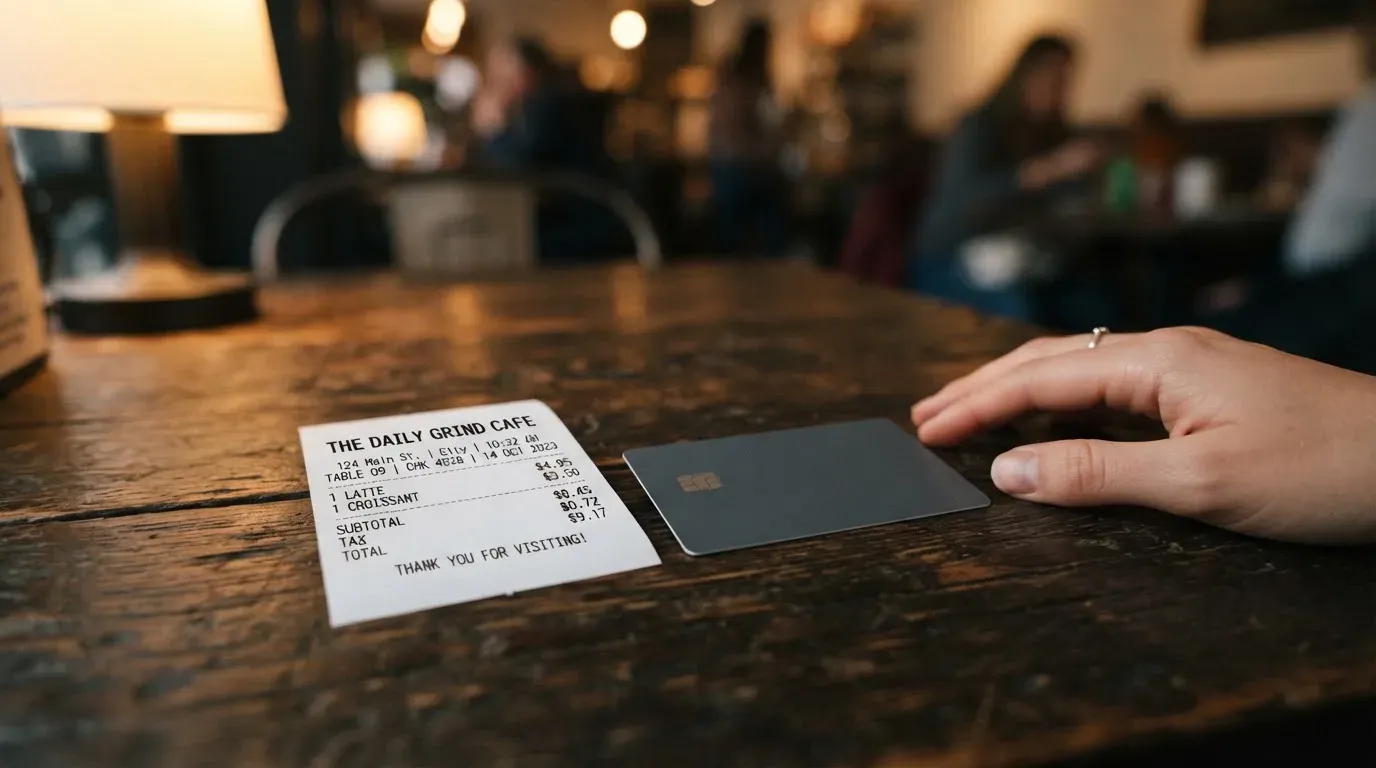
Three ordinary payments, using those numbers. A $30 coffee shop on Visa: you top up $30 and pay 5%, so $1.50 goes to loading the card before a single cent has bought anything. The purchase itself is free. A $30 lunch on Mastercard: 4% to load is $1.20, 1.25% of the purchase is $0.38, and if the shop’s authorisation later reverses or declines you are still out $0.35 for the attempt — the fee is charged whether it is approved or declined. A $200 flight on Mastercard: $8 to load, $2.50 on the purchase, and the card is USD-denominated, so any fare priced in euros or naira passes through a conversion at a rate the provider does not publish.
The two rows I would not skip past are the ones marked “not published”. The fixed foreign-exchange markup is not disclosed, and with a USD-denominated card that figure is exactly what you pay whenever you spend abroad or on anything priced locally in another currency. The ATM pricing is simply not shown, and there are no ATMs in the everyday-use picture anyway because these are virtual cards.
Then there is the gas cost, which never appears in card fee tables because it is not the card’s: on-chain network fees for your deposit are charged by the blockchain itself. If you have USDT but no ETH in the same wallet, an ERC-20 transfer simply cannot be made. That is a wallet problem, not a PayWide problem, but it stops people regularly.
The honest summary of the cost picture: issuance is free, and almost nothing else about this card is. The top-up percentage is the design decision, and it is the reason the cost mark is 2 out of 10.
Top up: how the balance gets there
This is the strongest part of the product and the part the card’s own material actually confirms. You top up from a connected Web3 wallet with more than forty cryptocurrencies across six networks: Ethereum, Polygon, Arbitrum One, OP Mainnet, BNB Smart Chain and Avalanche. The amount is converted to USD at Uniswap rates.
That list is the reason the top-up score is 8 out of 10. Six chains means you can move cost between networks before loading, and forty-plus tokens means you are not forced to hold a single asset just to eat. MetaMask is the wallet most commonly recommended, and the tokens are drawn from the Uniswap default list.
Two practical points, both from third-party reporting. First, timing: funding usually takes one to three business days after payment confirmation. That is not instant, and it is worth knowing before you book anything with the balance. Second, and more seriously, what happens to your crypto. Once converted, the funded balance cannot be recovered with your wallet’s private key. That is the moment you stop holding the asset and start holding a claim on someone’s USD balance — and per third-party sources, PayWide and undisclosed partners control that balance after conversion.
Which token and which network, in practice, decides more than the percentage does. Transfers are irreversible. A deposit sent on a network the provider does not support, or to an address belonging to a different network, can be lost or need manual support recovery with no guarantee attached. Check the network before you confirm, every time, because there is no second attempt.
Paying with it every day
The card’s own pages do not describe the mobile wallets or any rewards. Unofficial sources do.
Apple Pay and Google Pay work on the Mastercard 5258 and 5395 only — not on the Visa BINs. That is a real constraint if your phone is your wallet, and it is the kind of detail that quietly decides which card you keep and which one sits unused.
Rewards, unofficial: cashback of 0.10% to 1.00% on your top-ups, not on your purchases, varying with your top-up volume over the previous three months, running from $6,000 at Level 1 to $100,000-plus at Level 5. Read that carefully — you are paid for loading, not for spending, and the better rates demand six figures of monthly flow. A referrer gets one extra card slot and $3 after a new user’s first top-up.
There is no app to speak of; the flow is web-based. Support and access are both through the Telegram channel, which is where the invitation code came from in the first place.
Then there is the category of purchase that fails quietly. A virtual card has no magnetic stripe, so the places that still insist on a physical card — a car park barrier, a public transport gate, a restaurant that wants to take an imprint — simply do not work. Prepaid and foreign BINs get declined more often than cards from a local bank, because the merchant’s terminal looks up the BIN and can apply extra scrutiny when the issuer country does not match the billing address. Address verification is offered mainly in the US, Canada and the UK and is generally unavailable for foreign-issued cards, so online checkouts with a strict address match are where you will meet a decline. And gambling merchants sit under merchant category code 7995, which issuers block by policy rather than by law — with a small provider the blocklist is anyone’s guess.
The last piece of everyday friction is invisible and worth knowing about: a declined authorisation can leave a hold on funds that stays for several days, typically up to seven.
What can go wrong
Start with the company, because it is the least answered question. Official pages do not name it. Unofficial reporting says the legal operator, the issuing bank, the BIN sponsor, the regulator and the safeguarding jurisdiction are all absent from public disclosure; an earlier check named “PayWide (Wage3)”, which remains unconfirmed. I am not going to convert that into a conclusion, but I will point out what follows from it: when something goes wrong, the question you ask — who refunds this, under which law, in which court — currently has no answer you can find.
The complaints picture is thin but not clean. A Trustpilot report of April 2023 shows a 1-star review titled “Scam card not received”. A 5-star review in the same period notes a one-to-three day delay for the card deposit after blockchain confirmation. Read on 2026-10-21, Trustpilot showed 3.4 out of 5 from two reviews, none of them in the last twelve months — a score that looks respectable mainly because the denominator is two. An aggregator rating of 2.3 out of 5 from August 2026 points the other way. No official incidents were found. Two reviews cannot establish a pattern, and I will not pretend they do; what they do establish is that there is almost no public record of how this card behaves under stress, in either direction.
Card security and fund handling also warrant a closer look. Card details are displayed only once, so a lost screenshot is a significant operational issue. Three-D Secure is advertised, and while top-ups are described as “secured and insured in encrypted MPC wallets,” the insurer is not named—which offers little actual reassurance. Furthermore, once converted, your USD balance remains with PayWide and its undisclosed partners.
The category risk is worth stating once, plainly, because this card is a small operator in a field with a poor public history. Card programmes do close. WaveCrest, a Visa issuer that supplied crypto card brands, was suspended by Visa in Europe in 2018 and all its Visa programmes were shut. Visa ended its agreements with FTX on 13 November 2022 and the FTX US debit card was wound down by its issuer. The pattern in those cases: a notice period, then spending and loading stop, then you are asked to withdraw what is left. That is what to think about when a balance is sitting on a prepaid card you cannot move off yourself.
Finally, the risk that is not the company’s fault: stablecoins depeg. A stablecoin aims to hold a steady value against a fiat currency, but they are not necessarily stable. USDC temporarily lost its peg in March 2023 during the US banking crisis; TerraUSD collapsed in May 2022. Between the conversion rate you are quoted and the day you spend, the value of what you loaded is exposed to that market.
What to take instead
None of the three alternatives below is a clean recommendation either — they score 5.6, 4.9 and 4.7 out of 10, all above PayWide’s 4.6. I include them because they are better on disclosure and worse on flexibility, and which trade suits you depends on where you are.
| PayWide | Cardex | CardFlow | HyperCard | |
|---|---|---|---|---|
| Score | 4.6 / 10 | 5.6 / 10 | 4.9 / 10 | 4.7 / 10 |
| Who it targets | Web3 wallet users topping up a virtual card with 40+ tokens | One crypto card, 200+ countries; App Store listing is Naira-focused | Aimed at Nigeria; “Nigerians and global users” | No country list on official pages; App Store says works in more than 176 countries |
| Card | Virtual Visa (4931, 4383) and Mastercard (5258, 5395), USD | Debit crypto card on VERVE, Visa, Mastercard and UnionPay; virtual and physical | Virtual USD Mastercard, created in about 3 minutes | Prepaid “HyperCard”; balance in USD or EUR |
| Issuance | Free with an invite | Not stated | Free (site FAQ: “Create Free Card”) | Not stated |
| Fees | Unofficial: 5% Visa top-up, 4% Mastercard top-up, $0.35 per authorisation attempt, 1.25% per purchase; FX markup not published | No percentage stated; “AI-Powered Conversion Rate” picks a rate at the moment of payment | Not stated | Not stated on the pages available |
| Top-up | 40+ tokens on six chains | USDT, USDC and BTC wallets; networks not stated | Bitcoin, USDT, ETH or Naira bank transfer; networks not stated | Crypto deposit such as USDT, BTC, ETH; networks not stated |
Cardex is the one with the most ambitious claim and the least specific support for it: 200+ countries with no list and no exclusions published, a card currency shown as Naira on its store listing, and a fee structure described as an algorithm rather than a number. CardFlow is the most legible: virtual USD Mastercard in 3 minutes, free to create, aimed at Nigeria with a Naira bank transfer among the funding routes — but no fee line at all. HyperCard claims acceptance in more than 176 countries, which is an acceptance statement rather than an eligibility one, and publishes no fees.
What none of them publish is a complete cost, either. If your decision hinges on what a payment actually costs, you are looking at gaps in all four, and the honest answer is to ask the provider before you load.
Who I would recommend it to
I would recommend this card to someone who has already decided they want a virtual card fed from a self-held wallet, who is in a country the unofficial maps show as open, who can get an invitation code, and who treats the loaded balance as spending money rather than savings. That person gets the best part of the product — a wide choice of chains and tokens for topping up — and pays a known, visible percentage for it.
I would not recommend it as a first card, as a card for everyday banking, or as a place to hold money you would miss. The reasons are specific rather than atmospheric: no named operator or issuer to hold accountable, no published FX markup on a USD-only card, top-up fees that exceed what mainstream cards charge for a month of spending, Apple Pay and Google Pay only on two Mastercard BINs, and no cash access at all.
And if what you actually need is a normal bank card that has been difficult to get — that is the reader this review is written for — then the honest answer is that PayWide is a workaround, not a substitute. It converts crypto into a spendable balance through a provider you cannot fully identify. It does not give you the thing a bank account gives you, and the 4.6 reflects that gap rather than the quality of the software.
Two things to check before you load money: which network and token you are actually sending, because transfers are irreversible; and what happens to your balance if the service stops taking new loads, because you cannot move it off without them.
Frequently asked questions
What is the PayWide card?
It is a virtual, USD-denominated prepaid card in the Visa and Mastercard ranges, with unofficial sources listing Visa BINs 4931 and 4383 and Mastercard BINs 5258 and 5395. You connect a Web3 wallet, convert crypto into a USD balance, and spend that balance through the card number. No physical card is described in the public material, and cash access is not part of the picture.
How does the PayWide card work?
You top up from a connected Web3 wallet using one of more than forty cryptocurrencies across Ethereum, Polygon, Arbitrum One, OP Mainnet, BNB Smart Chain or Avalanche, converted to USD at Uniswap rates. The card then spends the stored balance like a prepaid card. Third-party sources put funding time at one to three business days after payment confirmation, so it is not instant.
Is PayWide a bank, and who owns it?
I cannot tell you from public information, and that is the honest answer rather than a dodge. The card’s own pages do not name the legal operator, the issuing bank, the BIN sponsor, the regulator or the safeguarding jurisdiction. An earlier check named “PayWide (Wage3)”, which is unconfirmed. You are being asked to fund a balance held by a company you cannot identify from its public disclosure.
Does the PayWide card require KYC?
Unofficial sources say the public application flow does not request identity or address documents and that you may enter an alias and an existing address. Official pages state neither the KYC position nor any age requirement. Note what that does and does not mean: it describes the visible form, not the absence of checks behind it, and with no named operator there is no way to tell under whose rules the service runs.
Which countries can use the PayWide card?
Third-party maps list 150 as “Available” and 35 as “Restricted”, with the United States, United Kingdom, Germany, France and most EU members among the restricted. Those lists are explicitly not an eligibility statement, so a country showing “Available” tells you about acceptance, not about getting a card. No official applicant-country list is published.
How much does the PayWide card really cost?
Issuance is free with an invitation and no monthly fee is listed, but the loading fees are high: 5% on Visa and 4% on Mastercard top-ups, plus $0.35 per Mastercard authorisation attempt whether approved or declined and 1.25% per Mastercard purchase. The fixed foreign-exchange markup is not published, and the cards are USD-denominated. These figures are unofficial.
Can I add the PayWide card to Apple Wallet?
Unofficial sources say Apple Pay and Google Pay work on Mastercard 5258 and 5395 only — not on the Visa BINs 4931 and 4383. Since these are virtual cards with no magnetic stripe, anything that requires a physical card insert, a paper imprint or a transit gate is simply out of reach regardless of wallet support.
Is the PayWide card safe to use?
Judge it on disclosure rather than on the security claims. Three-D Secure is advertised and card details are shown once, but top-ups are described as “secured and insured in encrypted MPC wallets” with no insurer named, and after conversion the USD balance is controlled by PayWide and undisclosed partners. Crypto transfers are irreversible, so sending on the wrong network can mean losing the funds.
Can I withdraw money from a PayWide card?
Cash withdrawals are not part of the offering as described: the cards are virtual and ATM pricing is not shown. Unofficial sources also note that once your crypto is converted, the funded balance cannot be recovered with your wallet’s private key. That is the more important withdrawal limit — your money becomes a claim on someone else’s ledger at the moment of conversion.
Is the PayWide card worth it?
Worth it if you are a Web3 wallet user who wants a virtual card and can get an invitation code; not worth it if you need low costs, a physical card, cash access, Apple Pay on Visa, or a provider you can name. The 4.6 out of 10 I give it reflects a strong top-up section and a weak disclosure section, and that trade is worth making only if you already understand both halves.
Virtual card fees – cryptocardfacts
Content created by the «cryptocardfacts» team