
The self-custody promise is real; the fees, the paperwork and the missing numbers are not
 Available in US
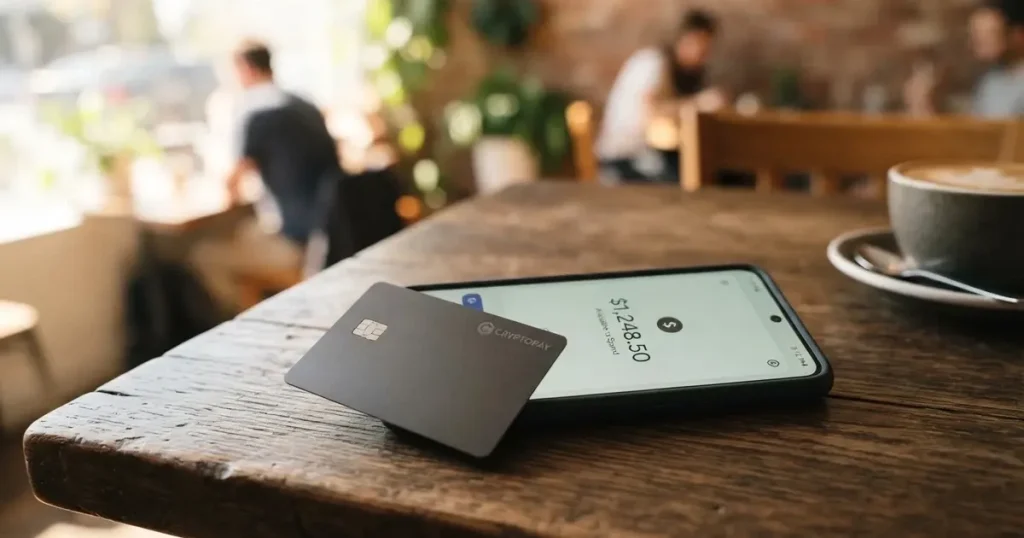
The OWNR Wallet card does one thing that most crypto cards cannot: it spends straight out of a wallet you hold the keys to, without the provider holding your coins as a favour to you. That is a genuine design decision, and it is the reason to look at this card at all. But when I went through the card’s own pages line by line, the picture that came back was thin where it matters: the card is only available for EU countries, the fee for issuing it is not published, and the public Trustpilot rating sits at 3.8 out of 5 across 469 reviews, with users reporting funds stuck in a wallet since May 2024 and ID problems. My score for this card is 4.9 out of 10. That is not a “stay away at all costs” number, and it is not a “fine, no better” number either; it is a card I would only point at a specific person, and I will try to be specific about who that is by the end.
Conditions are current as of October 28, 2026.
Verdict: 4.9 out of 10, and the “who” is narrow
The single sentence that decides this card for most people is on the card’s own site: so far the card is only available for EU countries. If you are reading this outside the EU, everything else in this review is interesting to you and useless to you. If you are inside the EU and you already have an ordinary bank card that works, you have to ask why you would switch, and the answer has to be more than “it is a crypto card.” For some of you it is, and I will say where below. For the rest of you, there are better-fitting options in the comparison section, and several of them publish their fees and limits where this one does not.
Who this card suits: someone in the EU who holds crypto in a self-custody wallet, who has had trouble getting a normal card, or who simply wants to pay for everyday things out of crypto without handing custody of the coins to a platform. That is the group the design fits. Who it does not suit: anyone who wants to know exactly what a payment will cost before they make it, anyone who needs a published monthly fee or a published withdrawal limit, and anyone who travels outside the EU expecting the card to work like a normal Visa.
Here is how the score breaks down.
| Criterion | Mark | Why |
|---|---|---|
| Who can get it | 5 / 10 | So far the card is only available for EU countries |
| Cost | 3 / 10 | The card’s own pages mention a commission for issuing the card but no amount; unofficial sources say a monthly fee of $1.5, 4% to buy crypto and free FX, none of which the card itself confirms |
| Top-up options | 6 / 10 | BTC, LTC, ETH and USDT (ETH) from the crypto account, or a transfer from another Visa card, and the top-up is instant |
| Reliability and complaints | 4 / 10 | OWNR Wallet Europe s.r.o. and OWNR Wallet Crypto Canada Ltd; the card issuer is not named; Trustpilot 3.8 out of 5 across 469 reviews, with complaints about stuck funds and KYC |
| Everyday use | 8 / 10 | Physical and virtual Visa, Apple Pay and ATM, though Google Pay is not mentioned |
Total: 4.9 / 10.
Notice where the weight falls. The highest mark, eight out of ten, is for everyday use, and it is the part you interact with most often. The lowest mark, three out of ten, is for cost, and cost is the part you cannot check yourself. That asymmetry is the story of this card: the paying is smooth, the arithmetic is invisible.
Who will they give the card to
They give it to residents of EU countries, and to nobody else on the card’s current terms. That single clause does all the work in this section, so I want to be precise about what it does and does not mean for you.
What it means is that if you live in an EU country, you are in the intended market and your application will be considered. What it does not tell you is anything about citizenship, residence documents, or what happens to an application from someone living inside the EU who holds an ID from elsewhere. The card’s public pages say nothing about a citizenship rule. Plenty of crypto card issuers screen nationality and country of birth separately from where you live, because sanctions screening and issuer risk policy are applied to citizenship as well as address. OWNR Wallet’s pages do not tell you which way they go on that, so if your situation involves two countries, that is a question to put to their support before you hand over documents, not after.
One thing worth knowing, because it trips people up: EU-wide is not the same as everywhere in Europe in a legal sense. An electronic money institution licensed in one EU member state can offer services across the EU and EEA, so a card marketed as “EU” can be run by one country’s regulator. That does not change who gets the card; it changes which rules are on top of it. And separately, the card’s own eligibility wording is about countries, not about how long you have lived in one.
If you are outside the EU, stop reading here and skip to the last section. The honest answer to “can I use this card in my country” is: the card says it is only available for EU countries, so the answer is almost certainly no, and I would rather say that plainly than leave you to find out at the checkout.
How to get it
The route is the straightforward one: sign up for an OWNR Wallet account, complete whatever verification they ask for, and the card comes as a physical card in the post or as a virtual card you can start using immediately. That much is clear. What is not clear is the verification itself, and since verification is where applications die, this is where I want to be careful.
The card’s public pages do not say what KYC level is required. There is an AML/KYC policy linked in the footer, but I could not read its contents, so I am not going to guess at its contents for you. Unofficial sources paint two different pictures: one third-party card directory lists the KYC level as “Phone,” meaning an email address and phone number only, while the same directory’s own pros and cons note that full KYC is required. Both cannot be true in the same sense, and I would treat the phone-only figure as unreliable. What you should assume is that EU rules make light verification impossible: under anti-money-laundering law, customer due diligence in the EU covers your name, address, date of birth, nationality and identity documentation, a sanctions check, the purpose of the relationship, and whether you are politically exposed. That is not optional in the EU. If due diligence cannot be completed, the institution must decline the transaction or the relationship and may have to close an existing account. That is why accounts freeze pending documents, and it is why a card that advertises a wallet can still ask you for a passport.
On the card itself: it is a Visa prepaid card, offered as a physical card and a virtual card, with the physical card mailed to the real address you specify. The card does not state how long delivery takes or what it costs, and it does not state what currency the card is denominated in. Unofficial sources say euro support, which fits an EU-only product, but the card does not confirm it, so treat “what currency will my balance be in” as a question to ask rather than a fact.
There are no tiers, no subscription levels and no card designs to choose between on the public pages. One card is described, and that is what you get.
Fees: what a payment actually costs you
This is the weakest part of the card, and I want to show you why rather than just score it. The rule I try to follow when I read any card’s fee page is simple: a fee you cannot see before you pay it is not a cheap fee, it is an unknown fee. OWNR Wallet’s own pages mention that you pay a commission for issuing the card but do not publish the amount. Everything else about the pricing comes from unofficial third-party directories, and those directories contradict each other and, in one case, contradict the card.
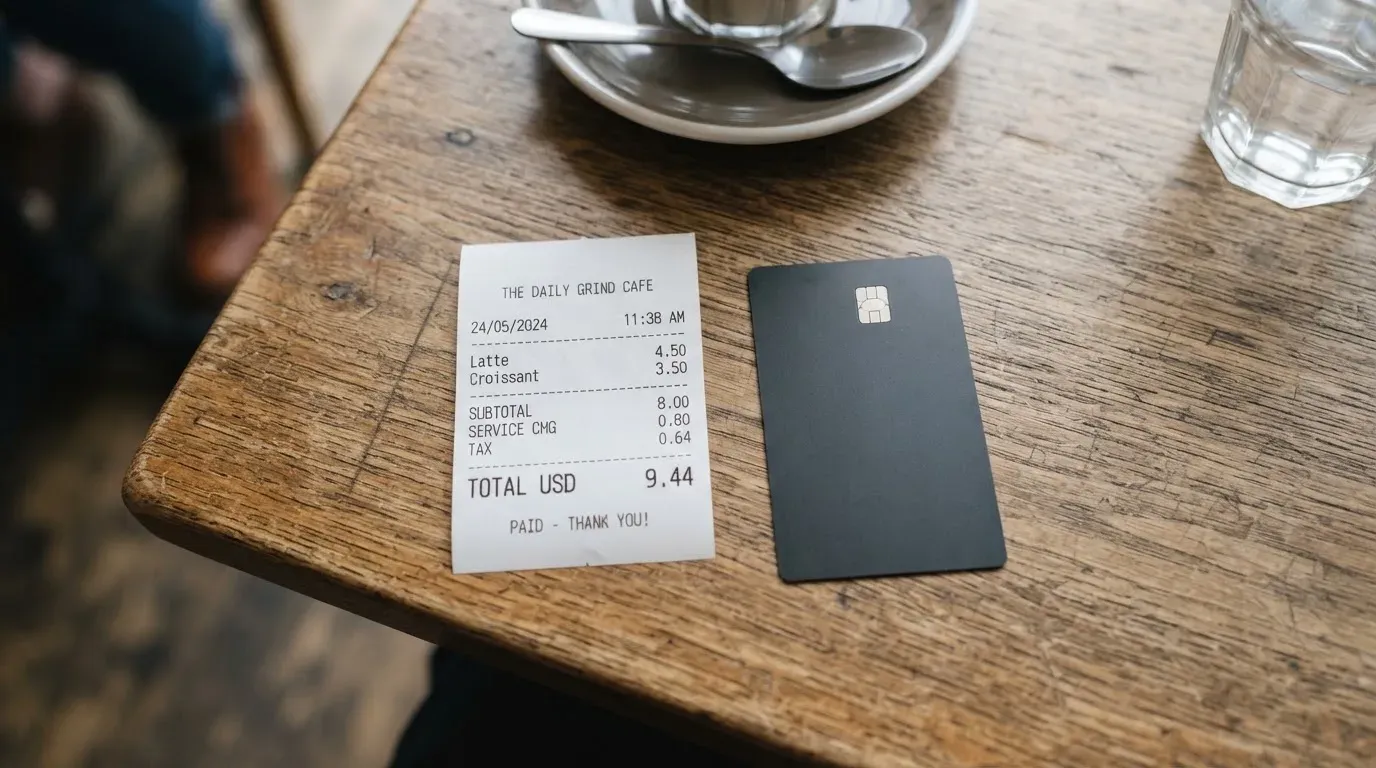
Here is what is known, and I have marked clearly what the card confirms.
| Fee or limit | What the card’s own pages say | What unofficial sources say |
|---|---|---|
| Card issuance | A commission is charged, amount not stated | One directory lists issuance as free; another summary cites 30 EUR issuance plus 1.50 EUR per month; a 2021 article gave 40 EUR plus 1 EUR per month |
| Monthly fee | Not stated | 1.50 USD per month |
| Crypto conversion | Crypto is converted to fiat during top-up, fee not stated | 4% crypto purchase fee |
| Foreign exchange | Not stated | Listed as free |
| ATM withdrawal | Cash withdrawal at ATM supported, fee and allowance not stated | ATM fee listed as free and unlimited |
| Spending limits | Not stated | Purchase limit up to 5000 EUR per month; another directory lists daily, monthly and ATM as unlimited |
Look at the right-hand column again and notice what it contains: three different issuance figures from three different places, one of them seven years old, and two flat contradictions on ATM and limits. I am not going to average them and hand you a number. That is exactly the arithmetic the card is asking you to do for free.
Here is how this plays out on three ordinary payments, so you can see which fee bites.
A coffee in a euro country, paid from a euro balance. On the card’s own facts, you convert your crypto into fiat when you top up, and you spend that balance. If the conversion happened at top-up, the 4% unofficial figure would already be baked in, and if your euro balance is already loaded, there may be nothing more to pay. The card does not say which, and this is the honest answer: I cannot tell you the cost of this coffee from the card’s public information, and neither, I suspect, could a support agent without looking at your account.
A coffee bought online from a merchant outside your own country, in a currency your balance is not in. Here you are exposed twice: the conversion if it happens on the way in, and the exchange rate if it happens on the way out. The unofficial directory says FX is free, and the card says nothing about FX at all. If that directory is right, this is the card’s genuine strength, and you would be paying only the network rate difference. If it is wrong, you are paying a percentage you were never shown.
A withdrawal at an ATM. Cash withdrawal is supported, which is what people usually mean when they say a card works like a bank card. Fee and allowance are not stated by the card; one unofficial source calls it free and unlimited. There is a second, less discussed cost here that no fee table will ever show you: the cost of getting your balance out of crypto in the first place, including the blockchain network fee for the transfer. Those are charged by the network, not by the card, and they vary.
The one thing I can tell you with confidence is that there are no reward schemes softening any of this. Unofficial sources list 0% cashback and no bonuses, and the card itself mentions no rewards program.
How to top it up
Topping up is where this card does its best work, and this is the section with the card’s highest convenience score. You fund it with BTC, LTC, ETH or USDT (ETH) directly from your crypto account, or you can transfer from another Visa card. The crypto top-up is instant, and the conversion to fiat happens during the top-up rather than at the moment of payment. That last detail is the one to understand properly: once your crypto has been converted and loaded, you are spending a stored balance, not converting coin by coin at the till.
That has real advantages. A prepaid-style balance cannot overdraw, so there is no debt, no interest and no credit line to be declined. It also means your exposure to the crypto market is settled at the moment you load, and the price you get is the price on that day. For someone who wants to spend crypto without thinking about it at the checkout, that predictability is the product.
It also means two costs move into the top-up step and out of the payment step, where they are easier to miss: the conversion fee, whatever it is, and the blockchain network fee for the transfer. The card states neither the deposit fee nor a minimum deposit. Your own transfer should also be sent on the right network, and this is worth taking seriously rather than treating as a detail. Blockchain transfers are irreversible. A deposit sent on a network the provider does not support, or to an address belonging to a different network, can simply be lost, and recovering it depends entirely on the provider’s goodwill with no guarantee.
If USDT on Ethereum is the route you plan to take, one technical point applies. On the Ethereum network, fees are paid only in ETH, so a wallet holding USDT but no ETH cannot send. If your balance is on Tron instead, that network prices transactions through bandwidth and energy resources, often burning TRX, so it works differently. This is general to the chains, not to this card, but it is the kind of detail that turns a “instant top-up” into an afternoon of support tickets.
One last thing about money going out. The card describes cash withdrawal at the ATM, but the public pages say nothing about withdrawing money back out to a bank account, and nothing about closing an account or getting a balance returned. If you have a use case where money has to come back to your normal account, ask that question first.
Paying with it every day
Day-to-day spending is this card’s strongest suit, and if you are reading for this section, the news is mostly good. It is a Visa, which is the network most merchants already accept, and it comes in both physical and virtual form, so you can be spending before the post arrives. The physical card is mailed to your real address, which matters for anyone whose usual card declines at foreign merchants.
You can add the card to Apple Pay, and the app describes it working as a payment card spent from a crypto balance. Apple Pay’s own design is relevant here and reassuring: the card number is replaced by a device-specific account number stored in the Secure Element on your device, never on Apple’s servers, and each payment uses a one-time dynamic security code. So adding the card to your phone does not hand your card number to anyone.
Google Pay is not mentioned anywhere on the card’s pages. If you are on Android, that is a gap worth raising with them rather than assuming.
The app is on iOS and Android. The iOS listing shows 4.5 out of 5 from 115 ratings, and it advertises 24/7 technical support inside the app, with a support ticket form and knowledge base in the site footer. Languages are not stated. The Google Play rating was not read, and when you are weighing an app, the rating you have not seen is often the more informative one.
Some things this card does not tell you, and each is a thing that bites in real life.
Blocked merchant categories are not stated. In this category of card, that list is often where the grief is: gambling sits under MCC 7995, and many issuers block it by policy rather than by law, with the list varying by issuer. If gambling is part of your spending, you need to know this card’s policy and the card does not publish it.
Dispute and chargeback handling is not stated. If a charge goes wrong, who you call and what happens next matters more than almost any other term on a card, and this one is silent.
Foreign merchants can decline the card for a reason that has nothing to do with you. The first six or eight digits of any card number identify the issuing institution and country, and merchants can look them up. If the issuer country differs from your billing address, some merchants apply extra scrutiny, and some decline prepaid or foreign cards outright. Address verification, which compares the numeric parts of the billing address you type against the issuer’s records, is mainly offered in the US, Canada and the UK and is generally unavailable for foreign-issued cards. A decline here is a fact about BIN geography, not a fact about your account.
One more thing you should expect from any card in this category: a declined authorisation can leave a hold on your funds for several days, typically up to seven.
What can go wrong
No official incidents involving this card came up in my checking. But “no official incidents found” is not the same as “nothing goes wrong here,” and the user reports are worth reading closely, because they are the only place the card’s weak points show up in detail.
On Trustpilot, across 469 reviews, the rating is 3.8 out of 5. The themes users raise are consistent enough to be worth naming:
- Funds stuck in a wallet since May 2024, with users unable to get them out.
- Disputed transactions and refund demands, reported around October 2025, over gambling transactions specifically.
- ID and KYC problems, showing up both on Google Play and Trustpilot: documents declined, verification loops.
- Withdrawals blocked by transaction costs, which is the fee question from earlier sections landing on a real person at the worst moment.
Two of these deserve a second look. The stuck-funds reports from May 2024 matter because they are old enough to still be unresolved, and unresolved balance problems are the single worst category of complaint for a card that holds your money while you use it. The gambling disputes matter because the card does not publish its blocked categories; if you were spending at a betting site, you were in uncharted territory.
Behind the brand sit OWNR Wallet Europe s.r.o. and OWNR Wallet Crypto Canada Ltd, registered in Canada under BC1274005. OWNR Wallet LLC is listed as licensed in the USA under 7826216, and some of the underlying data points to OWNR Wallet OU. The card issuer is not named anywhere on the public pages, which is the detail I would raise first with support. An unofficial source describes the issuer as an Estonian company providing Visa cards, but the card does not confirm that, so I am not treating it as established.
There is a regulatory backdrop worth knowing, because it explains some of these complaints. Since the EU’s MiCA regulation took legal effect, its rules on stablecoins applied from 30 June 2024 and the remaining provisions, including the rules for crypto-asset service providers, from 30 December 2024. A card is regulated separately from the crypto side: it is a payment service under e-money and payments law, so a card like this depends on two licences, one for the payment and one for the crypto. The MiCA transitional period lets providers already operating under national law continue only until 1 July 2026 or until they are authorised or refused authorisation, whichever comes first. That date has passed as this review is written, so “we are still in transition” is no longer an explanation available to you if something goes wrong. You can check whether a provider appears on ESMA’s interim register of authorised crypto-asset service providers.
The other structural risk is custody, and this is where the card is strong. Control of crypto belongs to whoever holds the private key or seed phrase. A seed phrase is typically 12 to 24 words and is an unencrypted form of the key, so anyone who gets it can restore the wallet and spend the funds. Transfers are typically irreversible, and a stolen key has no built-in recovery because the network cannot freeze or return money. Custodial platforms have a real record of failure: about US$350 million reported stolen from Mt. Gox between 2011 and 2014, about US$400 million from Coincheck in 2018, and US$625 million from the Ronin Network in 2022. Because this card’s model keeps the funds in your own wallet until payment, you avoid that counterparty risk. You take on the other risks instead: losing your own key, falling for phishing, and clipboard-hijacking malware that silently swaps a copied address.
Finally, on stability. Stablecoins aim to hold a steady value against a fiat currency, but they are not guaranteed to. TerraUSD collapsed in May 2022 and USDC briefly lost its peg in March 2023 during the US banking crisis. And stablecoins are not censorship-proof: Tether states that it disables tokens in wallets on the OFAC sanctions list and has frozen funds tied to illicit activity. If your balance sits in USDT on the other side of a top-up, that is who is holding it.
What to take instead
If the reason you are here is the same reason most people arrive at a crypto card, the honest question is whether this one is the best fit. Below are three alternatives that publish more of what you need. I am not ranking them for you; each wins on different things.
MetaMask scores 7.1 out of 10 here, the highest of the three. Sign-up is open in 45 listed countries and territories, with other regions on a waitlist, and proof of residency is required. Citizenship rules are not stated. Sign-ups in the US and UK are temporarily closed per their FAQ. The card is Mastercard, virtual first and instant, with a metal card that can be pre-ordered in the app after approval, one card per user, issued by Monovate with Crypto Life as card provider. The virtual card is free with no annual or maintenance fee; the metal card is $199 per year. Fees are described as a minimal fee per transaction with no additional MetaMask fees, no foreign transaction fee, and the Mastercard rate used; the amount itself is not published on the pages I read. It spends directly from your connected wallet on Linea, Base, Monad and Solana, and the rewards are the best in this group: cashback in mUSD, 1% on the virtual card and a headline 3% on metal, with a footnote limiting the 3% to the first $10,000 spent and 1% after that.
KAST scores 6.1 out of 10. Its eligibility rules are the most explicit of the three, which is itself a reason to like it: the country list is shown at KYC rather than buried, and if your country is not on it, it is not available there. Citizenship and ID matter separately, since living in a supported country with an ID from a restricted region may still make you ineligible, dual citizens with a supported-country ID may pass, only the account holder’s own ID counts, and a VPN does not bypass the check. You can create an account in an unsupported country but KYC stays locked. The cards run from Standard at no annual fee, through Premium at 1,000 USD per year, to Private at 10,000 USD per year, billed annually upfront. Extra virtual cards are 2 USD, Standard physical cards carry 0 USD card fee plus 40 USD delivery, and there is a 1 USD per month inactivity fee after 12 months. Fees are unusually well specified: 0% on stablecoin top-up, 0% on card spend in USD, 0% transaction fee, 0% for Apple and Google Pay, and a non-USD foreign exchange fee of 0.5% to 1.75% depending on your residence country, transaction country and card programme. It supports USDT, USDC, PYUSD and RLUSD, though their own terms say acceptable tokens are “currently USDT and USDC,” which is a conflict worth noting.
TokenPocket scores 5.8 out of 10. It is a Visa debit for a list of European countries and territories, with a Mastercard debit for Australia, Canada, Hong Kong, Japan, Taiwan, New Zealand, Singapore, South Korea and the UK, and the Americas described as planned. The cards are virtual, with no physical card mentioned, balances in EUR24 and USD24, running on Arbitrum. Fees are the softest of the three: an NFT creation fee partly covered by TokenPocket where the user pays a small portion, no other fees stated, but a 1% fee on depositing cryptocurrency into the card, which is described as refunded later through rewards and reduced transaction fees. No cashback is stated otherwise.
| OWNR Wallet | MetaMask | KAST | TokenPocket | |
|---|---|---|---|---|
| My score | 4.9 / 10 | 7.1 / 10 | 6.1 / 10 | 5.8 / 10 |
| Where it is offered | EU countries only | 45 listed countries and territories | Country list shown at KYC | Europe, plus a range of Asia-Pacific countries |
| Card | Visa prepaid, physical and virtual | Mastercard, virtual then metal | Visa, virtual and physical | Visa and Mastercard debit, virtual |
| Card cost | Commission charged, amount not stated | Virtual free; metal $199/year | $0 to $10,000/year by tier | Small share of an NFT creation fee |
| Network fees | Not stated | None additional | 0.5%–1.75% FX outside USD | 1% on crypto deposit |
| Cashback | 0% unofficial | 1% virtual, 3% metal up to $10,000 | 1.5%–3% in USD by tier | None stated; deposit fee refunded later |
| Main catch | Fee and limit numbers unpublished | Metal card costs $199/year | Tier prices are steep | No physical card |
My honest read of this table: OWNR Wallet’s self-custody model is the part competitors like MetaMask also offer, and its practical case for existing is thin beside cards that publish their prices. If your priority is keeping your own keys, MetaMask spends directly from your connected wallet and publishes more of its terms. If your priority is knowing what a payment costs, KAST publishes a full fee schedule.
Who I would recommend it to
I would recommend this card to one person, described plainly: someone living in an EU country who already holds crypto in a self-custody wallet, who wants to spend it at ordinary shops and in Apple Pay without giving custody to a platform, and who is comfortable accepting that they will not be able to see the fee before they pay it. If that is you, the card does what you want it to do, and the self-custody design is not a marketing line; it is the right call.
I would be more cautious, and would want you to get answers first, if any of these apply:
- You need published costs. The card’s own pages do not state the issuance amount, the conversion fee, the FX fee, the ATM fee or any spending limit.
- You travel outside the EU regularly. The card’s availability statement is about EU countries, and no card is immune to declines at foreign or prepaid BINs.
- You are on Android and need Google Pay. It is not mentioned.
- You spend on gambling. Blocked categories are not stated, and there are Trustpilot reports of refund disputes over exactly those transactions.
- You are moving money out. Withdrawal to a bank account is not described on the public pages, and there are reports of funds stuck since May 2024.
- You need help in a language other than English. Support languages are not stated.
And I would tell the person who asked me to look: ask support, before you apply, who the issuing institution is; what the exact total cost of a 100 EUR purchase is, in a currency that is not your balance currency; what your daily, monthly and ATM limits are; what your blocked merchant categories are; and what the process is for a disputed transaction. Five questions, written down, and you will know within one support conversation whether this card is for you. The information is not on the website, and that is itself the most telling thing I found.
Frequently asked questions
What is OWNR Wallet card?
OWNR Wallet is a crypto-to-fiat exchange that issues a Visa prepaid card linked to a self-custody wallet. You hold the crypto yourself, and the card spends a balance loaded by converting that crypto. The card comes in physical and virtual form, and the physical card is mailed to the address you specify. The card does not publish the issuing institution, and its own pages say it is currently available only for EU countries.
How does OWNR Wallet card work?
You convert crypto into fiat when you top up, and the card spends that stored balance. The card’s supported coins are BTC, LTC, ETH and USDT on Ethereum, and you can also transfer from another Visa card. Because the conversion happens at top-up rather than at the till, the rate you get is the rate on the day you load. The stored balance works like a prepaid card, so it cannot overdraw and there is no credit line to repay.
Is OWNR Wallet a bank?
No. It is a crypto-to-fiat exchange operating through OWNR Wallet Europe s.r.o. and OWNR Wallet Crypto Canada Ltd, registered in Canada under BC1274005, with OWNR Wallet LLC listed as licensed in the USA under 7826216. A card is a payment service regulated separately from the crypto side, and this one names no issuing bank on its public pages. An unofficial source describes the issuer as an Estonian company providing Visa cards, but the card itself does not confirm that.
Is OWNR Wallet card available in my country?
On the card’s own words, so far it is only available for EU countries, so if you live outside the EU the answer is no. If you live inside the EU but hold a passport from elsewhere, the card does not state a citizenship rule, and nationality is screened separately from address in this industry. Ask support with your specific two-country situation before you send documents. Either way, the availability statement is about the EU and says nothing about using the card while travelling elsewhere.
Does OWNR Wallet card require KYC?
Assume yes, and plan for document checks rather than an email address. The card’s public pages do not state its KYC level, and an unofficial source contradicts itself on the point, listing a phone-only level while also noting full KYC is required. EU anti-money-laundering rules make name, address, date of birth, nationality, identity documentation, a sanctions check and a politically-exposed-person check part of standard customer due diligence. If it cannot be completed, the transaction or the relationship must be declined.
How much does OWNR Wallet cost?
The card’s own pages say a commission is charged for issuing the card but do not publish the amount, and they do not state the conversion fee, the foreign exchange fee, the ATM fee or any limit. Unofficial sources list a 1.50 USD monthly fee, a 4% crypto purchase fee and free FX, while other summaries cite 30 EUR issuance plus 1.50 EUR monthly and a 2021 article cited 40 EUR plus 1 EUR. Do not treat any of those as the answer. Get the current figures from support before you commit.
Is OWNR Wallet card free?
Almost certainly not, and you should not plan on it being free. The card confirms that an issuance commission exists without giving a figure. Some unofficial listings call issuance free, others quote 30 EUR, and one from 2021 quoted 40 EUR with a 1 EUR monthly fee. These sources disagree with each other, which is the point: this is the card’s weakest area, and the cost is a number you have to ask for rather than one you can look up.
How do I top up OWNR Wallet card?
Top up with BTC, LTC, ETH or USDT on Ethereum from your crypto account, or by transfer from another Visa card, and the card states the crypto top-up is instant with conversion during the top-up. Send the transfer on the correct network: blockchain transfers are irreversible, so a deposit on an unsupported network or to another network’s address can be lost. Note that on Ethereum, fees are paid only in ETH, so a wallet holding USDT with no ETH cannot send. The deposit fee and any minimum are not stated.
Can I add OWNR Wallet card to Apple Wallet?
Yes, the card states it can be added to the Apple Pay system, and Apple Pay replaces the card number with a device-specific number stored on your device’s Secure Element, using a one-time code per payment. Google Pay is not mentioned anywhere on the card’s pages, so if you are on Android, raise that with support rather than assuming it works. The app is on iOS and Android, with the iOS listing showing 4.5 out of 5 from 115 ratings and advertising 24/7 support inside the app.
Is OWNR Wallet card safe and worth it?
The self-custody design is the strongest thing about it: your coins stay in your own wallet until you pay, so you avoid the counterparty and hack risk that took about US$350 million from Mt. Gox, about US$400 million from Coincheck and US$625 million from the Ronin Network, though you carry the full responsibility for your own key. Against that, Trustpilot shows 3.8 out of 5 across 469 reviews, with reports of funds stuck since May 2024, ID and KYC problems, and refund disputes over gambling transactions. Weigh it accordingly.
Wallet card fees and costs – cryptocardfacts
Content created by the «cryptocardfacts» team