
A no-KYC virtual card that hides almost everything about itself
 Available in US
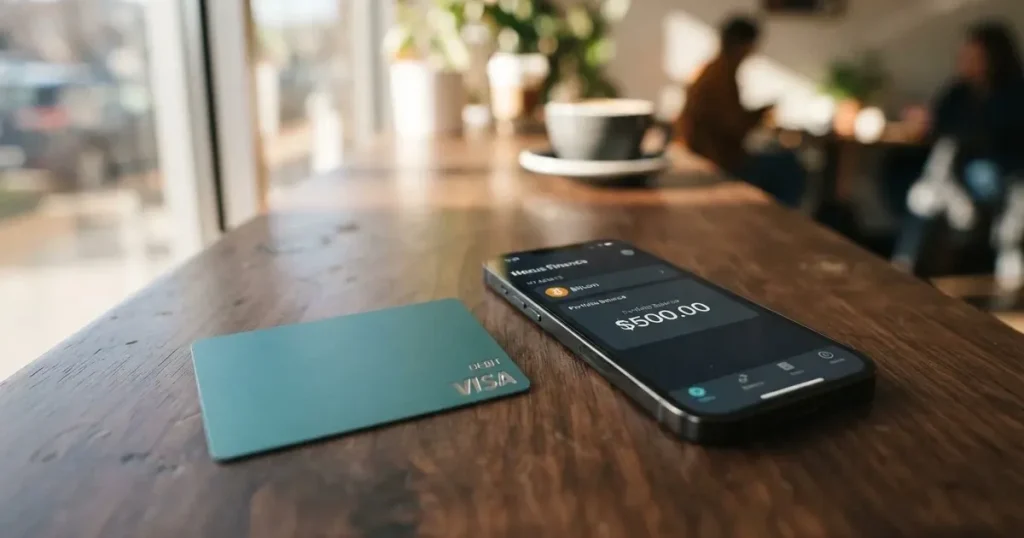
The Foton card is pitched at exactly one person: someone who cannot get an ordinary bank card, or would rather not try, and who holds USDT on the Tron network and wants to spend it online without handing over identity documents. If that is you, the pitch makes sense on its face. If you want to know who issued the card, which countries will accept it, whether your deposit is protected, and how to complain when something goes wrong, the picture is very different — because almost none of that is publicly documented, and the small amount of user reporting that exists is poor.
I am giving it 4.8 out of 10. Not because crypto cards are a bad idea in general, but because this one in particular leaves you holding a card number with no visible institution behind it.
The conditions described here are current as of October 28, 2026.
Verdict
| Criterion | Mark | Why |
|---|---|---|
| Who can get it | 5 / 10 | The official site was unavailable (403) when checked, so no country list is disclosed; unofficial sources mention US, Hong Kong and Singapore BINs but publish no country list |
| Cost | 7 / 10 | Unofficial figures: $2 issuance, no monthly fee, 1% top-up, free conversion, a $100 refundable guarantee deposit (one earlier note says 1.5% top-up — figures disagree) |
| Top-up options | 4 / 10 | Unofficial: USDT on Tron (TRC20) only |
| Reliability and complaints | 3 / 10 | Issuer and company not named; Trustpilot 3.5 from 4 reviews: chat does not answer, a complaint about $145 (September 2023), a deposit not returned |
| Everyday use | 4 / 10 | Unofficial: virtual Visa only, 3-D Secure; Apple Pay and Google Pay shown as supported on the English page but not on the Chinese one |
| Total | 4.8 / 10 | The strongest mark is cost; the weakest is who stands behind it |
Two things decide this for me. First, transparency: I could not read the official site, the issuer is not named on the pages I could access, and no country list is published anywhere I could confirm. Second, the user reports. A card that promises no KYC is telling you, in its own marketing, that it has no relationship with you in the regulated sense — which means when something goes wrong, the ordinary routes of complaint are the ones you will already have found closed.
None of this means the card does not work. It means you are being asked to trust it, not verify it.
Will they give you the card
The card’s public pages do not state who can get it. That is the honest answer, and I would rather give it to you than dress it up.
What is unofficial: no country list is published anywhere, and US, Hong Kong and Singapore BINs are mentioned — that is, the first digits of the card number that identify the issuing institution and its country. Those three came from a Chinese review page on cryptocards.so in 2026, not from Foton itself. For context, a card number starts with a 6 or 8 digit BIN that names the issuing institution; the rest is an account identifier plus a check digit. Merchants can look the BIN up, which means a card issued in one country can read as “foreign” to a shop in another.
There is a distinction worth holding onto, because the two get confused constantly. Where a card is *accepted* and who may *hold* it are different questions. It is not confirmed even that the three named countries will issue to residents.
So if your question is “can I get one in my country?”, the answer as far as public information goes is: not stated, and the site that might have said so returned a 403 error when checked.
How to get it
Also not stated on the card’s own public pages. What is unofficial, again from the 2026 cryptocards.so listing: no KYC. Email, phone, ID, proof of address and selfie are all listed as “Not Required”. There is no stated KYC tier structure either.
Before you read anything into that, understand what “no KYC” actually means in this category. KYC rules exist because regulated businesses are required to verify customers and assess risk under anti-money-laundering and counter-terrorism-financing law, including ongoing monitoring and reporting of suspicious activity. In the EU that due diligence covers name, address, date of birth, nationality, identity documentation, a sanctions check, the purpose of the relationship, and whether you are a politically exposed person. US customer identification rules require name, date of birth, address and an identification number.
A provider that skips all of it is not skipping paperwork for your benefit. It is skipping the checks that would also have told it — and in some schemes, told the regulator — that you are not on a sanctions list. And nationality is recorded and screened separately from residence precisely because sanctions screening is often applied to citizenship and country of birth. So “no KYC” here should be read as: nobody has established who you are. If you are subject to sanctions rules in your jurisdiction, a no-KYC card is not a tool that changes your obligations, and I am not going to pretend otherwise.
The card itself, unofficial: virtual only, on the Visa network — though the same page also mentions “virtual Visa and Mastercard options”, so the sources disagree — with 3-D Secure supported. No physical card is listed; delivery details are not stated. Prepaid and debit cards are generally available to adults 18 and over.
Fees: what it really costs
Every number in this section is unofficial, from the 2026 cryptocards.so listing, because the card’s own pages do not state them.

| Fee or limit | Figure as listed |
|---|---|
| Card issuance | $2 |
| Monthly fee | Free |
| Top-up fee | 1% (an earlier checking note says 1.5% — the figures disagree) |
| FX fee | Free |
| ATM fee | Listed as “Free” |
| ATM withdrawal | Listed as “Unlimited” |
| Daily spend | Unlimited |
| Monthly spend | Unlimited |
| Start-up deposit | $100, described as refundable |
| Decline rate policy | Strict 20% maximum decline rate policy (unofficial figure) |
| Tiers | One card listed; “unlimited card issuance available for high-volume users” |
Three everyday payments, so this stops being a table:
A $30 subscription. 1% of the top-up, if you funded with 1%. The conversion is listed as free and the FX fee as free. What you cannot see is the spread between the stablecoin value and what the merchant’s network settles. Free conversion on paper is not the same as no conversion cost in practice.
A $200 online purchase abroad. Same headline figures: 1% top-up, free FX fee. But a foreign-issued BIN is the classic decline trigger, and some merchants decline prepaid or foreign BINs outright because the lookup reveals the card type and issuer country. Address verification compares the numeric parts of the billing address you typed against issuer records, is mainly offered in the US, Canada and the UK, and is generally unavailable for foreign-issued cards — which can itself cause declines.
An ATM withdrawal. This is where the listing is most obviously at odds with itself: it says the ATM fee is free and withdrawals unlimited, on a card that is virtual only. A virtual card in a wallet cannot be inserted into a machine. Either the listing describes a physical card that does not exist, or the ATM line is boilerplate. I would not plan around it.
Also worth knowing about the category generally: on-chain network fees for your deposit are charged by the blockchain, not by the card provider, so the 1% is not the whole cost of getting money in.
And the 20% decline rate policy is a strange thing to advertise. This figure is unofficial and not confirmed by the card. Decline rate is what the issuer and the network watch — a card that fails at checkout too often gets throttled or killed. If there is a published cap on declines, someone is expecting the card to fail often, and that usually points at the BINs, not at you.
Top up
Unofficial, and narrow: USDT on Tron (TRC20) only. Top-up fee 1%, described as “fast automated top-ups”, with a $100 refundable deposit needed to start.
One network is a real constraint, and it is narrower than it sounds. USDT is issued on several networks — Ethereum, Tron, Solana, Polygon, Avalanche among others — and the token is the same token, but a deposit only arrives if it arrives on the network the provider watches. Circle stopped supporting USDC on Tron in February 2024, which is a useful reminder that these arrangements change without much warning. Tron pricing works differently too: rather than gas paid in ETH, Tron uses internal bandwidth and energy resources and often burns TRX.
The risk I would flag hardest: blockchain transfers are irreversible. A deposit sent to an address belonging to a network the provider does not support can be lost, or need manual support recovery with no guarantee. Before your first transfer, confirm the network and the address from inside your own account rather than from a support reply.
On the $100: it is described as refundable. Reviews you can read report otherwise — see the next section. If you fund this card, treat that $100 as potentially gone, because that is what the complaints suggest.
Paying with it every day
Unofficial throughout. Wallets: Apple Pay and Google Pay marked supported on the English page, and the Chinese page of the same site says not supported — the sources contradict each other, so assume nothing here. Rewards: none, cashback 0%. The app and the dispute process are not stated.
That last gap is the one that should bother you most. A dispute process is how a declined payment, a duplicated charge or goods that never arrived gets reversed — a chargeback is a refund ordered by the card issuer, with reason codes such as fraud, duplicate billing or goods not received. US rights differ by card type: Regulation E covers debit card reversals, Regulation Z covers credit card, and prepaid-card coverage varies and should not be assumed. Nobody has told me Foton’s arrangement. No stated dispute route means no assumed one.
Two everyday realities to plan around. Merchant category codes matter: MCC 7995 covers gambling, and many issuers block it by policy rather than by law, with the blocked list varying by issuer — if that is something you spend on, you will find out at the till. And a declined authorisation can leave a hold on your funds that stays for days, typically up to seven, so a failed payment may quietly reduce your balance for a week.
On the mobile wallets themselves: when Apple Pay stores a card, it replaces the card number with a device-specific number kept in the Secure Element, never on Apple’s servers, and each payment uses a one-time code. Issuers can separately restrict the tokenised number — blocking it on phone use, say, or on websites.
What can go wrong
No official incidents found. What exists is user reporting, and you should weigh it as such.
Trustpilot shows 3.5 out of 5 from 4 reviews, read on 2026-10-21: none in the last 12 months, and the profile is unclaimed. The themes reported: chat support does not answer (September 2023), an allegation that $145 was taken (September 2023), and scam accusations (September 2023). Separately, the Chinese cryptocards.so review mentions an unresolved withheld deposit and unanswered tickets.
There are positive reviews too — 5-star reviews in March and April 2024 mention timely customer service. The 5-star and 1-star material clusters differently by date, which tells you something about service quality changing over time, though four reviews is far too small a sample to draw a trend from.
Then there is the question those complaints cannot answer: who owns Foton, and who issues the card. Not stated on the pages I could read, and it is the single most important fact about any card.
Some background on why that matters more than usual in this category. Visa and Mastercard do not issue crypto cards to consumers themselves; they license issuers, and they can suspend a programme. Visa terminated its global agreements with FTX on 13 November 2022 and the FTX US debit card was wound down by its issuer. WaveCrest, a Visa issuer that supplied crypto card brands, was suspended by Visa in Europe in 2018, closing all WaveCrest-issued Visa programmes. Closures follow a pattern: a notice period, then loading and spending stop, then users are asked to withdraw remaining balances.
That history is not a prediction about Foton. It is a reminder that the entity you hold a balance with can disappear from the network while your money is still there. Two further category notes: Tether says it disables tokens in wallets on the OFAC sanctions list and has frozen funds tied to illicit activity, so stablecoins are not censorship-proof; and in the EU, e-money institutions must safeguard customer funds by segregating them in dedicated accounts or insuring them, but those are not bank deposits and may not sit under a deposit guarantee scheme. Whatever Foton’s arrangement is, it is not stated.
Regulatory context, briefly, since it shapes what “regulated” would even mean: MiCA, Regulation (EU) 2023/1114, took legal effect in June 2023, with rules on stablecoins and asset-referenced tokens applying from 30 June 2024 and the remaining provisions including crypto-asset service provider rules from 30 December 2024. Under MiCA, e-money tokens may be issued only by a credit institution or an electronic money institution. Providers operating under national law could continue only until 1 July 2026 or until they received or were refused authorisation, whichever came first. A card is regulated separately as a payment service, so a crypto card often depends on two licences. In the US, FinCEN guidance treats administrators and exchangers of convertible virtual currency as money transmitters, while ordinary users buying things are not. ESMA keeps a public register of authorised providers and white papers, and that register is the first place I would look.
On taxes, one factual point rather than advice: the IRS treats digital assets as property, so exchanging them for goods, services or dollars generally produces a taxable gain or loss, measured in local currency at fair market value on the date of the transaction. Each card payment funded from crypto may therefore be a separate disposal. How that applies to you depends entirely on where you live.
What to take instead
None of these is a recommendation — I have not tested any of them — but they are the options I would put side by side with Foton, and the differences are instructive.
| Card | Score | Card form | Cost as stated | Funding |
|---|---|---|---|---|
| Foton | 4.8 / 10 | Virtual, Visa (unofficial) | $2 issuance, no monthly fee, 1% top-up, $100 refundable deposit (unofficial) | USDT on Tron (TRC20) only (unofficial) |
| Cardex | 5.6 / 10 | Debit crypto card on VERVE, Visa, Mastercard and UnionPay; virtual and physical; Naira per the listing | Not stated | USDT, USDC and BTC wallets; networks not stated |
| CardFlow | 4.9 / 10 | Virtual USD Mastercard, created in about 3 minutes | Creating a virtual card is completely free; monthly fee not stated | Bitcoin, USDT, ETH or Naira bank transfer; networks not stated |
| HyperCard | 4.7 / 10 | Prepaid; network not stated on the App Store page; balance in USD or EUR | App Store page lists no fees | Crypto such as USDT, BTC, ETH, converted to USD or EUR; networks not stated |
Cardex (5.6). Aims wide — “one crypto card, 200+ countries”, no country list or exclusions published — and its App Store listing is Naira-focused, paying in Naira. Its unusual feature is conversion at the moment of payment, with an “AI-Powered Conversion Rate” that scans exchange rates and picks the best one; no fee percentage is stated. It also runs on four networks including UnionPay, which would matter if you travel.
CardFlow (4.9). Aimed squarely at Nigeria — “Nigeria’s smartest fintech card platform”, “Nigerians and global users” — with a virtual USD Mastercard created in 3 minutes, explicitly free to create, fundable with Bitcoin, USDT, ETH or a Naira bank transfer.
HyperCard (4.7). A prepaid card with a balance in USD or EUR. Its App Store page says the card works in “more than 176 countries” — that is acceptance, not eligibility, and the official pages state no country list either, which is a habit worth noticing. No fees are listed.
What Foton has that none of them advertise is the no-KYC position, and that is genuinely its whole proposition. If that is what you need, you may have no alternative in this list at all. If you are choosing on transparency, support and a named entity, Foton is last.
Who I would recommend it to
I would recommend this card to a person who has USDT on TRC20, cannot or will not complete KYC, and treats the balance as spending money rather than savings — small amounts, spent and gone, with nothing at stake if the provider disappears. Under those conditions it does one job, the fees are modest, and you understand exactly what you are accepting.
I would not recommend it if you are planning to hold a meaningful balance on it, if you pay rent or anything else recurring from it, if you travel, if you depend on Apple Pay or Google Pay, or if you need a dispute route. And I would not use it as your only card, for the same reason you would not keep your emergency money in the most volatile asset you own.
Two checks before you fund anything, in this order. First, find out who the issuer is and who stands behind the company — not on a review page, but in the register your own regulator publishes. Second, assume the $100 deposit is not coming back and see whether the card still makes sense if it never does.
The honest summary is that this is a card I could not verify, issued by an institution I could not name, described only in numbers I could not confirm from the company itself. The absence of KYC is not a perk you are being given; it is the reason there is nothing behind the card to hold responsible.
Frequently asked questions
What is the Foton card?
The Foton card is a crypto payment card that, according to unofficial 2026 listing details, exists only in virtual form on the Visa network, with 3-D Secure supported and Apple Pay and Google Pay shown as working — though the site’s Chinese page contradicts that. You fund it with USDT on the Tron network and spend the resulting balance like an ordinary card. The card’s own public pages state little, and the official site was unavailable when checked.
Is Foton a bank, and who owns it?
Bank status and ownership are not stated on the card’s pages. The issuer and the company are both unnamed, which is unusual and the main reason I scored it down. Card programmes like this are often run by a company that markets the card while a licensed institution issues it, so the two can be entirely separate — and here you cannot see either one.
Does Foton card require KYC?
Unofficial listings say no: email, phone, ID, proof of address and selfie are all marked “Not Required”, and the listing says “No KYC”. The card’s own pages do not state this. Nobody has verified your identity, which means sanctions screening and risk checks were not performed on you either. That is a legal fact about your situation, not something the card changes.
Which countries can use Foton card?
The card’s public pages state nothing, and no country list is published. An unofficial source mentions US, Hong Kong and Singapore BINs, which tells you where card numbers may have been issued, not who can hold one. Availability at a shop is a separate question again: foreign BINs are declined more often, sometimes automatically.
How do I top up Foton card?
Unofficial details say USDT on Tron (TRC20) only, with a 1% top-up fee and a $100 refundable deposit needed to start. Check the network and deposit address inside your own account before your first transfer, because blockchain sends cannot be reversed. On-chain network fees are charged by the blockchain separately, so the 1% is not the whole cost.
Can I add Foton card to Apple Wallet?
Possibly, but I would not plan on it. Apple Pay and Google Pay are marked supported on one page of the operator’s site and not supported on the Chinese page of the same site. Issuers can also restrict a tokenised card number by channel, so even a supported wallet payment could be blocked at checkout.
What are Foton card’s fees?
Unofficial figures: $2 to issue the card, no monthly fee, 1% to top up, free FX fee, and free conversion — although an earlier note gives the top-up as 1.5%. ATM fees are listed as free and withdrawals as unlimited, on a virtual-only card, which does not add up. There is a $100 refundable deposit to start.
Is Foton card safe?
Safe against what is unclear, and that ambiguity is the problem. Stablecoins are not censorship-proof and can lose their peg, blockchain transfers are irreversible, and crypto card programmes have been shut down by their networks before. Trustpilot shows 3.5 from 4 reviews with an unclaimed profile, including reports of an unanswered chat and a withheld deposit. No funds sit in a protected account as far as I can tell.
How do I withdraw money from Foton card?
The public pages do not say, and I would not assume a card withdrawal is available. The listing mentions free ATM withdrawals with no limit, but the card is described as virtual only, so an ATM route may not exist in practice. If you need to get money back out, establish how before you put money in, not after.
Is Foton card worth it?
For someone with USDT on TRC20 who cannot complete KYC and only wants to spend small amounts, the modest fees make it workable. For anything larger or recurring, I would not: the issuer is unnamed, the dispute route is unstated, there is no cashback or rewards, and the user reviews describe support that does not answer. Put small money in and treat it as spent.
Virtual card fees – cryptocardfacts
Content created by the «cryptocardfacts» team