
The $1 virtual dollar card that leaves most of the answers blank
 Available in US

I have read everything Dantown publishes about its card, sat with the app store listings, and then went looking for the things a company usually does publish and this one does not: who issues the card, what the conversion costs, which coins and networks fund it, which countries can hold an account. The card is real, it is cheap to create, and it is aimed squarely at one market — Nigeria. But a large part of how this card behaves simply is not written down anywhere public. That is the central finding of this review, and it is also why the score lands where it does.
I scored the card 4.2 out of 10.
That number is not a verdict on fraud or safety. Nothing I found suggests either. It is a verdict on how much of the picture you get before you hand over money, and on how thin the everyday-use offer is: a virtual dollar card, funded from naira, with no published conversion figures, no named issuing partner and no Apple Pay or Google Pay mentioned anywhere.
If you are Nigerian and need a cheap dollar card for subscriptions, online payments or a travel booking, this is a card worth trying with a small balance. If you are outside Nigeria, or you want a card you can hold, tap, or load with the coin of your choice, the public information simply is not there to support a decision, and that is a reason to look elsewhere — which the last sections of this review do.
| Criterion | Mark | Why |
|---|---|---|
| Who can get it | 2 / 10 | Sold as a “Virtual Dollar Card in Nigeria”; no other country named, no exclusion list |
| Cost | 8 / 10 | Card creation $1.00, funding fee $0; unofficial sources add $1 a year, conversion amounts not published |
| Top-up options | 3 / 10 | Officially naira via Pay-bridge; coins and networks not named, unofficial mentions of bank transfer and crypto |
| Reliability and complaints | 4 / 10 | Issuer and licences not found; Trustpilot TrustScore 0 with no reviews and a “high-risk investments” notice; no official incidents |
| Everyday use | 3 / 10 | Virtual only, USD only; Apple Pay and Google Pay not mentioned, no ATM |
| Total | 4.2 / 10 |
The conditions described here are current as of October 28, 2026.
Will they give you the card
Short answer: if you are in Nigeria and set out to buy a virtual dollar card, yes — that is exactly what the product is for. Nobody else is invited in, because nobody else is invited in writing.
The card is marketed for Nigeria, and only for Nigeria, as far as the public pages go. The product page title reads “Get a Secure & Cheap Virtual Dollar Card in Nigeria for $1”, and the FAQ on the same page asks “How can I create a virtual dollar card in Nigeria?” There is no country list, no eligibility test in the open, and no exclusion list. So if you are reading this in Lagos, Abuja or Port Harcourt, you are inside the intended market. If you are reading it anywhere else, the honest position is that you cannot tell from the site’s own words whether you would be accepted — the pages do not say.
That last point matters more than it sounds. Crypto card providers in this category routinely restrict who can open an account, and the restrictions are frequently published only inside the app. “Not stated” here means exactly that: not stated. It does not mean unrestricted, and it does not mean you will be refused at sign-up. It means the answer is not in front of you before you try.
One more thing belongs in this section rather than buried later. Trustpilot lists Dantown as a cryptocurrency buying, selling and spending service based in Port Harcourt, Nigeria. That listing is not the card issuer — it is the brand, and Trustpilot itself is a third party, so treat it as unofficial context rather than something Dantown states. I looked for an issuing bank or e-money partner and found none named. Under EU rules that sort of arrangement is normal: a card programme is held by a licensed bank or e-money institution, while the crypto brand is often only the front end that markets it. But when I cannot name the partner, you cannot check the partner’s register, and that is a real gap.
How to get it
Three steps, and the first one is the important one: you cannot get this card without the mobile app.
The official process is three steps, quoted as the site gives them: download the Dantown Mobile app, sign up and verify your account, then create and personalise your card. There is no branch, no paper form, no postal application. Everything happens on the phone.
What you get at the end of that is a virtual card only — the page says “virtual dollar card” throughout, and there is no delivery, because there is nothing to deliver. The card details — name on the card, number, expiry, CVC — appear in the app, ready to paste into an online payment form. The currency is US dollars.
The network is the small uncertainty here. The images on the official page are labelled “visacard”, but the text never names a network, so the label may be the page designer’s shorthand rather than a statement about the rails. A third-party comparison (Adomonline, 2026) describes it as a Mastercard virtual dollar card — that is unofficial and not confirmed by Dantown. If the network matters to you, and it can matter for acceptance, ask inside the app where the number is generated.
On verification, the site says only “verify your account”. Which documents are accepted, whether proof of address is required, whether there is an age or ID threshold, whether there are verification tiers with different limits — none of it is stated. For what this means inside the wider system: in the EU, customer due diligence normally covers name, address, date of birth, nationality and identity documents, a sanctions check and a politically-exposed-person check, and if it cannot be completed the institution is expected to refuse or end the relationship. In the US the customer identification programme asks for name, date of birth, address and an identification number. Nationality gets screened separately from residence, because sanctions and issuer risk policy often follow citizenship and country of birth rather than where you live. None of that tells you what Dantown asks for — it tells you that whatever they do ask will be checked against something, and that refusals and freezes pending documents are the normal outcome when it fails.
You will also see the app on Google Play under the developer name Dantown, with over 50,000 downloads and an update on 20 August 2026. Third-party trackers put the average rating at 4.10 from roughly 1.1 thousand ratings, with about 80 thousand downloads (AppBrain, 2026), while Adomonline lists 4.7 from 1.12 thousand reviews — again unofficial, and again a sign that the download counts do not fully agree. The company says iOS is available on the App Store; I did not read that page.
Fees: what it really costs
A dollar to make the card and nothing to load it — and then, on every payment, an amount nobody has published.
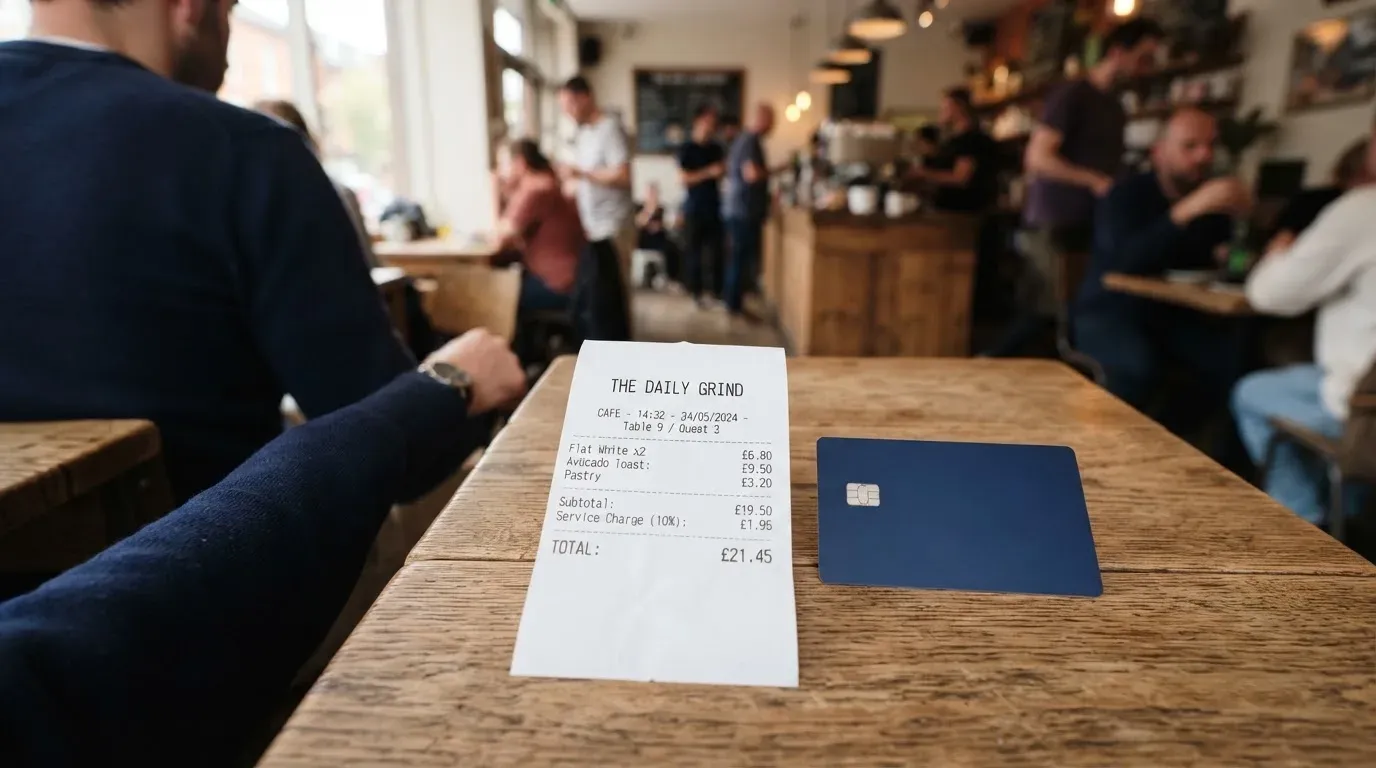
Here is every fee and limit figure the card states. The empty rows are not oversights on my side; those are the ones Dantown does not publish.
| Fee or limit | What Dantown states |
|---|---|
| Card creation | $1.00 |
| Monthly or annual fee | not stated on the official page; unofficial sources add $1 a year in maintenance |
| Funding fee | $0 |
| Deposit fee | $0 |
| Decline fee | $0 |
| Conversion fee | “Specific transaction fees and conversion fees” apply to international transactions; amounts not given |
| Naira-to-dollar rate and FX fee | not stated |
| ATM | not stated — the card is virtual, so there is no ATM use |
| Transaction limit | marketing claims “No transaction limit” and “Your spending should have no limit”; no per-tier figures published |
| Multiple cards | you can “create and manage multiple virtual dollar cards on the Dantown app”; no tiers |
Two or three ordinary payments show why that table is the real story.
Paying a $40 subscription in dollars. You load the balance first, so the top-up itself costs nothing — $0 funding, $0 deposit, $0 decline. Then the purchase is an international transaction, which is exactly the category Dantown says carries “specific transaction fees and conversion fees”. The amounts are not given. So of $40, you receive $40 less whatever those two deductions turn out to be, and you cannot find out what they are before you pay.
Spending while the naira rate moves. The naira-to-dollar rate is not stated, and neither is any FX fee on top of it. The card is dollar-denominated and funded from naira, so something has to convert between the two, and the person carrying that risk is you, not the platform. Compare that with a provider that shows you the rate it will use: without one, every naira-funded purchase is a small unknown.
Paying anything that tries to read your billing address. This one is not about Dantown at all, and it catches people who hold cards issued outside their own country. Address verification compares the numeric parts of the billing address you type against the issuer’s records; it is mainly offered in the US, Canada and the UK, and is generally unavailable for foreign-issued cards — which causes declines. Some merchants also decline prepaid or foreign card numbers because the issuer’s country is visible in the card’s opening digits. A Nigerian dollar card used on a US-facing merchant is, structurally, a foreign-issued card. If a payment fails, this is often why.
The $1 maintenance fee that keeps appearing is unofficial: a Dantown announcement carried by TechCabal on 9 December 2024, and Adomonline in 2026, both list $1 creation and $1 maintenance. Dantown’s own page gives only the $1.00 creation fee, so treat the annual figure as likely but unconfirmed by the card.
And there is no tiers story to escape into. One card product, with multiple virtual cards under one app rather than a set of priced plans.
Top up: how the money gets in
Officially, one way: naira, through something called Pay-bridge. Everything else is second-hand.
The Google Play description of the app puts it plainly: “Naira deposit via Pay-bridge”, “Naira withdrawal via Pay-bridge”, “Secure wallet”. So the documented route is a naira payment into a bridged account, and the same mechanism runs in reverse for naira withdrawals from the wallet.
The numbers are friendly: funding fee $0, and per the company’s announcement the deposit and decline fees are $0 as well. What is not stated: the minimum top-up, who pays the network fee if crypto is involved, and whether withdrawing the card’s own balance works at all. The Play listing speaks of naira withdrawal from the wallet; it does not say you can pull the card balance itself out, what that would cost, or what happens to a remaining balance if you close the account.
The unofficial picture is wider. Adomonline’s 2026 comparison describes funding by local bank transfer and by crypto. If either works, the coin and network still are not specified — and with stablecoins, that omission is not a detail. USDT and USDC sit on a dozen different networks, and the fee you pay, and whether the deposit arrives at all, depends on picking the one the provider watches. Send funds on an unsupported network and the transfer is irreversible: there is no built-in recovery, the network cannot undo it, and getting the money back can depend entirely on a support agent deciding to help.
So my practical advice is this. Use the documented naira route, and if someone tells you crypto funding works, ask which token and which network before you send a single coin. Tether’s own position is worth knowing here too: it says it disables tokens on wallets on the OFAC sanctions list and has frozen funds tied to illicit activity, so stablecoins are not censorship-proof in either direction.
Paying with it every day
Every day means online, in dollars, from a phone screen. There is no tap, no ATM, and no wallet integration mentioned.
Let me be concrete about what the card can and cannot do in daily life.
It is a virtual dollar card. That means it works where you type card details into a checkout page — subscriptions, online services, some travel bookings. It does not mean you can hand it to someone at a counter, tap a terminal, or take money out. There is no ATM story to tell, because a virtual card has no physical presence.
Apple Pay and Google Pay are not mentioned on the pages I read. The issuer can restrict a tokenised number — blocking it on magnetic-stripe, phone or website use is a normal control — and I found nothing indicating Dantown has enabled either mobile wallet. Treat “add to Apple Wallet” as unanswered rather than as a no.
Two things that do not appear anywhere in the public material: rewards of any kind, and any partner wallet feature. Single card, no perks listed.
Support is described as “24/7 Customer Service” on Google Play, with an e-mail at [email protected]. Whether that support team can actually resolve a stuck crypto deposit, a declined payment or a block is not something a listing can tell you.
And the risk picture that applies to any virtual card, whatever the brand: when a virtual card is blocked, all functionalities are disabled, and it can be blocked again. That is Dantown’s own wording about its own product, and it is worth reading twice. A block is not a soft warning.
What can go wrong
The honest list of risks here is mostly a list of things I could not find. That is itself the risk.
First, the issuer. I could not name the bank or e-money institution that holds the card programme, and I found no licence to check against a public register. Visa and Mastercard do not issue crypto cards to consumers themselves; they license issuers, and they can suspend a programme — Visa said in November 2022 that it had terminated its global agreements with FTX, and the FTX US debit card programme was wound down by its issuer. WaveCrest, a Visa issuer that supplied crypto card brands, was suspended by Visa in Europe in 2018, closing all WaveCrest-issued Visa programmes. Programme closures follow a pattern: a notice period, then loading and spending stop, then users are asked to withdraw what is left. One 2026 closure reported by a single secondary source had new loads ending 8 July 2026 and spending stopping 8 August 2026 — single source, unconfirmed, but the shape of it is what to expect. You cannot check whether your money sits with a licensed partner when the partner is not named.
Second, your money’s custody. Dantown describes a “secure wallet” and data encrypted in transit, but whether the wallet is custodial or self-custody is not stated, and neither is two-factor authentication. That matters more than the encryption line suggests. With a custodial wallet, the provider holds the credentials and you must trust them completely; with a self-custody card, the funds stay yours until the moment of payment, but you carry the full risk of key loss, phishing, and clipboard malware that swaps an address after you copy it. Crypto transfers are typically irreversible and there is no built-in recovery. Custodians do fail: Mt. Gox (about US$350 million reported stolen, 2011–2014), Coincheck (about US$400 million, 2018), Ronin Network (US$625 million, 2022). Even when a provider is careful, e-money funds are not bank deposits — they are safeguarded by segregation or insurance, and that is not the same as deposit guarantee.
Third, blocking. Already mentioned, and it deserves repeating because the failure mode is total: a blocked virtual card has all functionality disabled, and Dantown says it can be blocked repeatedly.
Fourth, refunds. Chargeback rights are not stated, and they vary enormously by jurisdiction and by card type. US debit card reversal rights come from Regulation E, credit card rights from Regulation Z, and prepaid-card coverage varies and should not be assumed. If a merchant takes your payment and never delivers, do not assume a dollar card in Nigeria behaves like a US credit card.
Fifth, disputes and support escalation: not stated.
Sixth, the base rate problem. I found no official incident notices from Dantown, and no relevant threads on Reddit or Nairaland. Trustpilot shows a TrustScore of 0 with no reviews yet (read 21 October 2026), and carries a notice that the company “may be associated with high-risk investments”. An empty review page is not evidence of anything — good or bad — but it does mean there is no independent record either. And one piece of context worth holding: Nairametrics noted that forex scarcity has led some virtual dollar card providers in Nigeria to suspend service (news, 2024; not specific to Dantown). That is the category’s fragility, not this company’s record.
Seventh, taxes, mentioned once and without advice: the IRS treats digital assets as property, so converting or spending them generally produces a taxable gain or loss, measured in local currency at the value on the transaction date — which can make each card payment a separate disposal event. How any of that applies to you depends on your jurisdiction and your situation; take it to an accountant, not to a card review.
What to take instead
If the reason you want Dantown is that a card is hard to get, the honest comparison is that the alternatives are not obviously better — but they are more published.
Here is where Dantown stands against three comparable products, on what each one actually discloses.
| Dantown | Cardex | CardFlow | HyperCard | |
|---|---|---|---|---|
| My score | 4.2 / 10 | 5.6 / 10 | 4.9 / 10 | 4.7 / 10 |
| Stated market | Nigeria | “One crypto card, 200+ countries”; no country or exclusion list | Nigeria and “global users”; no list | No country list; App Store says acceptance in “more than 176 countries” |
| Card | Virtual USD | Debit crypto card on VERVE, VISA, Mastercard and UnionPay; virtual and physical; naira per listing | Virtual USD Mastercard, about 3 minutes | Prepaid, USD or EUR balance |
| Creation cost | $1.00 | not stated | free (site FAQ) | not stated |
| Conversion fees | amounts not given | real-time conversion at payment; “AI-Powered Conversion Rate” picks the best rate; no percentage stated | not stated | not stated |
| Funding | Naira via Pay-bridge; unofficial bank transfer and crypto | USDT, USDC, BTC wallets; networks not stated | Bitcoin, USDT, ETH or naira bank transfer; networks not stated | Crypto such as USDT, BTC, ETH; networks not stated |
| Rewards | not stated | not stated | not stated | not stated |
Read that table carefully, because the pattern matters more than any single cell. Cardex scores highest here on the strength of one disclosure: it tells you it converts in real time at the moment of payment and describes how it picks the rate. That is a real answer to the question “what does a conversion cost me”. Dantown’s answer is “specific transaction fees and conversion fees apply”, which is not an answer.
CardFlow is the cheapest to start with on its own words — creating a virtual card is free — and names four funding routes. But it publishes no fees at all, and it is Mastercard by its own App Store listing.
HyperCard discloses the least about cost and says nothing about a network on the page I could read, though it is the clearest about the balance: crypto goes in, the card holds dollars or euros.
All three are built for or marketed toward Nigeria too. All three also fail to name networks for their crypto funding. None of them publish rewards. So the choice is not between good and bad options — it is between thin information and slightly thicker information.
Where Dantown genuinely leads: the $1.00 creation fee is concrete, written on its own page, and the $0 funding fee alongside it is the kind of thing competitors leave unstated.
If your priority is a card you can physically hold, none of these four is a strong answer. If your priority is a stablecoin card loaded on a chain you choose and can see, all four leave you guessing about networks. If your priority is spending money online in dollars from Nigeria on a small scale, Dantown is a reasonable place to start with a small balance.
Who I would recommend it to
I would recommend this card to one person: a Nigerian user who needs a cheap virtual dollar card, and who is willing to test it with a small amount first.
Specifically, that means you are paying subscriptions or making online purchases in dollars, you are comfortable with a pay-bridge-style funding route rather than a crypto transfer, and you will not be caught out by discovering the conversion fee after your first payment. Load a modest amount, spend it, and read what the app actually charges you — that single exercise will teach you more than every page on the site combined, and it is the only way to find out which network your card runs on.
I would not recommend it to you if any of these are true:
- You are outside Nigeria. Eligibility is not published, so you would be applying blind.
- You need a physical card, ATM access, or Apple Pay or Google Pay. None of these exist here.
- You intend to fund the card with crypto. The coins and networks are not named, and a wrong network is an irreversible loss.
- You want to know who holds your money. The issuing partner and licences are not published, so there is no register to check them against.
- You are choosing a card for consumer protection reasons. Chargeback and dispute terms are not stated, and prepaid-card coverage varies by jurisdiction.
Frequently asked questions
What is Dantown?
Dantown is a Nigerian crypto service that sells a virtual dollar card for $1.00. You create the card in a mobile app, fund it, and use the card number for online payments in US dollars. The brand is listed on Trustpilot as a cryptocurrency buying, selling and spending service based in Port Harcourt, Nigeria, though that listing is third-party rather than an official statement.
How does the Dantown card work?
It works like a prepaid card. You load money first, and the card spends only that balance, so it cannot overdraw. The official route is a naira deposit through Pay-bridge, at $0 funding and $0 deposit fee. International purchases then carry what Dantown calls “specific transaction fees and conversion fees”, though it does not publish the amounts.
Is Dantown a bank?
No — and it does not present itself as one. A card like this is normally issued by a licensed bank or e-money institution while the brand is only the programme manager and front end. I could not find Dantown naming its issuing partner or licence, which means there is no public register entry for you to check. That is the single most important gap for anyone weighing this card.
Who owns Dantown?
Dantown does not say on the pages I read. The unofficial picture is a Nigerian company in Port Harcourt, from its Trustpilot listing, with the app published on Google Play under the developer name Dantown. It announced its $1 virtual dollar card on 9 December 2024. Ownership and corporate registration details were not stated anywhere I could verify.
Is Dantown card available in my country?
Officially it is a Nigeria product — the page title and FAQ both name Nigeria, and no other country or exclusion list appears anywhere. So if you are in Nigeria, you are in the intended market. If you are elsewhere, the site does not say whether you would be accepted, and the answer may only exist inside the sign-up flow.
How do I apply and activate it?
You download the Dantown Mobile app, sign up and verify your account, then create and personalise the card; that is the whole three-step process. There is no delivery step because the card is virtual — the name, number, expiry and CVC appear in the app. What documents verification requires, and what ages or address proofs apply, is not stated.
Does Dantown card require KYC?
The site says only “verify your account”. In practice, a provider like this normally has to identify you and screen you, since sanctions checks and customer due diligence apply to regulated businesses. What that means concretely for Dantown — which documents, whether an address proof is needed, whether there are different verification tiers with different limits — is not stated on the public pages.
How do I top it up, and can I use crypto?
Officially you deposit naira through Pay-bridge, with a $0 funding fee and, per the company’s announcement, $0 deposit and decline fees. Unofficial sources describe bank transfer and crypto funding as well. If you plan to send crypto, ask which token and which network first — deposits on the wrong network are irreversible, and the minimum top-up is not stated.
Can I use Dantown card in Apple Pay or at an ATM?
No sign of either. Apple Pay and Google Pay are not mentioned on the pages I read, and there is nothing to insert at an ATM because the card is virtual only. Its everyday use is typing the card details into an online checkout. No rewards programme is described either.
Is Dantown card safe, and what about complaints?
There is nothing to suggest it is unsafe, and nothing to reassure you either. No official incident notices exist, no relevant Reddit or Nairaland threads turned up, and Trustpilot shows a TrustScore of 0 with no reviews plus a “high-risk investments” notice. Support is listed as 24/7 on Google Play with an e-mail at [email protected]. Verify your own account carefully and start with a small balance.
Virtual card fees – cryptocardfacts
Content created by the «cryptocardfacts» team