
A virtual USD Mastercard built for Nigeria, with more blanks than answers
 Available in US
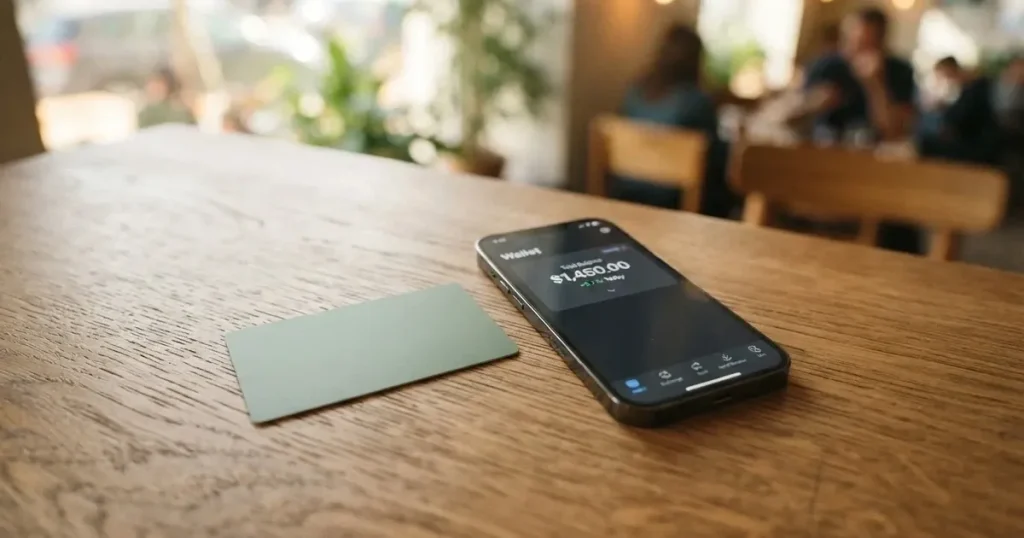
CardFlow is a virtual USD Mastercard that a company describes as “Nigeria’s smartest fintech card platform”, aimed at “Nigerians and global users”. You load it with crypto or naira, and it spends like an ordinary card online. On paper it is a neat fit for someone in Nigeria who wants a dollar card without a long bank application — which is precisely the kind of person who struggles to get an ordinary bank card at all, and who has usually already been declined somewhere else.
But I have read what the card’s own public pages say, and the honest summary is this: the product description is short, and the details that decide whether a card is usable or not are mostly missing. Free to create, yes. Everything after that — fees, limits, top-up costs, who issues it, what happens to a disputed payment — is not stated. That does not make the card bad. It makes it something you have to ask about before you trust it with money.
My score is 4.9 out of 10. It is not a bad card; it is an undocumented one, and for anyone whose rent or groceries depend on this card working, undocumented is its own kind of risk.
The conditions described here are current as of October 28, 2026.
The verdict at a glance
Here is how I scored the card, criterion by criterion. I have not changed any of these numbers to make the picture tidier.
| Criterion | Mark | Why |
|---|---|---|
| Who can get it | 5 / 10 | Aimed at Nigeria and at “Nigerians and global users”; no list of countries and no list of exclusions is given, so you cannot tell from the site whether your country is in or out |
| Cost | 6 / 10 | Creating a virtual card is completely free; but top-up fees and FX costs are not disclosed anywhere I could find |
| Top-up options | 6 / 10 | Bitcoin, USDT, ETH or a naira bank transfer; USDT on TRC-20 is near-instant, BTC and ETH take 5–30 minutes; the networks for the others are not named |
| Reliability and complaints | 4 / 10 | The legal entity and the issuing bank are not named; I found no complaints and no independent reviews either — which is not reassurance, it is an absence of information |
| Everyday use | 3 / 10 | Virtual only, USD Mastercard, created in about 3 minutes; Apple Pay and Google Pay are not covered, and there is no ATM at all |
| Total | 4.9 / 10 | A promising, narrow product with the essential numbers missing |
The best fit is a Nigerian user who wants to fund a dollar card with naira or crypto and is comfortable asking support questions in chat. The worst fit is anyone who needs a physical card, needs to withdraw cash, or is putting their rent on it — in all three cases this card does not do the job, and no amount of support chat will change that.
Who will they give you the card
The card’s own description is the whole of the eligibility picture, and it is short. It says the platform is “Nigeria’s smartest fintech card platform”, and it names its audience as “Nigerians and global users”. That is two phrases, not a rulebook.
What that means in practice is that you are not going to find a country list, a residency requirement, or a list of excluded countries on the site. If you are outside Nigeria and reading this wondering whether you qualify, the answer is: the card does not say either way. You will have to try, and you will find out by being approved or refused rather than by reading.
The other thing worth knowing before you apply is the shape of the account. There are NGN and USD wallets and a virtual naira account, and the card spends in USD. So the product is built around a Nigerian user holding both currencies — naira in, dollars out — rather than around a single-currency customer. That is a coherent design, and it is also a narrow one. If your money is in dollars and your spending is in dollars, the naira account does nothing for you.
Two questions the site does not answer here: whether identity verification is required, and how much verification means. Both come up in the next section.
How to get it
The card is virtual. It is a USD Mastercard, and the site says it is created in about 3 minutes. There is no physical card, no delivery, no waiting — which is why the three minutes is possible.
That speed is the single most attractive thing about the product, and for the reader this review is written for it is not a small thing. When an ordinary bank application is slow, or has failed, three minutes from an empty wallet to a working card number is genuinely a different experience. Everything else on this page exists in the shadow of that fact.
What is not stated: whether KYC is required before or after the card appears, and whether there are different verification levels with different limits. I have not guessed at this, because guessing wrong about identity rules is how people end up with a frozen account they cannot explain. If verification is a question you care about — and it should be — it is a question for their support chat before you fund the wallet, not after.
One practical point: a virtual-only card has no chip and no magnetic stripe. That is not a limitation the company chose to hide; it is inherent to the format. But it does mean every payment is online or contactless-through-phone, and there is nothing to hand to someone who wants a card.
What it really costs: Fees
Creating a virtual card is completely free. That is a direct quote from the site’s own FAQ, under a heading about creating a free card, and it is the one unambiguous price on the whole page.

After that, the picture goes blank, and this is where I have to be blunt: the costs section of this review is mostly a list of things the card does not say. Monthly fee: not stated. All other fees: not stated. ATM fees: not stated, and largely moot for a virtual card. Spending limits, daily and monthly: not stated. Tiers: not stated.
| Fee or limit | What the card says |
|---|---|
| Card creation | Free — “Creating a virtual card is completely free” |
| Monthly fee | Not stated |
| Conversion fee (crypto to fiat) | Not stated |
| FX / currency fee | Not stated |
| ATM withdrawal | Not stated (and there is no physical card) |
| Daily limit | Not stated |
| Monthly limit | Not stated |
| Minimum top-up amount | Not stated |
Let me walk through three ordinary payments and tell you which of these gaps actually bites, because “fees not stated” means something different depending on what you are buying.
A $30 subscription. You are paying in USD with USD in the wallet. Whether there is a conversion fee depends entirely on how the USD got there. If you loaded dollars directly, you are looking at whatever spread the provider built in; if you loaded crypto, the conversion happened at top-up and its cost is inside the same unstated number. Either way, the card’s pages do not tell you what the all-in cost of this purchase is.
A purchase in euros or pounds. This is where the missing FX line hurts most. Your card is a dollar card, so a euro subscription is converted by somebody, and the rate and the fee belong to the card. Nobody has published them. You are trusting a spread you cannot see, on a payment you may cancel next month.
A transfer to a friend or a withdrawal to your own bank account. If it is even supported. Whether you can move money off the card at all is not stated — there is no description of a withdrawal feature, and a card you can load but not unload is a trap if it is the only wallet you hold.
The general principle for crypto cards in this category: on-chain network fees for your deposit are charged by the blockchain, not by the card company. So the cost of a Bitcoin or ETH top-up is at least two things — the network fee you cannot avoid, and whatever the provider charges, which here is not published. When you ask support “what does a top-up cost”, the network fee is not what they will quote you.
My advice, offered as a question to ask rather than a trick to get around anything: get the fee schedule in writing in the chat before your first substantial top-up, and ask specifically about the FX spread. If the answer is vague, that is your answer.
How to Top up
Topping up is the part CardFlow describes most concretely, and it is also where this card looks most usable.

The site’s FAQ gives two routes: fund the wallet by bank transfer, or by crypto — Bitcoin, Ethereum and USDT. So the choice is between a naira bank transfer and an on-chain deposit, and the timings are given for the crypto route. USDT on TRC-20 is described as near-instant. BTC and ETH take 5 to 30 minutes.
What is not stated: which networks are supported for each coin, and what the fees and minimum amounts are. The network question is not a technicality. If you send USDT on a network the provider does not support, or to an address belonging to a different network, blockchain transfers are irreversible and the money can be gone — or recoverable only through a manual support process with no guarantee. That is a property of how blockchains work, not a criticism of CardFlow. It is also the single most common way people lose money to a card top-up, and it is why “which network do I use” deserves a straight answer before you send.
One more thing to know about USDT specifically. USDT exists on many chains — Ethereum, Tron, Solana, Polygon, Avalanche among others — and the card names TRC-20 as the fast one. But if you are used to USDC rather than USDT, be careful: Circle stopped supporting USDC on Tron in February 2024, so “USDC over TRC20” is not a native option, and mixing up which token belongs on which chain is exactly the error that costs money.
And a plain warning about stablecoins, because the word is misleading: a stablecoin aims to hold a stable value, but stablecoins are not necessarily stable. TerraUSD collapsed in May 2022 and USDC temporarily lost its peg in March 2023 during the US banking crisis. When you load a stablecoin and the card converts it, you are exposed to that possibility on top of whatever the card charges.
| Top-up route | What the card says | Time |
|---|---|---|
| Naira bank transfer | Available | Not stated |
| USDT (TRC-20) | Available | Near-instant |
| Bitcoin | Available | 5–30 minutes |
| Ethereum | Available | 5–30 minutes |
| Networks for the other coins | Not stated | — |
| Fees and minimum amount | Not stated | — |
Whether you can withdraw money from CardFlow — from the card or the wallet — is not stated. Check this before you rely on it as your only balance.
Paying with it every day
The site’s claim about acceptance is specific and worth repeating as it is written: the CardFlow Mastercard works on Amazon, Netflix, Shopify, AWS “and more”. Those are large online merchants, and that list is at least a real test of whether the card functions online for ordinary spending.
Beyond those named merchants, the picture narrows quickly. Where you cannot use the card is not covered — blocked merchant categories are not stated. And there is no ATM, because there is no physical card, so cash is not part of this product at all. For many people that is a dealbreaker on its own; there are neighbourhoods and situations where a card you cannot take out is not a card.
Mobile wallets are the other gap, and it is a big one in practice. Whether you can add the card to Apple Wallet or Google Pay is not stated. This matters more than it sounds. Tokenised mobile wallets are how most card payments are authenticated today, and Apple Pay specifically replaces your card number with a device-specific number stored in the Secure Element, with a fresh one-time security code on every payment — which is a genuinely stronger security posture than typing a static number into a browser. If this card cannot go into Apple Pay, you are doing all your online spending with the card number itself. That is the difference between a convenience setting and a security setting, and the card’s site does not tell us which side of that line it is on.
There are other unstated everyday details. Rewards or cashback are not mentioned. Disputes — what happens when a merchant charges you for something you never received — are not described. And the app itself is not stated: I found no app store listing, and the product appears to be a web service. If you are someone who lives in their phone, that is a downgrade from the norm.
Two general card behaviours are worth knowing regardless of which crypto card you choose. Online payments often go through 3-D Secure, an identity check where the issuer either approves the payment frictionlessly or challenges you with a one-time code — Visa calls its version Visa Secure, Mastercard’s is Identity Check. And some declines are not about you: merchants can look up the card’s issuer identification number at the start of the number and see which institution and country issued it, applying extra scrutiny when it differs from the billing address. That is why a card issued in one country can look foreign to a shop in another. Prepaid and foreign-issued cards are declined more often for reasons that have nothing to do with your balance — and a virtual card without a billing address a US merchant recognises is exposed to exactly that.
What can go wrong
I looked for complaints and found none. Searches for reviews of the card and its domain returned only other companies. There is no Trustpilot page for the card’s domain — a similar-looking page belongs to a different company. There is no press or news coverage either.
I want to be careful here, because “no complaints found” sounds like a clean bill of health and is not one. When a service has very few users, or very new ones, you will find very few complaints. What I actually have is an absence of information, which is different from an absence of problems.
And here is the finding that concerns me most. The legal entity behind the card is not stated, and the bank that actually issues the Mastercard is not named either. That second part matters more than it first appears, and the reason is structural rather than dramatic. A card payment passes through several parties: the network (Visa or Mastercard) routes the messages and sets the rules, an issuer — a bank or licensed e-money institution — holds the card programme, and the crypto brand is often only a programme manager or a front end that markets it. So the entity you send money to may not be the entity that issues your card, and only the issuer can authorise a payment or order a refund. If the card’s own pages do not name that issuer, you cannot tell from the card’s site who stands behind your balance.
The schemes themselves do not issue these cards. Visa and Mastercard license issuers and can suspend a programme — in November 2022 Visa said it had terminated its global agreements with FTX, and the FTX US debit card was wound down by its issuer. Programme closures have a pattern: a notice period, then spending and loading stop, then users are asked to withdraw remaining balances. That is not a prediction about this card. It is a reminder that the card brand is not the same thing as the guarantee.
On custody, the card does not say whether funds are safeguarded or insured. That is worth asking about specifically, and worth understanding what the answer would mean. Licensed e-money institutions are required to safeguard customer funds by segregating them in dedicated accounts or insuring them — but such funds are not the same as bank deposits and may not be covered by a deposit guarantee scheme. An answer of “we’re an e-money institution, funds are safeguarded” is reassuring in one sense and worth checking further in another. This is a question about what your money is, not a question of how to avoid anything.
The security features the card does advertise are real and sensible: a one-tap freeze on any card from the cards page, unfreezable at any time, and 2FA. Those are the standard safeguards any competent card app should have, and having them is better than not. But a freeze is a control on your card, not a control on the company’s solvency or on the security of your wallet.
Two general risks belong in this section because they apply to any crypto-funded card. The first is irreversible transfers: blockchain payments have no chargeback, so if money leaves your wallet to the wrong address, there is no customer service department that can reverse it. The second is that declined authorisations can leave a hold on your funds for several days — typically up to 7 — so a payment that fails at a till is not always money that came straight back to you.
One more thing on support, which is a positive: there is an in-site chat widget called “CardFlow Support”, labelled as online with replies in minutes, plus an FAQ. For a service this thin on public information, a responsive chat is genuinely useful. It is also, right now, the only channel where the missing numbers exist.
| Risk | What I could establish |
|---|---|
| Complaints about the card | None found |
| Independent reviews | None found |
| Trustpilot page for the domain | Not located (a similar page is a different company) |
| News coverage | None found |
| Legal entity named | Not stated |
| Issuing bank named | Not stated |
| Fund safeguarding or insurance | Not stated |
| Security features offered | One-tap freeze, unfreeze anytime, 2FA |
| Support channel | In-site chat, “Replies in minutes”, plus FAQ |
| Withdrawal from wallet or card | Not stated |
| Disputes and chargebacks | Not stated |
What to take instead
I compared this card against three others in the same category, and the comparison is where CardFlow’s thinness shows most clearly — because the alternatives publish more, even if they are not perfect.
Cardex scores 5.6 / 10, a little above CardFlow. It positions itself as “one crypto card, 200+ countries”, again with no country list or exclusions, and its app store listing is naira-focused. It is a debit crypto card on four networks — VERVE, VISA, Mastercard and UnionPay — with virtual and physical cards. The interesting part is its conversion claim: real-time crypto-to-fiat conversion at the moment of payment, with what it calls an “AI-Powered Conversion Rate” scanning global exchange rates and picking the best one as you spend. No fee percentage is published, so the claim is unverifiable, but the approach is more informative than silence. It funds from USDT, USDC and BTC wallets; networks not stated.
HyperCard scores 4.7 / 10, just below CardFlow. Its official pages state no country list, though the app store listing says the card works in “more than 176 countries” — which is acceptance, not eligibility, and those are different things. It is a prepaid card whose balance sits in USD or EUR; the network is not stated on the app store page. You deposit crypto such as USDT, BTC or ETH in the app and it is converted to USD or EUR on the card. Costs and fees are not stated on the pages I could read, and neither is the network.
Card.fi scores 6.6 / 10, the highest of the four, and the difference is instructive: it is the only one that publishes a fee schedule. One-time costs are Virtual Classic $49, Virtual Premium $249; physical and metal prices are not listed. There is no monthly, annual, inactivity or minimum-balance fee. Top-up fees are Classic 1.5% + $1.00, Premium 1%; FX fees Classic 3.5%, Premium 2.5%, with the conversion fee shown before each top-up. It offers physical cards as well as virtual — Classic, Premium and a stainless-steel metal version — and every physical order includes a virtual card; cards are issued “under licence from the relevant card schemes”, with Visa or Mastercard not named. Funding covers 32 coins across five networks (Ethereum, Base, BNB Chain, Solana, Kaanch) with a deposit address per card, converted at market rate on arrival. It also has cashback on card spending: Classic 0.8% capped at 10 USDT a month, Premium 1%, Metal 1.2% or 2% by tier with monthly and lifetime caps, plus a headline 10% at coffee shops capped at 10 USDT a month. Its terms bar residents of, or orders from, a country subject to sanctions that would prohibit the service. It also carries a warning worth weighing: sending on the wrong chain risks permanent loss — the same irreversible-transfer risk, stated openly rather than left out.
| CardFlow | Cardex | HyperCard | Card.fi | |
|---|---|---|---|---|
| Score | 4.9 / 10 | 5.6 / 10 | 4.7 / 10 | 6.6 / 10 |
| Physical card | No, virtual only | Yes | Yes | Yes, plus metal |
| Card network | Mastercard | VERVE, VISA, Mastercard, UnionPay | Not stated | Licensed from the relevant schemes, not named |
| Card currency | USD | Naira per listing | USD or EUR | Not stated |
| Stated fees | Creation free; rest not stated | Not stated | Not stated | Published schedule |
| Top-up fee | Not stated | Not stated | Not stated | Classic 1.5% + $1.00, Premium 1% |
| FX fee | Not stated | Not stated | Not stated | Classic 3.5%, Premium 2.5% |
| Funding | BTC, ETH, USDT, naira transfer | USDT, USDC, BTC | USDT, BTC, ETH | 32 coins, 5 networks |
| Rewards | Not stated | Not stated | Not stated | Cashback on spending |
| Issuer named | Not stated | Not stated | Not stated | Licence stated, bank not named |
Read that table for the pattern, not for a winner. Card.fi is ahead because it tells you things, not because its numbers are better — its top-up and FX fees are real percentages, and you can compare them to what you would pay elsewhere. CardFlow’s numbers are absent, which makes the comparison impossible rather than favourable.
Who I would recommend it to
I would recommend this card, cautiously, to one specific person. You are in Nigeria, or you transact mainly in naira, you want a dollar balance you can spend on the big online merchants, you are comfortable holding crypto or stablecoins, and you are the kind of user who will open the support chat and ask for the fee schedule before committing real money. For you, the three-minute virtual card is a real advantage and the naira-plus-crypto funding is a sensible design.
Everyone else, I would not — or not yet.
If you need a physical card, this is not it. If you need cash from an ATM, there isn’t one. If you want Apple Pay or Google Pay, that is unstated and I would not find out mid-payment. If you are putting rent or a salary-sized amount through it, you need to know who the issuer is and what your fee actually is, and the card’s own pages do not tell you either. If you are outside Nigeria entirely, the card says it serves “global users” without saying which ones.
The three-minute creation is what keeps me from scoring this lower, and it is also what makes me cautious. A card that appears instantly is a card that can be abandoned just as instantly, and the people who lose most in a programme closure are the ones who never expected one. Ask the questions — fee schedule, issuer, safeguarding, withdrawal, blocked merchants — before you load it with anything you would miss. If the answers come back clearly, you have gained a useful tool. If they come back vaguely, you have learned what you needed to know before it cost you anything.
Frequently asked questions
What is CardFlow card?
CardFlow is a virtual USD Mastercard sold by a platform that describes itself as “Nigeria’s smartest fintech card platform”. You hold NGN and USD wallets plus a virtual naira account, and the card spends in USD. It is aimed at “Nigerians and global users”. It is a web service rather than an app, and it is built around naira and crypto funding rather than around a bank account.
Is CardFlow a bank?
The card’s public pages do not say, and the legal entity behind it is not stated either. The bank that issues the Mastercard is also not named. That distinction matters, because a card network licenses issuers, and the issuer — not the brand — authorises payments and orders refunds. Treat it as unverified until their support names the entity.
Who owns CardFlow?
Nobody is named on the public pages. I searched for the company behind the card, for reviews, and for news coverage, and found nothing that identifies an owner or an issuing institution. I did find a Trustpilot page for a similarly named domain, but it belongs to a different company, so it says nothing about this one.
Can I use the CardFlow card in my country?
You cannot tell from the site. It says “Nigerians and global users” but publishes no country list and no list of excluded countries. Whether a card issued in Nigeria looks foreign to a shop elsewhere is a separate and well-known problem: merchants can read the issuer country from the first digits of the card number and decline prepaid or foreign-issued cards.
How do I get the CardFlow card?
You create it in the account, and the site says it takes about 3 minutes. It is virtual only, so there is no delivery and nothing to wait for. Whether identity verification is required, and whether there are tiers of verification, is not stated — ask in support before you fund the wallet.
Does CardFlow require KYC?
The card’s pages do not say either way. This is worth resolving before you deposit, not after, because regulated businesses are generally required to verify customers and assess risk, and where due diligence cannot be completed the institution can decline the transaction or close the relationship. I cannot tell you what CardFlow’s rule is.
How much does the CardFlow card cost?
Creating a virtual card is completely free, according to the site’s own FAQ. Beyond that, nothing is published: no monthly fee, no conversion fee, no FX fee, no ATM fee, no spending limits. Separately, the blockchain charges its own network fee for a crypto deposit, which the card company does not control and which is not included in anything you are quoted.
How do I top up the CardFlow card?
Two ways: a naira bank transfer, or crypto — Bitcoin, Ethereum or USDT. USDT on TRC-20 is described as near-instant; BTC and ETH take 5 to 30 minutes. Fees and minimum amounts are not stated. Confirm which network to use before sending, because blockchain transfers are irreversible and a deposit on an unsupported network can be lost.
Is the CardFlow card safe?
That depends on things the card does not publish. It does advertise sensible controls — one-tap freeze, unfreeze anytime, and 2FA. What it does not state is who issues the card, whether funds are safeguarded or insured, or how disputes are handled. Safeguarded e-money is not the same as a bank deposit and may not carry deposit guarantee.
Is the CardFlow card worth it?
For a Nigerian user who wants a dollar card funded with naira or crypto and who will ask support for the fee schedule first, the three-minute virtual card is a fair deal. For anyone who needs a physical card, an ATM, mobile wallets, or confidence about who stands behind the balance, it falls short — not because of anything harmful, but because the essential numbers and names are not published.
Virtual card fees – cryptocardfacts
Content created by the «cryptocardfacts» team