
A crypto Visa card that publishes almost no numbers — and what that means for you
 Available in US
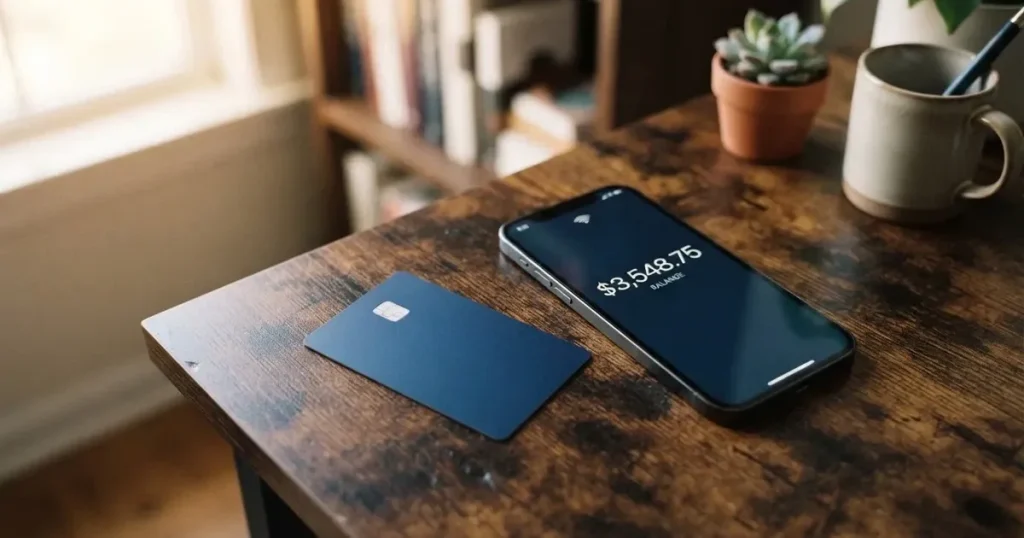
Gleec is a crypto payment card: you load it from crypto, it converts to fiat in the app, and you spend the balance with Visa — a physical card, or a virtual one for Apple Pay. On paper that is a useful idea, especially for anyone who cannot get an ordinary bank card. The problem is not the idea. It is that almost every number you would need to judge it — the fee, the limits, the card currency, the identity rules, the issuing bank — is absent from Gleec’s own public pages. I went through them looking for those numbers, and I want to be straight with you about how often I came back empty-handed, because “not published” is itself an answer and it is not a good one.
Gleec suits people who already hold Gleec Coin or bitcoin and want a Visa card to spend it through. It does not suit anyone shopping for a fee table, a support SLA, or a dispute process, because those things are not written down.
Conditions are current as of October 28, 2026.
Verdict: 6.9 out of 10
Six point nine out of ten. That is not a bad score for a card whose central selling point — no hidden fees — is never actually quantified. It is also not a score I would hand to someone who intends this to be their only payment card.
Here is how the marks break down, and I will explain each one rather than just showing you a list.
| Criterion | Mark | Why |
|---|---|---|
| Who can get it | 8 / 10 | Worldwide for payments; terms bar residents of listed prohibited jurisdictions |
| Cost | 7 / 10 | Issuance free apart from delivery and zero FX fees, both unofficial and from 2022; no official figures |
| Top-up options | 6 / 10 | Gleec Coin, BTC, ETH, USDT and more, converted in-app; networks and fees undisclosed |
| Reliability and complaints | 6 / 10 | Gleec-BTC OÜ, Estonia; issuer and licences unnamed; no complaints found |
| Everyday use | 7 / 10 | Visa, plastic and virtual, ATM, Apple Pay for the virtual card; Google Pay unmentioned |
| Total | 6.9 / 10 | Solid concept, thin disclosure |
The strongest mark is eligibility, and it deserves an asterisk. “Worldwide” appears on Gleec’s pages only in relation to payments — where the card is accepted. That is a different claim from who may hold the card. The list of countries issuing the card is never named, and that is a real distinction, not a pedantic one. A card that works in 200 countries is not the same as a card you are allowed to open an account for from the twenty-first.
Cost scores 7 partly on the strength of unofficial claims, and I want to flag that plainly: the figures I found — free issuance apart from a delivery fee, zero foreign transaction fees — come from a third-party report dated May 2022 and may well be out of date. Gleec’s own pages say “Convenience without abusive fees” and “no hidden fees”, which is a promise about tone, not arithmetic. Nobody has published the arithmetic.
Reliability at 6 is a mark of uncertainty rather than of complaint. I found no complaints — no official incident reports, and no Gleec card reviews on Trustpilot or Reddit when I searched on 21 and 22 October 2026, and no Trustpilot page for Gleec at all. A card with no complaints is usually either very new or very small, and possibly both; Gleec’s beta of the Visa top-up card was announced in late February in an article updated 25 May 2022, with the year of the announcement itself not shown. Absence of evidence is not evidence of a good track record. The iOS app scores 4 out of 4 ratings — four people, not four thousand.
Everyday use at 7 reflects a card that does the basics and stops there: Visa, plastic and virtual, ATM withdrawals, Apple Pay on the virtual card. Rewards are not mentioned anywhere. Blocked merchant categories are not stated. Google Pay is not mentioned.
Will they give you the card?
Probably, if you live somewhere Gleec has not ruled out — but the card’s own pages do not tell you which countries those are.
Gleec describes reach as worldwide, and I have to stress again that this is the worldwide of payments, not of onboarding. There is no country list on the public pages. What the terms do contain is a closed list of places residents are excluded: Afghanistan, Cuba, Iran, Iraq, Libya, North Korea, Syria, Yemen, Zimbabwe, and about 20 others. On top of that, Gleec reserves the right to restrict other regions at its discretion, which is a broad power that means today’s answer is not necessarily tomorrow’s.
There is also a category of question I cannot answer for you from the card’s own material, and I would rather say that than guess: the list of countries where the card is issued is not stated. If your question is “can I get one from where I sit,” the only reliable route is Gleec’s own support, at the address listed below.
Two things about who gets a card are also unresolved on the official pages. The issuing bank and the licences behind the card are not named — I get to the company behind it in a moment, but the company is not the same as the institution that actually issues the Visa. And the card currency is not stated: no euro, no dollar, nothing. For a card whose entire mechanism is conversion, an undeclared card currency leaves you guessing what you are actually holding.
How to get it
Nobody at Gleec publishes a signup walkthrough, so let me tell you what is actually documented — which is mostly the boundaries rather than the road.
To be blunt about it: the identity verification process for the card is not stated on the public pages. The terms refer you to a separate KYC/AML policy, and confirm two things — you must be 18 or older, and you must not appear on sanctions lists. What sits between that and an open account is a document the card’s marketing pages never summarise. I found no tier structure and no stated verification level either.
What I did find is a third-party description, and I am labelling it as such because you deserve the distinction: a report of a short onboarding process that includes identity verification, from a launch article in May 2022. Treat that as a hint about shape, not a promise about documents, and not as something Gleec has confirmed.
Here is what you do get, confirmed:
- A Visa card, in plastic and virtual versions.
- The App Store listing describes a physical card, or a virtual card for Apple Pay.
- Delivery arrangements for the plastic are not stated on official pages.
So: you are signing up for a Visa card from an Estonian company, in an app, at eighteen or older. The step where they look at your documents is the step I cannot describe for you. Ask for it before you upload anything.
Fees: what a payment really costs you
This is the section where Gleec is weakest, and I want to lead with the plainest version: the cost of the card is not stated officially. No figure for issuance. No figure for the monthly fee. No percentage for conversion. No number for foreign exchange.

Gleec’s own language is: “Convenience without abusive fees” on the page, “no hidden fees” in the App Store listing. Crypto is converted to fiat inside the app. That is the whole of the official fee information.
Here is the table the card should be publishing and does not, filled only with what exists:
| Fee or limit | What Gleec publishes |
|---|---|
| Issuance | Not stated officially; unofficial: free apart from delivery for the physical card |
| Monthly fee | Not stated; unofficial: “monthly fees are low” (May 2022, possibly outdated) |
| Conversion (crypto to fiat) | Not stated; conversion happens in the app |
| Foreign exchange | Not stated; unofficial: zero foreign transaction fees (May 2022, possibly outdated) |
| ATM | ATM withdrawals supported; fee and allowance not stated |
| Spending limits | “High spending limits”, no figures; unofficial: up to EUR 10,000 per month (not confirmed by Gleec) |
| Card currency | Not stated |
| Tiers | Not stated — Plastic and Virtual versions only |
Read that table again and notice how much of it is “not stated.” A zero FX fee is a genuinely valuable thing to have — it is the usual hidden tax on spending abroad — so if that claim holds, it is worth something. But it is a 2022 claim from someone who is not Gleec. A monthly fee described as “low” is not a monthly fee. And a limit quoted at EUR 10,000 a month in 2022 — an unofficial figure not confirmed by Gleec — tells you nothing about 2026.
Three ordinary payments, and what bites
Since Gleec will not give me a fee table, let me walk three payments you would actually make, and point at where the money can leak. These are illustrations of where to look, not calculations — I have no figures to calculate with.
A small payment, such as a coffee. You tap the card, Visa routes it, and the balance is deducted. The question is not whether the cost leaves your account; it is what happened to your bitcoin before that. If a conversion fee exists and is not printed anywhere, it is being taken here, at the moment of conversion, and you will see it only by comparing what left the wallet against what reached the merchant. If the card currency is not euro, the payment also carries whatever currency handling Visa’s scheme applies, on top of whatever Gleec does or does not charge.
A larger supermarket purchase. The same conversion, larger. This is where a fee percentage would hurt most and where I would want it in writing first. Conversion rates move; “converted in the app” without a stated method leaves you guessing which rate you got and who took a cut.
An ATM withdrawal. Here you have three unknowns stacked: the ATM’s own charge, whatever Gleec charges for the withdrawal (not stated), and whatever allowance applies (not stated, and with “high spending limits” as the only official hint). ATM withdrawal fees in this category are usually a flat fee plus a percentage, and I have neither number from Gleec. If you plan to use this card for cash regularly, this is the line to ask about.
The honest summary: the card markets itself on the absence of hidden fees, and the absence of published fees is the one thing I can confirm.
Top up: how the card gets money
You send crypto to the card, and it converts to fiat in the app. Gleec says that takes “in seconds”.
The App Store listing is the more specific source. It names Gleec, BTC, ETH and USDT — so Gleec Coin, bitcoin, ether and Tether — and confirms that the card is topped up with digital currencies, and that crypto can be cashed out at any time, with funds sent to a bank “in seconds”. That cash-out feature is worth noting: it makes the card a two-way bridge, not only a way to spend.
What is not stated: the fees and the minimum top-up amount, and, more importantly, which networks to send on. That omission has real teeth, and I will come back to it in the risks section, because it is the single most likely way to lose money on a card like this.
I also could not find any tier structure — only the Plastic and Virtual versions, no funded tiers to compare.
Paying with it every day
The mechanics are conventional: Visa, plastic or virtual, Apple Pay on the virtual card. That covers the common paths well.
Apple Pay is where the virtual card shines. It can be connected, and the mechanics are sound — tokenisation replaces your card number with a device-specific number held in the phone’s Secure Element, not on Apple’s servers, and each payment carries a fresh one-time code. What I cannot tell you is what the issuer has restricted on that tokenised number, if anything, and that matters: an issuer can block a tokenised card from magnetic stripe, phone or website use, and a merchant who declines it will rarely tell you that was the reason.
Google Pay is not mentioned at all. That is a gap rather than a no — many non-US cards simply never got there — but it means one of the two wallets people actually use is unsupported on the evidence available to me.
Two more everyday details are unresolved:
- Rewards are not stated. No cashback, no points, nothing in writing.
- Blocked merchant categories are not stated. This one is worth a moment of your attention. Merchants are classified by a four-digit code, and gambling sits in MCC 7995; many issuers block it on specific cards by policy rather than by law, and the list varies by issuer. Gleec does not publish its list, so you cannot know in advance whether a payment you need will be refused.
The app itself: Gleec Card — Crypto-powered card, free on the App Store, version 34.8 dated 19 May 2026, rated 4 from 4 ratings as I read it on 22 October 2026, English only. I did not read the Google Play listing. A version number in the thirties and a single-language listing tell you a small operation, not a troubled one.
What is not stated, and you should ask before you commit: how a disputed payment is handled. Chargebacks — a refund ordered by your issuer with a reason code such as fraud, duplicate billing or goods not received — are how a card system protects you when something goes wrong. Prepaid coverage varies by scheme and should never be assumed. If Gleec does not have a published dispute process, the honest reading is that the protection most people assume they have may not apply to you.
What can go wrong
There are four ways I would worry about this card, and I will order them by how likely they are to cost you money.
The one that worries me most: sending crypto on the wrong network. Blockchain transfers are irreversible. If you send on a network Gleec does not support, or to an address belonging to a different network, the funds can be lost outright or need manual support recovery with no guarantee of success. This is not a rare hazard; it is the ordinary way people lose money in this category, and it is aggravated here by the fact that Gleec does not publish which networks it accepts. You are asked to choose, blind.
Then: the conversion rate and fee you never see. Gleec converts in-app and does not publish the rate source or any fee. You will only see the effect by comparing the two sides of the transaction, after the fact.
Then: the unknown issuer. The company behind Gleec is Gleec-BTC OÜ, Estonia, registration number 14477970, registered office at Tornimäe 5, 2nd floor, 10145 Tallinn — taken from the terms, last updated 6 June 2023. The issuing bank and the licences are not stated. That gap matters more than it sounds. A Visa card is issued by a licensed bank or e-money institution under Visa’s licence; the crypto brand is often only a programme manager in front of it, and Visa can suspend a programme. Card histories include closures: WaveCrest, a Visa issuer supplying crypto brands, was suspended by Visa in Europe in 2018, closing all WaveCrest-issued Visa programmes, and Visa terminated its global agreements with FTX on 13 November 2022. Programme closures follow a pattern — a notice period, spending and loading stop, then users are asked to withdraw remaining balances. You cannot assess how Gleec would handle that when it does not name who its issuer is.
Then: custody and recovery. Whether Gleec holds your funds, and how key security works, is not stated for the card — GleecDEX is a separate non-custodial wallet, a different thing from the card. A third-party report from May 2022 says the wallet uses two-factor authentication and encryption, which may be outdated and does not cover the card. This is worth understanding in general terms, because the stakes are high: control of crypto belongs to whoever holds the private key or seed phrase; a seed phrase of typically 12 to 24 words is an unencrypted key, and anyone who obtains it can restore the wallet and spend the funds. Transfers cannot be reversed, and a stolen key has no recovery path — the network cannot freeze or return money. Custodial platforms have a real record of failure: Mt Gox (about US$350 million reported stolen, 2011–2014), Coincheck (about US$400 million, 2018), Ronin Network (US$625 million, 2022). And stablecoins, which USDT is, are not censorship-proof either — Tether says it disables tokens in wallets on the OFAC sanctions list and has frozen funds tied to illicit activity.
The genuinely reassuring part of this section is the complaint picture: nothing found. No official incidents published, no Trustpilot page for Gleec, no reviews on Trustpilot or Reddit in my searches of 21 and 22 October 2026. If something had gone badly wrong at scale, I would expect to have seen it.
Support is email at [email protected], and the App Store listing advertises 24/7 customer support. The app is English only. I could not verify any news or announcements officially.
A last thing to hold in mind, not a fault of the card’s but a feature of using crypto to pay: a decline can leave a hold on your funds for days — typically up to seven. And merchants sometimes decline prepaid or foreign-issued cards, because the issuer lookup reveals the card type and country, which is why a card issued in one country can look foreign to a shop in another.
What to take instead
Gleec is not alone, and it is not obviously the best of the options I looked at. Here is the honest comparison — and note that each of these has its own disclosure problems, which is the real state of this category.
| Gleec | Cardex | CardFlow | HyperCard | |
|---|---|---|---|---|
| Score | 6.9 / 10 | 5.6 / 10 | 4.9 / 10 | 4.7 / 10 |
| Network | Visa | VERVE, Visa, Mastercard, UnionPay | Mastercard | Not stated on the App Store page |
| Card form | Plastic and virtual | Physical and virtual | Virtual | Prepaid |
| Cost of getting it | Not stated officially | Not stated | Virtual card free (site FAQ) | Not stated; no fees listed |
| Fees | Not stated; unofficial zero FX | No percentage stated; conversion at payment | Not stated | Not stated on the pages I could read |
| Funding | Gleec Coin, BTC, ETH, USDT and more | USDT, USDC, BTC | BTC, USDT, ETH or Naira transfer | USDT, BTC, ETH |
| Rewards | Not stated | Not stated | Not stated | Not stated |
| Audience | Gleec Coin and BTC holders | Naira-focused (App Store listing) | Nigeria-focused | — |
Three differences are worth your attention.
Gleec names its network plainly; the others hedge. Cardex lists VERVE, Visa, Mastercard and UnionPay and its App Store listing is Naira-focused, so you pay in naira. CardFlow is aimed at Nigeria as “Nigerians and global users” and gives you a virtual USD Mastercard created in about 3 minutes, with virtual card creation free per its site FAQ. HyperCard’s App Store page does not state the network at all, only that it works in “more than 176 countries” — which, as before, is acceptance, not eligibility — with a balance in USD or EUR.
Cardex at least describes its conversion logic. Its site claims an “AI-Powered Conversion Rate” that scans global exchange rates and picks the best one when you spend, with conversion happening at the moment of payment. No percentage is given. It is at least a mechanism you can interrogate, which is more than “converted in the app” offers.
Nobody publishes networks, fees or rewards. Not one of the four states the networks its crypto deposits arrive on, not one states rewards. That is the pattern, and it is the reason I would not recommend switching to any of them on fee claims either. If your alternative is an ordinary bank card that is unobtainable where you are, the comparison is between imperfect options — not between one card with hidden costs and three clean ones.
One piece of background that may help you judge any of them: in the EU, MiCA took legal effect in June 2023; its rules on asset-referenced and e-money tokens applied from 30 June 2024 and the remaining provisions, including crypto-asset service provider rules, from 30 December 2024. E-money tokens may be issued only by a credit institution or an electronic money institution, and the transitional period lets providers already operating under national law continue only until 1 July 2026 or until they are authorised or refused, whichever comes first. ESMA keeps an interim register of authorised providers that you can check. A card is regulated separately from the crypto side — it is a payment service, while MiCA covers custody, exchange and transfer — so a crypto card often rests on two licences. Company details matter for this reason: Gleec’s terms were last updated 6 June 2023, before the bulk of MiCA’s provisions took effect.
Who I would recommend it to
I would recommend this card to a specific person and not to a general one.
Recommended if: you already hold Gleec Coin or bitcoin, you want a Visa number that works at ordinary merchants, and you are comfortable reading the terms yourself and asking support the questions the site does not answer. For you, the missing numbers are an annoyance rather than a risk, because you are spending a position you have priced already and you can hold the card to a few hard limits of your own.
Not recommended if: this would be your primary or only card; if you need to know your monthly fee, your spending ceiling or your ATM cost before you sign up; if you are cash-heavy; if you depend on Google Pay; if you care about rewards; or if a dispute would leave you stranded. In those cases the missing information is not a documentation gap — it is the thing you were trying to buy.
Before you sign up, ask four questions — they are the four I would ask, and they cover the gaps that hurt:
- Which networks can I send crypto on, and what happens if I use the wrong one?
- What exactly does a payment cost — the conversion method and any fee percentage, plus the ATM fee?
- Who is the issuing bank, and what licences are behind the card?
- If a payment goes wrong, how do I dispute it, and what protection do I have on a prepaid card?
Then set your own freeze and limit settings in-app, treat the balance as money you could lose, and remember the last clause in that sentence is about your deposits, not about Gleec’s conduct.
Frequently asked questions
What is the Gleec card?
Gleec is a crypto payment card on the Visa network, issued in plastic and virtual versions. You send it crypto — the App Store listing names Gleec Coin, BTC, ETH and USDT — and it converts to fiat inside the app so you can spend the balance at ordinary merchants. Its Visa spending reach is described as worldwide, though Gleec does not publish the countries where the card itself can be issued.
Is Gleec a bank?
No. Gleec-BTC OÜ is an Estonian company, registration number 14477970, registered at Tornimäe 5, 2nd floor, 10145 Tallinn, and the terms were last updated 6 June 2023. It is not a bank, and Gleec does not name the bank or e-money institution that actually issues the Visa card. That institution is the one whose licence stands behind your card.
Do I need to pass KYC to get a Gleec card?
Gleec’s public pages do not state the identity verification process for the card — that is the honest answer. The terms point to a separate KYC/AML policy and confirm you must be 18 or older and not on sanctions lists. A May 2022 third-party article describes a short onboarding including identity verification, but Gleec has not confirmed that, and it may be outdated.
Is Gleec card free?
Not stated officially. A May 2022 report says the card is free apart from a delivery fee for the physical version and that monthly fees are “low”, but that is unofficial and possibly outdated. The card’s own pages say “no hidden fees” and “Convenience without abusive fees” without printing a single figure, so treat the cost as unknown rather than zero.
How much does a Gleec card cost to use?
Nobody at Gleec publishes the numbers. No conversion percentage, no foreign exchange rate, no ATM fee, no allowance. A 2022 third-party report claims foreign transaction fees are zero and spending up to EUR 10,000 per month, which would be generous but may no longer be true. Crypto is converted to fiat in the app, so the conversion terms are where any cost lives.
Can I use the Gleec card in my country?
That depends on which country you are in. Gleec describes its card as worldwide for payments, but the list of countries where the card is issued is not stated. Residents of listed prohibited jurisdictions are excluded, including Afghanistan, Cuba, Iran, Iraq, Libya, North Korea, Syria, Yemen and Zimbabwe, and Gleec may restrict other regions at its discretion.
Which networks can I use to top up Gleec?
Gleec names the coins — Gleec Coin, BTC, ETH, USDT and others — but does not state which blockchain networks to send them on, and does not state fees or minimums. This is the gap to close before your first deposit: transfers are irreversible, and funds sent on an unsupported network can be lost or need manual recovery with no guarantee.
Is the Gleec card safe to use?
There is no published record of trouble: no official incident reports, no Trustpilot page for Gleec, and no card reviews on Trustpilot or Reddit in my searches of 21 and 22 October 2026. But Gleec does not state its custody arrangement for the card or its security measures, and does not name its issuing bank, so you cannot fully assess the risk from the card’s own information.
How do I add the Gleec card to Apple Wallet?
The virtual card is designed to work with Apple Pay, and the App Store listing describes choosing a physical card or a virtual card for Apple Pay. Google Pay is not mentioned anywhere on the card’s pages, so I would plan around Apple only. Also ask what the issuer has restricted on the tokenised number before you rely on it in a shop that matters.
What should I know before using Gleec every day?
Rewards are not stated, blocked merchant categories are not stated, the card currency is not stated, and the dispute process is not stated — prepaid coverage varies and should not be assumed. The app is English only, rated 4 from 4 ratings. Set your own limits in-app and keep cash withdrawals rare until you know the fee.
Virtual card fees – cryptocardfacts
Content created by the «cryptocardfacts» team