
AutoCard review: a crypto card mostly aimed at India, with most costs left unpublished
 Available in US
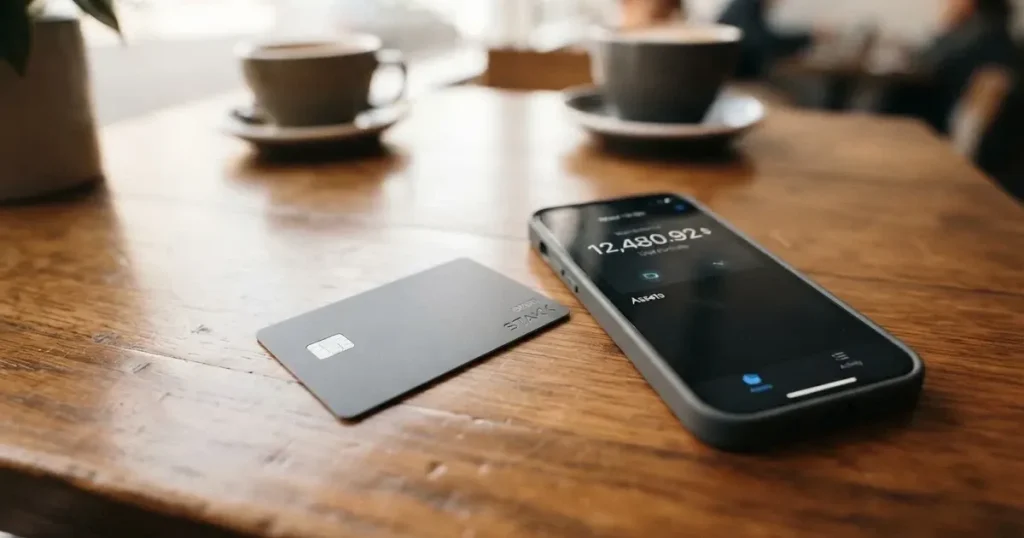
If you have trouble getting an ordinary bank card — because of where you live, or what documents you hold, or the kind of business you run — a crypto card can look like a practical way to get spending power back. AutoCard is one of these: an app that turns digital assets into a balance you spend through a virtual or physical payment card. The idea is simple. The paperwork behind it is where the reality gets complicated.
I went through AutoCard’s terms, its app listings and its public pages to see who is actually eligible, what the card costs in practice, and how solid the operation is. My honest summary: the service is built for people who can pass its identity checks and can reach its support, and it holds most of the numbers a shopper would want — fees, limits, which networks are supported — behind a “not published”. That is not a disqualifier on its own, but it forces you to make decisions on incomplete information.
The conditions described below are current as of October 28, 2026.
Verdict: 5.0 out of 10, and a narrow fit
AutoCard scores 5.0 out of 10 in my assessment. That is not a scolding; it is a card that does some things clearly and leaves other things genuinely unknown, and the balance of the two sits near the middle of the scale.
The strongest point is the audience it is clearly designed for: residents of India who want to fund their card spending with crypto. If that is you — you live in India, you hold digital assets, you want a working card balance without a traditional banking relationship — the product maps directly onto your situation. You apply in an app, verify once, load stablecoins, and spend. The virtual card is created in seconds, and you can set your own spending limits.
The weaker points are structural. The card is offered “exclusively” to residents of India “or any other eligible jurisdiction as specified by the Company”. The company does not publish the full list of other eligible countries. It is prohibited for citizens and residents of China, including Hong Kong and Macao, along with Chinese IP addresses, phone numbers or IDs. The cost side is quiet too: the issuance fee is paid from your wallet “as specified on the Platform”, but the amount is not named in the terms. And the trust layer is thin — the operator is named, but the card issuer and its licences are not stated on the public pages.
Here is the score broken down, criterion by criterion.
| Criterion | Mark | Why |
|---|---|---|
| Who can get it | 3 / 10 | “Exclusively” residents of India “or any other eligible jurisdiction as specified by the Company”; citizens and residents of China, incl. Hong Kong and Macao, are barred |
| Cost | 5 / 10 | Issuance fee is taken from the wallet “as specified on the Platform”; the amount is not published in the terms |
| Top-up options | 6 / 10 | Digital assets via “Deposit”, with USDT or USDC as the starting data; networks not disclosed |
| Reliability and complaints | 6 / 10 | ESTARTECH PTE. LTD., Singapore, with an address and contact named; issuer and licences not named; no complaints found, no Trustpilot page |
| Everyday use | 6 / 10 | Virtual and physical card in the app, virtual created in seconds, limits customisable; Apple Pay, Google Pay and ATM not disclosed |
| Total | 5.0 / 10 | A workable tool for its core audience, but thin on published costs and eligibility |
Read that table as I read it: the card is competent at being a crypto-funded payment card for its intended user, and weak at telling an outsider whether it can serve them, and at pricing itself in plain numbers. If you are not in India, spend a few minutes confirming eligibility before anything else.
Will they give you the card
Let me be direct, because this is the first question and the one the terms answer most clearly. AutoCard’s terms, last updated 14 January 2025, say the cards are “exclusively available” to residents of India (or any other jurisdiction the company specifies), with valid identification and contact details in that jurisdiction. The company keeps the list of other eligible jurisdictions to itself — it is not published.
There is a clear exclusion list too. The card is prohibited for citizens and residents of China, including Hong Kong and Macao, and the terms bar Chinese IP addresses as well as Chinese phone numbers or IDs. So if any of those apply to you, this is a firm no, not a grey area.
You also need to be 18 or older. That is the stated minimum age.
The broader way to think about this, if you are outside India: “eligible jurisdiction as specified by the Company” is doing a lot of work. It means the company can define who qualifies after the fact, and you will not find that list on the page. That does not mean they will turn you away — plenty of services with similar wording serve a wider audience than they advertise — but it does mean you are relying on an answer you cannot read in advance. The most sensible move is to install the app and work through the verification flow; the Unverified state will tell you quickly whether you are even in scope before you go further.
How to get it
The route is the app. AutoCard has an iOS app, “AutoCard – Crypto as Fiat”, free, version 1.3.15 (13 October 2026), requiring iOS 15.1 or later. Its App Store listing shows a rating of 5 from 3 ratings, which I read on 22 October 2026 — a small sample, but the listing is at least real and current. For Android, the app is distributed as an APK file hosted on Amazon S3 (AutoCard_1.3.15.apk) rather than through a store listing, so you are downloading and installing it yourself.
There are two states you move through:
- Unverified Account. After sign-up with your email or phone number and a password. At this stage you cannot do the things that matter — wallet top-ups and card applications only become available after verification.
- Verified Account. After you complete the KYC questionnaire and submit documents. This unlocks the wallet and the card.
On documents: KYC is required, and the site shows a “NEED TO KYC” heading pointing you at it. Which documents, what proof of address, and what age proof are not stated on the public pages, so do not assume the list is short — some markets and some company risk policies ask for more. Two things worth knowing: foreign-language documents may need a certified translation, at your cost; and a PAN may be requested.
Both a virtual and a physical card live in the app. The App Store listing describes virtual cards created “in seconds” and several cards held in one place. The starting data indicates the card balance is in USD.
One thing the public pages do not say is delivery: if you order a physical card, how it arrives and how long it takes is not stated. That is one of the practical gaps to keep in mind if a physical card is what you actually need.
Fees and what it really costs: the Fees question
This is where I have to be careful about the difference between “cheap” and “known”. AutoCard does not publish a full fee schedule, so what follows is what the terms and listing actually state — and where they say “not stated”, I say so rather than filling the gap with a guess.

Here is the cost picture as far as it is published:
| Fee or limit | What AutoCard states |
|---|---|
| Issuance fee | Paid from the Wallet, “as specified on the Platform”; the amount is not published in the terms |
| Monthly fee | Not stated |
| Conversion fee | Not stated |
| Foreign exchange / FX fee | Not stated |
| ATM withdrawal fee | Not stated |
| Daily spending limits | Not stated; the App Store listing mentions “customizable spending limits” you set yourself |
| Monthly limits | Not stated |
| On-chain network fee for your deposit | Charged by the blockchain, not by the card provider |
| Rewards for spending | Not stated |
| Fee tiers | Not stated |
Now let me run three ordinary payments through that, because abstract fee tables hide more than they show.
A coffee shop. You tap the card, the balance is converted, the shop gets paid. If there is a conversion or FX markup on this card, it would apply here — and AutoCard does not state one. In practice this is the payment where a hidden markup would hurt least, because the amount is small.
An online subscription. The same conversion applies, and here the merchant-category code starts to matter. Codes like the one covering gambling (MCC 7995) are blocked by many issuers as policy rather than by law, and the blocked list varies by issuer — so whether some merchants will let you through at all is not something the card’s own pages tell you. If online subscriptions are a big part of your spending, this is a real unknown.
An overseas purchase. Now a foreign exchange fee, if one exists, would land. AutoCard does not state one. But remember how a foreign-issued card behaves at the till: a merchant can look up the card’s issuing country from the card number and apply extra scrutiny, and address verification — which compares the numeric parts of the billing address — is generally unavailable for foreign-issued cards and can cause declines. So the risk here is not only the rate; it is that the payment is declined outright.
My read: the card’s cost structure is the single biggest reason to pause. Not because it looks expensive, but because you cannot price it from what is published. The issuance fee alone, drawn from your wallet “as specified on the Platform”, means the real number lives on a screen that changes or that I simply cannot quote you here. Budget for the possibility that everyday spending carries a cost you only discover at checkout.
Top up: how the money gets in
The flow the site shows is “Deposit” then “Spend”, with the balance held in “digital assets”. The starting data is USDT or USDC — so you are funding the card with stablecoins, not with Bitcoin or Ethereum.
Some important mechanics:
- The wallet is recharged only with virtual assets. There is no bank-transfer top-up described.
- Once you have funded the wallet, you allocate funds to a card.
- The issuance fee is paid from the wallet.
- A top-up fee is not stated.
And here is the sharpest edge in the whole product, which you should read twice: “Once funds are allocated to a Virtual Credit Card, the allocation is final and cannot be reversed or transferred back to the Wallet”. And: “Wallet balances cannot be withdrawn or transferred to external accounts unless explicitly permitted by the Company.” So the direction of travel is one-way. Money goes in, and getting it back out is not something you can rely on doing yourself. If you are used to a wallet where you can pull your balance back out, this is a meaningful difference.
Networks are not stated. That matters more than it sounds. Blockchain transfers are irreversible, so a deposit sent on a network the card provider does not support — or to an address belonging to a different network — can simply be lost, or need manual support recovery with no guarantee. So confirm, before your first deposit of any size, exactly which network the card expects. If you are transferring USDC, note that Circle stopped supporting USDC on Tron in February 2024, so “USDC over TRC20” is not the native option you might assume. On Ethereum, gas is paid only in ETH, so a wallet holding USDT but no ETH cannot send it.
For readers who want the wider context on why this matters: USDT and USDC are the two dominant dollar stablecoins, together about 90% of stablecoin market capitalisation as the BIS put it in July 2025, but stablecoins are not guaranteed stable — TerraUSD collapsed in May 2022, and USDC briefly lost its peg in March 2023.
Paying with it every day
Day to day, AutoCard is a fairly simple instrument. You have a card balance, you spend it, and the app converts as you go.
The App Store listing puts a positive spin on the mechanics: virtual cards created “in seconds”, several cards in one place, and “customizable spending limits” — limits you set yourself, though no figures are given. A virtual card you can spin up quickly and cap by hand is genuinely useful if you want to ring-fence spending from a larger balance, or if a card number for one subscription should not be the same card number you use elsewhere.
Your balance is shown in a fiat currency you choose from the options offered, converted at the platform’s regularly updated rate. One nuance in the terms worth knowing: the company says it operates only with virtual assets, not fiat. So the fiat number on screen is a display convention for what is, underneath, a crypto-funded balance.
On mobile payments and cash: Apple Pay, Google Pay and ATM withdrawal are not disclosed. That is a gap, not a refusal — the card may well work with a phone wallet, but the pages do not say so, and I will not guess. If tapping your phone at the counter is how you usually pay, treat this as an open question to settle before you rely on the card.
On security, the App Store listing claims “advanced encryption” and “secure payment processing”, and mentions instant notifications for transactions. Custody arrangements, two-factor authentication and a card-freeze feature are not stated. Instant notifications are worth turning on wherever they are offered — they are one of the few things you can do yourself to notice a problem early.
One more thing about who is in the middle of your payments: the company states it “is not a party to any transactions between the Client and third parties”, does not handle claims about a recipient failing to deliver, and bears no liability for such disputes. It may reverse transactions it considers suspicious. So if you pay someone who does not deliver, the card operator is telling you in advance that this is not their fight. On-chargeback rights generally, prepaid-card coverage varies by jurisdiction and should not be assumed; US debit reversal rights come from Regulation E and credit card rights from Regulation Z, and your protection there may not extend to a prepaid-style card.
What can go wrong
Let me group the risks by what they would actually do to you.
Eligibility risk. The card is limited to India and to the jurisdictions the company specifies, with a hard exclusion for Chinese citizens and residents including Hong Kong and Macao, plus Chinese IPs, phone numbers and IDs. If you fall outside this, the practical outcome is a wasted afternoon and, possibly, an account you cannot use.
One-way money. Allocated funds cannot be reversed back to the wallet, and wallet balances cannot be withdrawn or transferred out unless the company permits it. Combined with irreversible blockchain transfers and undisclosed networks, this is the category’s classic loss scenario: send on the wrong network and there is no undo button and no guarantee of recovery.
Cost opacity. The issuance fee amount is not published; conversion, FX, ATM, and most other fees are not stated. You are asked to trust a platform-displayed number rather than a schedule you can check before committing.
Stablecoin risk. Your balance is, in substance, dollar stablecoins. These are dollar-pegged but not risk-free, and a depeg hits your spendable balance directly. Tether also states it disables tokens in wallets on the OFAC sanctions list and has frozen funds tied to illicit activity — so stablecoins are not censorship-proof.
Declines at the till. A foreign-issued card can look “foreign” to a shop, foreign BINs and prepaid cards can be declined by some merchants, and a declined authorisation can leave a hold on your funds for several days.
Counterparty and issuer risk. The company is named — ESTARTECH PTE. LTD., 68 Circular Road, #02-01, Singapore 049422, contact [email protected], which is also the App Store seller name — but the card issuer and its licences are not stated on the public pages. The category has a real scar tissue here: Visa terminated its global agreements with FTX on 13 November 2022 and the FTX US debit card was wound down, and WaveCrest, a Visa card issuer that supplied crypto card brands, was suspended by Visa in Europe in 2018, closing all WaveCrest-issued Visa programmes. A programme can be wound down around you; closures typically give a notice, then stop spending and loading, then ask you to withdraw any remaining balance. On that last point I should be honest: one 2026 closure I found, reported by a secondary source with new loads ending 8 July 2026 and spending stopping 8 August 2026, was single-source and unconfirmed, so treat it as an illustration of the pattern rather than a fact about any particular provider.
The regulatory frame. A card is a payment service regulated separately from the crypto side; a crypto card often rests on two separate licences. In the EU, MiCA rules on e-money tokens applied from 30 June 2024 and the remaining provisions, including crypto-asset service provider rules, from 30 December 2024, with a transitional period running until 1 July 2026 or until a provider is authorised or refused, whichever comes first. ESMA keeps an interim register of authorised providers that you can check. None of this is specific to AutoCard, but it is the environment a small provider operates in, and it is a reason to ask whether the issuer is a regulated institution.
The thin support layer. The only listed contact is [email protected]. The app listing is in English only. With one email address as the front door to support, and given that disputes with merchants are explicitly not the company’s responsibility, I would not lean on this card for anything you cannot afford to lose.
What to take instead
I looked at three other crypto cards and compared them on the same things. None of them is perfect, and the honest summary is that this category has thin published information across the board — which is itself the useful takeaway.
| AutoCard | Cardex | CardFlow | HyperCard | |
|---|---|---|---|---|
| My score | 5.0 / 10 | 5.6 / 10 | 4.9 / 10 | 4.7 / 10 |
| Who it is for | Residents of India; other jurisdictions not published | “One crypto card, 200+ countries”; no exclusions listed | Aimed at Nigeria; “Nigerians and global users” | No country list on official pages; app says accepted in “more than 176 countries” |
| Card | Virtual and physical | Debit card on VERVE, VISA, Mastercard, UnionPay; virtual and physical | Virtual USD Mastercard, created in about 3 minutes | Prepaid “HyperCard”; network not stated; USD or EUR |
| Funding | USDT, USDC; networks not stated | USDT, USDC, BTC; networks not stated | Bitcoin, USDT, ETH, or Naira bank transfer; networks not stated | Crypto such as USDT, BTC, ETH, converted to USD or EUR; networks not stated |
| Cost | Issuance fee “as specified on the Platform” | Not stated | Virtual card creation “completely free”; monthly fee not stated | Not stated; app lists no fees |
| Conversion / rewards | Not stated | Real-time crypto-to-fiat conversion at payment, an “AI-Powered Conversion Rate” choosing the best global rate; no percentage stated | Not stated | Not stated |
Where that leaves the choice. If you live in India and fund with stablecoins, AutoCard is squarely built for you and you would be comparing it against a card aimed at Nigeria or one with a euro/US balance. If you are outside those markets, look at how openly a provider describes eligibility and pricing — Cardex at least states a conversion mechanism and a 200-plus-country reach, and CardFlow states plainly that creating a virtual card is free, which AutoCard does not. And across the board, check the register: if a provider will not tell you who the issuer is, treat that as the deciding fact.
A wider point about the category, since it bears on all four: Visa and Mastercard do not themselves issue crypto cards to consumers; they license issuers and can suspend a programme. That is why the issuer identity behind any of these cards matters more than the brand on the front.
Who I would recommend it to
I would recommend AutoCard to someone in a fairly specific place. You live in India. You already hold stablecoins and want to spend them without opening a conventional bank relationship. You are comfortable that your balance is, in substance, dollar stablecoins that can move in value. You can live with one-way money and with support that runs through a single email address. And you will personally check, before you rely on it, the things this review could not tell you — the real issuance fee, the conversion and FX cost, whether your phone wallet works, and who the issuer is.
If any of those is a stretch — if you need to get money back out easily, if you need phone-wallet tapping to just work, if you need a published fee schedule to plan around, if you are outside the eligible jurisdictions — then I would point you at an alternative with a clearer published offer, or at an ordinary bank card if a bank will have you.
The final word on the score: 5.0 out of 10, earned by a card that does the core job for its core audience and is candid that it will not say more than that. The gaps are not a scandal; they are just gaps, and you should size your exposure to fit them.
Frequently asked questions
What is the AutoCard card?
AutoCard is a crypto-funded payment card offered through a mobile app. You top up a wallet with digital assets, allocate funds to a card, and spend that balance through a virtual or physical payment card in the app. It is aimed at people who want a working card without a traditional banking relationship. It is not a bank account and, per its terms, the company operates only with virtual assets, not fiat.
Is AutoCard a bank?
Not on the evidence available. The operator is a company, ESTARTECH PTE. LTD. in Singapore, and the public pages name that company but do not name the card issuer or its licences. A card is typically issued by a bank or licensed e-money institution, and here that issuer is not stated. So I would not treat AutoCard as a bank, and I would want to know the issuer before trusting it with anything.
Who owns AutoCard?
The named operator is ESTARTECH PTE. LTD., at 68 Circular Road, #02-01, Singapore 049422, with [email protected] as the listed contact and the App Store seller name. That is the company behind the service. The card issuer and any licences are not named on the public pages, so the issuing institution behind the card itself is not something I could confirm.
Is the AutoCard card available in my country?
The terms say the cards are “exclusively available” to residents of India or approved jurisdictions, and that list is not published. The card is prohibited for citizens and residents of China, including Hong Kong and Macao, and for Chinese IP addresses, phone numbers or IDs. Because the wider eligibility list is not disclosed, you cannot confirm your country in advance — the quickest check is the app’s verification flow.
Does the AutoCard card require KYC?
Yes. KYC is required, and the site has a “NEED TO KYC” heading. You start as an Unverified Account after signing up with email or phone and a password, and reach a Verified Account after the KYC questionnaire and documents. Only after verification can you top up the wallet and apply for a card. Which documents are required is not stated publicly; foreign-language documents may need a certified translation at your cost, and a PAN may be requested.
How do I top up the AutoCard card?
You fund the wallet with digital assets via “Deposit” — USDT or USDC as the starting data — and then allocate funds to a card, with the issuance fee paid from the wallet. Networks are not stated, which matters: blockchain transfers are irreversible, so a deposit on an unsupported network, or to an address of another network, can be lost. Confirm the expected network before your first sizeable deposit.
Can I withdraw money from AutoCard?
You should not plan on it. The terms say that once funds are allocated to a virtual credit card, the allocation is final and cannot be reversed or transferred back to the wallet, and that wallet balances cannot be withdrawn or transferred to external accounts unless the company explicitly permits it. Treat the movement of money as one-way, from your wallet into the card and not back out on your own initiative.
Is the AutoCard card safe?
Safety here is mostly a question of trust and one-way risk. The app listing claims advanced encryption and secure payment processing, but custody, two-factor authentication and a card-freeze feature are not stated. Funds become dollar stablecoins once loaded, which are dollar-pegged but not guaranteed stable. And the support layer is a single email address, with disputes between you and merchants explicitly not the company’s responsibility. Reasonable for small amounts you can afford to lose; not a place for critical funds.
Is the AutoCard card free?
No — there is a card issuance fee, taken from the wallet “as specified on the Platform”. The amount is not published in the terms, and most other fees — monthly, conversion, FX, ATM — are not stated either. There is also a per-transaction on-chain network fee charged by the blockchain for your deposit, not by the card provider. So it is not free, and its true running cost is not published.
Is the AutoCard card worth it?
Worth it mainly if you live in India, already hold stablecoins, and want to spend them without a bank relationship. Beyond that audience the case weakens, because the eligibility list, the fee schedule, the issuer and the support all want checking in advance. If you need your money back easily, or a published price to plan around, or phone-wallet payments to just work, a provider with clearer published terms is the better bet.
Virtual card fees – cryptocardfacts
Content created by the «cryptocardfacts» team