
A Visa card that pays you back in bitcoin — with no annual fee and no FX spread
 Available in US

The Lava Card is a Visa payment card that spends from a USD balance you load yourself — either by depositing stablecoins, transferring local currency, or locking up bitcoin as collateral. It earns you bitcoin back on purchases, charges no annual fee, and applies no foreign-exchange fee or spread on international spending. My score for it is 7.1 out of 10: solid for non-US holders who want bitcoin rewards on everyday spending, with real gaps in published information and a few things you need to know about your collateral before you commit.
The conditions described here are current as of October 28, 2026.
Who this suits and who it doesn’t comes down to one thing: are you comfortable holding crypto as collateral to a card balance? If yes, the Lava Card is a reasonable everyday-spend tool with unusually clean fee terms. If you want a simple debit card with predictable fiat-only funding and published limits, the information gaps here will frustrate you.
Verdict
Score: 7.1 / 10. The Lava Card earns bitcoin back on spending, has no annual fee, and charges nothing for currency conversion or FX spread — genuinely rare in the crypto card space. But it operates as a secured card drawing on collateral, the published details are thin on several practical matters, and it targets people outside the United States, which rules out a lot of applicants.
Score breakdown
| Criterion | Score | Reason |
|---|---|---|
| Who can get it | 7 / 10 | You can spend at merchants in 150+ countries; card is built for people outside the US; no country list published |
| Cost | 8 / 10 | No annual fees, no FX fee, no spread; ATM is 2% with $1 minimum; issuance fee not published |
| Top-up options | 7 / 10 | Fund with stablecoins or local currency; collateral wallet on Ethereum, Polygon, Optimism, Arbitrum; specific coins not named |
| Reliability and complaints | 7 / 10 | Issuer is Third National under Visa licence; no complaints found; Lava is not a bank, and collateral can be liquidated in a “Liquidation Event” |
| Everyday use | 6 / 10 | Visa, virtual and physical mentioned; ATM 2%; Apple Pay and Google Pay not disclosed |
Total: 7.1 / 10
The card’s own reward headline is “up to 5% back in bitcoin on every purchase.” The Lava comparison article (unofficial) breaks that down: 5% bitcoin back at partner merchants, 3% on other purchases for US cardholders, and 1% for non-US cardholders. So the headline number applies to a narrower set of merchants than the marketing implies.
For most applicants the real question is eligibility: the card’s terms exclude US citizens and anyone on a US sanctions list. That matters enormously if you hold US citizenship but live elsewhere — you may be excluded on citizenship grounds alone, not residence.
Will they give you the card?
You need to attest you are not a US citizen and not on a US sanctions list. There is no country list, and a separate US terms document exists — meaning the card is explicitly built for people outside the United States.
From the Lava Card’s International Terms, the requirements are:
- Attestation that you are not a United States citizen
- Not listed on a US sanctions list
- Personal, family, or household use only
- Card intended for people outside the US
There is no published list of eligible or excluded countries. The card’s public pages don’t state which countries are approved or denied. This creates uncertainty: if you’re in a country you suspect might be restricted, the only way to know is to attempt application and see.
Sanctions screening is a legal requirement for the issuer, not a policy choice, so expect some identity verification even though the card’s public pages don’t detail exactly what documents or checks are required.
How to get it
The application itself isn’t documented in detail — the public pages don’t state required KYC documents, processing times, or verification tiers. The terms do require true and complete information.
What is stated:
- The card is called “Lava Card”
- It’s a Visa card, described as “secured” — it spends from your USD balance and explicitly “does not offer unsecured credit”
- Physical and virtual versions are both mentioned
- The terms also refer to it as a Visa credit card (the secured structure means the credit line is collateralised)
- Replacement cards are issued via the Lava account
What is not published: network details beyond Visa, the exact issuance process, verification documents required, how long approval takes, delivery countries, delivery time, delivery cost, or replacement fees.
KYC itself isn’t described on the card pages. That said, standard practice for a regulated Visa issuer includes identity verification and sanctions screening, so expect some form of KYC even though the specifics aren’t documented.
Fees: what it really costs
The Lava Card charges no annual fee, no foreign-exchange fee, and no exchange spread — among the cleanest fee structures in crypto cards. The ATM fee is 2% with a $1 minimum. The issuance fee isn’t published.
Fee table
| Fee or limit | Value |
|---|---|
| Annual fee | “no annual fees” |
| Issuance fee | not stated |
| Foreign exchange fee | 0% — “no FX fees, and no FX spread” |
| Cross-border fee | 0% |
| Bitcoin buy/sell exchange fee | none per card page |
| ATM withdrawal | 2% with $1 minimum (International Terms) |
| ATM in all 50 US states | fee-free (US context, per Lava page) |
| Free ATM allowance | not stated |
| Cash withdrawal limit | not stated |
| Daily spending limit | no fixed limit; tied to collateral/available balance, reducible to $0 at any time |
| Monthly spending limit | no fixed limit; same collateral-based structure |
| Minimum spend | “no minimum spend” |
Three everyday payments and which fees apply
Scenario 1 — Coffee shop, $5, home country
If you’re spending from your USD balance and the merchant prices in your local currency, the transaction converts at “zero spread” on the foreign currency with 0% FX fee. On a $5 purchase, no conversion fee. You earn bitcoin back — at 1% for non-US cardholders per the Lava comparison article (unofficial).

Scenario 2 — Online subscription, $15/month, priced in USD
No conversion involved; direct USD balance spend. No fee. Earn bitcoin back — 3% on other purchases for US cardholders or 1% non-US per the comparison article (unofficial). Under 3-D Secure, you may get a verification challenge here depending on issuer risk assessment.
Scenario 3 — Foreign purchase, €40 while travelling
0% FX fee, 0% cross-border fee, “zero spread” on foreign currency. No conversion cost. Earn bitcoin back at the applicable rate.
What the ATM situation means
The International Terms say ATM usage is 2% with a $1 minimum. A separate Lava page (US context) says ATM withdrawal is fee-free in all 50 US states. So fee treatment differs by region, and the free-ATM allowance and cash withdrawal limit are both unstated — meaning you can’t calculate your real ATM cost from the published information alone.
Spending limits
There is no fixed daily or monthly limit. Your spending limit equals the USD value of your collateral or available balance, and it can be changed or reduced to $0 at any time. This is secure by design — the card can’t overdraw — but it also means your limit moves with your crypto collateral value.
Top up: how to fund it
You can deposit in local currency or stablecoins. The collateral wallet sits on Ethereum, Polygon, Optimism, or Arbitrum. Specific coins accepted are not named on the public pages.
Funding methods from the Global Money Movement section:
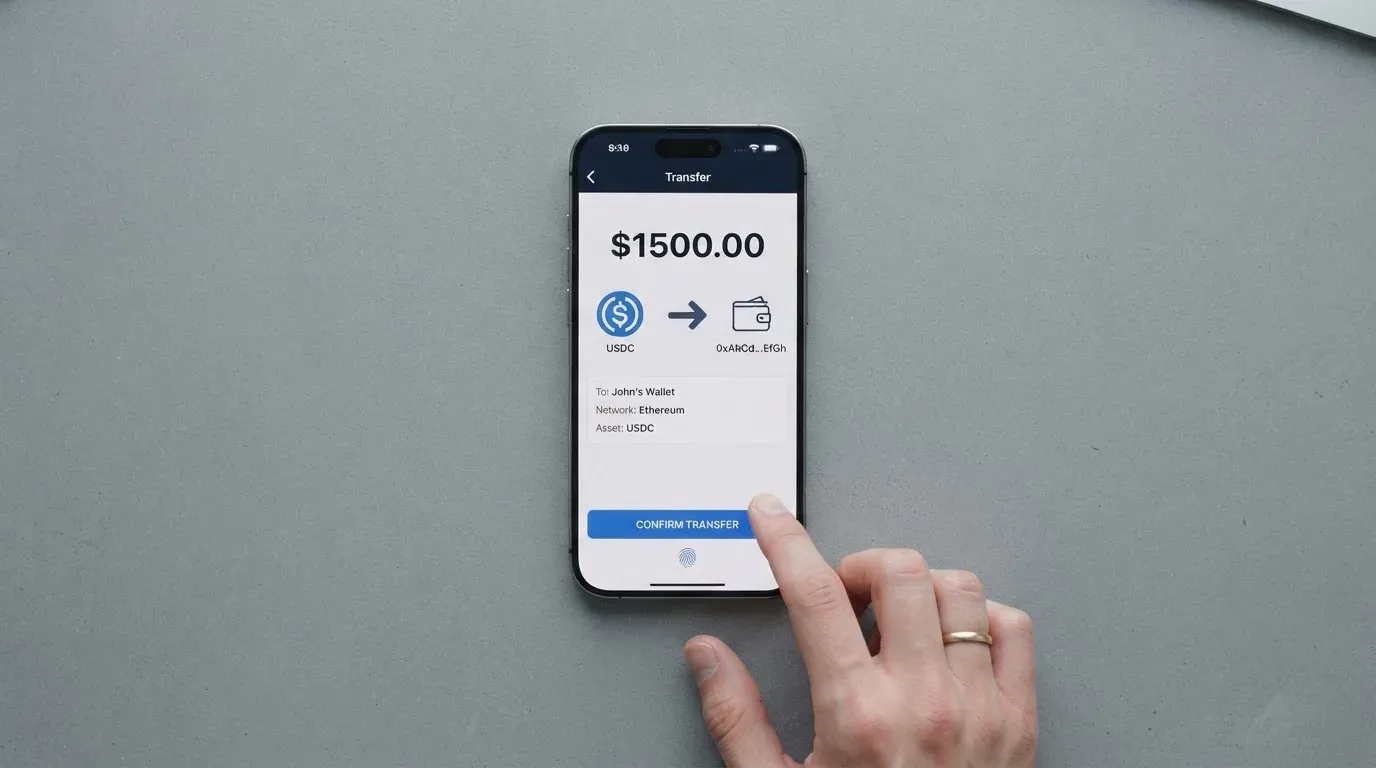
- Stablecoin transfer — instant, 24/7
- Bank transfer from a local bank account
- Direct deposit
- Borrow USD against bitcoin via BLOC — separate terms, fixed rates from 6.50% to 8.50%
The card’s terms promise “no hidden fees” on funding. What they don’t state: deposit fees or minimum top-up amounts.
The collateral wallet runs on one of four Supported Blockchains: Ethereum, Polygon, Optimism, or Arbitrum. When you deposit a stablecoin, network selection matters critically — blockchain transfers are irreversible, so sending on the wrong network or to a wrong address can be lost or require manual support recovery with no guarantee.
On gas fees: on-chain network costs for your deposit are charged by the blockchain, not by Lava. So transferring USDC on Ethereum will cost ETH gas; a wallet with USDT but no ETH can’t send at all.
Paying with it every day
The Lava Card works as a Visa card for everyday spending and pays you back in bitcoin — up to 5% at partner merchants per the headline. The reward rate depends on merchant and residency. Apple Pay and Google Pay support are not disclosed.
Rewards structure
The card’s official headline: “Earn up to 5% back in bitcoin on every purchase with the Lava Card.”
The Lava comparison article (unofficial) breaks this down by merchant type and residency:
| Purchase type | US cardholders | Non-US cardholders |
|---|---|---|
| Partner merchants | 5% bitcoin back | 5% bitcoin back |
| Other purchases | 3% | 1% |
Additional reward mechanics (unofficial):
- Rewards are issued once a transaction settles
- 100,000-satoshi minimum to redeem, per Lava announcement
- Some merchants and categories are ineligible
So the “up to 5%” headline is accurate but misleading for most spend: 5% applies only at partner merchants, and non-US cardholders get 1% on non-partner purchases.
Included Visa benefits
The card pages list these bundled Visa benefits:
- Purchase protection up to $20,000
- Extended warranty up to $25,000
- Global auto rental insurance
- Travel accident insurance
- Lost luggage insurance
These are real value if you use them, though the exact terms and claim process aren’t detailed on the pages reviewed.
Mobile wallet support
Apple Pay and Google Pay are not disclosed on the Lava card pages. This is a notable gap: mobile wallet support has become near-standard for payment cards, and its absence here means you can’t assume you can add the card to your phone’s wallet.
The Lava app
The Lava app is available on mobile and web. App Store and Google Play links aren’t on the Lava website. A third-party aggregator (App Pricing Lab, data updated 2026-02-16) lists the App Store version “Lava: Secure Bitcoin Loans” at 4.8/5 from 132 reviews. This is unofficial third-party data, not confirmed by Lava.
Disputes and chargebacks
If a charge is wrong:
- Report it within 60 days after it posts to your statement
- Try the merchant first
- Chargebacks resolved in your favour are credited to a current or future statement
- Card issues go to the Issuer via the cardholder agreement channels
Sixty days is the standard window; the “try the merchant first” step is typical but not always required by issuers.
What can go wrong
The main risks: your collateral can be liquidated if payments lapse or collateral value drops, Lava can suspend your account at any time, and almost nothing about fees, limits, KYC, or ATM allowances is published in detail.
Collateral liquidation risk
This is the biggest single risk. Under the terms:
- Collateral can be liquidated on a “Liquidation Event” — defined as payment unpaid for one calendar day, or collateral value falling below charges owed
- One calendar day of non-payment triggers liquidation. That’s tight.
- If crypto value drops, you can be liquidated even while making payments on time
Lava says it doesn’t rehypothecate: “We don’t trade, lend out, or otherwise use your funds.” Their infrastructure is claimed to “minimize trust and eliminate single points of failure.” But insurance on your balance is not stated.
Account suspension and closure
The issuer may suspend or cancel your account at any time. Closing the account does not cancel your repayment obligations. Prepayment without penalty is allowed.
No cash advances or balance transfers
Cash advances and balance transfers are not available. The card is secured by collateral or USD balance. Withdrawal of your USD balance back to crypto or a bank account is not stated — so you don’t know from the public pages whether you can get your balance back out.
Program-wide risks (category context)
Crypto card programs have failed before, and it’s worth understanding the structural risk:
- Visa terminated its global agreements with FTX on 13 November 2022; the FTX US debit card program was wound down
- WaveCrest, a Visa card issuer that supplied crypto brands, was suspended by Visa in Europe in 2018, closing all WaveCrest Visa programs
- Card program closures typically mean: notice period, then loading and spending stop, then you’re asked to withdraw remaining balances
- One 2026 closure (secondary source, unconfirmed): new loads ended 8 July 2026, spending stopped 8 August 2026
Visa and Mastercard don’t issue crypto cards themselves — they license issuers and can suspend programs. With Lava, the issuer is Third National, under licence from Visa, at 2100 Southbridge Pkwy STE 650, Birmingham, AL 35209.
Complaints and support
No user complaints found — no Trustpilot page, Reddit threads, or card-specific complaints were located. Official incidents: none found. This is simultaneously reassuring and slightly suspicious (a truly complaint-free track record is rare).
Support is 24/7 US-based: [email protected] or (347) 588-9749, described as “directly connected to a real human.” There’s also 24/7 Visa customer service.
What Lava says about security
- Doesn’t rehypothecate: “We don’t trade, lend out, or otherwise use your funds”
- Infrastructure “minimizes trust and eliminates single points of failure”
- Passkeys and account controls
- Daily spending limit settable in the app
- Collateral held in a wallet on a Supported Blockchain: Ethereum, Polygon, Optimism, or Arbitrum
- Insurance on balance: not stated
Regulatory context you should know
Lava is not a bank. It says so directly. The issuer is Third National under a Visa licence. Governing law is Puerto Rico; arbitration in New York.
In the US, FinCEN guidance treats administrators and exchangers of convertible virtual currency as money transmitters, but mere users buying goods or services are not.
Card programs in the EU operate under MiCA (Regulation (EU) 2023/1114) — the crypto side (custody, exchange, transfer) is regulated by MiCA, while the card itself is regulated separately under payment-services law. So a crypto card often depends on two licences.
The tax angle (important, not advice)
The IRS treats digital assets as property, so exchanging them for goods, services, dollars, or other digital assets generally produces a taxable gain or loss. For personal holdings, that’s a capital gain or loss; short-term if held one year or less. Gain is measured in local fiat currency at fair market value on the transaction date, so each Lava card payment funded from crypto may be a separate taxable disposal.
I’m not giving tax advice — check with a professional — but you should know each purchase may be a taxable event.
What to take instead
If the Lava Card doesn’t fit — or you want to compare before applying — here are the main alternatives in the crypto card space, with their scores from my evaluation:
| Card | Score | Key difference |
|---|---|---|
| Gemini | 4.9 / 10 | Mastercard World Elite credit card, fiat credit (not collateralized), no annual fee |
| GoMining | 6.6 / 10 | Cashback in mining power, not cash or crypto |
| Kinesis Virtual Card | 4.8 / 10 | Gold/silver-backed, 2% cashback in gold |
| Lava | 7.1 / 10 | Collateralized Visa, bitcoin back, no FX fees |
Gemini Card
Score: 4.9 / 10
- Type: Mastercard World Elite credit card (not prepaid, not collateralized)
- Funding: Standard credit card paid off in fiat — no crypto conversion needed
- Annual fee: None; issuance fee not stated
- Foreign transaction fees: None
- Rewards: Gas/EV/transit 4% (first $300/month), dining 3%, groceries 2%, other 1%; paid instantly in Bitcoin or 50+ cryptos on Gemini, changeable anytime
- Vault Rewards: 10% at some merchants (capped, varies)
- Referrals: $50 crypto each, $250 per 5 referrals, up to 50/year
- Who can get it: Not stated on the card page
The Gemini Card is fundamentally different: it’s a regular credit card that pays rewards in crypto, not a crypto-collateralized payment card. If you want clean rewards without managing collateral, this is simpler. The tradeoff is that your spending isn’t tied to crypto balance — you pay it off with fiat like any credit card.
GoMining Card
Score: 6.6 / 10
- Type: Virtual card now; physical “coming soon”
- Funding: BTC, USDT, GOMINING, and other coins (earlier check: from GoMining wallet)
- Opening perk: Grants a free 1 TH miner
- Rewards: Cashback paid in mining power, rate rises with VIP level; “up to 5% cashback”
- Annual fee: Not stated
- Fees: Not stated
- Who can get it: Not stated as a list; “may not be available in your jurisdiction”
The key difference: rewards come as mining compute, not cash or spendable crypto. That only makes sense if you’re already invested in mining.
Kinesis Virtual Card
Score: 4.8 / 10
- Type: Virtual card (network not officially stated)
- Funding: Instant conversion of gold (KAU), silver (KAG), crypto, or C1USD at point of sale from your Kinesis account
- Rewards: “Get 2% cashback in gold”
- Access: 6 months free from launch to the cashback plan
- Annual fee: Not stated
- Fees: Not stated (site links a general fees page not reviewed)
- Who can get it: Starting data says United States, Latin America, and the Caribbean
This is a commodities-backed card: spend converts from gold, silver, or crypto holdings, and rewards come back in gold. For anyone who wants gold exposure rather than bitcoin, it’s a different proposition entirely.
Who I would recommend it to
The Lava Card is a good fit if you’re a non-US citizen who wants to spend from crypto or stablecoins, earn bitcoin back on purchases, travel internationally, and don’t want foreign-exchange fees or spreads. It’s a poor fit if you need published, predictable limits, want to avoid collateral risk, or can’t tolerate a one-day payment window before liquidation.
Specifically, I’d recommend the Lava Card to:
- Non-US holders who want bitcoin back on everyday purchases at 1-5% depending on merchant
- Frequent international travellers who value 0% FX fees and zero spread on foreign currency
- People comfortable with collateral who understand the liquidation risk and hold their collateral in a wallet on Ethereum, Polygon, Optimism, or Arbitrum
- Users who want credit — the BLOC feature lets you borrow USD against bitcoin at fixed rates from 6.50% to 8.50%
I’d steer you toward something else if:
- You hold US citizenship — you’re excluded by the attestation requirement
- You can’t tolerate liquidation risk — one missed payment day triggers it
- You need published daily or monthly limits — they’re not disclosed
- You want to know your ATM costs in advance — the free allowance and cash limits aren’t stated
- You need to know your exact KYC requirements — the documents aren’t listed
- You want a standard fiat credit card that pays crypto rewards — that’s Gemini, not Lava
My honest assessment: the fee structure is genuinely good, the reward rate is decent for partner merchants, and the security posture (no rehypothecation, passkeys, self-set limits) is reasonable. The problem is information. Too many practical details — KYC, limits, ATM allowance, issuance fee, withdrawal of your balance — simply aren’t published. That’s not a dealbreaker, but it means you’re signing up with fewer facts than you’d want.
The one-day liquidation window is the detail that gives me most pause. If your payment fails once — a bank outage, a weekend, an expired card — and you don’t fix it within one calendar day, your collateral can be liquidated. That’s tighter than most people’s mental model of “a missed payment.”
Frequently asked questions
What is the Lava Card?
The Lava Card is a Visa payment card that spends from a USD balance you load yourself, rather than drawing on a bank account. You fund it by depositing stablecoins or local currency, or by locking up bitcoin as collateral through their BLOC feature. The card is Visa-branded, available in physical and virtual forms, and pays you back in bitcoin on purchases — up to 5% at partner merchants. Lava itself is not a bank; the issuing institution is Third National under a Visa licence.
How does the Lava Card work?
You top up a USD balance by depositing stablecoins or local currency, or by borrowing against bitcoin collateral. The card then spends directly from that balance, converting to local currency at zero spread when needed. There’s no fixed spending limit — it tracks your available balance or collateral value and can be reduced to $0 at any time. Rewards in bitcoin are issued once a transaction settles, with a 100,000-satoshi redemption minimum.
Is Lava a bank?
No. Lava says explicitly that it is not a bank. It’s a card programme manager or front-end. The actual issuing institution is Third National, which holds the Visa licence and issues the cards under it. This distinction matters because it means your deposit relationship and any regulatory protections come from the issuer’s jurisdiction and terms, not from Lava’s.
Who can get the Lava Card?
You must attest that you are not a United States citizen and not on a US sanctions list. The card is built for people outside the United States — a separate US terms document exists. There’s no published country list, so you can’t check eligibility in advance for your specific country. The card is for personal, family, or household use only. Identity verification details aren’t published, though sanctions screening is a legal requirement for the issuer.
Does the Lava Card require KYC?
KYC isn’t explicitly described on the Lava card pages, but it’s effectively required. As a regulated Visa issuer, Third National must conduct customer due diligence and sanctions screening. In the US, the customer identification programme requires name, date of birth, address, and an identification number. The specific documents Lava asks for aren’t stated, so you’d learn that during the application process.
What does the Lava Card cost?
The card has no annual fee, no foreign-exchange fee, and no exchange spread on Bitcoin buy/sell. ATM usage is 2% with a $1 minimum (though a Lava page says ATM is fee-free in all 50 US states — a US-specific context). The issuance fee isn’t published. Your real ATM cost can’t be calculated from public information because the free allowance and cash withdrawal limit aren’t stated either.
How do I top up the Lava Card?
You can deposit by stablecoin transfer (instant, 24/7), by bank transfer from a local bank account, or by direct deposit. You can also borrow USD against bitcoin via their BLOC feature, which has separate terms and fixed rates from 6.50% to 8.50%. Your collateral wallet sits on one of four Supported Blockchains: Ethereum, Polygon, Optimism, or Arbitrum. Lava states “no hidden fees” on funding, but the deposit fee and minimum top-up aren’t published.
Is the Lava Card safe?
Structurally, it’s more transparent than many crypto cards: Lava says it doesn’t rehypothecate your funds (“we don’t trade, lend out, or otherwise use your funds”), uses passkeys and account controls, and lets you set daily spending limits in the app. Support is 24/7 US-based with direct human contact. However, insurance on your balance isn’t stated, and your collateral can be liquidated on a “Liquidation Event” — defined as payment unpaid for one calendar day or collateral value dropping below charges. That’s a real risk.
Where can I use the Lava Card?
At merchants in 150+ countries, according to the card’s official pages. The card is Visa, so acceptance follows standard Visa merchant networks. Some merchants may decline prepaid or foreign-issued cards when they look up the BIN and see an issuer country different from your billing address — this is a general card industry behaviour, not specific to Lava. The card pages don’t list blocked merchant categories or specific country restrictions.
How do I get bitcoin back from the Lava Card?
Rewards are issued in bitcoin once a transaction settles, and you redeem them at a 100,000-satoshi minimum, per Lava’s announcement. The reward rate depends on merchant type and your residency: 5% bitcoin back at partner merchants, 3% on other purchases for US cardholders, and 1% for non-US cardholders per Lava’s comparison article (unofficial, not confirmed by the card pages). Some merchants and categories are ineligible for rewards.
Credit and cashback card costs – cryptocardfacts
Content created by the «cryptocardfacts» team