
A new crypto Visa card with a lot of first-year promises and very few published answers
 Available in US
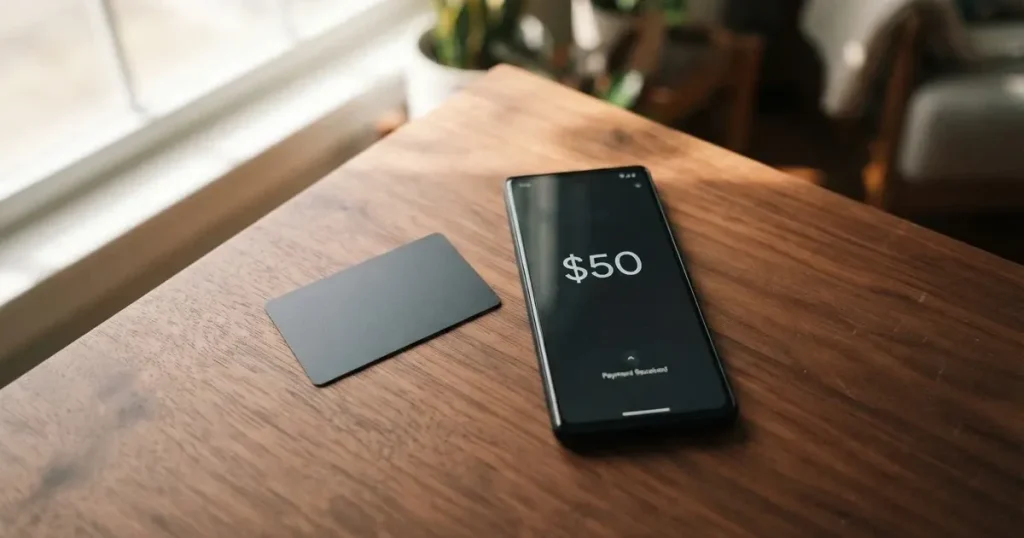
The MSX card is worth a look if you already hold or trade on the MSX platform and want a plain Visa card to spend from that crypto balance. Beyond that circle, the picture gets thin fast. The card arrived in June 2026, the promotional fee waiver is described only in third-party coverage, and the card issuer is not named anywhere I could read. So my verdict is a card with a real, useful shape and almost no published detail — take it as a platform feature you use alongside a main card, not as the card you depend on.
The conditions described here are current as of October 28, 2026.
Verdict: 6.4 out of 10
I scored this card 6.4 / 10. That is a passing mark, not an endorsement: the card does what it says on the surface — Visa, physical, spend from crypto — and the fee story during the promotional period is attractive. It loses points because almost every number a normal buyer wants — the issuer, the FX fee, the fees after the promotion, the card currency, the ATM allowance, the identity documents — is either unstated on an official page or repeated only by news outlets and sponsored articles.
| Criterion | Mark | Why |
|---|---|---|
| Who can get it | 8 / 10 | Unofficial sources describe it as global, with ATM withdrawals in several countries and regions, excluding mainland China and OFAC-sanctioned areas; starting data adds that the platform’s terms exclude the US, Canada and Hong Kong |
| Cost | 7 / 10 | Unofficial coverage describes zero annual fee and zero top-up, payment and annual fees during a promotional period; later fees and the FX fee are not named |
| Top-up options | 5 / 10 | Spending draws on crypto held on the MSX platform; starting data says top-up in USDT and USDC from the MSX account, with coins and networks undisclosed |
| Reliability and complaints | 5 / 10 | MSX (Maitong) launched as a real-world-asset tokenization platform with MSB registrations at FinCEN and in Canada; starting data names Mystonks Holding LTD; the card issuer is not named and no complaints surfaced |
| Everyday use | 6 / 10 | A physical card on the Visa network for online and offline payments, contactless via Google Pay, ATMs in several countries and regions; Apple Pay is not described |
The audience for this card is narrow and specific: MSX platform users who want a Visa card for their crypto. If that is you, the card makes sense as a second instrument. If you are looking for a primary everyday card, or you need one that works from a normal bank account, or you want Apple Pay and a fully published fee schedule, this is not the card to build around — and I would rather say that plainly than dress up a thin file.
Will they give you the card?
This is where the card is least specific, so I want to be honest about the shape of the answer: MSX does not publish an eligibility list I could read. There is no official page stating who qualifies. What exists is third-party description, and it points to a broad but bounded footprint.
Unofficial coverage, from an Odaily sponsored article in June 2026, describes availability as global, with ATM withdrawals in multiple countries and regions, excluding mainland China and OFAC-sanctioned areas. Starting data adds a narrower point that matters more than it first looks: the MSX platform’s terms of service also exclude the United States, Canada and Hong Kong.
That combination is the one to hold in your head. “Global” here is doing quiet work. It means the platform is not walled off to one country, not that it is open everywhere. If you live in one of those three excluded places, or hold citizenship there, the difference between a broad launch and a lawful, permitted onboarding is exactly the kind of thing that decides whether you can be a customer at all. Check your own country’s rules and the platform’s terms before you assume an answer either way.
On an official page I could read, the card’s eligibility, including age requirements, is not stated. I want to flag that once here and stop repeating it: where the card’s own public pages say nothing, I will say so rather than filling the gap.
How to get it
Nobody has published a step-by-step application flow for this card, so treat any walkthrough you find as somebody’s account of their own onboarding rather than the official procedure.
On identity checks, the card is not stated officially. Unofficial coverage says MSX operates under applicable KYC, AML and transaction-monitoring requirements, but names no card-specific steps, no documents and no minimum age. That is a general statement about the company’s compliance posture, not an instruction telling you what to upload. In practice every regulated intermediary in this category has to identify you before the money moves — the general rule in the EU is name, address, date of birth, nationality and identity documentation, plus a sanctions check and a politically-exposed-person check, and in the US name, date of birth, address and an identification number, with electronic systems also validating proof of address. Expect to prove who you are. If a service asks for nothing, that is a worse sign than a long form.
On the card itself: officially not stated. Unofficial coverage from cryptonews.net, June 2026, describes a physical card on the Visa network, usable online and in stores. Odaily does not say whether the card is virtual or physical, and the card’s currency is not stated anywhere.
So, practically: you start from an MSX platform account, go through whatever identity process the platform applies, and the card arrives. Delivery time, tracking, activation method and what happens if the card is lost in the post are all not stated. Cardholders usually get a virtual card first and a physical one after, but I could not confirm that is the pattern here, and I will not pretend otherwise. If the physical card is essential to you, treat its existence as the thing to verify before anything else.
What it really costs: Fees
The fee picture is the most attractive part of this card and the least certain. On an official page, not stated. What circulates is third-party description: zero annual fees, with deposit, payment and annual fees waived for an initial promotional period, and later fees not disclosed. Zero top-up fees and zero transaction fees during the promotional period, with the FX fee not stated.

Read that carefully. “Waived for an initial promotional period” is not the same as “free”. A promotion with no stated end date is a pricing decision you have not been told about. The card’s post-promotion fee schedule is the single most useful number you do not have.
| Fee or limit | What is known |
|---|---|
| Annual fee | Unofficial: zero; later fees not disclosed |
| Top-up fee | Unofficial: zero during the promotional period |
| Payment fee | Unofficial: zero during the promotional period |
| FX fee | Not stated — this is the one that bites when you spend abroad |
| ATM fee | Not stated; ATM withdrawals available in multiple countries and regions per unofficial coverage |
| ATM allowance | Not stated |
| Monthly spending limit | Unofficial: up to $1,000,000 |
| Card currency | Not stated |
| Tiered pricing | Not stated |
Now the part worth doing. Three payments you will actually make:
A coffee in your home country. If the card and your balance are in the same currency, this is the easy case — zero payment fee during the promotion, no conversion. This is where the card’s promise is strongest.
A card payment abroad. Here the unknown FX fee decides your cost, and nobody has published it. Add the network’s own rate on top. Budget for a spread you cannot yet put a number on, and check the amount that lands in your account rather than the amount on the terminal.
A cash withdrawal from an ATM. The card works in ATMs in several countries and regions, but neither the fee nor the allowance is stated, so a withdrawal could turn out to be the most expensive thing on the card. If cash is part of your plan, this is the question to ask before you rely on it.
One structural point worth knowing about this whole category: the fee for the blockchain transfer you use to fund the card is charged by the network, not by the card provider. When you read “zero top-up fee”, that covers the platform side. Sending USDT on Tron and sending it on Ethereum cost different amounts, because the networks price differently. Choosing a cheaper network is a legitimate money-saving habit — but only ever with a network the provider actually supports for that asset, because a transfer on the wrong network can be lost.
How to Top up
The funding model is the part I can describe most confidently, and it is the card’s real idea: you do not hold a bank balance, you hold crypto.
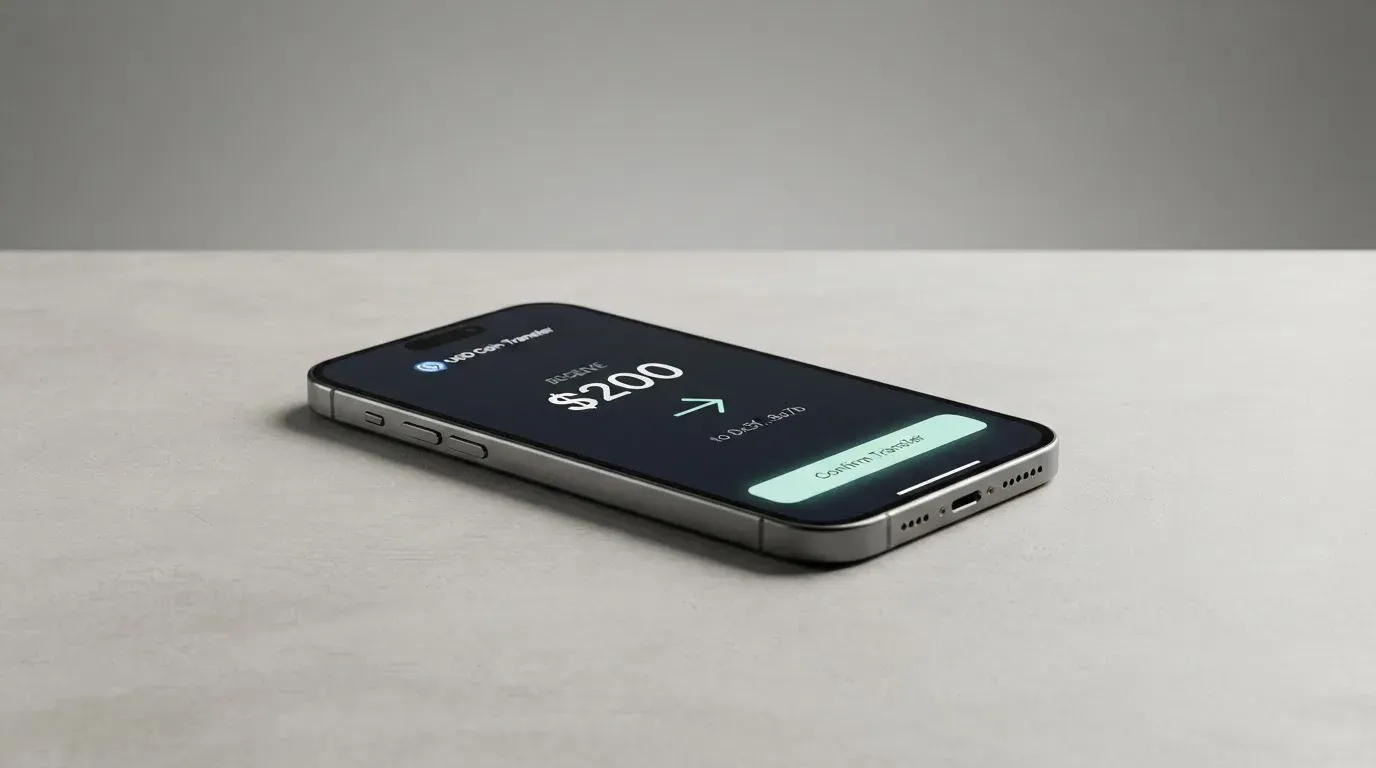
Official pages say not stated. Unofficial coverage says spending is funded from crypto assets held on the MSX platform, and starting data adds that top-up is in the stablecoins USDT and USDC from the MSX account, converted at the point of sale. Which coins and which networks are accepted is not disclosed.
So the flow looks like this: funds sit on the platform in crypto, a purchase is converted when you make it, and the card spends the result. This is the prepaid-card model — the card draws on a stored balance rather than a linked bank account, and it cannot overdraw because there is nothing to overdraw.
For that model, the coin you hold *is* the risk you hold. USDT and USDC are dollar-pegged, and roughly 90% of stablecoin market capitalisation sits in those two, per the BIS in July 2025. Circle says USDC is redeemable 1:1 for USD and fully backed by cash and cash equivalents, mostly in an SEC-registered government money market fund, with monthly reserve attestations. Tether describes USDT as built on multiple blockchains with reserves intended to back it 1:1. Those are strong claims from the issuers, not a guarantee from anyone else, and stablecoins have failed before: TerraUSD collapsed in May 2022, and USDC lost its peg briefly in March 2023 during the US banking crisis.
Withdrawals, card spending versus cashing out to a bank, and any withdrawal fee are all not stated. If you need to get money back out to a conventional account, that is an unanswered question, and for someone in a difficult banking position it may be the only question that matters.
The network detail is worth dwelling on for one practical reason. Stablecoins exist on many chains and they are not interchangeable. Circle lists USDC as natively supported on 38 networks as of 16 September 2026, including Ethereum, Solana, Base, Polygon PoS, Avalanche, Arbitrum and Stellar, and it stopped supporting USDC on Tron in February 2024 — so “USDC over TRC20” is not a native option. Tether’s USDT has been issued on networks including Ethereum, Tron, Solana, Polygon and Avalanche. Sending to an address on a network the provider does not support, or to an address belonging to another network, can lose the money outright, because blockchain transfers cannot be reversed and recovery is a manual support request with no guarantee. Check the supported network against the one you are about to send on, every time.
Paying with it every day
Used as intended, the card is unremarkable in the best sense: a physical Visa card that works online and in stores.
Unofficial coverage from cryptonews.net, June 2026, describes contactless payments through Google Pay. Apple Pay is not disclosed, and neither is any list of blocked merchant categories. If you are an iPhone user, the absence of a named Apple Pay integration is a real gap — it is one of the questions I would put to support before committing.
Two card mechanics explain most of the friction people meet with cards like this. First, the six- or eight-digit BIN at the start of the card number tells the merchant which institution issued it and where. Shops can look it up and apply extra scrutiny when the issuer’s country differs from the billing address, and some will decline a prepaid or foreign BIN outright. This is why a card that works perfectly at home can be refused abroad — it is a property of the merchant’s risk rules, not a fault in your card. Second, address verification, which compares numbers from the billing address you typed against issuer records, is mainly available in the US, Canada and the UK and is generally unavailable for foreign-issued cards, which causes declines online.
On rewards, there is nothing to bank on: no cashback or reward programme is described. Unofficial coverage says cardholders get exclusive subscription rights to MSX pre-IPO offerings. That is an allocation perk, not a rebate on your spending, and it is worth being honest about the trade: a subscription right to private pre-IPO access is not the same thing as money back on Tuesday’s groceries.
The app, the interface for freezes and limits, and the dispute process are all not stated. I cannot tell you whether there is a one-tap card freeze, whether you can set per-merchant limits in-app, or how a disputed charge is handled. Those three features are what most card users rely on daily, and their absence from anything I could read is a genuine gap in this review.
What can go wrong
No official incidents surfaced in what I looked at, and no user complaints either. Searches for reviews and discussions returned only launch coverage and promotional material — no Trustpilot page, no Reddit thread. Read that carefully: it is not a clean record, it is a thin one. A card announced in June 2026 has had a short life, and a young product generates complaints only once it has enough users to generate them. Absence of complaints at this stage tells you about the file size, not the quality.
The company behind it: officially not stated. Unofficial coverage says MSX was launched by MSX (Maitong), described as a real-world-asset tokenization platform holding MSB registrations with FinCEN in the US and in Canada, and starting data names Mystonks Holding LTD. The card issuer is not named. That is the sharpest risk on this page, and it deserves more than a line.
A card number is issued by a licensed institution, and the crypto brand is often only the programme manager or the front end that markets it. Visa and Mastercard do not issue crypto cards to consumers themselves; they license issuers, and they can suspend a programme. When a programme is suspended, the network licence goes with it. WaveCrest, an issuer that supplied crypto card brands, was suspended by Visa in Europe in 2018, closing every WaveCrest-issued Visa programme. In November 2022 Visa said it had “terminated our global agreements with FTX”, and the FTX US debit card was being wound down by its issuer. Closures typically follow a pattern: a notice period, then spending and loading stop, then users are asked to withdraw remaining balances.
So when I say the issuer is not named, I mean you cannot currently answer the question “who is legally responsible for my card and my money if this goes wrong”. The general shape of that protection depends on the licence the issuer holds. Under EU rules, an electronic money institution can issue e-money, payment cards and wallets but cannot lend, and must safeguard customer funds by segregating them in dedicated accounts or insuring them — and such safeguarded funds are not the same as bank deposits, so they may not sit under a deposit guarantee scheme. In the US, FinCEN guidance treats administrators and exchangers of convertible virtual currency as money transmitters; in the EU, MiCA has been in legal effect since June 2023, with its rules on asset-referenced and e-money tokens applying from 30 June 2024 and the remaining provisions including crypto-asset service provider rules from 30 December 2024. Under MiCA, e-money tokens may be issued only by a credit institution or an electronic money institution. A crypto card commonly depends on two licences at once — one for the crypto side, one for the payment side.
Three further risks, none specific to MSX but all live here. Crypto transfers are irreversible and a stolen private key has no recovery path: the network cannot freeze or return funds. Custodial platforms have a real record — Mt. Gox, about US$350 million reported stolen between 2011 and 2014; Coincheck, about US$400 million in 2018; Ronin Network, US$625 million in 2022. And a declined authorisation can leave a hold on your money that lingers for days, typically up to seven, which on a card funded from crypto you are converting means you can be out of usable balance at the worst moment.
Security features, support contact routes and any incident history are not stated officially, and no official news page covering the card could be found beyond the unofficial record of its announcement on 4 June 2026. What nobody has published anywhere is a cardholder agreement or a fee schedule — the two documents that would settle most of the questions on this page.
What to take instead
If any of the above makes you hesitate, here are three cards whose details are actually published. I am not saying one of them is right for you; I am saying you can read their fees today.
| Card | Score | Who | Card and network | Cost | Conversion and FX |
|---|---|---|---|---|---|
| MSX | 6.4 / 10 | Unofficial: global, excluding mainland China, OFAC-sanctioned areas, and per starting data the US, Canada and Hong Kong | Physical Visa, per unofficial coverage | Zero annual fee in the promotional period, later fees undisclosed | Zero transaction fee in the promotion; FX fee not stated |
| Bybit Card | 6.0 / 10 | Argentina, AIFC (Kazakhstan), Georgia, Kazakhstan, Australia, Mexico, Brazil, Peru, Asia Pacific; not for European Economic Area customers | Virtual and physical; Mastercard in Argentina, AIFC, Georgia, Kazakhstan, Australia, Mexico; Visa in Brazil, Peru and Asia Pacific | Virtual issuance free in all regions; physical 29.99 USD in Australia, 5 USD/USDT in Argentina, 5 USDT in Asia Pacific, 29,99 USDT in Georgia and Kazakhstan, free in Brazil and Mexico; no annual fees | Conversion 0.9% over the One-Click Sell rate, 0.5% in Argentina; FX 2% on top of the network rate in Australia, Asia Pacific, Georgia, Mexico; 7% Argentina, 1.5% Brazil, 1% Peru |
| Coinbase Card | 6.4 / 10 | All US states except Hawaii | Visa prepaid debit, virtual or physical | Zero spending fees, no annual fees | No Coinbase transaction fees, but a spread applies when crypto is converted at payment |
| Young Card | 5.7 / 10 | Not stated | Not stated officially | Not stated officially | Not stated |
Bybit is the most transparent of the three and the closest in spirit: same idea of a card drawing on crypto, but with a published fee schedule, a named list of regions, and an explicit statement that the product is not meant for European Economic Area customers. Its catch is that you are deeper inside one exchange — the card has no balance of its own and draws on the Funding Account and the Flexible Easy Earn balance, selling crypto at the One-Click Sell rate plus the card conversion fee when fiat runs short. Its rewards are also newly restricted: from 2026-10-05 at 10:00 UTC, only crypto-funded transactions earn points or cashback, and fiat-funded spending does not. Tiers run from Base at 2.00% up to Infinite at 10%, with monthly cashback caps from 5 USD to 600 USD.
Coinbase Card matches MSX’s score and is far more legible. It is US-only, all states except Hawaii, on the USA PATRIOT Act identity rules, and it is a Visa prepaid debit that converts all crypto to US dollars for purchases and ATM withdrawals. Fees are disclosed in the Cardholder Agreement and User Agreement, there are no spending or annual fees, and there is a spread rather than a transaction fee. Rewards are optional crypto rewards on every purchase for US Card users, at a variable rate shown in the app. If you are in the US, this is the version of the idea you can actually read the paperwork for.
Young Card scores lower and publishes less: eligibility, the card type, costs and funding are all unstated. The one thing that is documented is cashback paid in YNG tokens at a rate set by Club tier — Essential 0.1%, Gold 1.8%, Platinum 3.6% — with Bronze and Silver not given. A tier-based cashback rate you cannot check against a fee schedule is not enough for me to recommend.
Who I would recommend it to
I would recommend this card to someone who is already inside the MSX platform, holds or trades there, and wants a Visa number to spend from that balance without wiring money out to a bank first. For that person the value is real: it removes a step, it works in stores and online, and during the promotional period the fees are reported as zero.
I would not recommend it as your only card, for three reasons that have nothing to do with the marketing. The issuer is not named, so the question of who stands behind the card is unanswerable today. The FX fee is not disclosed, and an unpriced currency conversion is not a fee you can plan around. And Apple Pay, the ATM allowance and the post-promotion fee schedule are all absent from anything published — which is a lot of silence for a product whose whole purpose is daily spending.
My practical advice, in order. First, find out whether the card’s post-promotion fees and the FX fee are published anywhere before you put real volume through it. Second, get the issuer’s name from support and check what licence it holds in your own jurisdiction — that is the document that decides what happens if the programme ever closes. Third, keep a separate card and a bank balance for the things that must not fail: rent, medicine, travel. Fourth, if you need to cash out, ask what withdrawal costs and where the money lands before you assume you can.
And on taxes, since this card turns crypto into ordinary spending: in the US the IRS treats digital assets as property, so exchanging them for goods, services or dollars generally produces a taxable gain or loss, measured in local fiat currency at the fair market value on the date of the transaction. Each card payment funded from crypto can therefore be a separate disposal. I am not giving you tax advice and I am not telling you what to do — but if you spend from crypto regularly, that is a conversation to have with someone qualified in your country rather than a line item to discover at filing time.
Frequently asked questions
What is the MSX card?
The MSX card is a payment card offered alongside the MSX crypto platform, described in unofficial June 2026 coverage as a physical Visa card usable online and in stores. Spending draws on crypto assets held on the platform rather than on a conventional bank account, with stablecoins USDT and USDC named in starting data. MSX does not publish a card page stating this, so the description comes from third-party sources rather than the card’s own materials.
How does the MSX card work?
You hold crypto on the MSX platform, and when you pay, the crypto is converted and the card spends the resulting fiat value. This is the prepaid model: the card draws on a stored balance rather than a linked bank account, so it cannot overdraw. Cards like this are known to be subject to merchant-side decline risk in some regions, because the issuing BIN can be looked up and checked.
Is MSX a bank?
No bank is described anywhere in what could be read. Unofficial coverage describes MSX (Maitong) as a real-world-asset tokenization platform holding money services business registrations with FinCEN in the US and in Canada, and starting data names Mystonks Holding LTD. The card’s issuing institution is not named, which is the gap to close before you rely on the card.
Who can get the MSX card?
No official eligibility list is published. Unofficial June 2026 coverage describes global availability with ATM withdrawals in multiple countries and regions, excluding mainland China and OFAC-sanctioned areas, while starting data adds that the platform’s terms exclude the US, Canada and Hong Kong. Age requirements and card-specific eligibility rules are not stated on any page I could read.
How do I get the MSX card?
There is no published application walkthrough. In practice onboarding runs through an MSX platform account and the identity checks that platform applies. Unofficial coverage says MSX operates under applicable KYC, AML and transaction-monitoring requirements but gives no card-specific steps, documents or age, and neither delivery time nor activation method is stated anywhere I could find.
How much does the MSX card cost?
Unofficial June 2026 coverage describes zero annual fees and zero deposit, payment and annual fees during an initial promotional period, with later fees not disclosed. Top-up and transaction fees are reported as zero in the promotion, while the FX fee is not stated at all. Since no end date for the promotion is given, treat the current pricing as temporary until you see a published schedule.
How do I top up the MSX card?
Top-up is in the stablecoins USDT and USDC from your MSX account, converted at the point of sale, according to starting data. Which specific coins and which blockchain networks are accepted is not disclosed, so confirm the supported network before sending anything, since a transfer on the wrong network can be lost outright and blockchain transactions cannot be reversed.
Is the MSX card safe to use?
Treat it as a second card rather than your main one. It works in stores and online, but Apple Pay is not disclosed, blocked merchant categories are unstated, security features such as freeze and spending limits are not described, and no Trustpilot page or Reddit discussion exists to suggest a service history. It launched on 4 June 2026, so the absence of complaints reflects how new it is.
Where can I use the MSX card?
Unofficial coverage describes use at online merchants and in stores on the Visa network, contactless payments through Google Pay, and ATM withdrawals in multiple countries and regions. Apple Pay is not disclosed, ATM fees and allowances are not stated, and foreign-issued cards can be declined by some merchants because address verification services are generally unavailable for them.
Is the MSX card worth it?
For someone already active on the MSX platform, the convenience of spending directly from a crypto balance at zero reported fees during the promotion is worth having as a secondary card. For anyone else, the unnamed issuer, undisclosed FX fee and absent post-promotion schedule make it hard to justify over a card with published terms. Compare Bybit Card and Coinbase Card before deciding.
Exchange card fees – cryptocardfacts
Content created by the «cryptocardfacts» team