
Bitsa card review: a prepaid Visa with a crypto side, a European IBAN and a cautious score
 Available in US
Bitsa is a prepaid Visa card that converts crypto into a euro balance you spend like an ordinary payment card, with a European IBAN attached. It sounds exactly like what many people who cannot open a normal bank account are looking for. And in everyday-use terms it does a lot right. But the card also draws a low score overall, mostly because of what reviewers report about frozen accounts, and because key facts — eligibility, issuer, verification — are not published on the card’s own public pages. Here is what I found after working through the terms, and who I think it fits.
The conditions described here are current as of October 28, 2026.
The verdict: 5.0 out of 10
Bitsa scores 5.0 / 10. The number is an average of six things I looked at, and it hides a card that is very good at one job and much shakier at the boring parts.
| Criterion | Mark | Why |
|---|---|---|
| Who can get it | 5 / 10 | The official list of countries is not published; unofficial sources say residents of 27 EEA countries, with several countries closed. |
| Cost | 4 / 10 | The physical card costs EUR 20; you can reload by card for 1.5%, pay 1.75% outside the euro zone and 2% elsewhere, and pay EUR 0.55 + 1% at an ATM abroad. |
| Top-up options | 5 / 10 | Bitcoin, Ethereum and USD Coin are supported, plus card, SEPA, wallet and voucher — but the networks are not named. |
| Reliability and complaints | 3 / 10 | The issuer is not named officially; Trustpilot shows 1.3/5 from 363 reviews, 68% one-star, with reports of frozen accounts. |
| Everyday use | 9 / 10 | A physical and virtual Visa with a European IBAN; Apple Pay and Google Pay work; an ATM abroad costs EUR 0.55 + 1%. |
| Total | 5.0 / 10 | Strong for daily spending, weaker on cost, access clarity and reported reliability. |
Who this suits: EU residents who want a prepaid Visa with an IBAN — people who want a card that spends a balance they have loaded, in euros, with the ordinary mobile-wallet convenience, and who are comfortable with crypto as the funding source. Who it does not suit: anyone who needs a card with clear published eligibility and low published costs, anyone who wants to hold crypto themselves, or anyone whose peace of mind depends on support answering quickly. My honest read is that this is a convenient spending tool for a specific person and a poor substitute for a bank for almost everyone else.
Who will they give you the card?
The short answer is: the card’s own public pages do not say. Eligibility is listed as not stated — there is no official country list on the materials I checked.
What is circulating elsewhere is unofficial. Third-party reporting (CryptoCardHub, 11 Aug 2026) describes Bitsa as available to residents of supported EEA countries, with a list of 27: Austria, Belgium, Cyprus, Czech Republic, Denmark, Estonia, Finland, France, Germany, Greece, Hungary, Iceland, Ireland, Italy, Liechtenstein, Lithuania, Luxembourg, Malta, Netherlands, Norway, Poland, Portugal, Romania, Slovakia, Slovenia, Spain, Sweden. The same unofficial source lists these as restricted: Bulgaria, Canada, Croatia, Latvia, the United Kingdom and the United States. None of that is confirmed by the card itself.
So if you are reading this hoping to find “is Bitsa available in my country,” the honest answer is that you will have to check with Bitsa directly, because the authoritative list is not published. The unofficial picture is EEA-resident based, which is a helpful sign for most European readers but not a guarantee.
How to get it
Applying is described in official terms as being for a “prepaid Visa crypto card” with a physical and virtual version, crypto converted to euros, a European IBAN, and management in an iOS/Android app. But the practical steps — verification, delivery, activation — are mostly not stated on the public pages I read.
On KYC: whether it is required is not stated officially. Unofficial reporting (CryptoCardHub, 11 Aug 2026) describes proof of residence in an eligible country plus identity verification, and ages 16–17 handled through a “Bitsa Young” route with guardian authorisation in the app. The same source notes the issuer may suspend accounts over failed KYC, fraud or AML risk, or missing source-of-funds documents. That last point matters: the card’s compliance rules are not something it advertises, and they are the rules most likely to be applied to you.
On delivery: delivery times and shipping are not stated. Unofficial detail adds that the physical card costs EUR 20 and an additional virtual card EUR 2.50. Beyond that, expect to sort activation out yourself in the app; the official pages did not describe it to me, and how to activate was one of the things people most often search for.
Fees: what it really costs
The card is not free once you count the card, the plans and the per-payment charges. Here is what the official terms give, all from the card’s own pages:
| Fee or limit | What it says |
|---|---|
| Physical card | EUR 20 |
| Virtual card | EUR 2.50 |
| Plan — Free | EUR 0 |
| Plan — Move | EUR 0.99/month or 8.99/year |
| Plan — Pro | EUR 9.99/month or 69.99/year |
| Reload by external card (non-free plans) | 1.5% |
| International payment | 1.75% outside the euro zone; 2% elsewhere |
| Transfer commission | EUR 1 on Free and Move; free on Pro |
| ATM fee abroad | EUR 0.55 + 1% of the amount, minimum EUR 0.75 |
| Crypto conversion spread | not stated |
Let me make those costs concrete with three ordinary payments, because that is where the percentages bite.
Buying something in Spain (in the euro zone). If you are on Free or Move and topped up with a bank card, you paid 1.5% on the reload. The purchase itself is a euro-zone payment, so the 1.75% / 2% international fee does not apply. But if you funded with crypto, the conversion spread applies — and the official pages do not state what that spread is. This is the single biggest unknown in the whole cost picture, and it is the one number I would want to see before you commit.
Buying something in the United States. That is outside the euro zone, so the international payment fee of 1.75% applies, on top of any conversion. Add your 1.5% reload fee if you reloaded by card, and you are paying well above the price of the goods.
Withdrawing cash at an ATM abroad. This is the most expensive everyday action. The stated fee is EUR 0.55 plus 1% of the amount, with a minimum of EUR 0.75, and withdrawals outside Spain are capped at EUR 450 a day. If you need regular foreign cash, this adds up quickly.
A note on the plan tiers: what separates the plans beyond price and limits is not stated beyond the fees and limits above. Unofficial reporting (CryptoCardHub, 11 Aug 2026) lists virtual/physical card counts of 1/1 on Free, 3/2 on Move and 4/4 on Pro; crypto sell fees of 2.39% / 2.14% / 1.89%; and free SEPA Instant allowances of none / one then EUR 1 / two then EUR 1. Treat all of that as unofficial rather than as the card’s own published terms.
Top up: how the balance gets filled
Bitsa lists Bitcoin, Ethereum and USD Coin as supported crypto, and also accepts funding by card, SEPA transfer, wallet and voucher. Which blockchain networks those coins travel on is not stated — and that omission is more consequential here than it sounds. Sending on the wrong network is a classic way to lose money permanently. What networks are actually supported is something you must confirm in the app before you send anything.
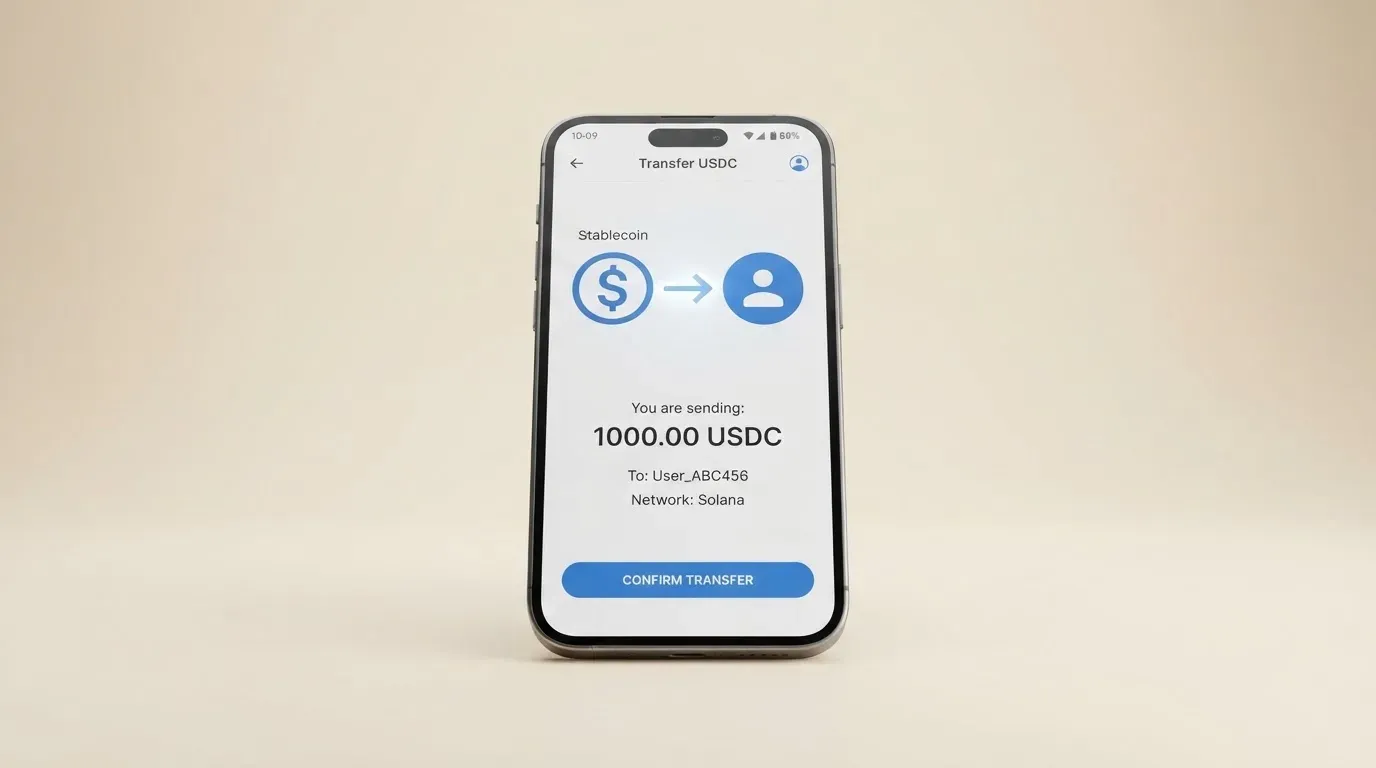
Unofficial detail worth knowing (CryptoCardHub, 11 Aug 2026): the crypto buy fee is 0% on all plans; an external-card top-up after the plan’s allowance is 1.5%; voucher reloads run 0%–6%; crypto top-ups are capped at EUR 20,000 a day; and for external-wallet top-ups you generate a new address each time, which is good practice against address-reuse errors.
On the mechanics of buying crypto: whether you can hold crypto in the app and send it to or receive it from an external wallet is not stated on the pages I read. Unofficial reporting indicates that the in-app crypto function is buy and sell only — you cannot move coins to or from an external wallet through it. That reframes what the card is: it is a euro spending account you fund by buying crypto, not a self-custody wallet with a card attached. Card cancellation and balance management at expiry are reported at EUR 0; a third-party external transfer EUR 1.50.
Paying with it every day
This is where the card earns its best mark, 9 out of 10. You get a physical and virtual Visa with a European IBAN, and spend a euro balance loaded from crypto. For ordinary shopping, subscriptions and everyday budgeting, it behaves like a normal prepaid card, and the mobile-wallet experience is the modern convenience most people actually notice day to day.
On wallets: which mobile wallets work is not stated officially. Unofficial, current help material (CryptoCardHub, 11 Aug 2026) confirms Apple Pay and Google Pay; Samsung Pay was announced earlier but has no current setup guide. So Apple Pay and Google Pay you can rely on per that source; Samsung Pay I would not plan around.
On rewards: the plan services list “Cashback up to 15%,” with the Move plan mentioning cashback at favourite brands. What asset it is paid in, and the conditions attached, are not stated. Treat the 15% as a headline to check the small print on, not as income you can bank on.
On the app: it is iOS and Android. Ratings are not stated on the official pages, though unofficial figures on Google Play sit around 2.8–2.9 out of 5 (the page shows slightly different numbers and no rating count). A mid-2s app rating is not a dealbreaker, but it is not the polish of a mainstream banking app either.
On disputes and blocked spending: what happens when a payment is declined or a chargeback is filed is not stated. This matters more than it first seems, because a prepaid card with an unclear dispute process can leave you with little recourse if something goes wrong.
What can go wrong
This is the section that drags the score down hardest, and it deserves to be read twice.
The official picture first, because fairness matters: the card’s own pages list no official incidents. But user reports tell a very different story. On Trustpilot, the Bitsa profile shows 1.3 / 5 from 363 reviews, with 68% one-star. The themes in those reviews are consistent and serious:
- Accounts frozen or blocked with funds withheld. Reviews dated from September 2020 to September 2026, including May, July and September 2026, describe money held after deposits.
- Support unresponsive for weeks or months, including a July 2026 report.
- Repeated document and KYC demands, reported in 2025.
- Crypto top-ups partly or not credited, reported in May and November 2025.
- Login or app failures, September 2026.
- Unexplained account closure, January 2025.
Two reviewers claim regulator warnings, though that is unverified and dated 2025. The company has not replied to negative reviews. I want to be careful here: I did not find a Bitsa Reddit thread or a second review platform to corroborate, and one unverified aggregator was my only secondary source. So treat this as a strong signal rather than proven fact — but a 68% one-star rate on 363 reviews is a strong signal by any reading.
On the company and who stands behind the card: officially, “BITSA is a simplified joint stock company (SAS) registered in the Nice Trade and Companies Register” (France). The card issuer or BIN sponsor is not named on the pages I fetched — the footer links to “Card issuer conditions” and “Payment service provider” but those I did not read — and licences are not stated. Unofficial reporting names the issuer as Pecunia Cards EDE S.L.U. under the PecunPay programme, on Banco de España register 6707, with Bitsa SAS as the programme operator.
Why does the issuer matter? Because a Visa card is issued by a licensed institution, not by the brand you see on the app. Knowing which institution holds your balance and under whose rules it can be frozen is exactly the information that tells you how exposed you are in a dispute like the ones above.
On security and support: the official pages do not state either. Unofficial detail indicates the model is custodial after funding — your euro card balance sits inside the PecunPay programme — with an SMS code plus a personal SCA secret for online purchases and sensitive changes, and cards can be blocked in the app. No support channels or response times are published on the review page, and reviewers report slow or absent replies. An SMS code plus an app is a reasonable baseline, but it is not a guarantee, and frozen-account reports suggest the failure mode here is account-level, not transaction-level.
What to take instead
If Bitsa is not quite the right shape for you, three alternatives came up in the same category, each with a different trade-off:
| Card | Score | Cost shape | Main catch |
|---|---|---|---|
| International Visa Card | 6.7 / 10 | $5 virtual issuance, no maintenance; plans Classic free, Pro $9/mo, Max $19/mo | 2% FX fee; USD-based; not available in a long list of countries |
| UNi Card | 6.1 / 10 | “No annual fee” and no foreign transaction fee | Spends from a UNi.Global balance; eligibility not stated |
| Whop Cards | 5.2 / 10 | “No extra fees” | US-state based; balance model, not a general spending account |
International Visa Card scores highest of the three at 6.7. It is a US-issued Platinum Visa, virtual (physical “coming soon”), paying in USD. You deposit USDC or USDT at 1:1 free, plus USD, EUR, SEPA, SWIFT and FedNow. Its catch: a 2% FX fee on foreign-currency use, and it is not available to residents of Belarus, mainland China, North Korea, Cuba, India, Iraq, Iran, Israel, Myanmar, Nepal, Nicaragua, Russia, Syria, Turkey, Ukraine, Venezuela or Vietnam. No cashback is stated.
UNi Card at 6.1 is the “no fee” option: a multicurrency Mastercard spending from a UNi.Global balance, with no annual fee, no foreign transaction fee, live OTC conversion rates and “no hidden exchange fees.” Rewards are “spend-to-earn” up to 3%. Who can get it is not stated, which is the same gap that holds Bitsa back on access.
Whop Cards at 5.2 is a Visa for a narrower crowd: 31 US states for consumers, 41 for businesses, with a list of unsupported countries. It spends from a Whop balance, offers 5% cashback at select merchants (currently Uber), and its cost page simply says “No extra fees” with no amounts. Its balance model suits freelancers selling on the platform more than general daily spending.
My honest comparison: if your priority is the lowest published cost with a multicurrency balance, UNi Card reads better on paper; if you want a USD card with the widest stated availability framework, International Visa Card scores higher; if you sell on Whop, its balance and cashback may suit you specifically. But each of these carries its own not-stated gaps, so I would not treat any of them as risk-free on the strength of a comparison table.
Who I would recommend it to
Bitsa is a well-designed everyday spending tool with a real weakness underneath, and the right answer depends on which of those matters more to you.
I would recommend it to EU residents who want a prepaid Visa with an IBAN, who are comfortable topping up with crypto, and who will not be devastated if a support ticket goes unanswered for a while. For that person it is genuinely convenient: a clean app, Apple Pay and Google Pay, and a euro balance that behaves normally day to day.
I would not recommend it as your only card, and I would hesitate if you are in a restricted country, if cheap foreign spending is central to your life (the 1.75% / 2% international fees are real), if you plan to use ATMs abroad often, or if you intend to hold crypto on the platform and treat it like a wallet. The unstated conversion spread, the unstated eligibility list and the frozen-account reviews are three separate reasons to keep a backup.
Read it this way: the card is a good front door for a euro balance, and a poor vault. Keep only what you are willing to see frozen, and check the four unknowns — the conversion spread, the country list, the issuer terms and the support response time — for yourself before you load it with meaningful money.
Frequently asked questions
What is Bitsa card?
Bitsa is a prepaid Visa crypto card with a physical and a virtual version. You convert crypto into euros, and the card spends that euro balance, with a European IBAN attached. It is managed through an iOS and Android app. It is a prepaid card, not a bank account, and the crypto you load is converted before you spend it.
How does the Bitsa card work?
You top the card up — by crypto, bank card, SEPA transfer, wallet or voucher — and the money sits as a euro balance you spend like any prepaid Visa. Purchases draw down that balance, so the card cannot overdraw it. The catch is the cost of getting in: reloading by external card is 1.5% on non-free plans, and if you fund with crypto a conversion spread applies that the card’s public pages do not state.
Is Bitsa a bank?
No. Bitsa describes itself as a simplified joint stock company (SAS) registered in the Nice Trade and Companies Register in France. The actual card issuer is a licensed institution — unofficial reporting names Pecunia Cards EDE S.L.U. under the PecunPay programme — while Bitsa is the programme operator and front-end. It is a payment product, not a place to keep a bank balance.
Who owns Bitsa?
Officially, BITSA is a French SAS registered in Nice. The card issuer or BIN sponsor is not named on the pages I read; the footer links to card issuer conditions and a payment service provider that I did not read. Unofficial sources name Pecunia Cards EDE S.L.U. as issuer on Banco de España register 6707, with Bitsa as programme operator. Who holds your balance matters when an account gets frozen.
Does the Bitsa card require KYC?
Whether KYC is required is not stated on the card’s official public pages. Unofficial reporting describes proof of residence in an eligible country plus identity verification, with ages 16–17 via a “Bitsa Young” route with guardian authorisation. The same source says the issuer can suspend accounts over failed KYC, fraud or AML risk, or missing source-of-funds documents. Expect to be asked for documents, more than once.
How much does the Bitsa card cost?
The physical card is EUR 20 and a virtual one EUR 2.50. Plans are Free at EUR 0, Move at EUR 0.99 a month, and Pro at EUR 9.99 a month. On top of that, reloading by external card costs 1.5% on non-free plans, international payments cost 1.75% outside the euro zone and 2% elsewhere, and an ATM withdrawal abroad costs EUR 0.55 plus 1%. The crypto conversion spread is not stated.
How do I top up the Bitsa card?
You can add money with Bitcoin, Ethereum or USD Coin, or by bank card, SEPA transfer, wallet or voucher. The app shows you an address to send crypto to. Unofficial detail says the crypto buy fee is 0% on all plans and crypto top-ups cap at EUR 20,000 a day. The networks are not named officially, so confirm in the app which one to use before sending, and use a fresh address each time.
Is the Bitsa card safe?
It is safe in the ordinary sense — SMS codes, an SCA secret for online payments, and instant card blocking in the app — but it is custodial after you fund it, meaning the euro balance sits inside the payment programme, not with you. It is also not backed by a deposit guarantee. Against that, users report frozen accounts and withheld funds on Trustpilot. Use it for spending, not as a place to park money.
Can I use the Bitsa card in my country?
Bitsa does not publish an official country list, so this is the hardest question to answer from the card’s own materials. Unofficial reporting points to residents of 27 EEA countries, with Bulgaria, Canada, Croatia, Latvia, the United Kingdom and the United States listed as restricted. If you are outside the EEA, assume it is unavailable until Bitsa confirms otherwise.
Is the Bitsa card worth it?
Worth it if you want a prepaid euro Visa with an IBAN and mobile-wallet convenience, and you are relaxed about fees and about support that may be slow. Not worth it if cheap foreign spending matters (1.75%–2% per international payment), if you use ATMs abroad, or if you want to hold crypto yourself. The low 1.3/5 Trustpilot score is the thing to weigh before you load real money.
App and neobank card fees – cryptocardfacts
Content created by the «cryptocardfacts» team