
One virtual Visa, USDT-funded, 4.9 out of 10
 Available in US
NoOnes is not really a bank card in the way your local bank issues one. It is a single virtual Visa denominated in US dollars, paid for out of a USDT balance you hold inside the platform. That single sentence explains most of what follows — the strengths and the gaps. If you spend USDT, or if an ordinary bank card is not something you can easily open where you are, the design makes sense. If you want a card with metal, rewards tiers, multiple currencies or a physical piece of plastic in your hand, this is not that card, and the platform says so plainly: there is one tier, one card format, one currency.
Conditions are current as of October 28, 2026.
I gave it 4.9 out of 10. That is not a verdict of “avoid” — it is a verdict of “narrow, and honest about being narrow in some places and silent in others”. The score breaks into six parts below. The conditions I describe were verified on 20 October 2026 and the public-review figures were read on 21 October 2026.
| Criterion | Mark | Why |
|---|---|---|
| Who can get it | 7 / 10 | Any country where NoOnes operates except restricted jurisdictions, judged by account country; card launch covered Ivory Coast, Kenya, South Africa |
| Cost | 4 / 10 | Activation 1 USDT; purchases outside the USA 3% + $0.50; top-up 2 USDT under $100 and 1.5% from $100; contactless payment 0.25% |
| Top-up options | 5 / 10 | Only the USDT wallet balance of NoOnes — buy, convert or deposit USDT; networks not named |
| Reliability and complaints | 4 / 10 | Issuer and licences not named; Trustpilot 2.9/5 from 1,131 reviews; custodial wallet |
| Everyday use | 4 / 10 | Virtual USD Visa only; Apple Pay, Google Pay and cash machines not disclosed |
| Total | 4.9 / 10 | One functional virtual card, narrow on cost and quiet on the details you would need to rely on it |
The audience that seems to be served best is the peer-to-peer trader paying with USDT out of the NoOnes wallet, and if that is you, the arithmetic below is the part worth reading. If you are looking for a everyday banking relationship, keep scrolling to the alternatives — there are better-shaped options.
Will they give you the card?
Yes, in any country where NoOnes operates, with restricted jurisdictions excluded, and the country that counts is the one on your account — not where you happen to be sitting and not your citizenship. Russia and Belarus both appear on the unavailable list, alongside Afghanistan, Cuba, Iran, Iraq, North Korea, Syria, Venezuela and others. Ukraine is restricted only for Crimea, Donetsk and Luhansk. The launch press release of 31 May 2024 named Ivory Coast, Kenya and South Africa as the first places with the virtual USD Visa card, so that is the visible shape of the footprint rather than a full country list.
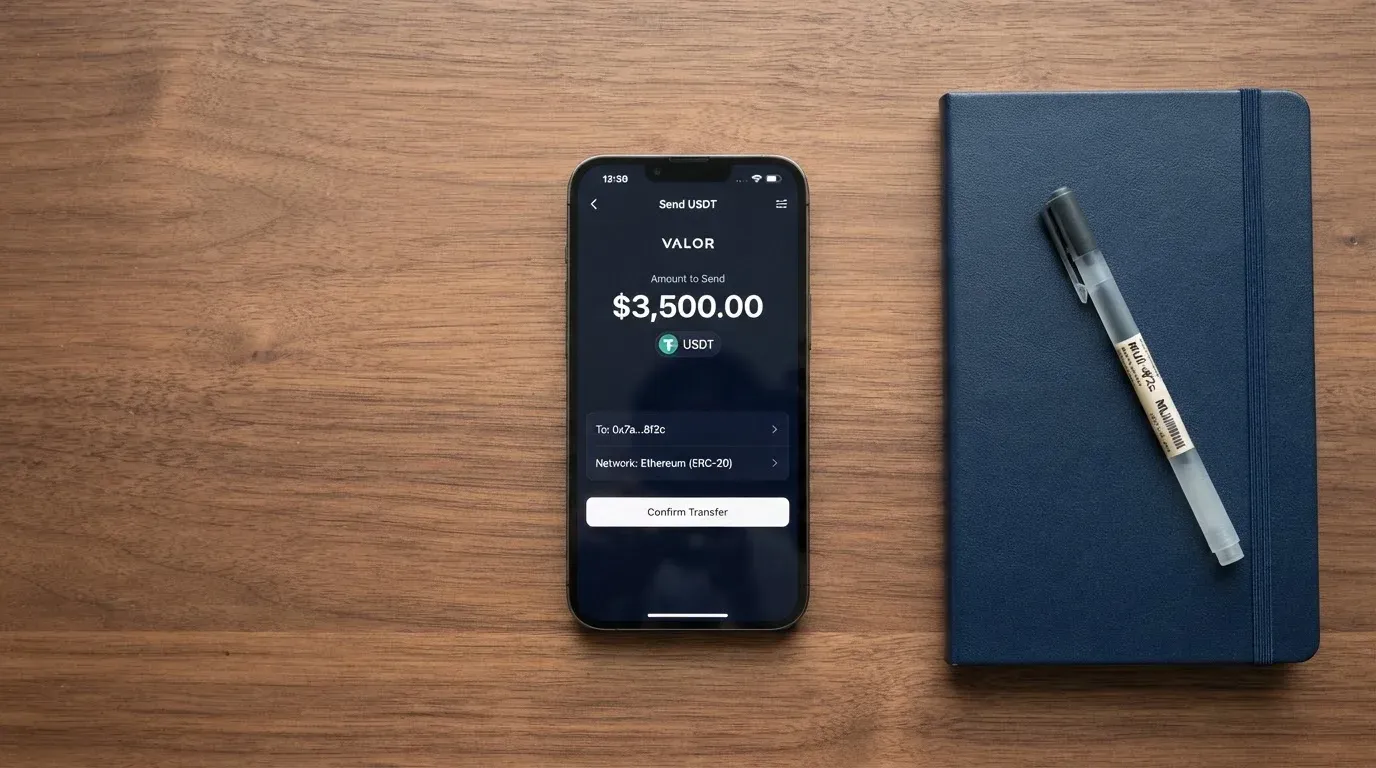
Two things are worth holding onto as you read this. First, the platform describes itself as Nigerian-founded, and the card issuer is described only as “our virtual card provider” — the name is not disclosed, and no licences are stated. That matters more than it might sound. A card number always belongs to somebody who is licensed to issue it, and that somebody is who you would deal with in a dispute. Second, availability is not the same as usability: being accepted for an account says nothing about whether the shops you want to buy from will take the card.
KYC, then, is the price of admission rather than an optional extra.
How to get it
The route is short and it runs through identity checks. You create an account with a verified email and phone number, complete identity verification at level 2, and consent to sharing your ID with the card issuer. That consent point is not cosmetic — the issuer is a separate institution, and your documents leave the platform to reach them. After that comes the deposit step, and then the card.
What sits above the basic level is worth knowing before you plan around it. Address verification is required before you can top up more than $500 in total, and before you can spend up to $50,000. So the spending ceiling you will hear about is not available on day one; it is unlocked by a further document check. The minimum age is not stated on the public pages I could read, and neither are the processing times or the reasons a verification might be refused — you are told the steps but not the timetable or the failure modes.
The card itself is virtual, Visa-branded and denominated in US dollars, and it is described as ready in under five minutes. There is no physical card. You can hold up to three active cards at once.
Fees: what it really costs to spend
This is the section where a card like this usually surprises people, so I will give you the full list before the examples. The single most important line is the one you will pay most: purchases outside the United States cost 3% plus $0.50 per transaction, and the card attributes this to the issuing bank rather than to itself.
| Fee or limit | Value |
|---|---|
| Card activation | 1 USDT |
| Monthly fee | None listed |
| Purchase outside the USA | 3% + $0.50 per transaction (set by issuing bank) |
| Contactless payment | 0.25% |
| Failed payment | 0.75 USDT on the 2nd and 3rd attempts |
| Conversion fee | Not listed (card funded in USDT) |
| Cash machine | Not stated |
| Spending limit | Up to $50,000 (with address verification) |
| Card creation | $3 minimum, $500 maximum |
| Minimum balance | $1 to keep the card active |
Three everyday payments, so you can see the shape rather than the headline:
- A $20 top-up at a neighbourhood café abroad. Add 3% of $20, which is $0.60, plus $0.50. You pay $21.10 for a $20 coffee run, plus whatever the café charges. That is not a rounding error.
- A $12 contactless payment in a shop outside the US. The 3% + $0.50 applies, and on top of that the contactless fee of 0.25% — so 12 + 0.36 + 0.50 + 0.03, roughly $12.89 of your balance for a $12 purchase.
- A failed $40 payment, then a retry. If the second attempt also fails, 0.75 USDT is charged. On a small transaction that can be the difference between a wasted try and a real cost.
What is not on that list is as informative as what is. There is no conversion fee listed because the card is funded in USDT and denominated in US dollars — you are converting at the moment you move crypto into the balance, not at the till. Multi-currency balances are not described. Cash machine use is not stated. And if your money arrives in naira, reais or roubles rather than dollars, there is a second conversion somewhere that this table does not show.
How to top it up
The card spends one thing: the USDT balance in your NoOnes wallet. There is no separate card balance to fund and no direct bank transfer into the card. You get USDT into the wallet in one of three ways — you buy it on the platform’s Marketplace, you convert crypto you already hold, or you deposit USDT from elsewhere. The homepage additionally mentions crypto, mobile money and banks as routes in, though fees for those are not stated.
The cost of putting money in:
- Top-ups under $100 cost 2 USDT.
- From $100 upwards the fee is 1.5%, with a 2 USDT minimum.
- Fees are paid in USDT.
- Networks are not stated.
That last point deserves a warning, because it is the one detail that can cost you real money and there is no way to read it off the public pages. USDT exists on several blockchains — Ethereum, Tron, Solana, Polygon, Avalanche among the ones Tether has issued it on — and blockchain transfers are irreversible. If you send on a network the platform does not support, or to an address belonging to a different network, the funds can be lost or need manual recovery with no guarantee attached. Ask support which networks are accepted for this card before your first deposit rather than after it.
Getting money back out is the reverse and, pleasingly, the free part. Card withdrawals are free and land in your Tether wallet as USDT. You can withdraw the balance minus $1, which is also the minimum balance required to keep the card active. Two timing rules apply: withdrawals and termination are blocked for 72 hours after your last card activity, and the Terminate option appears once the balance falls below $2, with the remainder going to the Tether wallet.
Paying with it every day
Everyday use is where this card is thinnest, and the honest answer is that the platform’s public pages describe very little of it. Apple Pay and Google Pay support is not stated. Blocked merchant categories are not stated either — the only blocked-category information I found concerns e-mail domains at sign-up, which is a different thing entirely. Whether you can add this card to a phone wallet is therefore not something I can tell you yes to on the strength of published information.
Apps exist for Android and iOS, which is the floor rather than the ceiling. There is no cashback or rewards scheme mentioned. Dispute handling for card payments is not stated, and that is the one omission that could actually cost you money in a bad month.
A little category background helps you predict the friction. A merchant category code is the four-digit number that classifies a business, and gambling sits under one such code (7995) that many issuers block on specific cards as policy rather than law, with the blocked list differing by issuer. Address verification, which compares the numeric parts of a billing address the buyer typed against issuer records, is mainly offered in the US, Canada and the UK and is generally unavailable for foreign-issued cards — a common cause of a decline. Some shops decline prepaid or foreign-issued card numbers outright, because the issuer’s BIN can be looked up. And a declined authorisation can leave a hold on your funds for several days, typically up to seven. None of that is a NoOnes-specific warning; it is what happens to virtual prepaid cards as a category.
What can go wrong
Let me separate what is documented from what is missing, because the missing part is larger.
Documented and checkable:
- Trustpilot 2.9/5 from 1,131 reviews (read 21 October 2026). The complaint themes are P2P disputes closed without explanation (August 2026), gift-card trade failures (April to August 2026), and slow or unanswered support (July to September 2026). Notably, only one review mentions the Visa card at all — most of the dissatisfaction is about the marketplace business, not the card.
- One card-specific report, July to August 2026: a user says the virtual card disappeared. NoOnes replied that technical issues affecting access to the Virtual Visa Card had been resolved.
- Custodial by design. Your funds sit in the NoOnes wallet, so you depend on the provider holding them. The industry record here is not encouraging as background: Mt. Gox (about US$350 million reported stolen, 2011–2014), Coincheck (about US$400 million, 2018), Ronin Network (US$625 million, 2022). The platform describes “advanced encryption and fraud detection on every payment”; freeze controls and spending controls are not stated, so do not assume you have instant card-freeze or daily caps.
- Support is 24/7 via a help centre and contact form. Languages are not stated.
Not disclosed on the public pages, and each item is something you would want before relying on this card:
- Who the issuing bank is, and under which licences anyone here operates.
- Whether Apple Pay, Google Pay or cash withdrawals work.
- Whether merchant categories are blocked.
- The networks for USDT deposits.
- Conversion fees, cash machine fees, dispute process for card payments, and how long verification takes.
One structural point about the card itself, for context: Visa and Mastercard do not issue crypto cards to consumers. They license issuers, and they can suspend a programme. WaveCrest, a Visa issuer that supplied crypto card brands, was suspended by Visa in Europe in 2018, closing all WaveCrest-issued Visa programmes. Closures typically run in a fixed order — notice, then spending and loading stop, then a request to withdraw remaining balances. That is why the 72-hour rule and the free withdrawal matter more than they appear: they are how money leaves.
What to take instead
Comparing a narrow card against two alternatives from the same scene is the fairest way to see whether the gaps matter to you. All three scores are on the same scale: Young Card 5.7/10, MSX 6.4/10, Bybit Card 6.0/10, against NoOnes at 4.9/10.
| NoOnes | Bybit Card | Young Card | MSX | |
|---|---|---|---|---|
| Score | 4.9 / 10 | 6.0 / 10 | 5.7 / 10 | 6.4 / 10 |
| Card | Virtual USD Visa | Virtual and physical, by region | Not stated officially | Not stated officially |
| Where | Any operating country except restricted | Named region list; EEA customers strictly prohibited | Not stated | Not stated |
| Own balance | NoOnes USDT wallet | None of its own; draws on Funding Account | Not stated for the card | Not stated |
| Rewards | Not stated | Tiered cashback, up to 10% | Cashback in YNG tokens, 0.1%–3.6% by Club tier | Not stated |
Bybit Card is the strongest of the three on paper, and the differences are structural rather than cosmetic. It offers virtual and physical cards (a virtual card must be obtained first; the physical card is not available in Peru and is rolling out in phases), across a named region list — Argentina, AIFC in Kazakhstan, Georgia, Kazakhstan, Australia, Mexico, Brazil, Peru and Asia Pacific — with network and currency varying by region: Mastercard prepaid in Argentina, Mastercard credit in AIFC, Georgia, Kazakhstan, Australia and Mexico, Visa prepaid in Brazil and Peru, Visa credit in Asia Pacific. Card currencies include USD for AIFC, Georgia, Kazakhstan, Australia and Asia Pacific, plus ARS, MXN, BRL, and PEN or USD for Peru. Virtual card issuance is free in all regions “until further notice”, with no annual fee listed; physical issuance ranges from 5 USDT in Argentina and Asia Pacific to 29.99 USD in Australia and 29.99 USDT in Georgia and Kazakhstan, and is free in Brazil and Mexico. The catch is its own complexity and its own rules: crypto conversion runs 0.9% over the One-Click Sell rate in most regions, FX fees run 2% on top of the network rate in Australia, Asia Pacific, Georgia and Mexico, 7% in Argentina, 1.5% in Brazil, 1% in Peru, and Kazakhstan charges a 2% international fee on purchases outside Kazakhstan even in dollars. There are also Argentine taxes on top. And its help centre states plainly that the product is not meant for European Economic Area customers and that all EEA participation is strictly prohibited, while its fiat-service restricted list includes Belarus and the Russian Federation.
Young Card publishes almost nothing about how the card itself works — eligibility, format, cost and fees are all not stated officially — which makes it hard to evaluate on anything but its rewards: cashback paid in YNG tokens at 0.1%, 1.8% and 3.6% depending on Club tier, with two tiers not stated. Token-denominated rewards are a different thing from cashback.
MSX scores highest of the four, and I could not find official statements on eligibility, card format, cost, fees or funding for it either. On the evidence available, that is not a reason to prefer it.
The pattern across all of these is the honest conclusion: in this category, the published detail is thin almost everywhere. NoOnes is thin on country list, networks and wallet support; Bybit is thick on all of those and correspondingly more complicated; Young Card and MSX are thin in a way that leaves you unable to plan. Your real choice is between a simple narrow card and a fuller but heavier platform.
Who I would recommend it to
I would recommend NoOnes to someone whose money is already in USDT, who needs a card number rather than a bank account, who mostly spends outside the United States while understanding that this costs 3% plus $0.50 a time, and who is comfortable holding funds in a custodial wallet. If your activity is peer-to-peer trading paid out in USDT, this card is aimed squarely at you and the marketplace around it is the actual product.
I would not recommend it to you if any of the following is true: you want a physical card; you rely on Apple Pay or Google Pay; you need cash machines; you want more than one tier, one currency and one virtual Visa; you want to name the bank that stands behind the card; or you intend to hold a large balance long-term and would rather hold the private key yourself.
Before you commit, check four things yourself: which USDT networks are accepted for deposits, what the issuer is, whether your own country of residence is on the restricted list, and how long a dispute actually takes. If you need the answer to a question about how the money leaves, that is easier here than in most of this category — withdrawals are free and go to your Tether wallet, minus $1.
One thing I will not do here is tell you what your tax position is. A card payment funded from crypto can be a taxable disposal in some jurisdictions, and that is advice I am not able to give.
Frequently asked questions
What is NoOnes card?
NoOnes is a platform with a USDT wallet, and the card is the payment front end for that wallet. What you get is one virtual Visa denominated in US dollars, funded from your USDT balance, with no physical card offered. There is a single tier, and up to three active cards at once. It launched in Ivory Coast, Kenya and South Africa on 31 May 2024.
Is NoOnes a bank?
No — or at least, it does not present itself as one. NoOnes is described as Nigerian-founded, and the issuer behind the card is called “our virtual card provider” without being named. No licences are stated on the public pages. It is best understood as a crypto platform that runs a card programme through a separate licensed issuer.
Who can get the NoOnes card?
Anyone in a country where NoOnes operates, excluding restricted jurisdictions, judged by your account country. Russia and Belarus are on the unavailable list, along with Afghanistan, Cuba, Iran, Iraq, North Korea, Syria and Venezuela. Ukraine is restricted only for Crimea, Donetsk and Luhansk. You need a verified email and phone, ID verification, and consent to share your ID with the issuer.
How do I get and activate the NoOnes card?
Create an account, complete identity verification at level 2, deposit to the card, and pay the 1 USDT activation. The card is virtual and described as ready in under five minutes. Address verification is needed separately before you can top up more than $500 in total or spend up to $50,000.
How do I top up the NoOnes card?
You add USDT to your NoOnes wallet balance — by buying it on the Marketplace, converting crypto you hold, or depositing USDT. Top-ups under $100 cost 2 USDT; from $100 the fee is 1.5% with a 2 USDT minimum. The homepage also mentions mobile money and bank routes, but their fees are not stated, and the accepted USDT networks are not named.
How much does spending the NoOnes card cost?
Most of the time you are paying 3% plus $0.50 on purchases outside the United States, set by the issuing bank, and 0.25% on contactless payments. A failed payment costs 0.75 USDT on the second and third attempts. There is no monthly fee listed and no conversion fee, because the card is funded and denominated in USD.
Can I add the NoOnes card to Apple Pay?
I cannot tell you that you can, because the public pages do not say. Apple Pay and Google Pay support is not stated, and the platform does not list it as a feature. If a phone wallet is essential to how you pay, treat this as unverified and ask support before you rely on it.
Is the NoOnes card safe to use?
It is custodial, so your USDT is held by the provider rather than by you, which means you are trusting them. The platform cites encryption and fraud detection on every payment, but freeze and spending controls are not stated. Its Trustpilot score is 2.9/5 from 1,131 reviews, though those complaints are mostly about P2P disputes and support rather than the card itself.
What are the limits on the NoOnes card?
Spending goes up to $50,000, but only after address verification. Card creation allows between $3 and $500. You must keep a minimum balance of $1 or the card loses its active status, and you can withdraw the balance minus $1. Withdrawals and termination are blocked for 72 hours after your last card activity.
What happens if I want to leave?
Card withdrawals are free and go to your Tether wallet as USDT, and the Terminate option appears once your balance falls below $2, with the remainder sent to the Tether wallet. The card is auto-terminated after three failed payment attempts. Nothing here requires you to ask permission, which is unusually clean — but it does mean the money lives in the platform wallet until you pull it out.
Exchange card fees – cryptocardfacts
Content created by the «cryptocardfacts» team