
What a Kontigo card actually does — and what it doesn't
 Available in US
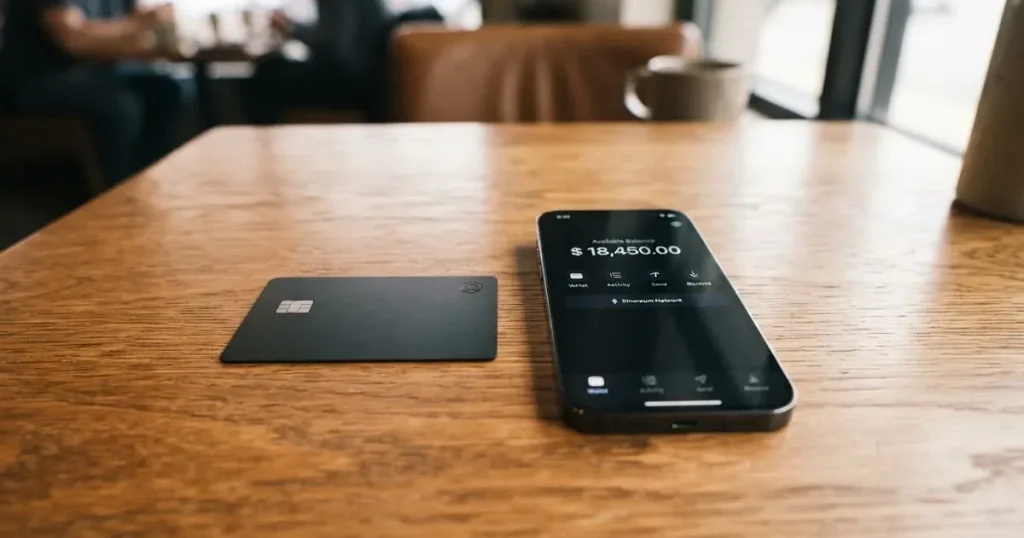
If you have ever tried to open a normal bank account and been turned away, the idea of a payment card tied directly to a stablecoin balance is appealing. Kontigo pitches itself as a “first international credit and debit card in USDC that earns yield,” with users in Latin America as a clear target audience. I went through the card’s public pages, terms, developer documentation, user reports and what third-party sites have written about it. What follows is what I found, what the card does well, where it leaves you guessing, and who I think it actually suits.
Conditions are current as of October 28, 2026.
Verdict
Kontigo gets 4.7 out of 10 in my scoring. That is a below-average mark for a crypto card, and the reason is straightforward: the card’s own website leaves almost every practical question unanswered. The countries where the card is issued, the network it runs on, the fees you will pay at a shop or an ATM, the daily and monthly spending limits, the card form factor and the issuer behind the BIN are all either not stated or hidden inside the app. I can only mark a card on what its public pages actually tell me.
Where the card does score, it does so on a narrow pitch. It positions itself as a USDC card that pays yield on the balance, runs the app on Base, and targets users in Latin America. For a person in, say, Argentina or Mexico who already holds USDC and wants to spend it without first selling to local currency, that pitch is genuinely interesting. For anyone outside that picture — anyone who needs a card with published fees, clear support, a named issuer and transparent limits — the same lack of disclosure is a deal-breaker.
| Criterion | Mark | Why I scored it this way |
|---|---|---|
| Who can get it | 5 / 10 | Card countries are not stated; terms only say availability depends on country of residence and exclude sanctioned and high-risk jurisdictions |
| Cost | 5 / 10 | Fees and spreads are shown only in the app; the site only says sending, receiving and topping up in USDC is “without commissions” |
| Top-up options | 4 / 10 | Card purchases are paid from a USDC balance and the app runs on Base; other coins and networks are not named |
| Reliability and complaints | 4 / 10 | Kontigo, Inc. is a Delaware corporation but the card issuer and licences are not named; funds sit in self-custody; unofficial reports of a 340,905.28 USDC drain from 1,005 accounts that the company says it has refunded |
| Everyday use | 5 / 10 | Card form, wallet support and ATM behaviour are not stated; the site only mentions hybrid, credit and debit cards |
Who they will give the card to
The honest answer is that I cannot tell you from the public website, and that is itself a finding.
The card’s terms say availability depends on the country you live in and that sanctioned and high-risk jurisdictions are not permitted. That is standard for a regulated payments product, but it is not the same as a list of countries where the card is actually issued. The Kontigo site footer lists Argentina, Bolivia, Brasil, Chile, Colombia, El Salvador, España, Estados Unidos, México and Perú under a heading that reads “Países,” but that list is not tied to the card specifically. It looks like a general site navigation footer rather than a card eligibility list, and the card’s own page does not say “available in these countries.”
The terms also require identity verification before you can use any of Kontigo’s services. That means name, date of birth, address, nationality, ID documents, possibly financial information, and checks against sanctions and credit databases. One account per user. The card-specific steps after that — what you need to upload for the card, how long it takes, what makes an application fail — are not stated. Developer documentation mentions that deposit methods depend on KYC level, but the actual levels and thresholds are not given.
If you live in a sanctioned country or one the issuer considers high risk, you should expect to be turned away regardless of which Latin American country you see in the footer. If you live somewhere the issuer is happy to take on, the next practical step is to download the app and try — because until you do, the website will not tell you whether you are eligible.
How to get it
The card sits behind a verified account. The terms make verification a precondition for any service, including the card, and verification covers the usual KYC items: name, date of birth, address, nationality, ID documents, possibly financial information, plus sanctions and credit checks. The terms do not describe card-specific steps beyond that — for example, whether you have to upload a separate proof of address for the card, whether there is a separate application form, or how long the card-specific review takes.
The site describes Kontigo as “the first international credit and debit card in USDC that earns yield,” and the footer lists hybrid, credit and debit cards. Beyond that, the card network (Visa or Mastercard), whether the card is virtual, physical, or both, and how the physical card is delivered are not stated. I could not find a published delivery time or a stated shipping fee.
One unofficial Spanish-language source describes a “stablecoin card with Bitcoin cashback” and a promotional 10% USDC yield. I would treat that as marketing material, not a confirmed card feature, because the official site does not repeat it in English-language terms or card pages. If you see it in a promotional post, take the headline and check the in-app terms before you rely on it.
So the practical flow today is: download the app, complete identity verification, see what the app offers for cards, and read the in-app terms before you tap “order.” The website alone will not get you there.
What it really costs: Fees
Here is where the review gets uncomfortable. The card’s own terms say fees, commissions and spreads are shown in the app and may change. The home page says sending, receiving and topping up in USDC is “without commissions.” That is reassuring for the on-ramp, but it tells you nothing about what happens when you actually spend.

The table below summarises what the public site does and does not say. Where the cell reads “not stated,” I mean the card’s public pages do not publish a number.
| Fee or limit | What the card publishes |
|---|---|
| Card issuance | not stated |
| Monthly or annual fee | not stated |
| Conversion / spread | shown in the app; not published on the website |
| Foreign exchange (FX) fee | not stated |
| ATM withdrawal fee | not stated |
| Daily spending limit | not stated |
| Monthly spending limit | not stated |
Let me walk through three everyday situations to show what this gap means in practice.
You are buying coffee in your home country. If the merchant accepts your card currency without conversion, the only cost that could apply is whatever spread the app shows when USDC is converted to the settlement currency. The site does not publish that spread. The only published promise is that topping up in USDC is “without commissions,” which is about getting money onto the platform, not spending it.
You are travelling and paying in a currency other than your card’s base currency. The terms say fiat accepted includes USD and other local currencies shown in the platform, and that liquidated balances may be held in a fiat currency Kontigo chooses. But the card’s base currency, the FX margin, and any flat cross-border fee are not stated. A card that does not publish an FX fee is a card where you cannot tell in advance what your coffee in a foreign airport will cost you.
You are taking cash out at an ATM. The terms do not describe ATM behaviour at all. Whether the card supports ATM withdrawals, what the fee is, whether there is a daily cap, and whether ATM cash advances are treated as credit or debit are all not stated. Help centre topics exist for “Kontigo Cash” and “Niveles Kontigo” (levels), but the content of those pages is not in the public material I worked from.
The bottom line: Kontigo’s costs are real, but the website refuses to print them. You can only see them inside the app, and the terms reserve the right to change them. If published fees matter to you — and for most people they should — that is a reason to keep looking.
How to top it up: Top up
Top-up is the one area where the public site gives you a clear direction. The card is designed to be paid from a USDC balance: user testimonials describe purchases drawn directly from USDC, and a Kontigo article confirms the app runs on Base. The home page says topping up in USDC is “without commissions.”
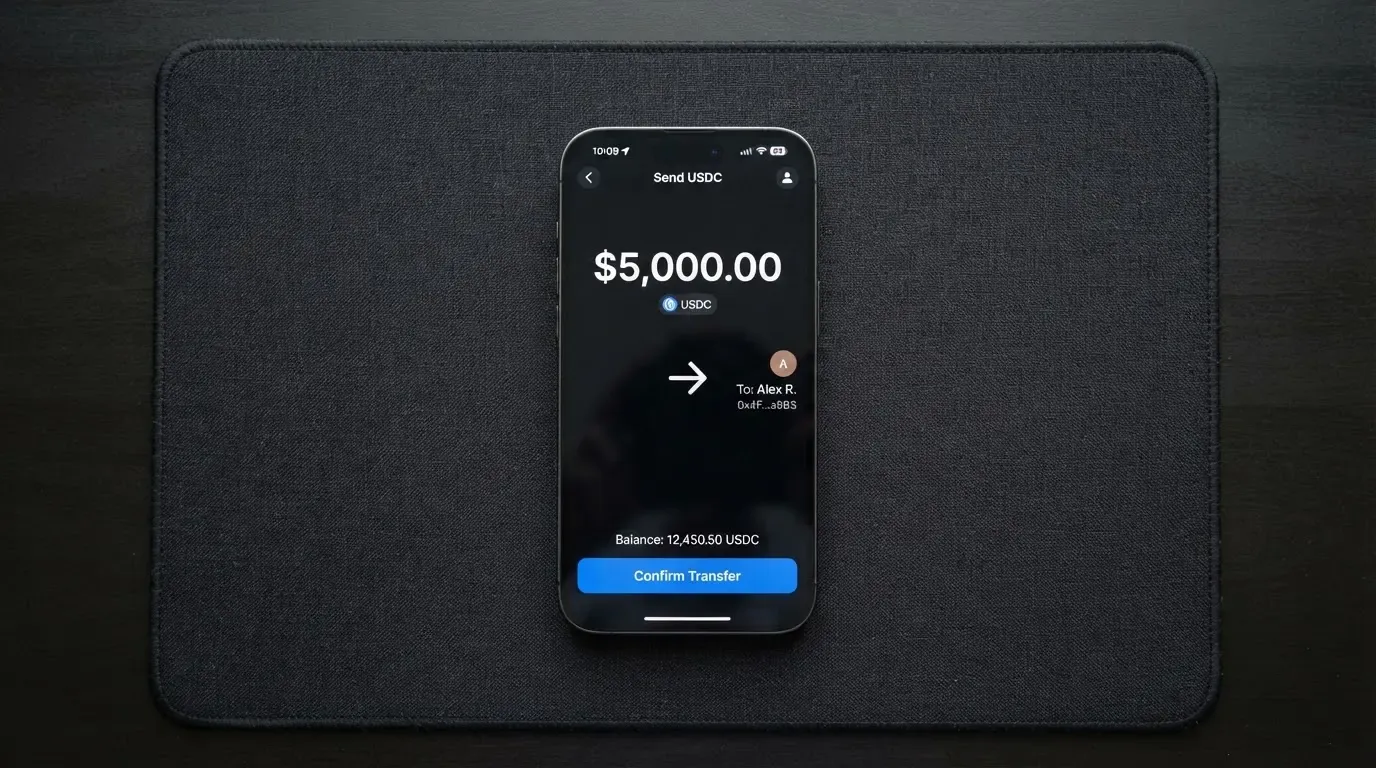
What the site does not say is just as important. Other coins are not named, and other networks are not named. If you hold USDT, DAI, or a non-USD-pegged coin, the public material does not tell you whether you can top up with it directly or whether you would have to swap into USDC first (and on what terms). If you hold USDC on Ethereum, Solana, Polygon or another chain, the public material does not say whether those deposits are accepted, or whether the only supported path is USDC on Base.
For a USDC-on-Base user, the picture is straightforward: send USDC on Base to the deposit address the app shows you, and the balance will fund the card. For anyone else, the path is unclear until you open the app.
The terms cover what happens when you want to take crypto back out. Digital assets can be transferred to external wallets “when that feature is available.” After you close your account, you have a reasonable period — the terms use 30 days as an example — to instruct a withdrawal. If you do not, Kontigo may sell the assets and hold the proceeds in a fiat currency it chooses, paying no interest. To close, you cannot have pending obligations and cannot have a positive balance (or must already have instructed a withdrawal).
The on-chain fee for your deposit is paid to the blockchain network, not to Kontigo. That is standard for any on-chain transfer. It is worth saying out loud because on Base the fees are typically very small, but on Ethereum mainnet they can be large enough to matter for small top-ups.
Paying with it every day
The site markets the card as one that “earns yield,” but the rate, the form of the payout (rewards in USDC, in fiat, in a separate token), and whether there is any cashback at all are not stated. If a yield is paid, you should be able to see it in the app; I cannot tell you what it is from the public site.
Wallet support is not stated. There is no mention of Apple Pay or Google Pay, no confirmation that the card can be tokenised into a phone wallet, and no list of merchant category codes that the card blocks. The site cites “over 10,000” user reviews for the app, but the app store ratings and the substance of those reviews are not in the public material I worked from.
Disputes and unauthorised transactions are covered in the terms, and the rule is more borrower-friendly than I expected. If you have a complaint, the terms ask you to negotiate in good faith for up to 15 business days after written notice, and only then can the matter go to the courts of Delaware. Local consumer protection authorities remain available. Chargebacks are not mentioned. The terms do tell you to report unrecognised transactions as soon as possible, which is the right thing to do whether or not a chargeback right exists.
One Spanish-language unofficial source describes “Bitcoin cashback” on the card. I would not rely on that until you see the same offer inside the app and inside the in-app terms. The official English-language card pages do not state a cashback rate.
What can go wrong
This is the section I would read first if I were you.
The company behind the card is Kontigo, Inc., a Delaware corporation. The card issuer — the bank or e-money institution that holds the BIN and the licence to issue — is not stated. The licences Kontigo itself holds are not stated. The footer says Kontigo does not provide financial services or take deposits, and that assets are held in user custody. That is a meaningful statement, because it means the legal entity holding the card programme is not the same as the legal entity running the app, and the public material does not tell you which licensed institution is on the other side of your transaction.
The custody model is self-custody, with a twist. The footer says users hold assets in their own custody. The terms say assets may sit in a self-custodied wallet or with third-party custodians, and that Kontigo cannot access or recover private keys. You are solely responsible for your credentials, and transactions are generally final. Two-factor authentication, instant card freeze, and insurance against loss are not stated. In practical terms, that means if you lose your seed phrase or your phone, Kontigo’s ability to help is limited to whatever the app supports — and the public material does not describe that support.
A third-party report describes a hack that drained 340,905.28 USDC from 1,005 user accounts, with the company saying refunds were processed. I could not verify the dates or the totals against a primary source, so I am treating this as unofficial. The same third-party channel reported a US$20M seed round in December 2025, which is consistent with a card issuer that is still early in its funding cycle.
I searched Trustpilot and Reddit for Kontigo card complaints and found nothing clearly tied to the card. The Kontigo Trustpilot page that does exist appears to belong to an unrelated brand, and Reddit threads under “Kontigo” were a mix. If the card’s user base is small, the absence of complaints is not the same as evidence of a clean record.
Support is through a help centre FAQ and a WhatsApp contact channel. The terms list communication through in-app messages, push, email, SMS and messaging apps, and do not list a direct phone, chat or email line. Help-centre pages are in Spanish; English article pages exist at /en/article. If you do not read Spanish, your written support will likely go through that English article path, which is a thinner experience than a full localised help centre.
The deepest risk is the combination of self-custody and card payments. With a self-custody-linked card, the funds stay in your own wallet until the moment of payment. If your seed phrase is exposed, your phone is compromised by clipboard-hijacking malware, or you sign a malicious transaction, there is no central authority that can freeze or reverse it. That is the trade-off for not handing your keys to a custodian — and the card’s own terms make that trade-off explicit when they say transactions are generally final.
What to take instead
If the gaps above matter to you, here are three cards I have also reviewed, with their own scores and what they do better or worse.
| Card | Score | What it does | Where it is stronger or weaker than Kontigo |
|---|---|---|---|
| International Visa Card | 6.7 / 10 | U.S.-issued Platinum Visa card, virtual, pays in USD; physical “coming soon” | Stronger because the rules and fees are published: $5 one-time issuance, plans from free to $19/month, USD spending free on all plans, FX at “Visa exchange rate + 2%”. Weaker because the list of unsupported countries is long and the physical card is not available yet |
| UNi Card | 6.1 / 10 | Multicurrency Mastercard that spends from a UNi.Global account balance | Stronger because the card publishes “no annual fee or foreign transaction fee” and a 3% spend-to-earn reward. Weaker because top-up methods and country availability are not stated on the public page |
| Whop Cards | 5.2 / 10 | Visa cards backed by stablecoin collateral from a linked wallet | Stronger because fee language is plain (“no extra fees”) and 5% cashback is published at select merchants. Weaker because the public material does not state the networks, the conversion and FX fees, or the country basis for its eligibility rules |
The pattern in this table is what the Kontigo score is really saying. The other cards publish enough of their mechanics that I can score them on substance; Kontigo publishes the pitch and asks you to read the in-app terms for the substance. For a user who has time to open the app and read carefully, that might be fine. For a user who needs to compare on the website before they hand over KYC documents, it is not.
Who I would recommend it to
If you live in one of the Latin American countries where Kontigo clearly operates, you already hold USDC, you are comfortable holding your own keys, and you do not need published fees or a named issuer to make a decision, then Kontigo’s pitch — a USDC balance that pays yield and spends through a card — is a real product, not just a website. The unofficial reports of a hack and a refund, the small user base, and the lack of a stated issuer mean I would still keep only the amount I am willing to lose on the card, and I would treat any yield number I see as promotional until I see it in writing inside the app.
If you are outside that picture — if you need a card with published fees, named licences, English-language support, wallet tokenisation, or a clear answer about which countries can use it — then this is not the card to start with. The 4.7 out of 10 is the score for a card whose public material does not yet support the kind of comparison shopping most people need to do.
Frequently asked questions
What is the Kontigo card?
The Kontigo card is a payment card tied to a USDC balance held in the Kontigo app, which runs on the Base network. The card is marketed as “the first international credit and debit card in USDC that earns yield,” and the site footer mentions hybrid, credit and debit cards. The card network and whether it is virtual, physical, or both are not stated on the public site.
How does the Kontigo card work?
Card purchases are paid directly from your USDC balance. The app converts USDC to the settlement currency at the time of purchase, at a rate shown inside the app. The site does not publish the conversion spread or any FX fee, and reserves the right to change fees over time. On-chain deposits are settled on Base.
Is Kontigo a bank?
No. The footer of Kontigo’s own site says Kontigo does not provide financial services or take deposits. Kontigo, Inc. is a Delaware corporation that runs the app; the licensed card issuer behind the BIN is not named on the public site.
Who owns Kontigo?
Kontigo, Inc. is a Delaware corporation. A third-party report describes a US$20M seed round in December 2025, but I could not verify the investor names or the total against a primary source, so I am treating that as unofficial. Beneficial ownership is not stated on the public site.
Is the Kontigo card available in my country?
The card’s terms say availability depends on your country of residence and that sanctioned and high-risk jurisdictions are not permitted. The site footer lists Argentina, Bolivia, Brasil, Chile, Colombia, El Salvador, España, Estados Unidos, México and Perú, but that list is not tied to the card. The only reliable way to check is to download the app and try.
Does the Kontigo card require KYC?
Yes. The terms require identity verification before you can use any Kontigo service, including the card. Verification covers name, date of birth, address, nationality, ID documents and possibly financial information, plus sanctions and credit checks. The terms do not describe separate KYC tiers for the card, although developer documentation mentions that deposit methods depend on KYC level.
How do I top up the Kontigo card?
You top up by sending USDC to the deposit address shown in the app. The card’s app runs on Base, and the home page says topping up in USDC is “without commissions.” Other coins and other networks are not named on the public site, so the only confirmed path is USDC on Base.
Is the Kontigo card free?
The site says sending, receiving and topping up in USDC is “without commissions.” Card issuance, monthly fees, FX fees, ATM fees and spending limits are not stated on the public site; the terms say fees and spreads are shown in the app and may change. In practical terms, the card’s fees are visible only after you sign up.
Is the Kontigo card safe?
The card uses self-custody, which means you hold the private keys and are solely responsible for your credentials. The terms say transactions are generally final. Two-factor authentication, freeze and insurance are not stated. An unofficial third-party report describes a 340,905.28 USDC drain from 1,005 user accounts, with the company saying refunds were processed; I could not verify the dates or amounts against a primary source.
How do I withdraw money from Kontigo?
The terms say you can transfer digital assets to an external wallet “when that feature is available.” After closing your account, you have a reasonable period — the terms use 30 days as an example — to instruct a withdrawal. If you do not, Kontigo may sell the assets and hold the proceeds in a fiat currency it chooses, paying no interest. Closing requires no pending obligations and no positive balance.
App and neobank card fees – cryptocardfacts
Content created by the «cryptocardfacts» team