
Cheap anonymity, unclear accountability
 Available in US
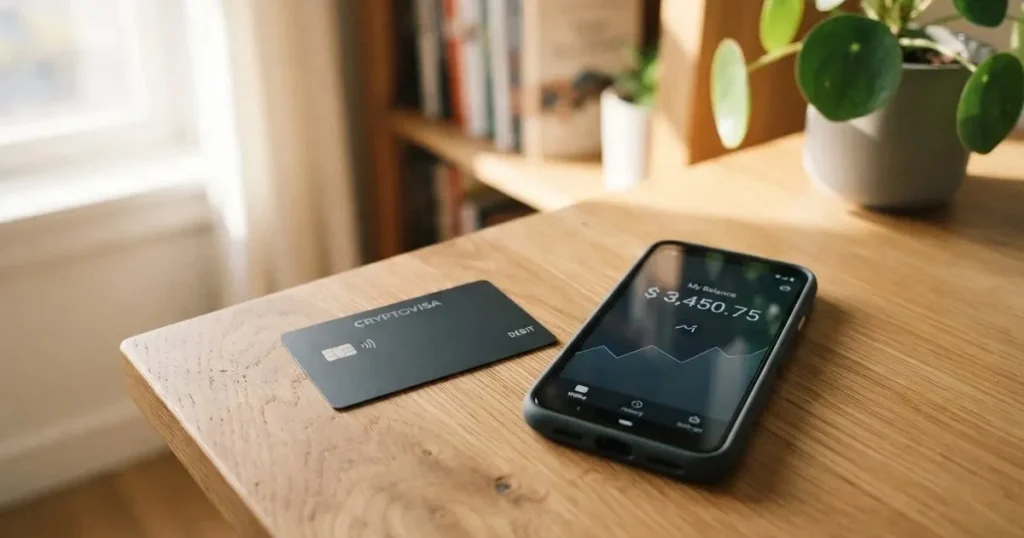
I have read everything the IZIPAY team publishes about its card, walked through the fee and limit claims, and then gone looking for the same information somewhere else — because on this card, the gap between the two is the whole story. My verdict is a cautious yes for one specific person and a clear no for everyone else. IZIPAY is a crypto-funded payment card that asks for an email address, sells four variants from $49.99 to $459.99, charges no monthly fee, and takes a flat 3% on every top-up. On the surface that is a clean, no-frills proposition. Underneath, no legal entity, no jurisdiction, no licence and no issuing bank are named anywhere on the public pages, and the user complaints on Trustpilot I found are the kind that concern people who already lost money. That combination is why my score lands where it does.
The conditions described on this page are current as of October 28, 2026.
Who this suits, in one line: an experienced crypto user who can absorb the loss of everything on the card in exchange for spending from a balance without handing over identity documents. Who it does not suit: anyone whose income, rent or savings depend on the card behaving like a normal bank card, anyone who needs chargeback rights, and anyone who cannot mentally write off the card price as a donation to a stranger.
That last framing matters more than it sounds. Every one of these anonymous prepaid cards asks you to decide how much trust you extend to an entity you cannot name. Usually you can at least find a company register entry and a regulator. Here you cannot, and that changes the arithmetic even when the fees are excellent.
Verdict
My score for IZIPAY is 5.5 out of 10. Not a write-off, not a recommendation — a score that says the product does one job well and the company behind it tells you almost nothing about itself.
| Criterion | Mark | Why |
|---|---|---|
| Who can get it | 6 / 10 | The site says anywhere Mastercard and Visa are accepted and lists no eligibility rules; a third-party catalogue says it is explicitly prohibited for users in the US, UK and EU |
| Cost | 5 / 10 | Virtual Visa and Virtual Mastercard $49.99, Apple Pay Mastercard $59.99, Metal $459.99; $0 monthly, 3% on top-ups; third-party sources say FX is free and the ATM fee is 1% |
| Top-up options | 9 / 10 | USDT, BTC, ETH, SOL, BNB, and USDC too, across TRC20, ERC20, BEP20 and Solana |
| Reliability and complaints | 1 / 10 | Operator undisclosed — no legal entity, licence or issuer named; Trustpilot 4.1 from 59 reviews with reports of lost funds and deleted accounts (March–July 2026) and Telegram blocking; the domain was registered 8 January 2025 |
| Everyday use | 8 / 10 | Virtual Visa, Virtual Mastercard, an Apple Pay Mastercard that works with Apple Pay and Google Pay, and a Metal card for ATM withdrawals; the plain virtual Mastercard works without any mobile wallet |
| Total | 5.5 / 10 | Strong mechanics and pricing, no verifiable company behind them |
The 9 for top-up options is not a rounding error, it is the best thing about the card. You choose the coin and the network from a real list rather than one option. The 1 for reliability cancels most of it out, because the top-up list is worthless if the balance can disappear.
Two things I could not verify and did not assume: who issues the card, and whether the “no hidden spread padding” claim about the 3% means what it sounds like. I read both as claims, not facts.
If you are reading this because your ordinary bank card is not an option, I want to be direct about the trade you are being offered. You are trading legal recourse for convenience. That can be a rational trade when the money involved is money you could afford to lose. It is a bad trade when it is your rent.
Will they give you the card?
Yes, on its own terms, essentially to anyone who can pay — and that is exactly the part that gives me pause.
The official site says the card works worldwide, phrased as “anywhere Mastercard and Visa are accepted”, and publishes no eligibility list at all. There is no country page, no onboarding question about where you live, and no stated criteria for who gets refused.
One thing is unofficial. A third-party crypto card catalogue (cryptocards.so, undated) describes the card as “explicitly prohibited for users in the US, UK, and EU”. I could not confirm that on any IZIPAY page. Treat it as a warning rather than a rule, but treat it seriously: those three markets are where prepaid-card and crypto-card regulation is most specific, and where an issuer working without a visible licence is least likely to want to be found. If you are in one of them, assume the card will not work as advertised rather than assume it will.
- No country list on the official site. “Worldwide” is a claim about where the card is accepted, not about who may hold one.
- Unofficial exclusion list for the US, UK and EU, from a third-party catalogue only.
- No stated residency, age or nationality requirement anywhere on the pages I read. Prepaid and debit cards are generally available to adults aged 18 or over in most markets, some issuers set higher limits, but IZIPAY does not publish its own.
- Not stated: any age floor, any minimum balance, or any criteria used to refuse an application.
If your reason for wanting this card is that a bank closed your account or a payment processor refused you, you should know that you are not in an unusual category here — that is a large share of who anonymous cards are for. The difference is that a mainstream card at least has an ombudsman behind it. This one does not, as far as anyone can see.
How to get it
There is no application form in any meaningful sense. The whole sequence is: email, pay, wait.
IZIPAY markets the card as “No KYC, No ID, Anonymous”. Their own FAQ says that for standard usage limits there is no document upload — only an email address is needed. The stated steps are: pay the card price in crypto, and the card is ready in under 2 minutes once the blockchain confirms the payment.
Four variants, and these are the only variants — there are no tiers, no premium tier, nothing that unlocks with volume:
| Card | Price | What it is |
|---|---|---|
| Virtual Visa | $49.99 | Online card, one-time purchase |
| Virtual Mastercard | $49.99 | Online only, no Apple Pay or Google Pay |
| Apple Pay Mastercard | $59.99 | Adds to Apple Pay and Google Pay, works in stores |
| Physical Metal Card | $459.99 | For ATM withdrawals worldwide |
The Metal card is the one that makes cash possible. Everything else is online spending.
Physical cards ship globally in 7–14 business days. Not stated: the shipping cost, and the cost of a replacement if you lose one. Assume you will have to ask support, and note that support is an AI chat and a Telegram channel — not a phone number.
What does not happen at signup: no identity check, no proof of address, no selfie, no answer about your country. That is the product. But it also means there is no record anywhere linking your email to your legal identity inside the system, which cuts both ways — it protects you, and it leaves you with nothing to present if money goes missing.
One practical note on the Metal card. At $459.99 it costs more than nine Virtual Visa cards, and its reason for existing is ATM withdrawals. Before you buy it, see the note on ATM costs below: the official pages do not state the fee or the allowance, and only an unofficial source says the fee is 1%.
Fees
This is the section where IZIPAY is genuinely competitive, and where you still have to read carefully.

The card price is one-time: $49.99 for Virtual Visa or Virtual Mastercard, $59.99 for the Apple Pay Mastercard, $459.99 for the Metal card. The monthly fee is $0. Top-ups carry a flat 3% when funded from a crypto wallet, and the site says “no hidden spread padding” — which is a claim about their markup, not about the rate your own exchange or wallet charges you.
| Item | What is stated |
|---|---|
| Issuance, Virtual Visa | $49.99 one-time |
| Issuance, Virtual Mastercard | $49.99 one-time |
| Issuance, Apple Pay Mastercard | $59.99 one-time |
| Issuance, Physical Metal Card | $459.99 one-time |
| Monthly fee | $0 |
| Top-up from a crypto wallet | Flat 3% |
| Conversion | Not stated; the site says “no hidden spread padding” |
| FX fee | Not stated officially; a third-party catalogue says free |
| Decline fee | Not stated officially; a third-party catalogue says free |
| ATM fee | Not stated officially; a third-party catalogue says 1% (physical card) |
| Deposit limits | Listed as “Zero” |
| Daily spending limit | Not stated officially; a third-party catalogue says $50,000 |
| Monthly spending limit | Not stated officially; a third-party catalogue says $200,000 |
| ATM withdrawal limit | Not stated officially; a third-party catalogue says unlimited |
| Balance currency | USD, EUR or GBP |
| Card reward / cashback | None |
| Shipping | Free (physical, delivery 7–14 business days) |
Everything in that table marked not stated is genuinely absent from IZIPAY’s public pages. I have flagged the unofficial figures because they are useful for planning, not because they carry any authority. A third-party catalogue can be wrong or out of date, and IZIPAY has never published these numbers to be accountable for them.
Three everyday payments, worked through:
Buying something online for $80 with a Virtual Visa. You pay nothing extra at the point of sale if the merchant charges in USD and you hold USD balance — the 3% was already taken at top-up. If the merchant charges in euros, you convert from your USD balance, and IZIPAY does not publish what that conversion costs. The unofficial answer is that the FX fee is free, which would mean the only cost is whatever rate you get. I would not build a monthly budget on the unofficial answer.
A $30 subscription from a US-only service, paid twice. Two things bite here. Address Verification Service compares the numeric parts of the billing address with issuer records and is mainly offered in the US, Canada and the UK, and is generally unavailable for foreign-issued cards — so some sites will simply refuse. And declined authorisations can leave a hold on your funds that stays for several days, typically up to 7, so a failed attempt can freeze money you were counting on.
Withdrawing $200 in cash with the Metal card. The official pages state neither a fee nor an allowance. A third-party catalogue says 1% and no limit. If that is right, the withdrawal costs you 1% on top of whatever your own ATM operator charges. If the card was bought at $459.99, cash is not where the value is — the value is in online spending, and the Metal card is a feature you pay a large premium for.
One more fee that is not IZIPAY’s: on-chain network fees for your deposit are charged by the blockchain, not by the card provider. Sending USDT over Ethereum costs ETH gas, and a wallet holding USDT with no ETH in it cannot send at all. Send on the network the card actually supports.
Top up
The deposit selector is the strongest part of this product. You choose the coin and the network, and you are not confined to one chain.
Coins: USDT, BTC, ETH, SOL, BNB. The FAQ also lists USDC, and an earlier check I made also saw TON. Networks: TRC20, ERC20, BEP20, Solana. Your card balance then sits in USD, EUR or GBP.
Top-up costs a flat 3% from a crypto wallet. Not stated: the minimum top-up, whether fiat top-up is possible, and who pays the network fee on the deposit.
Getting the network right is the single most important thing you will do on this card, and it is worth being slow about it.
- Blockchain transfers are irreversible. A deposit sent on a network the provider does not support, or sent to an address belonging to a different network, can be lost or need manual support recovery with no guarantee of success.
- If you hold USDT, the common choice is TRC20 (Tron), which charges fees through bandwidth and energy resources, often burning TRX. But Circle stopped supporting USDC on Tron in February 2024, so “USDC over TRC20” is not a native option — that pairing may not exist for you at all.
- Sending Ethereum-based tokens costs ETH gas. A wallet with USDT and no ETH cannot send.
- Stablecoins can lose their peg. TerraUSD collapsed in May 2022 and USDC briefly lost its peg in March 2023 during the US banking crisis. The 3% fee buys you a card, not stability.
- Stablecoins are not censorship-proof: Tether describes disabling tokens on wallets on the OFAC sanctions list and freezing funds tied to illicit activity.
On the plus side, USDT and USDC dominate: the BIS (July 2025) put about 90% of stablecoin market capitalisation in those two, Circle says USDC is redeemable 1:1 for USD and 100% backed by cash and cash equivalents, and Tether describes USDT as backed 1-to-1 by reserves. Whether those reserves are as described on any given day is not something a card user can verify, which is the honest summary of the whole category.
Withdrawal is not stated anywhere on the public pages. If your plan involves getting money back out into your own wallet or bank account, that is the first thing to ask support, in writing, before you put anything in. Ask for a ticket, not a Telegram reply.
Paying with it every day
For online spending, the mechanics are simple and they work.
The Apple Pay Mastercard ($59.99) adds to both Apple Pay and Google Pay and works in stores. The plain virtual Mastercard has no Apple Pay or Google Pay. The Metal card is the ATM route to physical cash. Blocked spending categories are not stated — meaning you do not know in advance whether gambling, adult content or any other MCC-coded category will be declined, and merchant category blocks vary by issuer even where they exist.
How a card like this actually reaches a merchant is worth understanding, because it explains the declines. The card number starts with a 6 or 8 digit issuer identification number (BIN) that says which institution and country issued it. Merchants can look that up, and they may apply extra scrutiny when the issuer country differs from the billing address. Some decline prepaid or foreign BINs precisely because the lookup reveals the card type and issuer country. That is a structural feature of a card with no obvious home country, and no amount of good behaviour on your part removes it.
Other category-level realities that show up in normal use:
- 3-D Secure adds an identity check to online payments, and can shift liability for a fraudulent online payment from the merchant to the bank — or, per critics, to you. Visa’s brand is Visa Secure, Mastercard’s is Identity Check.
- An issuer can restrict a tokenised number, for example blocking it on magnetic stripe, phone or web use.
- Apple Pay keeps the card number off Apple servers, storing a device-specific number in the Secure Element, which is the most ordinary thing about this card.
Rewards: no cashback. A $10 referral bonus appears on a third-party catalogue and not on IZIPAY’s own pages, so treat it as unofficial. There is no app — it is a web service — and dispute handling is not stated. That last one is the gap I would weigh heaviest if this were my money, because a chargeback is a refund ordered by the issuer with reason codes like fraud or duplicate billing, and IZIPAY does not tell you whether disputes are handled, by whom, or within what timeframe. In the US, debit reversal rights come from Regulation E and credit card rights from Regulation Z, but prepaid-card coverage varies and should not be assumed. If dispute rights are what you need from a card, this is not the card.
What can go wrong
This is the section I would read first if I were you, and I would read it twice.
Nobody will tell you who is liable. The only name given is “IZIPAY”. An earlier check listed a provider called IZIPAY Solutions Group. No legal entity, no jurisdiction, no licence and no issuing bank are disclosed. IZIPAY is a front-end without a named principal. That is not a formality: in the structure of any card programme, the card network routes messages and sets rules, the issuer is the bank or e-money institution that holds the programme, and the crypto brand is often only a programme manager or front-end that markets it. Here you cannot identify who holds your balance.
That last point is structural, not rhetorical. A card number, a BIN and a processor are the parts that can be provided by a partner while the balance sits with someone you never meet. Read the ToS for what it says about which entity holds your balance and which entity would owe you money in a dispute — and if those are different, that is a structural feature of this card, not an accident.
The complaints are about money vanishing. On Trustpilot the card scores 4.1 out of 5 from 59 reviews, which I read on 21 October 2026: 76% five-star, 19% one-star, with the listing flagged as “associated with high-risk investments”. The reported themes cluster in March–July 2026: lost funds and accounts closed or deleted, and Telegram support blocking people or not responding. The company replies to complaints calling them false. Trustindex shows 4.9 from 27 reviews (August–October 2026), but those read to me as short generic praise. Note also that the name is easily confused with the unrelated Peruvian payment network Izipay — so if you are searching, filter carefully or you will read about somebody else’s company. I ran a search on 21 October 2026 and no Reddit threads came back at all, which is itself informative about how little discussion exists.
The domain is young. The domain was registered 8 January 2025 — this, too, per the WHOIS cited on the third-party catalogue, so unofficial. There is no news coverage of the company that I could find. A domain age is not evidence of anything, but it does mean there is no long track record to lean on.
Custody risk is real and it is the default here. Control of crypto belongs to whoever holds the private key; a custodial wallet means the provider holds the credentials and you must trust them completely. A seed phrase is typically 12 to 24 words and anyone who gets it can restore the wallet and spend the funds. Transfers are typically irreversible, and a stolen key has no recovery. Custodial platforms have a real record: Mt. Gox (about $350 million reported stolen, 2011–2014), Coincheck (about $400 million, 2018), and Ronin Network ($625 million, 2022). A third-party catalogue describes IZIPAY as custodial; official security features are not stated.
Programmes get shut down. Visa and Mastercard do not issue crypto cards to consumers themselves — they license issuers and can suspend a programme. In November 2022 Visa said it had terminated its global agreements with FTX, and the FTX US debit card was wound down by its issuer. WaveCrest, a Visa issuer that supplied crypto card brands, was suspended by Visa in Europe in 2018, closing all WaveCrest-issued Visa programmes. When programmes close, the typical sequence is a notice period, then spending and loading stop, then users are asked to withdraw remaining balances. One 2026 closure reported by a secondary source ended new loads on 8 July 2026 and spending on 8 August 2026 — a single unconfirmed source, cited only because it shows what the timeline looks like when it happens to you.
Three declines and you are out. Unofficial, from the third-party catalogue: no decline fee, but three consecutive declines result in a permanent block. If that is true, three failed attempts at a card you are not used to could end your access permanently. Unverified, but the kind of rule you would rather learn about beforehand.
Support is thin. An AI live chat that “replies in seconds” and a Telegram channel. Fast replies from a bot are not the same as a human who can reverse a transaction or escalate a lost-funds claim.
Regulation is catching up. MiCA, the EU’s markets-in-crypto-assets regulation, took legal effect in June 2023; its rules on stablecoins applied from 30 June 2024 and the remaining provisions, including crypto-asset service provider rules, from 30 December 2024. Under MiCA, e-money tokens may be issued only by a credit institution or an electronic money institution. A card itself is regulated separately as a payment service — so a crypto card often depends on two licences. The MiCA transitional period lets providers already operating under national law continue only until 1 July 2026 or until they are authorised or refused, whichever comes first. ESMA keeps an interim register of authorised providers that you can check a firm against. In the US, FinCEN guidance (FIN-2013-G001) treats administrators and exchangers of convertible virtual currency as money transmitters. If you are in the EU or the UK and want to check the operator, there is a register to search — but you cannot search a name that has not been disclosed.
Taxes. Not advice, just the shape of it: the IRS treats digital assets as property, so exchanging them for goods, services or dollars generally produces a taxable gain or loss, measured in local fiat currency at fair market value on the transaction date. That means each card payment funded from crypto may be a separate disposal. I am not qualified to tell you what this means for you — but do not assume that spending the balance is spending untaxed money.
One procedural risk, not in your control. If you later face KYC or anti-money-laundering checks from a regulated business, those rules are mandatory, not discretionary. In the EU, customer due diligence covers name, address, date of birth, nationality, identity documentation, a sanctions check, the purpose of the relationship and politically-exposed-person status, and where due diligence cannot be completed the institution must refrain from the transaction and, where necessary, end the relationship — which is why accounts get closed or frozen pending documents. In the US, the customer identification programme requires name, date of birth, address and an identification number. Nationality is screened separately from residence because sanctions screening and issuer policy often apply to citizenship and country of birth too. I am not suggesting ways around any of this, and there are none — I am saying that a card which collects nothing has nothing to produce when you later need to prove who you are.
What to take instead
All three alternatives below I scored below IZIPAY on the total, and I am listing them anyway, because for the wrong kind of reader they are still worth a look — mainly the first, which has something the others do not.
| IZIPAY | Cardex | CardFlow | HyperCard | |
|---|---|---|---|---|
| Score | 5.5 / 10 | 5.6 / 10 | 4.9 / 10 | 4.7 / 10 |
| Who it is for | Experienced users able to accept high risk | 200+ countries claimed, no exclusions stated | Nigeria, plus “Nigerians and global users” | Acceptance in 176+ countries, no eligibility list |
| Card | Virtual Visa/Mastercard, Apple Pay Mastercard, Metal | Debit crypto card on VERVE, VISA, Mastercard, UnionPay; virtual and physical | Virtual USD Mastercard, ready in about 3 minutes | Prepaid “HyperCard”; network not stated |
| Issuance cost | $49.99 / $59.99 / $459.99 | Not stated | Free per site FAQ | Not stated |
| Fees | Flat 3% top-up, $0 monthly | Conversion at payment time, no fee percentage stated | Not stated | Not stated |
| Funding | USDT, BTC, ETH, SOL, BNB, USDC; TRC20, ERC20, BEP20, Solana | USDT, USDC, BTC | Bitcoin, USDT, ETH or Naira transfer | USDT, BTC, ETH in the app |
| Rewards | None | Not stated | Not stated | Not stated |
Cardex is the one that holds up best on inspection, for a reason that has nothing to do with features: an app you can download. I cannot make the same statement about IZIPAY, because no app is stated. Cardex converts crypto to fiat at the moment of payment and says an “AI-Powered Conversion Rate” scans global exchange rates and picks the best one when you spend; no fee percentage is published. Its App Store listing is Naira-focused, which tells you more about where it is anchored than the “200+ countries” line does.
CardFlow calls itself “Nigeria’s smartest fintech card platform” and a virtual USD Mastercard that takes about 3 minutes to create and is “completely free” to make. Free to create is not free to use — the monthly fee and the transaction fees are both not stated, which is the detail to press on.
HyperCard is a prepaid card, balance in USD or EUR, funded by depositing crypto such as USDT, BTC or ETH. Its App Store page lists no fees at all, and the card network is not stated on that page. “More than 176 countries” is a statement about acceptance, not eligibility.
The honest summary of this comparison: every card in this category is thin on disclosure. What differs is whether you can find a company behind it. My advice for anyone who cannot use an ordinary bank card is to spend an hour on exactly the questions I could not answer here — who is the legal entity, which regulator authorises them, which bank issues the BIN, what happens to my balance if the programme closes — and to walk away from any of these that will not answer in writing.
Who I would recommend it to
Yes, if all four of these are true: you already hold crypto and understand sending it on the wrong network can destroy it; you can lose the card price and your balance without it changing your life; you spend online and mostly in USD, EUR or GBP; and you have a mental rule that anything on this card is money you have already given away. For that person this is a genuinely useful product, with the best funding options I have seen in this category and a $0 monthly fee.
No, if any of these are true: a bank account closure left you without a normal card; this would be your primary or only payment method; you need to dispute a transaction; you are in the US, UK or EU; or you are someone who would be badly affected by a 3% fee on every single deposit and would rather pay once.
No, definitely not, if you cannot afford to lose $49.99. If you are choosing between this and going without a card at all, go without. The anonymity is not worth a rent payment.
If it is you — the person who already cannot get a card, who has run through the reasonable options, and who is choosing this with eyes open and a small balance — then this may still be the best of a thin field. That is the category’s problem, not IZIPAY’s alone.
Before you fund anything, I would do this: ask support, in writing, who the legal entity and issuer are; what the ATM fee and limit are; whether fiat top-up exists; and how withdrawals work. Ask for a ticket rather than a Telegram reply. Then check the answers against ESMA’s register if you are in Europe, and ask your own tax position about card payments funded from crypto — I am not able to advise on that. If you cannot get a straight answer to any of those four questions, keep the balance small.
Frequently asked questions
What is the IZIPAY card?
IZIPAY is a crypto-funded prepaid payment card sold in four variants: Virtual Visa $49.99, Virtual Mastercard $49.99, Apple Pay Mastercard $59.99 and a Physical Metal Card $459.99. You load it from crypto, and it spends a converted fiat balance. IZIPAY positions it as “No KYC, No ID, Anonymous”, with an email address as the only stated requirement. Notably, no app is stated — it is a web service.
Is IZIPAY a bank?
No, and this is the central question about the card. No legal entity, jurisdiction, licence or issuing bank is named on the public pages. An earlier check listed a provider called IZIPAY Solutions Group. The card number and processing can be supplied by a partner while your balance is held by someone else entirely, so I would not assume the visible brand is the entity holding your money.
Does the IZIPAY card require KYC?
Not according to IZIPAY. The site says “No KYC, No ID, Anonymous” and the FAQ says that for standard usage limits there is no document upload and only an email is needed. What KYC level applies to higher limits is not stated. Be aware that other regulated businesses you deal with may ask for documents regardless — those rules are not optional for them.
How much does the IZIPAY card cost?
$49.99 for a Virtual Visa or Virtual Mastercard, $59.99 for the Apple Pay Mastercard, and $459.99 for the Physical Metal Card. The monthly fee is $0 and top-ups cost a flat 3%. The site claims “no hidden spread padding”. The FX fee, decline fee and ATM fee are not stated officially, so treat the 3% as the only cost you can rely on.
Can I use the IZIPAY card in my country?
The official site says “anywhere Mastercard and Visa are accepted” and publishes no eligibility list, so nothing on the site tells you whether you personally qualify. One unofficial source, a third-party card catalogue, says the card is explicitly prohibited for users in the US, UK and EU. If you are in those markets, assume it will not work rather than assume it will.
How do I top up the IZIPAY card?
You pick a coin and a network from the deposit selector: USDT, BTC, ETH, SOL and BNB, with USDC also listed in the FAQ, over TRC20, ERC20, BEP20 and Solana. Top-up costs a flat 3%. Get the network right, because transfers are irreversible and a deposit on an unsupported network can be lost with no guarantee of recovery.
Can I add the IZIPAY card to Apple Wallet?
Yes, if you buy the $59.99 Apple Pay Mastercard, which adds to both Apple Pay and Google Pay and works in stores. The plain $49.99 Virtual Mastercard does not work with Apple Pay or Google Pay. Note that some merchants decline prepaid or foreign-issued cards outright after looking up the issuer country in the BIN.
How do I withdraw money from IZIPAY?
The public pages do not state how withdrawal works, so I cannot tell you. Cash is only possible with the $459.99 Metal Card, and neither the ATM fee nor the withdrawal allowance is stated officially; a third-party catalogue says 1% and unlimited. Ask support in writing, and get a ticket, before you deposit anything you expect to take back out.
Is the IZIPAY card safe?
There is no safety guarantee, and the specifics are thin. Official security features are not stated, and a third-party catalogue describes the model as custodial, meaning IZIPAY holds the credentials and you trust it completely. The Trustpilot score is 4.1 from 59 reviews, with reports from March–July 2026 of lost funds, deleted accounts and Telegram support blocking.
Is the IZIPAY card worth it?
For spending online from crypto with no identity documents, the $49.99 entry point is cheap and the 3% top-up fee is competitive. It is worth it only if losing the card price and the balance would leave you unaffected. If you need chargeback rights, a normal banking relationship, or a company that will answer for its money, it is not worth it — and this card scores 5.5 out of 10 from me for exactly that reason.
Virtual card fees – cryptocardfacts
Content created by the «cryptocardfacts» team