
Renegade card review: the euro IBAN is the product, the virtual card is the wrapper
 Available in US

Renegade is not really a card company with a crypto feature attached. It is a euro virtual IBAN with a payment card on the front of it, aimed at people inside the European Economic Area who want to be paid in euros and spend euros without opening a traditional bank account. That reading is the single most useful thing I can tell you before we go any further, because it changes what you should look for in the details: not a crypto rewards programme, but whether a company with no licences can honestly hold your money and issue a card.
My overall score is 4.1 out of 10. That is a low number and I am not going to soften it. The reason is not that the product idea is bad — a euro IBAN for crypto users is genuinely useful, and the cost structure is transparent. The reason is that the company behind it says in its own terms that it is “NOT a bank”, holds no licences, has one customer complaint on file about undelivered promises, and publishes almost none of the numbers a customer needs: no supported country list, no ATM fees, no FX fee, no limits, no deposit fee, no minimum. A financial product you cannot check the terms of is worth a low score whatever it promises.
Conditions described here are current as of October 28, 2026.
Who this fits, in one paragraph: someone in the EEA who already holds euros or stablecoins, wants a euro IBAN in their own name, is comfortable with an app-only virtual card, and treats the balance as money they could lose. Who it does not fit: anyone who needs a physical card, anyone who spends in other currencies often, anyone outside the EEA, and anyone for whom a regulated deposit guarantee or an audited custodian matters. I will walk through each of those claims below, and at the end I will name who I would actually recommend this to.
The score at a glance
| Criterion | Mark | Why |
|---|---|---|
| Who can get it | 5 / 10 | No country list published; the euro virtual IBAN is limited to EEA customers |
| Cost | 4 / 10 | Monthly 9.90 EUR (Pioneer), 19.90 EUR (Voyager), 29.90 EUR (Vanguard); crypto/fiat exchange 1.6 %; “No other fees are collected by Renegade” |
| Top-up options | 5 / 10 | Crypto vIBAN via Striga plus an IBAN account; coins and networks not named |
| Reliability and complaints | 3 / 10 | No licences, company states it is “NOT a bank”, issuer naming inconsistent, one 1-star Trustpilot review |
| Everyday use | 3 / 10 | Virtual card only, “No plastic”; Google Pay appears only in a testimonial; Apple Pay and ATMs not disclosed |
Total: 4.1 / 10.
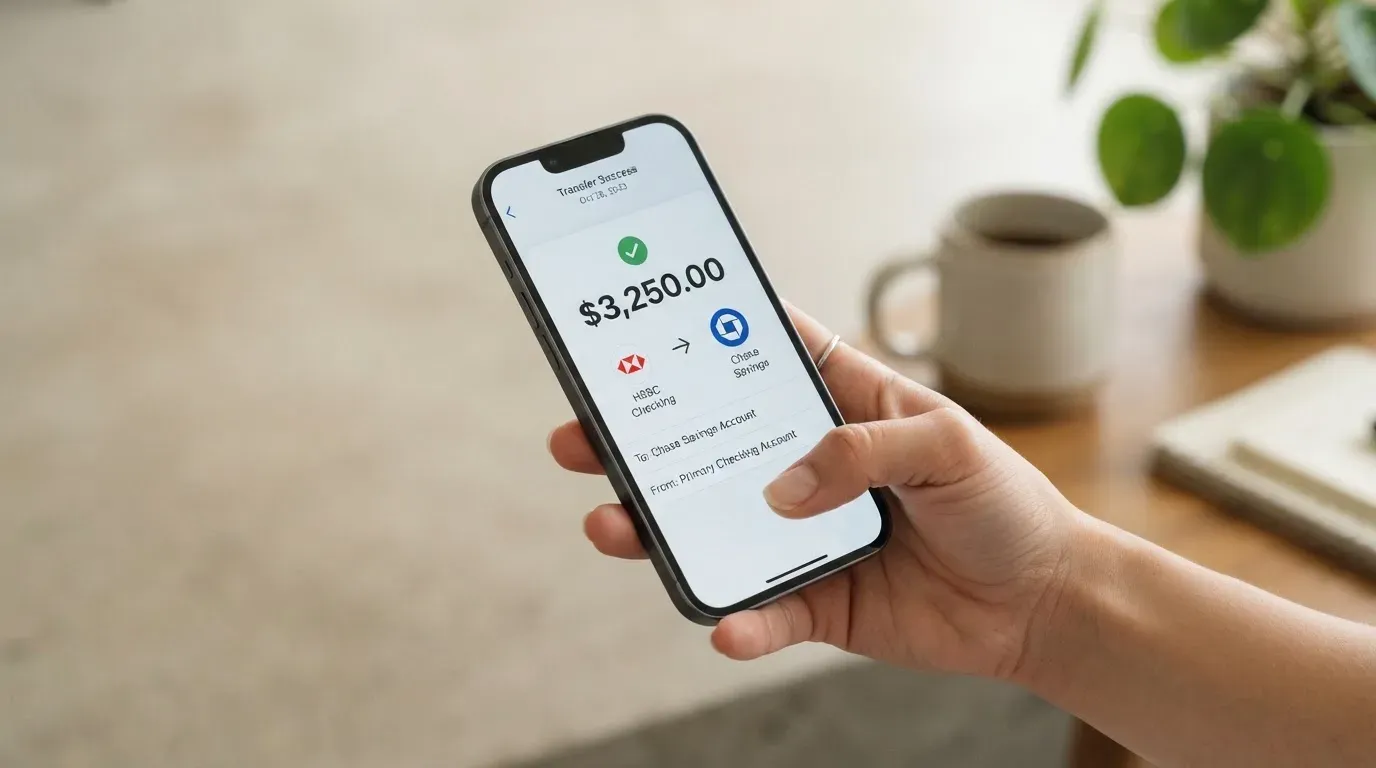
Will they give you the card
Here is the honest answer: the card page lists neither supported nor excluded countries. That is unusual, and it means you cannot pre-check eligibility from the marketing material. What the terms do say is narrower and more useful — only customers in the European Economic Area can use the virtual IBAN for euro deposits and withdrawals (terms 1.2). So the euro account, which is the centre of the product, is an EEA product. Outside the EEA you are not obviously eligible for the part that matters.
Identity verification exists but is described thinly. New users download the app, enter personal information and verify identity through a secure in-app chat, and the page says this “only takes a few minutes”. Notably, the card’s public pages do not say which documents are required, whether proof of address is needed, or what the minimum age is beyond the usual adult baseline for prepaid and debit cards. I want to be plain about that rather than guess: it is not stated.
If you are weighing this card because ordinary banking has been difficult for you, that instinct is reasonable and worth taking seriously. The people who benefit most from a card like this are often those for whom a conventional bank’s onboarding is slow, blocked or simply not offered. Renegade does appear to remove some of that friction. What it does not remove is the underlying fact that any regulated business is obliged to identify you properly before it can move money, and a company with no licences may still be obliged to close your account if it cannot complete its checks.
How to get it
The path is short. You download the app, you complete the in-app chat verification, and the virtual card is issued instantly in the app — the page’s own words are “No plastic. No waiting.” There is no physical delivery step, so there is nothing to wait for and nothing to lose in the post.
Two details about the card itself deserve a pause. The page says “VISA integration”, and the network wording is partly unclear — you may reasonably want to confirm what is actually being issued and by whom before you rely on it at a terminal. And the card’s currency is not stated, even though a euro IBAN sits behind it. Those are both small-sounding gaps that become large ones the first time a payment is declined for a reason nobody can explain to you.
There are three paid tiers, and I have kept the fee numbers exactly as the card states them, because the discount structure matters:
- Pioneer — 9.90 EUR monthly, or 4.90 if paid in RNG. Two benefits, instant virtual card.
- Voyager — 19.90 EUR monthly, or 14.90 in RNG. Three benefits, “Higher limits”.
- Vanguard — 29.90 EUR monthly, or 24.90 in RNG. Five benefits, “maximum limits”, priority support.
“Limits” are named in the tier table but no figures are published anywhere on the card’s pages. That is a real gap, because limits are what decide whether the card works for the size of payments you actually make.
Fees and what they add up to in daily life
The headline is friendly. The card states monthly fees as above, a crypto/fiat exchange fee of 1.6 %, and then says plainly: “No other fees are collected by Renegade.” It also says new fees can only be introduced with at least 30 days’ notice. That is a better-disclosed fee structure than many far larger products manage, and I want to credit it.

What is not stated is just as important. The FX fee is not stated. ATM fees are not stated. The issuance fee is not stated. Deposit fees, minimum top-up amounts and network fees are not stated. So when you read “no other fees”, the honest reading is “no other fees that Renegade itself chooses to add beyond the ones it hasn’t disclosed” — not “all-in cost is 1.6 %”.
| Fee or limit | Value as published |
|---|---|
| Monthly fee, Pioneer | 9.90 EUR (4,90 if paid in RNG) |
| Monthly fee, Voyager | 19.90 EUR (14,90 in RNG) |
| Monthly fee, Vanguard | 29.90 EUR (24,90 in RNG) |
| Issuance fee | not stated |
| Crypto/FIAT exchange | 1.6 % |
| Other fees collected by Renegade | “No other fees are collected by Renegade” |
| FX fee | not stated |
| ATM fee | not stated |
| Deposit fee, minimum top-up, network fees | not stated |
| Card currency | not stated |
| Spending limits | no figures published; Voyager “Higher limits”, Vanguard “maximum limits” |
Now three everyday payments, so the percentages mean something.
A €40 lunch in your own currency, in your own country. This is the case Renegade handles best. The 1.6 % exchange fee may not even bite if the balance is already in euro; if you pay from crypto it applies at conversion. Assume the monthly fee is the main cost, and that the 1.6 % is roughly €0.64 on €40 if a conversion happens. What you cannot check is whether an undisclosed FX or scheme fee is added on top.
A €15 subscription in dollars while you live in the euro area. Here the 1.6 % is the smallest of your problems. The real question is what the exchange rate is and whether an FX fee sits on top, and the card does not say. A card whose FX terms are unpublished is a card I would not use for anything recurring in another currency.
A €200 purchase at a shop that looks at your card. Here the category-level costs come up. A merchant category code is a four-digit number classifying the business by what it sells; some codes, notably the gambling code 7995, are blocked by many issuers as policy rather than by law, and the blocked list varies by issuer. Renegade does not state which categories it blocks. On top of that, address verification can cause declines: the AVS check compares the numeric parts of the billing address you type against issuer records, and it is generally unavailable for foreign-issued cards. For a Portuguese company issuing a euro card that is likely fine at home and less predictable abroad.
How to top it up
Two routes are named: a crypto virtual IBAN via Striga, and a plain IBAN account you can receive euros into. What the card page does not do is name the coins or the networks. An earlier version of the material mentioned a non-custodial wallet with USDC, BTC and ETH — that was a previous check, not a current published commitment, and I would not plan around it without asking support.
This is the single most practical risk in the whole product, and it comes from how blockchain transfers work rather than from this company’s intentions. If you send a transfer on a network the provider does not support, or to an address belonging to a different network, the funds can be lost entirely. Blockchain transfers are irreversible; there is no chargeback mechanism at the protocol level. There is a second trap specific to stablecoins: Circle stopped supporting USDC on Tron in February 2024, so “USDC over TRC20” is not a native option, and on Ethereum you need a little ETH in the wallet to pay gas — a wallet holding USDT and nothing else simply cannot send. Tron prices its fees with bandwidth and energy instead, often burning TRX. Before your first transfer, get the supported network list in writing, and check that you can send a test amount.
Withdrawals run through the virtual IBAN in euro. Beyond that, the terms say little more, but they do say two things that matter for planning: you may terminate at any time free of charge, and Renegade may close the relationship on two months’ notice. Accounts inactive for more than six months may be closed — if you are not sure whether you will use the card, that is a slow drip, not a cliff, but it is worth knowing. When you close, get your balance out well before you assume you can still reach the app.
Paying with it every day
It is a virtual card in an app. That is the entire physical reality, and for online subscriptions and app payments it is genuinely convenient. For anything that needs to be swiped, tapped at a terminal or handed to someone, it simply is not the tool.
Renegade does not list Apple Pay as a supported feature. Google Pay appears only inside a customer testimonial on the site — a user writing that a Web3card was added to Google Pay — which is not the same as a confirmed feature listing. Card controls, spending caps, merchant category blocks and freeze features are not disclosed.
There is one genuine reward: 3 % back on all three tiers, paid in the card’s own RNG coin, described on the page as cashback. Three percentages of a design decision sit underneath that headline. The reward is in a token, not in euros, so its value depends on a market nobody in this product controls. Paying a monthly fee in RNG to receive rewards in RNG concentrates you in one asset. And the monthly reward caps are listed as 2,500 EUR for Pioneer, 25,00 EUR for Voyager and a garbled figure for Vanguard that reads as 35****,***000 EUR — I am not going to guess at a number that is printed broken on the page. Check it before you rely on the cap.
The app itself: on iOS the App Store listing is “Renegade” by Renegade GmbH with no rating displayed, the listing noting it “hasn’t received enough ratings” as of 2026-10-21. The Android package is net.myrenegade.main and its rating was not readable. Small signals, but with a young product they are among the few you have.
Disputes are thin too. Chargebacks are not mentioned. The terms say the seller is liable for faulty goods (2.3), that complaints go to Customer Support and that a formal complaint must be in writing (7.14), and that the EU online dispute resolution platform applies (7.15). That is a workable path but a slower one than a chargeback, and I would not want to rely on it in a hurry.
What can go wrong
Start with the biggest thing, because everything else is smaller.
There are no licences. The company states it is “NOT a bank” and does not yet provide regulated services, and says it will apply for licences first. The registered entity is MYRENEGADE, UNIPESSOAL LDA, Lisbon, Portugal, company no. 517780801. The app developer on the App Store is Renegade GmbH. The partner for the virtual IBAN is Striga Technology OÜ in Tallinn, Estonia. And here is the contradiction I keep coming back to: the terms name Zypto as the card service provider in section 10, while section 11 describes an unnamed licensed card issuer running on Striga’s infrastructure. Two different pictures of who issues your card, in one document.
That matters more than it sounds. In any normal card setup the issuer is the party licensed by the network to hold the programme, and it is the party you have a regulated relationship with. Here the identity of that party is not clean on the face of the terms, and the company holds no licences of its own.
Nobody can see your money, clearly enough. The site describes itself as “user-interface only” and says Striga helps keep money “in a safe manner”. Custody is not clearly addressed in the terms. Multi-factor authentication is mentioned (9.1), which is better than nothing. But “we are only the interface” and “we are the ones responsible for your funds” are different messages, and the material supports both readings.
Complaints. I found no official incidents — no regulator action, no published enforcement. What exists is a single user report: a Trustpilot review dated 7 April 2026 saying that roadmap items promised for Q1 2026 — the app, the crypto wallet, the card — were not delivered, and that support refused a refund, calling it a “startup investment”. Trustpilot shows 3.2 from 1 review, read 2026-10-21. One review is not a verdict; it is a sample of one. But it is a sample of exactly the failure mode of a young, licence-free product: you are early, and early customers pay for that.
The category has a track record of disappearing. Visa and Mastercard do not issue crypto cards themselves — they license issuers, and they can pull the licence. In November 2022 Visa said it had terminated its global agreements with FTX, and the FTX US debit card was wound down. WaveCrest, a Visa issuer that supplied several crypto card brands, was suspended by Visa in Europe in 2018, closing all WaveCrest-issued Visa programmes. Closures usually follow a pattern: a notice period, then spending and loading stop, then users are asked to withdraw. One 2026 closure reported by a secondary source ended new loads on 8 July 2026 and spending on 8 August 2026 — single source, unconfirmed, but the shape of it is the shape to expect.
Both sides of 3-D Secure. Under 3-D Secure, liability for a fraudulent online payment can shift from the merchant to your bank — or, per its critics, to you. The issuer can also restrict your tokenised card number, blocking it on phone or website use. And a declined authorisation can leave a hold on your funds for several days, typically up to seven, which on a prepaid balance means the money is unavailable while the question is open.
Tax. I am not going to advise you here, but you should know the shape of it. Digital assets are generally treated as property for tax purposes, so exchanging them for goods, services or dollars generally produces a taxable gain or loss, measured in your local currency at the value on the date of the transaction. Each card payment funded from crypto may therefore be a separate taxable event. Take advice in your own jurisdiction.
One more thing, plainly, because people ask it constantly: stablecoins are not immune to all this. Despite the name, stablecoins are not necessarily stable — TerraUSD collapsed in May 2022 and USDC temporarily lost its peg in March 2023 during the US banking crisis. And they are not censorship-proof: Tether says it disables tokens in wallets on the OFAC sanctions list and has frozen funds tied to illicit activity.
What to take instead
If the euro IBAN is what you need, there are three other cards I looked at, and none of them is a clean substitute. Each is better in one dimension and worse in another, and I have kept their published terms exactly as stated.
International Visa Card — 6.7 / 10. A U.S.-issued Platinum Visa, virtual, paying in USD, with a physical card listed as “Coming soon”. The clearest pricing in this comparison: $5 one-time issuance, no maintenance fee, plans Classic free, Pro $9.00/month, Max $19.00/month, card use in USD free on all plans, foreign currency at “Visa exchange rate + 2% FX fee”, deposits of any kind free. You fund it with USDC or USDT at 1:1 into a USD account, and also with USD, EUR, SEPA, SWIFT and FedNow; networks are not stated; no cashback is stated. The catch is a long exclusion list — residents or legal registrants of Belarus, mainland China, North Korea, Cuba, India, Iraq, Iran, Israel, Myanmar, Nepal, Nicaragua, Russia, Syria, Turkey, Ukraine, Venezuela and Vietnam are refused, FATF grey-list countries are reviewed case by case, and purchases are blocked in North Korea, Cuba, Iran, Russia, Syria, Ukraine and Venezuela. The rule is by residence or registration; citizenship is not mentioned. If you are in the EEA and simply want a USD card, this is more expensive than Renegade’s euro product but far better documented.
UNi Card — 6.1 / 10. A multicurrency card on the Mastercard network that spends from the UNi.Global account balance. Its pricing language is the most reassuring of the three: “No annual fee or foreign transaction fee”, assets converted at “live OTC rates”, “No hidden exchange fees”, and “Spend-to-Earn rewards” up to 3% with the card. The gaps are the gaps: who can get it is not stated, funding routes are not stated, issuance fee not stated, and physical versus virtual is not stated. A rewards rate up to 3% paid in the platform’s own ecosystem is the same structural caveat as Renegade’s RNG rewards.
Whop Cards — 5.2 / 10. A Visa card that works anywhere Visa is accepted, spending from a Whop balance, with a pending balance usable as soon as a payment arrives and standard withdrawals using settled funds; starting data is backed by stablecoin collateral from a linked wallet. Cashback is 5 % at select merchants, currently Uber. The pricing page just says “No extra fees” with no amounts behind it, and the geography is restrictive and oddly specific: 31 US states for consumers, 41 for businesses, with a long unsupported-consumer-country list. Coins, networks, card currency and the citizenship-versus-residence basis are all not stated.
| Renegade | International Visa Card | UNi Card | Whop Cards | |
|---|---|---|---|---|
| Score | 4.1 / 10 | 6.7 / 10 | 6.1 / 10 | 5.2 / 10 |
| Network | “VISA integration”, wording unclear | Visa, U.S.-issued Platinum | Mastercard | Visa |
| Card form | Virtual only | Virtual; physical “Coming soon” | not stated | not stated |
| Monthly cost | 9.90 / 19.90 / 29.90 EUR | Classic free, Pro $9.00, Max $19.00 | “No annual fee” | “No extra fees”, amounts not stated |
| FX / conversion | 1.6 % crypto/fiat; FX fee not stated | Visa rate + 2 % FX fee | “live OTC rates”, no FX fee | not stated |
| Rewards | 3 % in RNG, capped | none stated | up to 3 % spend-to-earn | 5 % at select merchants |
| Licences | none; “NOT a bank” | not stated | not stated | not stated |
Where Renegade stands apart is the euro IBAN. If the reason you are reading this is that you need to receive euros in the EEA without a traditional bank, then the other three may not answer the question at all — they are USD, multicurrency and balance cards respectively. That is why I have not simply recommended the highest-scoring option.
Who I would recommend it to
I would recommend Renegade to someone who: lives in the EEA; already has euros or a stablecoin they are comfortable moving; wants a euro IBAN in their own name more than they want a bank relationship; is content to spend from an app-only virtual card; and would not be devastated by losing the balance, because there is no deposit guarantee behind an unlicensed company.
I would not recommend it to anyone whose income arrives in another currency, anyone who needs a physical card, anyone who travels enough for foreign BINs to be a regular annoyance, anyone who spends in gambling or other restricted categories without knowing the policy, and anyone who is currently unbanked and anxious — because a provider with no licences and no published limits is a poor place to keep the emergency money you were trying to access in the first place.
If you are in that last group, the single most useful thing you can do before signing up for anything is ask support three questions in writing and keep the answers: which networks and coins are supported for deposits, who is the licensed card issuer, and what happens to my balance if the programme is closed. A company that answers those plainly has earned a different score from one that does not.
Frequently asked questions
What is the Renegade card?
The Renegade card is a virtual payment card issued in an app, attached to a euro virtual IBAN rather than to a bank account. You are meant to fund it with euros from an IBAN or with crypto through Striga’s virtual IBAN, then spend from that balance as if it were an ordinary card. The card exists to be the spending half of a euro account, not as a crypto rewards product.
How does the Renegade card work?
You get a card number in the app and spend directly from the balance behind it. The model resembles a prepaid card: you load funds first, the card spends only what is loaded, and it cannot overdraw. Crypto is converted into fiat at the stated 1.6 % exchange fee, and card payments are then handled by the card network and the issuer named in the terms.
Is Renegade a bank?
No, and the company says so itself, stating it is “NOT a bank” and does not yet provide regulated services, intending to apply for licences first. The registered entity is MYRENEGADE, UNIPESSOAL LDA in Lisbon, Portugal, company no. 517780801. Your euro balance is therefore not a bank deposit and would not carry deposit-guarantee protection even if a future licence were granted.
Who owns Renegade?
Ownership is not stated as such on the pages I checked. What is stated is the legal entity MYRENEGADE, UNIPESSOAL LDA in Lisbon; the App Store developer is Renegade GmbH; and the virtual IBAN partner is Striga Technology OÜ of Tallinn, Estonia. The terms name Zypto as the card service provider in one section and an unnamed licensed issuer in another.
Is Renegade card available in my country?
The card page lists no supported or excluded countries at all, so you cannot pre-check from the site. The terms say only that customers in the European Economic Area can use the virtual IBAN for euro deposits and withdrawals. Outside the EEA the euro account appears unavailable, and what remains is not clearly described.
Does Renegade card require KYC?
Yes, identity verification is part of signup: you download the app, give personal information and verify identity through a secure in-app chat, which the page says “only takes a few minutes”. The specific documents required, whether proof of address is needed, and the minimum age are not stated on the card’s public pages, so ask support before you start.
How do I top up the Renegade card?
Through the crypto virtual IBAN via Striga, or by receiving euros into the IBAN account. Coins and networks are not listed on the card page, though an earlier check mentioned a non-custodial wallet with USDC, BTC and ETH. Get the supported network list in writing and test with a small amount first, because a transfer on the wrong network can be lost outright.
Is Renegade card free?
Not quite. Monthly fees are 9.90 EUR for Pioneer, 19.90 EUR for Voyager and 29.90 EUR for Vanguard, each cheaper if paid in RNG. Crypto-to-fiat conversion is 1.6 % and the card states that “No other fees are collected by Renegade”. Issuance fee, FX fee, ATM fee and deposit fees are not stated.
Can I add the Renegade card to Apple Wallet?
Apple Pay is not listed as a supported feature for the Renegade card, so I would assume it does not work until support confirms otherwise. Google Pay appears only inside a customer testimonial on the site, where a user mentions adding a Web3card to Google Pay — that is a user’s account, not a documented feature. Ask directly before you rely on either.
Is the Renegade card safe?
It depends what you mean. The app uses multi-factor authentication, which is a real safeguard, and the site describes itself as “user-interface only” with Striga helping keep money safe. But the company holds no licences, custody is not clearly addressed in the terms, and one Trustpilot review dated 7 April 2026 reports promised features undelivered and a refund refused. Treat the balance as money you could lose.
App and neobank card fees – cryptocardfacts
Content created by the «cryptocardfacts» team