
Ecstasy card, an honest look at the Nigerian virtual VISA that spends crypto in dollars
 Available in US
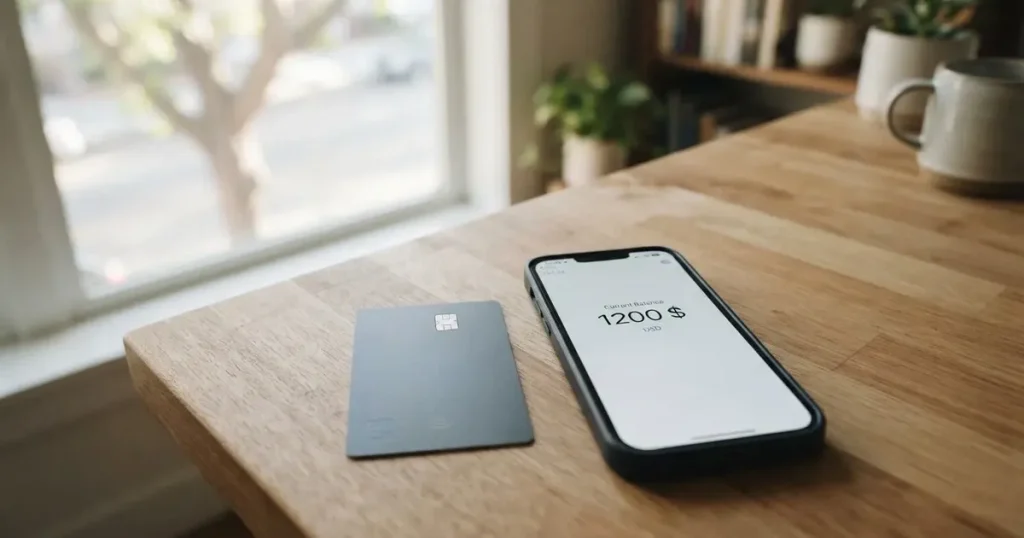
If you have been reading about cards that let you pay in dollars from a crypto balance, the name Ecstasy will probably have come up at some point. It is a virtual VISA card, issued in Nigeria, that converts USDT into Naira inside an app and then loads a dollar wallet you spend with a card number. That is the whole product, in one sentence, and the rest of this review is about deciding whether that single product is the right tool for your situation.
I went through the public material: the App Store listing, the developer site, and what users are saying in 2026. I will walk you through what the card actually does, what it costs (or, rather, what is not on the public record), how the top-up flow works, the everyday experience, and the things that could go wrong. At the end I will tell you who I think the card fits, and I will compare it with three other names you are likely to come across in the same space. The score is 3.6 out of 10, and I will explain that mark as we go.
The conditions described here are current as of October 28, 2026.
Verdict
Score: 3.6 out of 10. That is a below-average mark in a category where the leaders sit closer to 7 or 8. The card does one specific thing, funding dollar subscriptions and online payments from a USDT balance, and the score reflects how thin the public information is around everything else: costs, KYC, limits, and even the list of countries the card works in.
Here is the breakdown by criterion, with the marks I have assigned. I have rephrased the reasons in my own words.
| Criterion | Mark | Short reason |
|---|---|---|
| Who can get it | 2 / 10 | Only Nigeria is named; the issuer is Ecstasy Data Nigeria Limited and the app converts crypto to Naira, but no country list, citizenship rule or sanctions statement is published. |
| Cost | 5 / 10 | Issuance and top-up fees are not published anywhere I could read. |
| Top-up options | 4 / 10 | USDT on TRC20 is converted to Naira in the app, then the dollar wallet is funded. Other coins and networks are not stated. |
| Reliability and complaints | 4 / 10 | The issuer is a Nigerian private company and no licences are named. The iOS app sits at 2.7 out of 5 from nine ratings, with two recent reviews mentioning freezes after updates and login problems. |
| Everyday use | 3 / 10 | Only virtual VISA cards in USD, aimed at online and subscription payments. Apple Pay and Google Pay are not listed, and there is no ATM option. |
| Total | 3.6 / 10 |
The audience the card seems built for is straightforward: a Nigerian user who wants to pay dollar subscriptions (Netflix, Spotify, cloud tools) from a USDT balance, without opening a dollar bank account. If that is exactly you, the card does the job, but the public material does not give you much to lean on for trust, and the alternatives in the same space are better documented. If you live outside Nigeria, or you want a card you can tap in a shop, or you want a card whose fees are written down, this is not the product for you.
Will they give you the card
The headline here is short, and that is itself a finding. The only country named anywhere in the public material is Nigeria. The app’s developer on the App Store is Ecstasy Data Nigeria Limited, and the app’s stated purpose is to convert crypto into Naira and load a dollar wallet from that. There is no list of supported countries, no statement on citizenship or residence, and nothing published about how the card treats users from Russia, Belarus or anywhere else with restricted card programmes.
That has two practical consequences. First, if you are reading this from outside Nigeria, there is no public signal that you can be issued a card, and the absence of a list usually means the safe assumption is “no, or only with prior approval from support”. Second, even if you are in Nigeria, the lack of a country and exclusion list means you do not get the kind of clarity a regulated issuer normally publishes (such as “not available to residents of X, Y, Z” or “KYC required from all applicants”). For a card whose website and store listing are thin, that is a meaningful gap.
The fact is told in full here.
How to get it
Because this is a virtual-only product, there is no plastic to wait for and no delivery step. The published flow is: download the iPhone or Android app, set up an account, complete whatever identity checks the app runs, convert USDT to Naira in the app, fund the dollar wallet, and create a virtual VISA in USD. That is the same order a user review of the App Store listing describes.
A few things to flag, because the public material is quiet on them:
- KYC. The card’s own pages do not state what KYC steps the app performs. The App Store privacy section says the app collects payment information, name, email, phone number, and photos or videos. So it does collect enough to identify a real person, but the depth of checks (ID upload, selfie, proof of address) is not stated. Treat KYC as “happens in the app, exact level not published”.
- Card form. Virtual VISA cards, in USD, no physical or metal option mentioned, and the app description frames them for online and subscription payments.
- Delivery. Not applicable in the usual sense, since this is a virtual card.
- Tiers. The card does not appear to publish tiered plans (Standard / Premium / Metal) the way some competitors do.
If you decide to apply, the practical advice is the same as for anythinng in this category: do not top up the dollar wallet with more than you intend to spend, because a virtual card is harder to recover than a physical one if the app stops working.
What it really costs: Fees
This is the section where the public material is, frankly, thin. The card’s site, the App Store listing and the developer page do not publish an issuance fee, a monthly fee, an FX fee, an ATM fee, a conversion fee, or spending limits. There is no fees table to read, and no schedule of charges you can compare against. That is the single biggest reason the cost criterion sits at 5 out of 10 rather than higher: even if the fees turn out to be reasonable, the lack of disclosure makes it impossible for you to plan.
Here is the information I have verified:
| Item | Published value |
|---|---|
| Issuance fee | not stated |
| Monthly / annual fee | not stated |
| Crypto-to-fiat conversion fee | not stated |
| FX / cross-currency fee | not stated (card is USD, app side is NGN) |
| ATM fee | not stated (no ATM, virtual card only) |
| Daily / monthly spend limits | not stated |
| Tiers | not stated |
| Card currency | USD on the card, NGN handled inside the app |
Sources for the table include the card’s published data.
To make this more useful, let me walk you through three everyday payments and what we can say about the fees that apply. I am marking each one with what is published and what is not, so you can see exactly where the gap is.
- Paying for a Netflix subscription in dollars. You convert USDT (TRC20) to Naira in the app, fund the dollar wallet, and the card is charged in USD. The on-chain network fee is paid by you to Tron, not to Ecstasy. The conversion fee inside the app and any card-side FX fee are not published. So your visible cost is the network fee on your USDT transfer; the invisible cost is whatever spread the app takes on the USDT-to-NGN and NGN-to-USD legs.
- Buying a domain or a SaaS plan from a US vendor. Same flow as above, charged in USD. AVS (address verification, common in the US) is not stated to be supported, and the card is issued in Nigeria, so US merchants may decline the payment because the BIN does not match the billing address. That is a category-level risk, not a card-specific one, and it is worth checking with the merchant before you load the wallet.
- Topping up the dollar wallet from your bank account in Naira. Not stated as a route. The published funding path is crypto, not a Naira bank transfer.
The honest summary: at the time of writing, you cannot tell from public sources what the all-in cost of a payment is. That is unusual, and it is the reason to treat the card as a small-balance tool until you have seen your own receipts.
How to top it up: Top up
The published funding path is narrow, and that is part of the score. The app’s model is a two-step flow: convert crypto to Naira inside the app, then load a dollar wallet in the same app, and that dollar wallet is what the virtual card draws on when you spend.
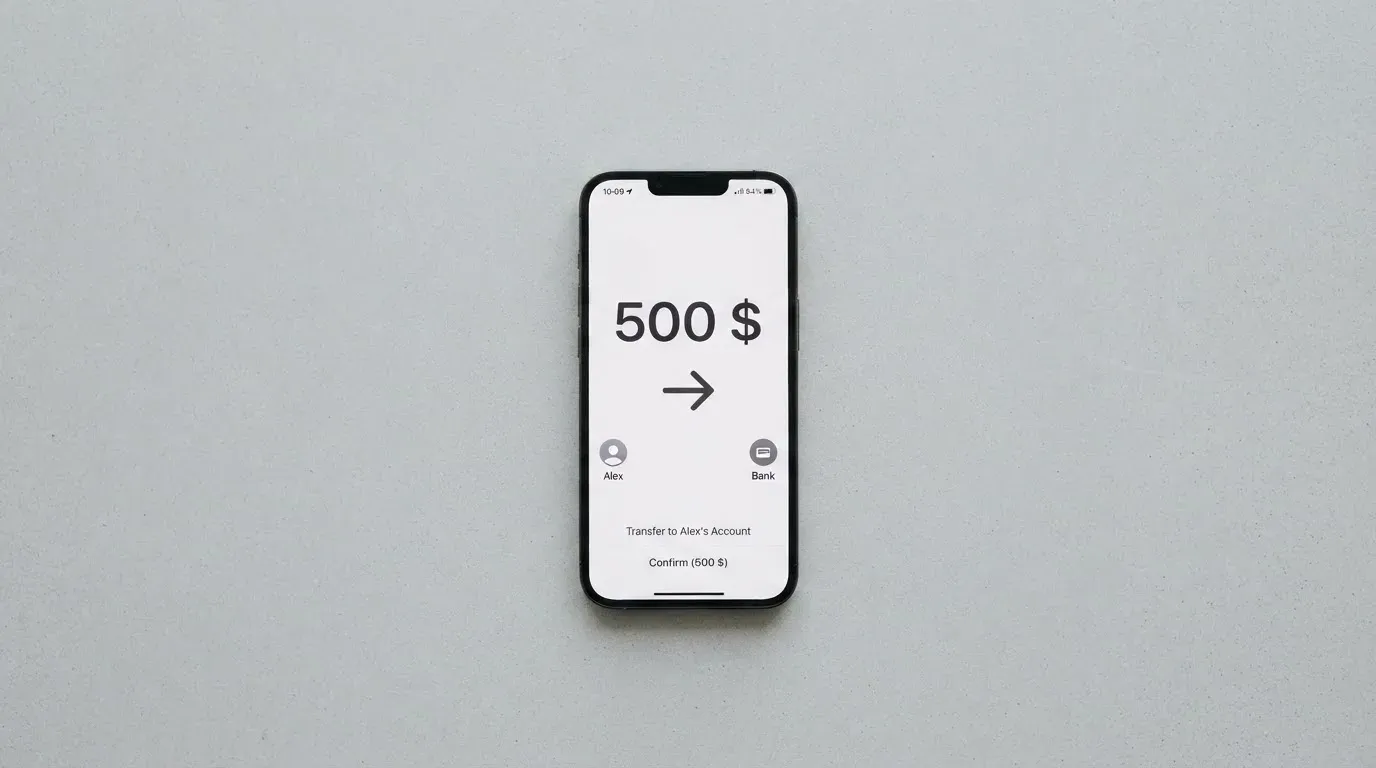
Step by step:
- Send USDT on the TRC20 network to a deposit address in the app. USDT TRC20 means USDT issued on the Tron network. The on-chain fee is paid in TRX (Tron’s network token) and is set by Tron, not by the card provider.
- The app converts the USDT to Naira at the rate shown in the app. The conversion rate and any spread on this leg are not published.
- You fund the dollar wallet from the Naira balance. The dollar wallet has top-up, transfers and transaction history in the app, and that is the balance the virtual card uses.
- You create and spend with a virtual VISA in USD. Card currency is USD; the card is intended for online and subscription payments.
A few things that are not stated: that you can fund with USDC, BTC, or any other coin; that you can fund with a Naira bank transfer; that the app supports multiple networks for USDT (ERC-20, Polygon, Arbitrum, Solana are common, and the public material names TRC20 only); what the minimum top-up is; and what the fee is on either leg of the conversion.
The general category point that matters here: a deposit sent on a network the provider does not support, or to an address of the wrong chain, is very often lost, because blockchain transfers are irreversible. If you are topping up, double-check the network in the app before you send. (See the background section on stablecoins and networks for the wider reason this matters.)
Paying with it every day
The card is built for a narrow use case, and the everyday section reflects that. There is no physical card, no ATM access, and no mention of Apple Pay or Google Pay in the App Store listing. The card’s job, in the public material, is to be a virtual VISA in USD that you can type into an online checkout, or hand to a subscription service. That is it.
A few notes on the experience as described in the public material:
- Wallets. Not stated. The card is virtual, so there is no tokenised mobile wallet option in the published feature list.
- Rewards. The app has a referral system; the rate or value of the reward is not stated. There is no published cashback percentage.
- App quality. The iOS app sits at 2.7 out of 5 from 9 ratings on the App Store (as of 24 September 2026). Recent reviews mention freezes after an update and login problems. The Google Play rating was not listed.
- Disputes and chargebacks. Not stated. There is no published description of how to raise a dispute or what the resolution path is. That is a meaningful gap for a payment card.
In practical terms, the card is fine for low-friction subscription payments where the merchant does not run an AVS check or a 3-D Secure challenge that fails on a foreign BIN. For higher-friction online checkouts, expect some declines and be ready to retry or fall back to another card.
What can go wrong
The risks here are mostly about information gaps and a young, lightly reviewed product, rather than any single dramatic incident. Let me list them so you can weigh them against the score.
- No public incident log. No official security or outage reports have been published for the card. That does not mean nothing has happened, but it is what the public record shows.
- Issuer is opaque. The issuing entity is Ecstasy Data Nigeria Limited, per the App Store developer name. The card’s own pages do not name an issuing bank, a partner bank, an e-money licence, a payments regulator registration, or any other licence. For a card product, that is the part where you would normally look for a CBN (Central Bank of Nigeria) licence, a PCI-DSS attestation, or a VISA issuer programme reference. None of those is published.
- Security claims are not stated. No published description of how customer funds are safeguarded, whether the dollar wallet is segregated, or what happens to your balance if the company stops operating.
- Support is hard to find. The App Store listing does not include a support link (only Apple’s billing support). The developer site is ecstasynigeria.com, with a privacy policy at ecstasynigeria.com/privacy. Listing language is English. If something goes wrong, the published path back to a human is thin.
- The product is young. The app was first released on 24 May 2023, and the latest iOS version (2.8.2) dates to 24 September 2026. That is a short track record for a card product.
- User feedback is thin and lukewarm. With only nine iOS ratings, the sample is too small to draw strong conclusions, but the two most recent reviews flagged freezes and login problems after an update.
The category-level risks that apply here as well: a card from a single country (Nigeria) can look “foreign” to a merchant in another country, and some merchants decline prepaid or foreign BINs. Custodial crypto balances carry the usual counterparty and hack risk, and stablecoins can depeg. None of that is specific to Ecstasy, but it is the background you should hold in mind when you load any wallet.
What to take instead
Three names come up alongside Ecstasy in the same space. I have included the score for each, and I have kept the comparison to the published facts.
Cardex (5.6 / 10)
- Who can get it. “One crypto card, 200+ countries” per the official site, with no country list or exclusions. The App Store listing is Naira-focused and lets you pay in Naira.
- Card form. Debit crypto card on VERVE, VISA, Mastercard and UnionPay. Virtual and physical cards are both offered.
- Cost. Issuance and monthly fees are not stated. The site describes a real-time crypto-to-fiat conversion at the moment of payment, with an “AI-Powered Conversion Rate” that scans global exchanges to pick the best rate when you spend. No percentage is published.
- Funding. USDT, USDC and BTC wallets are supported; networks are not stated.
- Rewards. Not stated.
Cardex is a more general-purpose product than Ecstasy, with a physical card option and a wider network reach, but it is similarly quiet on fees and rewards.
CardFlow (4.9 / 10)
- Who can get it. Aimed at Nigeria (“Nigeria’s smartest fintech card platform”) and at “Nigerians and global users”. No country list or exclusions published.
- Card form. Virtual USD Mastercard, created in the app. No physical card mentioned in the read material.
- Cost. “Creating a virtual card is completely free” per the site FAQ. Monthly fee not stated. Other fees not stated.
- Funding. Bitcoin, USDT, ETH or Naira bank transfer. Networks not stated.
- Rewards. Not stated.
CardFlow’s free virtual card and Naira bank funding make it a closer alternative to Ecstasy in shape, with a slightly higher score and a Naira funding route that Ecstasy does not name.
HyperCard (4.7 / 10)
- Who can get it. Official pages state no country list. The App Store says the card works in “more than 176 countries”, which is an acceptance figure, not an eligibility figure.
- Card form. Prepaid “HyperCard”; the network is not stated on the App Store page. Card balance in USD or EUR.
- Cost. Not stated; the App Store page lists no fees.
- Funding. Deposit crypto such as USDT, BTC, ETH in the app; converted to USD or EUR on the card. Networks not stated.
- Rewards. Not stated.
HyperCard has the broadest published acceptance figure of the three, and supports EUR as well as USD, which is useful if you pay European vendors.
If you are choosing between these, the practical decision is whether you want a card whose fees are published (none of the four here do this well), whether you need a physical card (Cardex, possibly), and whether you need a Naira bank funding route (CardFlow). Ecstasy’s narrow role is the USDT-to-NGN-to-USD pipeline for Nigerian users paying dollar subscriptions, and the alternatives are broader but no more transparent on cost.
Who I would recommend it to
I would be honest with you: the card is a niche tool, and the public information around it is not enough for me to recommend it as a primary payment card. The 3.6 score reflects that, and the breakdown above shows why each criterion drags the total down.
The narrow case where it makes sense is this. You are a Nigerian user, you already hold USDT (specifically on the TRC20 network, because that is the only coin and network named in the public material), and you want to pay for dollar subscriptions or US online services without opening a US dollar bank account. You are comfortable with a virtual-only card, you do not need Apple Pay or Google Pay, and you do not need to take cash out. You are willing to load only what you intend to spend, because the support path is thin and the dispute process is not published. If that is your situation, the card does the job it sets out to do.
The case where I would not recommend it: you live outside Nigeria, you need a physical card, you want a published fee schedule, you want to fund with anything other than USDT on Tron, you want EUR balances, or you want a card whose issuer and licences are clearly named. For any of those, the alternatives above will serve you better, and a regulated EMI-issued card with a published fee schedule is a safer starting point.
A final note on the general category, since you may be weighing several of these cards at once. A crypto card is two products in one: a card payment service and a crypto custody service. The card side is usually regulated (under e-money or payment-services law in the EU, or by a state regulator in the US), and the crypto side is regulated separately (under MiCA in the EU since 30 December 2024, or under FinCEN money-transmitter rules in the US). A card whose issuer and licences are not published is asking you to take both legs on trust, and that is the part I would want you to think about before you load a wallet.
Frequently asked questions
What is the Ecstasy card?
The Ecstasy card is a virtual VISA card in US dollars, issued by Ecstasy Data Nigeria Limited, that you fund by converting USDT (on the TRC20 network) into Naira inside the Ecstasy app and then loading a dollar wallet in the same app. It is aimed at online and subscription payments rather than in-store use, and no physical card is offered.
How does the Ecstasy card work?
You install the iPhone or Android app, set up an account, send USDT on TRC20 to a deposit address shown in the app, the app converts that to Naira, you fund the dollar wallet from the Naira balance, and you create a virtual VISA in USD that draws on that wallet when you pay. The card has no physical form and no ATM access.
Is Ecstasy a bank?
No. Ecstasy is the brand name of a Nigerian private company, Ecstasy Data Nigeria Limited, which runs the app and the card programme. The card’s own pages do not name an issuing bank, a partner bank or a payments regulator registration, and the licence framework is not stated in the public material.
Who owns Ecstasy?
The public material names Ecstasy Data Nigeria Limited as the developer on the App Store and as the company behind the Ecstasy website. No parent company, no investor list, and no regulatory filings are published.
Is the Ecstasy card available in my country?
The only country named in the public material is Nigeria. There is no published list of supported countries, no citizenship or residence rule, and no statement on Russian or Belarusian users. Outside Nigeria, the safe assumption is that the card is not available unless support confirms otherwise.
How do I get the Ecstasy card?
You download the iPhone or Android app, create an account, complete the in-app identity checks, send USDT on TRC20 to convert to Naira, fund the dollar wallet, and create a virtual VISA. The exact KYC steps and the depth of document checks are not stated on the card’s own pages.
Does the Ecstasy card require KYC?
The card’s pages do not state the KYC level. The App Store privacy section lists payment information, name, email, phone number and photos or videos as data the app collects, which suggests at least basic identity data, but the full KYC process is not published.
How do I top up the Ecstasy card?
You send USDT on the TRC20 network to a deposit address in the app, the app converts the USDT to Naira, and you fund the dollar wallet from the Naira balance. The dollar wallet is what the virtual card spends from. Other coins, other networks, and a Naira bank funding route are not stated in the public material.
Is the Ecstasy card safe?
The card’s own pages do not publish security claims, customer-fund safeguarding rules, or a dispute process. The iOS app sits at 2.7 out of 5 from nine ratings, and two recent reviews mention freezes and login problems after an update. The lack of a published support and dispute path is a meaningful gap for a payment card, and you should treat the wallet as a small-balance tool until you have seen your own receipts.
Is the Ecstasy card worth it?
For a Nigerian user paying dollar subscriptions from a USDT balance, the card does the job it sets out to do, and the narrow score (3.6 out of 10) reflects thin public information on cost, KYC and licences rather than a specific failure. If you need a physical card, published fees, broader coin support, or a clearly named issuer and licence, look at the alternatives in the comparison section above, or consider a regulated EMI-issued crypto card with a published fee schedule.
Virtual card fees – cryptocardfacts
Content created by the «cryptocardfacts» team