
AnoCard, the Telegram-only virtual card: what the operator doesn't spell out
 Available in US
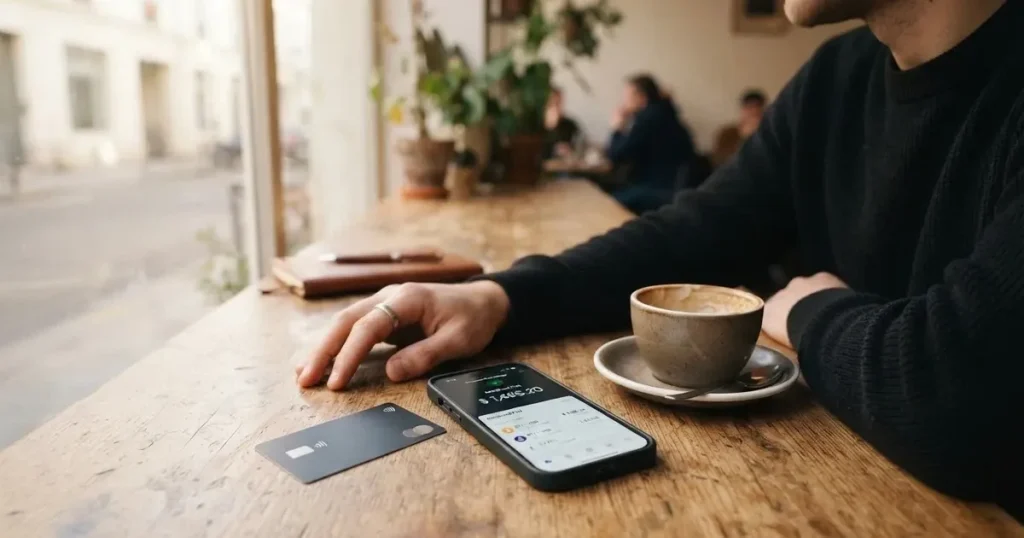
AnoCard is one of those products that looks, at first glance, like the answer to a specific problem: a payment card you can buy with crypto, set up inside a Telegram bot, and use without filling in a passport scan. For someone who has been locked out of an ordinary bank card, or who simply doesn’t want their spending tied to a name and an address, that pitch has obvious appeal. It also has obvious limits, and the operator behind AnoCard does not do much to spell them out. I went through the public pages, the SORN dashboard, the Trustpilot profile and the surrounding reviews, and what I found is a card that does a small job reasonably well, while raising more questions about its issuer, its licence and its long-term survival than it answers.
The conditions in this review are current as of October 28, 2026.
Verdict: 5.9 out of 10
AnoCard is a niche tool, not a general-purpose card. It suits a narrow reader: someone who is comfortable living inside a Telegram mini-app, who has crypto they want to spend without going through a mainstream exchange, and who can accept the trade-off of paying fees that are only revealed at the moment of purchase. It does not suit someone who wants a physical card, predictable monthly costs, a clearly named issuer, or the kind of consumer protection that comes with a regulated e-money licence.
| Criterion | Mark | Why it lands there |
|---|---|---|
| Who can get it | 6 / 10 | Country list and citizenship rules are not published; unofficial vendor text says no KYC for the core flow. |
| Cost | 5 / 10 | Creation fee varies by BIN, top-up percentage and minimum depend on the asset route, and some products carry a maintenance fee. The numbers only appear inside SORN, right before you pay. |
| Top-up options | 8 / 10 | A wide range of assets is mentioned in unofficial sources (SOL, BTC, USDT, USDC, ETH and others) via Telegram bot or web dashboard. The exact networks are not confirmed. |
| Reliability and complaints | 6 / 10 | The issuer and any licence are not named; the operating company is Anonymous Coding Cult. Trustpilot shows 4.7 from 44 reviews, with no recurring complaint themes. |
| Everyday use | 5 / 10 | Virtual cards only, usually issued within 10 minutes. Apple Pay and Google Pay work where the BIN and region allow. ATM access is not stated. |
| Total | 5.9 / 10 | A useful but opaque product, with the score pulled down by missing information rather than by outright failures. |
If you are the kind of reader this card is built for, that 5.9 is not a warning so much as a reminder: the things the operator does not say out loud are the things you have to take on trust.
Who can get an AnoCard
The honest answer to “who can get this card” is that the public site does not say. I tried to find a country list, a residency requirement or a citizenship restriction, and AnoCard’s own pages did not give one. At the time of writing, ano.cards is not resolving in a browser, so the main source the operator points to was not directly available. The information that does exist comes from third-party descriptions and reviews.
The vendor’s own text, on its Trustpilot profile, describes AnoCard as “a Telegram Mini App that lets users purchase virtual credit cards (VCCs) privately using cryptocurrencies” with no KYC and no intrusive identity checks. I should flag clearly that this is unofficial framing. The same line on the official card side is more cautious: “No KYC theater on our side for the core flow; issuer and network rules still apply.” In other words, the operator is saying that the brand itself does not ask for documents, but the bank or e-money institution that actually issues the card, and the card network, can still demand them. What that looks like in practice, and which countries end up blocked, is not spelled out anywhere I could find.
The bottom line for the eligibility section is that AnoCard’s doors are, in practice, open to anyone who can pay in crypto and who is not blocked by the issuer underneath. That makes the card attractive to users who have been refused cards elsewhere, but it also means there is no published safety net if a future compliance decision excludes a country or a nationality.
How to sign up
Signing up is a different experience from a normal card application. There is no web form with a name field, no upload of a passport, and no waiting for a manual review on the AnoCard side. The flow I could reconstruct from the operator’s own copy and from reviewer descriptions looks roughly like this:
- Open Telegram and find the AnoCard mini-app, or go to the SORN web dashboard at sorn.anoncult.com.
- Pick a virtual card product from several BINs, with filters that let you sort by what you need (reloadable, one-time, network, currency).
- Pay for the card in the asset you want to use; the fee, the BIN-driven creation cost and any maintenance fee appear in SORN before you confirm.
- Wait for the card details to be issued, which usually happens within 10 minutes after the chain confirmations land.
- Optionally, add the card to Apple Pay or Google Pay if the BIN and your region support tokenisation for that product.
There is one detail that is easy to miss and that matters for fees. The operator offers a paid verification code, sold separately, which it says can unlock lower fees and higher limits on the cards you buy later. AnoCard’s own copy is careful to say it does not run a tiered KYC system like a regulated bank would; the code is closer to a premium add-on than to a compliance step.
There is no App Store or Google Play listing for the dashboard. The whole product is reachable through the Telegram bot and the SORN web app, which is consistent with the privacy-led pitch but also means there is no official mobile app to install, and any “AnoCard” app you find in a store should be treated with suspicion.
AnoCard fees: what it really costs
This is the part of the review where the lack of a public price list matters most. The operator’s position is that fees depend on the BIN, the asset you top up with, and the product you choose, and that all of it is shown inside SORN before you pay. That is not the same thing as publishing a fee schedule, and it makes it hard to compare AnoCard to a competitor before you have already started the checkout flow. The point of the table below is to set out what is and is not known, so you know what to look for when you reach the SORN screen.
| Fee or limit | What AnoCard publishes |
|---|---|
| Card creation | Not published; varies by BIN, shown in SORN before payment. |
| Monthly maintenance | Not published; some products have it, some don’t, again shown in SORN. |
| Top-up percentage | Not published; depends on the asset route, shown in SORN. |
| Top-up minimum | Not published; depends on the asset route, shown in SORN. |
| FX / currency conversion | Not stated. |
| ATM withdrawal | Not stated. |
| Daily limit | Not published; per-BIN. |
| Monthly limit | Not published; per-BIN. |
| Paid verification code | Available, unlocks lower fees and higher limits; price not stated. |
To make that less abstract, here is what a typical day’s spending actually looks like once you are past the SORN screen.
- A coffee in a non-USD country paid with USDT on Ethereum. You pay the top-up percentage for that asset route when you load the card. There is no separate “payment fee” published, but if the card settles in USD and the merchant is paid in another currency, the network’s conversion rate applies, and any extra on top of that is not spelled out.
- A subscription in USD with a reloadable card. You carry a stablecoin balance, top up in SORN, and the card charges the merchant in dollars. The fees you can see are the top-up percentage and any maintenance fee on the product you chose; everything else is a number you only learn if you read your statement carefully.
- A one-time virtual card for a single online purchase. You pay the BIN-driven creation fee, you load the card, and the product is designed to be discarded. There is no monthly fee to worry about, but the per-card cost tends to be higher than a reloadable product, and the same caveats around conversion apply.
The honest summary is that AnoCard’s pricing is built around showing you the number at the moment of payment, not around giving you a schedule you can compare. If you are the kind of person who likes to model the cost of a card before committing, the lack of a fee page is a real gap. If you are comfortable approving a one-off crypto payment inside a Telegram bot, the system works, with the understanding that the costs you see in SORN are the costs you get.
How to top up an AnoCard
Topping up is the part of AnoCard that the operator talks about most confidently, and the part that reviewers mention most positively. The headline claim is that the top-up route depends on the asset you are paying with, and that issuing and reloads usually complete within 10 minutes of chain confirmation.
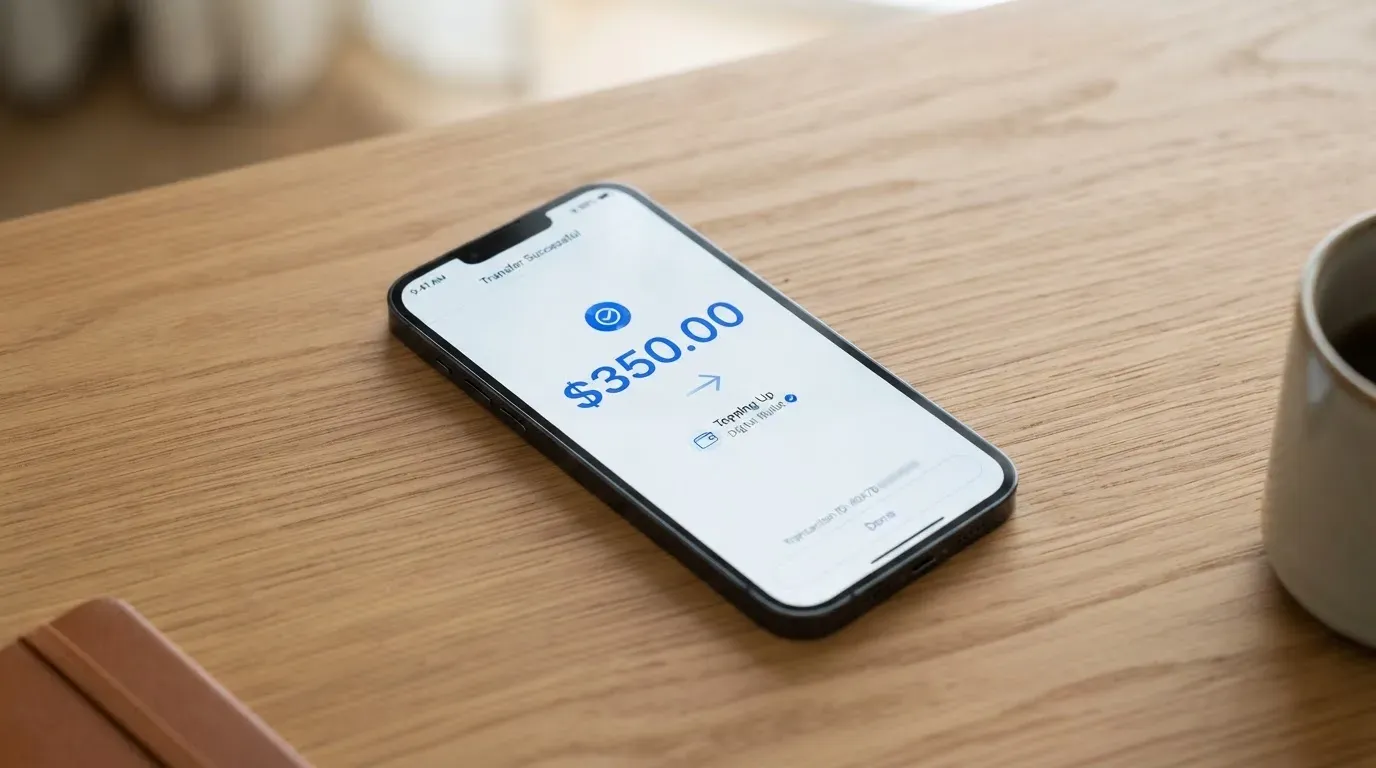
Third-party descriptions and reviewer copy suggest the supported assets include SOL, BTC, USDT, USDC, ETH and other major tokens, sent either through the Telegram bot or through the SORN web dashboard. I want to be clear that this is the picture I got from unofficial sources; AnoCard’s own pages do not publish a network table, so you do not know in advance which chain each asset is expected on. That is a meaningful gap, because sending USDT to the wrong network is one of the most common ways to lose money in crypto, and once a transaction is sent on-chain it is generally not reversible.
The two practical points to keep in mind before your first top-up:
- The address you are given inside the Telegram bot or SORN is the one that matters. If you copy and paste it into a wallet and your wallet picks a different network, the funds can end up in a place the operator’s system does not watch for, and recovery is a support ticket rather than a guarantee.
- The top-up percentage and the minimum are not constant across assets. USDT on a cheap network and BTC on the Bitcoin base layer are likely to carry different fees and different minimums, and the only way to see those numbers before you commit is to walk through the SORN flow.
Withdrawal, in the sense of moving a fiat balance off the card back to your bank, is not described on the public pages, and there is no statement of how to cash out a remaining card balance to crypto. That is a real limitation, and it is worth deciding before you load a card whether the balance is money you are happy to spend down inside the card’s own world.
Paying with AnoCard every day
Once the card is issued, everyday use is mostly straightforward, with the usual caveats that come with prepaid products from non-mainstream issuers.
- Mobile wallets. Apple Pay and Google Pay work where the BIN and your region allow tokenisation. There is no published list, so the only way to know for sure is to try adding the card, which the operator’s copy suggests reviewers have done successfully.
- Online checkout. A virtual Mastercard or Visa number (the network depends on the BIN you pick) goes into the card field like any other. You will not get a physical card, and there is no magnetic-stripe or contactless card to tap at a shop, so this is an online-first product.
- Recurring payments and subscriptions. A reloadable product behaves like a prepaid card: it spends only the balance on it, it cannot overdraw, and if the balance runs out the subscription will fail rather than go into arrears. That is safer in one sense and inconvenient in another.
- ATM use. Not stated. There is no published list of ATM networks and no published fee, which is enough to assume the operator is not actively marketing ATM access.
There is no cashback programme. There is a referral programme, and it is worth describing because it is one of the few concrete numbers AnoCard does publish: you receive $5 for each referred card creation and 0.25% of referred top-ups. That is enough to make the card feel a little less anonymous for the people who treat it as a side hustle, but it is not a rewards programme in the usual consumer sense.
For managing the card, the only official channels are the SORN web dashboard and the Telegram mini-app. There is no native iOS or Android app, and the operator’s reviews repeatedly describe support happening in Telegram direct messages, which is consistent with how the product is sold but also means there is no email support queue to fall back on.
What can go wrong with AnoCard
The honest way to write a risks section is to separate the things I could check from the things I could not.
- Issuer and licence are not named. The operator is Anonymous Coding Cult (the page footer reads “(c) 2026 Anonymous Coding Cult”, and the starting data points to AnonymousCodingCult LTD). The Trustpilot profile lists Estonia as the company contact location. The bank or e-money institution that actually issues the cards is not named on the pages I read, and no licence number is published. For a prepaid card product, that is a meaningful gap: if the programme is wound down, your remaining balance is only as recoverable as the operator’s goodwill and the issuer’s processes allow.
- Country and citizenship rules are not published. If you are in a country that the underlying issuer decides to exclude, you may find a previously working card declined at a moment’s notice, with no prior notice and no published appeals process.
- No published dispute or chargeback process. The public pages do not describe how a cardholder is supposed to raise a disputed transaction, recover an unauthorised charge, or escalate a non-delivery. That does not mean none of it exists, but it is not in writing.
- The “no KYC” pitch is partial. The AnoCard brand does not run a full identity check on its side, but the issuer and the network can still apply their own rules. If the issuer later asks for documents, refusal can mean the card is frozen.
- There is no App Store or Google Play listing for the product. The dashboard lives on the web and inside Telegram. Any “AnoCard” app that appears in a mobile app store is not an official channel, and you should treat it as a phishing risk.
- The Trustpilot picture is small but positive. AnoCard’s Trustpilot profile, under the name Anonymous Coding Cult, shows 4.7 from 44 reviews, with 7 in the last twelve months, 98% five-star and 2% three-star. The profile also notes that the company has not recently invited reviews and does not verify them, so the sample is small and self-selected. There are no recurring complaint themes, and the positive themes are around speed, ease of use, support in Telegram and privacy. One 3-star review dated 11 August 2026 has no substantive content, which is the most recent piece of negative feedback.
- On-chain transfers are irreversible. If you top up with the wrong asset, on the wrong network, or to the wrong address, the funds can be lost, and the only path back is a support ticket, with no guarantee of recovery.
The general rule of thumb is the one that applies to any prepaid product from a small operator: load only what you are prepared to spend, and treat the card as a spending tool, not as a place to park a balance.
What to take instead of AnoCard
AnoCard is not the only virtual card in this corner of the market, and looking at the alternatives is the easiest way to see what AnoCard does and does not give you. The three cards below are the most direct comparisons from the same category, and each one highlights a different trade-off.
| Card | Score | Form | Key costs | Top-up | Where it works |
|---|---|---|---|---|---|
| Azul Card | 5.3 / 10 | Virtual Mastercard, USD balance | $20 creation (refunded after $2,000 spent), $5/month maintenance | Crypto in Telegram; 4% + $0.25 per transaction | Worldwide except Russia, Belarus, North Korea, Iran, Syria, Cuba, Sudan, Venezuela, Ukraine and the Crimea, Donetsk, Luhansk, Zaporizhzhia and Kherson regions |
| Telecard | 6.1 / 10 | Virtual Mastercard, USD | $5 standard, $49 setup + $19/month VIP, $99 minimum deposit (stays in wallet) | USDT (TRC-20 or ERC-20), USDC (ERC-20), ETH, TRX | “Over 150 countries” wherever Mastercard is accepted; sanctions-based exclusions only |
| OnCards | 4.6 / 10 | Virtual Mastercard/Visa in Telegram | Not published | USDT on BEP-20 only | Not stated |
A few observations from that comparison:
- Azul Card is the only one of the three that publishes a country list, and the list is long. If you are in a country that is on it, the card is not an option; if you are not, the published monthly maintenance fee and the 4% top-up cost are useful to know in advance.
- Telecard is the most explicit about the costs of running the card, with a standard and a VIP tier, a published currency conversion fee (1.5%) and a gas fee (0.5 USDT per transaction). It also tells you which networks it accepts, which is more than AnoCard does.
- OnCards is the closest in spirit to AnoCard, including the Telegram-first experience, but it is even more opaque on fees, and the only published top-up network is USDT on BEP-20.
The honest summary is that AnoCard sits between these three. Its top-up range is wider than Telecard’s and OnCards’, but narrower than what an off-the-shelf wallet gives you. Its fee transparency is worse than Azul’s and Telecard’s, but its published Trustpilot score is comparable. If you are choosing on the basis of “where can I actually use it”, Azul and Telecard give you more certainty than AnoCard. If you are choosing on the basis of “I want a Telegram-first product with a privacy angle”, AnoCard is the most direct match.
Who I would recommend AnoCard to
After going through the facts, the questions and the alternatives, my recommendation is a narrow one.
- Use AnoCard if you are already a Telegram power user, you have crypto in a self-custody wallet you trust, you want a virtual card for online spending rather than a physical card for a shop, and you are comfortable approving a one-off fee inside SORN without seeing a published schedule. If you treat it as a privacy-friendly spending tool and load only what you intend to spend in the next few days, it does the job.
- Skip AnoCard if you need a physical card, if you want a published fee schedule, if you need a clearly named issuer and a licence number you can look up, or if you are in a country where a future compliance decision could freeze your balance with no published appeals process. For those readers, a regulated e-money card with a published fee page and a physical option is a better fit, even if it means going through a normal KYC flow.
AnoCard is a small, useful product, and the 5.9 is not a verdict against it so much as a description of it. The operator is more comfortable talking about what the card does than about who stands behind it, and a reader who is happy with that balance of information will get a working virtual card. A reader who needs more certainty should look at the alternatives before they commit a meaningful amount of crypto.
Frequently asked questions
What is AnoCard?
AnoCard is a virtual payment card sold through a Telegram mini-app and a web dashboard called SORN. You pay for the card in cryptocurrency, and the card is then used for online payments, with optional Apple Pay or Google Pay support where the card’s BIN and your region allow it.
How does AnoCard card work?
You pick a virtual card product inside the Telegram bot or SORN, pay for it in crypto, and the card details are usually issued within 10 minutes. The card behaves like a prepaid product: you top it up with crypto, it spends only the loaded balance, and the underlying issuer and card network apply their own rules on top of AnoCard’s.
Is AnoCard a bank?
No. AnoCard is a product operated by Anonymous Coding Cult; the page footer reads “(c) 2026 Anonymous Coding Cult”, and starting data points to AnonymousCodingCult LTD with a contact location in Estonia. The bank or e-money institution that actually issues the cards is not named on the public pages, and AnoCard is not described as a bank.
Who owns AnoCard?
The brand and the operator are Anonymous Coding Cult. The Trustpilot profile for the company uses the name Anonymous Coding Cult and lists Estonia as the company contact location. The licensed issuer underneath the brand is not named on the public materials I could read.
Is AnoCard card available in my country?
The operator does not publish a country list. The vendor copy says there is “no KYC theater” on its side, but it also notes that “issuer and network rules still apply”, which means a country can effectively be excluded at the issuer’s discretion. The only way to know for sure is to try the SORN flow and see whether the card is offered to you.
How do I get an AnoCard card?
Open the AnoCard mini-app in Telegram, or go to the SORN web dashboard at sorn.anoncult.com, choose a virtual card product, pay for it in the supported crypto asset, and wait for the card details to be issued, which usually happens within 10 minutes after the chain confirmations.
Does AnoCard card require KYC?
On the AnoCard side, the operator says there is no KYC for the core flow. Third-party descriptions on Trustpilot repeat that there is “no KYC or intrusive identity checks”. The qualifier is that the issuer and the card network can still apply their own identity rules, and a paid verification code sold by the operator can lower fees and raise limits.
How do I top up my AnoCard card?
You go into the Telegram bot or the SORN web dashboard, pick the asset you want to load (unofficial sources list SOL, BTC, USDT, USDC, ETH and others), and send it to the address the dashboard gives you on the network it expects. The top-up percentage and the minimum depend on the asset route, and the card is usually reloaded within 10 minutes of the chain confirmations.
Is AnoCard card free?
There is no published fee schedule. The creation fee varies by BIN, some products carry a maintenance fee, and the top-up percentage and minimum depend on the asset you use. All of these numbers appear inside SORN before you confirm the payment, rather than on a public price page.
Is AnoCard card safe?
The honest answer is “safer than keeping crypto on an exchange, less safe than a regulated e-money card with a named issuer”. The published Trustpilot score is 4.7 from 44 reviews, with no recurring complaint themes, but the issuer and any licence are not named, there is no published dispute process, and on-chain transfers are irreversible, so the usual crypto self-custody rules apply.
Virtual card fees – cryptocardfacts
Content created by the «cryptocardfacts» team