
A crypto-funded virtual card that promises privacy and charges you in the places it will not name
 Available in US

DigitalPurse is a virtual payment card you load with crypto and then spend through your phone’s mobile wallet, in stores and online, anywhere Apple Pay, Google Pay or Samsung Pay is accepted. There is no physical card, no ATM access, and no chargeback: if a purchase goes wrong, you have no card-network route to reverse it. The platform describes itself as a technology company, not a bank, and does not name the institution that issues the card.
I scored it 5.8 out of 10. That is not a score that says “avoid at all costs” — it is a score that says “useful idea, thin disclosure”. For a reader whose problem is that ordinary banks will not open an account for them, the card does one thing well: it gives them a card number that spends. For a reader who simply wants a cheap way to pay for things, the same card is worse than any free virtual card from an app they already use, because nobody will tell them what it costs.
The conditions described here are current as of October 28, 2026.
Verdict: 5.8 out of 10, and what that number is made of
Here is the whole score in one table, criterion by criterion, with the reasons in plain words.
| Criterion | Mark | Why |
|---|---|---|
| Who can get it | 6 / 10 | No country list and no exclusions are named, no limits on citizenship or residence, and the issuing region is not disclosed |
| Cost | 5 / 10 | Officially, issuance and top-up fees are visible in the app during creation, but no figures appear on the site and none are disclosed; unofficially, $3 for a virtual card and a $6 minimum balance by one App Store review, while cryptocards.so says issuance, top-up and monthly are free — the sources disagree |
| Top-up options | 7 / 10 | BTC, LTC, XMR, ETH, USDT, USDC; networks not disclosed; no extra fees for USDT and USDC |
| Reliability and complaints | 6 / 10 | Issuer not named, the platform is not a bank; chargebacks are not supported; Trustpilot 4.8 from 232 reviews, with complaints about declines at Google Cloud, Azure and DigitalOcean |
| Everyday use | 5 / 10 | Virtual only; Apple Pay, Google Pay and Samsung Pay available; ATM not permitted |
| Total | 5.8 / 10 | A quick, anonymous-style virtual card funded with crypto — and that one-line description is both its selling point and its ceiling |
Read that table twice. The two halves matter differently. The top-up row is the strongest, because six assets including the two biggest dollar stablecoins is a genuinely wide menu. The cost row is the weakest in substance, not in principle: I am not marking it down because the card charges a lot, but because nobody will say what it charges. An unpriceable fee is worse than an expensive one, because you cannot budget against it and you cannot tell whether you were charged correctly.
Who this suits, stated plainly: someone who has crypto sitting in a wallet, no usable bank card, and a merchant to pay right now. The card solves the access problem quickly. Who it does not suit: someone who wants to know what a coffee costs before they buy it, someone who plans to rely on refunds, anyone who needs cash from an ATM, and anyone for whom non-disclosure of the issuer is a dealbreaker in itself.
Will they give you the card?
The short answer is that the public pages do not say who is eligible. There is no list of countries, no list of excluded countries, no stated restrictions on citizenship or residence, and no disclosed issuing region. Nothing on the site tells you whether your country is one where the card can be created, or where a card created elsewhere will work.
That silence is unusual, and it matters more here than for a card from an established bank, because the issuer is also not named. The footer names the company — DECLASSIC TECHNOLOGIES LLC, 2026 — and the site states plainly that it is “a technology platform, not a bank” and that services “may be facilitated by third-party licensed financial institutions”. Who those institutions are, where they are registered, and which licence they hold: not stated.
So the practical answer to “will they give you the card” is: probably yes in many places, but nobody has published enough for you to plan around. If your country’s rules on crypto cards matter to you — because you are in a place where holding or spending crypto is restricted, or where a foreign-issued prepaid card is uncomfortable — you need to ask support directly before you load any money, and treat the answer you get as provisional.
There is one thing the general structure of KYC tells you, and I want to walk you through it because it shapes the next section. Under EU rules, customer due diligence covers name, address, date of birth, nationality and identity documentation, a sanctions check, the purpose of the relationship, and whether the customer is a politically exposed person. In the US the customer identification programme requires name, date of birth, address and an identification number. Nationality is screened separately from residence, because sanctions screening and issuer risk policy often apply to citizenship and country of birth as well as to country of address. Prepaid and debit cards are generally available to adults at 18+, sometimes with higher issuer limits. So the card existing at all tells you the platform is inside a regulated framework somewhere; it does not tell you which framework, or which country applies it to you.
How to get it
You download the app, create an account, and the card is generated. There is no application form, no waiting list and no physical delivery. The card is created through the app or a Telegram bot and is described as “available instantly”; orders are processed right away and “may take up to 24 hours”. Virtual only — no plastic will ever arrive in the post, so if you have been imagining something in your wallet, drop that image now.
The card is usable in store through mobile wallets, and the network and card currency are not stated. You add it to Apple Pay, Google Pay or Samsung Pay and use your phone.
On identity checks: the home page says only “create an account” after downloading the app, and the KYC documents required are not stated. Age is 18+, and one account per individual. Officially, KYC applies only for certain payments or products, and Non-KYC cards exist — at a higher price, because the platform says they “offer greater privacy and flexibility”. Reloadable KYC cards are the lower-cost option, and verified users get higher limits than unverified ones. Unverified users work under daily and monthly order caps whose amounts are not stated. No verification levels are defined, KYC “may” be required for some payments or products, and processing time and rejection reasons are not stated. A help article titled “Why is my KYC verification still pending?” exists, which tells you the question comes up often enough to be documented; I did not read it.
My read: the structure is a two-tier design — a cheap reloadable card once you are verified, and a pricier privacy card for people who do not want to be. That is a coherent design. It is also a design where the price of the privacy tier is never published, which is exactly the trade-off you cannot evaluate from the outside.
Fees: what it really costs
Officially: almost nothing is disclosed. The terms say purchases “may be subject to handling fees”, with amounts “detailed in the specific terms” of each product. Issuance and monthly fees are not stated. The platform’s own position is that creation and top-up fees are displayed in the card description in the app while you are creating the card, and that on privacy cards those fees scale with the amount. No percentages are published. Extra fees are possible for some non-fiat funding methods.
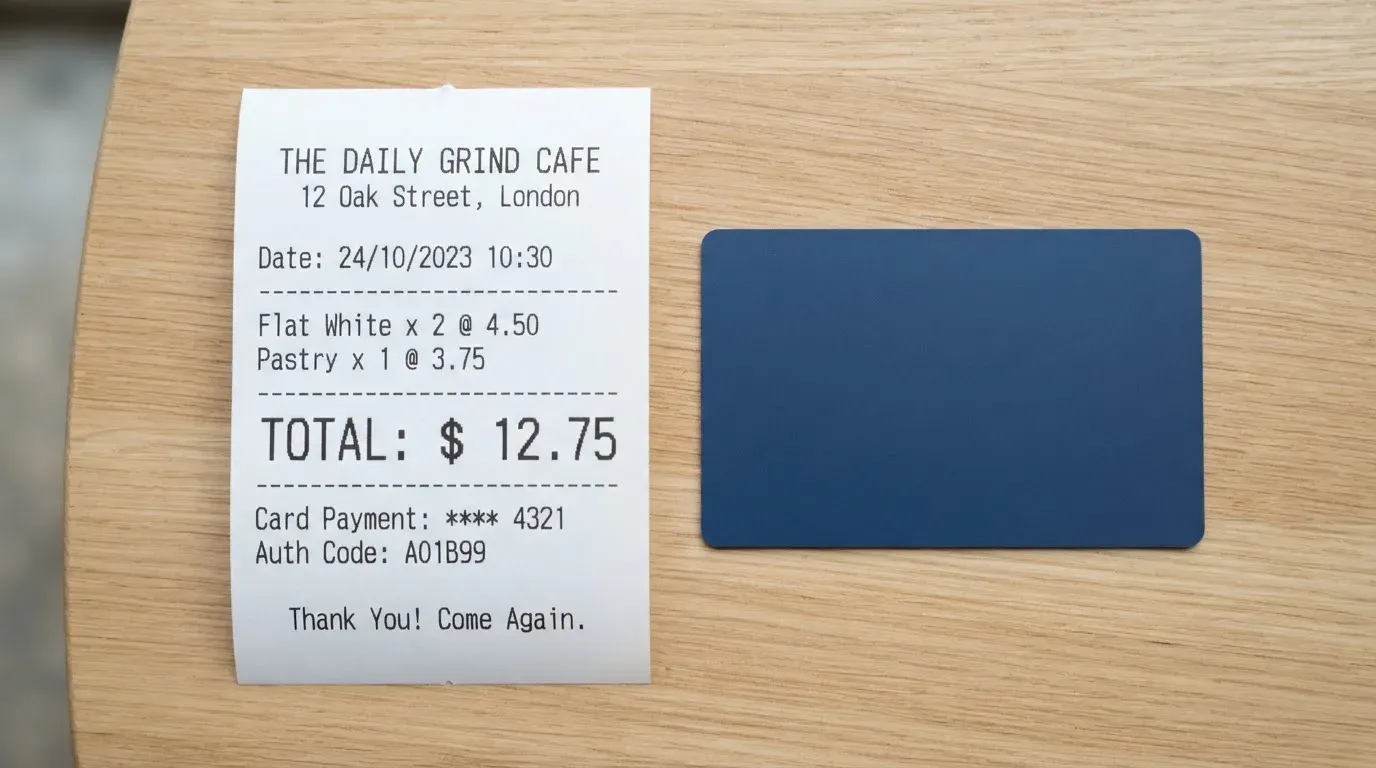
Unofficially, the picture is contradictory, and I would rather show you that than smooth it over. An App Store reviewer says the company charges an extra $3 for a virtual card and requires a minimum $6 balance. cryptocards.so, a third-party aggregator, lists issuance, top-up and monthly fee as free, while also listing spending limits as “unlimited” — and in the same breath noting that the platform publishes no limits. Treat both as unconfirmed.
Here is the cost table, with every disclosed item in one place and gaps marked as gaps.
| Fee or limit | What the card says |
|---|---|
| Issuance fee | Not stated; shown in-app during creation. Unofficial: $3 for a virtual card |
| Monthly fee | Not stated. Unofficial: listed as free by a third-party aggregator |
| Minimum balance | Not stated. Unofficial: $6 minimum |
| Top-up fee | Scales with the amount on privacy cards; no figures. No extra fee for USDT and USDC; extra fees possible for some non-fiat methods; BTC, ETH, LTC and XMR may cost more |
| Payment conversion | Crypto is converted to USD the moment it is loaded to the card. Spread and fee for paying in another currency are not stated |
| FX fee | Not stated |
| ATM withdrawal | Not permitted — treated as a “transfer of value”. Terms also list “Manual Cash Disbursements” and “Automated Cash Disbursements” among prohibited purchases |
| Starting balance | Virtual cards offered with a “starting balance of up to $1,000 – $10,000” |
| Spend and ATM limits | Not stated. Unofficial: “unlimited” per one aggregator, with no platform-published limits |
| Card currency | Balance in USD; card currency not stated |
Now the three everyday payments, because abstract fees hide more than concrete ones.
A coffee on your phone. You tap to pay, the money comes out of the stored USD balance, and the stated conversion happens at load time rather than at payment time. Which fees apply: any handling fee the product’s own terms may add, plus — if you are paying in a currency other than USD — a spread and fee that are not stated anywhere. The network charge of the underlying blockchain is not involved at all, because by then the money is just a balance.
An online subscription or purchase. The same as above, plus 3-D Secure is a plausible factor. Visa’s 3-D Secure brand is Visa Secure and Mastercard’s is Identity Check; the 2016 version supports one-time passcodes and app-based authentication. With a prepaid or foreign-issued card, two things commonly cause declines that have nothing to do with your balance: Address Verification Service, which compares numeric parts of the billing address you typed with issuer records and is mainly offered in the US, Canada and the UK and is generally unavailable for foreign-issued cards; and merchants who decline prepaid or foreign BINs because the BIN lookup reveals the card type and issuer country. A card number starts with a 6- or 8-digit issuer identification number identifying the issuing institution, and the rest is an account identifier and a check digit — which is exactly what a merchant’s system reads when it decides you look “foreign”.
Taking money out at an ATM. Not possible. This is a hard no, not a fee.
Two things that are not this card’s fee but feel like one: on-chain network fees for your deposit are charged by the blockchain, not the card provider — gas on Ethereum is paid only in ETH, so a wallet holding USDT and no ETH cannot send. And a declined authorisation may leave a hold on your funds for several days, typically up to 7, which is money you did not spend but cannot access either.
Top up: how the money gets in
Six assets are accepted: BTC, LTC, XMR, ETH, USDT and USDC. The blockchain networks are not stated, and that single missing detail is the one I would not gloss over. Blockchain transfers are irreversible, so a deposit sent on a network the provider does not support, or to an address belonging to a different network, can be lost or need manual support recovery with no guarantee. You are told which assets work. You are not told which rails.
The mechanics are simple. On a reloadable card you select the card and choose “Add Funds”. Non-reloadable cards cannot be topped up — you buy as many as you want instead. Minimum top-up is not stated.
On fees, the platform’s guidance is worth reading closely, because it is the one place it gives practical advice. No extra fees are charged for USDT and USDC, bank transfer or mobile money, and those are what it suggests if you want to avoid extra charges. BTC, ETH, LTC and XMR may cost more — the platform attributes this to volatility and processing. That is a sensible steer away from the assets nobody can price in advance.
A word on the stablecoins themselves, because “USDC” and “USDT” are not interchangeable in reliability. Circle says USDC is redeemable 1:1 for USD and 100% backed by cash and cash equivalents, mostly in an SEC-registered government money market fund, with monthly reserve attestations by a Big Four firm, and it listed USDC as natively supported on 38 networks as of 16 September 2026, including Ethereum, Solana, Base, Polygon PoS, Avalanche, Arbitrum and Stellar. Tether describes USDT as a token built on multiple blockchains with reserves intended to back it 1-to-1, issued on networks including Ethereum, Tron, Solana, Polygon and Avalanche. Neither is immune to trouble: TerraUSD collapsed in May 2022, USDC temporarily lost its peg in March 2023 during the US banking crisis, and “despite the name, stablecoins are not necessarily stable”. The BIS put about 90% of stablecoin market capitalisation in USDT and USDC as of July 2025. And stablecoins are not censorship-proof — Tether says it disables tokens in wallets on the OFAC sanctions list and has frozen funds tied to illicit activity.
Getting money back off the card is possible, but thinly documented. The FAQ says “Yes, you can withdraw your funds. Terms and conditions apply”, and the help center path is to select the active card, then More/Manage, then “Withdraw Funds”. Fees, minimum, timing and destination are not stated. What happens to a balance if you close an account is not stated. ATM withdrawals are not permitted, so this is the only route out — which makes its missing detail the more consequential gap.
Paying with it every day
Day to day, the card is a wallet app you top up and tap. That is genuinely simple once you know the two failure modes.
The first is merchant-category filtering. The site lists prohibited purchases, “not exhaustive”: betting and casino gambling, government-licensed online casinos, non-sport internet gaming, dating and escort services, security brokers and dealers, foreign or non-fiat currency, wires and money orders, and cash disbursements. Many issuers block gambling codes like MCC 7995 by policy rather than by law, and the blocked list varies by issuer — this card’s list is a policy choice you accept when you sign up.
The second is decline risk at infrastructure providers, which is the single most concrete complaint I found and it comes up again in the risks section: cards declined at Google Cloud, Azure and DigitalOcean, attributed to prepaid BIN blocking.
The wallet side is the part that works well. Apple Pay replaces the card number with a device-specific Device Account Number stored in the Secure Element, never on Apple servers, and each payment uses a one-time dynamic security code. That is a real security benefit over typing numbers. The issuer can, however, restrict a tokenised number — for example block it on magnetic-stripe, phone or website use.
Apps for both iOS and Android exist, with the site’s download buttons pointing to its own hosts rather than the stores. Unofficial ratings: about 4.6 out of 5 on Android from roughly 170 reviews and 50,000+ installs; about 4.5–4.7 on iOS from over a thousand ratings. I did not find an official store rating on the platform’s own pages. Rewards are not stated.
If a payment fails, support is reachable: “available 24/7” through the in-app support system, a Telegram bot at t.me/digitalpurse_bot, a Help Center in English with 29 articles, and a support email specifically for failed purchases. I would bookmark the Help Center before your first payment, because it is the only documentation that exists.
What can go wrong
No chargebacks, at all. The card states “we cannot support chargebacks”, citing unsustainable fraud, blockchain finality and privacy, and says this applies to sub-issuers too. A chargeback is a refund ordered by the issuer to settle a dispute, with reason codes for fraud, duplicate billing or goods not received. This is the biggest single difference between this card and a bank card, and it is worth pausing on what it means: in the US, debit card reversal rights come from Regulation E and credit card rights from Regulation Z, but prepaid-card coverage varies and should not be assumed — and here it is not just unassumed, it is refused in writing. Returned items are refunded “to the card originally used”, and gift-code orders get no returns or refunds once processed. No dispute time frames are stated.
Declines. Trustpilot 4.8 out of 5 from 232 reviews, 60 in the last 12 months, latest 19 October 2026, with the company noted as not having invited customers recently and the visible reviews positive. The same site’s earlier reading via a different domain was 4.5 from 192 reviews. Recurring complaints from a third-party aggregator and an App Store reviewer: declines at Google Cloud, Azure and DigitalOcean, non-refundable balances, and an extra charge on small cards. The aggregator also cites Reddit threads from r/Ghana and r/Nigeria that I could not verify. No official incident found. Under the EU’s rules, if due diligence cannot be completed the institution must refrain from the transaction or relationship and, where necessary, end existing relationships — which is the general reason accounts freeze or close pending documents, and the general reason a card can stop working.
Custody. The card is custodial by nature: funds are held with the platform and its sub-issuers, and the site says so. Control of crypto belongs to whoever holds the private key; with a custodial wallet the provider holds the credentials, so you must trust the provider completely. This carries a documented history — Mt. Gox (about $350 million reported stolen, 2011–2014), Coincheck (about $400 million, 2018), Ronin Network ($625 million, 2022). The site’s own security language is “secure encryption, minimal data collection, and strict access controls”. In-app freeze, two-factor authentication, spending controls and insurance are not stated, though you can cap the amount loaded onto a card to limit spending.
Regulatory footing. There is a MiCA angle worth knowing whether or not it applies to you. MiCA is the EU’s markets-in-crypto-assets regulation and took legal effect in June 2023; its rules on asset-referenced tokens and e-money tokens applied from 30 June 2024, and the remaining provisions including crypto-asset service provider rules applied from 30 December 2024. Under it, e-money tokens may be issued only by a credit institution or an electronic money institution. Transitional providers could continue only until 1 July 2026 or until they were authorised or refused, whichever came first. ESMA keeps an interim register of authorised CASPs, white papers and non-compliant entities, and you can check a provider there. Also note that a card is a payment service regulated separately from the crypto side, so a crypto card often depends on two licences — and electronic money institutions must safeguard customer funds in segregated accounts or by insurance, which are not the same as bank deposits and may not sit under a deposit guarantee scheme. In the US, FinCEN guidance treats administrators and exchangers of convertible virtual currency as money transmitters; ordinary users buying goods are not.
Programme risk. Card programmes end. Visa terminated its global agreements with FTX on 13 November 2022 and the FTX US debit card was wound down by its issuer. WaveCrest, a Visa issuer that supplied crypto card brands, was suspended by Visa in Europe in 2018, closing all its Visa programmes. Closures typically mean a notice period, then spending and loading stop, then users are asked to withdraw remaining balances. On this card specifically I found no dated licence, issuer or programme events on the official site or help center; help articles from 2025–2026 about non-reloadable cards and chargebacks are undated.
Taxes. I am not giving tax advice, but I would be doing you a disservice not to flag this. The IRS treats digital assets as property, so exchanging them for goods, services or dollars generally produces a taxable gain or loss, measured in local fiat currency at fair market value on the transaction date. Each card payment funded from crypto may be a separate disposal. That is a bookkeeping question for a professional in your jurisdiction, not for me.
What to take instead
Three alternatives came up in my research, all scored on the same criteria. None of them is a clear upgrade; they trade the same unknowns for different ones.
| Cardex | CardFlow | HyperCard | |
|---|---|---|---|
| Score | 5.6 / 10 | 4.9 / 10 | 4.7 / 10 |
| Who | “One crypto card, 200+ countries”; no country list or exclusions; app listing is Naira-focused | Aimed at Nigeria and “Nigerians and global users” | No country list; app says it works in “more than 176 countries” — acceptance, not eligibility |
| Card | Debit card on VERVE, Visa, Mastercard and UnionPay; virtual and physical | Virtual USD Mastercard, created in about 3 minutes | Prepaid; balance in USD or EUR |
| Fees | Real-time crypto-to-fiat conversion; an “AI-Powered Conversion Rate” picks the best rate at spend time; no percentage stated | “Creating a virtual card is completely free”; monthly fee not stated | Not stated; app page lists no fees |
| Funding | USDT, USDC, BTC | Bitcoin, USDT, ETH or Naira bank transfer | Crypto such as USDT, BTC, ETH, converted to USD or EUR |
| Rewards | Not stated | Not stated | Not stated |
Where these beat DigitalPurse: Cardex is the only one of the four that publishes card networks in detail and offers a physical card, which is what you need if mobile wallets are not your habit. It also says 200+ countries. Where they do not: every one of them keeps country exclusions, networks for funding, and fee percentages just as quiet, and Cardex and CardFlow are visibly built for Nigerian users, which narrows who they suit rather than widening it. HyperCard’s currency choice in USD or EUR is a small genuine advantage over a USD-only balance. None of them states rewards, and none of them will tell you what the atomic transactions cost in public either.
Who I would recommend it to
I would recommend this card to exactly one person, described concretely: someone with crypto already in a wallet, no way to open a normal bank card, and an urgent payment to make. For that person the card is genuinely useful, and the fast virtual creation with no application is the whole value. Use it that way — small, immediate, and funded with USDT or USDC rather than BTC or ETH so you avoid the extra charges the platform itself warns about.
I would not recommend it to you if any of these are true. You need cash. You need refunds and dispute rights, and the card refuses chargebacks in writing. You need to know the cost before you commit, and here nobody will tell you. You are in a jurisdiction where a crypto-funded foreign-issued prepaid card is a problem for you personally, and the issuer’s country is not disclosed. Or you simply already have a card that works.
The honest summary is that DigitalPurse sells discretion and access, and charges in transparency. That is a coherent product. It is not the product for a person who wants to know what a coffee costs before they buy it.
Frequently asked questions
What is the DigitalPurse card?
DigitalPurse is a virtual payment card funded with cryptocurrency. You create an account in the app, load crypto, and the value is converted to USD and held as a card balance you spend through Apple Pay, Google Pay or Samsung Pay. There is no physical card and no ATM withdrawal. The company behind it, DECLASSIC TECHNOLOGIES LLC, describes itself as a technology platform rather than a bank.
How does the DigitalPurse card work?
You download the iOS or Android app, create an account, and a virtual card is generated through the app or a Telegram bot, described as available instantly, though orders may take up to 24 hours. You add the card to your phone’s mobile wallet and tap to pay in store or online. When you load crypto, it is converted to USD the moment it is loaded, so later payments spend that stored balance rather than re-converting at each purchase.
Is DigitalPurse a bank, and who owns it?
No — the site states it is “a technology platform, not a bank”, and says services “may be facilitated by third-party licensed financial institutions”. The copyright line names DECLASSIC TECHNOLOGIES LLC, 2026. The issuing institution is not named, and its registration country and licences are not stated. That matters because a card’s chargeback rights normally come from its issuer, and this card does not support chargebacks at all.
Does the DigitalPurse card require KYC?
Partly. Officially, KYC applies only for certain payments or products, and Non-KYC cards exist at a higher price because the platform says they offer greater privacy and flexibility. Unverified users have daily and monthly order caps whose amounts are not stated; verified users get higher limits. The required documents are not stated, no verification levels are defined, and rejection reasons are not published.
How much does the DigitalPurse card cost?
Nobody will say officially. The terms say purchases “may be subject to handling fees” with amounts detailed in each product’s terms, and creation and top-up fees are displayed in the card description in the app during creation. No figures appear on the site. Unofficially, one App Store reviewer reports $3 for a virtual card and a $6 minimum balance, while a third-party aggregator lists issuance, top-up and monthly as free. USDT and USDC attract no extra top-up fee.
How do I top up the DigitalPurse card?
You select a reloadable card and choose “Add Funds”. Accepted assets are BTC, LTC, XMR, ETH, USDT and USDC, but the blockchain networks are not stated, which is the detail to insist on before sending anything — transfers are irreversible and a wrong network can be lost. Non-reloadable cards cannot be topped up; you buy additional cards instead. The platform advises USDT, USDC, bank transfer or mobile money to avoid extra charges.
Is DigitalPurse card free?
You cannot tell from the public pages. No issuance fee, monthly fee or percentages are published. What is published is that fees on privacy cards scale with the amount, that some non-fiat funding methods can carry extra fees, and that BTC, ETH, LTC and XMR may cost more because of volatility and processing. Virtual cards are offered with a “starting balance of up to $1,000 – $10,000”, so the balance you can hold and the balance you must hold are two different numbers.
Can I use DigitalPurse with Apple Pay and Google Pay?
Yes, and that is the intended way to spend. The site says the cards work at merchants supporting mobile wallets such as Apple Pay, Google Pay and Samsung Pay, and mentions virtual cards usable in store. Apple Pay stores a device-specific token in the Secure Element rather than your card number on Apple servers, and each payment uses a one-time dynamic code. Samsung Pay availability is stated by the platform; I did not test any of them myself.
Where can I use the card, and can I use it in my country?
Neither the issuing country nor the eligibility list is stated, so I cannot tell you. What is disclosed: the card balance is in USD, and crypto is converted to USD the moment it is loaded, with the spread or fee for payments in other currencies not stated. Practically, declines can come from merchant category rules or from prepaid BIN blocking — complaints specifically name Google Cloud, Azure and DigitalOcean.
Is DigitalPurse safe, and can I get my money back?
Both answers are qualified. The card is custodial: funds are held with the platform and its sub-issuers, the site cites secure encryption, minimal data collection and strict access controls, and in-app freeze, two-factor authentication, spending controls and insurance are not stated. Withdrawing is possible — select the active card, then More/Manage, then “Withdraw Funds” — but fees, minimum, timing and destination are not stated, and ATM withdrawals are not permitted. What happens to a leftover balance if you close the account is not stated either.
Virtual card fees – cryptocardfacts
Content created by the «cryptocardfacts» team