
A nameless Mastercard paid in roubles, run by a Bishkek company
 Available in US
MIG Pay is a payment card built for international users who want to pay abroad in roubles. The card is a Mastercard issued by a UK bank that the company does not name, sold through a Telegram mini-app by a Kyrgyz limited liability company called OOO “TriB Group”. There is no identity check at sign-up, no passport, and the card is described as nameless. After paying an 800 ₽ issuance fee through the Russian Faster Payments System (SBP), the card is ready in two minutes and stays valid for two years. Maintenance is free. The single biggest caveat is that MIG Pay’s public pages do not publish almost any of the information a cardholder usually relies on: which countries are supported, what the FX margin is, what ATM and daily limits look like, who the issuing bank really is, or what licences the programme runs under. Reviews are also essentially absent. For a reader who is happy to accept those gaps, MIG Pay is one of the few ways to get a Mastercard linked to a rouble balance without going through passport verification. For anyone else, the picture is too thin to recommend.
Conditions in this review are current as of October 28, 2026.
Verdict
MIG Pay scores 4.7 out of 10 in my reading. The reason it is not lower is the unusual combination it offers: a Mastercard, two years of validity, no monthly fee, and no identity check at all, in a market where most alternatives either demand full KYC or refuse Russian residents outright. The reason it is not higher is the long list of things the public pages simply do not say. The fee is hidden in the exchange rate and depends on the amount, which is fine in principle but means you cannot tell in advance what a given payment will cost. The company behind the card is a small Kyrgyz LLC, the issuing bank is unnamed, no licence is quoted, and there are no user reviews to lean on. Top-up works only through SBP in roubles, with crypto top-up unconfirmed on the page. Mastercard, app, and bank support are not described in detail.
Who MIG Pay suits
International users who need a card to pay abroad, are comfortable funding it in roubles through SBP, and are willing to take a product with no published FX margin, no stated limits, and no published reviews. The card is positioned precisely for that “from Russia, in roubles” use case.
Who MIG Pay does not suit
Anyone who needs clear country support, a written fee schedule, a chargeback pathway, or an issuer they can name on a regulator’s register. Anyone outside the rouble-SBP funding model. Anyone who wants Apple Pay, Google Pay, an app on the App Store or Google Play, or a physical card that arrives in the post — none of which MIG Pay states it offers.
Score breakdown
| Criterion | Mark | Why |
|---|---|---|
| Who can get it | 5 / 10 | Country list not published; service is positioned for paying abroad “from Russia, in roubles” |
| Cost | 6 / 10 | 800 ₽ issuance, free maintenance, fee included in the rate and amount-dependent; FX margin not published |
| Top-up options | 2 / 10 | Top-up in roubles via SBP in a Telegram mini-app; crypto top-up not confirmed on the page |
| Reliability and complaints | 5 / 10 | OOO “TriB Group” (Bishkek), UK bank unnamed, licences not stated; no reviews found |
| Everyday use | 4 / 10 | Mastercard for 2 years, ready in two minutes, reloadable; card type, Apple/Google Pay and ATM terms not stated |
| Total | 4.7 / 10 | A small niche product with very few written guarantees |
Will they give you the card
MIG Pay’s public pages do not list which countries it serves, which citizenships it accepts, or which residents it turns away. The single thing the site does say is that the service is positioned for paying abroad “from Russia, in roubles” — that is the use case it is built around, and the funding flow (SBP, see the Top up section) confirms that Russian SBP access is the assumed starting point. There is no separate Belarus page or note, and the page does not distinguish between citizenship and residence. If you are not in a position to send roubles through SBP, MIG Pay gives you no public answer about whether you can use it.
What MIG Pay does say clearly is that the card is nameless, and that it is issued without a passport and without checks. In my reading, that means there is no KYC step at sign-up at all, and the level of due diligence applied to cardholders is not stated. The cardholder’s age is also not stated. For a reader who has been turned away by a regulated card because of citizenship, country of residence, or missing documents, MIG Pay is the alternative that simply does not ask. The trade-off, which I come back to in the section on what can go wrong, is that “no checks” cuts both ways: it removes friction at sign-up, but it also removes the protections that come with being a verified customer of a regulated institution.
There is one practical detail worth keeping in mind. MIG Pay mentions UK and US billing addresses in passing. Mastercard can route a card issued in one country through a billing address in another, and some online merchants do flag the mismatch, but MIG Pay does not explain how the billing address is set or whether the cardholder chooses it. If you are evaluating the card for cross-border online payments, that ambiguity matters and is worth testing on a small purchase before relying on it for anything larger.
How to get it
The sign-up flow is unusually short. You open the MIG Pay Telegram mini-app, pay the 800 ₽ issuance fee via SBP, and the card is ready in two minutes after payment. There is no delivery, because the card is delivered inside the app. There is no identity document to upload, no selfie to take, no address to prove. Age is not stated, so MIG Pay is implicitly relying on SBP and Telegram account rules to keep out under-18s. From a cardholder’s point of view, the entire process is closer to buying a prepaid top-up than to opening a bank account.
The card itself is described as a Mastercard, issued by a UK bank whose name is not given, valid for two years, and reloadable. The page does not say whether the card is virtual only, physical only, or both; it does not say whether the card is credit, debit, or prepaid in the technical sense; and it does not state the card’s base currency. The two-year validity and the reloadable nature are both clear. Everything else is left for the cardholder to find out at the point of use.
Because there is no KYC, there is also no KYC upgrade path. MIG Pay does not publish a tiered scheme that starts light and ramps up with documentation. If a future payment gets blocked by a merchant or by the issuer, there is no stated “send us your passport and we will lift the limit” workflow.
What it really costs
MIG Pay’s pricing has two parts that are spelled out and several that are not. Issuance is 800 ₽, a one-time fee paid at sign-up. Maintenance is free. That is the whole visible cost schedule. The fee for actually spending the card is described in a single line: the commission is included in the exchange rate and depends on the amount, with larger top-ups getting a better rate. Transfers between your own MIG Pay cards are free.
What MIG Pay does not publish is the FX margin — the difference between the mid-market rate and the rate at which MIG Pay converts your rouble top-up into the currency of the merchant. For a rouble-funded card spending in euros or dollars, that margin is the most important number, and it is not on the page. ATM fees are not stated, daily and monthly limits are not stated, and there is no published tier structure. In effect, the only number a cardholder can know in advance is the 800 ₽ issuance fee, and the cost of every actual payment has to be discovered by paying and reading the receipt.
Fees and limits
| Item | Amount or status |
|---|---|
| Card issuance | 800 ₽, one-time |
| Monthly maintenance | Free |
| Spend fee | Included in the exchange rate; depends on the top-up amount; larger top-ups get a better rate |
| FX margin | Not stated |
| ATM fee | Not stated |
| Daily limit | Not stated |
| Monthly limit | Not stated |
| Transfer between own MIG Pay cards | Free |
| Top-up fee | Included in the rate, amount-dependent |
| Tiers | Not stated (single card product shown) |
| Card currency | Not stated; payments are made in roubles |
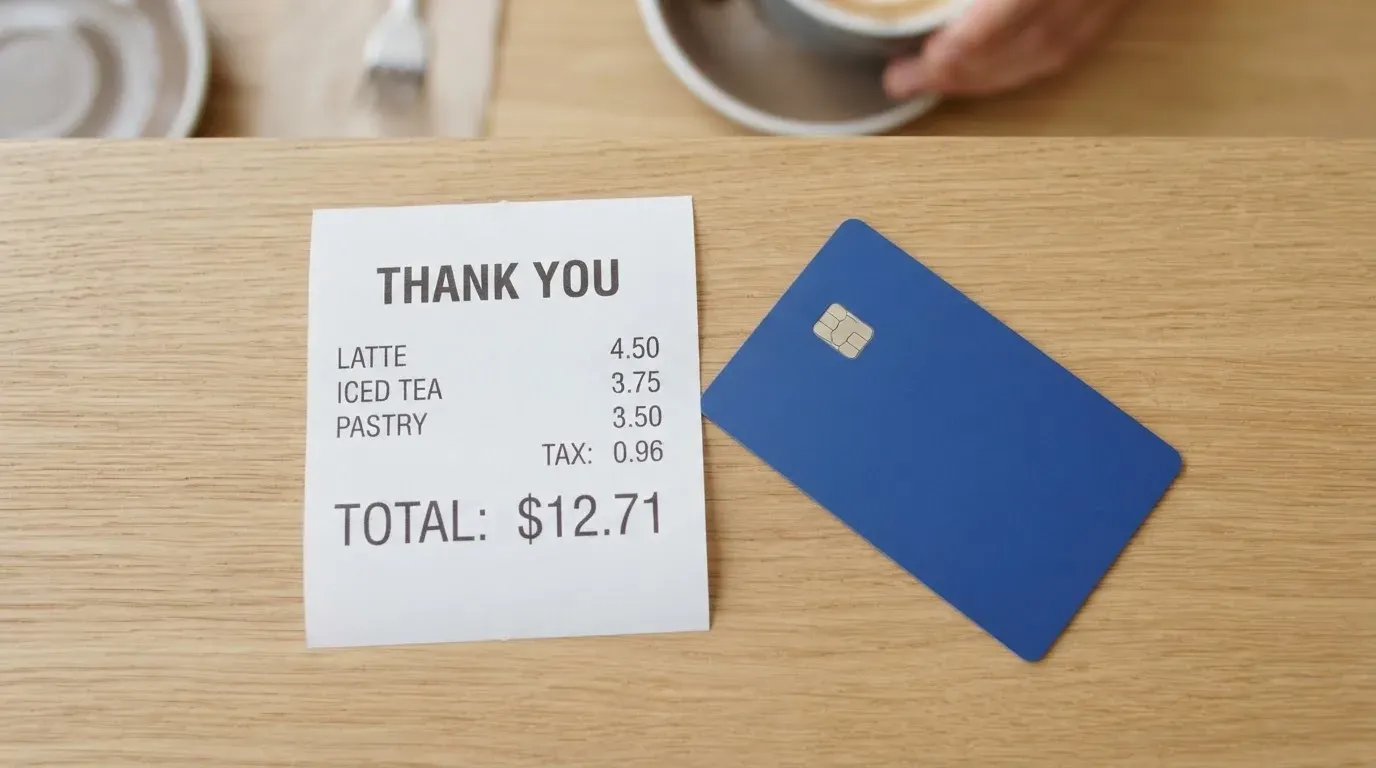
Three everyday payments, and what each one really costs
The easiest way to think about MIG Pay’s cost is to walk through three small examples, all of them the kinds of payments the card is built for. None of these are MIG Pay’s own numbers — the page does not give them. The point of the walk-through is to show you which fees would normally apply on a card like this, and where MIG Pay’s public information simply does not tell you what the number is.
With a card like this, the typical cost components are: the SBP top-up itself, the conversion from rouble to US dollar, and any foreign-transaction fee the card scheme or the issuer adds. MIG Pay’s stated fee is “included in the rate”, so the only visible line on the receipt is the dollar amount and the rouble amount charged. The 800 ₽ issuance fee is already in the past, and there is no monthly fee to subtract. What is missing is the FX margin, so the only way to find out what you actually paid is to compare the rouble amount against the rouble/USD rate at the moment of the transaction.
The mechanics of hotel booking are similar. MIG Pay says larger top-ups get a better rate, so the way to keep this kind of payment cheap is to top up with a single large SBP transfer rather than ten small ones. There is no published schedule, so the only way to verify the better rate is to compare the rate MIG Pay gives you against a mid-market rate for the same day.
For an in-app purchase made in roubles, there is no currency conversion at all. Here, the visible cost is the rouble amount you paid. MIG Pay’s rate-dependent fee still applies, but because the merchant and the funding currency are both roubles, there is no FX step to assess. This is the cleanest case, and the one where MIG Pay’s pricing model — fee in the rate — is hardest for a cardholder to evaluate against a competitor that publishes a percentage.
The general lesson, for a reader who is comparing MIG Pay to a card that publishes a clear fee table, is that you are trading a known cost (an explicit foreign-transaction fee) for an unknown one (a rate-dependent spread that you have to back out yourself). If predictability matters more than the headline price, that is a real disadvantage.
Top up
MIG Pay’s top-up flow is the most concrete part of the product, and the most limited. The page says you top up the card in roubles via SBP inside the Telegram mini-app, and the partners named on the page are SBP and Exnode. The top-up fee is included in the rate and is amount-dependent — larger top-ups get a better rate, but MIG Pay does not publish the thresholds or the resulting rates. The minimum top-up is not stated. There is no separate withdrawal function described.
The starting data I worked from included a USDT top-up option. That is not confirmed on the page: MIG Pay’s public text does not say you can top up with USDT or any other cryptocurrency, and it does not name a deposit address, a network, or a wallet to send from. If crypto top-up is available, it is in the app, not on the marketing page, and the only public description is the SBP-in-roubles flow. For a reader who was hoping to fund the card directly from a stablecoin balance, the conservative reading is to assume it is not available until MIG Pay says otherwise.
In practice, the SBP-only funding model has two consequences a cardholder should think through before signing up. First, you need a Russian bank account or wallet that can send through SBP, because there is no other way described to get money onto the card. Second, because MIG Pay’s fee is included in the rate, the cost of any given top-up depends on its size, so splitting one large payment into several small ones is more expensive at the rate level. There is no stated minimum, so the practical floor is whatever SBP itself sets.
Paying with it every day
The card is a Mastercard, valid for two years, reloadable, and ready in two minutes after payment. The product page does not describe a separate app for day-to-day use: the interface is the Telegram mini-app or a browser version. There is no App Store or Google Play app mentioned, and no app-store ratings to lean on. There is no published cashback or reward scheme, and the cardholder wallet types (self-custody, exchange, fiat) are not stated.
Three practical consequences follow. First, because there is no native mobile app, the only way to freeze the card, check the balance, or see recent transactions is through Telegram or a browser. For a cardholder who is used to a banking app with biometrics, that is a downgrade. Second, because MIG Pay does not describe Apple Pay or Google Pay, there is no published tokenisation flow, which means contactless phone payments are not something the card promises. Third, because the card’s base currency and FX margin are not stated, the only way to know what a given payment cost is to look at the rouble amount that left your SBP-linked account after the transaction cleared.
The dispute and failed-payment story is also thin. The FAQ says that if a payment fails, the money does not disappear and the balance stays on the card, with support investigating the cause. Chargeback terms are not stated. For a reader who is paying for a hotel or a flight abroad, that gap is worth weighing: the issuer that processes your chargeback is the UK bank MIG Pay does not name, and MIG Pay does not publish a written pathway for getting your money back if a merchant fails to deliver.
What can go wrong
MIG Pay’s risk profile is the section where the missing information matters most. I cannot find a public incident, a Trustpilot page, or a published review of MIG Pay or migpay.app, so the picture below is built from the public pages themselves and from what is missing from them.
The company behind MIG Pay is OOO “TriB Group” (registration 214410-3301-OOO), with an address in Bishkek, Kyrgyzstan. The card is described as issued by a UK bank whose name is not given. No licences are quoted — not a UK e-money licence, not a Mastercard issuer registration in the cardholder’s name, not a Kyrgyz payment-services registration. For a reader who is used to verifying a card issuer on a national regulator’s register, there is no register entry to check. “UK-issued Mastercard” is the only description, and MIG Pay’s pages do not say which bank actually issues the programme.
The security information on the public pages is also thin. The page does not describe two-factor authentication, biometric login, instant card freeze, spending limits, or 3-D Secure enrolment. The support channels are listed: a Telegram account at @MIGPaySupport, an email at [email protected], and a bot at telegram.me/migpaybot. The site is in Russian, support hours are not stated, and there is no published incident-response procedure.
The funding model adds a layer of risk that MIG Pay does not address. If the only top-up method is SBP in roubles, the cardholder’s exposure is to SBP itself, to the Russian bank that holds the sending account, and to MIG Pay’s rate-dependent fee. There is no crypto-deposit step to add an additional on-chain record, and no USDT balance to fall back on if a single top-up is delayed. If a cardholder’s MIG Pay balance is held by a custodial provider that is not regulated in a jurisdiction the cardholder can complain to, recovering that balance in a dispute becomes a question of who answers the support email.
The historical record of crypto card programmes is also relevant here. Visa terminated its global agreements with FTX in November 2022, and the FTX US debit card was wound down by its issuer. WaveCrest, a Visa card issuer that supplied crypto card brands, was suspended by Visa in Europe in 2018 and every WaveCrest-issued Visa programme was closed. Programmes run by small issuers with no public licence can be wound down quickly, and a cardholder’s typical protection in that situation is the notice period the issuer gives. MIG Pay does not publish a wind-down plan or a balance-return procedure, and the issuing bank is not identified by name. If the programme were to end, the cardholder would be relying on a Telegram support channel and an unnamed UK bank to recover any remaining balance.
The general category risk to keep in mind is that “no KYC at sign-up” is a feature, not a neutral design choice. The same absence of identity checks that lets the card be issued in two minutes also means there is no verified identity to lean on if the card is misused, and no on-record due diligence to satisfy a merchant’s anti-fraud check.
What to take instead
If MIG Pay’s gaps are deal-breakers, the cards below are the alternatives I would look at first. None of them are a perfect substitute — each trades something for something else — but they all publish more information than MIG Pay does, and each gives the cardholder a more obvious place to complain.
Azul Card
Azul Card is a virtual Mastercard, with no physical card at the moment though one may come later. It is positioned for users outside a long list of restricted countries, including Russia, Belarus, North Korea, Iran, Syria, Cuba, Sudan, Venezuela, Ukraine, and the Crimea, Donetsk, Luhansk, Zaporizhzhia and Kherson regions, and the restrictions apply regardless of the user’s nationality — so a Russian citizen anywhere in the world cannot use it. Card creation costs $20, refunded after $2,000 in spending; monthly maintenance is $5. Crypto top-up is 4% plus $0.25 per transaction. The FX fee is not stated. Funding is by sending crypto to the card in Telegram, with the first top-up taking up to 10 minutes and later top-ups 1 to 5 minutes. There is no stated cashback, but there is a referral programme that pays up to 40% of fees from referred transactions. Azul Card scores 5.3 out of 10.
Telecard
Telecard is a virtual Mastercard issued instantly, with no physical or metal card, and balances held in USD. The site says the card is usable in over 150 countries wherever Mastercard is accepted, with identity check “available in most major regions” and no full list of supported or excluded countries. The only explicit bar is being blocked or sanctioned by the United States Government, including OFAC. The standard plan is $5 one-time with no monthly fee; the VIP plan is $49 setup then $19 a month, with VIP reissuance at $15. A $99 minimum deposit is required to activate, which the page describes as “NOT a fee” because it stays in the wallet. Currency conversion is 1.5% on non-USD payments, with an additional 0.5 USDT gas fee per successful card transaction; FX and cross-border fees are “up to 3% each”. Funding is USDT on Tron (TRC-20) or Ethereum (ERC-20), USDC on Ethereum (ERC-20), with Polygon not supported. The main page also lists ETH and TRX, which the help page does not. Bank transfers are listed as “coming soon”. Telecard scores 6.1 out of 10.
OnCards
OnCards is a virtual Mastercard or Visa card delivered directly in Telegram, with the network not fixed in the public pages and the card currency not stated. The site does not list eligible or excluded countries and does not mention Russian or Belarusian citizens or residents. Cost details are not stated — the site says “simple and clear fees, no hidden charges” but does not give amounts — and the same is true of transaction fees. Funding is by USDT on BEP-20, with bank transfers not accepted. There is no stated cashback or reward programme. OnCards scores 4.6 out of 10.
How the alternatives compare
| Azul Card | Telecard | OnCards | MIG Pay | |
|---|---|---|---|---|
| Score | 5.3 / 10 | 6.1 / 10 | 4.6 / 10 | 4.7 / 10 |
| Card form | Virtual (physical “may come later”) | Virtual only | Virtual only | Not stated |
| Cost to start | $20 (refundable after $2,000 spent) | $5 standard; $49 + $19/mo VIP; $99 minimum deposit | Not stated | 800 ₽ |
| Monthly fee | $5 | None on standard | Not stated | Free |
| Funding | Crypto in Telegram (network not named) | USDT (TRC-20, ERC-20), USDC (ERC-20), ETH, TRX; bank transfers “coming soon” | USDT BEP-20 only | SBP in roubles; crypto not confirmed |
| Country policy | Worldwide except a long sanctions/restricted list | Usable in 150+ countries; US sanctions bar only | Not stated | Not stated; positioned for Russia |
| FX / spend fee | Crypto top-up 4% + $0.25; FX not stated | 1.5% non-USD conversion + 0.5 USDT gas; FX up to 3% | Not stated | Included in the rate, amount-dependent |
The clearest pattern is that the alternatives that publish more information (Telecard, in particular) also tend to score higher, while the alternatives that look most similar to MIG Pay in their lack of public detail (OnCards) end up at a similar low score. For a reader who came to MIG Pay looking for a nameless, no-KYC Mastercard funded in roubles, the honest comparison is that the same product category is poorly served across the board, and the question is which gaps you can live with.
Who I would recommend it to
I would recommend MIG Pay only to a narrow kind of reader. If you need a card that you can fund in roubles through SBP, if you do not need a verified identity on file with the card issuer, and if you are comfortable using a card whose fee schedule, FX margin, ATM terms, daily and monthly limits, and dispute pathway are not publicly documented, then MIG Pay does what it says on the tin: it gives you a Mastercard in two minutes for 800 ₽, and lets you spend it abroad for two years. The absence of identity checks is a feature in that scenario, not a bug.
For almost everyone else, I would look elsewhere. If you need a card with a clear fee table, a published FX margin, an issuer you can find on a regulator’s register, a working chargeback process, an app with biometric login, or Apple Pay and Google Pay support, MIG Pay does not state that it offers any of these, and the public pages do not give you a way to find out before signing up. The 800 ₽ issuance fee is small, but it is also non-refundable, so signing up to “have a look” is a real commitment. The cards in the section on alternatives publish more, and cost more, and may be worth the premium if predictability matters to you.
The two things I would check first, before paying the 800 ₽, are the SBP top-up flow and the dispute story. Send a small SBP top-up from your Russian bank account, watch the rate MIG Pay gives you against the rouble/USD mid-market rate for the same minute, and decide whether the spread is acceptable. Then make a small test payment, see whether the funds come back if the payment fails, and judge the support response time on the Telegram channel. If both work for you, MIG Pay is a usable tool. If either does not, walk away — the 800 ₽ is the cheapest part of the experience, and the rest of it is the part MIG Pay’s pages do not document.
Frequently asked questions
What is MIG Pay card?
MIG Pay is a Mastercard payment card issued by a UK bank that the company does not name, sold through a Telegram mini-app by a Kyrgyz limited liability company called OOO “TriB Group”. It is positioned for users paying abroad in roubles, and is issued without a passport or any other identity check.
How does MIG Pay card work?
You open the MIG Pay Telegram mini-app, pay an 800 ₽ issuance fee through SBP, and receive a reloadable Mastercard valid for two years in two minutes. You top the card up in roubles via SBP, and the commission is included in the exchange rate and depends on the size of the top-up.
Is MIG Pay a bank?
No. MIG Pay is a card programme run by a Kyrgyz LLC. The card is issued by a UK bank whose name is not given on the public pages, and MIG Pay does not describe itself as a bank or list any banking licence.
Who owns MIG Pay?
The card is sold by OOO “TriB Group”, a limited liability company registered in Bishkek, Kyrgyzstan, under registration 214410-3301-OOO. The issuing UK bank is not named.
Is MIG Pay card available in my country?
MIG Pay’s public pages do not publish a list of supported or excluded countries. The product is positioned for paying abroad “from Russia, in roubles”, and the funding flow is SBP in roubles. If you cannot send roubles through SBP, MIG Pay does not state an alternative.
How do I get a MIG Pay card?
Open the MIG Pay Telegram mini-app, pay 800 ₽ via SBP, and the card is delivered inside the app in two minutes. There is no identity check, no document upload, and no delivery by post.
Does MIG Pay card require KYC?
No. The page describes the card as nameless and issued without a passport or any other check. No tiered KYC scheme is published, and there is no stated procedure for upgrading to a verified status later.
How do I top up MIG Pay card?
Top up in roubles via SBP inside the Telegram mini-app. Partners named on the page are SBP and Exnode. The top-up fee is included in the rate and is amount-dependent, with larger top-ups getting a better rate. Crypto top-up is not confirmed on the public page.
Is MIG Pay card free?
Maintenance is free, and transfers between your own MIG Pay cards are free. Card issuance costs 800 ₽. The fee for spending is included in the exchange rate and depends on the top-up amount, so the only number you can know in advance is the issuance fee.
Is MIG Pay card safe?
MIG Pay’s public pages do not describe two-factor authentication, biometric login, instant card freeze, 3-D Secure, or any security certifications. The company is a small Kyrgyz LLC, the issuing bank is not named, no licences are quoted, and no third-party reviews of MIG Pay or migpay.app were found at the time of writing. Whether that level of disclosure is acceptable depends on the size of the balance you plan to keep on the card.
Virtual card fees – cryptocardfacts
Content created by the «cryptocardfacts» team