
A virtual Visa funded with USDT, with most of the numbers missing
 Available in US

MPay is a virtual Visa card that you top up with USDT and then spend like an ordinary payment card online. That is the whole product in one sentence, and it is genuinely useful for a specific person: someone who already holds stablecoins, cannot or does not want to use a normal bank card, and only needs a card number for online payments. For that person it does a real job. For anyone else the arithmetic is discouraging, because almost every number you would want to see before signing up is absent from the public pages. I scored it 5.5 out of 10. The score is not a verdict on the idea, it is a measure of how much of the product is verifiable from outside.
I want to be clear about one thing at the top, because it colours everything below: this is a small product with a thin public footprint. The company describes itself as “Backed by VISA & Invested by Mason Labs”, and a third-party business listing mentions backing by IsPay and a $3 million investment round announced in December 2025 — that investment figure is unofficial and not confirmed by the card’s own site. No official incidents came up in my searching, but I also found no Trustpilot or Reddit presence for this service at all, and a service with no public complaints page is not the same as a service with a good complaint record. It is a service nobody has written about yet, either way.
Conditions described here are current as of October 28, 2026.
Who will they give you the card
The MPay site says the virtual card is “available in most regions worldwide” and stops there. There is no country list, no list of excluded countries, and nothing about citizenship. That single sentence is what the card’s own pages tell you about eligibility, and I could not replace it with anything firmer. So if you are wondering whether MPay works where you live, the honest answer is that nobody outside the company appears to have published that.
A few things make the missing list matter more than it might at first seem. Card issuers work under licences in specific jurisdictions, and those licences come with country restrictions attached. A card issued under one country’s rules is often deliberately not offered in a dozen others, sometimes for sanctions reasons and sometimes because the issuer’s regulator forbids it. So “most regions worldwide” is a marketing phrase rather than a description of a defined market.
The audience note in my research reads “online payments with a virtual card topped up in USDT”, and that is the sharpest description of the intended user I can find. It is someone paying for things online — subscriptions, services, possibly gaming, possibly travel bookings — who already sits in the stablecoin world and wants a Visa number without moving through a bank. If you are not that person, MPay is asking you to take on the stablecoin learning curve for a benefit you may not need.
There is a second group worth naming: people who have trouble getting an ordinary bank card. If that is your situation, a card that is described as available in most regions is genuinely interesting. But the flip side is equally real — the same features that let it reach people banks will not serve are the features that make its regulatory position hard to verify from the outside. There is no country list and no named issuing entity, so I cannot tell you which regime you would be entering.
What I would want, and did not find: the name of the legal entity operating the service, the name of the entity that actually issues the Visa, and the licence or licences each holds. The card’s pages do not state the operating legal entity, the issuer, or the licences. In this category that is not a detail. A crypto card typically rests on two licences at once — one for the crypto side and one for the payment side — and knowing which one you are inside tells you who to complain to when a payment goes wrong.
How old is it
The December 2025 investment announcement comes from a third-party listing rather than the card’s own newsroom, so treat it as unofficial. What it does suggest, if accurate, is that the product is young. Young financial products have young track records, and a young track record means no history of handling a bad month, a depeg, or a fraud wave.
How to get it
The card runs through a Telegram bot and a web app at app.mpay.cards. The card states no identity verification level; whether the platform performs KYC, or at what level, is not stated on its public pages. So you cannot tell from the outside whether you will be asked for documents, when, or what happens to you if you decline.
I did check the app stores and found no listing for this product, which means the usual way most people judge an app — recent reviews, update history, screenshots from independent users — is not available to you here. You are going to be relying on what the bot shows you.
Your route in looks like this:
- Open the web app at app.mpay.cards or the Telegram bot @MpayCardBot
- Create the virtual Visa card, which is available now
- Fund it with USDT
- Use the card number online
That is the whole flow, and the middle two steps are the product.
One expectation to set now rather than later: the physical Visa card is not launched. The site says “global shipping in selected countries at launch” and describes the physical card as coming soon, with shipping costs not stated. So “selected countries” is doing quiet work in that sentence — it implies some countries and not others, and the site does not say which. If a plastic card in your postbox is part of the appeal, that part is not here yet.
The card currency is also not stated, which is odd for a card whose entire value proposition is spending. It matters a great deal when you are paying a merchant in euros while holding dollars: who eats the exchange rate is the difference between a good card and an expensive one, and the card does not say.
Fees: what a MPay payment actually costs
Here is the uncomfortable part of this review. The card does not publish its fees. Not the issuance fee, not the monthly fee, not the conversion spread, not the foreign-exchange markup, not the ATM withdrawal fee. The site’s plan section lists four tiers, and the descriptions attached to those tiers are generic financial-app marketing copy that never says what you pay for the card.

What I can tell you is this: a plan list is not a price list for the card. Standard, Plus, Premium and Metal exist as names with monthly prices, and the descriptions promise better limits, purchase insurance, travel insurance and enhanced limits. But nothing states that any of these benefits belongs to the card rather than to some wider product the card might sit inside.
| Cost | What MPay states |
|---|---|
| Issuance fee | not stated |
| Monthly fee | not stated for the card; a plan list shows Standard $0, Plus $3.99, Premium $7.99, Metal $14.99 per month, without tying them to the card |
| Crypto-to-fiat conversion | not stated |
| Foreign exchange | not stated; card currency not stated |
| ATM withdrawal | not stated; the physical card is not yet launched |
| Daily limit | not stated |
| Monthly limit | not stated |
The hero text on the card’s site says “ZERO LIMITS” in capitals. That is a slogan, not a figure — there is no daily number and no monthly number behind it. Anyone telling you this card has unlimited spending is repeating a marketing line.
Two network-level costs are real regardless of what MPay charges. When you send USDT to fund the card, the blockchain takes its own fee — gas on Ethereum, resources on Tron — and that is charged by the network, not by the card provider. So your first top-up is not free even if MPay’s own fee were zero, and on a busy network the gas can exceed the amount you were trying to move. That is a category fact rather than an MPay fact, and it is the kind of line item that surprises people the first month.
Now let me walk through three ordinary payments and show you which unknown applies to each, because this is where the missing numbers actually bite.
Buying a SaaS subscription. You hold dollars, or dollars of stablecoin, and the merchant charges in euros. At the moment of payment your balance is converted and the card is charged in euros. Two unknown fees are in play: the conversion rate MPay gives you, and any foreign-exchange markup. Because the card currency is not stated and no FX terms are published, I cannot tell you whether the euro amount on your statement will match the amount you saw at checkout. For a one-off this is small. As a recurring subscription it repeats every month, and that is when an unstated spread becomes an annual cost you never budgeted for.
Paying for a design tool in dollars. This is the cleanest case, and it is the case the product is designed for: same currency, no exchange, no balance surprise. What remains unknown is whether MPay charges anything on the conversion from USDT into the spendable balance, and at what rate. If the answer is a reasonable spread, this is where MPay earns its place.
Paying for anything with a foreign BIN. This is the one I would flag hardest. A virtual card issued by an entity in one country, used by you in another, looks foreign to the merchant’s payment system — the first six or eight digits of the card number identify the issuing institution, and merchants can look that up and apply extra scrutiny. Some merchants decline prepaid or foreign-issued cards outright, and some decline specifically when the billing address does not match the issuer’s country. Address verification, which compares the numeric parts of the billing address with the issuer’s records, is mainly offered in the US, Canada and the UK and is generally unavailable for foreign-issued cards — which is exactly the situation a card issued in an unnamed country creates. The card does not state any blocked merchant categories either, so gambling, adult content and fuel are all unknown territory rather than known exclusions.
Top up: how money gets onto the card
Top-up is the part MPay describes most concretely, and it is also where the product’s real constraints live. MPay currently supports USDT for card top-up. Support for other stablecoins like USDC and for native tokens is planned. The supported chains are Ethereum, BNB Chain, Solana and TON, and the named wallets are MetaMask, Trust Wallet, TON Wallet and Phantom.
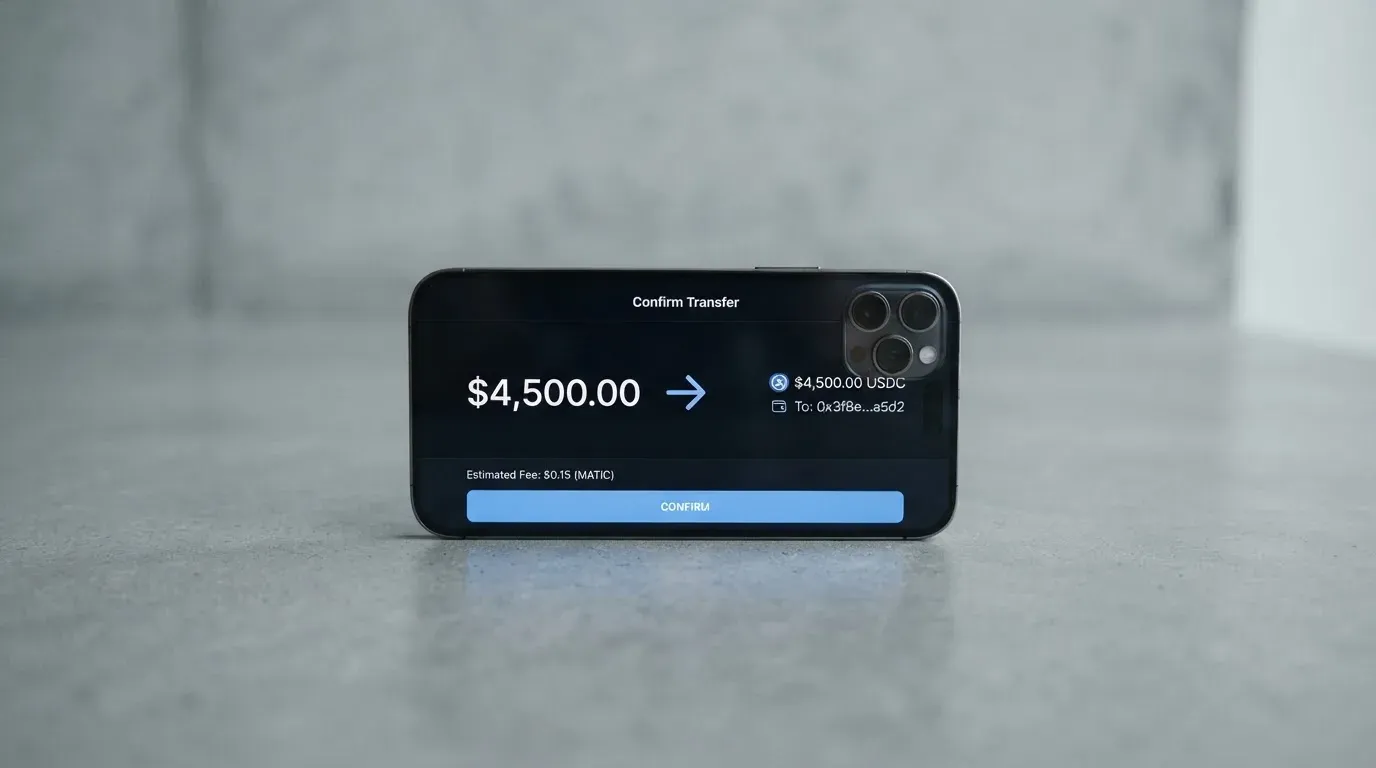
USDT only, at launch, is a narrow door. USDT is the largest stablecoin and the most widely issued, so this is not an obscure coin — but if your crypto sits in USDC, and you follow USDC, or anything native, you cannot move it here. USDC has been supported on many networks natively, though Circle stopped supporting USDC on Tron in February 2024, so USDC over TRC20 is not a native option anywhere. Getting USDT onto the right network is on you.
The mechanics are: connect your wallet, send USDT to the card’s address on one of those four networks. The minimum amount and the fee for topping up are both not stated, so you are working without a floor and without a cost figure. If you send too little, nobody has published what happens.
Two failure modes to understand before your first deposit, both of them general to the category rather than specific to MPay:
- Wrong network, wrong address. Blockchain transfers are irreversible. A deposit sent on a network the card does not support, or to an address belonging to a different network, can simply be lost or need manual support recovery with no guarantee of outcome. Check the network on both sides, every time.
- Right token, empty wallet. On Ethereum, fees are paid in ETH, so a wallet holding USDT but no ETH cannot send at all. Tron prices fees differently, burning or reserving TRX, so a Tron transfer can fail for a reason that looks identical.
There is a detail I want to flag because it is easy to misread: starting data listed USDC on BEP20, ERC20 and Base as well, while the site text read at the time says USDT only. The site’s current statement governs: USDT. Treat anything else as historical.
Withdrawal is not stated. Whether you can get money back off the card balance, and on what terms, is not something the public pages answer. That asymmetry is worth pausing on — the card is clearly built to spend outward, and the way back in is undocumented.
Paying with it every day
The card is usable on any online platform that accepts Visa. The card’s own examples are e-commerce, gaming, travel and SaaS. That is the realistic surface: online payments, not physical ones, since there is no plastic card yet.
Where a virtual card has real limitations, most of them are structural rather than MPay’s fault:
- Apple Pay and Google Pay are not disclosed. You cannot plan around a wallet integration the card does not confirm. Tokenised mobile wallets store a device-specific number rather than your card number, and each payment carries a fresh security code, so where they are offered they are the safer way to pay online.
- Card-not-present payments are the whole use case, and that is where 3-D Secure matters. Visa’s version is called Visa Secure and it either approves silently or challenges you with a one-time code or a biometric. If MPay does not run it, online fraud protections work differently for you. The card does not say.
- Merchant category codes can be blocked. The four-digit code attached to a merchant is set by the business, not by you. Many issuers block categories such as gambling on specific cards by their own policy rather than by law. MPay’s blocked list is not stated, so you will find out at the till.
- Declines can leave a hold. A declined authorisation may hold funds for several days, typically up to seven. With a small balance, that can freeze your card.
- Frozen cards and spending limits are not described. Two of the standard safeguards — instant freeze and adjustable limits — are exactly the things that are not stated here.
- Rewards are not stated. No cashback, no points, nothing.
There is also a dispute mechanism to think about, and it is not stated. A chargeback is a refund ordered by your issuer, with reason codes for fraud, duplicate billing or goods not received. If you pay with a crypto-funded card and a merchant does not deliver, the path to getting money back runs through that issuer — and I cannot tell you who that issuer is or how they handle disputes. In the US, debit card reversal rights come from Regulation E and prepaid-card coverage varies and should not be assumed.
One thing the card does say is worth giving proper weight, because it is a real architectural choice rather than a slogan: the integration is non-custodial, and MPay says it “never holds your crypto”. The funds stay in your own wallet until the moment of payment. That is meaningfully different from the custodial model, where the provider holds your credentials and you must trust it with everything. But it also transfers responsibility to you — key loss, phishing, and clipboard-hijacking malware that silently swaps a pasted address all become your problem with no built-in recovery, because blockchain transfers are irreversible.
What can go wrong
The failure modes here are not exotic. They are the standard ones for a young prepaid crypto card, and I want to name them in plain order of how likely they are to affect you.
Money stuck or lost in transit. Wrong network, wrong address, or a token the card cannot use. Irreversible in principle; support recovery in practice, with no guarantee.
Acceptance failures. A foreign BIN, a prepaid card declined at a merchant who does not like prepaid, or an address-verification mismatch that a domestic card would have passed. This will happen occasionally, and it will happen at inconvenient moments.
Liquidity and balance drama. Your card spends a stored balance. If your top-up is late or your stablecoin moves away from a dollar, the payment simply fails. Stablecoins are not reliably stable — TerraUSD collapsed in May 2022 and USDC briefly lost its peg in March 2023 during the US banking crisis — so “my balance is dollars” is an assumption, not a fact.
Programmes disappearing. This is the risk I would weigh most heavily and it is a category risk, not an MPay one. Visa and Mastercard do not issue crypto cards to consumers themselves; they license issuers, and they can suspend a programme. Visa terminated its global agreements with FTX on 13 November 2022 and the FTX US debit card was wound down. Visa suspended WaveCrest in Europe in 2018, closing all WaveCrest-issued Visa programmes. A closure typically means a notice period, then loading and spending stop, then you are asked to withdraw what remains. There was a 2026 closure reported by a single secondary source where new loads ended on 8 July 2026 and spending stopped on 8 August 2026 — unconfirmed, but the shape of it is what to expect.
Nobody to complain to. Support is a Telegram bot at @MpayCardBot and an X account at @MpayCard, with hours and languages not stated. The site interface runs in several languages including English, German, Spanish, French, Polish and Filipino. That is a thin support surface for a product that holds a spendable balance.
Regulatory change. In the EU, MiCA took legal effect in June 2023, with its stablecoin and asset-referenced token rules applying from 30 June 2024 and the crypto-asset service provider rules from 30 December 2024. E-money tokens may be issued only by a credit institution or an electronic money institution. The transitional period lets providers already operating under national law continue only until 1 July 2026 or until they are authorised or refused under MiCA, whichever comes first. A provider working through that transition can change, or stop, without much warning. ESMA keeps a public register of authorised providers and white papers, and it is worth knowing that it exists.
Taxes. In the US the IRS treats digital assets as property, so spending crypto on goods or services generally produces a taxable gain or loss, measured in local currency at fair market value on the transaction date. That means each card payment funded from crypto may be a separate disposal. I am not giving tax advice and you should not take this as advice — but this is a cost that does not appear anywhere in the fee table, because it is not the card’s cost. It is yours.
What to take instead
None of these are endorsements. I include them because comparing a thin disclosure against other thin disclosures is the only honest way to see where MPay sits. The scores are mine, on the same scale as MPay’s.
| Card | Score | Card type | Funding | What it does not say |
|---|---|---|---|---|
| MPay | 5.5 / 10 | Virtual Visa, physical coming | USDT on Ethereum, BNB Chain, Solana, TON | Fees, limits, issuer, entity, KYC, currency |
| Cardex | 5.6 / 10 | Debit crypto card on VERVE, VISA, Mastercard, UnionPay; virtual and physical | USDT, USDC, BTC | Networks, fee percentage, costs; no country list; app listing is Naira-focused |
| CardFlow | 4.9 / 10 | Virtual USD Mastercard, created in about 3 minutes | BTC, USDT, ETH, or Naira bank transfer | Networks, fees, monthly cost; aimed at Nigeria, no country list |
| HyperCard | 4.7 / 10 | Prepaid card, network not stated on its store page; balance in USD or EUR | USDT, BTC, ETH in the app, converted to USD or EUR | Network, fees; official pages give no country list |
A few honest comparisons. Cardex scores fractionally higher and is more transparent on one point that matters: it converts at the moment of payment and says it scans global exchange rates to pick a rate, though it still publishes no percentage — a rate claim is not a fee schedule. It also supports BTC and USDC, not just USDT, and offers physical cards. Against that, its app listing is Naira-focused, which tells you more about where its real market is than its “200+ countries” line does. Watch the two-token point in particular: it names an unfamiliar network alongside the familiar ones, and that is worth asking about.
CardFlow is the most specific: a virtual USD Mastercard aimed at Nigeria, created quickly, with creating the card described as completely free. It takes Naira bank transfer, which is a genuine advantage for anyone earning in naira. It is also the least transparent on networks, so the same transfer risks apply.
HyperCard is the vaguest of the three. The store page says the card works in more than 176 countries — but that is acceptance, not eligibility, and the distinction is exactly the one MPay’s “most regions worldwide” blurs. Its balance in USD or EUR and its deposit-then-convert model make it structurally similar to MPay without a named network to check.
The honest summary: these products are close together in score because they are close together in substance — virtual, stablecoin-funded, thinly documented. If you want a card with published fees and a named, regulated issuer, none of these four gives you that. The alternative that actually does is an ordinary bank card or an established regulated platform, and if your reason for being here is that you cannot get one of those, you already know why.
Who I would recommend it to
I would recommend MPay to one person: you already hold USDT, on Ethereum, BNB Chain, Solana or TON, in MetaMask, Trust Wallet, TON Wallet or Phantom. You want a Visa number for online payments — subscriptions, services, travel bookings — and you have decided that the missing fee schedule is an acceptable trade for reaching a card at all. You are comfortable that your own wallet holds the keys, that transfers are irreversible, and that when something goes wrong your first call is a Telegram bot. If that is you, the product does a narrow job and nothing else.
I would not recommend it to you if you need a physical card, because it does not exist yet. If you are moving money to a card without fully understanding which network to use, because a wrong transfer has no undo. If you are planning on spending large amounts through it, because there is no published monthly limit or fee to size that against — “ZERO LIMITS” is a slogan. If you need to raise a dispute or reach a human on a schedule, because the support surface is a bot and an X account with unstated hours. If you are in the EU and care that a card programme sits inside MiCA rules and a named licensed institution, because MPay does not tell you which it is.
And if you are simply looking for the cheapest way to pay online, this is not that. Standard is listed at $0 a month, but the $0 plan is not described as a card cost, and the card’s own fees are simply not published — so “free” is the one thing MPay cannot offer you a straight answer about. The score of 5.5 out of 10 is that gap, in one number: a sensible product idea, competently scoped to USDT and online spending, with the disclosure that a financial service owes the people relying on it still to come.
Frequently asked questions
What is MPay card?
MPay is a virtual Visa card you fund with USDT and spend online like an ordinary card. It runs through a Telegram bot and a web app at app.mpay.cards, with MetaMask, Trust Wallet, TON Wallet and Phantom named as compatible wallets. A physical Visa card is described as coming soon, with shipping in selected countries at launch. It is built for online payments, not everyday physical spending.
How does the MPay card work?
You send USDT to the card’s address on one of four supported networks — Ethereum, BNB Chain, Solana or TON — and it loads as a spendable balance. The card then behaves like a prepaid Visa: it draws on stored balance rather than pulling from a linked bank account, so it cannot overdraw. MPay says it never holds your crypto; your funds stay in your own wallet until the moment of payment.
Is MPay a bank?
Not on the evidence available. The card describes itself as “Backed by VISA & Invested by Mason Labs”, but the operating legal entity, the actual issuer and any licences are not stated on its public pages. Visa and Mastercard license issuers rather than issuing crypto cards themselves, so some licensed institution stands behind the programme — the card simply does not name it. Treat MPay as a card programme manager, not a bank.
Which countries is the MPay card available in?
The site’s own statement is that the virtual card is “available in most regions worldwide”, with no country list and no exclusions. Because the issuing entity and its licence are not named, I could not verify eligibility for any specific country. Physical-card shipping is described as limited to selected countries, which are not identified. If your country matters to you, the answer has to come from support directly.
Does the MPay card require KYC?
The card does not say. Identity verification requirements and KYC levels are not stated on its public pages, so you cannot tell in advance whether you will be asked for documents, at what point, or what happens if you refuse. This is worth resolving before you send funds, since regulated services in most jurisdictions are required to complete due diligence or decline to proceed.
How much does the MPay card cost?
The card does not publish its fees. Issuance, monthly fee, conversion, foreign exchange and ATM costs are all not stated, as are daily and monthly limits. The site does list plans — Standard Free, Plus $3.99, Premium $7.99 and Metal $14.99 per month — but the descriptions are generic and do not tie those prices to the card. You will also pay the blockchain’s own network fee on any USDT transfer.
How do I top up the MPay card?
Connect your wallet in the web app or Telegram bot and send USDT to the card’s address on Ethereum, BNB Chain, Solana or TON. USDT is the only coin supported at the moment; USDC and native tokens are described as planned. The minimum amount and the top-up fee are not stated. Check the network on both your side and the card’s, because transfers are irreversible.
Can I use the MPay card in Apple Pay or Google Pay?
Neither is disclosed. Apple Pay and Google Pay support is not stated on MPay’s public pages, so I cannot tell you whether a tokenised mobile wallet is offered. That matters because mobile wallets replace your card number with a device-specific number and a fresh code per payment, which is generally the safer way to pay online. The physical card is also not launched, so this is likely a question to ask support.
Is the MPay card safe?
The architecture is a genuine positive: MPay describes non-custodial wallet integration, saying it never holds your crypto, with transactions processed through licensed payment partners using fraud detection, encryption and real-time monitoring. But two-factor authentication, instant card freeze and spending limits are not stated, and neither is the issuer. The support channel is a Telegram bot and an X account with unstated hours. No official incidents surfaced, but neither did any Trustpilot or Reddit presence.
Is the MPay card worth it?
Only for a narrow user. If you already hold USDT on Ethereum, BNB Chain, Solana or TON and want a Visa number for online subscriptions or services, the narrowness is fine. If you need a physical card, a published fee schedule, human support, a dispute process, or certainty about your country’s eligibility, the missing disclosure makes it a poor choice. Compare Cardex, CardFlow and HyperCard before settling.
Virtual card fees – cryptocardfacts
Content created by the «cryptocardfacts» team