
Pay3 spends crypto like a normal Visa, but you pledge the collateral and pay for it
 Available in US

Pay3 is a payment card that turns crypto collateral into ordinary Visa spending. You load value, the card treats that value as the security for what you spend, and your spending limit tracks the market value of what you have posted. In practice it is closer to a secured card with a crypto engine behind it than to a bank account with a card attached. It is useful, it is cheap to try, and it is young enough that the reassuring parts of the picture are thinner than the marketing suggests. I scored it 6.3 out of 10.
The conditions described here are current as of October 28, 2026.
Verdict: a competent crypto Visa with an unbuilt-out public record
I gave Pay3 6.3 / 10. That is a working card with real Visa rails and a sensible fee structure, held back by the smallness of the operation, the absence of published restrictions and limits, and a fee table that contradicts itself. It suits you if you already hold crypto, you want both a virtual and a physical Visa, you are comfortable having your collateral set your ceiling, and you treat the card as one spending tool among several. It does not suit you if you need a bank card with published fees, a predictable limit, a banking ombudsman you can actually lean on, or a long public track record of complaints.
This is a card for the collateral-based spender who wants virtual and physical Visa and is willing to read the terms. It is not the card for someone shopping for the cheapest everyday debit card; the numbers are simply in a different category.
| Criterion | Score | Why |
|---|---|---|
| Who can get it | 7 / 10 | Open outside “Restricted Locations”; the list is not published and may change without notice; US citizens must give a waiver |
| Cost | 5 / 10 | Issuance “starts at $5”, spending from $0.15; conversion “from 1.15%”, FX and cross-border fees up to 3% |
| Top-up options | 6 / 10 | Stablecoins or fiat into a multi-currency account; top-up fee 0%; coins and networks not listed |
| Reliability and complaints | 6 / 10 | Pay3 Limited (Hong Kong, 2024), “not a bank”, issuer Third National; no insurance; few complaints |
| Everyday use | 8 / 10 | Virtual and physical Visa, Apple Pay and Google Pay; ATMs “may support” |
Total: 6.3 / 10.
The two things I keep coming back to. First, the strength of the day-to-day offering: a virtual card you get immediately, a physical one in a few days, both wallets, and a spend fee that starts at a fraction of a dollar. That is the best part of the package and it earns the 8/10 for everyday use. Second, the thinness everywhere else. This is a company incorporated in Hong Kong in 2024 that describes itself as a fintech company and not a bank, naming an issuer without naming its licences. There is no deposit guarantee and, by the terms, no insurance scheme. When something goes wrong you are negotiating with a help section and a Telegram channel.
Will they give you the card?
Yes, but the answer is built on a list the company has not published. Pay3 is open to users outside what it calls “Restricted Locations”, which it defines as countries under trade sanctions, export controls, or crypto and fintech prohibitions. Users who are citizens or residents of a Restricted Location are excluded. The catch, and it is a real one, is that the actual list is not published and may change without notice. That means you cannot read a page and know whether your country is in or out. You find out by trying. I gave this 7 / 10 rather than lower because the exclusion criteria are at least named, and because a self-attestation route exists for the cases that worry most.
On the United States specifically: the card terms require users to attest that they are not a US citizen and are not blocked by OFAC. That is a citizenship attestation, not a residence test. A US resident who is not a US citizen sits in a different position from a US citizen, and the terms draw that line explicitly. If you are a US citizen, the attestation is a hard stop, and I would not attempt to work around it.
A broader point worth holding onto: nationality gets screened separately from where you live, because sanctions lists and issuer risk policy tend to follow citizenship and country of birth rather than your billing address. A card that works for a resident of one country may still be closed to a citizen of another. Treat the question “is this available in my country?” as two questions: can I reside here, and am I a national of somewhere that is screened.
How to get it
The path is short: verify your identity in the app, apply for a card, fund it. Identity checking runs through Sumsub, once, and that result is reused across the card, the account and the swaps. You need to be 18 or your local legal age. Depending on the partner and your region, an extra document such as proof of address may be requested. What is not stated publicly: the verification tiers, how long a check takes, and the reasons a check might fail. The terms do hint that a failed check can lead to suspension.
You get a choice of card. There is a virtual card, ready right after your application goes through, a physical card that takes “3–5 business days”, and the card works in Apple Pay and Google Pay. It is a Visa, issued under licence from Visa. Countries served, shipping cost and replacement cost are not stated, which is a gap I would want filled before ordering a physical card I might have to replace.
One practical point on lost or stolen cards: replacement is handled through the account and a new number is possible. That is the mechanism you want and it exists.
Fees: what a payment really costs
Here is where Pay3 is more transparent than its age suggests, and also where it trips. The published numbers, exactly as the card states them:

| Fee or limit | What Pay3 says |
|---|---|
| Card issuance | “starts at $5” |
| Card spend | from $0.15 per transaction |
| Monthly or annual fee | not stated |
| Currency conversion | “from 1.15%” |
| Foreign exchange fee (non-USD) | up to 3% |
| Cross-border fee | up to 3% |
| Foreign transaction fee | up to 3% |
| Cash advance and balance transfer | not available |
| ATM withdrawal | physical cards “may support”, subject to partner policies; fee and allowance not stated |
| Spending limit | equals the USD market value of posted collateral; Pay3 may change it with or without notice, including to $0 |
| Adding funds | free; top-up fee 0% |
| Card tiers | Pay3 Credit Card and Pay3 Black named; differences not published |
| Card currency | not stated outright (USD implied by the “non-USD” FX fee) |
| Multi-currency account | cash, stablecoin and card balances shown together |
Three everyday payments show what that means.
A coffee bought in your home currency on a card with a healthy balance: you are paying from $0.15 upward per transaction, and if the merchant prices in your own currency the FX charge should not bite. The FX fee is described as applying to non-USD, so the card behaves as though it settles in US dollars and converts.
A subscription priced in dollars while you live in euros: here the up-to-3% foreign exchange fee becomes the real cost of the purchase, on top of any conversion of the underlying balance. This is the case that decides whether Pay3 is cheap for you. If most of your spending is in one currency that is not the dollar, you are paying a percentage on every transaction to hold that currency.
Anything that reads as cross-border to the payment network: the cross-border fee can reach 3%. Combined with the FX fee, the worst case on a single payment is not a small number.
Against that, the ATM position deserves a warning rather than a shrug. Cash advances and balance transfers are not available at all, which is normal and fine. ATM withdrawals are a separate matter: the platform terms say physical cards “may support” them, subject to partner policies, with no fee and no allowance published. The verb is doing a lot of work there. I would not plan a cash budget around this card.
Top up: the collateral is the point, not a detail
You fund the card with stablecoins, or with fiat into a multi-currency account. Adding funds is free and the top-up fee is 0%. Minimums are not stated, and neither is who pays the network fee on the way in. Specific coins and networks are not listed on the site, which is the single most important practical omission for anyone holding crypto: you need to send on a network the provider actually supports before you know the answer.
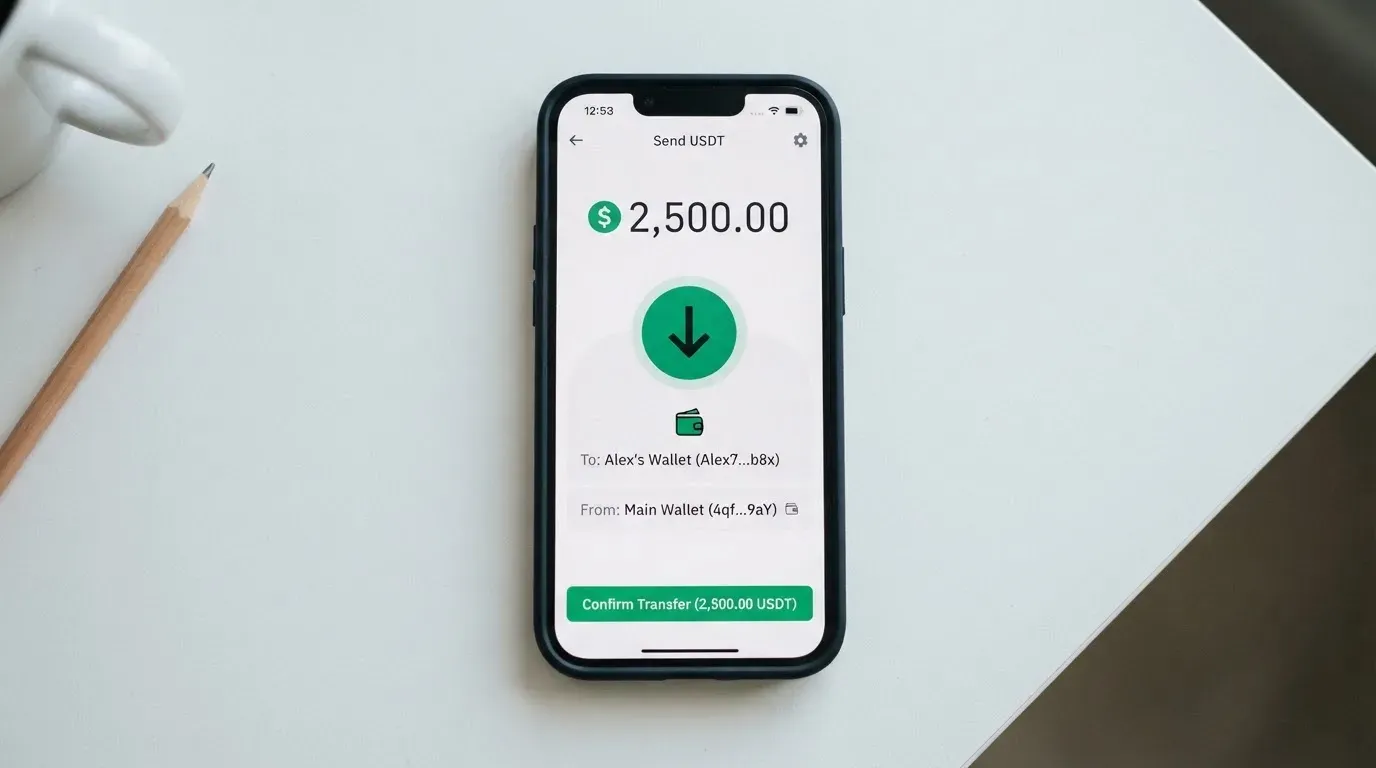
That omission is not academic. Blockchain transfers are irreversible. A deposit sent on a network the card does not support, or to an address belonging to a different network, can be lost or need manual support recovery with no guarantee of success. On-chain network fees for your deposit are charged by the blockchain, not by Pay3, so they come out of your wallet, not the 0% top-up fee.
The structural point about top-ups is the collateral. The card is collateral-based: what you post sets your limit, and the limit equals the USD market value of the posted collateral. So a top-up is not just adding spending money, it is posting security. Under the terms, Pay3 may change that limit with or without notice, including down to $0. Plan for a limit you cannot fully predict.
Withdrawals are available, but fees are not stated and the terms describe no withdrawal process. There is a further wrinkle: after termination, extra verification may be needed to retrieve residual balances. That is the shape of a clause that matters most on the day you no longer want the product.
Paying with it every day
This is the strongest part of the offer, and the reason the card scores well for everyday use. You get a virtual card immediately, a physical card in three to five business days, both Apple Pay and Google Pay, and a Visa number that behaves the way a Visa number is expected to behave.
What the merchant sees is a Visa with an issuer identification number that identifies a foreign institution, because that is what a crypto card is. Merchants can look up the issuer and country from the number and may apply extra scrutiny when the issuer country differs from the billing address. Some decline prepaid or foreign-issued numbers outright, not out of malice but because a BIN lookup tells them the card type. So expect the occasional odd decline at a small merchant, and do not read it as a statement about you.
A second friction point is address verification. The AVS check compares the numeric parts of the billing address you type against issuer records, and it is mainly available in the US, Canada and the UK. For foreign-issued cards it is generally unavailable, which is a common cause of declines online. If a checkout keeps failing, this is often why.
Blocked merchant categories are not stated for Pay3. Cash-like transactions, meaning foreign currency, crypto and money-orders type spend, may be limited. Rewards are not stated either. There is an unofficial report, from a third-party crypto card comparison site in 2026 and not confirmed by Pay3, that the Black tier carries no spend cashback and only non-transferable referral points redeemable toward card issuance. Take that as a rumour with a source, not a term.
The app is a Telegram Mini App and web app at app.pay-3.io. App Store and Google Play listings and ratings are not stated, so I cannot tell you what the store experience or the user ratings look like.
Disputes have a defined path, which is better than many young card programmes manage: try the merchant first, report a disputed charge within 60 days of posting, and the chargeback is started through the Pay3 account under card-network rules. If a complaint is unresolved after 60 days, it goes to HKIAC arbitration. That last point tells you something about the intended dispute geography, and it is worth knowing before you assume a European or UK process applies.
What can go wrong
The failure modes here are mostly structural rather than dramatic. I found no official incidents involving Pay3, and I found almost no independent reporting either, which is its own kind of information: a very thin community evidence base. What the third-party site recorded in 2026 was a small number of organic complaints, one being a card that failed to open with an error, and support reachable only through a Telegram bot or the help section. There is no Trustpilot page for Pay3. An absence of scandals on a young product mostly means there has not been time.
The company itself: Pay3 Limited, incorporated in Hong Kong in 2024, describes itself as a fintech company and not a bank, and delivers services through licensed partner providers. The card issuer is named as Third National, with no country given. Licences are not named. So the entity that holds the card programme is a partner, not the brand you install, and you cannot read the licence off the website.
Custody is the part I actually like. Pay3 states it does not offer custody of any digital or fiat assets, and that only the amount needed to repay debt is liquidated. That is a materially better position than a custodial card, where the provider holds your keys and its own history is your history. Mt. Gox, Coincheck and the Ronin Network are the reference points for what that history can cost. Self-custody shifts risk to you: a seed phrase is typically 12 to 24 unencrypted words, anyone who gets it can restore the wallet and spend the funds, transfers are irreversible, and a stolen key has no recovery path. Phishing and clipboard-hijacking malware that swaps a copied address are the everyday risks.
There is no insurance and no guarantee scheme. The terms are explicit about it. EMIs must safeguard customer funds by segregating them or insuring them, and even then those funds are not bank deposits and may not sit under a deposit guarantee scheme. What applies to an EMI does not automatically apply here, which is why I treat the absence of insurance as a real gap rather than boilerplate.
Two concrete defects to note. The returned-payment fee is inconsistent in the card terms: $29 in the table, $50.00 in the terms. That is exactly the kind of contradiction that makes a fee schedule hard to rely on. And the fees that are stated are ceilings: “up to 3%” three times over, plus conversion “from 1.15%”. What you actually pay depends on card type, currency and location, and the card says so.
On legal protection, do not assume the shape you have at home. US debit card reversal rights come from Regulation E and credit card rights from Regulation Z, and prepaid-card coverage varies by state and should not be assumed. Under 3-D Secure, liability for a fraudulent online payment can shift from the merchant to your bank, and critics have argued sometimes to you. None of that is spelled out for Pay3 in a way I could rely on.
Finally, the forward-looking features are placeholders. Grow is listed as “coming soon” and Autopilot as “in development”, and there are no dated events in the news. Treat them as intentions.
What to take instead
Three alternatives came up in the same category. They are not interchangeable, and the differences are structural.
| Pay3 | Sponge | Nexo | Xplace | |
|---|---|---|---|---|
| Score | 6.3 / 10 | 4.9 / 10 | 6.3 / 10 | 7.7 / 10 |
| Card | Virtual and physical Visa | Virtual card, described as a Rain-issued credit card | Virtual and physical, network branding shown but network not stated | Virtual instant; physical Silver live, Gold/Platinum coming soon, delivery 7–14 business days |
| Who | Outside “Restricted Locations”, list unpublished | Not stated; minimum age 13 for the service | Residents and citizens of “selected European countries, including the EEA and the United Kingdom” | Country list not stated; Visa accepted in 160+ countries |
| Cost | Issuance “starts at $5” | Not stated | No monthly, annual or inactivity fee | Annual: Basic free, Silver $99/y, Gold $249/y, Platinum $999/y |
| FX / conversion | Conversion “from 1.15%”; FX up to 3% | Not stated | FX 0.2% weekdays EEA/UK/CH, 2% rest of world; weekends 0.7% and 2.5% | “0% FX on Platinum”; stablecoin spending “no hidden spread” |
| Funding | Stablecoins or fiat, multi-currency account | USDC moved from the Sponge wallet (card fund; base, with solana as an SDK option) |
Nexo account, 100+ digital assets, Debit Mode uses stablecoins, crypto and FiatX | BTC (cbBTC), ETH (wETH), SOL, JitoSOL, USDC, USDT, xStocks on Solana |
| Rewards | Not stated | Not stated | Cashback in NEXO or Bitcoin in Credit Mode above $5,000; by tier from 0.5%/0.1% to 2%/0.5% | Credit-mode cashback 0.5% to 2% by tier, paid in USDC |
Sponge is the weakest of the four on the public record. Its country position is not stated, its fees are not stated, and what you get is a virtual card built from USDC moved out of the Sponge wallet. If you want a simple virtual-only card and nothing else, it is a thinner product than Pay3 at a lower score.
Nexo is the same score as Pay3 on a different footing. It is limited to residents and citizens of selected European countries including the EEA and the United Kingdom, which is a much clearer boundary than Pay3’s unpublished list, and it has a published fee structure: no monthly, annual or inactivity fee, and weekday FX of 0.2% in the EEA, UK and Switzerland against 2% elsewhere, rising at weekends to 0.7% and 2.5%. Its costs sit in the thresholds rather than the fees: the virtual card needs at least $50 in the account to activate, and the physical card needs free shipping but a balance above $5,000 in digital assets and at least Gold tier. Cashback is Credit Mode only, needs the same $5,000, and pays in NEXO or Bitcoin with tier rates from 0.5%/0.1% up to 2%/0.5%. One thing to weigh: a 2025-era report of a Bulgarian police raid on Nexo’s Sofia office over alleged sanctions and anti-money-laundering violations, carried by Cointelegraph and not an official Nexo statement. Reported, not confirmed.
Xplace scores highest at 7.7 / 10 and is the one whose economics I would look at first if your spending is heavy. It is a Visa with instant virtual and physical tiers, a two-mode design where Cash mode spends a stablecoin balance and Credit mode borrows against holdings, and it publishes its annual fees plainly: Basic free, Silver $99/year, Gold $249/year, Platinum $999/year, with no origination fee on borrowing. It states “0% FX on Platinum” and “no hidden spread” on stablecoin spending, and takes a named list of assets on Solana: BTC (cbBTC), ETH (wETH), SOL, JitoSOL, USDC, USDT and xStocks. Credit-mode cashback runs 0.5% at Basic to 2% at Platinum, paid in USDC to the wallet. Its own limits: the country list is not stated, and Gold and Platinum physical cards are still coming soon.
The honest summary: if you want the widest clarity on who can sign up and the cheapest everyday path, Nexo publishes more than Pay3 and is geographically narrow. If you want the strongest economics and the most specific asset list, Xplace is ahead of both. Pay3’s pitch, in comparison, is access without a published country list, a $5 entry, and a fee ceiling of a few percent.
Who I would recommend it to
I would recommend Pay3 to you if all of the following are true. You already hold crypto and are comfortable treating it as collateral rather than as savings. You want both a virtual card today and a plastic one in a few days. Most of your spending is in your own currency, so the up-to-3% FX fee rarely applies. You can live with a limit that tracks the market value of what you posted and that the provider may change at any time, including to zero. And you are willing to hold your own keys, because the non-custodial design is real and it puts key loss, phishing and wrong-network transfers squarely on you.
I would point you elsewhere if any of these are true. You need published, itemised fees with no ceiling language, or a card currency list you can read. You intend to rely on cash withdrawals, which are not available as advances and are merely “may support” as ATM. You want a complaint route in your own jurisdiction rather than HKIAC arbitration. You want spend cashback, which is not stated. Or you need deposit-guarantee protection, which this structure does not offer and does not pretend to.
The wider context helps frame the caution. In the EU, MiCA took legal effect in June 2023; the token rules applied from 30 June 2024 and the remaining crypto-asset service provider rules from 30 December 2024. Transitional grandfathering runs only until 1 July 2026 or until a provider is authorised or refused, whichever comes first, and ESMA keeps an interim register you can check. A card itself is regulated separately as a payment service, so a crypto card often rests on two licences. If you are reading this outside Europe, the equivalent caution is yours to apply: in the US, administrators and exchangers of convertible virtual currency are treated as money transmitters, while people buying goods or services are not.
One last thing that belongs in any honest card review. If you are spending crypto through a card, each payment funded from crypto may be a separate disposal of a digital asset, measured in local fiat currency at the fair market value on the date of the transaction. That is a general property of digital assets, not a Pay3 rule, and it is worth thinking about before you route a salary or a savings balance through a card. I am not able to tell you what your position is; that is a conversation with someone qualified in your jurisdiction.
Frequently asked questions
What is the Pay3 card?
Pay3 is a Visa payment card you fund with crypto collateral rather than with a bank balance. You load stablecoins, or fiat into a multi-currency account, and the value you post becomes your spending limit. Pay3 describes itself as a fintech company and not a bank, delivers services through licensed partner providers, and names Third National as the card issuer.
How does the Pay3 card work?
You verify your identity once, apply for a card, and fund it. The card is collateral-based, so the USD market value of what you have posted sets how much you can spend, and Pay3 may change that limit with or without notice, including to $0. A virtual card is ready right after your application; a physical one arrives in three to five business days.
Is Pay3 a bank?
No. Pay3 says plainly that it is a fintech company and not a bank, incorporated in Hong Kong in 2024. Services come through licensed partner providers, and the card issuer is named as Third National with no country given. Licences are not named on the pages I read, and the terms say there is no insurance and no guarantee scheme.
Who can apply for a Pay3 card?
Anyone outside what Pay3 calls “Restricted Locations”, meaning countries under trade sanctions, export controls, or crypto and fintech prohibitions. The list itself is not published and may change without notice. On the United States specifically, the terms require you to attest that you are not a US citizen and are not OFAC-blocked, which is a citizenship test rather than a residence test.
Does Pay3 require KYC, and what documents?
Yes. Identity checking runs through Sumsub, once, and the result is reused across the card, the account and swaps. You must be 18 or your local legal age. An extra document such as proof of address may be requested depending on partner and region. Verification tiers, processing times and rejection reasons are not stated, though the terms say a failed check may lead to suspension.
What does it cost to use a Pay3 card?
Issuance “starts at $5” and spending is from $0.15 per transaction, with no monthly or annual fee stated. Conversion is “from 1.15%”, and the foreign exchange, cross-border and foreign transaction fees each go up to 3%. These are ceilings, and fees vary by card type, currency and location. The terms also carry an inconsistent returned-payment fee, listed as $29 in the table and $50.00 in the terms.
How do I top up the Pay3 card?
You add stablecoins, or fiat into a multi-currency account. Adding funds is free and the top-up fee is 0%. Minimums are not stated, and neither is which coins or networks are supported, so you need to confirm the network before sending. On-chain network fees come from the blockchain, not Pay3, and transfers are irreversible if sent on an unsupported network or a wrong address.
Can I use Pay3 in Apple Pay and Google Pay?
Yes, both are supported, alongside a virtual card available immediately and a physical card in three to five business days. Because the card is a Visa, a foreign BIN and the general unavailability of address verification for foreign-issued cards are the likeliest causes of an unexpected decline at checkout, rather than anything wrong with your account.
Is the Pay3 card safe?
The design is better than the usual: Pay3 does not take custody of your digital or fiat assets, and only the amount needed to repay debt is liquidated. That puts key loss, phishing and wrong-network transfers on you, since a seed phrase restores a wallet for anyone who obtains it. Against that, there is no insurance and no guarantee scheme, the company is young, and there is no Trustpilot page and almost no independent reporting.
Is a Pay3 card worth it?
Worth it if you already hold crypto, want a virtual and physical Visa, and spend mainly in your own currency so the FX fee rarely applies. Less compelling if you need cash withdrawals, published itemised fees, a spend cashback scheme, or a complaint route in your own jurisdiction, since unresolved complaints after 60 days go to HKIAC arbitration. On my scoring it came out at 6.3 out of 10.
Credit and cashback card costs – cryptocardfacts
Content created by the «cryptocardfacts» team