
A euro-spending crypto card with no monthly fee, wrapped in gaps
 Available in US
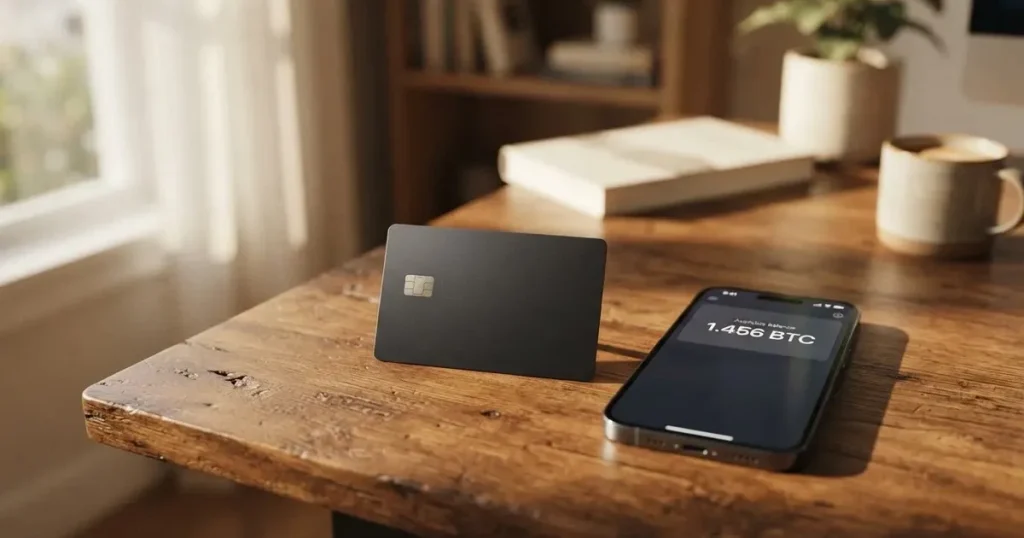
The PayPilot card is a Visa payment card that draws on a euro balance you load yourself, either by paying in euros or by converting crypto. Issuance is free and so is the monthly service, which puts it near the top of the fee score for this category: 9 out of 10. Payments straight from the euro balance carry no commission, and converting crypto into euros costs 0.4%. If that is your normal arrangement — hold crypto, spend euros — the arithmetic is genuinely good.
The catch is not in the prices, it is in the gaps. Whether you can open an account at all “depends on your country of residence and local regulations”, and no list of supported regions is published. The foreign-exchange fee is not stated. The daily, weekly and monthly payment limits are not stated. The minimum top-up is not stated. The card’s own pages are clear about what it charges and almost silent about what it will let you do, and for anyone deciding whether this is safe for their money, that silence is the thing to weigh first.
The conditions described here are current as of October 28, 2026.
Verdict: 7.4 out of 10, good for euro spenders topping up with crypto
I score the PayPilot card 7.4 out of 10. That is a solid product built on a licensed foundation, with a fee structure better than most of its category, wrapped in a service that publishes very little about who it serves and under what conditions.
| Criterion | Mark | Why |
|---|---|---|
| Who can get it | 5 / 10 | Depends on your country of residence and local regulations, and the list of supported regions is not disclosed |
| Cost | 9 / 10 | Issuance 0 EUR, service 0 EUR, payments from the euro balance without commission, crypto-to-euro conversion 0.4%; FX fee not disclosed |
| Top-up options | 6 / 10 | BTC, ETH, USDT and EUR, top-up by crypto or EUR; networks not named |
| Reliability and complaints | 8 / 10 | Issuer Walletto UAB, electronic money licence No 33 from the Bank of Lithuania dated 29 March 2018; no complaints found |
| Everyday use | 9 / 10 | Visa, virtual immediately and physical by post, Apple Pay and Google Pay, ATM |
| Total | 7.4 / 10 |
So who does this suit? Someone who already spends in euros, who wants a Visa number in their wallet for subscriptions, travel or online payments, and whose income or savings side is in crypto. For that person the card does one thing — convert crypto at 0.4% and spend euros at no further charge — and does it about as cheaply as the category allows.
Who it does not suit: anyone who needs to know in advance exactly what a foreign-currency payment will cost, anyone who lives in a country whose eligibility is unknown, and anyone planning to run a large monthly volume through it. Single, daily and monthly limits exist but their values are not stated, so “I will need to spend this much per month” is a question the card’s public pages do not answer.
I also want to flag a structural point that sits underneath everything else. PayPilot is not a bank, and the card is issued by a separate company with a licence from the Bank of Lithuania. That arrangement is normal in this category and not a warning sign by itself — but it means you are dealing with a platform, a card programme manager and a licensed issuer, and the pages do not always make clear which of them you are dealing with.
Will they give you the card?
Availability “depends on your country of residence and local regulations”. That is the entire rule as published. The supported regions are not listed anywhere on the card’s pages, and the rule is drawn by residence, not by citizenship — citizenship is not mentioned at all.
This is worth pausing on, because it is a very different situation from a card that publishes a country list. With a list, you check it and you know. Without one, the only way to find out is to attempt registration and see what happens, and the answer you get may arrive as a rejection or, more awkwardly, as silence.
A couple of practical consequences follow from “residence, not citizenship”. If you live in one country and hold a passport from another, the residence rule is the one that applies on the face of it. If you travel or move, your eligibility moves with you, because it is tied to where you live rather than to who you are on paper. Neither reading is confirmed by the card; both are simply what the published wording implies.
If your country of residence is one where crypto is heavily restricted, be aware that having a card in your pocket does not override local law. That is not a PayPilot rule, it is the general position, and it is where most of the risk in this category actually lives. Nothing on the card’s pages says this either way, so treat it as unresolved.
How to get it
The route the card describes is three steps: register, verify, create the card. Before any of that, there is a one-time “quick identity verification”. The order is what matters — verification comes first, and the card follows it. You are not applying for a card and being checked afterwards; you are being checked, and then the card is created.
What that verification asks for is not stated. Which documents count, whether proof of address is required, and what the age threshold is — the pages do not say. For context, prepaid and debit cards in this category are generally available to adults from 18, and some issuers set higher limits, but that is the general pattern, not something PayPilot states about itself.
The verification happens once; the account is described as “verified once”. Two KYC partners are named, KycAid and Ondato, but the verification levels, how long they take, and the grounds on which an application would be refused are not stated. If you are trying to plan around a specific deadline — a trip, a subscription that starts on a certain date — the honest answer is that the card’s pages do not give you the timing, so build in a margin.
One term is worth reading twice. The issuer may re-verify your identity and ask for additional documents at any time. Verification is not a one-off event you finish and forget; it is a standing obligation. Plan to keep your documents current.
On the card itself: it is a Visa, for online and in-store payments, and it spends from your euro balance. Whether a virtual card is issued, and whether a physical one is issued, is not stated on the card page. The card terms do allow both — a virtual card usable immediately, and a physical card that needs activating and arrives by post, with issuance including postal costs according to the issuer’s pricing page by country. The delivery time and the delivery cost are not stated.
So on the practical question people actually search for, how to get a PayPilot card: register, complete the one-time identity verification, create the card, and then expect either a virtual card straight away or a physical one in the post, depending on what your account is given. Which of the two you get is not something the pages promise in advance.
Fees and what a payment really costs
The fee section is where PayPilot scores best, and the numbers are genuinely good. But the good numbers are exactly the ones that are published, so it is worth separating what you know from what you do not.

| Fee or limit | What the card says |
|---|---|
| Issuance | 0 EUR |
| Monthly service fee | 0 EUR |
| Payments from the euro balance | No commission |
| Crypto-to-euro conversion | 0.4% |
| Foreign-exchange fee | Not stated |
| ATM withdrawal | Cash can be withdrawn; fee and allowance not stated |
| Single, daily and monthly payment limits | Exist; values not stated |
| Daily, weekly and monthly maximum payment amounts | Set by the issuer under the card terms; values not stated |
| Tiers | Not stated — a single card, no tiers described |
| On-chain network fee for a deposit | Charged by the blockchain, not by the card provider |
Two or three ordinary payments, worked through, so you can see which of those lines actually applies to you.
A €40 subscription paid from your euro balance. This is the cleanest case and the one the card is built for. Your balance is already in euros, the merchant charges euros, so no conversion takes place and no commission applies. Your cost is €40. Nothing else in the table touches you. This is the payment that earns the card its 9 out of 10 for cost.
A €40 purchase while your balance came from crypto. You topped up in, say, USDT and the conversion into euros happened at top-up at 0.4%. Spending that euro balance is commission-free. So the total cost on that €40 is the 0.4% conversion you already paid — 16 cents on €40 — and nothing else. Note the sequencing: the 0.4% is charged once, when crypto becomes euros, not again on every purchase.
A $60 purchase while paying from a euro balance. Here the picture is less complete than it looks. The card converts to the merchant’s currency when needed, and the card terms say exchange fees are specified in the payment account and based on Visa or Mastercard published rates at the time of exchange. But the value of that foreign-exchange fee is not stated on the page. So the honest position is this: you will be charged the network’s published rate plus something the card does not publish, and I cannot tell you from the public pages whether that something is a fraction of a percent or something that would change your mind. If you spend abroad often, this is the single figure to ask support for before you rely on the card.
The wallet itself holds BTC, ETH, USDT and EUR, so the balance side of your account is not euro-only even though the card spends euros.
On the ATM: cash withdrawals are possible, and both the fee and the allowance are unstated. Treat that part of the offer as open until you have read it yourself.
How to top it up
Top up with crypto or with euros. The FAQ lists BTC, ETH, USDT and EUR as what you can use. The networks are not specified — and this is not a small omission, so I will come back to it.
The fee structure here is straightforward. The 0.4% applies only when converting crypto into euros. If you top up in euros, the card charges you no conversion fee. Minimum top-up amounts are not stated, and any fee on a euro top-up is not stated.
The workflow, in short: transfer crypto, have it converted to euros, spend the euro balance. The top-up starts with a transfer to the right network — and “the right network” is precisely what the card does not tell you.
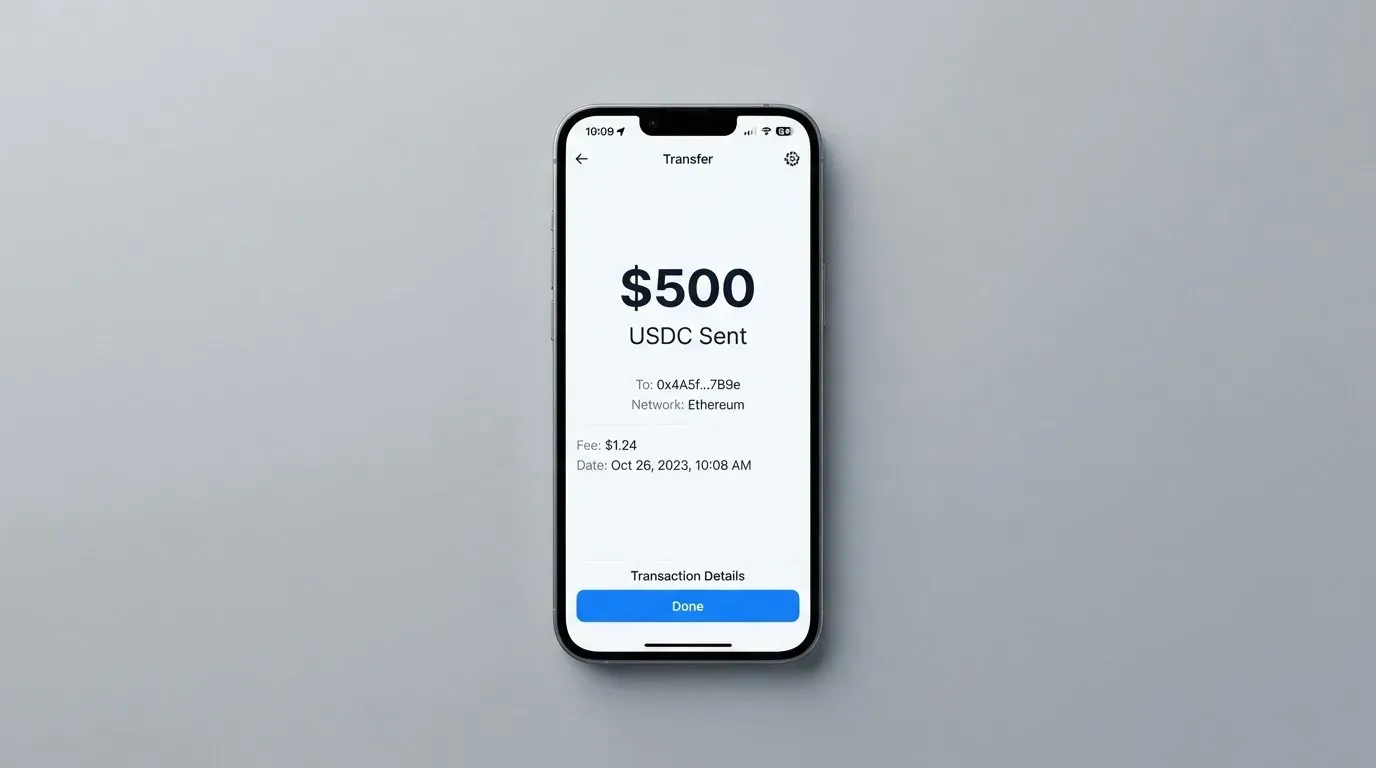
That gap has teeth. Blockchain transfers are irreversible. A deposit sent on a network the provider does not support, or sent to an address belonging to a different network, can be lost outright or need manual support recovery with no guarantee of success. The difference between USDT on one chain and USDT on another is not a formatting detail; it is the difference between funds arriving and funds disappearing. Before your first transfer, get the supported network from support in writing, check the receiving address character by character, and remember that a mistake here is not something a chargeback will fix.
One more network detail worth knowing, because it catches people out: Circle stopped supporting USDC on Tron in February 2024, so “USDC over TRC20” is not a native option. And on Ethereum, fees are paid only in ETH, so a wallet holding USDT with no ETH cannot send. Tron prices its fees through bandwidth and energy resources, often burning TRX. None of this is PayPilot-specific, but it all lands on you at the moment you top up.
The reverse direction works too. You can sell crypto for euros and withdraw to an IBAN, “subject to limits and compliance checks”. Two conditions in that short sentence matter. If the payment account is closed, the card becomes invalid. And what happens to a remaining balance on closure is not stated.
Paying with it every day
Day to day, this behaves like an ordinary prepaid Visa. That is the appeal and also the limitation: it draws on a balance you loaded, so it cannot overdraw, and if you forget to load it, the payment simply declines rather than creating a debt.
Apple Pay and Google Pay are both supported — the card can be linked to either. This is where most of the practical comfort lives. Tokenised mobile payments mean the card number itself is replaced by a device-specific number stored in the phone’s Secure Element, and each payment carries a one-time code, so the raw card number never has to be typed into a shop’s terminal or handed to a site. If you do one thing after getting the card, do this.
Where you can use it: anywhere Visa is accepted, online and in stores. Which merchant categories are blocked is not stated. For context, gambling has its own four-digit merchant category code, and many issuers block it by policy rather than by law, with the list differing from issuer to issuer — so if gambling matters to you, that is a question for support rather than an assumption.
The app is on the Apple App Store (id6751874532) and Google Play (org.paypilot.app). I could not read the store ratings, so I have no evidence either way about how people rate the app in practice.
Two everyday frictions worth naming. Some merchants decline prepaid or foreign-issued cards, because the issuer identification number at the front of the card reveals the card type and the issuing country — and the shop may apply extra scrutiny when that country differs from your billing address. This is the general reason a card issued in one country can look “foreign” to a shop in another, and it is not a PayPilot fault. Second, address verification compares the numeric parts of the billing address you type with the issuer’s records, and it is mostly available in the US, Canada and the UK; for foreign-issued cards it is generally unavailable, which can cause declines at checkout. Online payments may also be challenged with a one-time code through Visa Secure. If a payment declines, the authorisation can leave a hold that stays for several days, sometimes up to seven, and the funds are unavailable even though the purchase did not go through.
Rewards are not stated. There is no published cashback on the card’s pages.
What can go wrong
Let me take the risks in order of how much they should actually worry you.
Counterparty and platform risk. This is the one to think hardest about, because of who the parties are. The footer says the platform is developed by Pilot Innovation Sp. z o.o.; financial services are provided by Nexora Fintech Limited “where applicable”; and the card terms point to Walletto UAB as the card e-money provider in Lithuania, which the terms name as the Card Issuer — company code 304686884, Vilnius. Walletto UAB holds an electronic money institution licence, No 33, issued by the Bank of Lithuania on 29 March 2018, and the card terms are dated May 2024. That licence is a real asset and a genuine mark of legitimacy: an EU electronic money institution must safeguard customer funds by segregating them in dedicated accounts or insuring them, and such funds are not the same as bank deposits and may not sit under a deposit guarantee scheme.
What the pages do not do is name the issuer explicitly in one clear sentence, or list the licences, saying only that services come from “regulated partners”. When a footer lists a platform developer, a financial services company and an issuer in three different places, you should know which of them holds your balance and which one you would complain to. Right now that takes some reading.
Custody. The custody model is not stated. That single unstated fact covers most of what a careful person would want to know: whether your crypto is held by a provider who holds the credentials — meaning you must trust them completely, with no recourse if they fail — or whether it stays in your own wallet until the moment of payment, in which case the risk is entirely yours, from a lost key to a phishing site to malware that silently swaps a copied address. Neither answer is dangerous on its own; they are opposite risk profiles, and you cannot pick one without knowing which you have.
This category has a documented history of custodian failure: Mt. Gox, with about US$350 million reported stolen between 2011 and 2014; Coincheck, about US$400 million in 2018; and the Ronin Network bridge, US$625 million in 2022. Cold wallet storage and an audit reserve are claimed on the site, alongside AES-256 encryption, PCI-DSS, ISO 27001 and two-factor authentication — a normal list, asserted rather than audited in any document you can read here.
Eligibility and freezing. The card terms say a payment made with your card credentials is deemed authorised, with no refund unless the payee agrees to one. They also allow the client to request a block at any time, say the physical card is blocked after three wrong PIN entries, and allow the issuer to block for suspected fraud. Blocking can also happen if an account is restricted. Separately, if due diligence cannot be completed, EU rules require the institution to decline the transaction or end the relationship — which is the normal legal reason accounts close or freeze while documents are pending.
Disputes. The chargeback procedure and time frames are not stated. This matters more than it sounds. A chargeback is a refund ordered by the issuer to settle a dispute, with reason codes such as fraud, duplicate billing, or goods not received. If you are outside the US, do not assume the US debit-card reversal rights or credit-card protections travel with the product. Read the terms on what the issuer will and will not do when a charge goes wrong.
Reputation. I found no PayPilot-specific complaints on Trustpilot, Reddit or in news coverage, and no official incidents. That is mildly reassuring, and it is also a thin record: a young service with no complaints and no complaints about it. Absence of complaints is not evidence of a track record; it is evidence that nobody has written about it yet.
Getting money out. Withdrawal to an IBAN is “subject to limits and compliance checks”, and if the payment account closes, the card becomes invalid with balance-return terms unstated.
Support is reachable at [email protected] and through a “Write to us” form, with accounts on X, Telegram, Instagram, Facebook and LinkedIn. Response hours are not stated, which matters a great deal if your question is “my transfer went to the wrong network”.
One more thing from this category that belongs on the risk list because it recurs: card programmes can close. Visa and Mastercard do not issue crypto cards themselves — they license issuers, and they can suspend a programme. Visa terminated its global agreements with FTX in November 2022 and the FTX US debit card was wound down by its issuer; WaveCrest was suspended by Visa in Europe in 2018, closing all its Visa programmes. When a programme ends, the pattern is typically a notice period, then spending and loading stop, then users are asked to withdraw remaining balances.
What to take instead
If one of the blanks above is the reason you are hesitating, a different card may answer it. Here is where the three closest alternatives sit against PayPilot’s 7.4.
| PayPilot | International Visa Card | UNi Card | Whop Cards | |
|---|---|---|---|---|
| Score | 7.4 / 10 | 6.7 / 10 | 6.1 / 10 | 5.2 / 10 |
| Network | Visa | Visa, US-issued Platinum | Mastercard, multicurrency | Visa |
| Card type | Virtual and physical per terms | Virtual; physical “coming soon” | Not stated | Not stated |
| Issuance | 0 EUR | $5 one-time | Not stated | Not stated |
| Monthly fee | 0 EUR | Classic free, Pro $9.00/month, Max $19.00/month | No annual fee | Not stated |
| Conversion / FX | Crypto-to-euro 0.4%; FX fee not stated | Foreign currency: Visa exchange rate + 2% FX fee | Live OTC rates, no foreign transaction fee | Not stated |
| Rewards | Not stated | No cashback stated | Spend-to-Earn up to 3% | 5% cashback at select merchants, currently Uber |
International Visa Card publishes the thing PayPilot does not: a full exclusion list. The account and card are not available to residents or legal registrants of Belarus, mainland China, North Korea, Cuba, India, Iraq, Iran, Israel, Myanmar, Nepal, Nicaragua, Russia, Syria, Turkey, Ukraine, Venezuela or Vietnam, with FATF grey-list countries reviewed case by case with compliance approval; purchases are blocked in North Korea, Cuba, Iran, Russia, Syria, Ukraine and Venezuela. It is explicit that the rule follows residence or registration rather than citizenship. Its known costs are the $5 issuance and the 2% foreign-exchange fee on top of the Visa rate — a figure PayPilot does not give you. It pays in USD, and it takes USDC or USDT into the USD account free at 1:1, as well as USD, EUR, SEPA, SWIFT and FedNow deposits. If knowing your limits and your all-in FX cost matters more to you than paying nothing, this is the more honest card.
UNi Card is the multicurrency option on Mastercard, spending from the UNi.Global account balance, with no annual fee, no foreign transaction fee, conversion at live OTC rates and “no hidden exchange fees” — the clearest fee promise of the three. Its rewards are the strongest in this group, up to 3% back. Against that: who can get one is not stated, funding options are not stated, and the physical or virtual format is not stated. It is a good card described thinly.
Whop Cards spend from a Whop balance, where a pending balance is usable as soon as a payment arrives and standard withdrawals use settled funds, and the starting data is backed by stablecoin collateral from a linked wallet. It offers 5% cashback at select merchants, currently Uber. Its coverage is the tightest: consumers in 31 US states, businesses in 41, and an unsupported list that includes Belarus, mainland China, Cuba, Hong Kong, India, Iran, Iraq, Israel, Myanmar, Nepal, Nicaragua, North Korea, Russia, Syria, Turkey, Ukraine, Venezuela and Vietnam — with no statement of whether the basis is citizenship or residence. Coins, networks, fee amounts and card currency are all unstated. Convenient if you are in one of the 31 states; not a general answer.
None of these is a clean sweep, which tells you something about the category: the honest cards publish their limits and their prices, and the ones that look generous usually withhold one or the other.
Who I would recommend it to
I would recommend this card, without much hesitation, to the person the whole design points at: someone whose balance is in crypto, whose spending is in euros, and who wants a Visa number for ordinary online payments, subscriptions and travel, at no issuance cost, no monthly cost, no commission on euro spending and a single 0.4% charge when crypto becomes euros. Add Apple Pay or Google Pay on day one and the everyday experience is close to frictionless.
I would not recommend it, yet, to someone who needs certainty. If you want the foreign-exchange fee in writing before you spend abroad, or you need to know your daily and monthly caps to plan a rent payment or a large purchase, or you need to know whether your country is eligible before you commit, or you hold crypto you cannot afford to have anyone else’s hands on, this card will not give you those answers today. Ask support, and get the answers in writing — that is a reasonable thing to do and costs nothing.
And whatever you decide about PayPilot: keep a small ordinary balance somewhere as well. A card that spends a balance you loaded can decline at the worst moment, and a hold from a declined payment can sit on your money for days. The unremarkable bank card you already have is not exciting, and that is rather the point.
I have not used this card, and nothing above should be read as a report from having done so. Every figure here comes from the card’s own published pages and terms.
Frequently asked questions
What is PayPilot card?
PayPilot is a Visa payment card that spends from a euro balance you load yourself. You add money in euros, or in crypto that the platform converts into euros for a fee of 0.4%. Issuance is free and there is no monthly service charge. The card works online and in stores wherever Visa is accepted. It is issued by Walletto UAB, a Lithuanian electronic money institution holding licence No 33 from the Bank of Lithuania, dated 29 March 2018.
Is PayPilot a bank?
No. It is a card platform, not a bank account. The site says the platform is developed by Pilot Innovation Sp. z o.o. and that financial services are provided by Nexora Fintech Limited where applicable, while the card terms name Walletto UAB as the Card Issuer and e-money provider in Lithuania. An electronic money institution can issue e-money, payment cards and wallets but cannot lend, so your funds are safeguarded rather than bank deposits — meaning they may not sit under a deposit guarantee scheme.
Who can get the PayPilot card?
Availability “depends on your country of residence and local regulations”, and no list of supported regions is published anywhere on the card’s pages. The rule is drawn by residence; citizenship is not mentioned. You also need to complete a one-time quick identity verification before the card is created, though the documents required, the age threshold and the processing time are not stated.
How much does the PayPilot card cost?
Issuance is 0 EUR and the monthly service fee is 0 EUR. Paying directly from your euro balance carries no commission, and converting crypto into euros costs 0.4%, charged once at conversion rather than again per purchase. The foreign-exchange fee is not stated, which is the number to ask about before spending outside the euro area. ATM withdrawals are possible but the fee and allowance are also unstated, as are all limit values.
How do I top up the PayPilot card?
You can top up with crypto — the FAQ lists BTC, ETH and USDT — or with euros. Crypto is converted to euros at 0.4%; euro top-ups carry no conversion charge, though any separate euro fee and the minimum top-up are not stated. Crucially, the supported networks are not named, and transfers are irreversible, so confirm the network and the receiving address with support before your first deposit.
Can I use the PayPilot card in Apple Pay and Google Pay?
Yes, both are supported and the card can be linked to either. This is the route most people should take for everyday spending: the card number is replaced by a device-specific number held in the phone’s secure hardware, and each payment uses a one-time code. You can also add cash withdrawals from ATMs, though the fee and allowance for those are not stated.
Is the PayPilot card safe?
The site claims AES-256 encryption, PCI-DSS, ISO 27001, cold wallet storage, two-factor authentication and an audit reserve. The strongest structural point is the issuer: Walletto UAB’s Lithuanian electronic money licence No 33 means customer funds must be safeguarded, though not as bank deposits. The custody model itself is not stated, so you cannot tell whether crypto is held by a provider or stays in your own wallet until payment. No PayPilot-specific complaints were found, but there is no track record either.
What happens if a PayPilot payment goes wrong or is blocked?
The card terms say a payment made with your card credentials is deemed authorised, with no refund unless the payee agrees to one. You can request a block at any time, three wrong PIN entries block the physical card, and the issuer may block for suspected fraud. A declined payment can still leave a hold on your funds for several days, sometimes up to seven. Chargeback procedures and time frames are not stated, and blocked merchant categories are not listed.
Is the PayPilot card worth it?
Worth it if you spend euros, hold crypto, and want a Visa for subscriptions and travel at no issuance or monthly cost, with one 0.4% conversion when your crypto becomes spendable euros. Harder to recommend if you need foreign-exchange costs stated, exact daily and monthly limits, or certainty about your country’s eligibility before you commit. In this category, the cards that publish their limits tend to charge more, and the cheapest ones tend to publish less.
Can I withdraw money from PayPilot?
Yes, by selling crypto for euros and withdrawing to an IBAN, “subject to limits and compliance checks”. Two warnings come with it: if the payment account is closed, the card becomes invalid, and what happens to a remaining balance on closure is not stated. Withdrawal limits themselves are also not published, so check before you rely on the exit route.
App and neobank card fees – cryptocardfacts
Content created by the «cryptocardfacts» team