
A virtual Visa in Telegram, funded with USDT — useful, but too much of the fine print is still missing
 Available in US
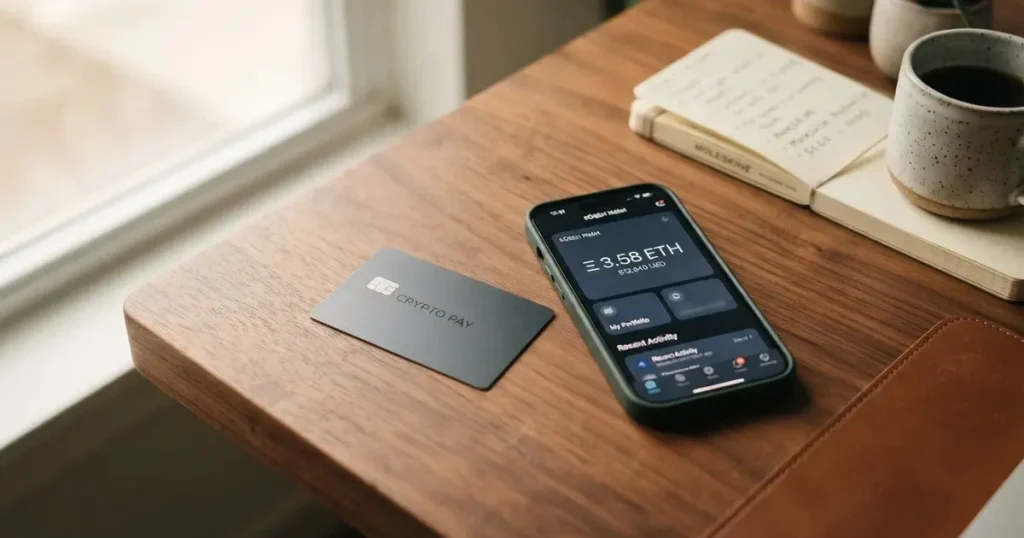
You have probably landed here because you cannot get an ordinary bank card, or because the bank card you have does not work where you actually spend. Balance Pay is a crypto card built around that problem: a virtual Visa you apply for inside a Telegram bot and fund with USDT. On paper that is exactly the shape of thing you want. The problem is that a large share of what you would need in order to decide — the country list, the conversion fee, the limits, the identity of the company behind it — is simply not published yet. My score is 5.7 out of 10, and the shape of that number matters more than the number itself: this is a card whose basic mechanics are sound and whose transparency is not.
The conditions described here are current as of October 28, 2026.
Let me be specific about what I mean, because “not stated” is easy to hide behind and unhelpful on its own. It is not that I found something bad. It is that I checked the card’s own pages and could not find it. When a company says its “full tariffs and legal documents will appear later,” you cannot price a product, you cannot plan around a limit, and you cannot tell whether your money sits in a segregated account or in someone’s operating wallet. That uncertainty, spread across several sections at once, is what holds the score down.
Verdict
Balance Pay scores 5.7 out of 10. It suits one person quite well: a Telegram user who already holds USDT and wants a virtual Visa without a bank relationship. It does not suit anyone who needs to know their exact cost per payment, their daily limit, or which legal entity is holding their balance before they commit.
| Criterion | Mark | Why |
|---|---|---|
| Who can get it | 7 / 10 | No country list or restrictions published; interface in English and Russian |
| Cost | 6 / 10 | No monthly fee and free registration, but a possible one-off virtual issuance fee in the Russian FAQ with no amount given; conversion and FX undisclosed |
| Top-up options | 8 / 10 | USDT on TRON (TRC-20), Polygon and Base; other networks “coming soon” |
| Reliability and complaints | 4 / 10 | A fintech company, not a bank; legal entity, country of registration and issuer unnamed; tariffs and legal documents “later”; no reviews found |
| Everyday use | 3 / 10 | Virtual Visa only today; Apple Pay and Google Pay “soon”; physical cards planned; ATM not disclosed |
| Total | 5.7 / 10 | A working idea with too much missing |
The high point is top-up, which is the part the card actually explains: USDT over three named networks is a genuinely useful answer to the question most people would ask. The low point is everyday use, and it is low for a blunt reason. What exists today is a virtual card number. That is not nothing, but the difference between a virtual card and a physical one is the difference between something you use for subscriptions and something you hand over in a restaurant, and right now only the first of those is real.
Before I go section by section, two framing points that apply everywhere. First, “fintech company, not a bank” is how Balance Pay describes itself, and that description carries consequences: an e-money or payments licence is not a banking licence, and customer funds held under one are not the same as deposits and may not carry deposit-guarantee protection. Second, the fact that you can do everything through Telegram is convenient and also concentrates risk — a bot is an interface, and interfaces get replaced. I will come back to both in the risks section.
Will they give you the card
Yes in principle — the card does not publish a country list, so nothing formally excludes you, and nothing formally promises you either. That double negative is the honest answer here. Balance Pay has not published a list of countries or any restrictions on who can open the account, and it does not explain what it looks at when it decides. The interface runs in English and Russian, which tells you something about who it is aimed at, but that is a hint rather than a rule.
This is worth sitting with, because the question is not really “can I open an account” but “can I keep using this card for the next two years.” A card with no published restrictions can change its policy without contradicting anything it has written down. A card with a published country list has constrained itself in a way you can check.
There is also a general point that applies to every prepaid or debit card in this category: they are generally available to adults (18+), and some issuers set higher limits. Balance Pay does not state what its own age requirement is.
What I would check first, if you are weighing this: whether the KYC provider is named anywhere, and whether anyone can tell you, before you upload a passport, which company on the other end is doing the checking and storing your document. That question has no published answer at the moment.
How to get it
The whole process is four steps, and all four happen in Telegram: open @balance_bot, pass identity verification inside the bot, top up, and receive your virtual card. The card says verification takes “a few minutes.”
That is unusually short a description of a KYC process, and it is where I have the most questions. The bot does not name the identity provider, does not say which documents it asks for, and does not say whether it needs proof of address or a date of birth check. It does not say what verification tiers exist, or what higher tiers would unlock. All of that is “not stated.”
You will get a virtual Visa, issued instantly in the bot. Metal and plastic physical cards are planned, along with Visa Signature perks “once physical cards launch.” The card’s currency is not stated.
Physical card delivery is not stated either — which means the delivery time, the shipping cost, and the countries it would ship to are all unknown.
So the honest picture of signup is this: the virtual path is clear, quick on paper, and fully self-service. The physical path is a promise with no timeline, no cost and no geography. Plan around the virtual card.
Fees
The cost picture is the reason this section exists. Balance Pay states no monthly fee and free registration. It also states that “full tariffs and legal documents will appear later.” That single sentence is doing a lot of work, because the fees that matter to a card user are the ones that are not a monthly fee.

| Fee or limit | What Balance Pay publishes |
|---|---|
| Registration | Free |
| Monthly fee | No monthly fee |
| Virtual card issuance | Possible one-off fee mentioned in the Russian FAQ; amount not named |
| Conversion fee | Not stated |
| FX / foreign currency fee | Not stated |
| ATM withdrawal | Not stated |
| ATM fee | Not stated |
| Daily limit | Daily caps are mentioned; no values given |
| Monthly limit | Not stated |
| Tiers | None published |
| Card currency | Not stated; “multi-currency spend” is listed as a feature with no detail |
The card currency point deserves a second look, because it interacts with the FX row. If your card is denominated in a currency other than the one you are spending in, a conversion happens at some exchange rate, and the party applying a margin on that conversion is almost always the issuer. Balance Pay does not say whether its card is USD-based, multi-currency with a selectable account, or something else. Until that is answered, the honest answer to “what does a coffee cost me” is “I cannot tell you from the published information.”
Now, three everyday payments, and which fees apply to each.
A USDT-funded card payment in the currency of the account. If you top up with USDT and your card balance is in a fiat currency, something has to happen between the token and the purchase. That step has a cost, and Balance Pay does not publish what it is — conversion fee not stated. Plus whatever network fee the blockchain charges for your deposit, which is charged by the network rather than by the card.
The same payment a week later, after the rate has moved. USDT is meant to hold a stable value against a fiat currency, but as the BIS put it in July 2025, about 90% of stablecoin market capitalisation sits in USDT and USDC, and despite the name stablecoins are not necessarily stable. TerraUSD collapsed in May 2022 and USDC temporarily lost its peg in March 2023. If you hold a balance through a depeg, the cost of your coffee changes without any fee being charged at all.
A purchase in a currency your card does not hold, or at a foreign online merchant. This is the payment where you are most likely to meet two separate charges: a conversion cost on the currency and, if the card is foreign-issued, the risk of the payment being declined outright. More on both in the section on daily use.
None of those three scenarios has a published price attached to it. That is not a small complaint. A card you cannot cost is a card you have to check with a small balance before you trust it with a real one — which, to be fair, is a reasonable thing to do anyway.
How to top up
This is the part that works, and it is why the top-up criterion scores 8 out of 10. Balance Pay funds from USDT on TRON (TRC-20), Polygon and Base. More networks are “coming soon.”
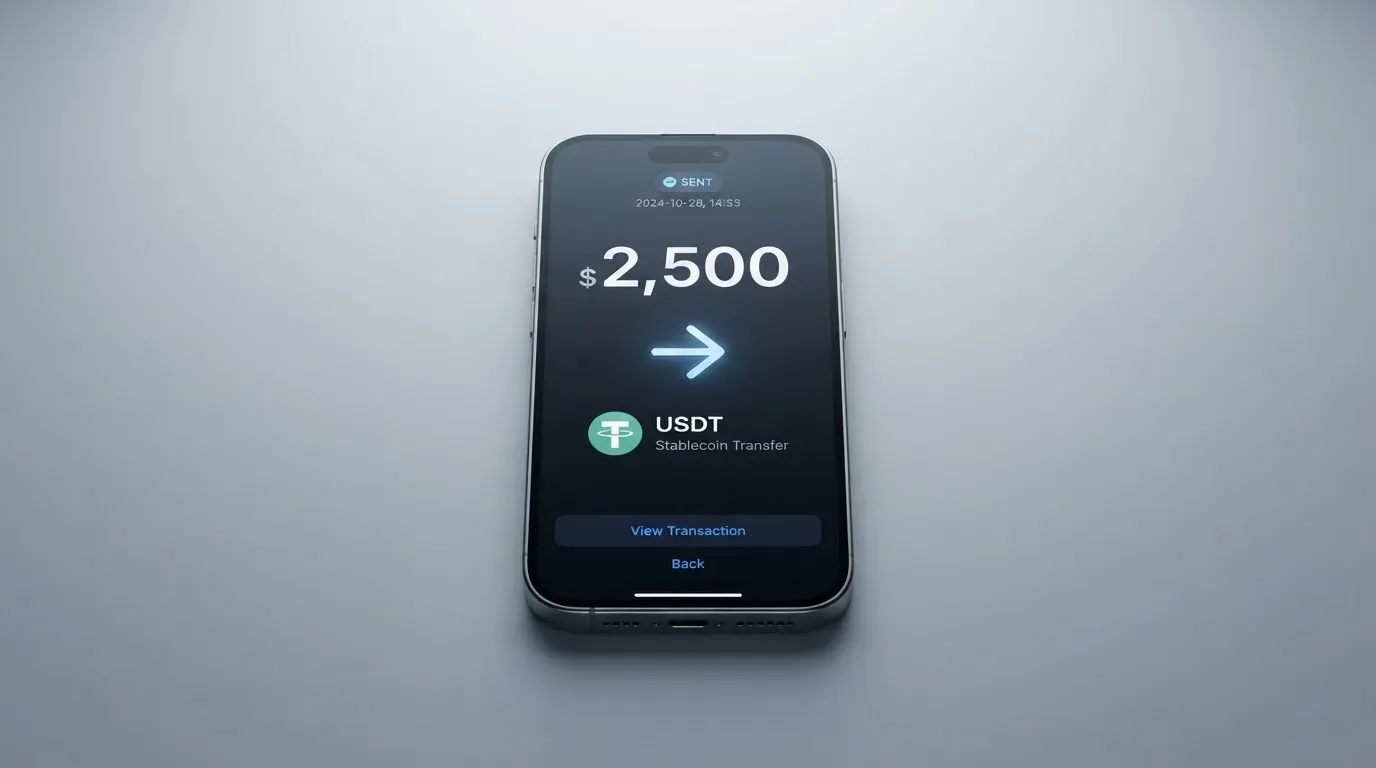
TRON is the network worth understanding if you have not used it, because it prices fees differently from most. ERC-20 is the Ethereum token standard, proposed in November 2015, and its fees — gas — are paid only in ETH, which means a wallet holding USDT but no ETH cannot send anything. Tron instead uses bandwidth and energy as internal resource pricing, and fees on Tron are often paid by burning TRX. In practice this is why USDT over TRC-20 is so common on cards like this one: the network fee tends to be low enough to ignore.
Two things are not stated: the minimum top-up, and who pays the network fee. No top-up fees are listed, which is at least a clear statement — absence of a listed fee is not the same as absence of a fee, but it is a better position than most.
There is a fiat route too, through on-ramp partners: Mercuryo for EU cards, and local providers for Latin America and the Asia-Pacific region. That is useful if you are starting from a bank balance rather than from crypto, but note that an on-ramp adds its own pricing and its own verification, and neither is described here.
Two warnings that belong in this section rather than in a footnote. First, blockchain transfers are irreversible: a deposit sent on a network the provider does not support, or to an address belonging to another network, can be lost or need manual support recovery with no guarantee. Read the network name twice. Second, Circle stopped supporting USDC on Tron in February 2024, so “USDC over TRC20” is not a native option on that route — a fact worth holding even though Balance Pay names USDT rather than USDC for TRON.
Withdrawing works in two directions: send USDT to external wallets, or use partner routes to reach bank accounts. Fees and any minimum balance left on closure are not stated.
Paying with it every day
Here is the weakest part of the card, and it scores 3 out of 10. Today you have a virtual Visa. Apple Pay and Google Pay are “coming soon.” There are allowed and blocked merchant category rules, but no list of them is published. There is no native app — you work through the Telegram bot plus a web dashboard preview — and no store ratings to look at, which is itself a small fact about how new the thing is.
A merchant category code, or MCC, is a four-digit number classifying a business by goods or services, specified in ISO 18245 and assigned when a business starts accepting a card. MCC 7995 covers gambling — casinos, betting, lotteries — and many issuers block it on specific cards by policy rather than by law, with the blocked list varying by issuer. Balance Pay mentions merchant category rules without publishing them. You will not know in advance which parts of your spending life are closed.
Some card payments will carry friction that has nothing to do with you. Address Verification Service compares the numeric parts of the billing address a buyer typed — street number, ZIP — with issuer records; it is mainly offered in the US, Canada and the UK and is generally unavailable for foreign-issued cards, which can cause declines. More broadly, merchants can look up the BIN, the 6 or 8 digit issuer identification number at the front of every card number, to see which institution and country issued it, and may apply extra scrutiny when the issuer country differs from the billing address. This is exactly why a card issued in one country can look foreign to a shop in another. Balance Pay does not name its issuing bank or country, so you cannot even predict what the BIN lookup will show about it.
Two more everyday realities. A declined authorisation may leave a hold on your funds for several days, typically up to seven, so a failed attempt at a hotel or a car hire desk is not free. And 3-D Secure — Visa’s version is called Visa Secure — adds an identity step to online payments where the issuer approves frictionlessly or challenges you with a one-time code or biometric. Nobody has said how Balance Pay handles it.
On the positive side, there is a referral element: bonus points or stablecoin cashback for each activated referred friend. The amounts are not stated, which means I cannot tell you whether it is worth anything.
And one more thing a card user should ask about that is not answered here: disputes. What happens when a charge is wrong, a merchant never delivers, or a payment is fraudulent — who you claim against, in which country, under which rules. For prepaid cards, coverage varies and should not be assumed. Balance Pay does not state a dispute process.
What can go wrong
Let me separate the risks into the ones I verified and the ones I simply could not verify, because they are different kinds of problem and you should weight them differently.
First, the verified picture is reassuring in a narrow way: I found no official incidents, and I found no user reports for balance.money or BalancePay when searching for reviews. There is no Trustpilot page. In practice that means the card is either very new or very quiet — and it means I have no evidence either way about how it behaves when something goes wrong. An absence of complaints from a card with no reviews is not a track record.
The unverified picture is where the risk sits. Balance Pay describes itself as a fintech company, not a bank. It does not name its legal entity, its country of registration, or its issuing bank. Under normal operation, a card programme has an issuer — a bank or an e-money institution licensed to issue under the network’s licence — and a crypto brand that is often only a programme manager or front-end. Those are two different companies with two different responsibilities, and you need to know which one you are dealing with before you load money. Here, that chain is not disclosed.
There is a pattern here worth naming, because it has happened repeatedly in this category. Visa terminated its global agreements with FTX on 13 November 2022 and the FTX US debit card was wound down by its issuer. WaveCrest, a Visa issuer that supplied crypto card brands, was suspended by Visa in Europe in 2018, closing all WaveCrest-issued Visa programmes. What a closure looks like in practice: a notice period, then spending and loading stop, then users are asked to withdraw remaining balances. I found a reported 2026 closure where new loads ended 8 July 2026 and spending stopped 8 August 2026, but that is a single unconfirmed source and I would not treat it as fact — I mention it only to show the shape of the risk, not to predict it for this card.
On the custody side, what is published is reassuring at the surface level and silent underneath. The card offers freeze and unfreeze, security toggles, and real-time payment alerts. Not stated: the custody model, and how funds are safeguarded. Those are different questions. If the provider holds the credentials, you are trusting it completely — and custodial platforms have a real record of failure, including Mt. Gox at about US$350 million reported stolen across 2011–2014, Coincheck at about US$400 million in 2018, and Ronin Network at US$625 million in 2022. If instead the funds sit in your own wallet until the moment of payment, you bear the key-loss and phishing risk instead. Which of these is true here is not something the published pages tell you.
Support is thin but present: a “Contact support” shortcut in the bot and an email at [email protected]. No news or announcements page is described.
If you are in the EU, there is one more thing worth checking yourself. MiCA, the EU’s markets-in-crypto-assets regulation, took legal effect in June 2023 under Regulation (EU) 2023/1114; its rules on asset-referenced and e-money tokens applied from 30 June 2024 and the remaining provisions, including crypto-asset service provider rules, applied from 30 December 2024. Under Article 48, e-money tokens may be issued only by a credit institution or an electronic money institution. The transitional period lets providers already operating under national law continue only until 1 July 2026 or until they receive or are refused a MiCA authorisation, whichever comes first. ESMA keeps an interim register of authorised providers, and you can look there. That is a check you can make, and it is the single most concrete thing I would suggest you do before funding the card.
Note also that a card is regulated separately from the crypto side: MiCA covers custody, exchange and transfer, while the card itself is a payment service under e-money and payment-services law. A crypto card often depends on two licences, and it is entirely possible to hold one and not the other. Nothing in the published material tells you which Balance Pay holds.
Alternatives
If the missing disclosure is the deciding factor for you — and for most people it is — then the useful comparison is not “which card is cheapest” but “which card publishes enough for me to plan around.” On that measure, three alternatives in the same general space are more transparent today, and none of them is unambiguously better.
| Card | Score | Card type | Stated fees | Funding |
|---|---|---|---|---|
| Balance Pay | 5.7 / 10 | Virtual Visa | No monthly fee, registration free; conversion and FX not stated; possible virtual issuance fee, amount unnamed | USDT on TRON (TRC-20), Polygon, Base |
| Azul Card | 5.3 / 10 | Virtual, Mastercard network, USD balance | $20 creation, refunded after $2,000 in spending; $5 monthly; 4% crypto top-up; $0.25 per transaction; FX not stated | Crypto sent in Telegram; coins and networks not named on the pages read |
| Telecard | 6.1 / 10 | Virtual Mastercard, USD | Standard $5 one-time; VIP $49 setup then $19/month; 1.5% currency conversion on non-USD payments; 0.5 USDT gas per successful transaction; FX and cross-border “up to 3% each”; $99 minimum deposit to activate, stated as not a fee | USDT on Tron (TRC-20) or Ethereum (ERC-20); USDC on Ethereum; Polygon not supported |
| OnCards | 4.6 / 10 | Virtual Mastercard or Visa, network not fixed | “Simple and clear fees — no hidden charges”, no amounts given; not stated | USDT BEP20 only; no bank transfers |
The differences are instructive. Azul Card publishes the most complete country policy of the group — worldwide except Russia, Belarus, North Korea, Iran, Syria, Cuba, Sudan, Venezuela, Ukraine and the Crimea, Donetsk, Luhansk, Zaporizhzhia and Kherson regions, with the note that the restrictions apply regardless of the user’s nationality. Its card creation fee is refunded after $2,000 in spending, which is unusual and fair. Its referral programme pays up to 40% of fees from your referrals’ transactions. Against that: a real $5 monthly fee, a 4% top-up charge, and card balances converted to USD. First top-up up to 10 minutes, later ones 1 to 5.
Telecard scores highest of the four and is the most expensive on paper. Its site says it is usable in over 150 countries wherever Mastercard is accepted, with identity check “available in most major regions” and no list of supported or excluded countries; the terms only bar users “blocked or sanctioned by the United States Government, including OFAC.” You need a $99 minimum deposit to activate, which it insists is not a fee because it stays in your wallet — a fair characterisation, and still $99 of your money. It also has a two-tier structure, which Balance Pay does not. Its networks: USDT on Tron or Ethereum, USDC on Ethereum, and no Polygon — the main page additionally lists ETH and TRX, which the help page does not. Bank transfers “coming soon.” Its referral scheme uses a points currency called Fiorini at 1 USDT to 100 Fiorini, with a cashback rate not specified.
OnCards is the thinnest of the four and, in my view, the least useful as a comparison, because its fee page promises clarity without giving numbers. It funds from USDT BEP20 only and does not accept bank transfers. It does not mention Russian or Belarusian citizens or residents either way.
Two pros and cons, stated plainly:
Balance Pay — for: USDT over three networks including Base, no monthly fee, free registration, English and Russian interface. Against: no country list, no conversion or FX figure, no limits, no named issuer or legal entity, virtual only, no mobile wallet yet.
Telecard — for: the highest score here, the clearest platform list, published percentage fees. Against: the highest cost, a $99 activation deposit, no Polygon, USD card currency with a conversion fee.
Where I would come down: if your only requirement is “send USDT to a virtual card and pay online,” Balance Pay is competitive and cheap on paper. If you are going to actually spend a salary-sized balance through this, take the card that publishes its tariffs, its issuer and its country — that is Telecard, at a cost, or Azul if a published country list matters most to you.
Who I would recommend it to
To the person who already speaks USDT. Not as a general recommendation — as a specific fit. You keep balances on networks you understand, you top up from your own wallet, you run a small balance rather than a large one, and you use the card for the things a virtual Visa is good at: subscriptions, digital services, travel booking. You accept that Apple Pay and Google Pay are not available yet, and that a physical card is a plan rather than a product.
I would not recommend it to the person who needs certainty. If your question is “what will this payment cost me,” or “what is my daily limit,” or “which company is holding my money,” the honest answer today is that the card’s own pages do not say — and a product that cannot answer those three questions has not finished being built.
The test I use is simple. Would I be comfortable holding a few hundred dollars of my own money here for a month, purely to learn how it behaves? Yes, comfortably, at that size. Would I be comfortable loading next month’s income? Not yet, not without seeing a tariff sheet.
Two practical suggestions, offered as prudence rather than as advice on how to do anything. Keep the amount you hold small until the tariffs and legal documents appear, because the information that would let you size it correctly does not exist yet. And if you are in the EU, check ESMA’s interim register for the provider before you fund anything — that is a check available to you and it costs nothing.
One last thing that is not about this card at all. If you spend from a crypto balance, your tax position may change with each transaction, and I am not qualified to advise on it. In the US the IRS treats digital assets as property, so exchanging them for goods, services, dollars or other digital assets generally produces a taxable gain or loss, measured in local fiat currency at fair market value on the date of the transaction. Whether an equivalent treatment applies where you live depends on your jurisdiction — so if this is material to you, take professional advice before you draw conclusions.
Frequently asked questions
What is the Balance Pay card?
Balance Pay is a virtual Visa card issued through a Telegram bot, funded with USDT rather than drawn from a bank account. You pass identity verification inside the bot, top up, and receive a card number. Metal and plastic physical cards are planned but not available today. It is designed for people who cannot easily obtain an ordinary bank card or want a crypto-funded alternative to one.
Is Balance Pay a bank, and who owns it?
No — Balance Pay describes itself as a fintech company, not a bank. It does not name its legal entity, its country of registration, or the bank that issues the card. That is the single most important gap for a potential user: the issuer is normally a licensed bank or e-money institution, while the brand is often just a front-end. Neither role is identified here.
How do I get the Balance Pay card, and does it require KYC?
Open @balance_bot, complete KYC inside the bot, top up, and the virtual card is issued instantly. The card says verification takes “a few minutes.” Identity verification is required, but the documents requested, the provider, the age requirement and proof-of-address rules are not stated.
What does it cost to open and keep a Balance Pay card?
Registration is free and there is no monthly fee. The Russian FAQ mentions a possible one-off fee for issuing a virtual card, but no amount is named, and the card says full tariffs will appear later. Conversion fees and foreign-exchange fees are not published, which makes the real cost of a payment impossible to calculate in advance.
How do I top up the Balance Pay card, and what are the limits?
You send USDT to the card on TRON (TRC-20), Polygon or Base, with more networks “coming soon.” There is also a fiat route through on-ramp partners: Mercuryo for EU cards and local providers for LatAm and the Asia-Pacific region. Daily caps are mentioned but no values are given, and no top-up fees, minimums or network-fee payer are listed.
What are the daily and monthly spending limits?
Not published. The card refers to daily caps and to daily and monthly limits without giving a single number, and no tiers are described. Given that virtual card limits are usually the tightest constraint in this category, this is a material gap rather than a detail.
Can I use it with Apple Pay or Google Pay, and is there a physical card?
Not yet. Apple Pay and Google Pay are described as “coming soon.” Only a virtual Visa exists today; physical metal and plastic cards are planned, with Visa Signature perks mentioned for after launch. Delivery time, shipping cost and shipping destinations are not stated. Card currency is also not stated, though multi-currency spend is listed as a feature.
Is the Balance Pay card safe to use?
It publishes sensible controls — freeze and unfreeze, security toggles and real-time payment alerts — but does not state its custody model or how customer funds are safeguarded, and names no legal entity or issuer. I found no official incidents and no user reviews for balance.money or BalancePay, which for a new card means no track record either way. Treat it as a product still being built.
Is it worth it compared with Azul, Telecard or OnCards?
It depends what you are optimising for. Balance Pay is cheapest on paper and supports three USDT networks including Base, but publishes the least. Telecard scores highest at 6.1/10 and discloses percentage fees, at a $99 activation deposit and real monthly cost on its VIP plan. Azul publishes the clearest country policy but charges $5 a month. OnCards says fees are simple and clear without stating any.
What should I check before committing money to it?
Check for a tariff sheet, a named legal entity and issuer, a country list, and daily limits — the four things missing today. If you are in the EU, look for the provider on ESMA’s interim register under MiCA. Until those exist, keep the balance small, confirm you are sending on a supported network since transfers are irreversible, and treat the card as untested.
Virtual card fees – cryptocardfacts
Content created by the «cryptocardfacts» team