
The fee-free euro card with yield that has not yet explained its issuer
 Available in US

Rebind is a card you open in an app in five minutes, for free, and it hands you a Visa you spend from a euro balance that earns interest. On paper that is close to the best combination a person in Europe can be offered: no account fee, no foreign exchange fee, no minimums, and money sitting still pays up to 5% on euros and up to 8% on dollars. I have gone through the card’s own pages and the surrounding material, and my overall mark is 5.8 out of 10 — not because the offer is weak, but because the things a saver most needs to know (who issues the card, what the limits are, what the cashback conditions are, what happens when you withdraw early) are either not stated publicly or come from third-party summaries the card itself has not confirmed.
The conditions described here are current as of October 28, 2026.
So who is this for? In my reading, the card suits one person quite precisely: someone already holding euros who wants them to earn something while they sit still, and who does not want to pay for the privilege of holding an account. If that is you, the fee side of this card is unusually clean and worth taking seriously. If instead you are looking for a card you can load straight from a crypto wallet, or you need a physical card in the post, or you want to know exactly what you may spend per day, you will finish this page with more questions than answers — because the public pages do not answer them.
Verdict: 5.8 out of 10
| Criterion | Mark | Why |
|---|---|---|
| Who can get it | 5 / 10 | Rebind says it works in 40+ countries, inside and outside the eurozone, but does not publish the full list; third-party sources narrow it to the EU, EEA and UK |
| Cost | 8 / 10 | No account fees, no transfer fees, no foreign exchange fees, no minimums; buying and selling assets carries a “small fee” with no amount given; unofficial sources mention a 1.5% markup outside EUR and GBP |
| Top-up options | 4 / 10 | Only an IBAN is stated officially; crypto funding is not described publicly, though third-party sources say ETH and USDC on Gnosis Pay infrastructure |
| Reliability and complaints | 5 / 10 | Rebind SAS is a technology company without a banking licence, euros come from Monerium as e-money, the card issuer is not named, and there is no deposit insurance; third-party user reports describe cashback tied to GNO holdings and withdrawal delays |
| Everyday use | 6 / 10 | A free Visa you can spend euros globally; third-party sources list virtual and physical versions and free ATM use but say Apple Pay and Google Pay are not supported |
| Total | 5.8 / 10 | A generous fee structure wrapped in a company young enough that its public disclosures are still thin |
Two of these marks deserve a word of explanation, because they are where the number comes from.
The cost mark is the high one, and it is high for a reason you can check yourself in a minute. There is no account fee, no transfer fee, no foreign exchange fee, and no minimum. Most cards take one of those four somewhere. The gap is that “a small fee” on buying and selling assets has no number attached, and third-party summaries describe a 1.5% markup on spending outside EUR and GBP — the kind of number that would erase the advantage of the fee-free structure the moment you spend in dollars.
The top-up mark is the low one, and it is low because the official material is thin rather than bad. A European-style IBAN with instant 24/7 transfers at no cost is described. Crypto top-ups are not described on the pages I could read. If you came to Rebind *because* you hold crypto, that ordering is backwards for you.
Will they give you the card?
Here is the honest answer: probably, if you are in Europe, and the card’s own words are vague about it.
Rebind states that it “works in 40+ countries, inside and outside the eurozone”, with the full list sitting on a linked guides page. I did not read that guides page, so I cannot reproduce the list, and I am not going to guess at it. A third-party summary of the card narrows the picture to the EU, EEA and UK, which is a considerably smaller claim than “40+ countries inside and outside the eurozone”. Where the two disagree, treat the narrower one as the safer assumption.
There is a second thing to understand before you apply, and it is about what kind of company is handing you the card.
Rebind SAS is built in Paris and describes itself as a technology company without a banking licence. That is not a warning sign in itself — plenty of legitimate fintechs operate exactly this way. What it means practically is that your euro balance is not a bank deposit. It is e-money issued by Monerium, an EU-licensed electronic money institution, and the physical card is issued through what Rebind calls “our licensed, MiCA-compliant card-issuing partner”, which the page does not name. The page logos include Stripe, Visa, Privy and Gnosis Pay, but logos are not a statement of who issues the card.
If you are outside the eurozone, this matters more, not less. Non-EU residents can hold the euro balance and spend it globally, but a euro balance with eurozone assumptions is a stranger object to an American, British or Australian regulator than a domestic bank account. I have seen no deposit insurance attached to it, and Rebind says so plainly: e-money balances are not covered by the French deposit guarantee scheme or anything equivalent.
How to get it
The official description of signing up is deliberately short: “Free to open. Only takes 5 min.” The steps are to sign up in the app and get the card in the app.
That is all the official material gives. Documents, proof of address, age requirements, KYC tier, delivery time for a physical card — none of it is stated on the pages I read. I want to be plain about that rather than filling the gap with plausible-sounding assumptions, because the gap is where people get caught out.
What a third-party summary of the card reports, as unofficial information not confirmed by Rebind, is that signup requires an email address, a phone number and an ID document, and that proof of address and a selfie are not required. Treat that as a starting expectation, not a promise: it comes from an aggregator, and issuers change their verification rules without announcing it.
One more thing to know before you click through, because it will shape your expectations about how long this takes. EU rules require regulated firms to complete customer due diligence covering name, address, date of birth, nationality and identity documentation, run a sanctions check, establish the purpose of the relationship, and assess whether you are a politically exposed person. If that cannot be completed, the institution is required to hold back or refuse the transaction and, where necessary, end the relationship. In practice this is why “five minutes” describes the application flow and not the whole path to a working, verified card.
Fees: what it really costs
This is where Rebind looks best, so I will give you the numbers first and then the places they are missing.

| Fee or limit | What Rebind states |
|---|---|
| Account fee | “No account fees”; the card is described as free; no per-tier prices stated |
| Transfer fee | None — “no transfer fees” |
| Foreign exchange | None — “no foreign exchange fees”; you can pay in any currency |
| Minimums | None — “no minimums” |
| Buying / selling assets | A “small fee”, amount not stated |
| Conversion spread | Not stated |
| ATM fee | Not stated officially; third-party summary lists ATM use as free |
| Daily, monthly, ATM limits | Not stated officially; third-party summary says no limits are listed |
| Tiers | None stated — “free to open”, no per-tier prices |
Now let me walk through three ordinary payments, because a fee table tells you less than a receipt does.
Paying for coffee in a eurozone city. This is the clean case. You pay in euros, your balance is in euros, no conversion happens, and on the published structure there is no fee at all. If the only card you use is for spending money that came from wages or savings, Rebind’s cost story is as good as it gets.
Paying for something priced in dollars, from a euro balance. Here the picture stops being simple. Rebind says there are no foreign exchange fees, and it also says it does not state the conversion spread. Those are two different things: a “no FX fee” card can still earn its margin in the rate you are given. The card’s own materials do not tell you how wide that spread is, and I have deliberately not filled it in with a figure from elsewhere. This is the single most important number to ask support for before you rely on this card outside the eurozone — not because the card is likely bad, but because it is simply not public.
Buying and selling crypto through the app. Rebind says buying and selling assets carries “a small fee”, with no amount, and no tiers are published. If you plan to trade inside the app rather than just spend what is already there, this is a line item you should size up yourself before committing money.
Two limits deserve a separate warning because their absence cuts both ways. Rebind’s pages do not state daily or monthly spending limits, and a third-party summary says no limits are listed there either — but “not listed” is not the same as “none exist”. An EMI is required by law to monitor transactions and report suspicious activity, so limits and freezes are part of the toolkit whether or not they are advertised. Treat “unlimited” as unverified.
Top up: how money gets in
The official answer is an IBAN, with “instant transfers 24/7 at no cost” and “no transfer fees, no minimums”. Savings are advertised “from 1€”. In practice, if you are paid in euros or have euros somewhere, this part is straightforward and free.
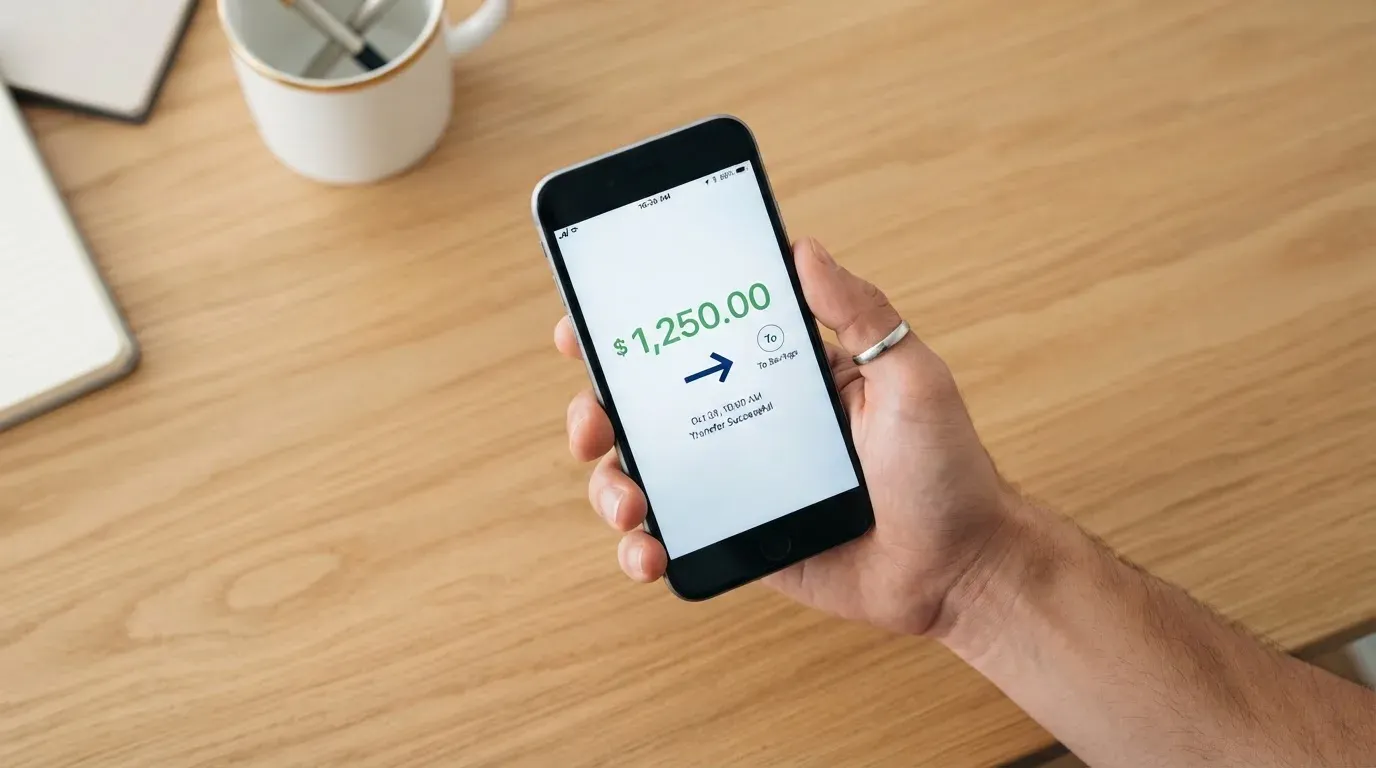
Crypto funding is the part that is not officially described. The public pages do not state which cryptocurrencies you can deposit, on which networks, or how long a deposit takes. What a third-party summary reports — unofficial, not confirmed by the card — is support for ETH and USDC on Gnosis Pay infrastructure. If you are coming from crypto, that is the claim to verify in the app before you send anything.
The reason this gap matters more than it looks is a property of the rails rather than of Rebind. Blockchain transfers are irreversible. A deposit sent on a network the provider does not support, or to an address belonging to a different network, can be lost outright or need manual recovery with no guarantee of success. Some stablecoins also cannot be sent on certain networks at all: Circle stopped supporting USDC on Tron in February 2024, so “USDC over TRC20” is not a native option. Check the network in the app, character by character, on a small test amount, the first time you do it.
Two further things about the savings side. The card says your funds are “available at any time” with no lock-ups — a genuinely important claim, because lock-ups are the normal way yield products trap money. But the withdrawal process and any withdrawal fees are not explained on the pages I read. And third-party user reports describe multi-day delays when withdrawing from yield contracts. That is an unverified report from users, not a policy statement, but it is exactly the kind of thing you want to know *before* you need the money.
Paying with it every day
What the card is: a free Visa, spending euros globally, paying in any currency, from an euro account held as e-money with Monerium.
What that means for your Tuesday is mostly good news. The Visa network is the one merchants know best, and a euro balance means no currency dance for everyday European spending.
Two practical points that third-party sources add, both unconfirmed by Rebind. The first is that both a virtual and a physical Visa exist. The official pages do not confirm this and do not state delivery times for a physical card, so if you need plastic in your wallet, ask first. The second is that Apple Pay and Google Pay are reported as not supported, with one App Store reviewer saying the virtual card can only be added to mobile wallets by manual card entry. If you pay by phone for most things, that is a significant limitation, and it is the kind of thing that is far more annoying to discover after a week of use than before you sign up.
On rewards, be careful. Rebind advertises yield of “up to 5% on your euros, paid every second”, variable and not guaranteed, with no lock-ups. That is interest on your balance — not cashback. Card cashback is not stated on the pages I read. A third-party summary shows no cashback line in its table, while user reviews mention cashback and a 5.6% yield, and the same aggregator shows conflicting scores: 8.3 out of 10 on its English page against 6.2 on its Russian, French and Chinese pages. Those are aggregator ratings of each other, not ratings of Rebind, but the spread tells you how unsettled the picture is. Separately, third-party user reports describe the advertised cashback as depending on holding GNO tokens with weekly caps — which I would treat as a warning to read the terms, not as a confirmed feature.
One thing worth knowing in general terms, because it explains declines you may hit anywhere and not just here: some merchants decline prepaid or foreign-issued cards, since a lookup of the card’s first six or eight digits reveals the issuer and country, and address-verification checks are mainly offered in the US, Canada and UK and are generally unavailable for foreign-issued cards. Merchant category codes are also worth a glance if any spending of yours declines — a four-digit code classifying the business, with gambling (MCC 7995) the one most often blocked by issuers as policy rather than by law. And if an authorisation is declined, a hold on your funds can stay for several days.
What can go wrong
This is the section I would not skip, and the honest version is longer than the marketing version.
The company has no banking licence and is young. Rebind SAS is a technology company; the euros are e-money from Monerium. That is a legitimate structure, but it means your protection is not deposit insurance. Rebind’s own guide on protecting money says the euro balance is e-money, not a bank deposit, and is not covered by the French guarantee scheme or equivalent. If that balance is a large part of your savings, that is a real decision to make deliberately.
The card issuer is not named. Rebind describes “our licensed, MiCA-compliant card-issuing partner”. This matters for practical reasons. When a card programme fails, you want to know who holds your card contract. In November 2022 Visa said it had “terminated our global agreements with FTX”, and the FTX US debit card programme was wound down by its issuer — a reminder that a brand you use can be a front end for a programme you don’t control. Separately, WaveCrest, a Visa issuer that supplied several crypto card brands, was suspended by Visa in Europe in 2018, closing all WaveCrest-issued Visa programmes. Programme closures typically mean a notice period, then loading and spending stop, then you are asked to withdraw your balance.
The complaints that exist are all third-party and none are official. Rebind’s own pages carry no complaints, and no news items, and there is no Trustpilot page for Rebind that I could find. What does exist is an unverified aggregator summary of user reports and news-style items, describing: cashback that depends on holding GNO with weekly caps; a 15% performance fee on yield; a reported 1.5% markup on spending outside EUR and GBP; multi-day delays withdrawing from yield contracts; no deposit insurance; and availability limited to the EU, EEA and UK. No dates are given with these. I am not treating them as facts about the card, but I am not dropping them either — a 15% performance fee on your yield, if true, would change what “up to 5%” means, and that is worth ten minutes of your own checking.
Your crypto is yours, but the pipes are not. Rebind says it does not custody assets: stablecoin assets are owned and custodied by you, while euro balances are e-money. That is the better arrangement. But a self-custody-linked setup has its own risks — whoever holds the seed phrase holds the money, and typically that is 12 to 24 unencrypted words that anyone who obtains them can use to restore the wallet and spend the funds. Transfers are irreversible and a stolen key has no built-in recovery. And stablecoins are not censorship-proof: Tether says it disables tokens in wallets on the OFAC sanctions list and has frozen funds tied to illicit activity.
Neither is anonymity a feature. I want to say this plainly, because cards are sometimes marketed as if they were. KYC rules require regulated businesses to verify customers, monitor transactions and report suspicious activity. Nationality is recorded and screened separately from residence, because sanctions screening is usually applied to citizenship and country of birth as well as country of address. Rebind’s guide mentions passkey and biometric protection without detail, and says nothing about freeze controls or spending limits in the materials I read — the standard safeguards you would expect, an instant freeze and per-card limits, are simply not documented publicly.
The yield is variable and comes from elsewhere. Up to 5% on euros and up to 8% on dollars is not a promise; the card describes it as coming from third-party DeFi protocols. Up to is doing real work in that sentence. Stablecoins themselves depeg — TerraUSD collapsed in May 2022 and USDC temporarily lost its peg in March 2023 during the US banking crisis — so the thing the yield is calculated on can move against you.
And on tax, one practical note, not advice. Digital assets are generally treated as property for tax purposes, so exchanging them for goods, services or dollars generally produces a taxable gain or loss, measured in local currency at the fair market value on the date of the transaction. Each card payment funded from crypto may therefore be a separate disposal. How that applies to you depends on where you live; treat this as a prompt to check with a professional rather than as an answer.
What to take instead
If the fee structure is what draws you, MetaMask scores 7.1 here — the highest of the four — and is the clearest alternative. It issues a Mastercard, virtual free with no annual or maintenance fee, with a metal version at $199 a year; sign-up is open in 45 listed countries and territories with proof of residency required; and it states “minimal fee for each transaction” with no MetaMask-added fees and no foreign transaction fee, using the Mastercard rate. It spends directly from your connected wallet across Linea, Base, Monad and Solana, and pays cashback in mUSD — 1% on Virtual, 3% headline on Metal with a footnote limiting 3% to the first $10,000 spent and 1% after. The catch is availability: US and UK sign-ups are temporarily closed per its FAQ, and ineligibility limits sign-up, not spending.
KAST, at 6.1, is the one to look at if tiered cashback matters to you. It offers virtual and physical cards, up to ten per user, across Standard, Premium and Private, with annual memberships of 0, 1,000 and 10,000 US dollars. Its fee sheet is unusually explicit: stablecoin top-up 0%, card spend in USD 0%, transaction fee 0%, Apple and Google Pay 0%, a non-USD FX fee of 0.5% to 1.75% depending on where you live and where you spend, 0.10 USD on non-USD transactions under 25 USD, and 0.50 USD for a declined payment from insufficient balance. Cashback runs from 1.5% to 3% of eligible spend depending on tier, paid in USD when the transaction is authorised. Its eligibility test is residence-based and strict: if you live in a supported country but hold an ID from a restricted region, you may still fail KYC, and a VPN does not change that.
TokenPocket, at 5.8 — the same mark as Rebind — is the closest structural comparison. It offers Visa debit in a list of European countries and territories and Mastercard debit across Australia, Canada, Hong Kong, Japan, Taiwan, New Zealand, Singapore, South Korea and the UK, with the Americas described as planned for Q2 2025. It runs on Arbitrum, and its cards are virtual. Fees: no additional fees beyond a “small portion” of NFT creation, but a 1% fee on crypto deposits into the card, described as refunded later through rewards and reduced transaction fees.
The honest summary: Rebind wins on the published absence of fees, loses on published detail. MetaMask publishes less about top-ups than Rebind does but far more about rewards. KAST publishes the most complete cost sheet of the three and charges membership for the privilege. If you want certainty over generosity, KAST’s table is the easiest to read.
Who I would recommend it to
I would recommend Rebind, with eyes open, to one specific person: someone inside Europe who already holds euros, wants them to earn something while they sit idle, and is not going to be frustrated by a mobile-only wallet and a savings product whose fine print lives in a support conversation rather than on a page.
I would steer it away from three kinds of reader. If your main currency is not the euro, the unstated conversion spread is a hole in the main advantage — find out what it is first. If you are holding crypto and want to spend straight from a wallet, the official material does not describe that path, and third-party sources naming only ETH and USDC on Gnosis Pay infrastructure is not the same as a published commitment. And if you need to know your daily limit, your ATM terms, or who stands behind the card when something goes wrong, none of those are public, so you will be asking support questions before you can even decide.
My honest summary is this: the economics here are unusually good and the disclosure is unusually thin, and those two facts are connected. A new company competing on zero fees has every incentive to say little about the margins it earns elsewhere. Treat this as a card worth asking questions of, not one worth staking a large balance on sight.
Frequently asked questions
What is Rebind card?
Rebind is a payment card you open in an app in five minutes, for free. You get a Visa that spends from a euro balance, and that balance earns interest of up to 5% on euros and up to 8% on dollars, variable and not guaranteed. The company behind it is Rebind SAS, built in Paris, which describes itself as a technology company without a banking licence. Your euros are e-money issued by Monerium, an EU-licensed institution, not a bank deposit.
Is Rebind a bank?
No. Rebind says plainly that it is a technology company and does not hold a banking licence. The euro balance is e-money issued by Monerium, an EU-licensed electronic money institution, which can issue e-money and payment cards but cannot lend. The physical card comes through what Rebind calls “our licensed, MiCA-compliant card-issuing partner” — the page does not name that partner.
How do I get a Rebind card?
Sign up in the app and the card is issued in the app, in a process the company describes as taking five minutes and free to open. What is not stated publicly: which documents are needed, whether proof of address or a selfie is required, the age limit, or how long a physical card takes to arrive. A third-party summary says email, phone and ID are required.
Does Rebind require KYC?
Yes, in practice, because it operates in the EU and its balance comes from a licensed e-money institution. EU due diligence covers name, address, date of birth, nationality, identity documents, a sanctions check, the purpose of the relationship, and politically exposed person status. Rebind’s own pages do not list the documents. If due diligence cannot be completed, the institution is required to hold back or refuse.
What countries is Rebind available in?
Rebind says it works in 40+ countries, both inside and outside the eurozone, with the full list on a linked guides page I did not read. A third-party summary narrows it to the EU, EEA and UK. Where the two differ, assume the narrower set until the app tells you otherwise — and note that the euro balance itself is built around eurozone assumptions.
How do I top up a Rebind card?
Officially, with an IBAN: Rebind describes instant transfers 24/7 at no cost, with no transfer fees and no minimums, and savings starting from 1€. Crypto deposits are not described on the public pages. A third-party summary reports support for ETH and USDC on Gnosis Pay infrastructure. Blockchain transfers are irreversible, so test a small amount and check the network carefully before sending anything large.
Is Rebind card free?
The account fee is free — “no account fees” — and Rebind describes no transfer fees, no foreign exchange fees and no minimums. Two costs are unquantified: buying or selling assets carries a “small fee” with no amount given, and the conversion spread is not stated. A third-party summary mentions a reported 1.5% markup on spending outside EUR and GBP, which would matter a lot if it is accurate.
Can I add Rebind to Apple Pay?
Probably not. A third-party source states that Apple Pay and Google Pay are not supported, and one App Store reviewer says the virtual card can only be added to mobile wallets by manual card entry. Rebind’s own pages do not mention either wallet. If you pay by phone daily, ask support before signing up — this is the limitation most likely to annoy you later.
Is Rebind card safe?
Treat it as a real financial product with real limits. Rebind SAS has no banking licence, your euro balance is e-money and not covered by the French deposit guarantee scheme, and the card issuer is not named publicly. Rebind’s materials describe no deposit insurance, and third-party user reports raise questions about cashback conditions and withdrawal delays. There is also no Trustpilot page for Rebind that I could find.
Is Rebind worth it?
Worth it if you hold euros, want them to earn something while idle, and don’t need mobile wallets. Worth thinking twice about if you spend mainly outside the eurozone, because the conversion spread is not published, or if you intend to hold a large balance, because e-money carries no deposit protection. The fee structure is genuinely excellent; the disclosure around it is not.
Wallet card fees and costs – cryptocardfacts
Content created by the «cryptocardfacts» team