
Roqqu Card Review: The Reality Behind the Marketing
 Available in US
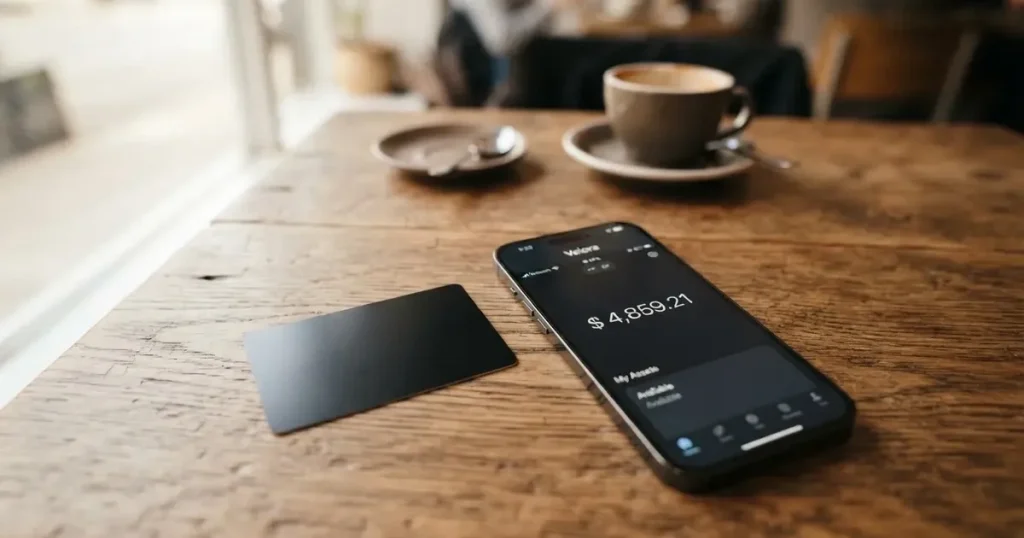
If you have used the Roqqu exchange and want to spend your crypto directly without going through a bank, the pitch here is genuinely appealing. Roqqu offers a virtual payment card that lets you “spend your crypto directly online or in-store” through what it calls “Direct Conversions.” The card comes with customizable designs. The idea is clean: hold stablecoins, tap a card, pay.
Conditions are current as of October 28, 2026.
But when I went through Roqqu’s own public pages and terms looking for the details a person actually needs — where is it available, what does it cost, what are the limits, how is money loaded, what kind of card is it — I found a striking number of blank spaces. The card’s country list, fees, limits, card network, funding coins and networks, and even whether a physical card exists: none of it is stated in public pages. Roqqu’s terms say Roqqu is a platform and not a counterparty, that the issuing institution and its licences are not named, and that the Trustpilot picture is mixed. My honest conclusion after reviewing it: this is a promising product with an unusually thin public paper trail, and I’d want you to read the rest of this page before deciding.
Here’s my full breakdown.
Verdict: A Promising Idea, A 4.5/10 Score, and a Lot of Unstated Detail
My overall mark for the Roqqu card is 4.5 out of 10. That is not a score I give lightly, and I want to explain it with the same honesty I would want if I were the one choosing a card.
Let me break that score down into the criteria I used.
| Criterion | Score (out of 10) | Why |
|---|---|---|
| Who can get it | 5 / 10 | Countries are named only as “supported markets”; access depends on where you live and the countries Roqqu operates in, and the list is not disclosed |
| Cost | 5 / 10 | Card fees are not disclosed; the page it links to does not list them |
| Top-up options | 5 / 10 | “Spend your crypto directly”, direct conversion; coins and networks are not named |
| Reliability and complaints | 4 / 10 | Roqqu Nigeria Limited is named as the issuer; licences are not named; complaints about locked accounts and held assets; Trustpilot 3.6 out of 5 from 104 reviews |
| Everyday use | 3 / 10 | A virtual card with a customizable design; Apple Pay, Google Pay, plastic and ATM are not disclosed |
Total: 4.5 / 10.
So who does this suit? In my view, this card suits Roqqu exchange users who are already on the platform, want to spend stablecoins online, and are comfortable with crypto’s usual trade-offs — irreversibility, platform risk, and self-managing their own limits. If that’s you, the idea is real and the concept is sound.
Who does it not suit? I would be cautious recommending it to anyone who needs a bank-like everyday card, who needs a physical card for in-store contactless, who travels and needs a reliable FX fee, or who relies on chargeback protection and dispute rights. A person who cannot get an ordinary bank card today — which is often exactly why someone is reading about a crypto card in the first place — is the very person this card’s thin disclosure serves worst, because they have the fewest alternatives and the most to lose.
My bottom-line advice: treat Roqqu as an exchange feature first and a card second. If you’re already holding funds there and want a virtual spend option, it’s worth exploring. If you’re choosing a card in the dark, the missing information should stop you, not excite you. In a world where Visa and Mastercard do not issue crypto cards to consumers themselves and instead license issuers — Visa even terminated its global agreements with FTX in November 2022 — the identity of the actual issuer matters enormously. Here, that identity is not publicly named. That’s a gap, not a detail.
Will They Give You the Card?
This is the first question, and the honest answer is: the public pages do not actually tell you. Roqqu does not publish a list of eligible countries. The official material refers only to “supported markets” — a phrase that tells you nothing concrete without a signup form in front of you.
What the general terms *do* say is that access depends on where you live and on the countries Roqqu operates in, and that eligibility is reassessed on an ongoing basis. Read that last part carefully. Ongoing reassessment means your eligibility is not a one-time gate you pass; the platform can reassess it continuously.
This matters a great deal if you are applying from outside Nigeria. Roqqu’s terms are those of Roqqu Nigeria Limited (the site footer refers to Roqqu Technologies; the relationship between the two is not explained). The issuing institution and its licences are not named on the public page. So even if you got an account, you’d be relying on a Nigerian entity’s terms while the institution that actually issues your card remains unnamed.
Here’s my practical guidance. If you want to know quickly whether you qualify, the fastest honest test is to attempt registration — but I won’t pretend that attempt is harmless. Before you type anything in, know exactly what you’ll be asked for (I cover this next) and understand that submitting government ID is not reversible. I can’t tell you “yes, it’s available in your country,” because Roqqu doesn’t say. Treat any claim you find online, including third-party sites, as unofficial and not confirmed by the card until you’ve verified it yourself on Roqqu’s own pages.
How to Get It
The signup path is not published in step-by-step form, so let me walk you through what the terms actually commit you to, and what you’ll need on hand.
Registration means providing your legal name, a government ID, and your date of birth, and you must be 18 or the legal age in your jurisdiction. That’s the core identity package. Roqqu’s card FAQ has a KYC answer, but it is not shown on the public page, so the specific identity-check flow for the card itself isn’t visible to you before you start.
There are two more things worth understanding before you begin:
Verification tiers exist, and they gate your limits. The terms say transaction limits depend on your verification level and tier, and that higher limits may require enhanced due diligence. But no tiers or timings are published. So you cannot know in advance what limit you’ll start at, or how long reaching a higher one takes. This is the single most important operational fact for anyone planning to depend on this card for real spending.
The card is virtual, with a customizable design. The page describes a “Virtual Flexibility” card with customizable designs. Here’s the catch: the card network and whether a physical option exists are not stated, and the FAQ answers weren’t displayed when I checked. My earlier look at the product described a prepaid Visa, but I want to be honest about the weight of that: the current public page does not confirm it, so treat the network as unverified.
This is the practical reality of the onboarding: you’ll provide identity documents, land in some verification tier you can’t predict, and receive a virtual card with a design — while the network, the physical option, the delivery timeline, and your limit all remain unknown in advance. There’s no published delivery estimate for a physical card because, as far as the public pages show, there may not be one.
Fees: What It Really Costs to Use Roqqu Day to Day
Here’s the blunt answer: the fees are not disclosed, and I can’t reconstruct them for you without inventing numbers. I won’t do that.
The card page links to a /fees page, and that page lists no card fees. The card’s cost, its fee schedule, its ATM fees, its currency handling, and its limit figures are all not stated on the public pages. The terms mention that tiers exist and that they affect limits, but no tier names, no figures, no timing.
Let me show you the table with the honest state of each item, because the gaps are the story.
| Fee or limit | What the public pages say |
|---|---|
| Issuance fee | Not stated |
| Monthly fee | Not stated |
| Conversion fee | Not stated (the card does “Direct Conversions”) |
| FX / currency fee | Not stated; the card currency is not stated |
| ATM fee | Not stated (no ATM offering is described) |
| Daily limit | Not stated; depends on verification level and tier |
| Monthly limit | Not stated; depends on verification level and tier |
| Tiers | Referenced in the terms as affecting limits, but not defined |
As you can see, every financial parameter is either blank or undefined. This is not me being unhelpful — this is the genuine state of the disclosure.
To make this less abstract, let me run three ordinary purchases past you, so you feel where the uncertainty lands.
Purchase one: a coffee or a small app subscription online, paid from stablecoins. The page says you spend crypto directly and conversion happens at each purchase. So the *mechanism* is clear — but the *rate* and any spread or conversion fee are not disclosed. You don’t know what fraction of your stablecoin value reaches the merchant. In the background of the category, note that on-chain network fees for your deposit are charged by the blockchain itself, not by Roqqu — but the card-side conversion cost remains unknown.
Purchase two: something priced in a currency other than your stablecoin’s peg. This is where FX would bite, and Roqqu does not state an FX fee, a network rate, or even what currency the card holds. If you spend abroad or on a non-dollar merchant, you have no published number to budget against. You are flying blind on the single cost most likely to surprise you.
Purchase three: a larger everyday purchase, or a trip to an ATM. No ATM terms are described at all, and daily/monthly limits are unknown. You cannot know whether a given purchase will clear the limit your tier imposes, or what an ATM withdrawal would cost.
Here’s what I’d genuinely tell a friend: the *absence* of a published fee schedule is itself the fee risk. In this category, published fees are how you predict your cost; here there’s nothing to predict from. Before you rely on this card for real money, go and find Roqqu’s current in-app fee screen or ask their support directly — the public pages won’t answer it. And remember that when a provider won’t publish costs in advance, the costs tend to surface at the worst moment.
How to Top Up the Roqqu Card
The funding story is the card’s strongest suit, and the card’s weakest-documented corner at the same time. Let me take those in turn.
What’s clear: the page says you can “spend your crypto directly online or in-store” via “Direct Conversions.” That means there’s no separate, traditional “load the card” step you can assume — you hold crypto, and the conversion is meant to happen at the point of purchase. My earlier check described stablecoins held in a Roqqu wallet and converted in real time at each purchase.
What’s not clear: which coins and which networks are supported are not listed on the current page. My earlier check pointed to stablecoins in the Roqqu wallet; the present public material doesn’t name coins or networks. Separately, the traditional top-up details — minimums, methods — are not stated.
Here’s why the missing network detail is the part that can actually hurt you, and it’s worth a moment. In the wider crypto-card world, sending a deposit on the wrong network can mean the funds are simply lost or need manual support recovery with no guarantee, because blockchain transfers are irreversible. Tether’s USDT has been issued on networks including Ethereum, Tron, Solana, Polygon and Avalanche; Circle’s USDC is natively supported on 38 networks including Ethereum, Solana, Base, Polygon PoS, Avalanche, Arbitrum and Stellar, but Circle stopped supporting USDC on Tron in February 2024. If Roqqu’s supported networks aren’t published, you could plausibly send on a network it doesn’t support. So my guidance is firm: never send a deposit to a Roqqu address until you have confirmed, on Roqqu’s own current surface, exactly which coin on which network it expects. Getting that wrong is not a fee you can argue about later; transfers are irreversible and the network cannot undo them.
One more point on money leaving the system: the terms state that digital asset transactions cannot be reversed once broadcast, and — importantly — the card’s withdrawal terms are not stated. So don’t assume you can pull funds back out quickly and cheaply; that part is undocumented too.
Paying With It Every Day
What you hold in hand is a virtual card with a customizable design. That’s the everyday-use story, and it’s a thin one.
Let’s inventory the everyday features and mark what I could actually verify:
- Card form: Virtual, customizable design — stated on the page.
- Card network: Not stated in current public material (my earlier check said prepaid Visa; unverified now).
- Physical card / plastic: Not stated.
- Apple Pay / Google Pay: Not disclosed.
- ATM / cash withdrawal: Not stated; no ATM offering described.
- Wallets on the card: Not stated.
- Rewards or cashback: Not stated.
So the honest picture is: you get a virtual card. Everything a person normally reaches for a card *for* — tap-to-pay in a shop, a phone wallet, cash from a machine — is undocumented.
The app is real, at least: the page carries App Store and Play Store badges, and it displays “4.25 Stores” without explanation; I didn’t read the store ratings or counts. That’s a minor point, but in this context it matters — when the public marketing page can’t explain a store rating, you shouldn’t lean on it as a quality signal.
Two background facts shape your everyday experience even so. First, virtual-only means no physical fallback: if your phone dies or the app locks you out, the card is unreachable. Second, in the category at large, some merchants decline prepaid or foreign-issued cards because the issuer-identification-number lookup reveals the card type and issuer country — which is why a virtual prepaid-style card from a specific market can read as “foreign” at checkout. And declined authorizations can leave a hold on your funds for several days, sometimes up to seven.
On the positive side of the ledger: the page states cold storage, two-factor authentication, email and SMS transaction notifications, “ISO 27001 certified,” and an NDPR audit dated 2024. That’s a real security posture on paper. The caveat: the custody model for the *card funds themselves* is not stated, so it’s unclear whether your balance is held the same way as exchange holdings.
What Can Go Wrong
This is where I think the card deserves real scrutiny, and where the review materials concern me most.
The issuing institution is not named, and there are two company names. The terms name Roqqu Nigeria Limited; the site footer names Roqqu Technologies; the relationship is not explained. The issuing institution and its licences are not named on the page. This matters because, in this category, the crypto brand is often only a programme manager or front-end, while a licensed bank or e-money institution actually holds the card programme and is the party you actually have a banking relationship with. Here you cannot see who that is.
User complaints cluster around exactly the painful failures. No official card-specific incidents were found, and no dated card-related events turned up. But third-party user reports on Trustpilot describe themes worth taking seriously — and I want to be precise that these are unofficial user reports, not confirmed card incidents, and that card-specific complaints were not found:
- Missing deposits or withdrawals (reports dated October 2023 and October 2025)
- Slow support (November 2023 and February 2026)
- Locked accounts and held assets (November 2023 and June 2024)
- Identity-verification problems (December 2023 and January 2025)
The specific ones I’d flag for you: “locked accounts and held assets” and “missing withdrawals” are the two that hurt a cardholder most, because a card converts directly into money you need. Note also the February 2026 support complaint is recent.
Trustpilot: mixed, and the card’s own page is inconsistent with it. Reading the Trustpilot listing on 21 October 2026 gives 3.6 out of 5 from 104 reviews, only 2 of them in the last 12 months. Separately, the card’s own page claims “4.0 Trust Pilot / 300.” So the official page’s numbers don’t match the live Trustpilot listing. Two takeaways: treat the self-reported “4.0 / 300” as marketing, and note that with only 2 reviews in the last year, the Trustpilot score is somewhat stale and not a strong current signal.
You’re dealing with a platform, not a counterparty — with the dispute handling that implies. The terms state that Roqqu is a platform and not a counterparty, and that disputes you raise are resolved directly rather than through an issuer chargeback process; chargebacks appear only in a fraud context. A formal complaint process is published at a /complaint-handling-process-ng page. This is a meaningful difference from a normal bank card. In the background, US debit-card reversal rights come from Regulation E and credit-card rights from Regulation Z, with prepaid-card coverage varying and something you should never assume. The upshot: if a merchant won’t refund you, your route to a chargeback is far weaker than with an ordinary card.
Platform and custody risk is real in this category. Holding funds with a custodian carries counterparty and hack risk — the track record includes Mt. Gox (about US$350 million reported stolen, 2011–2014), Coincheck (about US$400 million, 2018) and Ronin Network (US$625 million, 2022). This is background about crypto custody generally, not a claim about Roqqu, but it’s the environment your funds sit in.
Regulatory footing is worth checking yourself. A card is a payment service regulated separately (e-money / payment-services law), while the crypto side (custody, exchange, transfer) is covered by crypto regulation — so a crypto card often depends on two licences. Roqqu’s Nigerian context means you should look to the relevant Nigerian authorities, not assume EU or US protections. In the EU, MiCA’s stablecoin rules have applied since 30 June 2024 with the rest from 30 December 2024, and e-money tokens may be issued only by a credit institution or an electronic money institution; providers could previously continue under a transitional period only until 1 July 2026. If you’re outside Nigeria, none of that is your regulator, and that’s precisely why the unnamed issuer is a problem.
Support is stated as 24/7, with legal notices to [email protected]. That’s a good-faith signal, but 24/7 availability doesn’t answer the locked-account and held-asset themes above.
What to Take Instead
You asked what the alternatives are, so let me walk you through the comparison honestly — including where *they* are equally undocumented. I’m not here to talk you into anything.
The three comparison cards come with these scores:
| Alternative | Score | Notes on disclosure |
|---|---|---|
| Young Card | 5.7 / 10 | Country, card type, cost and fees not stated; cashback paid in YNG tokens by Club tier |
| MSX | 6.4 / 10 | Country, card type, cost, fees and funding not stated on the pages I could read |
| Bybit Card | 6.0 / 10 | Extensively documented; regions, networks, fees and rewards all published |
All three score higher than Roqqu’s 4.5, but the reasons differ, and it matters which reason.
Bybit Card (6.0/10) — the documented option, with a hard geographic limit. This is the only one of the three where you can actually read the numbers before you commit. Its catch: eligibility. The card regions are Argentina, AIFC (Kazakhstan), Georgia, Kazakhstan, Australia, Mexico, Brazil, Peru and Asia Pacific. The cards page is explicit: “This product is not meant for European Economic Area customers. All European Economic Area customer participation is strictly prohibited.” Bybit’s fiat-service restricted list includes Belarus, the Russian Federation, Serbia, China and the United States — though that list covers deposits, withdrawals and One-Click Buy, not the card as such — and Russian users can only make RUB fiat transactions. I found no card-specific statement on Russian or Belarusian *citizens*, and no rule on citizenship versus residence; the application asks for country of residence, and if your country isn’t supported Bybit will “register your interest.” The card currency “depends on the country of your Advanced Identity Verification.”
Its costs are published in detail: virtual card issuance is free in all regions “until further notice”; physical card issuance/replacement is 29.99 USD in Australia, 5 USD/USDT in Argentina, 29,99 USDT in Georgia and Kazakhstan (AIFC), 5 USDT in Asia Pacific, and none in Brazil and Mexico — with VIPs holding certain physical cards paying no issuance or replacement fee, and the cards page promising “Auto interest, no annual fees.” The conversion fee is 0.9% over the One-Click Sell rate in most regions and 0.5% in Argentina (Peru not supported); FX is 2% on top of the network rate in several markets, 7% in Argentina, 1.5% in Brazil, 1% in Peru. Rewards run from 2% to 10% cashback by tier, but only crypto-funded transactions count from 5 October 2026.
MSX (6.4/10) — scores highest, and discloses the least. I want to be straight with you: on the official pages I could read, the country, card type, cost, fees, funding method and rewards for MSX are all not stated. Its higher score is not a statement that it’s more transparent than Roqqu; it’s a statement that on the criteria I scored, it came out ahead — but you’d be making the same kinds of decisions in the dark. Treat MSX as something to investigate, not something this page vouches for.
Young Card (5.7/10) — one concrete perk, same disclosure gap. Young Card’s country, card type, cost and fees are not stated officially, and its top-up method isn’t stated for the card itself. What *is* concrete is the rewards structure: cashback is paid in YNG tokens at a rate set by Club tier — Essential 0.1%, Gold 1.8%, Platinum 3.6%, with Bronze and Silver not stated. Cashback in a volatile token, at undisclosed tiers, is something to weigh rather than a reason to switch.
My honest read on the comparison: if you need a card you can actually understand and budget for, Bybit’s published schedule is in a different class from Roqqu’s blank page — *but* it’s strictly unavailable to EEA customers and its region list may exclude you. If you can’t tell from any of these whether you’re eligible, that is itself the answer to “what should I take instead”: look for a card whose issuer, network, fees and limits are published, in a market that actually accepts you. Don’t let an attractive score pull you into an undocumented product just because a competitor looks vaguer.
Who I Would Recommend It To
Let me be direct, because that’s the service of a review.
I would recommend the Roqqu card to exactly one kind of person: an existing Roqqu exchange user who wants to spend stablecoins online and is comfortable with the crypto trade-offs. If you already have funds on the platform, you understand that transfers are irreversible, you’re at peace holding assets with a custodian, and you mainly need a virtual card for online spending in your own currency — then this serves a real need, and the “spend crypto directly / Direct Conversions” design is genuinely convenient. Just go in knowing it’s virtual-only as far as the public material shows, and confirm the fees in-app before you spend.
I would not recommend it to:
- Anyone who needs a physical card or reliable in-store/contactless, or a phone wallet (Apple Pay / Google Pay). These aren’t disclosed. If your day depends on tapping a terminal, this isn’t established to do it.
- Anyone looking for published fee or FX rates. There are none available. If your spending involves other currencies or you budget tightly, you cannot forecast the cost from public information.
- Anyone relying on chargebacks or formal dispute rights. Roqqu is a platform, not a counterparty; the dispute route is materially weaker than an ordinary bank card’s.
- Anyone who can’t verify their own eligibility in advance. No country list is published, eligibility is reassessed on an ongoing basis, and the issuer and its licences aren’t named.
- Anyone nervous about platform risk. The user-report themes include locked accounts, held assets, and missing deposits and withdrawals.
The through-line in all of that is the same: this card’s central problem isn’t that it’s bad, it’s that it’s undocumented. And for the person who most often *needs* a crypto card — someone who can’t get an ordinary bank card — undocumented is the worst possible state, because you have the fewest alternatives to fall back on.
My 4.5/10 is therefore not a verdict on the idea. It’s a verdict on what you can safely rely on today. If Roqqu publishes its country list, fee schedule, card network and issuing licence, that score could move a long way. Until then, treat it as an exchange convenience, not a card to depend on.
Frequently asked questions
What is the Roqqu card?
The Roqqu card is a virtual payment card offered by the Roqqu platform. The page describes it as a “Virtual Flexibility” card with customizable designs, letting you “spend your crypto directly online or in-store” through “Direct Conversions.” It converts your crypto at the point of purchase rather than requiring a traditional prepaid load. Its card network and whether a physical version exists are not stated on current public pages.
How does the Roqqu card work?
You hold crypto in your Roqqu wallet, and when you pay, the card converts it — earlier descriptions say stablecoins are converted in real time at each purchase — so you spend directly from your crypto balance. Which specific coins and which blockchain networks are accepted is not listed on the current public page. That last point matters most: sending funds on an unsupported network can mean they’re lost, since blockchain transfers can’t be reversed.
Is Roqqu a bank?
Not on the evidence. Roqqu describes itself as a platform rather than a counterparty, and the terms name Roqqu Nigeria Limited while the site footer refers to Roqqu Technologies, with the relationship unexplained. Crucially, the issuing institution for the card and its licences are not named publicly. In this category the actual card issuer is often a licensed bank or e-money institution distinct from the crypto brand, so this is a meaningful distinction.
Who owns Roqqu?
Two names appear in Roqqu’s own materials, and the pages don’t explain how they relate. Roqqu’s terms name Roqqu Nigeria Limited, which appears to be the issuing entity behind the card. The website footer names Roqqu Technologies. Beyond that, ownership structure isn’t set out in the public pages, and the regulatory licences for the issuing entity aren’t named there either.
How do I get the Roqqu card?
Registration means providing your legal name, a government ID and your date of birth, and you must be 18 or the legal age where you live. Limits then depend on your verification level and tier, and higher limits may require enhanced due diligence — though no tiers or timings are published. Eligibility is assessed on an ongoing basis, and no country list is published, only “supported markets.”
Does the Roqqu card require KYC?
Yes. Roqqu’s general terms require your legal name, a government ID and your date of birth at registration, which is a standard know-your-customer check. Limits are tied to verification level, and moving up can mean enhanced due diligence. Separately, user reports on Trustpilot include identity-verification problems dated December 2023 and January 2025 — unofficial user reports, not confirmed card incidents.
What are the Roqqu card’s fees?
They aren’t disclosed. The card page links to a fees page that lists no card fees, and issuance, monthly, conversion, FX and ATM costs are all not stated. No currency, daily limits or monthly limits are published either — those depend on verification level and tier, which aren’t defined. So the real cost of a purchase can’t be calculated from public information; you’d need Roqqu’s in-app fee screen.
Is the Roqqu card free?
There’s no way to tell from the public pages. No issuance fee or monthly fee figure is stated, and the linked fees page lists nothing. Since Roqqu doesn’t publish the numbers, “free” isn’t something I can confirm or rule out — and it isn’t something you should assume. Ask in the app before you rely on the card for regular spending.
Can I add the Roqqu card to Apple Wallet or use it at an ATM?
You can’t tell from public information, and that’s the honest answer. Apple Pay, Google Pay, physical/plastic cards and ATM withdrawals are all not disclosed for the card, and no ATM offering is described at all. If tapping to pay or taking out cash is central to how you use a card, this one isn’t established to support it — and being virtual-only means your phone and app are your only route to the card.
Is the Roqqu card safe, and can I withdraw from it?
On security, Roqqu states cold storage, two-factor authentication, email and SMS transaction notifications, “ISO 27001 certified” and a 2024 NDPR audit — but the custody model for the card funds specifically isn’t stated. On support, the page says 24/7, while unofficial Trustpilot reports mention slow support and locked accounts with held assets. Card withdrawal terms are not stated, and crypto transfers can’t be reversed once broadcast.
Exchange card fees – cryptocardfacts
Content created by the «cryptocardfacts» team