
A virtual USD crypto card with cheap payments and an unresolved trust problem
 Available in US

The Trustee card is a virtual, USD-denominated payment card that you load with USDC or USDT and then spend like an ordinary card — online, in shops, and through Apple Pay or Google Pay. On paper the economics are attractive: a virtual card listed at 10.00 $, “0% fees on transactions”, no monthly fee stated anywhere, and a 30,000 USDC monthly transaction limit. In practice the parts that make a card usable day to day are half-finished: there is no physical card at the moment, cash withdrawals at ATMs are not available, and the card’s own Trustpilot presence sits at 2.2 out of 5 from 236 reviews, with 56% of them one-star. My score is 5.1 out of 10 — a card that works for a narrow job, and works cheaply, wrapped in a support and compliance situation I would not want to be dependent on.
If you are in the EU and want a virtual dollar card for online spending, this one is worth reading about. If you need a physical card, cash from an ATM, or a provider you can be confident will not freeze your balance for weeks with no timeline, it is not the tool for you.
The conditions described below are current as of October 28, 2026.
My score: 5.1 out of 10
| Criterion | Mark | Why |
|---|---|---|
| Who can get it | 5 / 10 | Countries are not listed. The page says only “Issued in Great Britain” and “Worldwide Crypto Card”. Unofficial sources add EEA, Ukraine and Moldova, but that data may be outdated |
| Cost | 7 / 10 | Virtual card listed at 10.00 $, “0% fees on transactions” — but the conversion markup is not disclosed. Unofficial figures say 0.5% conversion and 0 EUR monthly, while reviews cite up to 2% per transaction |
| Top-up options | 5 / 10 | USDC or USDT, first to the Trustee Plus wallet, then to the card balance. Networks are not named. Unofficial sources mention 30+ assets in the wallet |
| Reliability and complaints | 3 / 10 | Issuer Wirex Limited. Trustpilot 2.2 out of 5 from 236 reviews, 56% one-star: funds frozen for AML review, one amount of 21,360 USDT, one case running 53 days |
| Everyday use | 5 / 10 | Virtual available, physical temporarily unavailable, ATM withdrawal currently unavailable. Apple Pay and Google Pay are supported |
| Total | 5.1 / 10 | Cheap to hold, thin on function, heavy on unresolved complaints |
The 5.1 is not a rounding of a 5 and a 6 — it is the cost score pulling the total up and the reliability score pulling it down. That shape tells the story better than the number does. If you only care about what a payment costs, this card looks good. If you care about whether you can get your money out when something goes wrong, it is the weakest part of the picture, and it is the part that decides how much money you would be comfortable leaving on it.

Will they give you the card?
The card’s public pages do not list countries. That is the honest first thing to tell you. What the page does say is “Issued in Great Britain” and calls it a “Worldwide Crypto Card” — which describes the issuing jurisdiction and the ambition, not an eligibility list. No list of accepted countries, no list of excluded countries, no citizenship rule.
If you are outside the EU, that gap matters more than it looks. Issuers apply risk policy to citizenship and country of birth, not only to where you live, and KYC rules in the EU separately screen nationality alongside residence. A card that does not publish its country list leaves you guessing whether you are eligible until you have already handed over documents.
Unofficial sources — cryptocardhub.com and a forklog.com guide, undated, from the 2023-2025 era — describe the card as available to EEA residents plus Ukraine and Moldova, usable wherever Mastercard is accepted. Treat that as third-party and undated, not as a promise from the card. It may be badly out of date, and it is not something you can hold the company to.
The rest of the eligibility signal is indirect: the app is offered in several languages on the App Store — English, Bulgarian, Lithuanian, Polish, Portuguese, Russian and Ukrainian. That tells you where the audience is, not who is approved.
How to get it
KYC is required before the card is issued. The stated steps are: download the Trustee Plus app, complete KYC verification, order the card, then top up the balance in USDC or USDT.
What is not stated is almost as important as what is. The pages do not say which specific documents will be required, do not mention proof of address as a standing requirement, and do not mention an age threshold. From reviews, the picture that emerges is a single in-app step: Profile, Identity, choose your country, then “Other method”, where you state the purpose of the account and the source of your income, give your address, upload an ID card (national passport) or an international passport, and take a selfie. Levels, processing time and the reasons a check might be refused are not published — the app says verification “usually takes little time” and stops there.
The realistic expectation, from what reviewers report, is that proof of address and further documents may be requested after the first submission. That is normal for this category and not a warning sign in itself; it just means your first attempt may not be your last.
On the card itself: the virtual format is orderable, the physical format is marked “Temporarily unavailable” with a waitlist, and the network is not stated. The card currency is USD. The virtual card is issued in “a few minutes” once the order goes through. For the physical card, delivery countries, delivery time, delivery cost and replacement terms are not stated — which, given that it is unavailable anyway, is arguably moot.
What it really costs
Here is what the card states and what third parties state, side by side. I have kept them separate on purpose, because the gap between them is where your actual cost lives.
| Item | What the card states | Unofficial figures |
|---|---|---|
| Virtual card | 10.00 $ (not labelled as an issuance fee) | EUR 10 virtual, EUR 25 physical; cryptocardhub notes no virtual issuance charge during a promotion |
| Monthly fee | Not stated | EUR 0 per month |
| Card payments | “0% fees on transactions” | 0% commission |
| Crypto-to-fiat conversion | Not stated | 0.5% (the most consistent figure across 2023-2025 sources); Trustpilot reviews cite up to 2% per transaction |
| Foreign exchange markup on non-USD payments | Not stated — conversion is automatic at the moment of payment | Not stated |
| ATM cash withdrawal | “At the moment, cash withdrawals from the card in Trustee Plus at ATMs are not available” | An older, undated guide describes ATM withdrawal at NFC terminals with PIN, up to EUR 2,000 per day and EUR 10,000 per month at 1.5% + EUR 1 |
| Monthly transaction limit | 30,000 USDC | — |
| Daily transaction limit | Not stated | — |
The ATM row is the one to read twice. The official page says ATM withdrawals are not available now; the unofficial line describes a feature that the card’s own feature list also mentions in past tense context. The third-party numbers describe a world that the current page says does not exist. Treat the ATM row as “not available”, full stop.
The two payment examples that matter most in practice:
Paying 40 EUR on a euro price tag. The card is USD, so the payment converts automatically at the moment of payment. The card promises 0% fees on transactions, and that promise covers the payment itself. What is not disclosed is the FX markup — the spread between the real mid-market rate and the rate your balance is actually charged at. Third parties put that spread at around 0.5% for crypto-to-euro conversion; reviews cite up to 2% per transaction. On 40 EUR, 0.5% is 0.20 and 2% is 0.80 — the difference between a rounding error and a visible line item. Ask support which number applies before you rely on either.
Paying something with USDC already in the balance. If you top up in USDC or USDT and the merchant charges USD, no conversion of the underlying crypto should be involved at the point of sale. The cost here is the network fee the blockchain charges on the deposit, not a card fee. That is the cheapest way to use this card, and it is the case where “0% fees on transactions” is closest to the full picture.
There are two formats and no tiers. Virtual at 10.00 $, orderable; physical, temporarily unavailable on a waitlist. No cashback scheme and no limit tiers are stated. Balances are a single balance across currencies: EUR, PLN, GBP and other payments all convert at the point of sale rather than into separate pots.
How to top up
The mechanism is specific and narrow. You top up the Trustee Plus wallet in USDC or USDT, and then move the funds from the wallet to the card balance. These are two separate balances, and the second step is a transfer you make yourself. Credit is “usually within up to 5 minutes”.
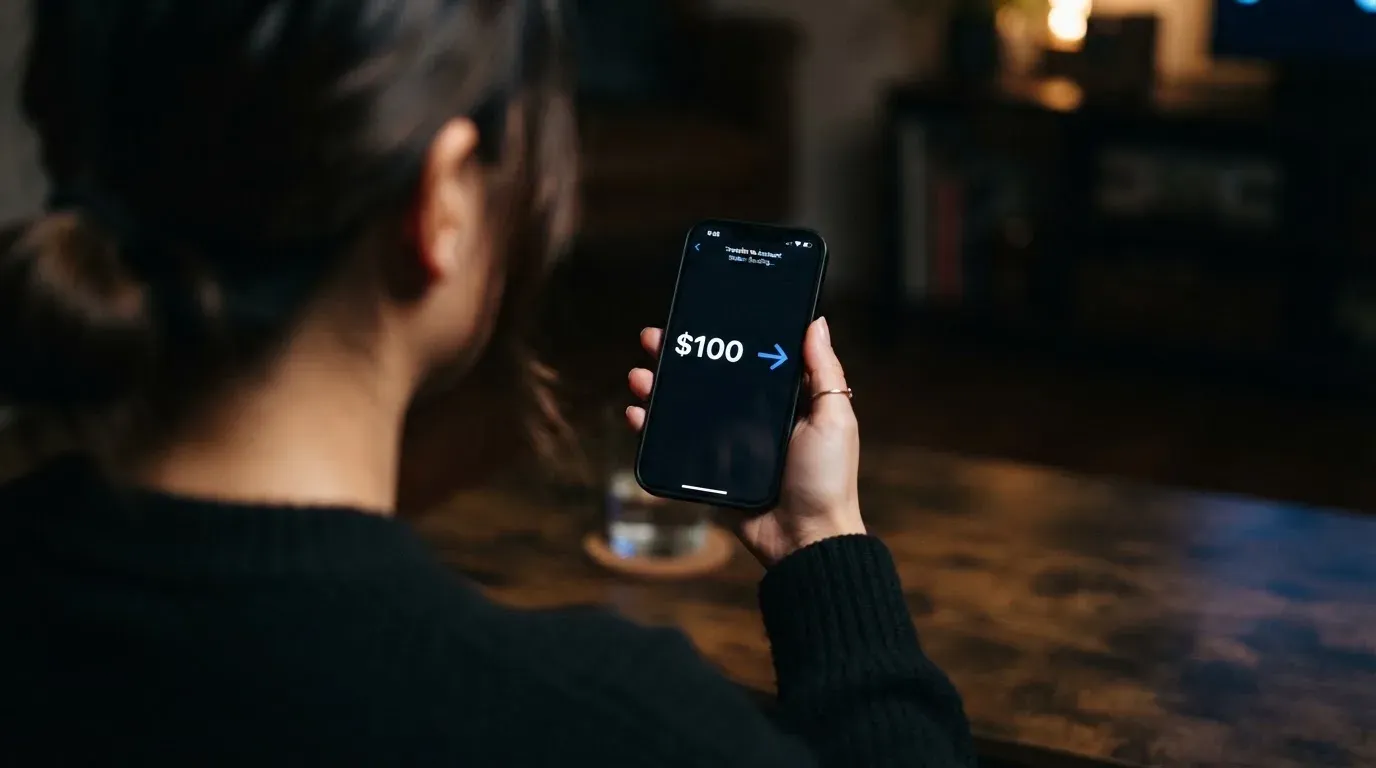
Three things the card does not state: the networks, the top-up fee, and the minimum. Those are the three things that most often go wrong with a stablecoin deposit — you send on the wrong chain, or below the provider’s floor, and there is no undo. Blockchain transfers are irreversible by design. A deposit sent to an address for a network the provider does not support can be lost, or can need manual support recovery with no guarantee attached.
The wiki does mention a personal IBAN for SEPA transfers and links to a “How to add funds to the EUR balance” article, and a “Trustee Plus fees” article that could not be retrieved. That suggests a bank-transfer route exists in some form. What it costs is not something I can tell you from the pages I read.
Unofficial sources say the wallet holds 30+ assets — BTC, ETH, TRX, USDT, USDC, SOL — and one of them claims card spending is limited to BTC, ETH and USDT, with USDC only for wallet top-ups. That contradicts the official page, which says USDC or USDT go to the card. Trust the official page on the narrow question of what loads the card, and treat the wider asset list as unconfirmed.
Getting money back out is thinner still. The wiki links to “How to withdraw money to a bank card” without stating the steps; the card-balance-to-crypto route, its fees, and what happens to a leftover balance when you close the account are all not stated. Cash ATM withdrawals are not available, and the card says the team is working on it. This is the gap I would ask about before putting anything on the card: a card you can fill easily and drain only with difficulty is not the same product as one that does both.
Paying with it every day
What works. Apple Pay and Google Pay are both supported, which is the practical detail that matters most, because you add the virtual card to your phone’s wallet once and then tap. The iPhone build requires iOS 17.0+ and the version listed was 2.1.6; an Android APK is offered directly on the site rather than through the Play Store. The app is published by MIKEPAY INC., and the App Store Nepal storefront showed no rating at all — “not enough ratings” — as of 2026-10-20. The Google Play rating was not read. An app with no visible public rating history is worth factoring into how much you trust it with money.
What does not work, or is unknown. No cashback or rewards programme is stated. Which merchants are blocked is not stated. Whether you can dispute a transaction is not stated on either the card pages or the wiki — though a review does describe an account closed after a chargeback request, which is the kind of thing you would want to know before you need it.
On rewards, third-party sources flatly contradict each other: one comparison says no traditional cashback but a referral programme and hotel discounts; another says cashback is “in development”; a sponsored piece claims up to 8% without making clear the offer belongs to this card. Plan on no rewards.
On merchant acceptance in general, this is where a card like this runs into the category’s structural problem rather than the company’s own. A card number encodes the issuer’s country in its first six or eight digits, and any merchant can look that up and apply extra scrutiny when the issuer country differs from the billing address. Some merchants decline prepaid or foreign cards simply because the lookup reveals the type. A card issued in Great Britain and used in a shop in another country can look foreign to the till. That is not a Trustee defect, but it is a real and recurring complaint in this category, and it is worth knowing before you blame the card.
Declined payments have another ordinary trap: a declined authorisation can leave a hold on funds for several days, typically up to seven.
What can go wrong
I want to be direct about this section, because the reliability score of 3 out of 10 reflects something specific and checkable.
The issuer is named; the Trustee entity is not. The page states the issuer as Wirex Limited, alongside “Issued in Great Britain”. The Trustee entity itself does not appear on the page. When you cannot see plainly which legal company holds your balance, that is a gap worth naming out loud.
Custody is stated but not explained. The security page says “We safeguard, but we do not control”, which is a sentence rather than an answer. It does not say who holds the keys, how funds are segregated, or what happens to them if the business fails. Insurance is not mentioned. Whether you can freeze the card yourself from the app is not stated.
The complaints are specific, not vague. On Trustpilot, trusteeglobal.eu (Trustee Plus) sits at 2.2 out of 5 from 236 reviews — 97 of them in the last 12 months, 56% one-star against 37% five-star. The company replies to 98% of negative reviews, mostly with a templated “funds are safe”. The recurring user themes, all dated between March and October 2026: funds frozen under AML review with no timeline, including 21,360 USDT held on 1 October 2026 and one case running 53 days; “return to source” refunds never completed; copy-paste support replies; lost access or verification revoked; and a card blocked in July 2026.
There is a second Trustpilot page for trustee.io at 2.5 out of 5 from five reviews, all one-star, June to October 2026: AML holds, a chargeback request followed by account closure on 22 September 2026, and five documents requested on 12 October 2026. That profile is unclaimed. A reviewer on trustee.io separately complained about unclear handling of existing users after card issuance resumed for Ukrainian users, slow USDT transfers and an unclear AML review and complaint procedure — though that entity may not be the same one.
Read those themes as a family rather than as anecdotes. Funds held without a timeline is the pattern. It is the specific failure mode of this kind of card: your money is not lost in a hack, it is sitting still while an automated review decides what to do about it, and the person you would ask for an update is answering from a template.
The official pages themselves confirm an incomplete product. As of 2026-10-20 the physical card was temporarily unavailable and ATM cash withdrawals were not available. Reviews from January 2026 describe cards moving to a merged platform or a new provider. A July 2026 review reports a card block that the company’s reply of 30 July 2026 attributes to the card issuer. The Trustee Plus page rating was unavailable due to a guideline breach when I looked. I found no licence or fine news, and I am not going to manufacture one.
The category’s own failures are the background risk. Custodial platforms have a real record: Mt. Gox (about US$350 million reported stolen, 2011-2014), Coincheck (about US$400 million, 2018), Ronin Network (US$625 million, 2022). Crypto transfers are irreversible, and a stolen key has no recovery path because the network cannot freeze or return funds. Tether says it disables tokens on OFAC-sanctioned wallets and has frozen funds tied to illicit activity, so stablecoins are not censorship-proof either — a freeze can reach you through no wrongdoing of your own.
Stablecoins are not what the name promises. They aim to hold a stable value, and “despite the name, stablecoins are not necessarily stable”. TerraUSD collapsed in May 2022; USDC temporarily lost its peg in March 2023. You are taking currency risk on top of counterparty risk when you hold USDT or USDC.
One more practical trap: fees on Ethereum are paid only in ETH, so a wallet holding USDT with no ETH cannot send. On Tron, fees are paid via bandwidth and energy resources, often by burning TRX. Getting this wrong is a support ticket at best.
What is protected, and what is not. A debit card is not a deposit. Safeguarded customer funds sit in dedicated accounts or under insurance, which is not the same as a bank deposit and may not fall under a deposit guarantee scheme. A chargeback is a refund ordered by the issuer, and prepaid-card coverage varies and should not be assumed — especially here, where the dispute process is not even stated on the pages. Under US rules, debit card reversal rights come from Regulation E and prepaid coverage differs; because the card’s own pages do not state which regime applies, check the terms for your specific card programme.
And a tax note, offered as information rather than advice: in the US the IRS treats digital assets as property, so spending from a crypto balance generally produces a taxable gain or loss measured in local currency at fair market value on the transaction date — each card payment can be a separate disposal. Rules elsewhere differ, and how this works for you depends on your own situation and local law; take it to a professional rather than to a review page.
What to take instead
I looked at three alternatives from the same category, each with a different shape of trade-off. Here is how they compare on the things that actually decide it.
| Trustee | TokenPocket | MetaMask | KAST | |
|---|---|---|---|---|
| Score | 5.1 / 10 | 5.8 / 10 | 7.1 / 10 | 6.1 / 10 |
| Card | Virtual USD; physical unavailable | Mastercard/Visa debit, virtual | Mastercard; Virtual free, Metal $199/year | Virtual and physical; Visa tiers |
| Cost to start | 10.00 $ | NFT creation fee partly covered, “small portion” payable | Virtual free | Standard 0 USD; Premium 1,000 USD/year; Private 10,000 USD/year |
| Stated fees | “0% fees on transactions”; conversion markup not stated | 1% on crypto deposit, refunded later via rewards | “Minimal fee per transaction”; no FX fee, Mastercard rate | 0% USD spend; FX 0.5%–1.75% depending on country pair; 0.10 USD on non-USD under 25 USD; 0.50 USD declined transaction |
| Rewards | Not stated | None; the 1% is refunded via rewards | 1% cashback (Virtual) to first $10,000, then 1%; Metal headline 3% with the same cap | 1.5% / 2% / 3% cashback on monthly spend caps per tier |
| Who it suits | EU users wanting a virtual USD card | Euro-area and Asia-Pacific users | Users who want self-custody | Users in a supported country willing to pay for a tier |
TokenPocket at 5.8 is the closest in spirit. A Mastercard or Visa debit for a list of European countries and territories (Germany, France, Spain, Switzerland among them), and Mastercard for Australia, Canada, Hong Kong, Japan, Taiwan, New Zealand, Singapore, South Korea and the UK, with the Americas “planned for Q2 2025”. It runs on Arbitrum, Fiat24 cards are virtual, and balances sit in EUR24 and USD24. The cost is a 1% fee on depositing cryptocurrency into the card, which the company says is refunded later through rewards or reduced transaction fees. Its own country list is published, which alone puts it ahead of Trustee on the point I complained about above.
MetaMask at 7.1 is the strongest of the three, and for a structural reason: it spends directly from your connected wallet, so there is no custodial balance to freeze. Sign-up is open in 45 listed countries and territories (Andorra, Argentina, Brazil, Canada, Mexico, Germany, France, Spain, Uruguay among them) with other regions on a waitlist, and the company is explicit that ineligible regions limit sign-ups but not spending. Proof of residency is required; citizenship rules are not stated; US and UK sign-ups are temporarily closed per the FAQ. The card is Mastercard, virtual first and instant, Metal pre-orderable at $199/year, one card per user, issuer Monovate. Fees are a “minimal fee for each transaction” with the amount not published on the pages I read, no additional MetaMask fees and no foreign transaction fee — the Mastercard rate applies. Networks are Linea, Base, Monad and Solana; tokens named include mUSD, wETH, EURe, GBPe, USDC and USDT, with Solana-only wallets unable to withdraw credit. Cashback is 1% paid in mUSD on Virtual, and on Metal the headline is 3% but the footnote caps it at the first $10,000 spent, then 1%.
KAST at 6.1 is the most transparent on fees and the most expensive to enter. Residence is decided at KYC, and the rule is unusually clear-cut: if your country is not listed, KAST is not available there. Citizenship matters too — living in a supported country while holding an ID from a restricted region may still make you ineligible, dual citizens with an ID from a supported country may pass, only your own ID counts, and a VPN does not bypass it. You can create an account in an unsupported country, but KYC stays locked. Cards run from Visa Platinum through Visa Infinite metal and gold-plated, with themed designs for Pengu, Solana and Bitcoin, up to 10 cards. Membership is 0 USD for Standard, 1,000 USD/year for Premium and 10,000 USD/year for Private, billed annually upfront; an extra virtual card is 2 USD, a Standard physical card is 0 USD plus 40 USD delivery, and there is a 1 USD/month inactivity fee after 12 months. Fees are the clearest of the four: stablecoin top-up 0%, USD spend 0%, transaction 0%, Apple and Google Pay 0%, non-USD FX 0.5%–1.75% depending on residence country, transaction country and card programme, non-USD transactions under 25 USD cost 0.10 USD, and a declined transaction for insufficient balance costs 0.50 USD. Cashback is 1.5%, 2% or 3% on monthly spend caps of 2,000, 10,000 and 40,000 USD.
If you want published numbers rather than a promise, KAST and MetaMask both give you more than Trustee does. If you want to keep control of the funds, MetaMask is the only one of the four that holds no balance for you in the middle. If you want the cheapest possible start with a virtual card in the euro area, TokenPocket is the closer comparison.
Who I would recommend it to
I would recommend this card to one specific person: someone in the EU who wants a virtual dollar card for online spending, already holds USDC or USDT, is comfortable leaving a modest balance on a prepaid-style card, and treats support tickets as a normal cost of using it. For that person it is genuinely cheap — 10.00 $ to start, no monthly fee stated, 0% on the payment itself — and Apple Pay and Google Pay make it usable without a plastic card ever existing.
I would not recommend it to someone who needs cash, who needs a physical card, who needs to be certain which legal entity holds their money, or who cannot afford to have a balance frozen for weeks without a timeline. The 3 out of 10 on reliability is not a rounding of a mediocre score; it is built from specific, dated, still-open complaints about exactly that.
The decision rule I would use is simple: how much money would I be unhappy to see stuck for 53 days? Put that much on it, not more. And if the answer is “all of it, because this is my only card” — go with one of the alternatives above instead.
Frequently asked questions
What is the Trustee card?
The Trustee card is a virtual, USD-denominated payment card linked to the Trustee Plus app. You load it with USDC or USDT and spend the balance as ordinary currency — online, in shops, and through Apple Pay or Google Pay. The card is issued in Great Britain and works as a prepaid instrument rather than a debit card tied to a bank account, which is why it does not overdraw.
Is Trustee a bank, and who owns it?
No, Trustee is not a bank. The card page names the issuer as Wirex Limited and says “Issued in Great Britain”, but the Trustee entity itself is not named on that page. That distinction matters: a bank deposit carries deposit protection, and an e-money balance does not. What you hold here is a balance, not a deposit.
How much does the Trustee card cost to open?
The official page lists the virtual card at 10.00 $, though it does not label this as an issuance fee. No monthly fee is stated anywhere. Unofficial sources put virtual issuance at EUR 10, physical at EUR 25, and monthly maintenance at EUR 0, and note that a promotion removed the virtual charge entirely at some point.
What are the transaction fees?
The card advertises “0% fees on transactions”, which covers the payment itself. The conversion markup is not disclosed. Third-party sources across 2023-2025 put crypto-to-euro conversion at 0.5%, while Trustpilot reviews cite fees up to 2% per transaction. Non-USD payments convert automatically at the moment of payment, so that markup is where your real cost lands.
How do I top up the Trustee card?
You top up the Trustee Plus wallet in USDC or USDT, then move the funds to the card balance as a second step — they are two separate balances. Credit is usually within up to 5 minutes. The card does not state which networks are supported, what the fee is, or the minimum amount, so confirm those before sending anything irreversible.
Does Trustee require KYC, and what documents do I need?
Yes, KYC is required before the card is issued. Reviews describe an in-app flow: profile, identity, country, then “Other method”, where you state the account purpose and source of income, give your address, upload a national or international passport, and take a selfie. Proof of address and further documents may be requested later.
Can I use the Trustee card in my country?
The card does not publish a country list, which is the honest answer. It says only “Issued in Great Britain” and “Worldwide Crypto Card”. Unofficial sources from 2023-2025 describe availability for EEA residents plus Ukraine and Moldova, usable wherever Mastercard is accepted, but that is third-party and may be outdated.
Is it safe to leave money on the Trustee card?
Custody is asserted but not explained: the security page says “We safeguard, but we do not control” without saying who holds the keys or how funds are segregated, and insurance is not mentioned. On Trustpilot, Trustee Plus sits at 2.2 out of 5 from 236 reviews, with 56% one-star, and a recurring theme of funds frozen under AML review with no timeline.
Does Trustee pay cashback or rewards?
No rewards programme is stated on the card’s pages. Third-party sources contradict each other — one says there is a referral programme and hotel discounts rather than cashback, another says cashback is “in development”, and a sponsored piece claims up to 8% without clear connection to this card. Plan on receiving nothing.
Can I withdraw cash or get a physical card?
Not at the moment. The card page states that cash withdrawals at ATMs are not available in Trustee Plus, and the physical card is marked “Temporarily unavailable” with a waitlist. An older third-party guide describes ATM limits of EUR 2,000 per day and EUR 10,000 per month at 1.5% plus EUR 1, but that contradicts the current official page.
Wallet card fees and costs – cryptocardfacts
Content created by the «cryptocardfacts» team