
UNi card review — the multicurrency Mastercard promise and the fine print that is missing
 Available in US
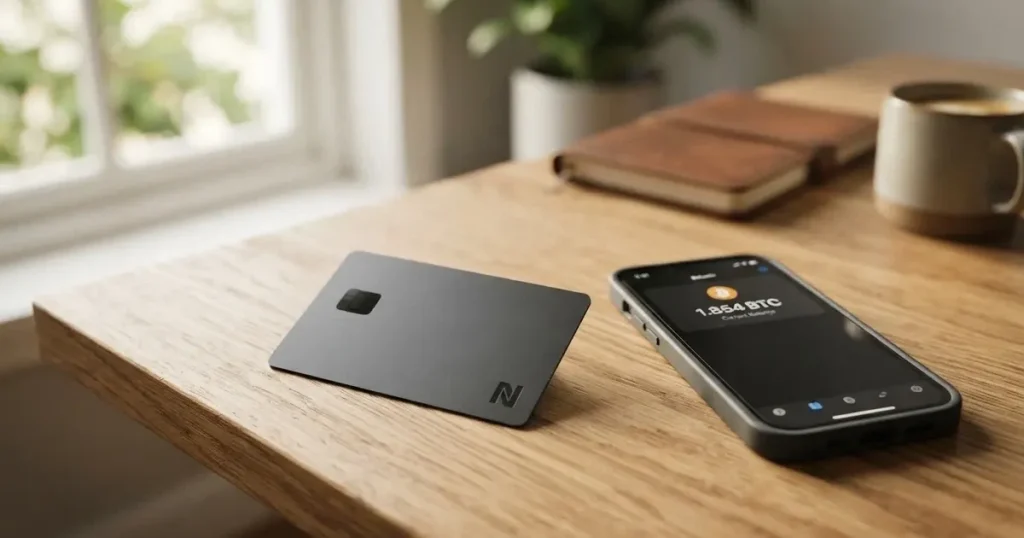
The UNi card is a multicurrency Mastercard that spends from the balance of a UNi.Global account, aimed at people who spend across several currencies and want up to 3% back. It carries no annual fee and no foreign transaction fee, with conversion at live OTC rates — genuinely attractive on paper. But the card’s own public pages are unusually quiet about the things that decide whether a card works for you: which countries can sign up, whether it is physical or virtual, how much issuance costs, how you top it up, and what the daily limits are. My score is 6.1 out of 10. It is a card for the multi-currency spender who accepts some unanswered questions; it is not a card for someone who needs to know the fine print before they commit a euro. The conditions described here are current as of October 28, 2026.
Verdict: 6.1 out of 10, a good promise with too few answers
The UNi card’s pitch is clean: a Mastercard that holds several currencies, converts at live OTC rates with no hidden exchange fees, no annual fee, no foreign transaction fee, and spend-to-earn rewards up to 3%. If all of that lands as described, it is a strong everyday card for someone whose income or spending spans currencies. The card also works with Apple Pay and Google Pay, and you can freeze it in the app instantly, which is the sort of control people actually want.
What holds it back is not the feature list but the silence around it. The card’s public pages do not name the countries eligible to apply, do not say whether the card is physical or virtual, do not disclose an issuance fee, do not explain how to top the balance up, and do not set out daily or monthly limits. On top of that, the entity that markets the card, UNi.Global, is described as an AUSTRAC-regulated service provider with teams in Sydney, Auckland, Hong Kong and Taipei — but the card’s actual issuing institution is not named, and I could not find the card issuer’s own name anywhere in the public material. That combination — good headline economics, thin disclosure — is why I land in the middle rather than higher.
| Criterion | Mark | Why |
|---|---|---|
| Who can get it | 5 / 10 | Countries are not named; access is “subject to jurisdictional limitations” and this is not spelled out |
| Cost | 8 / 10 | No annual fee and no foreign transaction fee; conversion at live OTC rates, but the issuance cost is not disclosed |
| Top-up options | 5 / 10 | How to fund the balance is not disclosed; the wallet holds 12+ currencies and the card spends from the UNi.Global balance |
| Reliability and complaints | 6 / 10 | UNi.Global is named as an AUSTRAC-regulated service provider with offices in Sydney, Auckland, Hong Kong and Taipei; the issuer is not named and I found no complaints |
| Everyday use | 6 / 10 | Multicurrency Mastercard, Apple Pay and Google Pay, freeze in the app — but card form and ATM access are not disclosed |
| Total | 6.1 / 10 | A genuinely attractive fee story wrapped in thin public disclosure |
Who this suits: someone who spends regularly in more than one currency, wants neither annual nor foreign transaction fees, and is comfortable holding a balance rather than a credit line. Who it does not suit: someone who needs to know before applying whether their country is allowed, whether they will get a plastic card, what the top-up route is, or which institution stands behind the card. That is a lot of “not disclosed” for a product you would use daily.
Will they give you the card?
Here is the honest answer: the card’s public pages do not say. The material I worked from states that access is “subject to jurisdictional limitations” but does not name a single eligible country, and it does not name an ineligible one either. There is no country list on the pages, and no statement about citizenship versus residence.
This is the single most important gap for you, so let me be concrete about what that means in practice. In this category, providers publish an exclusion list — countries where accounts cannot be opened or cards cannot be used — and they publish the basis of the rule, whether it follows your citizenship or where you live. UNi publishes neither. So you cannot tell from the public pages whether you are inside the service area or outside it.
There is also a distinction worth keeping in mind, because other cards in this category are explicit about it and UNi is not. Some providers restrict by country of residence or registration — where you live or where your company is registered — and say nothing about citizenship. Others screen on nationality and country of birth as well. Without a published rule you cannot know which logic UNi applies.
There is a reliable way to narrow this down, and it is the same for any provider: check whether UNi.Global appears on the relevant regulator’s register for the jurisdiction you live in. The company describes itself as an AUSTRAC-regulated service provider, which is the Australian anti-money-laundering regime; AUSTRAC maintains a register of regulated entities you can search. If you do not find the entity you are dealing with, that is itself an answer. I am not telling you this to steer you anywhere — it is simply the one objective check available when a provider does not publish its own country rules.
The upshot for this section: treat country eligibility as unresolved from public information, and confirm it directly with the provider before you upload identity documents.
How to get it
The route to the card runs through identity verification, and it is a single verification that covers both the fiat services and the card. Before you can use the fiat side or obtain the UNi Card, the provider requires KYC: your personal information with an age requirement of 18 or over, a scan of an ID document, a selfie, and your address backed by proof of address such as a bank statement or a utility bill. Verification is stated to take 1 to 2 business days once your documents are in.
Once you are verified, the card itself is a multicurrency UNi Card on the Mastercard network, and it spends from the balance of your UNi.Global account rather than from a bank account or a credit line. You can switch among currencies on the card to pay.
Two things about the card itself are not disclosed, and both matter more than they sound:
- Physical or virtual — the pages do not say whether you receive a plastic card, a virtual card, or both. If you need a card for tap-to-pay at a shop that does not accept a phone, this is decisive, and you cannot resolve it from the public pages.
- Delivery — if there is a physical card, how or where it is delivered is not stated.
There is also a membership system. The pages refer to membership levels but do not say what each level gives you — so I cannot tell you whether a level carries fees, extra currency, higher limits, or better rewards. Read that as an open item.
So the practical picture: one verification for the account and the card, one to two business days, and then a multicurrency Mastercard tied to your UNi.Global balance. What kind of card arrives, and how quickly, is not something the public pages will tell you.
What it really costs: Fees and limits
The fee story is the strongest part of this card, and it is the reason the score is not lower. The card has no annual fee and no foreign transaction fee. Assets on the balance are converted at live OTC (over-the-counter) rates, and the pages state there are no hidden exchange fees. That combination — no annual fee, no FX markup as a named line item, no hidden conversion charge — is better than most of what I see in this category.
What is missing is everything around that story. Here is the costs table, drawing only on what the card’s own pages disclose:
| Fee or limit | What the card states |
|---|---|
| Issuance fee | Not stated |
| Annual / monthly fee | “No annual fee”; no monthly fee is mentioned |
| Foreign transaction fee | None — “no annual fee or foreign transaction fee” |
| Conversion | Assets converted at “live OTC (Over-the-Counter) rates”; “no hidden exchange fees” |
| ATM withdrawal | Not stated |
| Daily limit | Not stated |
| Monthly limit | Not stated |
| Membership levels | Levels exist; what each gives is not stated |
So when I ask “is UNi card free,” the truthful answer is: free to hold, yes — but free of what, exactly, is only partly specified. There are no annual or foreign transaction fees, with conversion at live OTC rates with no hidden exchange fee. Issuance, ATM and limits are simply not on the page.
Let me walk through a few everyday payments and which of these fees actually touch them, because “no foreign transaction fee” is easy to over-read:
- Buying coffee in your home currency. If your balance already holds that currency and you pay in it, the stated fee story is cleanest here — no annual fee, no FX line, and the amount comes off the balance at the live rate. This is the scenario the card’s fee structure fits best.
- Paying a subscription priced in dollars while your balance is in euros. This is the multicurrency case: you switch to the dollar balance to pay, at the live OTC rate, with no named foreign transaction fee and no hidden exchange fee. The cost to you is the rate itself — live OTC is still a market rate, not necessarily the rate your bank would give you — plus whatever, if anything, the network charges, which the pages do not break out.
- Withdrawing cash from an ATM. Here I cannot help you: the ATM fee, the card’s own cash-withdrawal terms, and whether ATM access exists at all are not stated. If cash is part of your plan, this is the section to press the provider on.
Two limits worth naming separately. First, network cost: the on-chain gas or bandwidth fee for a deposit is charged by the blockchain, not by the card provider — so a top-up from a crypto network can cost you something the card never shows you. Second, the app’s real-time alerts and instant freeze are free controls, but they are controls, not spending limits; actual daily and monthly caps are not stated.
The bottom line: the fees the card advertises are genuinely low, and the fees it does not disclose (issuance, ATM) are the ones that would show up in a wallet full of coins. For a card you use daily, that is a fair trade — with the caveat that you are accepting undisclosed items, not that they are large.
How to top it up
I have to be blunt: how you top up this card is not stated. The card’s public pages do not describe the top-up methods, the deposit route, or the withdrawal path from the account. That is not a small gap for a card that spends from a balance, because topping up is the one action a balance-based card cannot do without.
What the pages do tell you about the money side: the card spends from the balance of your UNi.Global account, and that wallet holds 12 or more currencies. The card is multicurrency, and you switch among currencies to pay. So the architecture is a multi-currency balance that you load and spend from — the familiar prepaid pattern, where crypto or money is converted and loaded as a balance, and the card can draw only on what is there and so cannot overdraw. But the specific rails — which networks, which coins, whether bank transfer, card, or stablecoin transfer — are exactly what is missing.
One thing to keep in mind for any card in this category, because it applies to the deposit step here: blockchain transfers are irreversible. A deposit sent on a network the provider does not support, or to an address belonging to a different network, can be lost or need manual support recovery with no guarantee. Since UNi does not publish its supported networks, that risk is one you cannot currently size — you would be sending funds into an instruction set the provider has not written down.
If topping up is the part of the flow you care most about, this card gives you the least to go on of the cards I looked at. Ask, before you commit: which networks and assets do you accept, and what happens if I send on the wrong one.
Paying with it every day
Day to day, the card behaves like a normal multicurrency Mastercard with a few modern touches.
Wallets. The card works with Apple Pay and Google Pay. The mobile-wallet route is also the security-stronger one generally: tokenised wallet numbers sit on the device and use a one-time code per payment, and an issuer can restrict a tokenised card to phone-only use, so adding it to a wallet is a reasonable step if you take that option.
Rewards. The card offers “spend-to-earn rewards” of up to 3%. Read that “up to” carefully: 3% is a ceiling, not a flat rate. What earns the top rate, what earns less, and what the cap is are not spelled out, so treat 3% as the best case rather than your expected return.
Freezing and alerts. You can freeze and unfreeze the card in the app without limit, and turn on real-time alerts for each transaction. For anyone who has had a card skimmed or a wallet drained, instant freeze is the feature that actually changes the day-to-day feel — it turns a bad afternoon into a two-minute fix. These are the kind of controls people say they want and rarely get.
App. The app is UNi.Global — “UNi.Global: Invest & Spend BTC” on the App Store, and uni.global.mcdc_client_app on Google Play. It is listed in the Estonian store. I did not read the store ratings, so I am not going to characterise them; you can judge that yourself in the store listing before you commit.
Not disclosed in everyday use: card form (physical or virtual), ATM access, and how a disputed transaction is handled — the chargeback process and the reason codes behind it are not stated. Disputes are where prepaid-style cards most often leave you exposed, so if you plan to run anything large through this card, ask about chargebacks up front.
The day-to-day picture is good where the card talks, and simply blank where it does not.
What can go wrong
Let me take this in order of how much it should worry you.
The first thing to understand is who actually stands behind the card. A card payment involves several parties: the network (Visa or Mastercard) routes the messages and sets the rules; the issuer is the bank or e-money institution licensed to issue under that network’s licence; and the crypto brand is often only the programme manager or front-end that markets the card. In UNi’s case, UNi.Global describes itself as an AUSTRAC-regulated service provider with teams in Sydney, Auckland, Hong Kong and Taipei — but the issuer is not named. So the entity you can name is not necessarily the institution that issues the card and stands behind your balance. That gap is worth asking about directly.
On the regulatory side, one useful anchor: in the EU, MiCA took legal effect in June 2023, and its rules on stablecoins applied from 30 June 2024, with the remaining crypto-asset service provider provisions from 30 December 2024; under MiCA, e-money tokens may be issued only by a credit institution or an electronic money institution. A card, though, is a payment service regulated separately — so a crypto card often rests on two licences at once: one on the crypto side, one on the payment side. If you are in the EU, ESMA keeps an interim register of authorised crypto-asset service providers that you can search; that is a concrete place to check UNi.Global’s standing. I am describing registers and rules, not advising you on your legal position.
Money and keys. The wallet holds your balance, so the question of custody applies. With a custodial wallet the provider holds the credentials and you must trust it completely; transfers are typically irreversible, and a stolen key has no built-in recovery — the network cannot freeze or return funds. This category has a real history here: custodial platforms have suffered major losses (Mt. Gox, Coincheck, Ronin Network). So holding a balance with a provider carries counterparty and hack risk, and that risk sits with you whatever the card’s fee savings.
Declines and holds. Two practical effects. A prepaid or foreign card can be declined by some merchants because the card’s issuing-number lookup reveals the card type and issuer country, and a shop may apply extra scrutiny when the issuer country differs from the billing address — which is why a card issued in one country can look “foreign” in another. Also, a declined authorisation can leave a hold on your funds that stays for several days, sometimes up to about 7. Neither is a fault unique to UNi, but both bite harder when limits are undisclosed.
Blocks on specific spend. Certain merchant categories are commonly restricted on crypto cards by policy rather than by law — gambling is the classic example, with its own merchant category code, and the blocked list varies by issuer. Whether UNi blocks such categories is not something the public pages state.
Account-level risk. Identity verification also carries the ordinary consequences: if due diligence cannot be completed, EU rules require the institution to refrain from the relationship and, where necessary, end it. Accounts get frozen pending documents. That is normal and not a fault, but it is the kind of friction a person who chose this card for access reasons should expect.
Complaints: I found none for UNi Global or the UNi Card — but that is not a clean bill of health. A search for reviews returned only unrelated Indian products (Uni Cards and UnCard), and there is no Trustpilot page for uni.global. The absence of complaints here mostly reflects the absence of a review footprint, which is itself a fact about how new or how small the public presence is. It is not evidence of a clean record.
Taxes, briefly and without advice: in the US the IRS treats digital assets as property, so spending crypto generally produces a taxable gain or loss measured in local currency at the date of the transaction — meaning each card payment funded from crypto may be its own disposal. That is a general notice that card-funded crypto spending is a taxable event in many jurisdictions, not something to plan around here.
What to take instead
If UNi’s missing country list, top-up instructions or limits are deal-breakers for you, here are three alternatives I looked at, with their own scores, so you can weigh them side by side.
| Card | Score | Card and cost basics | Who it’s for |
|---|---|---|---|
| UNi | 6.1 / 10 | Multicurrency Mastercard; no annual fee, no foreign transaction fee; issuance, ATM and limits not stated | Multi-currency spenders comfortable with thin disclosure |
| International Visa Card | 6.7 / 10 | U.S.-issued Platinum Visa, virtual, pays in USD; $5 issuance, no maintenance; Classic free, Pro $9/mo, Max $19/mo; USD use free, FX at “Visa exchange rate + 2% FX fee” | People who want a published exclusion list and a stated 2% FX fee |
| Stella | 6.5 / 10 | Virtual and physical VISA, works at “over 40 million VISA merchants globally”; fees described in the User Agreement / App | People who want both card forms and deposit-crypto auto-top-up |
| Whop Cards | 5.2 / 10 | Visa, online and in stores; “no extra fees” (no amounts listed); 5% cashback at select merchants, currently Uber | People spending from a Whop balance rather than holding their own |
A few notes as you take these in. The International Visa Card publishes the most complete picture of the four: it names the countries it will not serve (Belarus, mainland China, North Korea, Cuba, India, Iraq, Iran, Israel, Myanmar, Nepal, Nicaragua, Russia, Syria, Turkey, Ukraine, Venezuela, Vietnam), states the rule runs on residence or registration rather than citizenship, reviews FATF grey-list countries case by case, and gives you a fee grid — $5 virtual issuance, free Classic, $9 Pro, $19 Max, USD use free, and foreign currency at the Visa exchange rate plus a 2% FX fee. What it gives up is the physical card (“Coming soon”) and it pays in USD.
Stella offers both virtual and physical cards and a deposit-crypto-then-auto-top-up model, but its country list is not stated either, and its fees live in the User Agreement rather than on the card page.
Whop Cards is the most different: it spends from a Whop balance rather than from a wallet you hold, offers 5% cashback at select merchants (currently Uber), and says “no extra fees” without listing amounts. Its country support is stated as 31 US states for consumers and 41 for businesses, with a list of unsupported countries. It scores lowest, largely because the amounts are missing in the same way UNi’s are.
The pattern worth noticing: none of these cards publishes everything. The choice is really about which gaps you can live with. If you need a published country list and a stated FX fee, the International Visa Card is the most transparent. If you want both a virtual and a physical card, Stella. If you want the cleanest fee promise plus multicurrency, UNi — with the understanding that you will be asking them the questions the page does not answer.
Who I would recommend it to
I would recommend UNi to someone in this position: you spend across several currencies, you want a card with no annual fee and no foreign transaction fee, you are content to hold and convert a balance rather than carry a credit line, and you will add it to Apple Pay or Google Pay and use it mainly for everyday purchases where the live OTC rate is good enough. If that is you, the card’s economics are genuinely attractive and 6.1 is, if anything, conservative.
I would not push it toward someone who needs certainty before they hand over documents: if you cannot tell from the provider’s site whether your country is eligible, whether the card is physical, how to fund it, or which institution issues it, then the product is not ready for you. That is a reasonable line to draw, not a complaint.
And before anyone signs up, my short list of questions for the provider is the same four that the public pages leave open: which countries can apply, on what basis; is the card physical or virtual and how is it delivered; what are the exact top-up methods, networks and assets; and what are the daily and monthly limits and the ATM terms. If you get straight answers on those four, UNi moves up in my estimation quickly — the fee structure underneath is good. If the answers stay vague, then the score of 6.1 is telling you something real: a promising product that has not yet finished telling you what it is.
Frequently asked questions
What is the UNi card?
The UNi card is a multicurrency Mastercard on the Mastercard network that spends from the balance of your UNi.Global account rather than from a bank or credit line. It is marketed by UNi.Global, which describes itself as an AUSTRAC-regulated service provider with teams in Sydney, Auckland, Hong Kong and Taipei. The card carries no annual or foreign transaction fees, and offers spend-to-earn rewards up to 3%. Its physical-versus-virtual form is not stated publicly.
How does the UNi card work?
You verify your identity once, then load a balance into your UNi.Global account and the card spends that balance. Because it draws on a stored balance, it behaves like a prepaid card and cannot overdraw — there is no credit line. When you pay, the amount is taken from the balance in the currency you choose to pay in, converting at live OTC rates. You can also freeze the card in the app and set real-time transaction alerts.
Is UNi a bank?
Not on the information published. UNi.Global describes itself as an AUSTRAC-regulated service provider, not a bank, and the institution that actually issues the card — the issuer — is not named publicly. That distinction matters, because the issuer is the party that holds the card programme and stands behind your balance. Treat UNi as a crypto financial platform that issues a card, not as a bank you hold an account at.
Who owns UNi?
The card is marketed by UNi.Global. The company describes itself as an AUSTRAC-regulated service provider with teams strategically located in Sydney, Auckland, Hong Kong and Taipei, and its app is UNi.Global — “Invest & Spend BTC”. The underlying card issuer is not named in the public material, so the corporate owner of the issuing institution is not something I can confirm for you from what was disclosed.
Is UNi card available in my country?
The card’s public pages do not name the countries eligible to sign up. Access is described only as “subject to jurisdictional limitations,” with no country list published, and no statement of whether the rule follows citizenship or residence. So eligibility is genuinely unresolved from public information. If you need to know before applying, search the relevant regulator’s register for the entity and confirm directly with the provider before you upload identity documents.
Can I use UNi card in my country?
Whether you can use the card once you have it depends on where the card’s issuing institution is based, which is not named publicly — and that matters, because some shops apply extra scrutiny or decline a card when the issuing country differs from your billing address. The card’s own pages also do not state any country where usage is blocked. For a reliable answer about use in your country, confirm with the provider directly.
How do I get a UNi card?
You apply by completing KYC, which is a single verification covering both the fiat services and the card. You submit personal information (you must be 18 or over), a scan of an ID document, a selfie, and your address with proof of address such as a bank statement or utility bill. Verification takes 1 to 2 business days. After that you receive the multicurrency Mastercard — though whether it is physical or virtual, and how it is delivered, is not stated.
Does UNi card require KYC?
Yes. KYC is required before you can use the fiat services or obtain the UNi Card. It requires your personal details with an age requirement of 18+, an ID document scan, a selfie, and your address supported by a bank statement or utility bill. This is standard for regulated financial providers, and note that if verification cannot be completed, EU rules require the institution to decline or end the relationship.
How do I top up UNi card?
The public pages do not state how to top up the card, what networks are accepted, or which assets can be deposited — this is one of the card’s biggest gaps. What is stated is that the card spends from your UNi.Global account balance and that the wallet holds 12 or more currencies. Because you fund the balance before spending, learning the exact deposit route matters, and note that blockchain transfers are irreversible, so a deposit on an unsupported network can be lost.
Is UNi card safe and is it worth it?
On safety: the card offers real controls — instant freeze in the app, real-time alerts, and Apple Pay and Google Pay support, which use tokenised numbers stored on your device. But UNi.Global is a custodial provider, so you must trust it with your balance, and transfers are irreversible with no key-recovery safety net. On worth: the fees are the best part, with no annual fee and no foreign transaction fee, but issuance, ATM fees and limits are undisclosed. For most people it is worth it only if you are comfortable with those unknowns.
App and neobank card fees – cryptocardfacts
Content created by the «cryptocardfacts» team