
A Visa debit card funded by Bitcoin, with EEA-only access and a euro IBAN to top it up
 Available in US
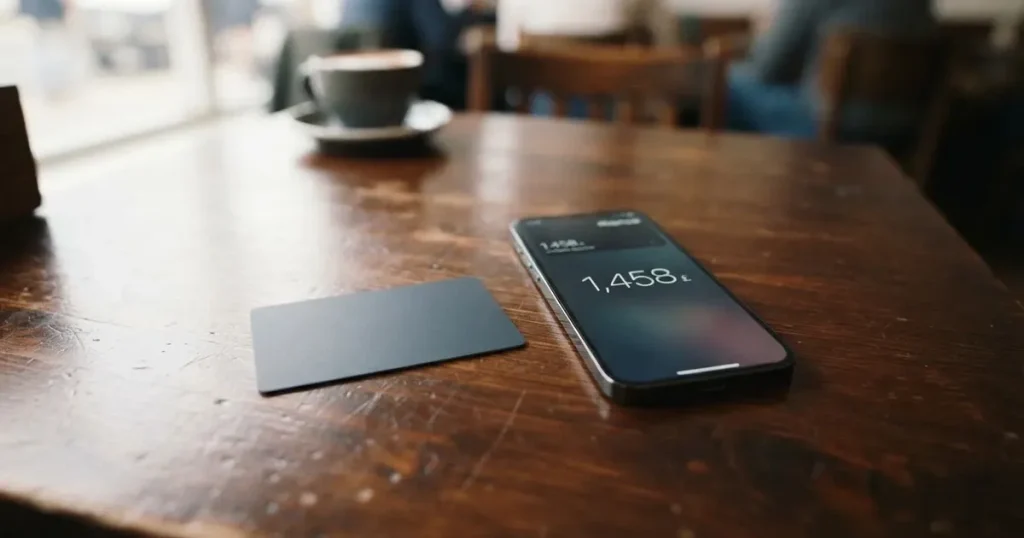
wavecard is a Visa debit card that draws on a Bitcoin balance: you load it with BTC (on-chain or via Lightning), then the card sells that BTC at the moment of payment and pays the merchant in euros. It comes with a personal vIBAN, so you can also top it up by sending euros to that account and converting them into BTC. The card is distributed by a Lithuanian company, Wave Space Exploration UAB, and it sits on a white-label arrangement with a third-party card issuer. Cards are only issued to residents of the 30 countries in the European Economic Area.
The conditions described below are current as of October 28, 2026.
Verdict
I went through wavecard’s terms, fees, country list, and recent user feedback, and the picture is mixed. The card does what it says — it lets you spend Bitcoin through a Visa debit card, with a euro IBAN and mobile wallets, in 30 European countries. But the company is small, the card programme is white-labelled, there is no chargeback process described, and at least one user has reported having their account blocked with funds held. The score reflects those trade-offs rather than one single issue.
Score: 6.3 / 10. Here’s how that breaks down.
| Criterion | Mark | Why it scores that way |
|---|---|---|
| Who can get it | 5 / 10 | Open to all EEA residents aged 18+ — that is 30 countries — but it is EEA-only and rule is by residence. |
| Cost | 7 / 10 | Virtual card is €2.99, physical €29.99, no monthly fee. BTC conversion is 1% plus a 0.5% spread baked into the price. ATM is 3% + €2. |
| Top-up options | 6 / 10 | On-chain BTC, Lightning, and a euro vIBAN work well; there is a self-custodial “PRO” option. No stablecoins. |
| Reliability and complaints | 6 / 10 | Trustpilot 4.3 from 25 reviews, Lithuanian distributor and Estonian services partner, and a documented account freeze with funds held in January 2026. |
| Everyday use | 8 / 10 | Virtual card is instant, Google Pay and Samsung Pay are on by default, and the daily ATM ceiling is €350. |
If you are an EEA resident who already holds Bitcoin and wants a Visa debit card that converts BTC to euros at the till, wavecard covers that use case. If you are outside the EEA, want stablecoin funding, expect cashback or rewards, or want a card programme with a clear chargeback and safeguarding regime on the issuer’s own balance sheet, wavecard is not for you.
Who they will issue the card to
wavecard is restricted by residence, not by citizenship: the rule is that you have to live in the European Economic Area. The company names all 30 EEA countries on its own page, so I will list them as wavecard does — Austria, Belgium, Bulgaria, Croatia, Cyprus, Czechia, Denmark, Estonia, Finland, France, Germany, Greece, Hungary, Ireland, Italy, Latvia, Lithuania, Luxembourg, Malta, Netherlands, Poland, Portugal, Romania, Slovakia, Slovenia, Spain, Sweden, Liechtenstein, Norway, Iceland. The minimum age is 18.
Two consequences follow from the residence rule. If you are a citizen of one of these countries but live somewhere else — for example, an Austrian working in Singapore — you are not eligible. And if you are a non-EEA citizen living in, say, Germany, you are eligible. That is unusual: most crypto cards in this space screen by nationality as well, and the contrast is worth noting.
You also need a verified wave.space account before the card is issued. wave.space’s own page says sign-up and verification take “under five minutes” and that KYC is “free of charge.” The terms only mention a “Tier 2 KYC” tier, which raises monthly spending to €15,000; other tier levels, processing times, and the documents or proof of address the issuer asks for are not stated on the public pages. If you are planning to use the card heavily, you will want to know which documents the company actually asks for, and that information is not on the website.
How to get the card
The path is the same for both card types. You create a wave.space account, complete verification, and once that is done you can issue a virtual card instantly or order a physical one.
The virtual card is issued in seconds and costs €2.99, paid in BTC. The physical card costs €29.99, also paid in BTC. The physical card ships to addresses in the EEA list above, with standard delivery (5–9 working days, tracked, free) or express (2–3 working days, €30). On delivery the card has to be activated before it can be used. wavecard does not publish a replacement cost for lost or damaged physical cards.
You can issue more than one card from the same account — virtual, physical, or both — but wavecard is a single card product. There is no premium tier and no metal card. The only variable is whether you upgrade to “Tier 2 KYC” for the higher monthly limit.
What it really costs: Fees and limits
Card costs are easy to read on wavecard’s own terms page, which is one of the card’s strengths. The headline is: no monthly fee, a paid issuance, and a Bitcoin conversion fee that is paid in two parts (a 1% charge and a 0.5% spread that is built into the BTC price the user sees).

| Fee or limit | Amount |
|---|---|
| Virtual card issuance | €2.99 (paid in BTC) |
| Physical card issuance | €29.99 (paid in BTC) |
| Monthly fee | Free |
| Bitcoin conversion fee | 1% |
| Spread on BTC price | ~0.5% (built into the displayed rate) |
| FX between fiat currencies | None stated |
| ATM cash withdrawal | “At cost”: 3% + €2 |
| Daily card spend | €10,000 |
| Monthly card spend | €10,000 (up to €15,000 with Tier 2 KYC) |
| Daily ATM | €350 |
| Monthly ATM | €3,000 |
The card is denominated in euros via the vIBAN. The terms mention “0% FX fees” between fiat currencies, but multi-currency balances on the card itself are not stated — in practice, the card holds BTC and converts it to euros at the till. There is no free ATM allowance: every cash withdrawal pays the 3% + €2 fee.
A few everyday payments to make the table concrete. If you buy a €40 supermarket shop on the virtual card, the merchant sees a €40 euro charge, wavecard takes 1% off the BTC it sells (€0.40), and the spread (about €0.20 at current prices) is already inside the rate. If you take out €100 from an ATM, the same conversion applies, plus a fixed €2 fee plus 3% of €100 (€3), so €105 in total. If you spend €100 in a country that uses a non-euro currency — for example, on a trip to Sweden before you have krona on the card — the card sells the BTC for euros and the merchant’s bank does the FX conversion, with no additional wavecard fee on top of the 1% conversion.
Two things are worth checking for yourself, because they are not stated. The minimum top-up is not stated, and the deposit fee for the vIBAN or the on-chain deposit is not stated. Network fees for an on-chain Bitcoin transfer are paid by you to the Bitcoin network, not to wavecard.
Top up: funding the card
There are three ways to put money on the card, and the choice changes who controls the funds at every step.
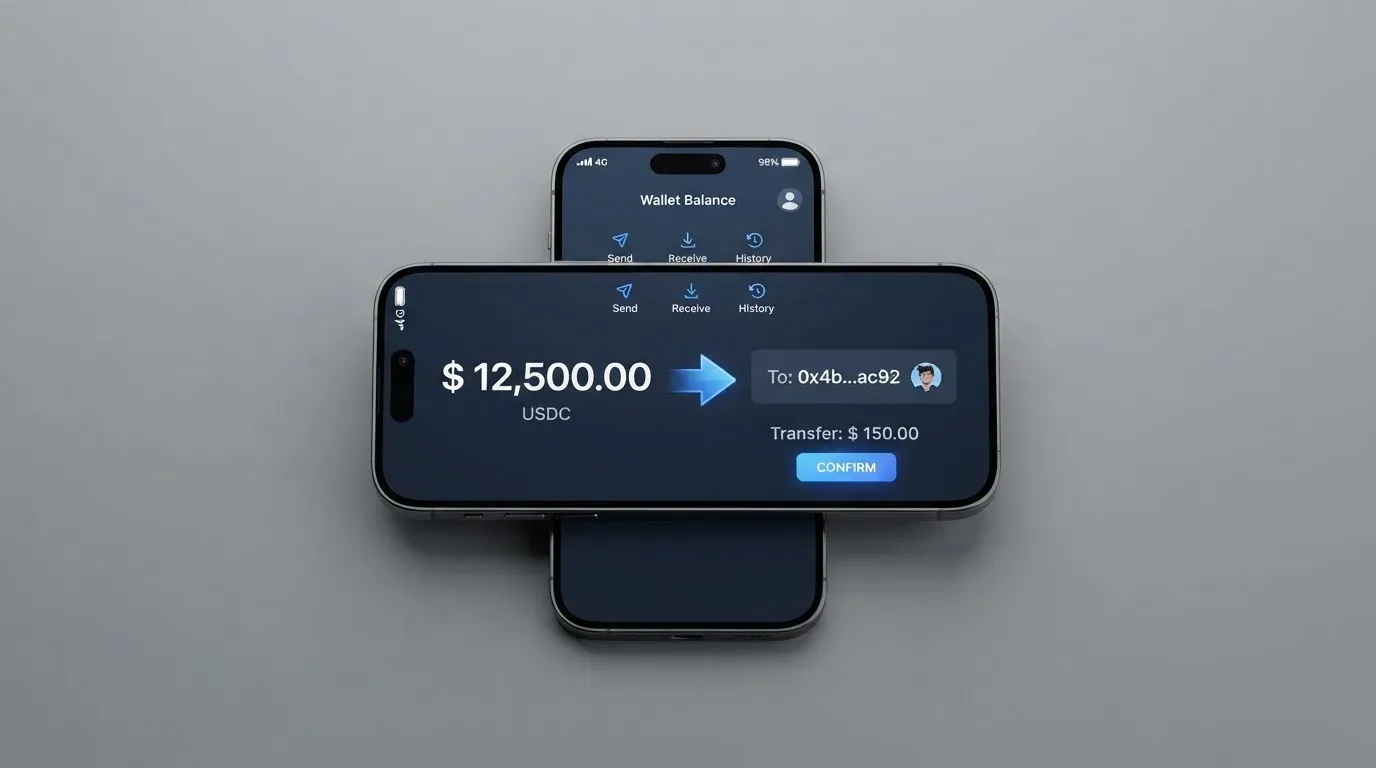
The first is on-chain Bitcoin. You send BTC from any wallet to the deposit address shown in the wave.space app. The transfer takes as long as Bitcoin confirmation takes. The second is the Lightning Network. You can pay a Lightning invoice or use an LN address, and the balance lands in seconds, but Lightning transfers are usually smaller in size. The third is euros to the personal vIBAN. The IBAN is in your name, and any SEPA transfer you receive converts to BTC at the standard 1% rate. There is also a “PRO” option that lets you connect a self-custodial Lightning wallet via Nostr Wallet Connect (NWC); Alby is the wallet wavecard recommends. With PRO, the BTC sits in your own wallet until the moment of payment, and wavecard pulls it through at the till.
There are no stablecoins on wavecard. If you hold USDT or USDC, this is not the card for you, and the rest of the comparison section is more relevant.
The card holds BTC until you pay, then sells it at the live market rate. Refunds come back in BTC at the same rate. To close the account, you email [email protected]. If the account has been inactive for 365 days, the company reserves the right to close it or charge a maintenance fee. The exact wording on the closure balance is not in the public terms.
Paying with the card every day
The virtual card is ready the moment you finish verification, which is what most users will live on. The physical card adds a contactless Visa and shows up in Google Pay and Samsung Pay by default — Fitbit Pay and Garmin Pay are also enabled automatically. Apple Pay is the obvious gap: it only works through the Curve app, and the wave.space page says direct Apple Pay support is “coming soon.”
A few practical points the terms leave open. The list of blocked merchant categories is not stated. There is no cashback or rewards programme mentioned anywhere. The web app lives at app.wave.space; there is no App Store or Google Play rating in the public record I worked from, so I cannot tell you how users rate the app experience. If you have a problem with a payment, the terms say wave.space will respond within 2 business days and that disputes are governed by the card issuer’s terms — there is no internal chargeback process described, and the company tells you to refer to the issuer.
What can go wrong
Two structural risks are worth understanding before you sign up, and one specific incident is worth knowing about.
The first is the company structure. The card programme is distributed by Wave Space Exploration UAB (company number 306727148, Lithuania). The financial services — including the personal vIBAN — are provided by Lightspark Payments Europe AS (company number 16298772, Tallinn, Estonia). The card itself is issued “through a white-label arrangement with a third-party provider, with Wave Space acting as the distributor.” That is a three-party structure: a distributor, a services partner, and a separate card issuer. The licence type the card issuer holds is not stated on the public page, and the card programme is governed by Lithuanian law. White-label arrangements are common in this market, but they do mean that if something goes wrong with the card, you may end up dealing with a company whose name is not on the front of the product.
The second is the absence of a chargeback process. The terms do not describe how disputes are escalated within wave.space itself; instead, card matters go to the issuer’s terms, and claims are answered within 2 business days. Refunds on the card are converted back into BTC at the available market rate. If you are used to chargebacks on a bank card, the contrast matters.
The third is a specific incident. On 15 January 2026, a Trustpilot reviewer reported that the company blocked their account and held the funds. Wave Space replied on 18 March 2026, saying the suspension was for compliance reasons and that a full refund was offered. Trustpilot shows a 4.3 TrustScore from 25 reviews, and the star graphic on the page reads 4.5 — the two are slightly different, and I am giving you both as they appear on the page. The themes across the 25 reviews include account freezes with withheld funds, a claim of fake reviews (disputed by the company), requests for Lightning support and physical card delivery, and slow Bitcoin confirmations. With 25 reviews, this is a small sample.
In the app you can freeze the card, change limits, and set a 3-D Secure password. Recovery codes are issued at sign-up. You can also use a pseudonymous name on the card (the printed name is not the legal name you verified with), which is a privacy feature some users will appreciate. The safeguarding regime — that is, where customer euros are held while they sit in the vIBAN — is not stated.
Support runs through a Telegram live chat (t.me/wavespacecommunity), email at [email protected] or [email protected], an FAQ, and a live support widget. The terms commit to a response within 2 business days.
What to take instead
If wavecard does not fit, the three alternatives in this comparison are International Visa Card, UNi Card, and Whop Cards. None is a direct substitute — they differ on geography, funding, and what they optimise for.
International Visa Card (score 6.7 / 10) is a U.S.-issued Platinum Visa, virtual, paying in USD. Issuance is $5 one-time, no maintenance fee, and there is a free Classic plan plus a $9/month Pro and $19/month Max. The card itself is free to use in USD; foreign currency carries “Visa exchange rate + 2% FX fee.” Funding is by USDC or USDT into a USD account (free at 1:1), with USD, EUR, SEPA, SWIFT, and FedNow also available. The country list is the opposite of wavecard’s: it excludes residents or legal registrants of Belarus, mainland China, North Korea, Cuba, India, Iraq, Iran, Israel, Myanmar, Nepal, Nicaragua, Russia, Syria, Turkey, Ukraine, Venezuela, and Vietnam, with FATF grey-list countries reviewed case by case. Purchases are blocked in North Korea, Cuba, Iran, Russia, Syria, Ukraine, and Venezuela. If you are an American or live in a country International Visa Card supports, and you hold USDC or USDT, this is the closer match. There is no cashback stated.
UNi Card (score 6.1 / 10) is a multicurrency Mastercard that draws on a UNi.Global account balance. There is “no annual fee” and “no foreign transaction fee,” and assets convert at “live OTC rates.” The card runs a “Spend-to-Earn” programme of up to 3% rewards. Country availability, issuance cost, and top-up options are not stated on the public pages I worked from, so this is the alternative with the most missing data.
Whop Cards (score 5.2 / 10) is the most restrictive geographically. Consumers are accepted in 31 US states (the list includes California, Texas, New York, Florida, and others; businesses can apply in 41 states), and the unsupported list runs from Belarus and mainland China to Cuba, Hong Kong, India, Iran, Iraq, Israel, Myanmar, Nepal, Nicaragua, North Korea, Russia, Syria, Turkey, Ukraine, Venezuela, and Vietnam. The card is a Visa, spends from a Whop balance (pending balance usable as soon as a payment arrives), and is backed by stablecoin collateral from a linked wallet. The page says “no extra fees” but no specific conversion or FX numbers are published. There is 5% cashback at select merchants — currently Uber, with more planned.
What this comparison actually shows is that “crypto card” still means three different things. wavecard is a Bitcoin-only Visa for EEA residents, with a euro IBAN. International Visa Card is a USDC- and USDT-funded USD Visa with a broad country blacklist and a US focus. UNi Card is a multicurrency Mastercard with rewards. Whop Cards is a US-state-restricted stablecoin-funded Visa with merchant cashback. The right pick depends on where you live, what coin you hold, and whether you want a card that pays you back.
Who I would recommend wavecard to
wavecard fits a narrow profile, and it fits it well. You are an EEA resident — that is the only jurisdiction that works. You hold Bitcoin, not stablecoins. You want a Visa debit card that converts your BTC to euros at the till, and you are comfortable with a Lithuanian distributor and an Estonian services partner rather than a household-name bank. You probably do not need cashback, because there is none. You are happy to use Google Pay or Samsung Pay, or to route Apple Pay through Curve until the direct integration arrives. You are unlikely to need a chargeback, because there is no internal process. And you accept that if a compliance review flags your account, your funds may be held while the company investigates.
If that description fits, the card is straightforward: low issuance cost, no monthly fee, a transparent 1% conversion plus a 0.5% spread, an instant virtual card, and a self-custodial PRO option for users who do not want to leave BTC sitting on the platform. If any of those conditions is not true, one of the alternatives will probably serve you better.
Two final checks before you decide. First, the small sample on Trustpilot and the white-label structure mean you should not park large balances on the card. Second, look for the missing data in the public terms — the minimum top-up, the deposit fee, the safeguarding regime, the issuer’s licence type, the blocked merchant categories — and decide whether you can live without those answers. I cannot.
Frequently asked questions
What is wavecard?
wavecard is a Visa debit card that lets you spend a Bitcoin balance at the till. The card is denominated in euros via a personal vIBAN, sells your BTC at the moment of payment, and refunds come back in BTC.
How does wavecard work?
You top up the card with BTC (on-chain or via Lightning) or by sending euros to a personal vIBAN that converts to BTC. At payment, wavecard sells the BTC for euros and the merchant sees a normal euro transaction.
Is wavecard a bank?
No. The card is distributed by Wave Space Exploration UAB in Lithuania; financial services are provided by Lightspark Payments Europe AS in Estonia; the card itself is issued through a white-label arrangement with a third-party provider. It is not a bank.
Who owns wavecard?
Wave Space Exploration UAB (company number 306727148) is the distributor. The card issuer and the licence type are not stated on the public pages, and the programme is white-labelled, so the underlying issuer is not named.
Is wavecard available in my country?
Only if you live in one of the 30 EEA countries: Austria, Belgium, Bulgaria, Croatia, Cyprus, Czechia, Denmark, Estonia, Finland, France, Germany, Greece, Hungary, Ireland, Italy, Latvia, Lithuania, Luxembourg, Malta, Netherlands, Poland, Portugal, Romania, Slovakia, Slovenia, Spain, Sweden, Liechtenstein, Norway, or Iceland. The rule is by residence, not citizenship.
Does wavecard require KYC?
Yes. You need a verified wave.space account before the card is issued. The company says sign-up and verification take “under five minutes” and that KYC is “free of charge.” The exact documents and proof of address are not stated on the public pages.
How do I top up wavecard?
Three ways: send BTC on-chain to the deposit address; pay a Lightning invoice or use an LN address; or send euros by SEPA to your personal vIBAN, which converts to BTC. There is also a self-custodial “PRO” option that connects a Lightning wallet via NWC.
How do I add wavecard to Apple Wallet?
You cannot add it directly today. Direct Apple Pay support is described as “coming soon.” For now, you can route Apple Pay through the Curve app and add the Curve card to Apple Wallet.
Is wavecard safe?
The card has standard safeguards — instant freeze, in-app limit changes, 3-D Secure, recovery codes — and a self-custodial option for users who prefer it. The safeguarding regime for fiat balances is not stated, the card is white-labelled, and at least one user has reported an account freeze with funds held. Small balances and self-custody where possible are sensible.
How do I close my wavecard account?
Email [email protected]. If the account has been inactive for 365 days, the company may close it or charge a maintenance fee. The terms do not describe the balance treatment on closure.
App and neobank card fees – cryptocardfacts
Content created by the «cryptocardfacts» team