
Fees are low and top-ups are easy, but the card is virtual only, cash machines are out of reach, and the operator's record deserves a look.
 Available in US
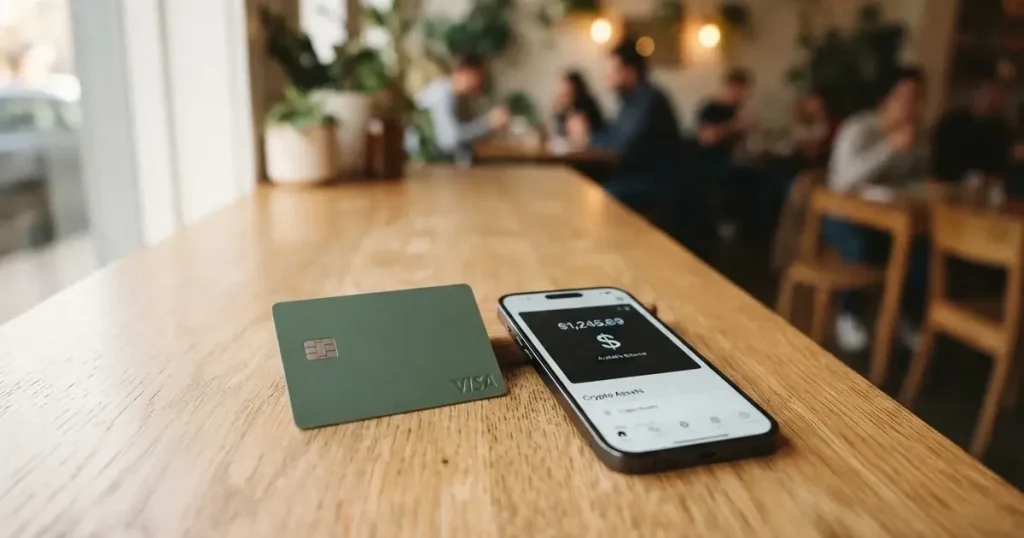
The WhiteBIT Nova card is not a bank card in the ordinary sense. It is a Visa payment card that spends the balance you already hold on the WhiteBIT crypto exchange, converting to US dollars at the moment of payment. If that sounds like exactly what you want — an ordinary-looking Visa that drains a crypto balance instead of a current account — you will find parts of this card genuinely convenient. If you need a physical plastic card, cash from a machine, or a spending record that does not depend on one company’s risk team, this is the wrong instrument and no fee will make it right.
I scored it 5.7 out of 10.
Before the details, one honest caveat about what this review rests on: the card’s own public pages were not readable when I checked them, so almost every specific number below comes from third-party reporting rather than from WhiteBIT itself. I have marked those lines as unofficial throughout, and where the card’s public pages simply do not say something, I have said so rather than filling the gap. That matters here more than with most cards, because the card’s availability, its fees and its limits have all shifted during 2026.
The conditions described here are current as of October 28, 2026.
The verdict: 5.7 / 10, made for people already inside WhiteBIT
| Criterion | Mark | Why |
|---|---|---|
| Who can get it | 8 / 10 | Reported open in roughly 140 countries across Asia, Africa, the Middle East and Latin America; closed in the US, UK, Canada, Colombia, Costa Rica, Panama and Venezuela; European Union status reported as contradictory |
| Cost | 5 / 10 | Issuance reported free with no annual, monthly, inactivity or cancellation fee; but 1.5% plus $0.20 per payment, 1.5% on currency conversion, and the fee is not returned when a purchase is refunded |
| Top-up options | 7 / 10 | Spends a wide list of coins straight from the exchange balance, converted at the spot rate at payment; reported to draw on the Main balance rather than the trading balance |
| Reliability and complaints | 3 / 10 | The operator is the WhiteBIT exchange; the euro card was frozen on 30 June 2026; the exchange’s Trustpilot page shows heavy complaints about frozen funds and long anti-money-laundering checks |
| Everyday use | 5 / 10 | Reported as a virtual Visa only, working through Apple Pay and Google Pay, with no access to cash machines |
That middle column is the honest summary. The card scores well on reach and reasonably on cost, and badly on the one thing that decides whether it is pleasant to live with: whether it keeps working when you need it.
Who it suits, plainly: you already hold a balance on WhiteBIT, you want to spend it like dollars rather than selling it by hand, and you are comfortable with a virtual card in a phone wallet rather than plastic in your pocket. The audience this card is really built for is WhiteBIT exchange users spending balances in USD. The conversion is at the spot rate at the moment of payment, so the rate you get is the market rate rather than a rate set by a card company — that is genuinely better than many card conversions, and it is why the 1.5% is the main thing you are paying for.
Who it does not suit: anyone who needs cash, anyone who wants a physical card, anyone in the US, UK or Canada, and — the biggest group — anyone whose reason for wanting a crypto card is that ordinary banks have refused them one. That last group should read the reliability section before anything else. This card is issued by a bank, behind a crypto exchange, into the same compliance system that closes accounts. If a mainstream bank declined you, this route is unlikely to treat you more gently; it just routes the same question through a different desk.
Will they give you the card?
Availability is the strongest part of the picture, and it is also the part I trust least, because the details conflict.
The official page was blocked when I checked, so the country list is not stated by the card. Third-party reporting fills in the picture: starting data lists Algeria, Armenia, Azerbaijan, Bahrain, Bangladesh, Egypt, India, Kazakhstan, Kyrgyzstan, Malaysia, Singapore, Türkiye, the UAE, Uzbekistan, Argentina, Australia, Brazil, Chile, China, Georgia and others.
Unofficial, from thegodfunded.com in October 2026: the card is open in about 140 countries, mainly in Asia, Africa, the Middle East and Latin America, and not available in the United States, the United Kingdom, Canada, Colombia, Costa Rica, Panama or Venezuela. The same source reports the European Union status as contradictory — which in plain terms means nobody can give you a straight answer about whether you can use it from, say, Germany or Poland. If you are in the EU, treat that as “ask first, expect nothing”. And note that the euro version of this card is a separate product: for the Nova EUR card, Russia is reported as one of 22 restricted countries (cryptocardhub.com, August 2026). Two cards, two different country stories.
What this means for you in practice: the card’s reach is wide but uneven, and it is widest exactly where access to a normal bank card is hardest. That is a deliberate commercial choice, and it cuts both ways. Broad reach means fewer people around you will be able to recognise the card, which shows up at the checkout. A card issued in one country can look “foreign” to a shop in another, because merchants can look up the issuer from the card number and apply extra scrutiny when it does not match the billing address. Expect occasional declines and expect to have a fallback card with you.
How to get it
The application process is not stated by the card — its own page was blocked — so this section is thinner than I would like. Here is what is reported.
Identity verification is required. Card verification is a separate step from the exchange’s own verification, which catches people out: passing the exchange’s checks does not mean your card application is approved. Reviews also describe card verification taking more than a month, so this is not a same-afternoon process.
The card itself is reported as virtual only, with no physical version, on the Visa network, in US dollars. If that is right, there is no delivery step and no plastic to wait for — you get card details and add them to a wallet. It also means there is no physical card to show at a place that insists on one.
What to check first, before you spend an hour on the form: confirm the card’s country list includes yours, confirm you are comfortable with a virtual-only Visa, and be aware that card verification is its own queue. Identity verification rules are not bureaucracy for its own sake — regulated businesses must verify customers and assess risk under anti-money-laundering and counter-terrorism-financing law, and in the EU that due diligence covers your name, address, date of birth, nationality and identity documents, a sanctions check, and whether you are a politically exposed person. If that process cannot be completed, the institution is required to hold off, and where necessary to close the relationship. That is the rule behind accounts being frozen pending documents, not a policy invented by one support agent.
Prepaid and debit cards are generally available to adults of 18 and over; some issuers set higher minimums.
Fees: what it really costs, payment by payment
The headline cost numbers are good. The way they are applied is where you feel them.

Unofficial, from thegodfunded.com in October 2026: issuance is free, and there is no annual fee, no monthly fee, no inactivity fee and no cancellation fee. Per payment there is 1.5% plus $0.20. Currency conversion is 1.5%. And the fee is not refunded when a purchase is refunded.
| Fee or limit | Reported value |
|---|---|
| Issuance | Free |
| Annual fee | None reported |
| Monthly fee | None reported |
| Inactivity fee | None reported |
| Cancellation fee | None reported |
| Per payment | 1.5% plus $0.20 |
| Currency conversion | 1.5% |
| Fee on a refunded purchase | Not refunded |
| Cash machine withdrawal | Not available |
| Daily limit | $40,000 |
| Monthly limit | $200,000 |
None of these figures is confirmed by the card itself, and there are no tiers: no fee tier, no status level, no volume discount. What you pay is what everyone pays.
Two of those lines deserve more than a glance.
The 1.5% conversion fee is charged when you pay in another currency, and it sits on top of whatever the network rate does. So paying for a coffee in euros from a dollar card costs you the rate movement plus 1.5%. Over a month of ordinary foreign spending that is a real number, and it is the fee most likely to surprise you. Ask yourself honestly how much of your spending is in the card’s own currency: if you spend mostly in dollars and are quoted dollars everywhere, you will barely meet it.
The refund line is the one I would read twice. If a merchant refunds a purchase, the 1.5% and $0.20 stay gone. You paid for the privilege of the transaction once and the refund does not give it back. Some merchants also add a currency-conversion charge of their own that the card cannot recover.
Now, three everyday payments, with the fees that actually apply:
- A $30 supermarket shop in dollars. You are charged 1.5% plus $0.20 — call it about $0.65. That is the whole cost, and it comes straight out of the converted balance.
- A €24 restaurant bill while your card is in dollars. The amount is converted, the network rate applies, and the 1.5% conversion fee is added on top. The card’s dollar figure rises slightly above a straight 24-to-dollar conversion would give.
- A refunded $80 online purchase. You get $80 back and the 1.5% plus $0.20 is not returned. Net, you have paid roughly $1.24 for a purchase that never happened.
The limits, reported as $40,000 a day and $200,000 a month, will not be your problem. Almost nobody hits them. The fee percentages, on the other hand, will add up across a month of daily spending.
Top up: you are not topping up, you are spending a balance
This is the part that confuses people, and understanding it changes how you use the card.
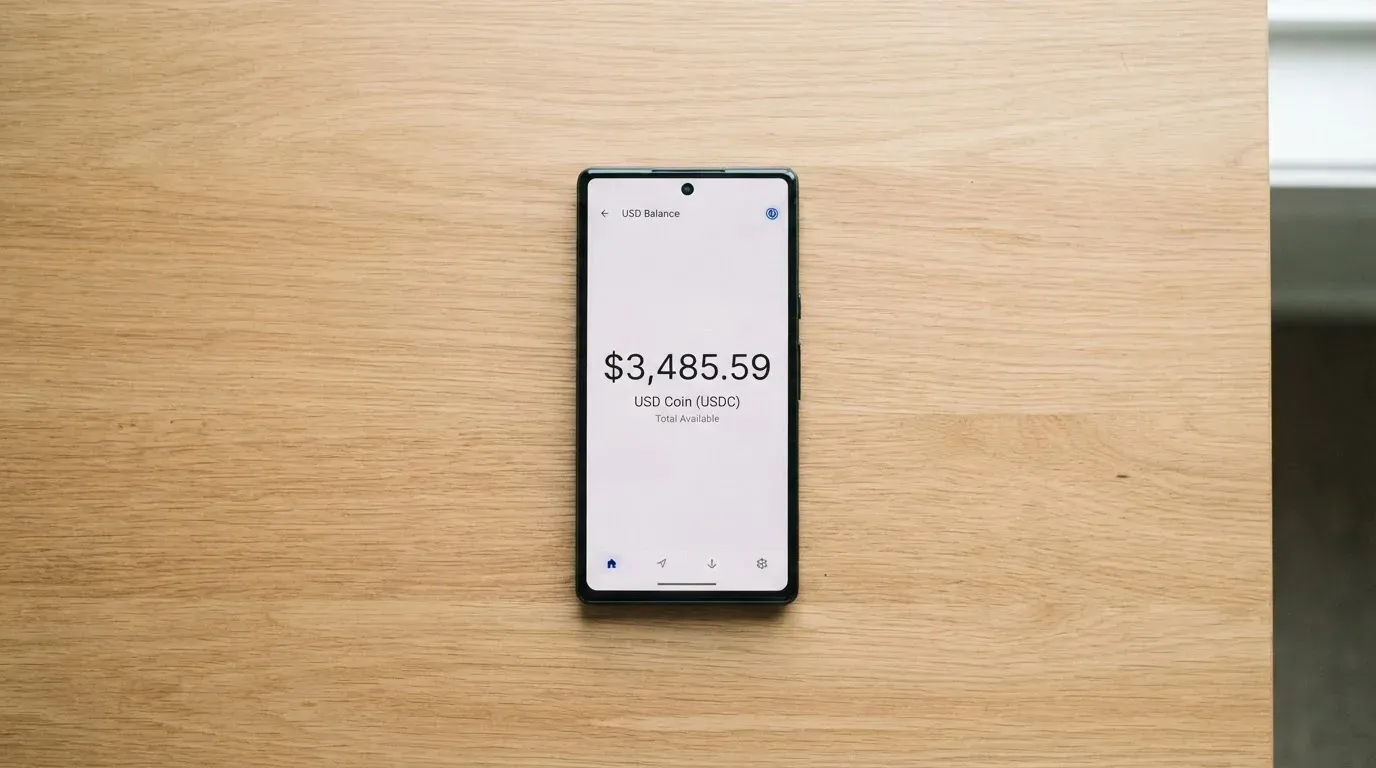
You do not load money onto the Nova card. The card spends directly from your WhiteBIT exchange balance. When you pay, the amount is converted to US dollars at the spot rate at the moment of payment. The coins named in the starting data are USDC, USDT, BTC, ETH, XRP, SOL, NEAR, ADA, AVAX, WBT and DOGE — a broad list, and the conversion happens per transaction rather than at some pre-set rate.
Unofficial: it spends from the exchange’s Main balance, not from the trading balance. If you have been trading, the money you are trading with is not what the card reaches for. Check which balance is actually holding your funds before you assume the card is empty.
Nothing is stated officially about topping up or withdrawing for the Nova USD card, because topping up is not the model here — the exchange balance is the model. If you want to move money off a card balance, the card’s public pages do not describe how, and I would not guess.
Two practical consequences follow. First, you never need to convert crypto into fiat yourself before spending, which saves a step and a spread. Second, you are spending whatever the exchange holds for you at that moment, which means the exchange’s solvency and operational status are part of your payment. That is the same dependency, stated plainly.
One thing worth separating out: the network fee for a blockchain transfer is charged by the blockchain, not by the card provider. If you move crypto onto the exchange to fund your life, that gas or bandwidth cost is separate and is not part of these percentages.
Paying with it every day
Reported daily use is narrow, and narrower than the fee table implies.
Unofficial, from thegodfunded.com in October 2026: Apple Pay and Google Pay are supported, and the card is added manually in the wallet app. Cash machine withdrawals are not available. And the card is not accepted for betting, casinos, lotteries, brokers or money transfers.
That last line is the merchant category system doing its work. Each merchant carries a four-digit category code assigned under ISO 18245 when it starts accepting cards, and code 7995 covers gambling — casinos, betting and lotteries. Issuers frequently block that code on specific cards as policy rather than law, and the blocked list varies by issuer. Expect the same surprise elsewhere: brokers and money-transfer businesses are the categories most likely to be switched off.
Not being able to reach cash is the sharpest edge. It means the card cannot be your only card, and it means a day when every shop declines it leaves you with nothing. Budget for a backup.
Adding it to a phone wallet is the whole point of the mobile setup. Apple Pay replaces your card number with a device-specific number stored in the phone’s secure element, never on Apple’s servers, and each payment carries a one-time dynamic code. The issuer can still restrict that tokenised number — for example block it on magnetic stripe or on a website — so a card that works in a shop is not a guarantee that it works everywhere online.
Two more everyday realities. Online payments usually run a 3-D Secure check, Visa’s version of the brand being Visa Secure: the issuer assesses risk and either approves the payment without friction or challenges you, for example with a one-time code. And address verification — which compares the numeric parts of the billing address you type with the issuer’s records — is mainly offered in the US, Canada and the UK, and is generally unavailable for foreign-issued cards. That is a common reason an online payment gets declined even when everything about your card is correct.
There is also cashback, reported unofficial: up to $25 a month by merchant category, with three categories you choose and can change weekly, paid in BTC or WBT and withdrawable from 5 USDC. Read the cap carefully. $25 a month is real money, but it is not enough to change any conclusion above, and it is paid in tokens rather than dollars.
What can go wrong
This is where the score lives, and I want to be direct rather than reassuring.
The card has already been frozen once. The Nova EUR card was frozen on 30 June 2026, according to the help centre; other parts of the same material say 1 July 2026. Some users in the European Economic Area report frozen Nova payments. The euro card launched on 10 December 2024. That is a live product with a recent shutdown event, not a hypothetical.
The operator’s complaint record is poor. Trustpilot for whitebit.com — the exchange, not the card specifically — shows 469 reviews, 41% five-star and 47% one-star, read on 21 October 2026, with the TrustScore itself hidden as “unavailable due to a breach of our guidelines”. A third-party site reports 3.4 from 474 reviews on 8 October 2026, and notes that only 28 of the 299 reviews it read even mention the card. So: the exchange has a serious volume of complaints, and the card is a thin slice of them.
The themes are consistent, and they are the themes that matter for a payment card. Users report frozen or restricted funds and long anti-money-laundering and source-of-funds reviews between August and October 2026. Users report slow, templated support in May 2025 and August–September 2026. Users report deposit and withdrawal delays in May 2025 and August 2026, and a third-party impersonation scam in August 2026. Meanwhile card verification has been reported as taking over a month.
Read that list as a description of what your money is exposed to. Long AML reviews are the normal mechanism by which a payment account stops working, and here they appear alongside frozen funds at the same time.
You do not hold the keys. Reported unofficial: the card is custodial — for the Nova EUR card, the user does not hold the keys (cryptocardhub.com, August 2026) — and WhiteBIT can restrict, freeze or close accounts on suspected misuse. That is the ordinary arrangement for an exchange balance, and it is worth being clear-eyed about what it means. A custodial wallet means the provider holds the credentials and you must trust them completely. A seed phrase — typically 12 to 24 words — is the unencrypted form of the private key, and anyone who obtains it can restore the wallet and spend the funds. Crypto transfers are typically irreversible, and a stolen private key has no built-in recovery: the network cannot freeze or return the funds. Custodial platforms have a real record of failure — Mt. Gox at about US$350 million reported stolen in 2011–2014, Coincheck at about US$400 million in 2018, Ronin Network at US$625 million in 2022.
Who is actually behind it. WhiteBIT, the crypto exchange at whitebit.com, runs the app, the custody and the conversion. The euro card’s issuer is reported as Wallester AS in Estonia, registration 11812882, a Visa Principal Member, per cryptocardhub.com. The dollar card’s issuer is reported by thegodfunded.com as JSC Hash Bank in Georgia, with no licences named. Support terms are not stated.
The frozen-card pattern is normal for this category, which is exactly the problem. Programme closures typically run in a fixed order: a notice period, then loading and spending stop, then users are asked to withdraw remaining balances. One 2026 closure reported by a secondary source ended new loads on 8 July 2026 and stopped spending on 8 August 2026 — a single unconfirmed source, but the shape of it is instructive. This has happened to crypto card programmes before at scale: Visa terminated its global agreements with FTX on 13 November 2022 and the FTX US debit card was wound down; WaveCrest, a Visa issuer that supplied crypto card brands, was suspended by Visa in Europe in 2018, closing every programme it had issued.
Regulation cuts both ways. Under the EU’s MiCA rules, stablecoin issuers must be a credit institution or an electronic money institution. The transitional period lets providers operating under national law continue only until 1 July 2026 or until they receive or are refused an authorisation, whichever comes first — so the regulatory ground under European providers is shifting right now. A card is regulated separately from the crypto side: MiCA covers custody, exchange and transfer, while the card itself is a payment service under e-money and payment-services law. A crypto card often depends on two licences, and you are relying on both. Electronic money institutions must safeguard customer funds in dedicated accounts or by insurance, but those funds are not the same as bank deposits and may not be covered by a deposit guarantee scheme.
Money you can get back, and money you cannot. A chargeback is a refund ordered by the card issuer to settle a dispute, with reason codes for fraud, duplicate billing or goods not received. Rights differ by country: US debit card reversal rights come from Regulation E and credit card rights from Regulation Z, and prepaid-card coverage varies and should not be assumed. And a declined authorisation can leave a hold on your funds for several days — typically up to seven.
If your worry about a crypto card is anonymity or safety, put it down: nothing here offers either, and I am not going to pretend otherwise.
What to take instead
Three alternatives came up in this review, and the honest comparison is uncomfortable because their public pages were no more readable than WhiteBIT’s. Where I have facts, I have them; where I do not, I will say so rather than pad the comparison.
| Card | Score | Card type | Fees | Rewards |
|---|---|---|---|---|
| WhiteBIT Nova | 5.7 / 10 | Virtual Visa, USD (unofficial) | Issuance free; 1.5% plus $0.20 per payment; 1.5% conversion (unofficial) | Cashback up to $25 a month by merchant category, in BTC or WBT (unofficial) |
| Bybit Card | 6.0 / 10 | Virtual and physical; Mastercard in Argentina, Mastercard credit card in AIFC, Georgia, Kazakhstan, Australia, Mexico; Visa prepaid in Brazil and Peru; Visa credit in Asia Pacific | Virtual issuance free in all regions until further notice; crypto conversion 0.9% in most regions, 0.5% in Argentina; FX fee 2% on top of the network rate in most regions | Tiers from Base at 2.00% up to Infinite at 10%, with monthly cashback caps from 5 USD to 600 USD |
| Young Card | 5.7 / 10 | Not stated officially | Not stated | Cashback paid in YNG tokens: Essential 0.1%, Gold 1.8%, Platinum 3.6%; Bronze and Silver not stated |
| MSX | 6.4 / 10 | Not stated officially | Not stated | Not stated |
Bybit Card is the strongest of these on the evidence available, and by a wider margin than the half-point suggests. It has virtual and physical cards with real regional detail, it states its fees in public, and it has a rewards structure that is documented to the decimal — tiers from Base at 2.00% with a 5 USD monthly cap up to Omega at 8% and Infinite at 10% with a 600 USD cap. Its crypto conversion fee of 0.9% in Australia, Asia Pacific, Georgia, Kazakhstan, Brazil and Mexico is well below WhiteBIT’s 1.5%, though its FX fee of 2% on top of the network rate is higher than WhiteBIT’s 1.5%. Two details to weigh: from 5 October 2026 at 10:00 UTC, only crypto-funded transactions earn points or cashback — fiat-funded spending does not. And its own cards page states the product is not meant for European Economic Area customers, with all EEA participation strictly prohibited.
Young Card matches WhiteBIT’s score but shares its opacity: card type, fees and eligibility are not stated on any official page I could read. Its one documented feature is that cashback is paid in YNG tokens at a rate set by club tier — Essential 0.1%, Gold 1.8%, Platinum 3.6% — which is a double bet. You are already betting on the card working; now you are betting on a token’s price. Young’s eligibility is also not stated.
MSX scores highest at 6.4 / 10, but I cannot tell you why. Eligibility, card type, fees, funding and rewards are all not stated on any page I could read. A high score on thin evidence is not something I would act on.
There are two comparisons worth making that are not about rival crypto cards. First, a self-custody-linked card keeps your funds in your own wallet until the moment of payment — no exchange in the middle, no frozen-balance risk — but you carry sole responsibility for key loss, phishing, and clipboard-hijacking malware that swaps copied addresses. Second, an ordinary bank card or an e-money account in your own name gives you a payment instrument that no exchange can switch off, which for daily spending is worth more than any cashback percentage. If you can get one, that is the comparison that matters most, and the rest of this page is a footnote to it.
Who I would recommend it to
I would recommend WhiteBIT Nova to one specific person: someone with a real balance on WhiteBIT who is spending it constantly, in dollars, from a phone, and who treats the card as a convenience layer rather than as their financial foundation.
For that person the maths works. Issuance is free, there is no monthly or annual charge, conversion happens at the spot rate at payment, and $40,000 a day and $200,000 a month are generous limits. The coin list is wide enough that you are not forced to hold something awkward to use it.
I would not recommend it to anyone who needs cash, anyone who wants plastic, anyone in the United States, the United Kingdom, Canada, Colombia, Costa Rica, Panama or Venezuela, or anyone whose EU status is unclear. And I would think twice if you are using it because a conventional bank turned you down.
The reason is not the fees. It is that this card has been frozen once already inside a year of existing, its operator has 47% one-star reviews concentrated on frozen funds and long compliance checks, your money sits in someone else’s hands by design, and the card’s own public pages would not tell me any of the numbers above. A 1.5% fee is a small thing to pay for a good product. It is a large thing to pay for one that can be switched off.
Keep a second card that nobody can freeze. Use this one where it is convenient, not where it is necessary.
Frequently asked questions
What is the WhiteBIT Nova card?
The WhiteBIT Nova card is a Visa payment card that spends a balance you hold on the WhiteBIT crypto exchange. Rather than loading money onto the card, you pay directly from your exchange account, and the amount is converted into US dollars at the spot rate at the moment of payment. It is reported as a virtual card only, with no physical version, and the card’s own public pages were not readable when I checked, so most of these details come from third-party reporting.
How does the WhiteBIT Nova card work?
You pay with the card, and the amount is taken from your WhiteBIT exchange balance, converted to dollars at the current spot rate at the moment of payment. The coins named in the starting data are USDC, USDT, BTC, ETH, XRP, SOL, NEAR, ADA, AVAX, WBT and DOGE. It is reported to draw on the exchange’s Main balance rather than the trading balance, which matters if you have been actively trading.
Who owns the WhiteBIT Nova card?
WhiteBIT, the crypto exchange at whitebit.com, runs the app, the custody and the conversion. The euro version of the card is reported as issued by Walleter AS in Estonia, registration 11812882, a Visa Principal Member. The dollar version is reported by a third-party site as issued by JSC Hash Bank in Georgia, with no licences named. Visa and Mastercard do not issue these cards themselves; they license the issuers.
Is the WhiteBIT Nova card available in my country?
Reported by third parties as open in about 140 countries, mainly in Asia, Africa, the Middle East and Latin America, and closed in the United States, United Kingdom, Canada, Colombia, Costa Rica, Panama and Venezuela. The European Union status is described as contradictory, so if you are in the EU, ask before you rely on it. The official page was blocked when I checked, so none of this is confirmed by the card itself.
Does the WhiteBIT Nova card require KYC?
Identity verification is required, and it is reported as a step separate from the exchange’s own verification — so passing the exchange’s checks does not automatically mean the card is approved. Reviews describe card verification taking more than a month. Note that anti-money-laundering rules require regulated businesses to verify customers, check sanctions lists, and hold off where due diligence cannot be completed.
What does it cost to use the WhiteBIT Nova card?
Reported unofficial: issuance is free, with no annual, monthly, inactivity or cancellation fee. Each payment costs 1.5% plus $0.20, and converting into another currency adds 1.5%. Two catches worth knowing: the fee is not refunded if a purchase is refunded, and some merchants add their own currency-conversion charge on top. Limits are reported as $40,000 a day and $200,000 a month.
Can I get cash from an ATM with the WhiteBIT Nova card?
No — cash machine withdrawals are reported as not available. That is the sharpest limitation of the card and the reason it cannot be your only card. Plan on carrying a second instrument, because on a bad day a virtual card with no cash fallback leaves you with nothing.
How do I add the WhiteBIT Nova card to Apple Wallet?
Apple Pay and Google Pay are both reported as supported, and the card is added manually in the wallet app — there is no physical card to scan. Adding it this way means the phone stores a device-specific number in its secure element rather than your actual card number, and each payment uses a one-time code. The issuer can still restrict that tokenised number, so a card that works in a shop may not work on every website.
Is the WhiteBIT Nova card safe?
Safe is the wrong question; the right one is who holds your money and who can switch the card off. The card is custodial — the provider holds the credentials, not you — and reported as able to restrict, freeze or close accounts on suspected misuse. The euro card was frozen on 30 June 2026, and the exchange’s Trustpilot page shows 47% one-star reviews, with frozen funds and long compliance checks as recurring themes. Treat it as a convenience layer, never as your only card.
Is the WhiteBIT Nova card worth it?
Worth it if you already hold a WhiteBIT balance, spend it in dollars from your phone, and want the exchange rate rather than a card company’s rate. Not worth it if you need cash, want a physical card, live in the United States, United Kingdom or Canada, or are trying to solve a problem with ordinary banks. The fees are fair; the dependency is the part to think about.
Exchange card fees – cryptocardfacts
Content created by the «cryptocardfacts» team