
A prepaid Visa for spending USDT and USDC that keeps its costs visible and its gaps quiet
 Available in US
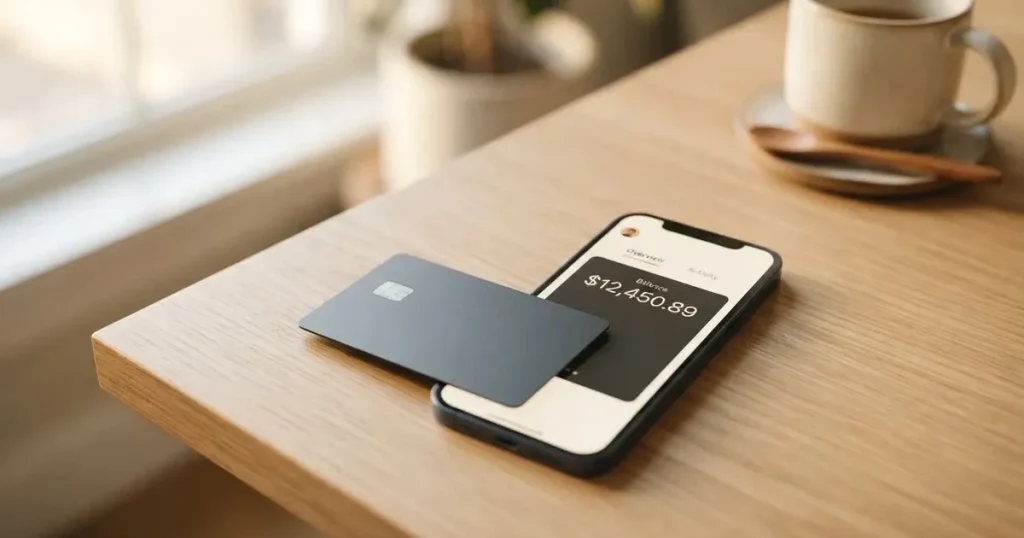
Winity Exclusive is a Visa payment card you fund with crypto rather than from a bank account. You load USDT, USDC or one of several other tokens, the app converts them to US dollars, and the card spends that balance like a prepaid card. There is a virtual card for online payments and a physical card for everything else. The card’s own pages put its reach at “187+ countries” in the FAQ and “180+” in the footer, and they name Winity Life as the operator with WTY Technology Hong Kong Limited behind the technology, issuing through unnamed licensed partners. That combination — a wide-open eligibility claim, a Hong Kong technology base, cards from partners you never see named, and almost no independent review history — is the honest shape of this product. It works, the fees are mostly visible, and the parts you cannot see are the parts that matter when something goes wrong.
The conditions described on this page are current as of October 28, 2026.
Verdict: who this card suits, and who it does not
I rate Winity Exclusive 7.6 out of 10. It is a competent prepaid card with a clear fee structure, wide stated availability and a decent range of top-up assets. It is not a bank account, it does not promise anonymity, and for anyone who needs a normal bank card in their own country it is a second instrument rather than a first one.
The score comes from six criteria, and the weakest of them is the one that should give you pause. Reliability and complaints scores 5 out of 10 because Winity describes itself as “not a bank”, the cards come from unnamed partners, and the entire independent-review record is a single five-star Trustpilot review. Everything else scores 6 or better.
| Criterion | Mark | Why |
|---|---|---|
| Who can get it | 9 / 10 | “187+ countries” in the FAQ, “180+” in the footer; restricted countries are excluded but the list is not given, and citizenship is not mentioned at all |
| Cost | 7 / 10 | Physical card USD 20 a year with the first six months waived; USDT and USDC top up at 0%, other assets at 5%; a payment under USD 25 costs USD 0.10; virtual issuance and the FX fee are not disclosed |
| Top-up options | 9 / 10 | USDT and USDC at 0%, plus ETH, SOL, POL, TRX, WCO and BNB at 5%, over six networks; minimum balance USD 25 |
| Reliability and complaints | 5 / 10 | Winity Life and WTY Technology Hong Kong Limited, “not a bank”, unnamed issuing partners; Trustpilot 3.7 on one review and no complaints to read |
| Everyday use | 8 / 10 | Exclusive Virtual and Exclusive Physical on Visa, Google Pay ready, USD 3 per ATM withdrawal on the physical card; Apple Pay never mentioned |
| Total | 7.6 / 10 | A usable prepaid card with thin independent track record |
Who it suits: you already hold stablecoins, you mostly spend in dollar-priced places or online, you are comfortable with an app that converts your tokens and hands you a Visa number, and you treat the balance as spend money rather than savings. Who it does not suit: anyone who needs a bank account, anyone who cannot clear identity checks, anyone in a restricted country, and anyone for whom an unnamed card issuer and a Hong Kong programme manager is a dealbreaker.
The category context matters here. A crypto card is not one thing but three: a card number, a licence, and a wallet. Visa and Mastercard do not issue crypto cards to consumers themselves — they license issuers and can suspend a programme, as they did with FTX in November 2022 when Visa said it had “terminated our global agreements with FTX” and the FTX US debit card programme was wound down by its issuer. WaveCrest, a Visa issuer that supplied crypto card brands, was suspended by Visa in Europe in 2018 and all its Visa programmes closed. In many of these products the crypto brand is only a front end or programme manager, not the institution behind the card. That is exactly the position Winity describes itself in. When you read this review, keep in mind that “the card is Visa” tells you the network will route your payment, not who stands behind your balance if it disappears.
Will they give you the card
Eligibility is where Winity sounds most generous and tells you least. The FAQ says “187+ countries” and the footer says “180+” — the same reach described two ways on the same public site, which tells you the numbers are marketing copy rather than a tested list. Restricted countries are excluded, but the card’s public pages do not give that list. So the honest answer to “can I get a Winity Exclusive card in my country?” is: probably, unless you live somewhere they have quietly excluded, and you cannot tell from the outside which those places are. If your country matters to you, you find out by applying.
The terms talk about residence in a supported, non-restricted country. Citizenship is not mentioned. That omission is worth holding onto, because in this sector nationality and country of birth are often screened separately from where you live: sanctions screening and issuer risk policy are applied to citizenship and country of birth as well as the address on your documents. A card that never asks about your citizenship may simply not be asking, or may be applying the check somewhere you cannot see.
The age floor is 18. That is the standard for prepaid and debit cards in this category, and some issuers set higher limits, so 18 does not guarantee anything else. There are no tiers of verification to climb — no bronze, silver, gold of identity — just one check. Whether a verification tier exists is separate from whether you pass it, and Winity has a single path rather than a ladder.
How to get it
You need to be 18 or older, and you need one of three documents: a passport, a driving licence or a national ID. That is the whole list. There is no stated requirement for proof of address, which is unusual — most regulated providers ask for it, and its absence here is either a simplification or a gap you should be aware of. If you are someone who has been turned away by ordinary banks for lack of documents, this may be the appeal of the card; if you are someone who wants strong verification and legal recourse, a lighter check is not the same thing as a better one.
The process itself is quick on paper. The check usually completes within minutes; if it goes to manual review, the card’s pages say one to two business days. The card is issued only after the verification succeeds — there is no card first, documents later. Reasons for rejection are not stated, which means if you are turned down you will not be told which document or which field was the problem.
The card you get comes in two forms you care about: Exclusive Virtual and Exclusive Physical. There is also an Executive Metal in the range. All of them run on Visa, and transactions are in USD. The physical card is the one that unlocks cash withdrawal at Visa ATMs; the virtual one is for online payments and is what Google Pay is set up with. Shipping for the physical card may cost extra — the card’s pages say charges may apply but do not name countries, delivery times, or what a replacement costs if it is lost or arrives damaged.
One condition catches people out: the physical card requires USD 25 of spend on the virtual card first. You do not receive the physical card and immediately have full function; there is a spending hurdle in front of it, and a minimum balance of USD 25 sits underneath card transactions anyway.
Fees and limits: what Winity Exclusive really costs you
Here is what the card’s own materials state, item by item. Anything not on this table is marked as not stated, because the public pages do not say it — and a fee you cannot see is a fee you cannot budget for.
| Fee or limit | What it is | What is stated |
|---|---|---|
| Physical card, annual | Cost of holding the plastic card | USD 20 per year; first 6 months waived on new activations; free physical issuance described as “limited” |
| Physical card condition | Spend required before the physical card works | USD 25 spend on the virtual card |
| Virtual card issuance | Cost of the virtual card | Not stated |
| Deposit conversion | Fee on crypto sent in | 0% for USDT and USDC; 5% for WCO and other non-stable assets |
| Minimum spend fee | Fee on small payments | USD 0.10 for transactions under USD 25; other spend fees are shown in the app |
| FX fee | Fee when the merchant charges in another currency | Not stated |
| ATM withdrawal | Cash from a Visa ATM | USD 3 per withdrawal, physical card only; Visa ATMs in 180+ countries |
| PIN change | Changing your PIN | USD 5 |
| Free ATM allowance | How many withdrawals are free | Not stated |
| Daily and monthly limits | Caps on spending and movement | Amounts not published; caps vary by user, tier and jurisdiction |
| Minimum balance | Balance needed for card transactions | USD 25 |
| Chargeback fee | Cost of disputing a transaction | USD 100 |
| Statement request | Getting a statement | USD 5 |
Now let me walk three everyday payments through this, because that is where the numbers stop being abstract.
A USD 40 subscription paid online with USDC. You have USD 40 in USDC and pay USD 40. The deposit conversion on USDC is 0%, and the merchant is charging in dollars so there is no currency conversion on your side. Because the payment is over USD 25, the USD 0.10 minimum-spend fee does not apply. This is the clean case, and it is the one the card is built for. Note, though, that the network fee on the blockchain transfer to get the USDC to Winity was paid by you and is not in this table — gas is charged by the blockchain, not by the card provider.
A USD 18 taxi paid in euros from the same balance. The conversion on deposit is still 0% because you funded with USDC. But now the merchant’s currency is not yours. The card’s FX fee is not stated, so the total cost of this payment is the taxi fare plus an unknown amount. That is not a criticism of the card’s pricing — it is a hole in the disclosure, and it is the hole you are most likely to walk into if you travel. Before you rely on this card abroad, find out what the FX fee actually is.
A USD 12 coffee paid with SOL. Here two things bite. The deposit conversion is 5% because SOL is not a stable asset, so sending 12 dollars’ worth of SOL costs more than 12 dollars’ worth of balance. And because the payment is under USD 25, the USD 0.10 minimum-spend fee applies on top. Small purchases are charged twice: once for being under the threshold, once in the conversion if you funded with anything other than USDT or USDC. If you spend small amounts often, this is the pattern that will quietly add up — the card shows other spend fees in the app, so the running total lives there rather than on any published page.
Two limits are worth reading twice. The minimum balance is USD 25 for card transactions, which means your balance has to sit above a floor to be usable at all. And the daily and monthly caps are not published: they “vary by user, tier and jurisdiction”. So the same card might let one person spend USD 5,000 a day and another USD 200, and neither of you can find out your number in advance. If you are someone who needs to place a large payment — a rent deposit, a tuition fee, a business invoice — this is the practical risk, and it is one you can only discover by trying.
How to top up
Topping up is where this card earns its other 9. You send crypto to the card, and it converts to dollars in a partner custody wallet before you can spend it. The asset list is wide: USDT and USDC at 0% conversion, and ETH, SOL, POL, TRX, WCO and BNB at 5%. Those are accepted over six networks — Ethereum, Solana, Tron, Polygon, BNB Chain and W Chain. That is genuinely more than most cards in this category offer, and the 0% on the two dollar-pegged coins is the part that matters, because those are the ones most people would send.
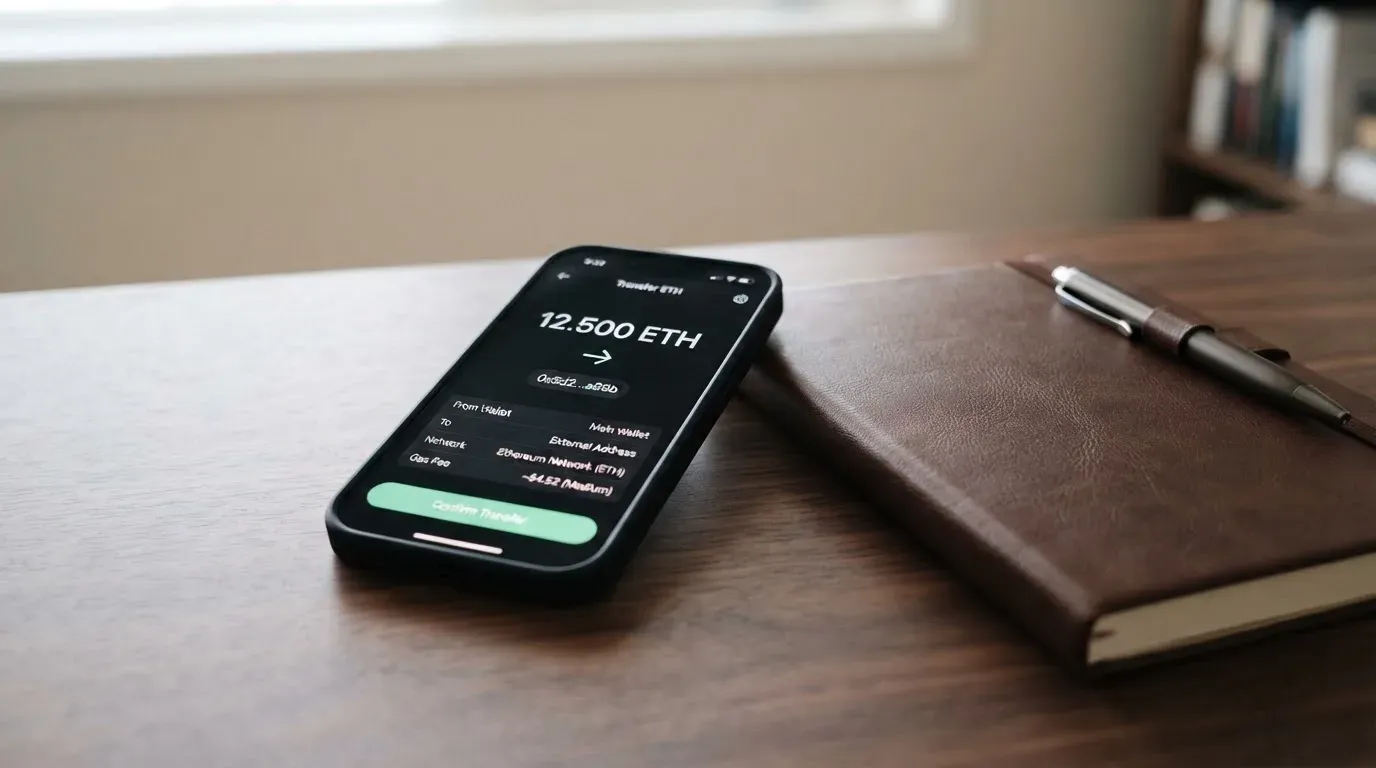
Four conditions shape how you top up. Network gas is paid by you, so a deposit costs slightly more than the amount you send. The minimum balance is USD 25. There is no fiat top-up stated anywhere — the routes described are crypto routes — so if your plan was to buy dollars into this card from a bank account, that route is not on the table as far as the public pages go. And the card is strict about the first balance: a virtual card is deactivated if it has received less than USD 25 within 14 days of activation. Send too little too slowly and your card switches off before you have spent anything.
The network choice is not a formality, and this is where people lose money in this whole category. Blockchain transfers are irreversible. A deposit sent on a network the card provider does not support, or to an address belonging to a different network, can be lost entirely or need manual support recovery with no guarantee. Sending USDC on the wrong chain is the classic version of this. There is also a specific gotcha worth knowing: Circle stopped supporting USDC on Tron in February 2024, so “USDC over TRC20” is not a native option — if you see that pairing offered somewhere, it is worth a second look. And on Ethereum, gas is paid only in ETH, so a wallet holding USDT with no ETH cannot send at all.
One more practical note on Ethereum: ERC-20 is the token standard on that network, and sending a token on it means paying gas in ETH regardless of what you are transferring. On Tron, fees are paid through bandwidth and energy resources, often burning TRX. So the network you pick changes not only whether your deposit arrives but what it costs you to get it there.
Taking money back out is where the design is clearly one-directional. Withdrawals to crypto are not supported in the app. Cash comes from Visa ATMs, at USD 3 per withdrawal on the physical card. Refunds of crypto deposits are possible only under a narrow process: the review covers only the most recent deposit, it must be requested immediately, and there must be no card transactions after it. If you have spent from the balance since depositing, that route closes. Getting a statement costs USD 5. In short: money goes in easily and comes out hard, and you should treat the balance as spend money.
Paying with it every day
In daily use the card behaves like an ordinary prepaid Visa, which is the whole point. You spend the converted dollar balance, in USD, at any merchant that takes Visa. In many countries you can also use it for contactless and online payments.
The digital wallet picture is one-sided. Google Pay is ready, on the virtual card. Apple Pay is not mentioned anywhere in the card’s materials. If you are on iPhone, that gap is worth weighing — it does not mean Apple Pay is refused, it means the card makes no claim about it, and a claim you can check is worth more than one you have to test. When a wallet token is set up, the card issuer can restrict it, for example blocking it on magnetic-stripe, phone or website use, so the card could behave differently in a wallet than at a terminal.
The rewards are thin, and you should know that before you start. There is no cashback. What there is Winity Points: one point per USD 10 spent on eligible purchases on the Exclusive card. The redemption portal is described as “coming soon” — so as of these conditions you accumulate points and cannot spend them yet. The Executive rate is not specified. If rewards were part of your decision, this is where the card is weakest in plain value terms, and the honest framing is that points you cannot redeem are a promise, not a benefit.
There are apps for iOS and Android. I could not find ratings for them, which is a small signal in itself — well-used apps in this category usually have a trail of reviews, and their absence leaves you with nothing to read before you install.
Not stated, and worth asking about: which merchant categories are blocked. This category uses a four-digit merchant category code to classify a business, and codes covering gambling are commonly blocked on specific cards by policy rather than by law, with the blocked list varying by issuer. Winity does not publish its list, so you cannot know in advance whether a category you need is closed. If gambling is on your list of things to avoid, note that the absence of a published block is not the same as permission.
What can go wrong
The honest risk section is longer than the marketing section, and I would rather you read it than skip it.
Who is actually behind the card. Winity Life is the brand, WTY Technology Hong Kong Limited is the technology provider and programme manager, described as “not a bank”, and the cards are issued by unnamed licensed partners, with services issued in Hong Kong and disputes under Hong Kong law with HKIAC arbitration. No registration number is given. So when something goes wrong, you are dealing with a programme manager whose bank-like name is not a bank, and a card issuer you cannot name. That is not automatically a bad structure — plenty of legitimate programmes work exactly this way — but it means you cannot independently check who your money’s issuer is, and that is information you would want.
Custody. A partner custody wallet holds your assets temporarily. Control of crypto belongs to whoever holds the private key or seed phrase; with a custodial wallet the provider holds the credentials, so you are trusting the provider completely. And the failure record of custodians is not theoretical: Mt. Gox reported about US$350 million stolen between 2011 and 2014, Coincheck about US$400 million in 2018, and Ronin Network US$625 million in 2022. A seed phrase is typically 12 to 24 words and unencrypted — anyone who obtains it can restore the wallet and spend its funds — and blockchain transfers have no built-in recovery, because the network cannot freeze or return them. None of this is a prediction that Winity will fail. It is a statement of what the structure exposes you to. Safeguarding arrangements are not stated.
The stability of the asset. Stablecoins aim to hold a stable value against a fiat currency, but despite the name stablecoins are not necessarily stable. Tether’s USDT and Circle’s USDC are US-dollar-pegged, and the BIS put about 90% of stablecoin market capitalisation in these two, which is why they are the sensible default here — but they do depeg. TerraUSD collapsed in May 2022, and USDC temporarily lost its peg in March 2023 during the US banking crisis. Circle says USDC is redeemable 1:1 for USD and fully backed by cash and cash equivalents with monthly reserve attestations, and Tether describes USDT as backed 1-to-1 by reserves, but those are issuer statements, and Tether also says it disables tokens in wallets on the OFAC sanctions list and has frozen funds tied to illicit activity. Stablecoins are not censorship-proof either.
Declines you will not see coming. Address Verification Service compares parts of a billing address the buyer typed with issuer records, and it is mainly offered in the US, Canada and the UK — generally unavailable for foreign-issued cards, which can cause declines at checkout. Some merchants decline prepaid or foreign card numbers because the issuer lookup reveals the card type and issuer country. A declined authorisation can also leave a hold on your funds for several days, typically up to seven, which is the sort of thing that makes a balance look unavailable when you did not spend it.
Disputes. If a transaction is unauthorised you report it to support and block the card; Winity reviews and raises it with Visa. The chargeback fee is USD 100. There is no guaranteed recovery, decisions are described as “final and binding”, and anything unresolved after 60 days goes to arbitration. Read that twice: the cost of disputing a USD 50 transaction is USD 100, so a chargeback is only rational above that threshold unless the fraud is larger. In the EU and UK, 3-D Secure can shift liability for fraudulent online payments, and Winity’s card uses biometrics-based 3-D Secure without an OTP; that verification working in your favour or against you is not something the public pages spell out.
The track record. I found no official incidents and no user reports to read beyond a single positive Trustpilot review. The Trustpilot profile is claimed from October 2025, the TrustScore is 3.7 with stars labelled 3.5 from one review — a five-star review dated 26 December 2025 — and no complaint themes exist because there are too few reviews to judge. One review is not evidence of anything, in either direction. It is, however, thin ground for confidence, and it is why Reliability and complaints scores 5.
Support is at [email protected] and in an in-app Support tab. Member service 24/7 is claimed for members, and email replies typically come within 24 hours. That is a reasonable commitment on paper.
Regulation and the closing door. Under MiCA, the EU’s markets-in-crypto-assets regulation, e-money tokens may be issued only by a credit institution or an electronic money institution; its rules on stablecoins applied from 30 June 2024 and the remaining provisions from 30 December 2024. Transitional periods let providers already operating under national law continue only until 1 July 2026 or until they are authorised or refused under MiCA, whichever comes first — so if you are in the EU, a provider’s status can change under you. A card is regulated separately from the crypto side, so a crypto card often depends on two licences. And if due diligence cannot be completed, EU rules require the institution to refrain from the transaction or the relationship and, where necessary, end it — which is why accounts close or freeze pending documents. In the US, FinCEN guidance treats administrators and exchangers of convertible virtual currency as money transmitters, while ordinary users spending crypto are not.
If a programme does close, the pattern is usually a notice period, then loading and spending stop, then users are asked to withdraw remaining balances. One 2026 closure reported by a secondary source ended new loads on 8 July 2026 and spending on 8 August 2026 — a single unconfirmed report, cited only so you know the shape of it. Since Winity’s pages do not say what happens to your balance if the programme ends, ask before you commit money you would need back.
Taxes. I am not giving tax advice and you should get your own, but the mechanics are worth knowing. The IRS treats digital assets as property, so exchanging them for goods, services, dollars or other digital assets generally produces a taxable gain or loss, measured in local fiat currency at fair market value on the date of the transaction. Every card payment funded from crypto can therefore be a separate disposal record. Keep your transaction history.
What to take instead
If any of the above has made you cautious, that caution is reasonable. Here is what the field looks like, and why I would not treat these as straightforward substitutes.
A normal bank card or a regulated e-money account. If you can get one, the honest answer is that a licensed bank’s card comes with deposit-style protections, clear dispute rights and a named institution you can complain about. A crypto card cannot match that, because the whole design routes around it.
Cardex — 5.6 out of 10. One crypto card, 200+ countries, with no country list or exclusions published, and an App Store listing that is Naira-focused, paying in Naira. It runs on VERVE, Visa, Mastercard and UnionPay, with virtual and physical cards. What makes it interesting is the conversion model: real-time crypto-to-fiat conversion at the moment of payment, with what the site calls an “AI-Powered Conversion Rate” that scans global exchange rates and picks the best one when you spend. That is a genuinely different idea from pre-loading a balance. But no fee percentage is stated, the networks for its USDT, USDC and BTC wallets are not stated, rewards are not stated, and issuance cost is not stated. Four of the numbers you would need to compare it are missing, which is why it scores below Winity.
CardFlow — 4.9 out of 10. Aimed at Nigeria, described as “Nigeria’s smartest fintech card platform” and serving “Nigerians and global users”, with no country list or exclusions stated. It is a virtual USD Mastercard created in about three minutes, and creating a virtual card is “completely free” per its FAQ. You can fund it with Bitcoin, USDT, ETH or a Naira bank transfer. Everything else — monthly fee, conversion fees, rewards — is not stated.
HyperCard — 4.7 out of 10. A prepaid card, with no country list on the official pages; the App Store says it works in “more than 176 countries”, which is a statement about acceptance, not about whether you can open one. Balance in USD or EUR, deposit crypto such as USDT, BTC or ETH in the app, converted to USD or EUR on the card. The network is not stated on the App Store page, and neither are fees, issuance cost or rewards.
Read that table of alternatives and notice the pattern: every one of them publishes less than Winity does. Winity discloses its top-up percentage, its ATM price, its minimum balance and its annual card cost. These three disclose little more than a slogan and an app-store line. On transparency of published numbers, this card is ahead of the field it competes in — it just leaves several important gaps, and the ones it leaves are the FX fee, the virtual issuance cost and the spending limits.
| Winity Exclusive | Cardex | CardFlow | HyperCard | |
|---|---|---|---|---|
| Score | 7.6 / 10 | 5.6 / 10 | 4.9 / 10 | 4.7 / 10 |
| Network | Visa | VERVE, Visa, Mastercard, UnionPay | Mastercard | Not stated |
| Card form | Virtual + physical | Virtual + physical | Virtual | Prepaid |
| Stated reach | 187+ / 180+ countries | 200+ countries | Nigeria-focused | 176+ countries (acceptance) |
| Funding | USDT, USDC, ETH, SOL, POL, TRX, WCO, BNB | USDT, USDC, BTC | BTC, USDT, ETH, Naira | USDT, BTC, ETH |
| Fees published | Conversion, ATM, PIN, spend, chargeback | Not stated | Not stated | Not stated |
| Rewards | Winity Points, redemption “coming soon” | Not stated | Not stated | Not stated |
Who I would recommend it to
I would recommend Winity Exclusive to someone who already lives in stablecoins and wants a way to spend them without converting to a bank account first. The 0% on USDT and USDC is the best number in this card, the network coverage for top-ups is wider than most, Google Pay is ready on day one, and the fees that exist are published rather than hidden. If your money is already dollar-pegged and your spending is ordinary — subscriptions, groceries, a bit of travel — it does the job without drama.
I would not recommend it as your only card. The unnamed issuer, the “not a bank” self-description, the unpublished spending limits, the missing FX fee, the USD 100 chargeback fee, the absence of Apple Pay, the redemption portal that is still “coming soon”, and a review history consisting of one five-star comment are each individually survivable and collectively a thin foundation. And I would not recommend it at all if you are trying to avoid identity checks, if you are in a country they might be restricting without publishing, or if the balance is money you might need back quickly — because withdrawals to crypto are not supported in the app, cash costs USD 3 a time, and a refund is only available for the most recent deposit, requested immediately, with no card spending since.
If you fall between those, here is the test I would apply. Top up a small amount you would not mind losing, use it for a month, and watch two things: whether it is accepted everywhere you spend, and what the app shows you about fees you could not read on the website. Those two observations will tell you more than any published fee table, including this one.
Frequently asked questions
What is the Winity Exclusive card?
Winity Exclusive is a prepaid Visa card you fund with cryptocurrency instead of a bank account. You send USDT, USDC or other supported tokens to Winity, the app converts them to US dollars in a partner custody wallet, and the card spends that balance at any merchant taking Visa. It comes as a virtual card for online payments and a physical card that also works at ATMs. Winity describes itself as a technology provider and programme manager, not a bank.
How does the Winity Exclusive card work?
You transfer crypto from your own wallet to an address Winity gives you, choosing one of the supported networks — Ethereum, Solana, Tron, Polygon, BNB Chain or W Chain. The funds are converted to dollars and held as a spendable balance. The virtual card then works like an ordinary prepaid Visa. You keep a USD 25 minimum balance, and the virtual card deactivates if it receives less than USD 25 within 14 days of activation.
Is Winity Exclusive a bank?
No. Winity describes itself as “not a bank” — Winity Life is the brand and WTY Technology Hong Kong Limited is the technology provider and programme manager. The actual cards are issued by unnamed licensed partners, with services issued in Hong Kong and disputes under Hong Kong law. Your balance is not a bank deposit, so deposit guarantee schemes do not apply, and safeguarding arrangements are not stated in the card’s public materials.
Who owns Winity Exclusive?
The public pages name Winity Life as the operator and WTY Technology Hong Kong Limited as the technology provider and programme manager, but no registration number is given for either. The card-issuing partners are not named at all. If ownership structure matters to you, this is the single biggest disclosure gap on the card, and it is worth asking directly before you deposit anything you would want back.
Can I use the Winity Exclusive card in my country?
The card’s FAQ says “187+ countries” and its footer says “180+” — the same reach stated two ways. Restricted countries are excluded but not listed, so you cannot confirm your eligibility from the outside. The terms refer to residence in a supported non-restricted country, and citizenship is not mentioned, which is unusual given that sanctions screening in this sector often applies to nationality as well as address.
How do I get a Winity Exclusive card?
You must be 18 or older and hold a passport, driving licence or national ID. Verification usually completes within minutes, or one to two business days if it goes to manual review, and the card is issued only after it succeeds. Proof of address is not stated as required. Note that the physical card requires USD 25 of spend on the virtual card first, and shipping charges may apply.
What does it cost to top up and spend?
Topping up with USDT or USDC costs 0%, and ETH, SOL, POL, TRX, WCO and BNB cost 5% on deposit. Network gas is paid by you on top. A card payment under USD 25 incurs a USD 0.10 fee, and other spend fees appear in the app. The physical card costs USD 20 a year with the first six months waived, ATM withdrawals cost USD 3 each, a PIN change costs USD 5, and a chargeback costs USD 100.
Is the Winity Exclusive card safe?
Safe is the wrong question — it is a custodial product with a thin independent record. Your assets sit in a partner custody wallet during processing, and with custodial wallets the provider holds the credentials, so you trust them completely. The card uses biometric 3-D Secure, an instant freeze in the app, a PIN and optional biometrics, but safeguarding is not stated. The Trustpilot record is one review at a TrustScore of 3.7 — too few to judge either way.
Can I add the Winity Exclusive card to Apple Wallet?
Apple Pay is not mentioned anywhere in the card’s public materials, so there is no claim to rely on. Google Pay is ready on the virtual card. Do not assume Apple Pay is refused and do not assume it works — test it. Also remember that a wallet token can be restricted by the issuer, blocking it on magnetic-stripe, phone or website use, so behaviour may differ from a physical terminal.
How do I get money off the Winity Exclusive card?
Withdrawals to crypto are not supported in the app, so cash comes from Visa ATMs at USD 3 per withdrawal on the physical card. A deposit refund is possible only for your most recent deposit, requested immediately, and only if you have made no card transactions since. A statement costs USD 5. Plan your exit before you load a large balance, because the routes out are narrower than the routes in.
Virtual card fees – cryptocardfacts
Content created by the «cryptocardfacts» team