
A Solana-first crypto card with a free tier, three paid tiers and a lot of numbers the public terms do not explain
 Available in US

Xplace is one of those crypto cards that arrived with a familiar shape — a Visa number, an app, a crypto balance behind it — and a set of terms that leave a lot unsaid. If you are reading this, you are probably one of two people. Either you are looking for a card that works in an ordinary shop while you live on a stablecoin balance, or you have been turned away by a bank and you are trying to find something that will still issue you one. Both of you should read the sections below in the same order, because the good news and the bad news here are close together.
The good news: there is a genuinely free tier, a virtual card that appears right after sign-up, Apple Pay and Google Pay are built in rather than bolted on, and the card terms table shows zero on foreign exchange, cross-border and foreign transaction fees. The bad news: the same terms table is not what the marketing sentence on the site says, the country list is not published, the daily limits are not published, and the reviews describe support that gets slow when you need it.
Here is the shape of the thing before the detail. Xplace is a Visa card issued by Third National under a programme managed by Signify Holdings, marketed by Pontech Group L.L.C-FZ, a company in the Dubai free zone. The money side is Solana: you deposit cbBTC, wETH, SOL, JitoSOL, USDC, USDT or xStocks on Solana. You can either spend your stablecoin balance (Cash mode) or borrow against your holdings (Credit mode) — those are two very different products wearing one card, and which one you are in matters more than almost anything else on this page.
The conditions described below are current as of October 28, 2026.
Verdict: 7.7 / 10
My score for Xplace is 7.7 out of 10. That is not a polite number and it is not a marketing number. It reflects a card that does the basic job unusually well for the crypto crowd and does it while leaving enough of its own paperwork unpublished that you have to make decisions on gaps.
| Criterion | Mark | Why |
|---|---|---|
| Who can get it | 9 / 10 | No official country list is published; Visa is accepted in 160+ countries. Unofficial sources put 162 countries available and 34 closed, but the negative list does not prove every unlisted country is onboardable. |
| Cost | 8 / 10 | Basic is free, Silver is $99 a year, Gold $249, Platinum $999. The card terms show 0% foreign exchange, cross-border and foreign transaction fees. Cash is unavailable. Unofficial tier-by-tier figures put Silver FX at 0.5%. |
| Top-up options | 8 / 10 | Deposit BTC (cbBTC), ETH (wETH), SOL, JitoSOL, USDC, USDT or xStocks on Solana — crypto only, no fiat rail described. |
| Reliability and complaints | 6 / 10 | Pontech Group L.L.C-FZ in Dubai; the card is issued by Third National under a programme managed by Signify Holdings. Trustpilot 4.1 out of 5 across 56 reviews, Google Play 3.5, with complaints about hidden fees and support. |
| Everyday use | 7 / 10 | Virtual card instantly, physical Silver card, Gold and Platinum physical “soon”, Apple Pay and Google Pay native. No cash withdrawal. |
Who this suits: if your money already sits in Solana-area stablecoins, you want to pay for ordinary things without touching an exchange, you would rather not wait a week for plastic, and you can live inside the Visa network rather than on cash — this card is built for you. Credit mode in particular is aimed at people holding crypto who want card spending without selling.
Who it does not suit: if you need cash from an ATM, if you live somewhere the country rules exclude you, if you want to know exactly what a foreign purchase costs before you make it, or if you are going to hold a balance for months and want certainty about withdrawals. Those are not dealbreakers for everyone. They are dealbreakers for a specific kind of person, and if you are that person, read the section on what can go wrong before you sign up.
Will they give you the card?
The honest answer is: nobody outside Xplace can tell you, because Xplace does not publish a country list. Its pages say only that “services are not available in all jurisdictions”. Visa acceptance is 160+ countries, which is a statement about Visa and not about Xplace eligibility — this distinction trips up a lot of readers. A card can be accepted everywhere Visa is accepted and still not be issued to you.
What you do have is a third-party compilation. Unofficial, from CryptoCardHub on 24 August 2026: 162 countries are listed as available, and 34 are explicitly unavailable, Russia among them, along with India. That same page makes the point that matters most for anyone in a country not on either list — the negative list does not prove the unlisted ones are open. Not stated anywhere official: the age requirement, the accepted documents, or whether proof of address is requested.
So how do you find out whether you qualify? You attempt the registration, and the verification step is where the answer arrives. That is genuinely the only route. Which means the practical test for you is not “is Xplace available in my country” — it is “how long does it take me to get through the door”, and I cannot give you a number for that because the card does not state one.
One more thing to weigh: this is not a bank. Xplace’s own site says it is not a bank, a licensed lender or an investment firm, and it is not. The card itself is issued by Third National under a programme managed by Signify Holdings, Inc. When you are asking “will they give me the card”, you are actually asking three separate entities — the marketing company in Dubai, the programme manager, and the bank that issues the plastic — and only one of them decides who gets a card number.
How to get it
The process is short. Xplace says “register and verify” takes minutes, and the virtual card activates instantly after sign-up. Not stated: which documents you will be asked for, whether proof of address is required, what the minimum age is, how long processing really takes, or the reasons a verification can be refused. There are no KYC tiers described, no faster tier for higher balances — just the one door.
The card arrives in two forms. Virtual, immediately, from the moment your account works. Physical: the Silver plastic card is live, Gold and Platinum are described as coming soon, with delivery in 7–14 business days depending on the region. Third-party reporting from August 2026 says Silver members could order a physical card for $99 with delivery quoted at 3–12 days, which is a different number from the 7–14 business days in the terms — worth knowing if you are timing something around the arrival.
Not stated: where the physical card is delivered to, what delivery costs, and what a replacement card costs. The terms refer to “fees for Card issuance or replacement” without giving the amounts. If you lose the card in a foreign country, you will be finding the number out at the worst possible moment.
One thing to flag before you start: Xplace holds your funds only in the sense that the app can show them. The card markets itself as non-custodial — “XPlace does not hold your funds” and “XPlace cannot freeze, seize, or move your funds”. That is a real and meaningful claim about the crypto side, and it does not cover the card side. The card side is an ordinary prepaid-style Visa product, and card issuers have their own rules.
Fees: what a payment really costs
Here is where the two Xplace stories pull apart, and I want to show you both rather than pick the flattering one.
The card terms contain a table with three zeros: 0% Foreign Exchange Fee for non-USD transactions, 0% Cross Border Fee, 0% Foreign Transaction Fee. The page’s own marketing copy says something narrower — “0% FX on Platinum”. The card terms table covers all tiers. The marketing sentence names one.
There is a third version. Unofficial, from a tier comparison on CryptoCardHub in August 2026: FX of 0.5% on Basic is not confirmed, 0.5% on Silver, 0.25% on Gold, 0% on Platinum. That directly contradicts the card terms table. I cannot verify it, Xplace has not confirmed it, and you should treat it as a reason to test a small foreign purchase rather than as a fact to plan around.
What the card says about spending your crypto is encouraging in the way marketing copy usually is: “No hidden spread, no FX games”. Not stated anywhere: the conversion fee itself, and what FX applies on the lower tiers. Whether the card converts at a rate you would have got yourself is not something the terms commit to.
| Fee or limit | What the card states |
|---|---|
| Basic annual fee | Free |
| Silver annual fee | $99/year |
| Gold annual fee | $249/year |
| Platinum annual fee | $999/year |
| Borrowing origination fee | None — “No origination fee” |
| Foreign exchange fee | 0% for non-USD, per the card terms table; the page says “0% FX on Platinum”; unofficial tier figures contradict this |
| Cross border fee | 0% |
| Foreign transaction fee | 0% |
| Conversion fee | Not stated |
| ATM / cash advance | Not available — “Cash advances and balance transfers are not available under these Card Terms”; an ATM fee is not stated |
| Monthly spending limit | Basic $2,000 · Silver $20,000 · Gold $200,000 · Platinum $750,000 |
| Daily limits | Not stated officially; unofficial per-transaction figures: Silver $3,000, Gold $10,000, Platinum $25,000 |
| Replacement card fee | Not stated; terms mention “fees for Card issuance or replacement” without amounts |
Two ordinary payments, and what applies to each.
Coffee, $4.50, in your own country, Cash mode. Your stablecoin balance is converted and $4.50 is charged. What applies: whatever conversion mechanism the app uses, which the terms do not itemise. What does not apply: FX, cross-border and foreign transaction fees, all at 0% per the table. Cash advances and balance transfers are unavailable, so there is no cash-advance interest to worry about.
A $60 hotel in a different currency, Credit mode. You are borrowing against your holdings, and the card terms say the card association converts foreign-currency transactions into US dollars, with 0% on all three fee lines in the table. What applies on top: the interest on the borrowing — the rate is not stated on the public pages — and the risk that the collateral is liquidated if the market moves against you. A secondary guide, unverified, reviewed on 2 October 2026, describes Credit Mode as exactly that: a collateral-backed loan with interest and liquidation risk.
The number to hold on to: your spending limit is generally set by Pontech Group L.L.C-FZ, and the issuer may set additional limits that can change at any time. So the monthly figures in the table are ceilings, not entitlements.
How to Top up
Top-up is the simplest part of this card, and the most restrictive. You deposit, on Solana, one of: BTC (as cbBTC), ETH (as wETH), SOL, JitoSOL, USDC, USDT, or xStocks. That is the whole list. Network: Solana.
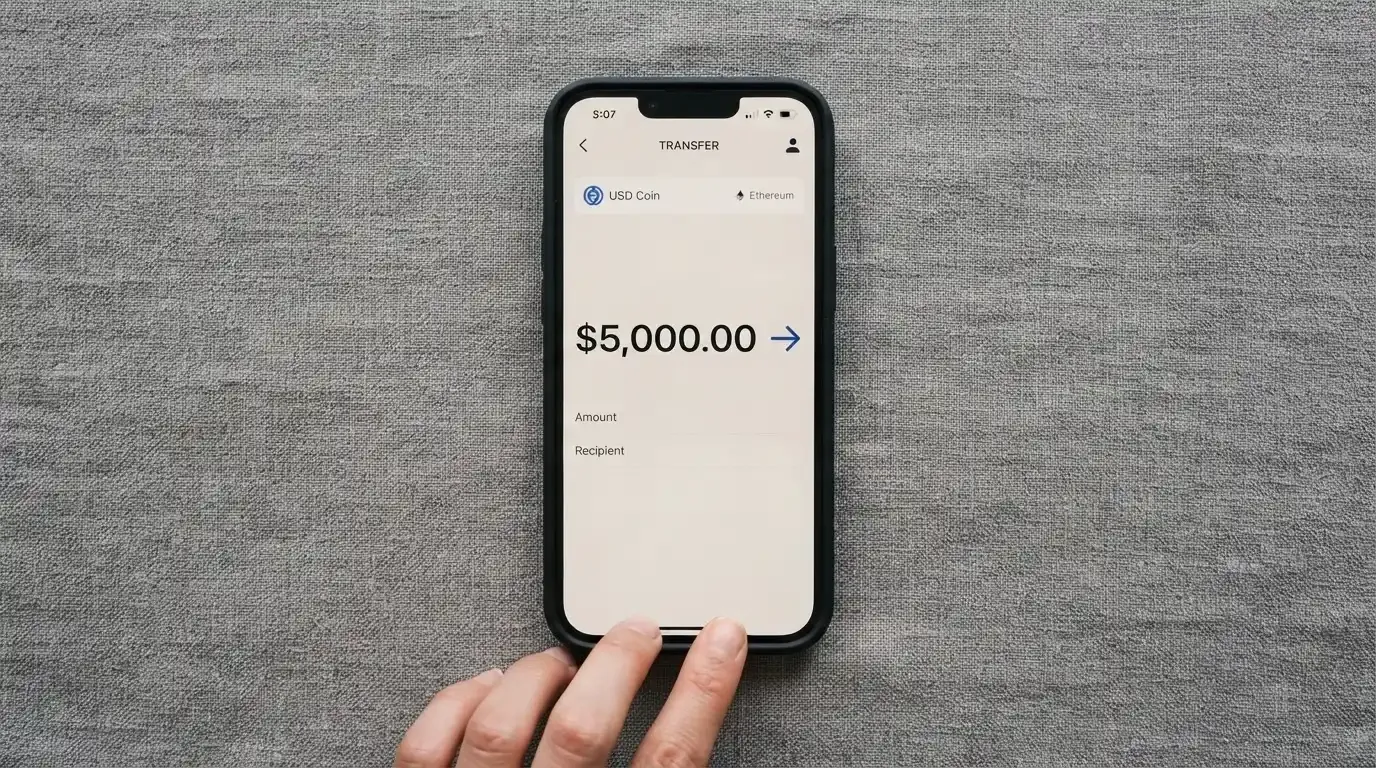
So the top-up question is not “how do I add money” but “what do I already hold, and am I willing to deal with it”. If your balance is USDC on Ethereum, you are not topping up an Xplace card directly — you are bridging or swapping first, onto a network the card supports. And blockchain transfers are irreversible: a deposit sent on a network the card does not support, or to an address belonging to another network, can simply be lost, with recovery dependent on support and carrying no guarantee.
Also relevant, if you are planning around small amounts: network fees are charged by the blockchain, not by Xplace. A Solana transfer costs something small; a mistake costs everything.
Not stated: any deposit or top-up fee, the minimum top-up, and whether there is any fiat route in at all. There is no fiat top-up option described. This is a crypto-to-card product, not a bridge between your bank account and a shop.
On the way back out, the marketing is confident — “withdraw the moment you decide”, “no lock-ups” — with one caveat that deserves more attention than it gets: withdrawals depend on protocol liquidity and may be temporarily limited during market stress. Withdrawal fees are not stated, and what happens to a balance left on the card when you close your account is not stated either; the terms only tell you to surrender or destroy the card.
Paying with it every day
Apple Pay and Google Pay are native, which is the single most practical thing on this page. If you are not going to hold the plastic, the virtual card plus your phone’s wallet is the whole experience, and it behaves like any other card in a contactless terminal.
Two ways to spend, and they behave differently.
Cash mode spends your stablecoin balance. Credit mode borrows against your holdings. In Cash mode you are spending what you have; in Credit mode you are spending what you have and owing it. Reviews note that credit limits and yield rates are hard to understand, which is exactly the sort of thing you should be able to see before you opt in rather than after.
Cashback, Credit mode only: Basic 0.5%, Silver 1%, Gold 1.5%, Platinum 2%, paid in USDC to your wallet at settlement. Cash-mode cashback is not stated. If you spend mostly from your balance rather than on credit, the reward most of the marketing leans on may not apply to you.
There is a blocked-merchants list, and it is longer than “no casinos”. The Blocked Merchants document says merchant category codes for explosives, small arms, wire transfers, pawn shops, gambling and lotteries, money transfer services, escort and massage services, political, labour and religious organisations are automatically declined. Named merchants blocked include eToro, Skrill, Neteller, Wish.com, MoonPay and Wise, plus a “dynamic list” that can change. So: if part of your life involves moving money through payment providers, expect the card to decline.
What is missing from the everyday-use picture is just as important. Two-factor authentication: not stated. In-app card freeze: not stated. Spending controls: not stated. Insurance: not stated. The app exists on the Apple App Store and Google Play, and the official page does not show its ratings — which, given what the review sites say, is probably not an accident.
On a disputed charge, you have 60 days from the posting date to report it. If a chargeback is resolved in your favour, it is credited back to your XPlace account.
What can go wrong
This is the section I would read first if I were you.
Cash is out. “Cash advances and balance transfers are not available under these Card Terms.” No ATM, no bank counter, no cash. In a country where cash still matters, or for any trip where the nearest ATM is three hours away, this is a hard stop. Unofficial sources also say Xplace does not currently publish confirmed ATM fees or ATM limits, which is moot given there is no ATM.
The FX story contradicts itself. The card terms table says 0% across all tiers. The page says 0% FX on Platinum. A third-party tier comparison puts Silver at 0.5% and Gold at 0.25%. Until you have made one small foreign purchase and checked the rate yourself, assume you do not know the number.
Reviews are mixed in a specific way. Trustpilot, read on 20 October 2026: 4.1 out of 5 from 56 reviews. Google Play 3.5 from 35 ratings. The complaints are not generic — they cluster: hidden fees reported in September 2026, at two stars; a plastic card offered in place of an advertised metal card with an extra charge for the card, which the company answered by saying metal launches in October; slow support across August and September 2026; incoming SEPA transfers rejected without a stated reason in October 2026; one user unable to add the card to Apple Wallet in September 2026. Earlier readings of the same Trustpilot page show 4.4 from ten reviews and 4.3 from nine on a second profile, and a Google Play figure of 3.6 from 40 reviews — the picture moves, which is itself the point. Some of this is complaint-volume noise; some of it is a young product finding its feet. A secondary guide also mentions withdrawal lockups and slow support; no Reddit threads were found.
The lending protocol underneath has a history. The unverified secondary guide says Credit Mode is collateral-backed lending with liquidation risk, that the Drift lending protocol was hacked affecting users, and that XPlace moved to Kamino in May. Treat the shape of that risk as real — collateral-backed credit against volatile assets can liquidate you — without taking the specifics as verified.
Withdrawal is not unconditional. “No lock-ups” is the marketing; protocol liquidity may temporarily limit withdrawals during market stress is the terms.
Third-party reporting on the company: an August 2026 item lists penalty fees in international card terms from October 2025 — late payment up to $40, returned payment $29 — and no regulatory actions against the company. Official news and official incident disclosures are not stated, which is not the same as saying there were none.
Identity and eligibility sit with someone else. Xplace does not publish a country list, so your eligibility is resolved at the door, by a verification process whose documents and refusal reasons are not stated. Nationality screening is routine in this industry and is applied to citizenship and country of birth, not only to where you live. There is nothing in this review that helps you get around that, and nothing should.
What you are trusting. Pontech Group L.L.C-FZ, Meydan Free Zone, Dubai, UAE, licence 2527237.01, markets the card; Third National issues it; Signify Holdings, Inc. manages the programme. Xplace’s non-custodial claim covers your crypto — “XPlace does not hold your funds”, “XPlace cannot freeze, seize, or move your funds” — but a prepaid-style Visa programme is a separate arrangement, and card programmes do close. In November 2022 Visa terminated its global agreements with FTX and the FTX US debit card was wound down by its issuer. That is the shape of the risk: the network and the issuer are not on your side of the table.
Support is promised “24/7 across every tier”, with [email protected] and a Dubai phone number in the card terms, plus Discord, X, Telegram, Instagram, YouTube and LinkedIn. The promise and the reviews do not match, and the reviews are the ones written by people who needed help.
What to take instead
If Xplace does not fit, the honest question is which of its two problems is yours. If it is no cash, a card with ATM access matters more than crypto integration. If it is country eligibility, most alternatives publish their jurisdiction list; Xplace does not. If it is cost, three of these alternatives charge nothing to hold.
| Alternative | Score | Card | Cost and fees | Who can get it |
|---|---|---|---|---|
| Xplace | 7.7 / 10 | Visa, virtual instant, physical Silver live | Basic free; Silver $99/y; Gold $249/y; Platinum $999/y; terms table shows 0% FX, cross-border and foreign transaction | No official country list; Visa accepted in 160+ countries |
| Sponge | 4.9 / 10 | Virtual card, described as a Visa credit card issued by Rain | Not stated — no cost, fee or reward figures published | Not stated; platform terms set a minimum age of 13 |
| Nexo | 6.3 / 10 | Virtual and physical; issuer DiPocket UAB; network not stated explicitly | No monthly, annual or inactivity fee. FX 0.2% weekdays in EEA/UK/CH, 2% rest of world; 0.7% and 2.5% at weekends | Residents and citizens of selected European countries, including the EEA and the UK |
| ether.fi | 6.7 / 10 | Visa, virtual and physical | First virtual card free for Core members, $10 in regional-pricing countries; FX 0.5% Core, 0.25% Luxe, none at Pinnacle and VIP | Named jurisdictions only, plus 31 US states; “if your jurisdiction is not listed, you will not be able to apply” |
Sponge is the thinnest option here and I would not lead with it. A virtual card, USDC collateral moved from the wallet with a card-funding command, and essentially no published detail on cost, fees, rewards or eligibility. At 4.9 it is behind Xplace on the same basic criteria.
Nexo is the one to consider if you want a fee-free everyday card in Europe. No monthly, annual or inactivity fee; FX of 0.2% on weekdays inside the EEA, UK and Switzerland; spends stablecoins, crypto and FiatX assets such as EURx, USDx and GBPx in Debit Mode. The catch is access: residents *and* citizens of selected European countries, with an explicit list not published. Cashback is Credit-mode only, needs more than $5,000 in digital assets, and pays in NEXO tokens or Bitcoin at rates from 0.5%/0.1% up to 2%/0.5%. The virtual card needs at least $50 in the account to activate; the physical card is free to ship but requires a balance above $5,000 and the Gold tier. One thing you should know that is not on the card page: Cointelegraph reported a 2025-era police raid on Nexo’s Sofia office over alleged sanctions and anti-money-laundering violations, with no official Nexo statement on it.
ether.fi is the most transparent on eligibility — it names its jurisdictions, including 31 US states, and tells you plainly that if yours is not listed you cannot apply. It also publishes tier FX: 0.5% Core, 0.25% Luxe, none at Pinnacle and VIP, and cashback in ETHFI at 3% on tiered monthly ladders. Its structural difference is that your collateral sits in your own Safe. Its quirks are a first virtual card that is free for most members but $10 in regional-pricing countries, and ATM withdrawals blocked in North Korea, Iran and Myanmar.
If your problem is a bank that will not open an account for you, the honest summary is that Xplace and ether.fi are the two on this list that are most likely to look past a conventional banking relationship — Xplace by publishing no country list at all, ether.fi by naming a very wide one. Neither publishes the daily limits you will meet in practice.
Who I would recommend it to
I would recommend Xplace to someone who has a Solana balance of USDC or USDT, pays for things online and in shops, does not need cash, uses Apple Pay, and wants a card number today rather than next week. For that person the free Basic tier with a $2,000 monthly limit is a low-cost way to find out whether the thing works for them, and the Cash-versus-Credit choice means you can start by spending only what you actually hold.
I would not recommend it — yet — to someone who needs cash, who is outside the 34 countries that are explicitly unavailable and cannot get a straight answer about the rest, who plans to hold a balance and withdraw it on a schedule, or who is the sort of person who needs the foreign-exchange number to be certain rather than probable. And if I were choosing a card for my own money, the reviews would make me look twice: 3.5 on Google Play and complaints about hidden fees and unreachable support are not what I want to hear about the company holding my balance.
The thing that would move this score up fastest is not a feature. It is publishing the country list, the daily limits, the conversion fee, and the FX number for each tier.
Frequently asked questions
What is Xplace card?
Xplace is a Visa payment card marketed by Pontech Group L.L.C-FZ, a Dubai free zone company, and issued by Third National under a programme managed by Signify Holdings. Your crypto stays in your own wallet and the card spends against it. It offers a free Basic tier plus Silver, Gold and Platinum, and works mainly on the Solana network. It is not a bank and Xplace says so itself.
Is Xplace a bank?
No, and Xplace does not claim to be. Its own site states it is not a bank, a licensed lender or an investment firm. The card is issued by a bank acting as issuer under a programme manager, while Xplace provides the app and the crypto side. That distinction matters if you are choosing between a card and an actual current account, because deposits and protections differ.
Who owns Xplace?
Xplace is operated by Pontech Group L.L.C-FZ, registered in the Meydan Free Zone in Dubai, UAE, under licence 2527237.01. Two other companies appear on the card: Third National, which issues the card, and Signify Holdings, Inc., which manages the programme. Three companies, and only the issuer decides who gets a card number.
Is the Xplace card available in my country?
Xplace does not publish a country list. Its pages say only that services are not available in all jurisdictions. Unofficial reporting from August 2026 lists 162 countries as available and 34 as explicitly unavailable, including Russia and India. If your country is on neither list, the only reliable test is whether you pass verification at sign-up, which takes minutes.
Does Xplace require KYC?
Yes — Xplace says “register and verify” takes minutes, and it describes itself as licensed and compliant. Which documents are needed, whether proof of address is required, the minimum age, and the reasons a check can be refused are all not stated on the public pages. Assume your identity will be screened, and that nationality as well as residence may count.
How do I top up the Xplace card?
You deposit on Solana: BTC as cbBTC, ETH as wETH, SOL, JitoSOL, USDC, USDT or xStocks. There is no fiat top-up option described and no minimum published. The network matters — a transfer sent on an unsupported network or to another network’s address can be lost, and blockchain transactions cannot be reversed.
Is the Xplace card free?
Yes at the Basic tier: no annual fee, a $2,000 monthly spending limit and 0.5% Credit-mode cashback. Silver costs $99 a year with a $20,000 limit, Gold $249 with $200,000, and Platinum $999 with $750,000. Borrowing carries no origination fee. Beyond that, the conversion fee and ATM fees are not stated, and cash advances are unavailable altogether.
Can I use the Xplace card in other countries?
Visa acceptance is 160+ countries, so in principle yes — but not every purchase is free of friction. The card terms convert foreign-currency transactions into US dollars and show 0% on foreign exchange, cross-border and foreign transaction fees, while an unofficial tier comparison puts Silver FX at 0.5%. Merchant categories such as gambling, wire transfers and money transfer services are blocked, and named names including eToro, Wise, MoonPay and Wish.com are declined outright.
Is the Xplace card safe?
Split the question. On the crypto side Xplace states it does not hold your funds and cannot freeze, seize or move them, and you keep control of your wallet. On the card side you rely on a Dubai marketing company, a programme manager and a bank issuer — and card programmes can close, as Visa’s termination of its FTX agreements in November 2022 showed. Reviews are mixed: 4.1 from 56 on Trustpilot, 3.5 on Google Play, with complaints about hidden fees and slow support. Verify before you fund it.
Is the Xplace card worth it?
Worth it if you hold Solana stablecoins, pay online or in shops, need no cash, and want a usable virtual card immediately — start on the free Basic tier. Not worth it if you need cash, sit in an unlisted country, need confirmed limits and fees, or want to borrow against your holdings without understanding liquidation risk. The tier costs rise steeply: $99, $249 and $999 a year for limits you may never use.
Credit and cashback card costs – cryptocardfacts
Content created by the «cryptocardfacts» team