
A quiet card from a regulated Italian exchange, with a lot left unsaid
 Available in US

The Young card is the payment card of Young, an Italian crypto exchange. That framing matters more than any feature on the card itself: whatever the card does, it does as part of an exchange account, with the exchange’s own balance, its own YNG token tier system and its own support desk behind it. So the sensible way to review this card is to review it as a spending front-end for a crypto trading account rather than as a standalone payment product.
On that basis I scored it 5.7 out of 10. It is not a weak product in the regulatory sense — the company behind it is authorised by Consob and Banca d’Italia under MiCAR, and the payment side runs through TPPay S.p.A., an e-money institution registered with the Bank of Italy. Those are real names with real supervisors, and they are the strongest single thing on this page.
The weakness is silence. Young’s public pages, as far as I could read them, do not publish a country list for the card, do not state the fees that matter most (currency conversion, ATM, exchange-rate markup), do not name the card issuer, do not say which coins or networks you can use to top the card up, and do not state daily or monthly spending limits. Issuance and the monthly fee are described as free, but only in third-party reporting, not on an official page. For a card whose entire purpose is spending, that is a lot of blanks where prices and rules should be.
Who does it suit? In my reading, an Italian-market user who already holds YNG, trades on the exchange, and wants the exchange-linked cashback and tier discounts rather than a wide range of countries or a big welcome bonus. The Clubs by YNG tiers discount card fees — Essential already gets a 5% fee discount and a 1% staking boost — and cashback is paid in YNG at 0.1% for Essential, 1.8% for Gold and 3.6% for Platinum, with Bronze and Silver not stated.
Who does it not suit? Anyone who needs to know, before applying, exactly what one swipe costs in euros. It does not suit people outside Italy who are guessing whether they are eligible at all. And it does not suit anyone planning around the card as their main everyday money, because everyday costs — conversion, ATM withdrawal, limits — are the parts the public pages leave open.
| Criterion | Mark | Why |
|---|---|---|
| Who can get it | 4 / 10 | The country list is not disclosed and there is no confirmation of any country restriction |
| Cost | 7 / 10 | Unofficial: issuance and the monthly fee are free; conversion and ATM fees are not disclosed |
| Top-up options | 4 / 10 | The coins and networks for topping up the card are not disclosed; the card is tied to the exchange account |
| Reliability and complaints | 8 / 10 | Young Platform S.p.A. is supervised by Consob and Banca d’Italia, payment partner TPPay S.p.A. (IMEL); card issuer not named; Trustpilot 4.4 out of 5 for the exchange |
| Everyday use | 5 / 10 | Unofficial: a Visa debit card tied to the exchange account; wallets, virtual and plastic card, ATM not disclosed |
| Total | 5.7 / 10 | A solid regulatory base, thin public disclosure |
The conditions described here are current as of October 28, 2026.
Will they give you the card?
The honest answer is that I cannot tell you from the public pages, because Young does not say.
There is no published list of eligible countries on the pages I could read, and no statement confirming whether the card is Italy-only, available across the European Economic Area, or opened case by case. That is not a small gap for you personally. It is the first thing to check, and the honest way to check it is to look at what the exchange itself says about who it serves and then ask the support centre directly — not to assume from the fact that the company is Italian. Italian supervision does not mean Italian-only, and a MiCAR authorisation in one member state can, in principle, support services across the EU, but what a specific card programme supports is a separate question from what a licence permits.
There is a second thing you should understand about who gets cards, whatever the answer turns out to be. Almost every regulated provider in this space runs customer due diligence: name, address, date of birth, nationality and identity documentation, a sanctions check, an assessment of whether you are a politically exposed person, and ongoing monitoring of transactions. That is not a Young-specific quirk; it is what anti-money-laundering and counter-terrorism-financing law requires of a regulated business. Where due diligence cannot be completed, EU rules require the institution to hold back from the transaction or relationship, and where necessary end the relationship — which is why accounts get closed or frozen pending documents rather than refused politely.
And note a distinction people often miss: nationality is recorded and screened separately from residence. Sanctions screening and issuer risk policy are often applied to citizenship and country of birth, not only to the country on your address. A person living in one country with citizenship of another is the case most likely to hit an unexpected wall, and the case where an answer from support is worth more than an answer from a comparison table. Age is the other basic: prepaid and debit cards are generally available to adults, and some issuers set higher limits rather than serving everyone.
On the Young card itself, the type is not confirmed on an official page. Third-party review describes a Visa debit card linked to the exchange trading account. I have treated that as unofficial throughout this page. What that description implies, if it is accurate, is that the card draws on the exchange account rather than on a bank account — the card is a way of spending what sits on the exchange.
Where I would send you next: the exchange’s own eligibility pages, and then a direct question to the support centre. If your situation is unusual — you are not resident in Italy, or your citizenship differs from where you live — that is exactly the case to raise before you upload documents, because the answer determines whether the upload is worth the effort.
How to get it
The mechanics are not documented publicly. Young’s pages, as far as I could read, do not lay out an application flow for the card, do not state what identity verification levels exist, do not state how a card is delivered, and do not describe activation.
That means the process I can honestly describe is the generic one: you register on the exchange, complete the identity checks the exchange requires, and then the card question has to be settled through the exchange’s support centre rather than through a published form. Anyone promising you a step-by-step application path for this specific card is filling the gap with their own guess.
Two practical points follow from the generic route. First, expect the card to sit on the exchange account rather than on a separate wallet or bank account — so the account itself has to be working, funded and in good standing before the card is worth anything. Second, because delivery is not stated, treat timing as unknown rather than optimistic.
Fees and what a payment really costs
This is where the picture gets thin, and it is the section I would read twice.
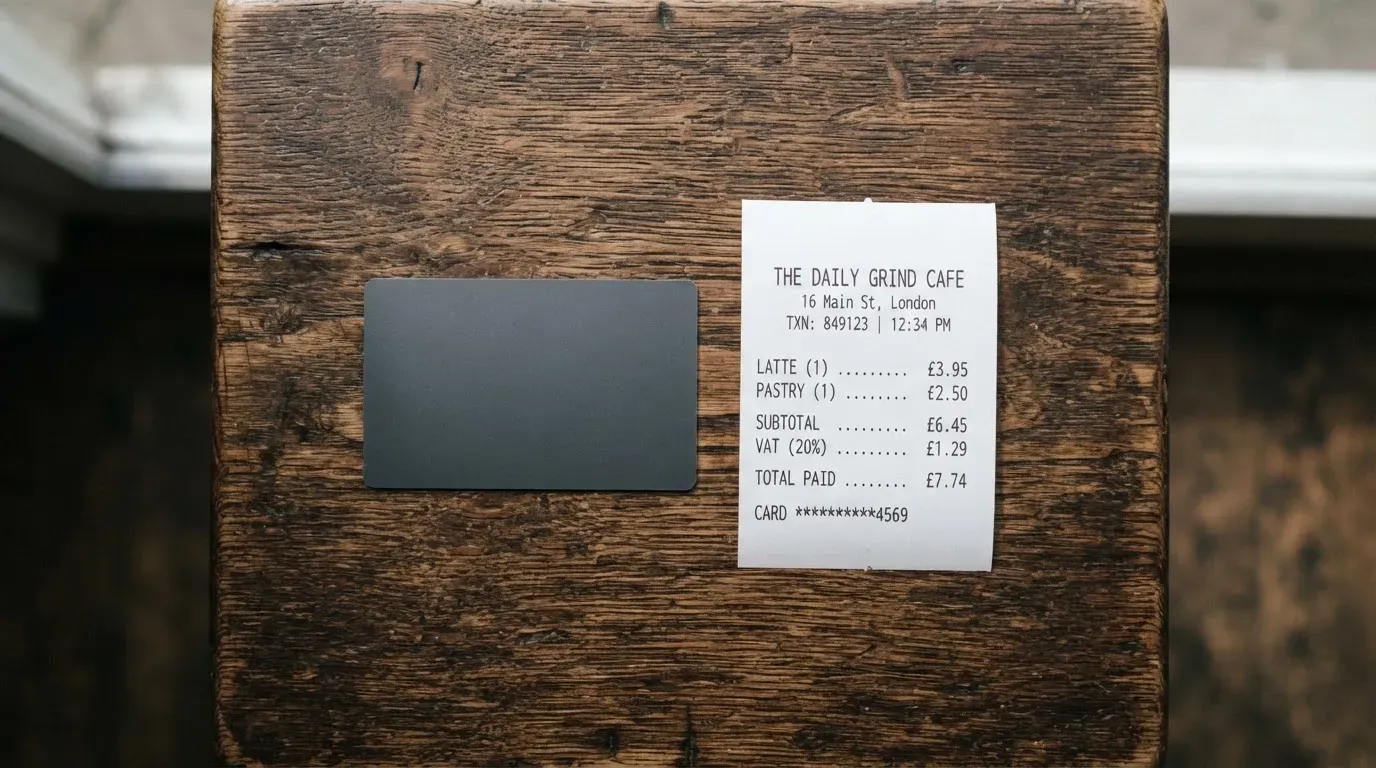
Unofficial reporting says issuance and the monthly fee are listed as free. Everything that actually moves when you spend — the conversion fee, the FX rate you get, ATM withdrawals — is not stated on the official pages. I have seen this pattern before in the category, and it is the reason I marked cost at 7 out of 10 rather than higher: free to open, and then undisclosed on use.
| Fee or limit | What Young states |
|---|---|
| Issuance | Unofficial: free (per Finanza Digitale, 2026) |
| Monthly fee | Unofficial: free (per Finanza Digitale, 2026) |
| Currency conversion | Not stated |
| FX rate / markup | Not stated |
| ATM withdrawal | Not stated |
| Daily spending limit | Not stated |
| Monthly spending limit | Not stated |
| Card currency | Not stated |
Two everyday payments, to make the shape of the problem concrete.
A coffee in Rome, paid on the card. If the card converts whatever balance it holds into euro at the moment of payment, the cost to you is the conversion fee plus whatever spread sits between the rate you receive and the mid-market rate — and Young states neither. A flat 1% conversion fee and a 2% FX markup feel very different from a 0.5% conversion and no markup; both are common in this category, and I have no basis here to tell you which one Young charges, so I am not going to guess.
The same coffee paid while you are abroad. Here the card’s own currency matters, and that is not stated either. A foreign purchase can involve a conversion by Young, a markup on the exchange rate, and, separately, the merchant’s own acquirer charges — the last one is not the card’s fault but it lands on your receipt. And a third-party review reported users complaining about unclear or undisclosed fees on instant bank transfer, which is not the card but is the same fee-transparency question.
The lever you do have is the tier system. Clubs by YNG discount card fees by tier: Essential at around 130 YNG gives a 5% fee discount and a 1% staking APY boost; Bronze at around 1,100 YNG gives a 30% discount and one free card deposit a month; Silver at around 3,600 YNG gives half-price fees, a 15% staking boost and a monthly Market Report; Gold at around 7,200 YNG gives a 75% discount and two free card deposits a month; Platinum at around 18,000 YNG gives a 90% discount, three free card deposits a month and a dedicated Account Manager. If you already hold YNG, those discounts are the clearest documented cost reduction Young offers. If you do not, buying a tier token to save a fee is its own decision with its own risk, and the fees you are saving are not documented anyway.
The practical advice is blunt: before you rely on this card for anything regular, get the conversion rate, the FX treatment and the ATM fee in writing from support. If the answer is vague, that vagueness is the cost.
How to top up
Not disclosed for the card. Young’s public pages do not state which coins or networks can be used to fund the card, do not set out a top-up procedure, and do not describe how to withdraw money from it. The one structural fact available is that the card is tied to the exchange account, so funding flows through that account rather than through a separate card wallet.
That matters more than it sounds, because in this category the top-up step is where the classic irreversible loss happens. Blockchain transfers cannot be reversed. If you send on a network the card provider does not support, or to an address belonging to a different network, the funds can be lost or need manual support recovery with no guarantee. So “which network do I send on” is not a technicality to check afterwards — it is the question to answer before you send anything.
A few category facts worth holding while you wait for Young’s answer. Network fees for a deposit are charged by the blockchain, not by the card provider. Stablecoins are the usual deposit asset: Tether’s USDT and Circle’s USDC are dollar-pegged, and the BIS in July 2025 put about 90% of stablecoin market capitalisation in those two. They are not the same thing, though. Circle lists USDC as natively supported on 38 networks as of 16 September 2026, including Ethereum, Solana, Base, Polygon PoS, Avalanche, Arbitrum and Stellar. USDT has been issued on Ethereum, Tron, Solana, Polygon, Avalanche and others. Circle stopped supporting USDC on Tron in February 2024, so “USDC over TRC20” is not a native option. On Ethereum, ERC-20 transfers need ETH for gas, so a wallet holding USDT but no ETH cannot send. Tron prices fees through bandwidth and energy, often burning TRX. And stablecoins can lose their peg: TerraUSD collapsed in May 2022, and USDC briefly lost its peg in March 2023 during the US banking crisis. A “stablecoin” is a name, not a guarantee.
Paying with it every day
Two things are documented and one big thing is not.
Documented: Young Platform has an app on iOS and Android, and cashback is paid in YNG tokens. The cashback rate follows your Club tier — 0.1% for Essential, 1.8% for Gold and 3.6% for Platinum; Bronze and Silver are not stated. I did not read the store ratings, so I am not going to characterise how users rate the app.
Not disclosed: whether there are wallets, whether there is a virtual card alongside a physical one, and what ATM access looks like. Those three answers determine how the card behaves in a week of ordinary life — whether you can try it before committing, whether you can pay with a phone, whether you can get cash when a shop will not take the card.
Cashback in a platform token deserves one more thought than it usually gets. A 0.1% return paid in YNG is not the same as 0.1% back in euros: the value you receive depends on what the token does next, and the token is issued by the same company that issues the card. That is not a reason to refuse the card. It is a reason to know that part of the reward is exposure to a platform asset.
Where this fits in the wider category, so you can judge the mechanics. A payment card number starts with an issuer identification number of 6 or 8 digits that identifies the card-issuing institution; the rest is an account identifier and a check digit. Merchants can look that up and see which institution and country issued the card, and may apply extra scrutiny when the issuer country differs from the billing address. That is why a card issued in one country can look foreign in a shop in another. Many crypto cards behave like prepaid cards: crypto is converted and loaded as fiat balance, and the card can only spend what is loaded. A card payment involves several parties — the network routes messages and sets rules, the issuer holds the programme, and the crypto brand is often only a programme manager or front end. Visa and Mastercard do not issue crypto cards themselves; they license issuers and can suspend a programme. In November 2022 Visa said it had terminated its global agreements with FTX, and the FTX US debit card programme was wound down by its issuer.
Day-to-day friction worth knowing about, since it applies to any card in this space: 3-D Secure adds an identity check to online payments, with a one-time code or a biometric. Address verification compares the numeric parts of your billing address with issuer records, and is mainly offered in the US, Canada and the UK — so it is generally unavailable for a foreign-issued card and can cause declines. Some merchants decline prepaid or foreign cards outright because the lookup reveals the type and issuer country. And a declined authorisation can leave a hold on your funds for several days, typically up to seven.
What can go wrong
Let me separate what I could verify from what I could not.
On the company side, the position is the strongest part of this review. Young Platform S.p.A. is authorised by Consob and Banca d’Italia as a crypto-asset service provider under MiCAR — the EU’s crypto-asset regulation, which ESMA says took legal effect in June 2023, with the asset-referenced token and e-money token rules applying from 30 June 2024 and the remaining provisions, including crypto-asset service provider rules, from 30 December 2024. Account and payment services are linked to TPPay S.p.A., an Electronic Money Institution registered with the Bank of Italy, and Young Platform is a registered Payment Services Agent of TPPay. Under MiCAR’s transitional period, a provider operating under national law can continue only until 1 July 2026 or until it receives or is refused a MiCAR authorisation, whichever comes first. ESMA keeps an interim register of authorised CASPs, white papers and non-compliant entities, and a CASP authorised in one member state can serve the EU. Two structural notes: a card is a payment service regulated separately from the crypto side, so a crypto card often rests on two licences; and e-money funds must be safeguarded — segregated or insured — but they are not bank deposits and may not sit under a deposit guarantee scheme.
The gap: the card issuer is not named. That is a real hole. When you hold a card, you are holding a claim against an issuing institution under rules set by that institution, and here I cannot tell you which institution that is.
On user experience, the reviews are about the exchange, not the card — and that distinction has to stay visible. Trustpilot shows 4.4 out of 5 for Young Platform’s exchange from 980 reviews, read on 2026-10-21. No review I saw discusses card payments. The reported themes are unclear or undisclosed fees on instant bank transfer, unhelpful support, a site bug that caused a loss of about €100 which the company acknowledged and offered compensation for, and stablecoins no longer being available. None of those is a card review. What they do tell you is that fee clarity and support responsiveness are where this company’s users report friction.
On incidents: I found no official incidents recorded against the card.
On security controls: not stated. That matters, because the ordinary safeguards in this category — app-based two-factor authentication, instant card freeze, spending limits, 3-D Secure confirmation, tokenised mobile wallets — are exactly the features you would want to see confirmed rather than assumed.
On news: not officially stated. Unofficial reporting says the card became available from 30 November 2025, alongside a new payment account.
Two category risks to hold alongside all of this. Programme closures are real: Visa terminated its global agreements with FTX on 13 November 2022 and the FTX US debit card was wound down by its issuer; WaveCrest, a Visa issuer that supplied crypto card brands, was suspended by Visa in Europe in 2018, closing all WaveCrest-issued Visa programmes. A closure typically means a notice period, then spending and loading stop, then you are asked to withdraw what is left. Custodial platforms have a genuine failure record — Mt. Gox (about US$350 million reported stolen, 2011–2014), Coincheck (about US$400 million, 2018), Ronin Network (US$625 million, 2022) — so holding funds with a custodian carries counterparty and hack risk. And a chargeback is a refund ordered by your issuer, with reason codes such as fraud, duplicate billing or goods not received; prepaid-card coverage varies and should not be assumed. If something goes wrong, the Young Platform support centre is where it starts.
What to take instead
Three comparisons, all chosen because their disclosures are fuller.
MSX — 6.4 out of 10. Country eligibility is not stated on an official page I could read, and the card type, fees, funding route and rewards are not stated either. I am including it because the score is higher and because the gaps are of a different kind: not “free but unpriced”, simply undocumented. If you are comparing, that difference matters.
Bybit Card — 6.0 out of 10, and by far the most fully documented of the three. Eligibility is spelled out by region: Argentina, AIFC (Kazakhstan), Georgia, Kazakhstan, Australia, Mexico, Brazil, Peru and Asia Pacific, and the cards page states plainly that the product is not meant for European Economic Area customers and that participation by EEA customers is strictly prohibited. The application asks for your country of residence; if it is unsupported, Bybit says it will register your interest. Card currencies are listed per region (USD, ARS, MXN, BRL, PEN or USD), validity runs three to six years by region, and both virtual and physical cards exist, with physical cards not available in Peru. Costs: no virtual card issuance fee in any region until further notice, physical issuance in some regions and none in others, with a stated rule that VIPs holding a physical card in several regions pay no issuance or replacement fee. Fees are the most detailed in this comparison: a crypto conversion fee of 0.9% over the One-Click Sell rate in most regions and 0.5% in Argentina, an FX fee of 2% on top of the network rate in several regions and 7% in Argentina, 1.5% in Brazil, 1% in Peru. Funding works by drawing on the Funding Account and Flexible Easy Earn balance, fiat first, with a stated default coin priority you can reorder. Rewards are tiered and dated: from 2026-10-05 only crypto-funded transactions earn, from 2.00% at Base up to 10% at Infinite, with monthly cashback caps from 5 USD to 600 USD.
The catch is obvious and worth saying: Bybit’s card is explicitly closed to European Economic Area customers, so if you are reading this from inside the EEA, it is not an option at all.
Coinbase Card — 6.4 out of 10. Available in all US states except Hawaii, following US PATRIOT Act identity rules, and in no other countries. A Visa prepaid debit card, virtual or physical, spending cash or crypto, with all crypto converted to US dollars for purchases and ATM withdrawals. Costs are stated plainly: zero spending fees and no annual fees, with all fees disclosed in the Cardholder Agreement and User Agreement. No Coinbase transaction fees, but a spread applies when Coinbase buys, sells or trades crypto, including at payment. Funding by linking a bank account or depositing part of a paycheck, at zero fees. Optional crypto rewards on every purchase for US card users, at a variable rate shown in the app. So: transparent about price, and geographically narrow.
| Option | Score | Where it fits | Where it falls down |
|---|---|---|---|
| Young | 5.7 / 10 | Italian-market exchange users holding YNG who want tier discounts and YNG cashback | Country list, conversion and FX fees, top-up networks, limits and issuer all undisclosed |
| MSX | 6.4 / 10 | — | Nearly everything on the public pages is unstated |
| Bybit Card | 6.0 / 10 | Anyone outside the EEA in a listed region; the most fully priced option here | Explicitly not for EEA customers; cashback only on crypto-funded transactions |
| Coinbase Card | 6.4 / 10 | US residents outside Hawaii | US only; conversion spread on crypto spend |
Who I would recommend it to
I would recommend this card to you if all four of these are true. You already use the Young exchange and hold YNG, so the tier discounts land on spending you were going to do anyway. You are in the market the card is built for, so eligibility is not a gamble. You are comfortable having your balance on a custodial platform, with the key-material risk that implies — a seed phrase, typically 12 to 24 words, is an unencrypted form of the private key, and anyone who obtains it can restore the wallet and spend the funds, with no built-in recovery because transfers are irreversible. And you treat it as a secondary spending card, not your main money.
I would not recommend it if your priority is knowing what things cost, if you are outside the market and hoping the licence stretches to you, or if you plan to run the card through a non-standard month of foreign transactions and ATM withdrawals on undisclosed terms.
The summary: solid regulated company, thin product disclosure. Take it if you are already inside that world; check the four numbers — conversion, FX, ATM, limits — in writing before you rely on it.
Frequently asked questions
What is the Young card?
It is the payment card attached to Young, an Italian crypto exchange. Third-party review describes it as a Visa debit card linked to the exchange trading account — unofficial, not confirmed by Young’s own pages. If that description is right, the card spends the balance on your exchange account rather than a separate bank account, and it is best understood as a spending front-end for a crypto trading account.
How does the Young card work?
Unofficially, it works like a prepaid card: whatever is on the exchange account gets converted and spent. Young’s public pages do not document the mechanics, do not say whether a virtual card exists, and do not describe ATM access. The company is authorised as a crypto-asset service provider under MiCAR, and payment and account services run through TPPay S.p.A., an e-money institution registered with the Bank of Italy.
Is Young a bank?
No. Young Platform S.p.A. is authorised by Consob and Banca d’Italia as a crypto-asset service provider, and the payment side is linked to TPPay S.p.A., an Electronic Money Institution. An e-money institution can issue e-money, payment cards and wallets but cannot lend. Safeguarded e-money funds are not bank deposits and may not be covered by a deposit guarantee scheme. The card issuer itself is not named.
Who owns Young?
Young Platform S.p.A., the Italian company behind the exchange, with account and payment services linked to TPPay S.p.A. as its payment services agent. On Trustpilot the exchange scores 4.4 out of 5 from 980 reviews, read 2026-10-21. Those reviews are about the exchange, not the card — no review I saw discusses card payments.
Is the Young card available in my country?
Young’s public pages do not disclose a country list, and there is no confirmation of any country restriction. That makes this the first question to ask their support centre, and especially worth asking if you live outside Italy or your citizenship differs from where you live — nationality is screened separately from residence.
How do I get the Young card?
Through the exchange, most likely — but Young does not publish an application flow, identity verification levels, delivery arrangements or activation steps for the card. Expect to complete the exchange’s own checks first, then have the card question settled by their support centre rather than a published form.
Does the Young card require KYC?
Almost certainly yes, as any regulated provider must: name, address, date of birth, nationality, identity documents, a sanctions check and a politically-exposed-person assessment, with ongoing monitoring. Young does not publish card-specific verification levels. Where due diligence cannot be completed, EU rules require the provider to hold back or end the relationship, which is why accounts get frozen pending documents.
How much does the Young card cost?
Unofficial reporting lists issuance and the monthly fee as free. Everything that moves when you spend is not stated: the currency conversion fee, the FX rate or markup, and ATM withdrawal fees. Daily and monthly spending limits are also not stated. Your documented cost reducer is the tier system, where Club tiers discount card fees from 5% at Essential to 90% at Platinum.
How do I top up the Young card?
Young does not state which coins or networks can be used, or set out a procedure. Treat this as the irreversible-loss question: blockchain transfers cannot be reversed, and sending on an unsupported network can lose the funds. Network fees are paid to the blockchain, not to the card provider, and a deposit sent from a wallet with no ETH on Ethereum cannot move at all.
Is the Young card safe?
Regulated, but lightly disclosed. Young Platform is authorised by Consob and Banca d’Italia, and payment services run through a Bank of Italy-registered e-money institution. Against that: the card issuer is not named, security controls are not stated, and the exchange has a mixed user record with complaints about unclear fees, support and a site bug. No official incidents were found against the card, and no review visible covers card payments.
Exchange card fees – cryptocardfacts
Content created by the «cryptocardfacts» team