
A crypto card built on USDC in a non-custodial Base wallet, launched in Nigeria and still filling in its own terms
 Available in US
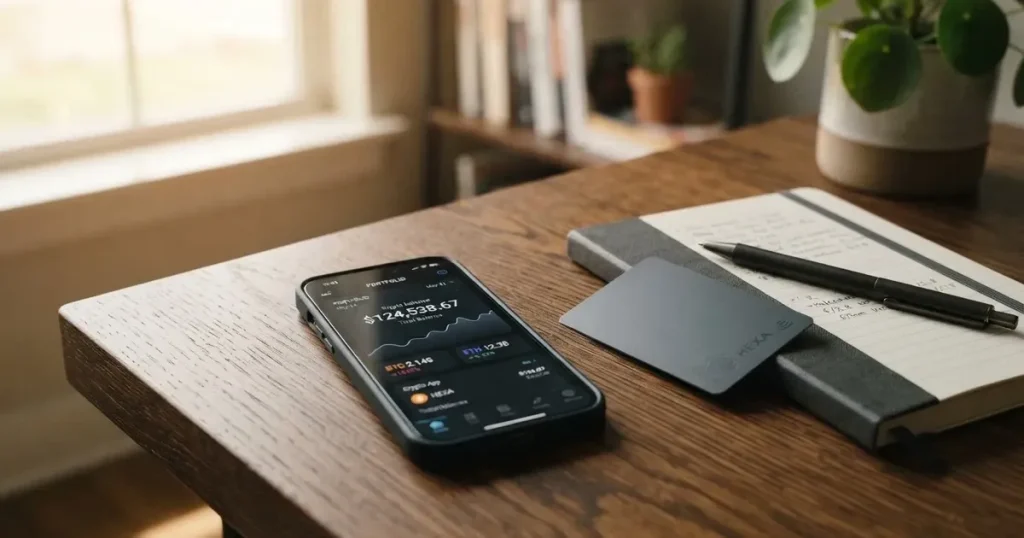
Zerocard is a crypto payment card that spends USDC from a non-custodial wallet on the Base network. That is the short version, and it is also the most useful thing to know before reading further, because everything else about this card follows from that design: you hold the key, the card converts at the point of sale, and the issuer behind it is not named on the pages I could read. The card says it “works in 150+ countries”. It launched in Nigeria as a beta in 2025. And a fair amount of what a buyer would want to know — the exact fees, the ATM charge, the limits, the currency, the delivery time — is simply not published.
I scored it 6.3 out of 10, and I want to be precise about what that number means. It is not a verdict on whether the technology works. It is a verdict on how much of a normal card’s promise Zerocard currently makes good in public, weighed against how much it leaves open. For someone already holding stablecoins who wants a card that spends from their own wallet without handing over their seed phrase, the fit is genuinely good. For someone who needs a card they can rely on next Tuesday in a shop abroad, with a stated fee and a stated limit, it is thin.
The conditions described below are current as of October 28, 2026.
Zerocard at a glance: the score and who it suits
Here is the breakdown, criterion by criterion, with the reasons in my own words. The marks are the ones I arrived at; the total at the bottom is the number that goes on the front of the review, and I have not adjusted it.
| Criterion | Mark | Why |
|---|---|---|
| Who can get it | 7 / 10 | The card says it “works in 150+ countries”, and the Terms do name the jurisdictions it refuses. What is missing is the other half: the list of countries where you can actually sign up is not published, and whether eligibility runs on citizenship or on residence is not said. |
| Cost | 7 / 10 | The Terms promise a “zero-fee experience” for core services, and optional extras such as card issuance, express processing, currency conversion and cross-border transactions may cost money. No amounts are published anywhere I could find. |
| Top-up options | 6 / 10 | Officially: USDC or USDT on Base or Ethereum. Unofficially, per TechCabal in July 2025, the app takes only USDC on Base and each user gets a non-custodial Base wallet. Two coins and two networks officially is not bad; the gap between the two descriptions is. |
| Reliability and complaints | 5 / 10 | The provider is Notzero Technologies Limited, the issuer is not named, it launched in beta in Nigeria, and the Terms allow an account to be suspended at the provider’s discretion without prior notice. I found no complaint pages — but I also found no independent track record, which is not the same as a clean one. |
| Everyday use | 6 / 10 | A virtual or physical debit card after KYC, which is a normal starting point. Unofficially there is an ATM fee, separate from a ₦5 per-transaction charge. Which wallets are supported is not stated. |
| Total | 6.3 / 10 |
Who this suits: you already hold USDC, you are comfortable choosing a network before you press send, and you would rather keep custody of your own keys than hand a platform your balance. Who it does not suit: anyone who needs certainty about fees, limits, delivery times, or what happens to the money when the provider decides to restrict an account.
Will they give you the card?
The card’s own answer is broad and its exclusions are specific. The site says Zerocard “works in 150+ countries”, which tells you where it can be *spent*. The Terms then list restricted jurisdictions: Belarus, Burundi, Central African Republic, Cuba, Iran, Libya, Myanmar (Burma), North Korea, Russia, Somalia, South Sudan, Sudan, Syrian Arab Republic, Ukraine, Venezuela, Zimbabwe — with others added by the third-party verification provider.
Here is the gap I would want you to notice. There is no published list of eligible countries. “Works in 150+ countries” is a statement about acceptance, not about onboarding. A card can be usable in a country whose residents cannot open an account, and several of the currencies where you would most want a crypto card are not ones you can simply assume are served.
Nor does the card say whether eligibility follows citizenship or residence. That is not a technicality. Screening in this industry routinely runs on nationality and country of birth as well as address, so a resident of a supported country holding a passport from a restricted one can be treated differently from a citizen of the supported country living abroad. If your situation involves two countries, that question is worth asking support in writing before you upload a passport.
The third-party verification provider can add jurisdictions of its own, which means the restricted list you see may not be the full list at the moment you apply.
How to get it
Identity verification comes first, and it is a hard gate rather than a formality. KYC is required before you can withdraw funds and before you can request a card. The card accepts a valid International Passport, a Driver’s License or a National Identity Card, plus a residential address and proof of address — a utility bill not older than three months is the example given. The minimum age is 18.
The sequence is short and entirely conventional: register, pass KYC, then request either a virtual or a physical Zerocard debit card. Both are debit cards, and both are requested after verification, so the choice is about form factor rather than about a different product.
What is not stated, and it is worth asking about before you commit:
- The card network. Zerocard’s public pages do not say whether the card runs on Visa or Mastercard. This matters more than it sounds; network rules, 3-D Secure behaviour and acceptance at foreign merchants all follow from it.
- The card currency. No card currency is named. How your balance is denominated, and who absorbs the exchange rate between that and the currency of the shop, is not described.
- Delivery. Nothing is said about how a physical card is delivered, how long it takes, or what it costs beyond the Terms’ reference to optional express processing.
- Processing time. Not stated. There are no published tiers and no stated turnaround for KYC or card issuance.
- What happens if you fail. The KYC policy is blunt: failing to provide the requested information blocks transactions for new users, or suspends the account. Sanctioned persons cannot open accounts at all.
The policy defines only risk categories — High, Medium, Low — with no published limits attached to them. That is a structure, not a number.
Fees: what it really costs
The honest summary is that Zerocard promises a “zero-fee experience” for its core services and then lists the things that may not be free, without putting a number on any of them. I have compiled the fee picture as far as the card’s own pages allow.

| Fee or limit | What is stated |
|---|---|
| Issuance | Card issuance may be an optional-service fee; no amount published |
| Monthly fee | Not stated; core services described as “zero-fee experience” |
| Express processing | May be an optional-service fee; no amount published |
| Currency conversion | Terms list currency conversions as a possible optional-service fee; no rates stated |
| Cross-border transactions | Terms list cross-border transactions as a possible optional-service fee; no rates stated |
| ATM | Not stated officially. Unofficial (TechCabal, July 2025): ATM fees exist and are described separately from a ₦5 per-transaction charge; the amount was not visible in the available summary |
| Daily limit | Not stated |
| Monthly limit | Not stated |
| Card tiers | None published |
So the thing to hold in your head is this: nobody at Zerocard has published a number you could compute a monthly budget from. If you want to know what you will pay for a coffee abroad, you will have to ask, and I would ask in writing so the answer exists somewhere you can point to.
Let me walk through three ordinary payments and what I can say about each.
A coffee in a shop that takes cards. The transaction clears. Whether your crypto is converted once at a good rate or twice — once by the provider and again by the merchant’s acquirer — is exactly what the unpublished conversion and cross-border fees would cover. Nobody has told you which side of that you are on.
A purchase online in a foreign currency. This is where the conversion and cross-border fee language stops being decorative. You are spending a stablecoin denominated against the dollar, in a shop billing you in something else, on a card whose currency is not named. There are potentially two conversion steps and the Terms say both may carry a fee.
A cash withdrawal. Here I have to mark the boundary between what the card says and what someone else says. Officially: nothing. Unofficially, per TechCabal in July 2025, ATM fees exist and are described separately from a ₦5 per-transaction charge, with the amount not visible in the summary I could see. Treat the ATM as a cost you have not yet been told the price of.
One category-level point that is not Zerocard’s fault but is yours: on-chain network fees for a deposit are charged by the blockchain, not by the card. Whatever you send to top up is reduced by the network’s own fee before the provider sees it.
How to top it up
The official method is narrow and clear. You fund the wallet with USDC or USDT on Base or Ethereum, and your crypto is automatically converted to local fiat at the point of sale. That “per earlier check” wording matters, because there is a second description.
Unofficial, from TechCabal in July 2025: the app supports only USDC on Base, not USDT, and each user gets a non-custodial wallet on Base. If that is the live behaviour, then the official line is wider than reality in two ways — one fewer token and one fewer network — and the network you actually need becomes decisive.
Top-up methods other than that — bank transfer, card-to-card, cash, third-party on-ramps — are not stated. Neither are any fees for funding, and neither is any minimum. So the honest answer to “how do I top it up” is: send the right stablecoin on the right network to your Base address, and confirm the network twice before you press send.
Which is where the general risk applies. Blockchain transfers are irreversible. A deposit sent on a network the provider does not support, or to an address belonging to a different network, can be lost, or need manual support recovery with no guarantee. Two specific traps catch people out here: on Ethereum, fees are paid in ETH, so a wallet holding USDT with no ETH cannot send anything at all; and Circle stopped supporting USDC on Tron in February 2024, so “USDC over TRC20” is not the native option people still find suggested online.
On withdrawals: mandatory KYC must be completed before you can withdraw funds. Fees for withdrawal and any balance due at closure are not addressed.
Paying with it every day
At its core this is a prepaid model, which has a practical virtue: the balance you can spend is what you loaded, so the card cannot overdraw into a debt. Crypto is converted and loaded as fiat balance, and the card spends that. For someone who has had a traditional credit line extended and would rather not, that structural property is the point.
The app exists — the site carries a “Download app” button — but no store URL and no ratings were found. Which wallets are supported is not stated. If you are coming from another self-custody setup, that is a question to ask before you move any balance.
On everyday economics: a founder post claims “zero fees” and free transactions, and no cashback is stated anywhere. The “zero-fee” claim and the Terms’ optional-service fee list sit in mild tension, and I would plan around the Terms rather than the post.
One detail worth knowing because it causes failures in other cards and may here: some merchants decline prepaid or foreign-issued cards, because a BIN lookup reveals the card type and the issuer’s country. Address Verification Service, which compares the numeric parts of your billing address with the issuer’s records, is mainly offered in the US, Canada and the UK and is generally unavailable for foreign-issued cards — a common source of declines.
When something goes wrong, the stated process is to contact Customer Support first with the transaction reference and the date. There is no timeline, no refund policy, and no chargeback procedure described.
What can go wrong
Suspension without notice. The Terms say an account may be suspended or restricted “at its sole discretion and without prior notice”. That is the single most important line in the document for anyone considering a balance. Two-factor authentication and a card-freeze control are not stated, so I cannot tell you what self-defence exists inside the app.
You cannot see the issuer. The provider is Notzero Technologies Limited. The Terms name only “Zerocard”; registration is not stated and the issuer is not named. A founder blog refers to a “card infra partner” in Nigeria. So there is at least one more regulated entity between you and your money, and the card does not tell you who it is. The general pattern here is worth knowing: the network (Visa or Mastercard) does not issue crypto cards to consumers — it licenses issuers and can suspend a programme. Visa terminated its global agreements with FTX on 13 November 2022 and the FTX US debit card was wound down by its issuer. WaveCrest, a Visa issuer that supplied several crypto card brands, was suspended by Visa in Europe in 2018, closing all WaveCrest-issued Visa programmes. Card programmes do end, and when they do the sequence is usually the same: a notice period, then spending and loading stop, then you are asked to withdraw what is left. (One 2026 closure reported by a secondary source had new loads ending 8 July 2026 and spending stopping 8 August 2026 — a single unconfirmed source, but the shape of it is what to watch for.)
Hold-ups on declined payments. A declined authorisation can leave a hold on your funds that stays for several days, typically up to seven.
A stablecoin is not a guarantee. Stablecoins aim to hold a stable value, and despite the name they are not necessarily stable. TerraUSD collapsed in May 2022; USDC temporarily lost its peg in March 2023 during the US banking crisis. Tether also says it disables tokens in wallets on the OFAC sanctions list and has frozen funds tied to illicit activity, so stablecoins are not censorship-proof. The concentration is worth knowing too: about 90% of stablecoin market capitalisation sits in USDT and USDC, so a problem at either would be a problem for you.
Nothing has gone publicly wrong. I found no official incidents, and no Trustpilot or Reddit pages for this card — the search results were about an unrelated US card called “Zero”. Read that absence carefully. A company that launched in beta in Nigeria in 2025 simply may not have generated a searchable complaint corpus yet. It is not evidence of a clean record.
Taxes are yours. I am not going to advise you here, but you should know that in the US the IRS treats digital assets as property, so exchanging them for goods or services generally produces a taxable gain or loss, measured in local fiat at the fair market value on the date of the transaction. If your balance is in USDC, every card payment may be a separate disposal. Ask a professional in your own jurisdiction.
What to take instead
The alternative worth naming is not one card but a shape of card. Here is how Zerocard compares with three that publish considerably more.
| Zerocard | TokenPocket | MetaMask | KAST | |
|---|---|---|---|---|
| Score | 6.3 | 5.8 | 7.1 | 6.1 |
| Networks / tokens | USDC or USDT on Base or Ethereum | Crypto deposits from the TokenPocket wallet; Arbitrum | Linea, Base, Monad, Solana; mUSD, wETH, EURe, GBPe, USDC, USDT | USDT, USDC, PYUSD, RLUSD on Ethereum, Solana, Polygon, Arbitrum, TRON |
| Cost basics | Core “zero-fee”; optional fees unnamed | 1% on crypto deposits; otherwise “no additional fees” | Virtual free; Metal $199/year | $0 / $1,000 / $10,000 per year by tier |
| FX fee | Not stated | Not stated | None; Mastercard rate | 0.5%–1.75% on non-USD |
| Cashback | Not stated | Deposit fee refunded via rewards | 1% (Virtual); 3% capped then 1% (Metal) | 1.5% / 2% / 3% by tier, monthly caps |
| Card | Virtual or physical; network not stated | Mastercard/Visa debit, virtual | Mastercard, virtual first, Metal pre-order | Visa, virtual and physical, up to 10 |
MetaMask (7.1) is the one to look at first if you want published numbers. Sign-up is open in 45 listed countries and territories, with other regions on a waitlist, and proof of residency required; US and UK sign-ups are temporarily closed per its FAQ. The virtual card is free with no annual or maintenance fee, Metal is $199/year, the stated fee is “minimal” with a fee table linked, and there is no foreign transaction fee. Cashback is paid in mUSD: 1% on Virtual, and on Metal a headline 3% with a footnote limiting 3% to the first $10,000 spent and 1% after, plus a dining-app bonus of 5X or 7X. That is a far more legible proposition than Zerocard’s — though the “minimal fee” amount still is not on the page I read, and one card per user.
KAST (6.1) is the most transparent about eligibility, which is instructive: it shows your country at KYC and tells you plainly that if your country is not listed, KAST is not available there. It goes further than most on citizenship — you may be ineligible if you live in a supported country but hold an ID from a restricted region, dual citizens with an ID from a supported country may pass, only your own ID is accepted, and a VPN does not bypass it. You can create an account in an unsupported country but KYC stays locked. Fees are the clearest in this group: stablecoin top-up 0%, card spend in USD 0%, non-USD FX 0.5%–1.75% depending on your residence country and the transaction country, declined transaction $0.50, non-USD transactions under $25 cost $0.10, inactivity $1/month after 12 months. Standard is $0 a year, Premium $1,000, Private $10,000, and Standard physical cards carry a 40 USD delivery fee. Cashback is 1.5% / 2% / 3% on the first 2,000 / 10,000 / 40,000 USD per month.
TokenPocket (5.8) scores lowest, and the reason is structural: it charges 1% on depositing cryptocurrency into the card. The card says this is later refunded through rewards and reduced transaction fees, and that apart from that it charges nothing additional, but you are fronting a percentage on every top-up.
If you are outside the regions any of these serve, my honest read is that none of them is obviously better for you, and the gap is in the same place for all of them: acceptance is global, onboarding is not, and the restricted list is easier to find than the eligible one.
Who I would recommend it to
I would recommend Zerocard to someone who has already made the harder decisions — who holds USDC, which chain, who bears the key risk — and wants a spendable card without surrendering custody. The non-custodial wallet is the genuinely attractive part, and it is the design’s main virtue: control of the crypto belongs to whoever holds the private key, so with a self-custody-linked card the funds stay in your own wallet until the moment of payment, while the burden of key loss, phishing, and malware that swaps a copied address becomes yours to manage. That trade is the whole proposition.
I would not recommend it yet to someone whose only requirement is a working card. The gaps are not cosmetic: no fee schedule, no limits, no named issuer, no stated card currency or network, no delivery time, and a Terms clause permitting suspension without prior notice. In a card whose own terms list currency conversion and cross-border transactions as chargeable extras, those unknowns are the cost.
What I would do: keep your balance modest, confirm with support in writing which token and network the app actually accepts, ask what the ATM fee and the conversion fee are, and ask who the issuer is. Then treat the card as what it is — an early product from a young company that launched in Nigeria in 2025 and is still filling in its own terms — rather than as a replacement for a bank card you depend on.
Frequently asked questions
What is Zerocard card?
Zerocard is a crypto payment card that spends stablecoins rather than a bank balance. You fund a wallet with USDC or USDT, and the card converts crypto to local fiat at the point of sale so a shop sees an ordinary payment. The provider is Notzero Technologies Limited, the Terms name no issuer, and the card says it works in 150+ countries.
How does Zerocard card work?
You register, complete identity verification, and then request a virtual or physical debit card. Your wallet holds the stablecoins, and each purchase converts crypto to local fiat at the point of sale, so the card behaves like a prepaid card drawing on a loaded balance. Because it is prepaid in effect, the balance cannot be overdrawn. The Terms do not state which card network or card currency is used.
Is Zerocard a bank?
No — and this matters. Zerocard is a crypto card provider, Notzero Technologies Limited, and the Terms name only “Zerocard” without giving a registration or naming an issuer. A founder blog refers to a “card infra partner” in Nigeria, implying at least one licensed entity sits behind the product. So there is a regulated partner somewhere behind this card, but the card does not tell you who.
Who owns Zerocard?
The provider is Notzero Technologies Limited, and the Terms use only the Zerocard name, with registration not stated. The founder’s public account announced the launch in Nigeria first, with a global plan to follow, and described the arrangement with a Nigerian card infrastructure partner. The company itself is young: beta in Nigeria in 2025.
Is Zerocard card available in my country?
The card says it “works in 150+ countries”, but that describes acceptance, not signup. The Terms list restricted jurisdictions — Belarus, Burundi, the Central African Republic, Cuba, Iran, Libya, Myanmar, North Korea, Russia, Somalia, South Sudan, Sudan, Syria, Ukraine, Venezuela, Zimbabwe — plus others added by the verification provider. No eligible-country list is published, and whether eligibility follows citizenship or residence is not stated, so ask before applying.
Does Zerocard card require KYC?
Yes, and it gates both the card and your money. Identity verification is required before you can withdraw funds and before you can request a card. You need a valid International Passport, Driver’s License or National Identity Card, a residential address, and proof of address such as a utility bill no older than three months, and you must be 18 or over.
How much does Zerocard card cost?
Core services are described as a “zero-fee experience”, but the Terms also list card issuance, express processing, currency conversion and cross-border transactions as optional-service fees, with no amounts published. Unofficial reporting (TechCabal, July 2025) describes ATM fees separate from a ₦5 per-transaction charge. Daily and monthly limits are not stated, and no tiers exist, so you cannot build a reliable monthly budget from what is published.
Is Zerocard card safe?
It is early and thinly documented. The provider is Notzero Technologies Limited, the issuer is not named, it launched in beta in Nigeria in 2025, and the Terms allow an account to be suspended at the provider’s discretion without prior notice. Accounts may be frozen while documents are chased, crypto transfers are irreversible, and stablecoins can lose their peg — though holding the key yourself means you keep custody of the funds.
How do I top up Zerocard card?
Officially you send USDC or USDT on the Base or Ethereum network to your wallet; unofficially, TechCabal reported in July 2025 that the app accepts only USDC on Base and gives each user a non-custodial Base wallet. Check the network twice before sending, since transfers are irreversible. On Ethereum you need ETH for gas, and a deposit on an unsupported network can be lost.
Can I add Zerocard card to Apple Wallet?
That is not stated anywhere I could find. The site has a “Download app” button but no store URL and no app ratings, and the Terms say nothing about mobile wallet support. Standard practice for card issuers is that a virtual card can be pushed into Apple Pay or Google Pay once the provider enables it, but treat that as something to ask support rather than something to plan around.
Wallet card fees and costs – cryptocardfacts
Content created by the «cryptocardfacts» team