
A card that stopped: what the BitPay shutdown means for you
 Available in US
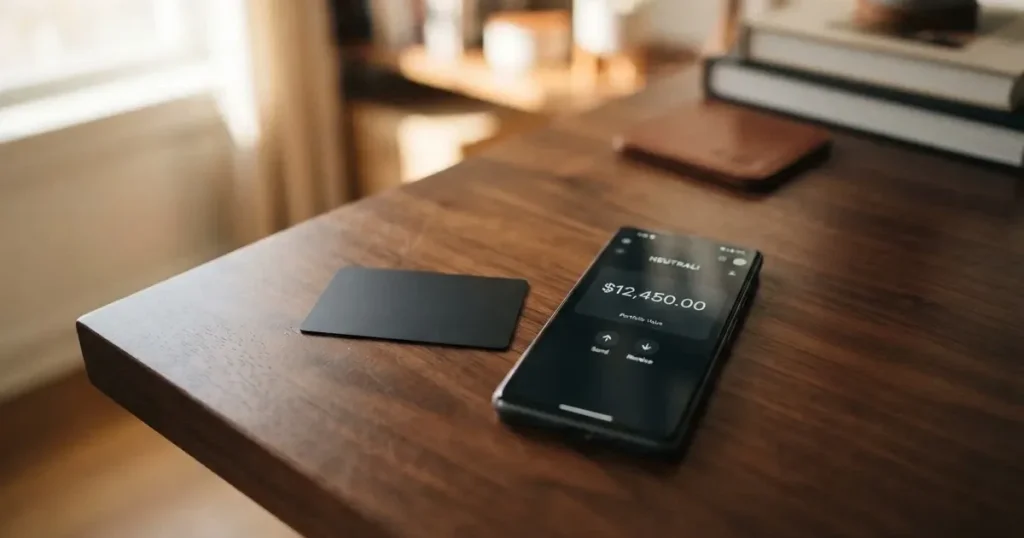
If you landed here looking for a BitPay card to spend crypto in a shop or to get paid by someone who does not want crypto, I have to open with the hard part: there is no BitPay card to sign up for. The card programme stopped. Loading stopped on 1 June 2023, spending and ATM access ended on 15 June 2023, and remaining balances were mailed out as cheques. The card pages are gone from the BitPay site. So this page is not a verdict on a product you can buy today — it is an explanation of what happened, what it means if you are one of the people left holding a balance, and what the alternatives actually look like now.
Conditions are current as of October 28, 2026.
My score for the card as a product, out of 10: 1.7 / 10. That number is not a complaint about BitPay the company, which is a long-running crypto wallet and payment processor; it is a mark on a card programme that no longer exists. If you are a former cardholder tracking down leftover balances, the sections on holders and on what can go wrong are the ones written for you — start there and skip the rest.
Conditions are current as of October 2026.
My verdict: 1.7 / 10, and the reasons
The score is low because a card that has been shut down cannot be rated on the things a card is normally rated on. I can tell you what the card’s pages used to say, I can tell you how the programme ended, and I can tell you what the company itself says it is licensed for. What I cannot tell you is what it costs today, because there is nothing to buy today.
| Criterion | Mark | Why |
|---|---|---|
| Who can get it | 0 / 10 | The card is closed: support and ATM access ended on 15 June 2023 after the issuing bank left crypto, and the card is no longer on the site |
| Cost | 3 / 10 | Unofficial and historical: 3% FX, 2.50 USD per ATM withdrawal, 5 USD per month after 90 days of inactivity, 10 USD for a replacement; nothing official has been disclosed |
| Top-up options | 3 / 10 | Not disclosed: the card is closed, and the last day to load was 1 June 2023 |
| Reliability and complaints | 1 / 10 | The programme closed on 15 June 2023, balances went out as cheques; BitPay on Trustpilot is 1.2/5 across 299 reviews, and the replacement card never launched |
| Everyday use | 2 / 10 | No card exists; the terms for the virtual card, physical card, wallets and ATM are not disclosed |
| Total | 1.7 / 10 |
Who this suited when it worked: people who wanted to spend a crypto balance at ordinary merchants without converting it themselves each time, and who were willing to accept a prepaid-style card backed by a partner bank rather than by their own bank. Who it does not suit now: anyone at all. And if you are reading this because a balance of yours is unaccounted for, none of the alternatives below touch that money — they are about spending going forward.
What happened to the programme
The sequence matters, because it tells you why the card went and what state any leftover money is in. In January 2023 Metropolitan Commercial Bank announced it was exiting crypto banking. That bank was the issuing partner behind the BitPay card. On 17 May 2023 cardholders received an email saying the prepaid Mastercard programme was being wound down. Loading stopped on 1 June 2023. ATM access and spending stopped on 15 June 2023. Remaining balances were mailed as cheques around 30 June 2023, to the address linked to the card.
After that, the sources disagree about whether anything replaced it. One review says the promised replacement card was never launched. CryptoCardHub says new applications are paused with a waitlist open, but it gives no date, so I would not treat that as current. The BitPay site in 2026 shows no card at all. The company itself says it is “licensed to engage in Virtual Currency Business Activity by the New York State Department of Financial Services” — that is a company-wide statement about the business, not about the card — and it gives NMLS ID#1496848.
What the card’s own pages used to say, as far as they can still be checked: almost nothing survives. Whether you could get one, what identity checks applied, the card terms, the cost, the fees, which wallets linked, the rewards, any tiers, the currencies, delivery, and verification steps are all not stated on the public pages now. The one thing visible is the site’s download badges for the App Store, Google Play, Windows and Mac, with no ratings shown; I did not read the store ratings.
A few historical terms survive only in third-party reviews, and I mark them as unofficial because BitPay does not confirm them now: a 3% foreign transaction fee, 2.50 USD per domestic ATM withdrawal, a 5 USD monthly dormancy fee after 90 days of inactivity, and 10 USD for a standard card replacement. Take those as a picture of what the card used to cost, not as current terms.
One earlier chapter is worth knowing: a non-US prepaid Visa was shut down in 2018 after Visa revoked Wave Crest’s licence. That is a pattern in this category, not a BitPay-specific failing — I explain it further under what can go wrong.
If you already have the card
You are in a narrow group and I would rather be precise than reassuring. If your card is in a drawer and your balance is already sitting as a cheque, this section is mostly history. If you still have a balance showing somewhere and no cheque arrived, this is the section that matters.
What is officially stated today about loading: nothing — the top-up terms are not disclosed, and the last day to load was 1 June 2023. Limits, ATM access, funding routes and dispute handling for the card are likewise not stated, because the programme is closed. The only public account of what was supposed to happen to a remaining balance is the announcement: a cheque to the address linked to the card, roughly 30 days after the 15 June 2023 cut-off. I found no stated refund amount and no published claims process. That absence matters, and I am not going to fill it in with speculation.
Unofficial historical limits, from a third-party review and no longer current terms: a 10,000 USD daily purchase cap and a 25,000 USD monthly ATM cap, and 2.50 USD per domestic ATM withdrawal.
Support: BitPay’s site still has a help library, and support is reachable from the app. Card-specific support has ceased. Languages and hours are not stated.
So what should you do? Check the address on the card account first — a cheque to the wrong or old address is the most plausible reason one never arrived, and confirming it is the cheapest step. Then check whether the cheque has cleared or been returned. If you have neither the card nor the cheque and still see a balance, you are dealing with a closed programme with no published claims process, and the only channel left is the company’s general support through the app and help library. I cannot promise you a result, and I would not trust anyone who offers to recover “locked” card funds for a fee.
What can go wrong
The closure is the lesson here, and it is not only a BitPay lesson. Three failure modes are worth carrying to whatever card you pick next.
The first is that the card is not really the bank’s product. A crypto card involves several parties: the card network, which routes the messages and sets the rules; the issuer, a bank or e-money institution licensed to issue under that network’s licence; and the crypto brand, which is often only a programme manager or front end. When the issuer leaves, the card leaves. BitPay is the clean example: the issuer exited crypto banking in January 2023 and the card was gone by June.
The second is the chain reaction. Visa and Mastercard do not issue crypto cards to consumers; they license issuers and can suspend a programme. In November 2022 Visa said it had “terminated our global agreements with FTX”, and the FTX US debit card was wound down by its issuer. In 2018 Wave Crest, a Visa issuer that supplied several crypto card brands, was suspended by Visa in Europe, closing all WaveCrest-issued Visa programmes — which is what ended the earlier BitPay prepaid Visa. None of this was a secret at the time; it is just that the people who wanted a card rarely read the licence chain.
The third is money you cannot get back. Cryptocurrency transfers are typically irreversible, and a stolen private key has no built-in recovery — the network cannot freeze or return the funds. Custodial platforms have a real record: Mt. Gox, with about US$350 million reported stolen between 2011 and 2014; Coincheck, about US$400 million in 2018; and Ronin Network, US$625 million in 2022. Holding funds with a custodian carries counterparty and hack risk. That is the trade you make for convenience, and it is worth making consciously.
There is a fourth thing specific to this card’s history: a promised replacement that reportedly never launched. A company can tell you a successor is coming and simply not ship it. If you are holding a balance, do not treat a future card announcement as a plan for your money.
One more practical caution. Some Trustpilot reviews about BitPay claim scam losses and promote recovery services. Those claims are unverified; I would not act on them, and neither should you.
What to take instead
I am not going to pretend there is a single replacement. There are broadly two kinds of thing: cards that convert and spend your balance for you, and general payment cards you fund and use. The three below are the ones I have enough information to compare, and I would read the table before reading any marketing page.
| Young Card | Cardex | International Visa Card | |
|---|---|---|---|
| Score out of 10 | 5.7 / 10 | 5.6 / 10 | 6.7 / 10 |
| Who can get it | Not stated | “One crypto card, 200+ countries”; no country list or exclusions given, and the App Store listing is Naira-focused | Account and card not available to residents or legal registrants of Belarus, mainland China, North Korea, Cuba, India, Iraq, Iran, Israel, Myanmar, Nepal, Nicaragua, Russia, Syria, Turkey, Ukraine, Venezuela and Vietnam; FATF grey-list countries reviewed case by case |
| The card itself | Not stated officially | Debit crypto card on VERVE, VISA, Mastercard and UnionPay; virtual and physical; card currency Naira per listing | “U.S.-issued Platinum Visa card”, virtual, pays in USD; physical card “coming soon” |
| Cost | Not stated officially | Not stated | Virtual card issuance 5 USD one-time; no maintenance fee; plans Classic free, Pro 9.00 USD/month, Max 19.00 USD/month |
| Fees | Not stated | Real-time crypto-to-fiat conversion at the moment of payment, with an “AI-Powered Conversion Rate” scanning global exchange rates; no percentage stated | Card use in USD free on all plans; foreign currency “Visa exchange rate + 2% FX fee”; deposits of any kind free |
| Funding | Not stated for the card itself | USDT, USDC and BTC wallets; networks not stated | USDC or USDT into the USD account at 1:1; also USD, EUR, SEPA, SWIFT, FedNow |
| Rewards | Cashback paid in YNG tokens by Club tier: Essential 0.1%, Gold 1.8%, Platinum 3.6% (Bronze and Silver not stated) | Not stated | No cashback stated |
| Where purchases are blocked | Not stated | Not stated | North Korea, Cuba, Iran, Russia, Syria, Ukraine, Venezuela |
Reading that table as a person choosing, not as a spec sheet:
- If you want cashback, Young Card is the only one of the three that pays any, and the rate swings from 0.1% to 3.6% depending on your tier — so the tier rules decide the value, not the headline.
- If you want to spend without thinking about which exchange rate you get, Cardex converts at the moment of payment, but it does not publish a fee percentage, and its listing is Naira-focused.
- If you want predictable, published pricing and a card you can fund with stablecoins at 1:1, the International Visa Card publishes both the 5 USD issuance fee and the 2% foreign currency fee, and it also tells you, in unusual detail, where the card is not available and where purchases are blocked. Rule is by residence or registration; citizenship is not mentioned.
- All three have gaps. Any of them can change its country list, its fees, or its issuing partner, and none of that is something I can promise you will hold.
Who I would recommend it to
Honestly: nobody, for the card itself. There is nothing to apply for.
If you are a former cardholder with a balance you cannot account for, the recommendation is procedural rather than commercial. Confirm the address on the account, confirm whether the cheque was returned, and use the company’s general support if neither resolves it. Do not pay anyone who offers to release “card funds” for a fee.
If you are simply looking for a way to spend crypto, this page is only a starting point. What I would check first on any card, in this order:
- Who is the issuer, and is the crypto brand the issuer or just the front end? The BitPay card died because the issuer left.
- What happens when the programme ends? Look for how loading stops, how spending stops, and how balances get returned — in writing, not in a promise of a successor card.
- Are the fees published, including the foreign exchange fee?
- What are the countries where the card cannot be used or the account cannot be opened?
- Which networks does each supported token actually run on? Chain transfers are irreversible, and a deposit on a network the provider does not support can be lost or need manual recovery with no guarantee.
- Does the product work as a prepaid balance or as a debit card? A pre-loaded balance cannot overdraw, which is a real comfort if a payment lands before you have funded it.
Frequently asked questions
What is the BitPay card?
It was a prepaid Mastercard that let you load a balance from crypto and spend it at ordinary merchants, backed by an issuing bank rather than your own. Loading stopped on 1 June 2023 and spending and ATM access ended on 15 June 2023, and balances were mailed out as cheques. The card no longer appears on the BitPay site.
How did the BitPay card work, and does it still?
You funded the card from crypto, it held a balance, and you spent that balance anywhere Mastercard was accepted, like a prepaid card. That model cannot overdraw because the card only ever spends what you loaded. It no longer works at all: the programme is closed and the card pages are gone.
Is BitPay a bank?
No. BitPay describes itself as licensed to engage in Virtual Currency Business Activity by the New York State Department of Financial Services, with NMLS ID#1496848 — a company-wide statement, not a banking licence. The card was issued by a partner bank, which is exactly why its exit ended the card.
Is the BitPay card available in my country?
Not any more, in any country. The programme is closed, the card is no longer on the site, and the card’s public pages do not state who could get one. If you are looking for something current, the comparison table above is where I would start.
What happened to my leftover BitPay card balance?
Remaining balances were to be issued as a cheque to the address linked to the card, roughly 30 days after the 15 June 2023 cut-off. I found no stated refund amount and no published claims process. If no cheque arrived, check the address on the account first, then contact the company through its app and help library.
Was the BitPay card free?
Unofficial and historical figures only, from third-party reviews: a 3% foreign transaction fee, 2.50 USD per domestic ATM withdrawal, a 5 USD monthly dormancy fee after 90 days of inactivity, and 10 USD for a standard card replacement. BitPay does not confirm these now, and none of them apply to a closed programme.
Can I top up or withdraw from the BitPay card now?
No. The last day to load was 1 June 2023, and ATM access ended on 15 June 2023. The card’s top-up, limit and withdrawal terms are not stated on the public pages now, because the programme is closed. There is nothing to top up and nowhere to withdraw to.
Is BitPay safe, and what about the reviews?
BitPay the company still operates, and it names BitPay Software, LLC as its wallet provider. On Trustpilot the company scores 1.2/5 across 299 reviews, with 89% one-star, and the company does not reply to negative reviews. The recurring themes are funds that cannot be withdrawn or sent, KYC that is burdensome or declined, support reachable only by bots with no phone line, and refused account closures.
What replaced the BitPay card?
I found no working replacement from BitPay itself — one review says a successor card was never launched, and one third-party site claims applications are paused with a waitlist but gives no date. For something current, the alternatives I could actually compare are Young Card, Cardex and the International Visa Card, with their published details in the table above.
Is the BitPay card worth it?
There is nothing left to be worth it. The whole question now is what to do with any balance still showing on the account, and that is a support matter rather than a spending decision. If you want a card that spends crypto today, read the alternatives table and check the issuer, the fees and the exit terms first.
App and neobank card fees – cryptocardfacts
Content created by the «cryptocardfacts» team