
The card is simple, cheap to open and virtual-only — and most of the details you would want are not published
 Available in US
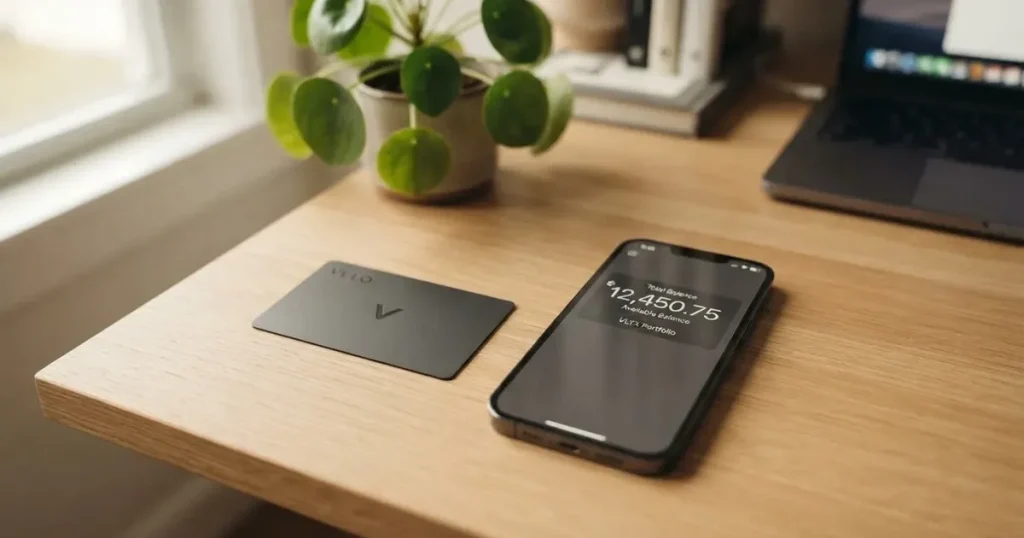
The Busha card is a virtual Visa card, denominated in US dollars, that draws on balances held inside the Busha wallet rather than on a bank account. You pay a one-off $2 to create it, there is no funding fee and no maintenance fee, and it is issued within minutes once you are approved. It is also virtual-only, Apple Pay and Google Pay are not supported, and the card’s own public page does not say which countries qualify, what the conversion or foreign-exchange fees are, or what the spending limits are. That combination — genuinely cheap, genuinely narrow — is the whole picture.
Conditions described here are current as of October 28, 2026.
Verdict: 4.8 out of 10, and the reason is disclosure rather than cost
Busha scores 4.8 / 10. That is not a verdict on the price, which is among the better parts of the offer. It is a verdict on how little the card’s public pages tell you before you commit, and on how little the card does once you have it.
Who it suits: residents of Nigeria, Ghana and Kenya who already hold dollars or dollar-pegged tokens in the Busha wallet and want to pay for online subscriptions in USD, where a normal bank card is awkward or unavailable. If your spending is online, in dollars, from a balance you already hold, the card is a thin, cheap layer on top of that.
Who it does not suit: anyone who needs a physical card, anyone who pays in cash, anyone who wants Apple Pay or Google Pay, anyone who needs to know the exact foreign-exchange cost before a payment, and anyone outside the three countries where Busha operates. If any of those describes you, stop reading and look at the alternatives further down.
| Criterion | Mark | Why |
|---|---|---|
| Who can get it | 2 / 10 | Countries not named on the card’s page; Busha entities exist in Nigeria, Kenya and Ghana. Unofficial sources describe it as a card for those three countries |
| Cost | 8 / 10 | $2 to create the card once, no funding fee, no maintenance fee. Conversion and FX fees are not disclosed |
| Top-up options | 5 / 10 | Spending draws on USD, USDT and USDC balances in the Busha wallet; the networks are not named |
| Reliability and complaints | 6 / 10 | Busha Digital Limited, licensed by SEC Nigeria as a Digital Asset Exchange; the card issuer is not named. Unofficial reports mention slow withdrawals and slow support |
| Everyday use | 2 / 10 | Virtual only, no Apple Pay, no Google Pay. Unofficial reports say there is no ATM |
| Total | 4.8 / 10 | Cheap to open, hard to plan around |
The everyday-use mark is the one that hurts most in practice. A virtual card with no mobile wallet support is not the card most people picture when they hear “crypto card”, and it removes the most common reason people reach for one in the first place.
Who will they give you the card
The card’s own page does not name a single country. It says applicants “complete the eligibility questions” and leaves it there. What the public pages do tell you is where Busha as a company exists: there are Busha entities in Nigeria, Kenya and Ghana, and Naira payments are not supported.
Third-party reporting, which the card itself does not confirm, describes it as available to applicants in Nigeria, Ghana and Kenya aged 18 or over with a verified Busha account. Treat that as a strong hint rather than a promise — the eligibility questions in the app are the only real gate, and what they ask is not published.
That gap matters more than it sounds. There is no list to check before you download anything, so the practical test is simply whether the app lets you through the eligibility questions and whether your verification reaches a level that permits a card. If your country is not one of the three, you have no way to know from the outside, and you may find out only after uploading documents.
How to get it
The application path is short on paper: answer the eligibility questions, accept the Card Terms, pay the $2 creation fee, and the virtual card is issued “within minutes” after approval. You can hold up to four cards, each with a custom name and colour. There is no physical card.
What is not detailed is the verification side. Busha publishes an AML & KYC Policy and an “ID Verification” help article, but the help centre redirected when those pages were checked, so the requirements are not confirmed here. Documents required, proof of address, minimum age: the card’s public pages do not state them.
One related thing is documented, because it decides whether you can use the card at all. The help centre has a “Verification Levels and Limits” page covering fiat limits in Nigeria, quoted in naira:
- Level 1: deposits only, withdrawals not allowed.
- Level 2: up to NGN 10,000,000 per month in deposits and withdrawals.
- Level 3: up to NGN 500,000,000 per month.
Which of those levels the card itself requires is not stated, and neither are the documents, the processing time, or the reasons a verification might be rejected. If you are in Nigeria, read that page before you assume Level 2 is enough.
Fees and limits: what a Busha payment really costs
The headline numbers are good. The card costs $2 once to create, and Busha states plainly: “No funding fees or maintenance fees.” That is genuinely unusual — most cards in this category either charge monthly or bury the cost in the exchange rate.
The problem is everything around that sentence. The fees you would actually hit while spending are not published.
| Fee or limit | What the card says |
|---|---|
| Card issuance | $2, one time |
| Monthly or maintenance fee | None — “No funding fees or maintenance fees” |
| Funding fee | None |
| Crypto conversion fee | Not stated |
| Foreign exchange fee | Not stated |
| ATM withdrawal | Not stated |
| Cash advance | Not stated |
| Daily spending limit | Not stated |
| Monthly spending limit | Not stated |
Three concrete payments show why the missing rows matter:
A monthly subscription in dollars, for example a design tool at $15. The card is USD, the merchant charges USD, so you are in the cleanest case the product has: $15 leaves the USD balance and you should not be paying a conversion spread. The $2 creation fee is the only cost you can point at.
The same subscription billed in euros or naira. Now the missing FX row bites. The card works “wherever Visa supports international USD payments”, but the FX fee for non-USD payments is not stated, and neither is the conversion cost when the balance you hold is USDT or USDC rather than plain dollars. You are paying a rate you cannot look up in advance.
A purchase from a crypto balance rather than a dollar balance. If you hold USDT or USDC, the card spends from those balances directly. What that conversion costs, and at what rate, is not on the page.
Third-party reporting claims there are no annual, monthly, transaction or foreign transaction fees at all, and that only platform fees for buying USDC and network fees apply. That claim also describes a USDC Mastercard with up to ten cards, which conflicts with the card’s own description of a Visa, four cards and a $2 creation fee. Because it contradicts the official page, I would not plan around it.
One last row worth internalising: the card is USD only. Naira payments are not supported. Whatever the FX fee turns out to be, you are not spending naira with this card.
Top up: the balance comes from the wallet, not from a bank
Top-up is not a separate mechanism. The card spends directly from balances sitting in the Busha wallet, and those balances can be USD, USDT or USDC. That is the whole funding story the card gives.
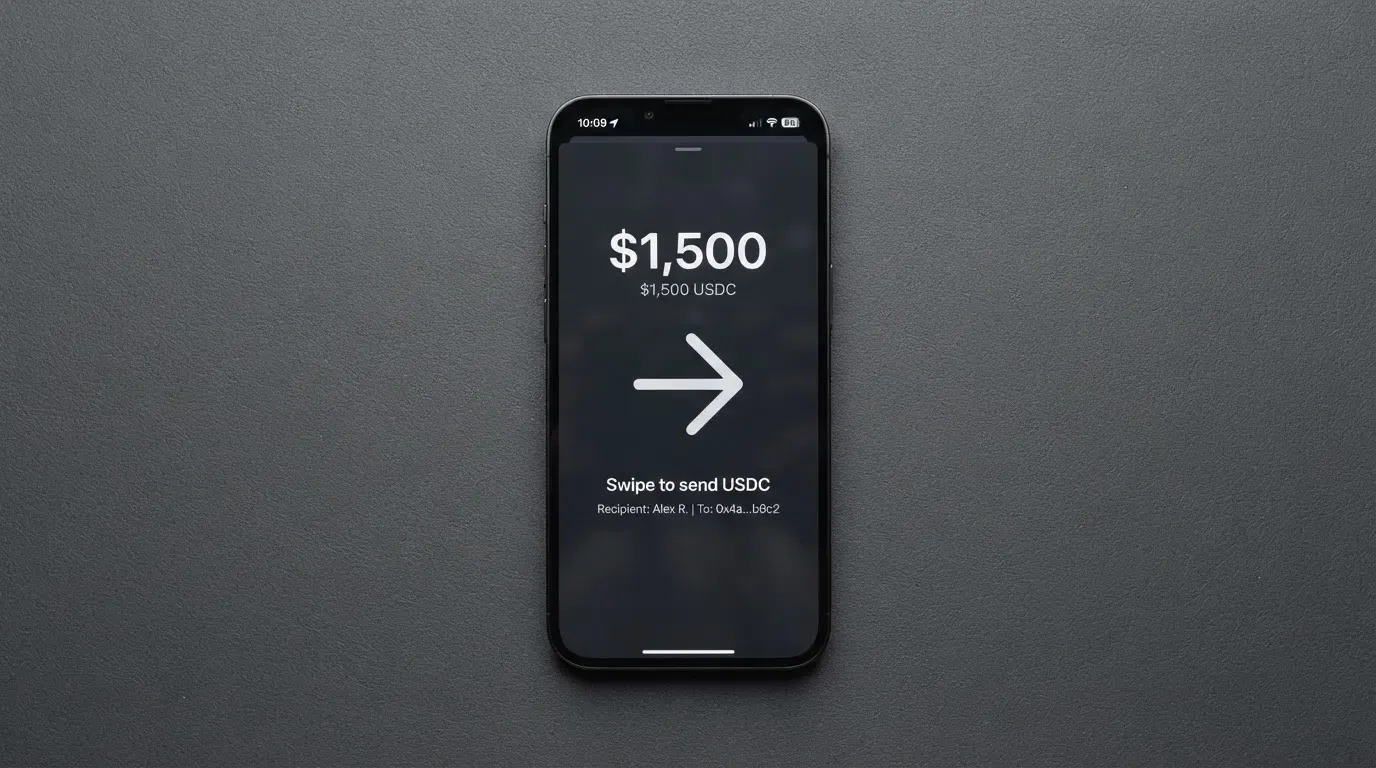
What that means practically is that you are not moving money from a bank account onto a card — you are already holding the money in the wallet, and the card simply spends it. If your money is on an exchange that is not Busha, you first have to move it in, and that step is where the risk lives rather than in the card.
The networks are not stated. Neither is the minimum top-up, and neither are deposit network fees. For a stablecoin transfer that is a real omission: sending USDT on a network the provider does not support, or to an address belonging to another network, can mean the deposit is lost or needs manual recovery with no guarantee. Blockchain transfers are irreversible. If you have sent crypto to a wrong address before, you already know this is not a theoretical concern.
There is an older figure floating around — a minimum top-up of 2 USDC and a maximum of 5,000 USDC per funding, with 10,000 USDC held per card — but that comes from a 2022 post describing an earlier product. It is not confirmed for the current card, and I would not hold it against the current one.
Withdrawal is the other half of the loop and it is undocumented. The card’s post does not describe moving a balance back out or closing a card, gives no closure terms, and does not link the Card Terms. If you plan to close the account, you are planning without the exit rules in front of you.
Paying with it every day
Day to day, the card is narrower than the word “card” suggests.
- Virtual only. No plastic is issued. That is stated plainly: no physical card.
- Visa, USD. A “stablecoin-backed virtual USD Visa card”.
- Apple Pay and Google Pay are not currently supported. Stated directly on the card’s page.
- Where it works. “Wherever Visa supports international USD payments”, so online, in dollars.
Blocked merchant categories are not stated. That matters because the category that crypto cards most often restrict is gambling (MCC 7995) — many issuers block it by policy rather than by law, and the list varies by issuer, so you cannot assume either way. If gambling is part of your spending, ask support before you assume.
The app is the whole interface. Busha’s iOS and Android app carries strong store ratings: the App Store Nigeria listing shows 4.6 out of 5 from about 5.4K ratings, and Bush’s own site cites 4.6 on the App Store (5k+) and 4.5 on Google Play (11k+). Strong app ratings say something real about the software. They say nothing about card controls.
What is not stated for daily use: no cashback or rewards are mentioned, no spending controls are described, and there are no dispute, chargeback or refund terms in the post. If something goes wrong with a payment, the public pages do not tell you what happens next.
Two general mechanics are worth keeping in mind when a payment fails, since they are properties of card payments generally. A declined authorisation can leave a hold on your funds that stays for several days, typically up to seven. And if your billing address does not match what the issuer has on file, address verification — which is mainly offered in the US, Canada and the UK and is generally unavailable for foreign-issued cards — can cause declines you cannot diagnose from the app.
What can go wrong
Start with the issuer, because the biggest single fact here is an absence. Busha Digital Limited (Nigeria, registration 1495049; Kenya PVT-GYUQJAEL) and Busha Digital Ltd (Ghana CS-182631123) are the named entities. The company is licensed by SEC Nigeria as a Digital Asset Exchange, and has data-protection registrations in Kenya (ODPC 15965), Ghana and Nigeria. The card issuer, or the BIN sponsor that actually runs the card programme, is not named.
That distinction matters more than it sounds for crypto cards generally. Visa and Mastercard do not issue crypto cards themselves — they license issuers, and they can suspend a programme. The crypto brand is often only a programme manager or front-end. So the entity that holds your balance and the entity that issues your card can be different, and here you can only see one of them.
A wallet you do not hold the keys to is a counterparty risk. Busha is a custodial exchange wallet: the provider holds the credentials, so you must trust it completely. Crypto transfers are irreversible, and a stolen key has no recovery path — the network cannot freeze or return funds. Custodial platforms have a real history here: Mt. Gox (about US$350 million reported stolen, 2011–2014), Coincheck (about US$400 million, 2018), Ronin Network (US$625 million, 2022). This is not an argument against Busha specifically; it is the category you are buying into.
Card controls are the second gap. The card’s post gives no information about freezing the card, two-factor authentication, or spending controls; the site footer mentions an ISMS Policy and the help centre has a “Security” collection of 11 articles that were not read. So the standard safeguards — app-based 2FA, instant freeze, spending limits, 3-D Secure confirmation — are not documented as features of this card.
Support is documented and thin. Channels are the Help Center (support.busha.io, English) and a Contact Us page. There is no Busha Card collection in the help centre — the collections cover KYC, Security, Busha Spend, Busha Business and similar. So the specific questions this review raises (FX fee, networks, closure) do not have a documented home.
On complaints, the honest picture is thin in both directions. An official search for complaints found nothing on the card’s own pages. A dedicated search for Busha virtual USD card complaints returned no Busha reviews at all — only other companies’ — so no user reports or news surfaced. Third-party reporting is where the picture changes: a May 2026 review page cites Busha on Trustpilot at roughly 3.5–3.8 out of 5 from about 16–17 reviews, with recurring themes of deposits and withdrawals that are slow or never appearing, KYC delays and forced upgrades, rate gaps when selling crypto, and slow support. Google Play is around 4.36. The Trustpilot page itself was not fetched, so treat all of that as unconfirmed third-party reporting — but the themes are the ordinary ones for this category, and they align with what is missing from the official pages.
Finally, the product has changed before. On 8 July 2022 Busha announced earlier USD virtual cards: USDC-funded, Mastercard, early access, up to ten cards, “completely free”. The current card is Visa, up to four cards, with a $2 creation fee. Programme changes are normal in this category, and closures are too: Visa terminated its global agreements with FTX on 13 November 2022, and WaveCrest, a Visa issuer that supplied crypto card brands, was suspended by Visa in Europe in 2018, closing all WaveCrest-issued Visa programmes. When a programme ends, the usual sequence is a notice period, then loading and spending stop, then you are asked to withdraw remaining balances. That is why the missing withdrawal terms on this card are worth more attention than they look.
One last thing, not a risk to the card but to your balance sheet: the IRS treats digital assets as property, so exchanging them for goods or dollars generally produces a taxable gain or loss, measured in local currency at fair market value on the date of the transaction. Each card payment funded from crypto may be a separate disposal. I am not giving tax advice here — but if you will spend from crypto balances regularly, this is worth raising with a professional in your own country.
What to take instead
Three alternatives came through the same checks, and each solves a different part of what Busha does weakly.
| Alternative | Score | Card | Cost | FX / conversion | Availability |
|---|---|---|---|---|---|
| Busha | 4.8 / 10 | Virtual USD Visa, up to 4 | $2 once, no maintenance | Not stated | Nigeria, Kenya, Ghana (unofficial) |
| International Visa Card | 6.7 / 10 | US-issued Platinum Visa, virtual; physical “coming soon” | $5 issuance; plans Classic free, Pro $9.00/month, Max $19.00/month | USD use free; foreign currency “Visa exchange rate + 2% FX fee” | Not for residents or registrants of a long restricted list |
| UNi Card | 6.1 / 10 | Multicurrency, Mastercard network | “No annual fee”; issuance not stated | “No annual fee or foreign transaction fee”, converted at live OTC rates | Not stated |
| Whop Cards | 5.2 / 10 | Visa; virtual/physical and currency not stated | “No extra fees”; amounts not listed | Not stated | 31 US states for consumers, 41 for businesses |
International Visa Card is the strongest of the three on disclosure. It publishes the number that Busha does not: foreign currency costs “Visa exchange rate + 2% FX fee”, with USD use free on all plans and no fee on deposits of any kind. You fund it by depositing USDC or USDT into the USD account, and it also accepts USD, EUR, SEPA, SWIFT and FedNow. The catch is a long restricted list — no account or card for residents or legal registrants of Belarus, mainland China, North Korea, Cuba, India, Iraq, Iran, Israel, Myanmar, Nepal, Nicaragua, Russia, Syria, Turkey, Ukraine, Venezuela or Vietnam, with FATF grey-list countries reviewed case by case with compliance approval. Purchases are blocked in North Korea, Cuba, Iran, Russia, Syria, Ukraine and Venezuela. Note that this is by residence or registration, not citizenship.
UNi Card is the one to look at if your problem is conversion cost rather than availability. It converts assets at live OTC rates with “no hidden exchange fees”, carries no annual or foreign transaction fee, and pays up to 3% back through Spend-to-Earn rewards. The information gaps move to the other end: who qualifies is not stated, and so is how you fund it.
Whop Cards fit a narrower case: US residents. Visa, works anywhere Visa is accepted online and in stores, with5% cashback at select merchants (currently Uber, more planned). Consumer coverage is 31 US states and business coverage 41; unsupported consumer countries include Belarus, mainland China, Cuba, Hong Kong, India, Iran, Iraq, Israel, Myanmar, Nepal, Nicaragua, North Korea, Russia, Syria, Turkey, Ukraine, Venezuela and Vietnam. It spends from a Whop balance, and whether your balance is backed by which coins on which networks is not stated.
What none of these fix for you: none of them publishes conversion fees as clearly as an ordinary bank’s schedule would. And the honest comparison is that Busha is cheaper to open than the International Visa Card and narrower than all three.
Who I would recommend it to
I would recommend the Busha card to one specific person: someone based in Nigeria, Ghana or Kenya who already holds dollars, USDT or USDC in the Busha wallet, pays for online services billed in USD, and has given up on getting an ordinary card to do it. For that person the card does one job, does it at a $2 one-off cost, with no monthly charge and no funding fee, and the virtual-only limitation stops mattering because the spending was never going to be in cash.
I would not recommend it if any of these are true:
- You need cash, a physical card, or ATM withdrawals.
- You pay with your phone. Apple Pay and Google Pay are not supported.
- You spend in anything other than dollars, because the FX and conversion costs are not published.
- You are outside the three countries where Busha operates, and the card’s page will not tell you whether that is a problem before you try.
- You need to move money out and close the account, because withdrawal and closure terms are not published.
- You are choosing between cards on the basis of support quality. Support is a help centre and a contact page, with no card-specific collection.
And one caution that applies to the whole category, not just this card. What you are really choosing between is who holds your money and how long you can reach it. A card that spends a wallet balance means the wallet is the counterparty; the card network is only the rail. Busha is licensed by SEC Nigeria as a Digital Asset Exchange and has data-protection registrations in three countries, which is not nothing — but the entity that issues the card is not named, and the card’s terms are not linked from the page that describes it. If you are holding an amount you would be upset to lose, check who the issuer is and what the closure terms are before you load it, not after.
Frequently asked questions
What is the Busha card?
It is a virtual Visa card denominated in US dollars that spends balances held inside the Busha wallet. The card’s own description calls it a stablecoin-backed virtual USD Visa card. You can hold up to four, each with a custom name and colour, and there is no physical version. It is a payment card drawn from a crypto balance, not a bank card.
Is Busha a bank?
No. The named entities are Busha Digital Limited in Nigeria, plus registrations in Kenya and Ghana, and the company is licensed by SEC Nigeria as a Digital Asset Exchange — a crypto licence, not a banking one. It is a custodial crypto exchange with a card attached. The entity that actually issues the card is not named on the card’s page.
Who can get a Busha card?
The card’s public pages do not name any country; they say you complete eligibility questions and leave it there. Busha entities exist in Nigeria, Kenya and Ghana, and Naira payments are not supported. Third-party reporting describes it as open to applicants aged 18 or over in those three countries with a verified account, which the card itself does not confirm.
How do I get and activate a Busha card?
Answer the eligibility questions, accept the Card Terms, and pay the $2 creation fee. Once approved, the virtual card is issued within minutes — there is no physical card and therefore no delivery step. What the pages do not detail is verification: required documents, proof of address, minimum age and rejection reasons are not stated.
What does a Busha card cost?
A one-time $2 card creation fee, with no funding fees and no maintenance fees. Everything else is the gap: conversion fees, the foreign-exchange fee for non-USD payments, ATM and cash-advance charges are all not stated, and no daily or monthly spending limits are listed. Plan for the known $2 and be aware the rest is unknown.
How do I top up the Busha card?
You do not top up the card separately — it spends directly from USD, USDT or USDC balances in the Busha wallet. No funding fee applies. Networks are not stated, nor is the minimum top-up or the deposit network fees, which matters because a transfer on the wrong network can be lost or need manual recovery with no guarantee.
Can I use it with Apple Pay or Google Pay?
No. Apple Pay and Google Pay are explicitly not currently supported. Combined with virtual-only delivery, that means you are entering the card number by hand at online checkouts, which is exactly where 3-D Secure checks and foreign-card declines bite hardest. If phone payments are central to how you spend, this is the wrong card.
Is the Busha card safe?
It depends what you mean. Your balance sits in a custodial wallet, so you trust Busha with it completely, and crypto transfers cannot be reversed if something goes wrong. Card-level protections are not documented: no freeze, two-factor or spending-control features are described. Company details are published — Busha Digital Limited, an SEC Nigeria Digital Asset Exchange licence, data-protection registrations in three countries.
Is Busha card free?
Not quite. There is no monthly fee and no funding fee, but creating the card costs $2 once. A third-party source claims there are no other fees at all, yet its description of a USDC Mastercard with up to ten cards conflicts with the official Visa, four-cards, $2-fee version — so I would not rely on it. The card also has no cashback or rewards mentioned.
Can I withdraw money or delete my Busha account?
Unclear from the public pages. The card’s post does not describe moving a balance back out of the wallet or closing a card, gives no closure terms, and does not link the Card Terms. Separate from the card, Nigeria’s verification levels set monthly withdrawal caps. If exit matters to you, ask support before you load funds.
App and neobank card fees – cryptocardfacts
Content created by the «cryptocardfacts» team