
A no-KYC virtual Mastercard paid in crypto, with the trade-offs spelled out
 Available in US
If you have ever tried to open a bank account from a country that mainstream banks tend to avoid, or you simply do not want to hand over an ID to pay for something online, a virtual prepaid card paid in crypto can feel like the answer. The Card2Crypto card sits in that niche. It is a prepaid virtual Mastercard you buy with USDT, USDC, Bitcoin, Ethereum, Solana or Monero, and it comes without a “know your customer” identity check at the point of purchase. That combination is rare, and it is also the source of most of the questions and limits around the product.
This review walks through what the card actually does, who can get it, what it really costs, how the top-up works, what paying with it day to day looks like, and where it falls down. The information here is current as of October 28, 2026, and is based on Card2Crypto’s own pages and terms together with a few third-party sources, which are flagged where they appear.
Verdict
Card2Crypto scores 6.0 out of 10. It is a small, single-purpose product that does the one thing it promises: turn a crypto payment into a working virtual Mastercard balance in USD, without an ID check. It loses marks mainly for what it does not tell you: there is no published conversion or ATM fee, no monthly maintenance charge, no spend limit, no information about the issuing bank or the company behind it, and no 3-D Secure on the card. For someone who only needs an anonymous one-off online payment and is comfortable with those unknowns, it is a usable tool. For anyone who plans to use a card as a daily driver, or who needs the protections a regulated issuer provides, the gaps are too wide.
| Criterion | Mark | Short reason |
|---|---|---|
| Who can get it | 8 / 10 | “Anyone worldwide can purchase,” but activation is denied to residents of 30 named countries, including Russia, Belarus, Serbia, Turkey and Ukraine |
| Cost | 5 / 10 | Card value from $5 to $499; no published conversion, FX or ATM fee; the 4–7% figure on the site refers to the PayPal gift card, not the Mastercard |
| Top-up options | 8 / 10 | USDT and USDC on Polygon, plus Bitcoin, Ethereum, Solana and Monero; no top-up or reload of the card itself is described |
| Reliability and complaints | 4 / 10 | “Card2Crypto” is described in its own terms as software services only; the issuer, home country and licences are not named; the card has no 3-D Secure; no independent reviews surfaced |
| Everyday use | 5 / 10 | Virtual Mastercard only, with Apple Pay and Google Pay support; no physical card and no ATM information |
| Total | 6.0 / 10 |
The card is best understood as an anonymous one-off payment tool. The lack of KYC and the fact that Card2Crypto says “anyone worldwide” can buy one are the headline features. Everything else has to be read with that in mind: the same freedom that lets you in also means the card has no strong customer authentication, no clearly identified issuer standing behind disputes, and a 30-country blocklist that includes several large markets.
Who Card2Crypto will issue a card to
The headline on the homepage is that “anyone worldwide can purchase” a Card2Crypto card. The terms back that up in the sense that there is no application form, no country field on the signup, and no identity document upload at the point of purchase.
The same terms, however, name a list of 30 countries whose residents may be refused activation. Activation, in this context, is the step where the card is loaded with the USD balance that the Mastercard can spend. If the system decides you are a resident of one of those countries, you can still pay, but the card will not work and the terms say “attempting to redeem or activate a card from a Restricted Country will void any right to a refund.” The full list, as it is published, is: Afghanistan, Albania, Belarus, Bosnia and Herzegovina, Burma/Myanmar, Central African Republic, Croatia, DR Congo, Cuba, Ethiopia, Iran, Iraq, North Korea, Lebanon, Libya, Mali, Nicaragua, Palestine, Russia, Saudi Arabia, Serbia, Somalia, South Sudan, Sudan, Syria, Turkey, Ukraine, Venezuela, Yemen and Zimbabwe. The list is residence-based, not citizenship-based, which is the language Card2Crypto uses, but in practice that distinction is hard for an anonymous user to argue with.
A few things follow from this. If you live in a country not on the list, the card is technically open to you. If you live in one of the 30, paying does not entitle you to anything. If you are travelling or have moved and your billing address, IP and stated country do not line up, you can also end up in trouble, because the terms also say that “use of any VPN or anonymising service is strictly prohibited by the card provider” and can lead to cancellation without a refund. The card does not ask for an ID at purchase, but it does ask for a valid name, an email address, a phone number and a billing address when you activate, so the no-KYC promise is more limited than it first sounds: the data is not checked against documents, but it is collected and can be used to block you.
How to get the card
The signup path is short, which is part of the appeal. You go to the site, choose a card amount in USD, pick one of the supported cryptocurrencies, and pay within a 10-minute timer. The card is normally ready in minutes and may take up to 48 hours in busy periods. The card is virtual only, so there is no shipping, no courier, and no second factor in the post.
In practical terms, the steps are:
- Pick the card amount. The range is from $5 to $499, and the card carries a USD balance. There is no option to choose a different currency and no multi-currency wallet.
- Choose a crypto and a network. The dropdown shows USDT on Polygon, USDC on Polygon, Bitcoin, Ethereum, Solana and Monero. The choice you make is the network you have to send on; sending on the wrong network is the most common way to lose a deposit (see the top-up section).
- Pay within 10 minutes. The timer is real: after it runs out, the quote expires and you have to start again. Card2Crypto’s own description says cards are “typically ready in minutes” but that they “may take up to 48 hours in high demand.”
- Activate with a name, email, phone number and billing address. None of this is checked against a passport or utility bill, but the values are recorded and used.
- Add the card to Apple Pay or Google Pay, or type the 16-digit details into a checkout form.
Because there is no application, no document upload and no credit-style approval, there are no KYC “levels.” You are not asked to provide more information to lift a limit, because there is no public limit to lift.
What it really costs
The honest answer is that the Mastercard page does not state the fees, and the only fee number that appears prominently is for a different product. The numbers below come from Card2Crypto’s own pages, and the gaps are also taken from those pages, not invented.
| Fee or limit | Value |
|---|---|
| Card issuance | “no fee stated” on the Mastercard page; price equals card value |
| Card value range | $5 to $499 USD |
| Monthly fee | not stated |
| Conversion fee (crypto to USD at purchase) | not stated |
| FX fee on non-USD spend | not stated |
| ATM withdrawal | not stated (no physical card) |
| Daily spend limit | not stated |
| Monthly spend limit | not stated |
| Currency of the balance | USD only |
| 3-D Secure | not supported |
The card is sold at face value, so a $100 card costs you $100 in crypto at the quoted rate. The conversion spread between the rate Card2Crypto applies and the rate on a major exchange at the time of payment is not disclosed; in effect, that spread is the main cost of using the card, and the only way to know it is to compare. Where a percentage does appear on the site, the 4% to 7% range, it is described as the fee for the PayPal gift card product, not for the Mastercard, so it would be a mistake to apply that figure to a regular Card2Crypto card purchase.
Three everyday situations show how this plays out in practice. First, paying $50 for a streaming subscription in euros: the price on your statement is whatever the card network quotes at the moment of authorisation, and the spread is whatever Card2Crypto applied when you bought the card; both are unknown in advance. Second, a $200 online shop purchase in US dollars: there is no FX step, but the crypto you sent was converted at the time of purchase, so the effective cost is the difference between the live USD price of, say, USDT when you sent it and the rate Card2Crypto used. Third, an in-store tap with Apple Pay: the same conversion arithmetic applies, plus whatever the merchant’s acquirer does with a foreign-issued prepaid BIN, which can be a decline rather than a fee (see the section on paying with it every day).
Top up
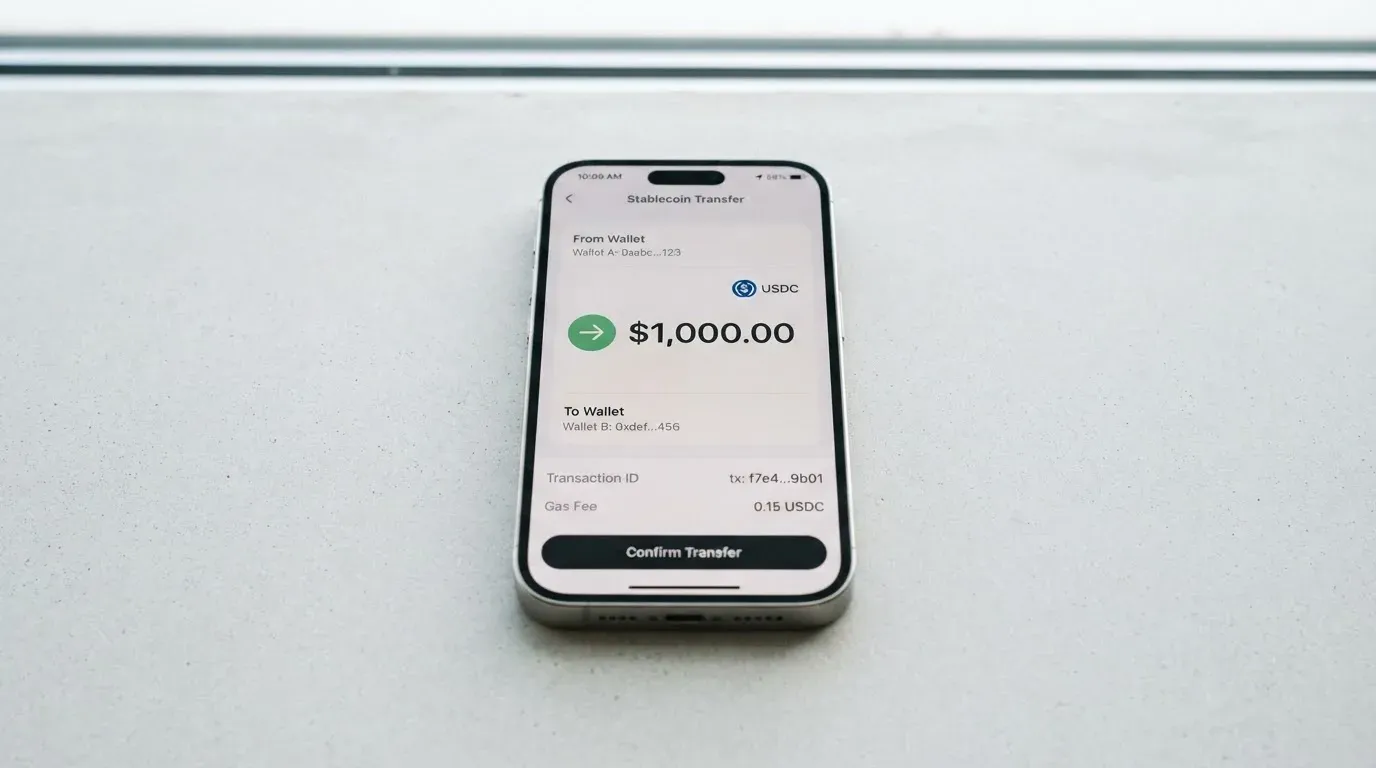
Topping up the card starts with a transfer to the right network, which is where most of the risk sits. The crypto list is short and specific: USDT (Polygon), USDC (Polygon), Bitcoin, Ethereum, Solana and Monero. The same list is the top-up list and the purchase list, because the only way to load a card is to buy a new one; the site does not describe a way to add funds to an existing card.
A few details are worth holding on to:
- USDT and USDC are accepted on the Polygon network, not on Ethereum or Tron. Polygon is the chain that uses the MATIC token for gas. Circle stopped supporting USDC on Tron in February 2024, and Card2Crypto does not list Tron as an option, so any “USDT TRC20” or “USDC TRC20” deposit the system seems to ask for would be wrong.
- Bitcoin and Ethereum mean the native networks. Ethereum gas is paid in ETH, so a wallet that only holds the destination token can fail to send; you need a small ETH balance alongside.
- Solana and Monero round out the list. Monero in particular is the privacy-focused option, and the combination of XMR funding with no KYC is the route most often associated with the card’s anonymous use case.
A practical rule: send a small test transaction first, on the exact network named in the dropdown, before sending the full amount. On-chain transfers are not reversible, and sending USDT on Ethereum to a Polygon address is a common way to lose funds with no automatic recovery.
Reload and top-up of the same card are not described on the public pages, so if the only published flow is “buy a new card,” the right working model is that each purchase is a one-off virtual card, not a long-lived account you keep adding to. The terms also say that on termination “the right to use the service ceases” but do not address what happens to a leftover balance, which is a question worth asking support about before you load a large amount.
Paying with it every day
The card is a virtual prepaid Mastercard denominated in USD, and Card2Crypto says it “supports Apple Pay and Google Pay.” There is no physical card and no ATM in the product description. The card is single-currency, so spending in any non-USD currency is, in effect, a foreign transaction from the card’s point of view, even if the merchant prices its goods in your local currency.
What that means in day-to-day life:
- Online checkout: type the 16-digit card number, the expiry and the CVV into the payment form. The card does not support 3-D Secure, so there is no second-factor step at the merchant. That makes the checkout faster, but it also means the issuer’s usual anti-fraud screen is not in the way, and some merchants that require 3-D Secure will decline the card outright.
- In-store contactless: push the card into Apple Pay or Google Pay on a phone and tap to pay. The merchant’s terminal sees a tokenised device number rather than the card’s PAN, and each payment uses a one-time dynamic code. This is the safest way to use the card, both because the card details are not exposed and because tokenisation is what Apple Pay and Google Pay are designed to do.
- Subscriptions: the card can be used like any other prepaid card, but the balance is the cap. If a $20 subscription renews against a $5 balance, it is declined; there is no overdraft.
- Blocked categories: Card2Crypto does not publish a list. Many issuers block gambling MCCs by default, and some crypto-linked cards block a wider set, but the public pages do not say. If a category is important, it is worth asking before loading.
- Rewards: not stated. There is no cashback or points programme described.
Two network-level behaviours are worth understanding. First, a merchant’s payment system can look up the first six or eight digits of the card number to identify the issuing institution, and it can apply extra scrutiny or decline if the issuer country looks “foreign” relative to the billing address. With an anonymous card and an anonymous signup, mismatches are more likely, and a decline is the most common failure mode. Second, an authorisation hold can stay on the card for up to 7 days, so a refund that does not arrive inside that window is not, by itself, a sign of a problem.
What can go wrong
The risks around this card fall into three buckets: the unknown issuer, the lack of standard protections, and the specific things the terms say will void your right to a refund.
The issuer is not named on the public pages. “Card2Crypto” is described in its own terms as a software-services business, payments are handled by “licensed third-party providers” who are not named, and the country of registration is not stated. That means the entity standing behind a chargeback, a frozen balance or a programme closure is not visible from the front page. In the wider crypto-card market, programmes have been shut down before: Visa said in November 2022 that it had “terminated our global agreements with FTX,” and the WaveCrest suspension in 2018 closed every Visa programme WaveCrest issued. When a programme closes, the typical pattern is a notice period, then spending and loading are stopped, then users are asked to withdraw any remaining balance. None of that is announced for Card2Crypto because there is no public programme document to begin with.
The protections that a regulated card normally provides are thinner here. There is no 3-D Secure on the card, so the issuer is not in the loop on every online payment. The card is prepaid, so US debit reversal rights under Regulation E do not apply in the same way, and the coverage of a prepaid card in a dispute is “not the same as a bank deposit” and should not be assumed. The terms put disputes in the courts of an unnamed home country, which is a practical barrier for a user anywhere else.
The specific traps in the terms are short and worth reading twice:
- Residents of the 30 restricted countries cannot activate the card, and “attempting to redeem or activate a card from a Restricted Country will void any right to a refund.”
- “Use of any VPN or anonymising service is strictly prohibited by the card provider” and may lead to cancellation without a refund.
- The timer at checkout is 10 minutes; missing it means starting again.
- A reload or top-up of an existing card is not described, and the terms do not address what happens to a leftover balance on termination.
- No independent reviews surfaced. There is no Trustpilot page and no Reddit thread that a search returned (other-brand results came up instead), so there is no public track record to lean on for the experience of other users.
On the safety side, the card behaves like a custodial crypto card: the crypto you send is in someone else’s hands by the time the card is funded, and the working model is closer to “pre-loaded balance” than to “self-custody linked at the moment of payment.” That trades the risk of losing your own keys for the risk of the issuer failing. Stablecoins are also not censorship-proof: Tether says it has disabled tokens in wallets on the OFAC sanctions list and frozen funds tied to illicit activity, so “anonymous” in this context means no ID check at signup, not immunity from network-level controls.
What to take instead
The alternatives below are also prepaid or virtual crypto cards that came up in the same research, and the figures come from their own pages. They are not direct substitutes for Card2Crypto, because none of them offers the same no-KYC, six-coin, worldwide promise; they are useful as a way to see what the trade-offs look like one step over.
- Cardex (5.6 / 10) is described as a single crypto card for “200+ countries,” with no country list and no exclusions in the public pages. Its App Store listing is Naira-focused, which suggests the product is built around a Nigerian market even if the front page is global. The card is a debit crypto card on the VERVE, Visa, Mastercard and UnionPay networks, available as virtual and physical. Conversion is “AI-powered” at the moment of payment; the fee percentage is not stated. Funding is USDT, USDC and BTC, with networks not specified.
- CardFlow (4.9 / 10) is a virtual USD Mastercard “created in about 3 minutes.” The site is aimed at Nigeria (“Nigeria’s smartest fintech card platform”) and “Nigerians and global users,” with no published country list. Card creation is free, monthly fees are not stated, and funding is Bitcoin, USDT, ETH or Naira bank transfer, with networks not specified.
- HyperCard (4.7 / 10) is a prepaid card with a balance in USD or EUR. The official pages do not list countries, while the App Store page says the card works in “more than 176 countries” — a useful distinction, because acceptance and eligibility are not the same thing. The card network is not stated on the App Store page. Funding is “deposit crypto such as USDT, BTC, ETH in the app,” converted to USD or EUR on the card, with networks not specified.
Two structural points follow. None of these alternatives is clearly cheaper: the cost lines are mostly “not stated” too, so the comparison ends up being about who you trust, what currencies and networks you can use, and whether the card has to be anonymous. The other point is that the “no KYC” promise in this corner of the market is the main differentiator, and every step away from that promise usually comes with a clearer issuer, a published fee, and a 3-D Secure check that this card does not have.
Who I would recommend Card2Crypto to
Put the trade-offs in your own situation and the verdict gets sharper. The card is a fit for someone who:
- needs a single, anonymous online payment, in the range of $5 to $499, and is comfortable not knowing the conversion spread in advance;
- lives outside the 30 restricted countries and is not relying on a VPN to be there;
- plans to tokenise the card into Apple Pay or Google Pay rather than type the 16 digits into random forms;
- is okay with no 3-D Secure, no physical card, no cash access and no rewards;
- is not planning to keep a balance on the card long enough to care about a programme-closure risk.
The card is a poor fit for someone who:
- lives in Russia, Belarus, Serbia, Turkey, Ukraine or any other country on the restricted list — the terms give the issuer the right to refuse activation and to refuse a refund;
- needs a card for daily spending, subscriptions or travel, where 3-D Secure, dispute rights and a known issuer matter;
- wants to add to an existing balance: the public pages describe only buying a new card, not topping one up;
- is moving money they cannot afford to lose: on-chain transfers are irreversible, and the wrong network on USDT or USDC can mean a manual recovery with no guarantee.
If your use case is “one anonymous online payment, then walk away,” the card does that. If your use case is anything that needs a paper trail, a known issuer, or a way back when something goes wrong, the gaps on this card are the gaps you would feel first.
Frequently asked questions
What is the Card2Crypto card?
The Card2Crypto card is a prepaid virtual Mastercard you buy with crypto. You choose an amount between $5 and $499, pay in USDT, USDC, Bitcoin, Ethereum, Solana or Monero, and receive a 16-digit card with a USD balance that you can use online or add to Apple Pay or Google Pay.
How does the Card2Crypto card work?
You pay in crypto at the quoted rate, the card is loaded with a USD balance, and the Mastercard is spent in USD. The card is prepaid, so it cannot overdraw, and there is no bank account in the background. Each purchase is a new card; the public pages do not describe topping up an existing one.
Is Card2Crypto a bank?
No. Card2Crypto describes itself in its own terms as a software-services business, and payments are handled by unnamed licensed third-party providers. The issuing bank, the country of registration and the licences behind the card are not stated on the public pages.
Can I use the Card2Crypto card in my country?
The card can be used at any merchant that accepts Mastercard online, in apps, or through Apple Pay and Google Pay. The eligibility question is different: residents of 30 named countries, including Russia, Belarus, Serbia, Turkey and Ukraine, are blocked from activating the card and the terms say any such attempt voids the right to a refund.
How do I get a Card2Crypto card?
You pick a card amount, choose one of the supported cryptocurrencies, and pay within a 10-minute timer. The card is normally ready in minutes and may take up to 48 hours. Activation asks for a name, email, phone number and billing address, none of which is checked against an ID.
Does the Card2Crypto card require KYC?
The card can be purchased and activated without submitting identity documents. Activation does collect a name, email, phone number and billing address, and the terms allow the card provider to block activation for residents of 30 countries or for VPN use, so the no-KYC promise is at the level of documents, not at the level of any check at all.
How do I top up the Card2Crypto card?
The public pages describe buying a new card, not adding funds to an existing one. Each purchase is funded with USDT or USDC on Polygon, or with Bitcoin, Ethereum, Solana or Monero on their native networks. Sending on the wrong network, such as USDT on Ethereum to a Polygon address, is a common way to lose a deposit.
Is the Card2Crypto card free?
The card has no separate issuance fee; you pay the card value in crypto. Conversion, FX, monthly and ATM fees are not stated on the Mastercard page, so the effective cost is the spread between the rate Card2Crypto applies and the live market rate at the time of payment.
How do I add the Card2Crypto card to Apple Wallet?
Add the card through the Apple Wallet app by typing the 16-digit number, the expiry date and the CVV, or by following the prompts in the Google Pay app on Android. The card is virtual only, so there is no plastic to enrol; the tokenised device number is what the merchant sees when you tap.
Is the Card2Crypto card safe?
The card has no 3-D Secure, the issuer is not named on the public pages, and the terms make the user responsible for choosing the right country and for not using a VPN. The card is custodial, so the crypto is in someone else’s hands by the time the card is funded. It can be used safely for the use case it is designed for, but it is not the right tool if you need the protections a regulated issuer normally provides.
Virtual card fees – cryptocardfacts
Content created by the «cryptocardfacts» team