
Cardify Africa card, reviewed from the numbers: fees, top-up rules, and the trust gap behind a 3.7/10
 Available in US

A crypto-funded dollar card aimed at people in Nigeria, issued through a UK-incorporated company, sold without a named bank partner, and priced in a way that punishes small balances. That is the shape of Cardify Africa in a sentence, and it is the reason this review lands on a 3.7 out of 10. I went through Cardify’s own pages, the figures that have been published elsewhere, and the user reviews people have left in public, and the pattern is consistent: a narrow product that does one thing reasonably well for a specific audience, but with costs and reliability gaps that are hard to ignore.
The conditions described here are current as of October 28, 2026. Where I write “not stated”, it means the card’s public pages do not say.
Verdict
Cardify Africa is a virtual payment card paid for from crypto or from a Nigerian naira bank transfer, intended for people who cannot easily get a dollar card from a regular bank. The score is 3.7 out of 10, broken down across who can get it, what it costs, how you top it up, how reliable it is in practice, and how it works day to day. None of those dimensions is a strong pass, and one of them, reliability, has more negative weight than the others can carry.
For a Nigerian or African user paying online in dollars, Cardify does solve a real problem: it gives you a Mastercard or Visa number that a foreign merchant will accept when a local card would be declined. For anyone outside that audience, the card is either unavailable or simply not competitive with what else is on offer. Even for the audience it does serve, the combination of a 5% issuance fee on prepaid loads, a $2.50 monthly charge, and a Trustpilot score of 2.7 from 68 reviews is not a comfortable place to keep money.
How the score breaks down
| Criterion | Mark | Why it scores where it does |
|---|---|---|
| Who can get it | 3 / 10 | The card is built for users in Nigeria; the site says “Designed specifically for Nigerians & Africans”, with no published country list and no stated exclusions |
| Cost | 3 / 10 | The prepaid card charges 5% to fund and $2.50 a month after the first two months; unofficial sources put the cross-border fee at 2.5%, and other dollar cards’ fees are not listed at all |
| Top-up options | 4 / 10 | Dollar cards take either naira from a Nigerian bank or USDT on the Tron network; the prepaid card is USDT-TRC20 only and can be funded only once |
| Reliability and complaints | 5 / 10 | The company is CARDIFY TECHNOLOGY LIMITED in the UK, but the issuing bank is not named; Trustpilot sits at 2.7 out of 5, with repeated complaints about charges on failed payments |
| Everyday use | 4 / 10 | Virtual Mastercard and Visa only; Apple Pay and Google Pay work; there is no ATM access and no published list of blocked merchant categories |
| Total | 3.7 / 10 | A narrow product for a specific audience, weighed down by cost and complaint history |
I would recommend it to Nigerian residents who need a quick virtual dollar card for one-off online purchases and who can absorb the 5% funding fee. I would not recommend it as a card to keep a balance on, as a long-term primary card, or for users outside Nigeria or Africa.
Will they give you the card?
Cardify’s own FAQ and homepage describe dollar cards as being for users in Nigeria, and the company line is “Designed specifically for Nigerians & Africans”. There is no published list of supported countries, and there is no published list of excluded countries either. If you are not in Nigeria, the site’s framing gives you a clear signal: this product is not aimed at you, and the signup flow that I walked through is built around a Nigerian identity number.
The identity check itself comes in two layers. Level 1 asks for a verified email and phone number plus a 4-digit PIN. Level 2 asks for a regulatory ID number, the Bank Verification Number (BVN) for Nigerians, and confirms it with a code sent to the phone tied to that ID; it also requires two-factor authentication through an authenticator app or email one-time code. The card’s own pages say that for other countries “similar methods may apply”, but the pages do not say which countries, which documents, or what age threshold applies. Proof of address is not mentioned, and the minimum age is not stated.
The practical question — can someone in country X get a Cardify Africa card? — is one the company does not answer in public. If you are outside Nigeria, the absence of a country list is itself the answer: the card is sold on the assumption that you are Nigerian, and the verification flow reflects that. The product is a virtual card only, so there is no question of physical delivery to consider.
How to get it
The signup process is meant to be quick, and the steps are the same ones a typical crypto-card app would use. You download the iOS or Android app, register with your email and phone number, set the 4-digit PIN that will gate every outbound transaction, and then decide how much identity you want to give up. Level 1 (email, phone, PIN) is mandatory; Level 2 (BVN for Nigerians, plus an authenticator app or email OTP) is what unlocks the dollar cards.
There are three card products on offer. The Basic Dollar Card is a Mastercard virtual debit card. The Standard Dollar Card is a Visa virtual debit card. The Prepaid Dollar Card is a Mastercard, denominated in US dollars, that is sold in a fixed amount and behaves like a gift card you fund once and spend down. Price differences between Basic and Standard are not stated on the public pages, and the only product with a clear price tag is the Prepaid card, which charges a 5% issuance fee on whatever amount you put on it.
Because all three products are virtual, the question of delivery does not really arise. You create a card in the app, fund it, and the card number is ready to use. Activation is not a separate step the company describes, and the prepaid card is the one product with a published activation window: the link to activate it is valid for 60 days from purchase.
Fees: what it really costs
The fee picture is uneven. The prepaid card publishes its two main charges, and the dollar cards publish neither. Unofficial comparisons have filled in some numbers, but the company itself does not list a full fee schedule, and that absence is part of the problem with this product: you cannot see the full cost of using it before you commit money to it.

The numbers I can give you with confidence are these. The Prepaid Dollar Card charges 5% of the funded amount as an issuance fee, and after the first two free months it deducts $2.50 a month from the balance if any balance remains. The prepaid card is also one-shot: it is funded once, used down, and the card itself is terminated automatically if the balance falls below $2.50. The Basic and Standard dollar cards say “Low Charges” on the site, with no amounts attached. (The card issuer notes 2.5% for cross-border fees outside the US, and $0.06 or $0.40 for declined transactions, but these figures are unofficial and not confirmed by the card.) Cross-border fees, declined-transaction fees, conversion markups and ATM fees are not stated officially.
Cardify Africa fee and limit table
| Fee or limit | Amount | Notes |
|---|---|---|
| Prepaid card issuance fee | 5% of funded amount | Charged on top of the load |
| Monthly maintenance (prepaid) | $2.50 | After the first two months, while a balance remains |
| Cross-border fee (outside US) | 2.5% | Unofficial, per Adom Online comparison, 2026 |
| Declined transaction fee (US) | $0.06 | Unofficial, same source |
| Declined transaction fee (outside US) | $0.40 | Unofficial, same source |
| FX / conversion markup | Not stated | No published percentage on the card’s pages |
| ATM fees | Not stated | Card is virtual; ATM access is not described |
| Funding minimum (prepaid) | $25 | One-shot load only |
| Funding maximum (prepaid) | $10,000 | One-shot load only |
| Spend limits (Basic and Standard) | Not stated | No published per-transaction or monthly caps |
| Card validity | 3 years | Prepaid card; the dollar-card validity is not stated |
The everyday payments that matter most are small online purchases, subscriptions, and the occasional cross-border payment. For a $50 subscription paid from the prepaid card, the 5% issuance fee alone is $2.50, and if you keep $50 sitting on the card for the two free months and then leave it, you lose another $2.50 the third month. A $200 cross-border purchase would add another $5 on top of whatever the conversion markup turns out to be, because the cross-border percentage is unofficial and the FX markup is not stated at all. None of these costs is hidden in the sense of being concealed, but the total is easy to underestimate when only one or two numbers are on the price tag.
Top up: how to fund the card
Top-up is where Cardify’s audience shapes the product most clearly. The dollar cards can be funded in one of two ways: from the naira wallet, which you fill by bank transfer from any Nigerian bank, or by sending USDT to a Tron-network address. The prepaid card is narrower: USDT on the Tron network only, and only once, when you buy the card. If your USDT sits on Ethereum, Solana, Polygon or any chain other than Tron, you will have to move it or bridge it before you can top up. Sending USDT on the wrong network is the most common way users lose deposits with this kind of card, because blockchain transfers are irreversible and the card provider cannot always recover them.
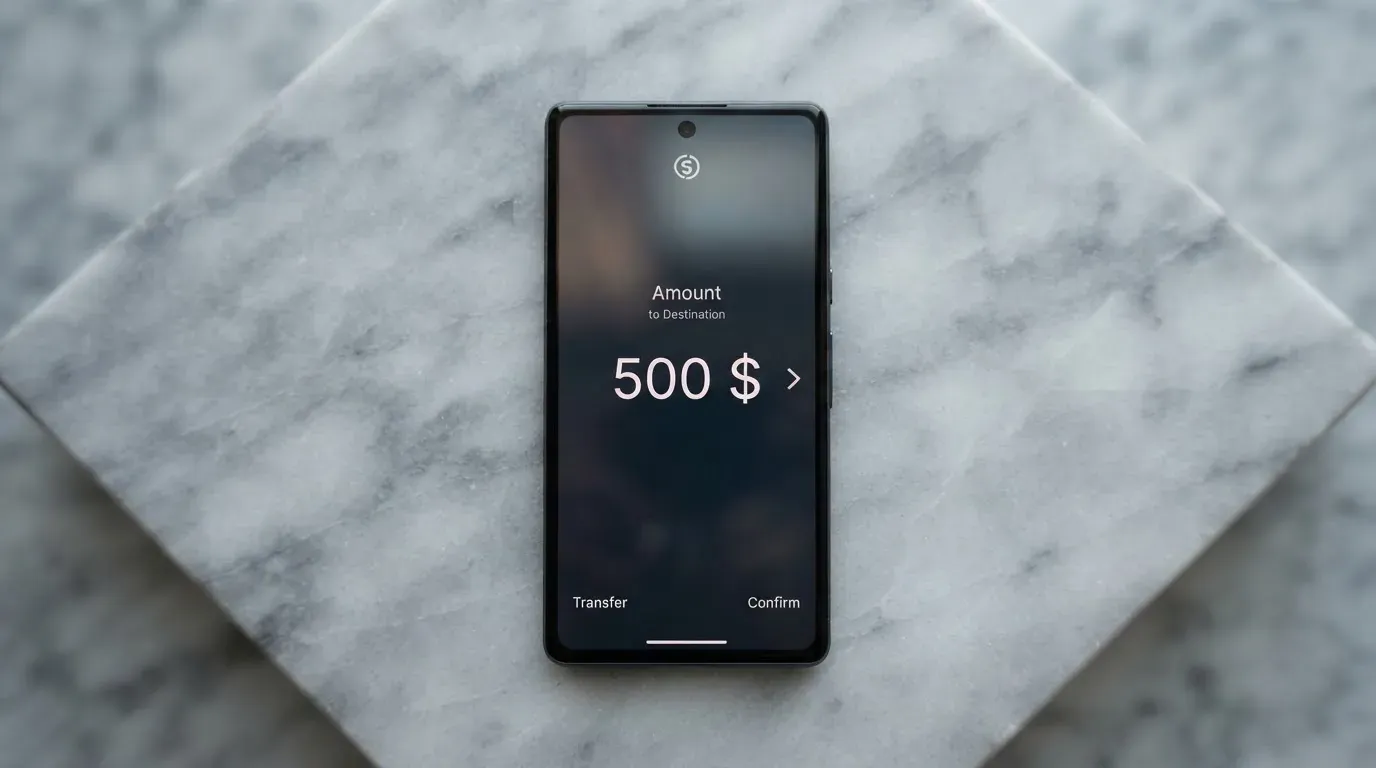
The Tron-specific design has a second consequence that is easy to miss: fees on Tron are paid in TRX (the network’s own token) through bandwidth and energy resources, so your wallet needs TRX alongside the USDT to send. A wallet holding USDT and no TRX simply cannot move funds. This is a small detail in normal use, but it is a real reason first-time top-ups fail.
The dollar cards’ naira top-up path is the more conventional one: a local bank transfer, which clears through the regular Nigerian banking rails. Minimum amounts, network fees, and any deposit fee for the dollar cards are not stated. The unofficial comparison puts the minimum funding at $5, but you should not rely on that figure before the company itself confirms it. The Prepaid card is bounded by the $25 to $10,000 funding range and by the one-shot rule: once you have loaded it, you cannot reload it.
A few smaller details are worth knowing before you commit. The activation link for a prepaid card expires after 60 days, so the card is not a thing you can buy and sit on. The prepaid card also has a two-month spending window: any balance you have not used within two months of purchase is meant to be used or lost, and the card terminates itself when the balance drops below $2.50.
Paying with it every day
All three Cardify products are virtual cards, which means you will not be carrying a physical piece of plastic. You add the card to Apple Pay or Google Pay from the prepaid page’s instructions, and you use the card number for online checkouts. The card’s pages say Apple Pay and Google Pay are supported for virtual cards; the same pages do not list any blocked merchant categories, which leaves gambling, adult content and similar categories in a grey area rather than a definite “blocked” or “allowed” answer.
There is no ATM access. The card is virtual, the company does not describe a cash withdrawal flow, and the dollar-card withdrawal process is not stated. If you need cash, this is not the card to reach for.
The mobile app is available on iOS and Android. The Google Play rating from the unofficial comparison is 4.3 out of 5 across 553 reviews, which is a reasonable mark for a fintech app; the App Store rating was not readable in the same check. In normal use the app is where you create cards, fund them, freeze them, and see your transactions. There is no rewards programme described, and the Terms of Service are governed by Nigerian law, with disputes heard in Nigerian courts. If you are not in Nigeria, that is a fact worth sitting with, because it determines where you would have to bring a complaint.
Two everyday annoyances are worth flagging because they show up in user reviews. First, a declined authorisation can leave a hold on your funds for several days — a property of card networks generally, not specific to Cardify — which means a failed online payment is not a no-op on your balance. Second, Cardify’s name and issuer country can be visible to merchants through the BIN (the first six or eight digits of the card number), and some merchants apply extra scrutiny to foreign-issued prepaid cards. The card works in most online checkouts, but it is not invisible as a foreign prepaid BIN.
What can go wrong
The cost and top-up questions are the ones you can answer before you put money in. The risk question is the one the company itself answers least, and it is where the review score loses the most ground.
The published security story is standard for a custodial fintech: Cardify is “not a bank”, funds are held through licensed partners, traffic is encrypted, the app uses multi-factor authentication, fraud monitoring is described as real-time, and a 4-digit PIN gates outbound transactions. The company behind the product is CARDIFY TECHNOLOGY LIMITED, a UK company with number 14295286; the Nigerian entity is CARDIFY COMPANY LTD, and the US entity is Cardify Africa Technology Inc, registered in Dover, Delaware. None of those three names is a bank, and the issuing bank for the cards is not named on the public pages. That is the structural risk: the card sits on a partner’s licence, and the partner is not identified.
The complaint record is more concrete. On Trustpilot, Cardify Africa sits at 2.7 out of 5 from 68 reviews (read on 2026-10-21). The recurring themes in the negative reviews are charges on transactions that never went through ($0.40 to $1 at a time, in reviews from mid-2025 through May 2026), slow card creation and funding (some users report two days to over a week, in 2025), and allegations of lost funds (March 2025 and August 2026). The pattern is not just one bad week: it is the same three complaints turning up in different years, which suggests they are structural rather than teething problems.
The wider context matters too. In July 2022, an issuer called Union54 that supplied several African virtual dollar card providers tightened or paused after chargeback fraud, and the effect rippled through products that depended on it. The Cardify Terms were last updated on 8 January 2024, and the prepaid card and foreign bank accounts sections of the site are still labelled “New”; no dated licensing or partnership news has been published since then. The prepaid card can be funded only once, and the dollar cards’ dispute process is not stated. None of this is a smoking gun, but it is the texture of a product that has not been around long enough, or transparent enough, to make the complaint record easy to dismiss.
Support is available by email, live chat, WhatsApp at +234 815 163 3333, and phone 9am to 5pm on weekdays, with a helpdesk at help.cardify.co. Outside those hours and channels, the recourse is the terms of service and the courts of Nigeria.
What to take instead
Cardify is not the only virtual dollar card aimed at this audience, and a few alternatives address some of the gaps I have just walked through. None of them is a perfect replacement — the alternatives each have their own rough edges — but each one changes the trade-off in a useful way.
Cardex (score 5.6 / 10) markets itself with the line “One crypto card, 200+ countries” and is not aimed only at Nigeria. It supports VERVE, Visa, Mastercard and UnionPay, and offers both virtual and physical cards; the App Store listing is naira-focused and the card’s currency is naira per the same listing. The site’s own pitch is an “AI-Powered Conversion Rate” that scans global exchanges at the moment of payment and picks the best rate; it accepts USDT, USDC and BTC, and fees are not stated as a percentage. The wider country footprint is the headline, the unspecified fee structure is the catch.
CardFlow (score 4.9 / 10) calls itself “Nigeria’s smartest fintech card platform” and targets Nigerians and global users. It issues a virtual USD Mastercard that the site says you can create in minutes, with a “Create Free Card” page that promises no creation fee. Funding can be in Bitcoin, USDT, ETH or naira by bank transfer; the networks for the crypto options are not stated, and the fee schedule is not stated either. CardFlow’s draw is the speed of card creation and the free issuance; the trade-off is the same lack of published fees.
HyperCard (score 4.7 / 10) does not publish a country list, and the App Store page claims acceptance in “more than 176 countries”, which is a useful thing to be clear about: acceptance is where the card works, not who is eligible to apply. The card is prepaid, the network is not stated on the App Store page, and the card balance can be in USD or EUR. Funding is crypto (USDT, BTC, ETH) deposited in the app, converted to the card currency at the time of funding; the App Store page lists no fees, and the wider fee schedule is not stated.
None of the three scores above 6, and none of them gives you the fully-transparent fee schedule that would let you compare them line by line. What they do give you is a wider country footprint (Cardex), a free creation step (CardFlow), or a multi-currency balance option (HyperCard). The right choice depends on which gap matters most to you.
| Card | Score | Headline difference | Main trade-off |
|---|---|---|---|
| Cardify Africa | 3.7 / 10 | Three products, prepaid and dollar card | 5% prepaid issuance, $2.50/month, low Trustpilot |
| Cardex | 5.6 / 10 | 200+ countries, four networks | No published fee percentage |
| CardFlow | 4.9 / 10 | Free card creation in ~3 minutes | No published fee schedule, networks not listed |
| HyperCard | 4.7 / 10 | 176-country acceptance, USD or EUR balance | No country list for eligibility, network not stated |
Who I would recommend it to
A short version of the verdict is this: Cardify Africa is a fit for a narrow reader. If you are a Nigerian resident, you have USDT on the Tron network (or naira in a local bank), and you need a virtual dollar card for a specific online payment that a Nigerian naira card would not clear, Cardify will get the job done. The 5% issuance fee on the prepaid card is high but not ruinous for a one-off $100 or $200 purchase, and the dollar cards’ “Low Charges” pitch is the part you have to take on trust until you actually try them.
It is not a fit if you want a card to keep a meaningful balance on, if you need to draw cash, if your USDT is on Ethereum or Solana rather than Tron, if you are outside Nigeria and the country list does not include you, or if the 2.7-out-of-5 Trustpilot score and the unresolved complaint themes are dealbreakers for you. The complaint record is not a one-off: charges on failed transactions, slow funding, and fund-loss allegations are the same three notes repeating across years, and the missing issuing-bank disclosure means the product’s safety rests on partners whose names you cannot see.
I would not use it as my primary dollar card, and I would not park funds on the prepaid card past the two-month free window. If you do use it, fund only what you intend to spend, fund it on the Tron network, keep TRX in the same wallet for the fee, and treat the 5% issuance fee as the cost of the convenience rather than a surprise.
Frequently asked questions
What is the Cardify Africa card?
The Cardify Africa card is a virtual payment card sold by a UK-registered company, CARDIFY TECHNOLOGY LIMITED, with a Nigerian operating entity, CARDIFY COMPANY LTD. There are three products: a Basic Dollar Card (Mastercard virtual debit), a Standard Dollar Card (Visa virtual debit), and a Prepaid Dollar Card (Mastercard, USD, one-shot funding). It is built for users in Nigeria and elsewhere in Africa, and the cards can be added to Apple Pay and Google Pay.
Is Cardify Africa a bank?
No. The company’s own pages say “not a bank” and describe its role as working with licensed partners. The issuing bank that holds the card programme is not named on the public pages, which is a structural gap rather than a unique one — many fintechs operate the same way — but it is the reason your money is held by an unnamed counterparty.
Who owns Cardify Africa?
The trading name belongs to CARDIFY TECHNOLOGY LIMITED, a UK company with company number 14295286, with CARDIFY COMPANY LTD in Nigeria and Cardify Africa Technology Inc in Delaware, US. The public pages do not identify individual owners or a parent group, and no dated licensing news has been published since the Terms were last updated on 8 January 2024.
Can I get a Cardify Africa card in my country?
The card’s homepage says it is “Designed specifically for Nigerians & Africans”, and the FAQ frames the dollar cards as being for users in Nigeria. There is no published country list and no published list of excluded countries, and the verification flow is built around the Nigerian BVN. If you are not in Nigeria, the safest reading is that the product is not aimed at you, and you should check the signup flow in the app before assuming eligibility.
How do I apply for a Cardify Africa card?
You download the iOS or Android app, register with your email and phone number, and set a 4-digit PIN. Level 1 (email, phone, PIN) is the basic layer; Level 2 adds the BVN for Nigerians plus an authenticator-app or email OTP, and is what unlocks the dollar cards. For users outside Nigeria the company says “similar methods may apply”, but the specific documents are not published.
Does Cardify Africa require KYC?
Yes. Level 1 collects and verifies your email and phone and sets a 4-digit PIN. Level 2 collects a regulatory ID number — the BVN for Nigerians — and confirms it with a one-time code to the phone linked to that ID, plus two-factor authentication. The published pages do not list a separate proof-of-address requirement, and the minimum age is not stated.
How do I top up a Cardify Africa card?
Dollar cards accept either naira from the NGN wallet (funded by bank transfer from any Nigerian bank) or USDT on the Tron network. The Prepaid card accepts USDT-TRC20 only and can be funded only once. Minimums and fees for the dollar cards are not stated officially; the prepaid card’s range is $25 to $10,000.
How do I add a Cardify Africa card to Apple Pay or Google Pay?
The card is virtual, so adding it to a mobile wallet is the normal way to spend it in person. The card’s own prepaid-page instructions describe adding the card to Apple Pay or Google Pay; once added, the wallet uses a tokenised Device Account Number rather than the real card number, and each transaction uses a one-time dynamic code. The card is virtual, so there is no plastic to carry.
Where can I use a Cardify Africa card?
Anywhere a Mastercard or Visa is accepted online, plus any contactless terminal that accepts Apple Pay or Google Pay once you have tokenised the card. There is no ATM access. The card’s BIN identifies it as a foreign-issued prepaid card to merchants, and some merchants apply extra scrutiny or decline foreign prepaid BINs; the card works in most checkouts but it is not invisible.
Is the Cardify Africa card safe?
The company describes encryption, multi-factor authentication, real-time fraud monitoring, and a 4-digit PIN for outbound transactions. The risks that user reviews focus on are operational rather than technical: charges on failed transactions ($0.40 to $1 each), slow card creation and funding, and allegations of lost funds in 2025 and 2026. The card sits on an unnamed issuing partner, and the Trustpilot score is 2.7 out of 5 from 68 reviews (read 2026-10-21). It is safe in the sense that the app uses standard controls; whether it is safe to keep a balance on is a question the complaint record answers negatively.
Virtual card fees – cryptocardfacts
Content created by the «cryptocardfacts» team