
COCA card review — what the pages actually say, and what they don't
 Available in US
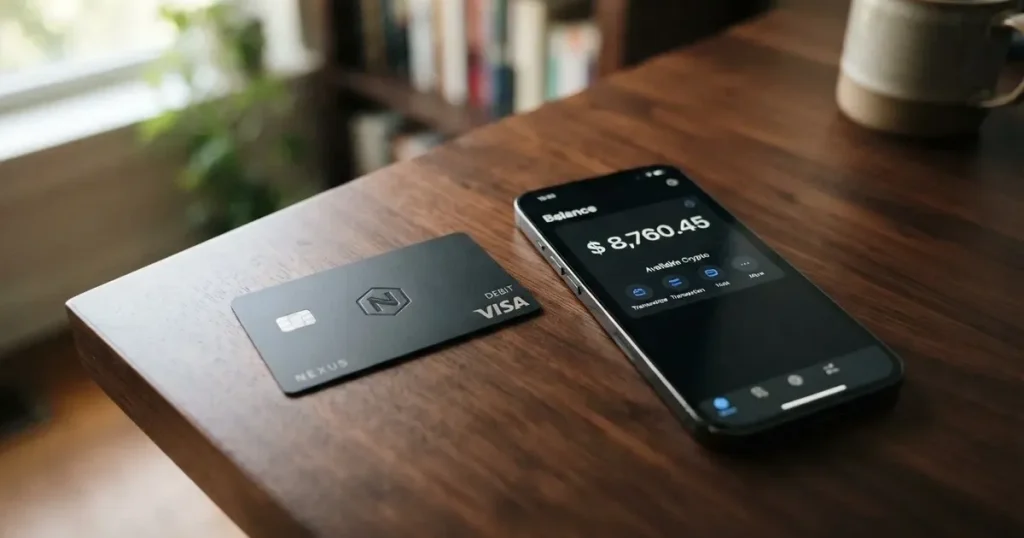
The COCA card is a Visa payment card linked to a non-custodial crypto wallet, and it pitches itself on two things: up to 8% cashback in stablecoins on card spending, and up to 50% back on subscription services. It runs on a tier system where holding the project’s own $COCA token lifts the cashback rate and monthly cap. That’s the marketing.
The day-to-day reality, after reading the card’s own pages, the terms, the App Store listing, and dozens of user reports, is that a lot of the practical details — the card’s own currency, the issuer, the FX markup, the exact tier thresholds — are simply not published. What you do get is a wallet-first product that hands you a Visa number, a stablecoin balance to spend from, and an app where the rest of the bill arrives in a notification after the swipe.
This review walks through who COCA is for, what it costs in practice, how funding works, and where the rough edges are. Conditions are current as of October 28, 2026.
Verdict
COCA scores 6.4 out of 10 in this review. It earns marks for everyday use (physical and virtual Visa, contactless, a free ATM allowance, mobile-wallet support according to third parties) and for being available in a wide spread of regions, including the UK, the EEA, Asia, South America, the Middle East and Africa. It loses marks because so much of the practical information — the issuer’s name, the card’s currency, the FX fee, the higher-tier thresholds, the chargeback policy — is not stated on the card’s own pages. Reliability and complaint handling are the weakest part of the package, and the cost of an everyday payment is hard to predict without going to third-party sites.
If you are a stablecoin holder who wants a high headline cashback rate on subscriptions and a Visa you can tap in a shop, COCA is worth a look. If you are a first-time crypto user who needs a card where the rules, fees, and dispute process are clearly written down before you apply, COCA asks you to take more on trust than most alternatives do.
How the score breaks down
| Criterion | Score | Why it lands there |
|---|---|---|
| Who can get it | 8 / 10 | Available across the UK, EEA, Asia, South America, the Middle East and Africa, with a defined list of restricted jurisdictions; eligibility is checked in the app. |
| Cost | 6 / 10 | The wallet has no maintenance fee per the App Store, but the card’s own pages do not state the issuance price, the FX markup, or the ATM terms; third-party sites report 0.5–1.5% FX depending on currency and a 50 EUR first top-up for the physical card. |
| Top-up options | 5 / 10 | Funding is via IBAN in EUR or USD, from other cards, or in stablecoins, but the specific coins, networks and minimums are not named on the official pages. |
| Reliability and complaints | 4 / 10 | The operating company is named (CCA Labs – FZCO in Dubai) but the card issuer is not; the wallet’s Google Play package still references Wirex; Trustpilot sits at 2.8/5 from 31 reviews, with several reports of locked funds and slow ticket resolution. |
| Everyday use | 9 / 10 | Physical and virtual Visa, mobile-wallet support per third parties, free ATM withdrawals up to 250 USD a month, and a non-custodial wallet with multi-party-computation security rather than a seed phrase. |
Who they will give the card to
COCA’s site says the card is “currently available in the UK, EEA, Asia, South America, Middle East and Africa,” and the recommended way to confirm is to check the eligible area in the app. The terms add a list of restricted jurisdictions that goes beyond the headline regions: Afghanistan, Iran, Iraq, Cuba, Syria and others.
A few things follow from that. The card is not marketed as global in the way a Visa or Mastercard sticker might suggest — eligibility is regional, and the restrictions look like the kind of sanctions- and risk-based exclusions you see across the crypto-card category, rather than a per-country application. A second, quieter point: because the card is non-custodial, country restrictions come from the wallet provider, the card issuer, and the underlying Visa programme, and they can all change. The app is the source of truth at the moment you apply.
The card is available to adults; the terms set 18+ as the floor. The card is physical and virtual, both on the Visa network, and the card’s own currency is not stated.
How to get it
The signup path is short on the page and longer in practice. The marketing line “no KYC hassles” sits on the wallet’s homepage, but the same site’s terms require you to cooperate with the provider’s verification requests, and a third-party write-up says the card’s KYC step is to pick the country of the ID you want to use and pass the issuer’s identity check. The exact list of documents, the time it takes, and what makes an application get rejected are not published by COCA.
What you can plan around:
- The wallet is the front door. You install the iOS or Android app, set up the wallet, and the card sits inside it. The App Store listing shows the iOS build as version 3.10.0, requiring iOS 17.0 or later (and visionOS 1.0+), with English as the only listed language.
- The card itself comes as physical and virtual, both Visa. The virtual card is typically available inside the app once the wallet is funded; the physical card is the one that involves a production and shipping step.
- Delivery time and cost are not stated by COCA. One Trustpilot reviewer described the delivery as fast; a third-party walkthrough also does not give a number. If timing matters for travel, assume you’ll need to ask support rather than rely on a published estimate.
- The physical card has a known wrinkle that COCA itself does not state: according to a third-party walkthrough, it requires a first top-up of around 50 EUR, with the card’s production and shipping costs deducted from that and the remainder kept as your balance. The size of that fee is not published.
The age of 18+ is the only published threshold. Anything about a credit check, proof of address, source-of-funds questions or PEP screening is not stated.
What it really costs
This is the section where the gap between the official pages and the third-party reports is widest. COCA’s terms say that fees are “disclosed at the time you access the Service,” and a single line in the footer advertises “fee-free swaps.” The App Store listing is more concrete: “No maintenance fees” and “Free ATM withdrawals up to $250/month.” Beyond that, the card’s own pages do not state issuance, the FX markup, ATM terms above the allowance, or monthly and daily limits.
Third-party sites fill in some of the blanks, and they broadly agree that the headline costs are low:
- Issuance — the virtual card is reported (in third-party walkthroughs, not confirmed by COCA) as free, with no minimum, and an annual fee of US$0. The physical card is reported to need a first top-up of around 50 EUR, with the production and shipping fee taken from that.
- Monthly maintenance — none, per the App Store listing.
- Conversion — the footer advertises “fee-free swaps.” A November 2024 press release advertised zero fees on swaps, spending and FX, described as a limited-time promotion; whether the promotion is still running is not stated on the pages read.
- Foreign exchange — a third-party walkthrough reports an FX fee of 0.5–1.5% depending on the currency, with USD and EUR at 0%. A separate aggregator reports 0% FX and no annual fee. The two do not contradict each other so much as describe different snapshots in time; the official position is “not stated.”
- ATM — free up to 250 USD a month, per the App Store listing. Above that, a third-party walkthrough reports a 2% fee, with the precise allowance not stated.
- Spending limits — one third-party site says there is no spending limit; another says there is a 30,000 EUR daily limit with unlimited transactions. The two are from different sources and have not been reconciled by COCA. Cashback claimable per month ranges from US$15 to US$350 depending on tier, per a third-party walkthrough.
A practical note on the spread: a September 2026 Trustpilot reviewer argues that the real cost of a payment is hidden in the conversion spread rather than the published fee. That is a complaint about clarity, not a specific fee, and it is worth weighing if you are the kind of person who wants every basis point in writing.
The honest summary is that the day-to-day cost of a COCA payment depends on which currency you spend in, whether you are inside or outside the ATM allowance, and which tier you sit in. The card’s own pages answer the easy half of those questions and leave the rest to support and to third parties.
Costs at a glance
| Item | What the card’s own pages say | What third parties report |
|---|---|---|
| Card issuance (virtual) | Not stated | Free, no minimum |
| Card issuance (physical) | Not stated | First top-up ~50 EUR, fee deducted from it |
| Monthly maintenance | “No maintenance fees” (App Store) | No annual fee |
| FX fee | Not stated | 0.5–1.5% by currency; USD/EUR 0% (per walkthrough); 0% per another aggregator; a 2024 promo advertised zero fees for a limited time |
| ATM withdrawals | Free up to $250/month (App Store) | 2% above the allowance; precise allowance not stated |
| Spending limits | Not stated | “No limit” vs 30,000 EUR daily (different third-party sources) |
| Cashback claimable | Tier-dependent, monthly cap | US$15–US$350 per month by tier (third-party estimate) |
Three everyday payments and what they cost
To make the abstract concrete, here is how three ordinary transactions work out under the third-party-reported fees.
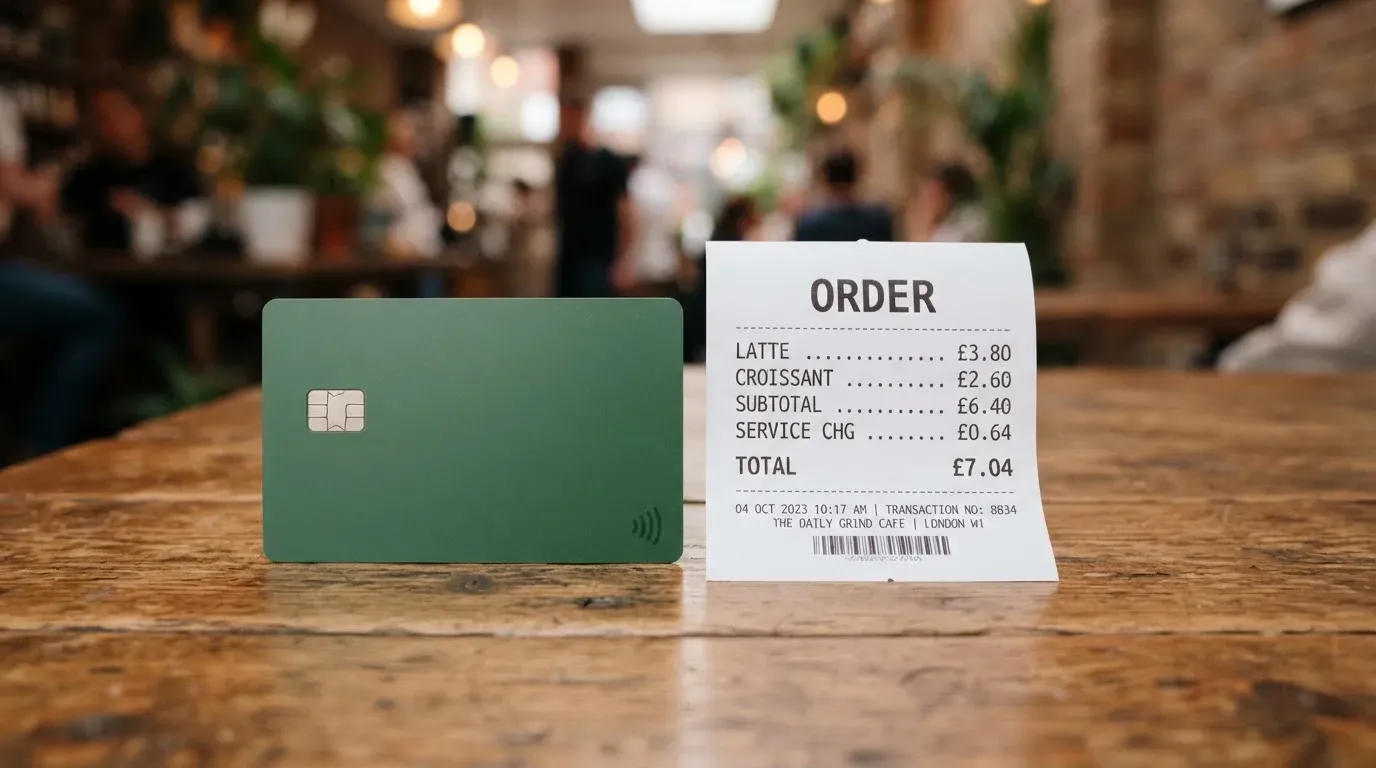
- Coffee in London paid with USDC — the app converts USDC to GBP at the rate inside the wallet. If the FX markup is at the low end of the 0–1.5% range, the cost of a £4 coffee is a few pence on top of the spot rate. You earn cashback under your tier’s rate. This is the use case COCA’s own pages actively encourage.
- ATM withdrawal in Berlin, 200 EUR — this sits inside the free 250 USD monthly ATM allowance the App Store describes, so the fee is zero. Above the allowance, a third-party walkthrough puts the fee at 2%, which on 100 EUR is 2 EUR. The precise allowance figure is not published by COCA.
- A 200 USD flight on a foreign airline, paid in a non-USD/non-EUR currency — the FX fee of up to 1.5% per the walkthrough is the published cost. A separate Trustpilot reviewer argues the spread is where the real cost sits, so the on-paper fee and the realised cost may not match. If you are sensitive to that gap, this is the kind of payment to test with a small amount first.
How to top it up
The funding path is the part COCA’s documentation actually describes, even if the specifics are thin. The wallet is funded by an IBAN transfer in EUR or USD, by other cards, or by stablecoins. The documentation at docs.coca.xyz repeats those three lanes: IBAN in EUR or USD, cards, and stablecoins.
What the official pages do not say:
- The specific stablecoins and networks. The third-party walkthroughs and the user reports on Trustpilot mention USDT and USDC; a September 2026 report on Trustpilot describes USDC transfers via X Layer that were not refunded, which suggests users do send over specific networks even if COCA does not list them.
- The minimum top-up. For the physical card, a third-party walkthrough gives a first top-up of around 50 EUR; for the wallet, no minimum is stated.
- Who pays the network fee. On-chain transfers are paid by the sender in the network’s own asset (gas in ETH on Ethereum, bandwidth/energy or TRX on Tron). COCA does not publish whether the wallet or the user covers this.
A few practical points worth knowing before you send anything:
- The wallet is non-custodial. When you pay, the assets are moved to a third-party linked smart-contract wallet that handles the fiat side. That is the architecture that lets COCA market itself as self-custody, but it also means a deposit is one transaction you cannot cancel or modify once it is sent.
- Transfers on the wrong network can be lost. Blockchain transfers are irreversible, and a deposit on a network the wallet does not support, or to an address of another network, can only be recovered through support, with no guarantee.
- Account closure is by withdrawing assets. The terms say the account is closed by withdrawing assets, that the wallet is non-custodial, and that if COCA withdraws the wallet it will “endeavour to give” two months’ notice. Fees are not refunded on termination.
Paying with it every day
In the shop, COCA behaves like a prepaid Visa: you tap the card or the phone, the app converts the balance at the rate inside the wallet, and the merchant receives fiat. The card supports physical and virtual use; third-party sites list Apple Pay and Google Pay as supported, although COCA’s own pages do not state this directly.
Cashback is the headline feature, and the tier system is what makes it interesting:
- Basic tier is automatic — you do not need to hold any $COCA. You earn the base cashback rate.
- Higher tiers require holding $COCA in the wallet. The exact thresholds, names, and monthly spending caps above which the rate drops to 1% are not published on the pages read; COCA points to a separate “Tier System Terms & Conditions.”
- Subscriptions — Netflix, Spotify and similar services can earn up to 50% back. The 50% rate is the marketing line; the actual rate for any given service depends on your tier.
- Downgrade — when $COCA holdings fall below a tier, you have a 30-day grace before the rate drops.
In the app, the iOS build is version 3.10.0, requires iOS 17.0 or later (and visionOS 1.0+), and the App Store rating is 3.9 out of 5 from 37 ratings as of 2026-10-20. The Google Play package is com.wirex.wallet, which is a notable tell: the same Android package was used by Wirex, and a 2024 Trustpilot review describes Wirex accounts moving into the Coca Wallet app. The current Google Play rating was not retrievable.
Two small but practical points on daily use:
- The terms do not mention chargebacks. Disputes are handled under English law, individual claims only, and time frames are not stated. If your plan is to rely on the card for large purchases where a dispute is part of the safety net, that gap is worth pricing in.
- A declined authorisation can leave a hold on your balance for several days. That is industry-wide behaviour rather than a COCA-specific quirk, but it matters more on a prepaid-style card because the held amount is part of the balance you actually spend from.
What can go wrong
The honest list of risks starts with the company’s own pages and widens out to the user reports that are public.
- The card issuer is not named. COCA is operated by CCA Labs – FZCO, registered at Dubai Digital Oasis, UAE, under DSO-FZCO-31557. The card issuer — the licensed entity that actually issues the Visa — is not stated on the pages read. A third-party walkthrough suggests the issuer is Wirex, and the Google Play package name com.wirex.wallet supports that hint, but COCA itself does not confirm it. That means the regulatory passport behind the card sits somewhere other than where the brand is registered, and the cardholder is the one left reading the small print.
- The terms predate MiCA’s later phases. The published terms are dated 2023-11-04. MiCA’s stablecoin rules took effect on 30 June 2024 and the rest of the regulation, including crypto-asset service provider rules, on 30 December 2024. Nothing about a licence change has been found in the December 2025 to 2026 window. If the issuer is in the EEA, the card programme sits under the relevant national authority and is also subject to MiCA’s transition, which runs until 1 July 2026 or until the provider receives or is refused a MiCA authorisation, whichever comes first.
- Trustpilot sits at 2.8 out of 5 from 31 reviews, with 78% five-star and 16% one-star, mostly from early 2024 wallet reviews. The recurring complaints are: funds and card inaccessible after an app update, deposits on the correct network not credited after a week, USDC transfers over X Layer not refunded, an account closed after a months-long wait with only part of the balance returned, an internal 20 EUR SEPA transfer held for compliance, and a claim that the “0% FX” promotion hides the cost in the spread.
- The dispute path is thin. The terms do not mention chargebacks, and the time frame for filing a claim is not stated. If something goes wrong with a payment, the practical route is the support channels: [email protected], a “Need Help?” channel on Discord, t.me/coca_card on Telegram, and @coca_card on X. Hours are not stated, and the App Store lists English as the only supported language.
- Security is the strong suit. The wallet is non-custodial and uses multi-party computation, so the FAQ says there is no seed phrase to write down. The terms still refer to a “Recovery Phrase” and say COCA cannot recover access if you lose it. Swaps are protected via Flashbots, which front-runs less of the transaction than a public mempool would. Freeze in app, and any insurance, are not stated.
The pattern in the complaints is not fraud — it is stuck funds, slow support, and uncertainty over the issuer. If you are the kind of person who needs a fast, clearly-identified entity on the other end of a chargeback, that is the gap to be honest about.
What to take instead
COCA’s strongest alternatives in the same broad category are listed below. Each is described only on the facts published on its own pages and on the score given in this review.
- International Visa Card — 6.7/10. A U.S.-issued Platinum Visa that pays in USD, with a $5 one-time virtual card fee and no maintenance fee. Plans run from a free Classic tier to Pro at $9/month and Max at $19/month. Card use in USD is free; foreign-currency use is the Visa exchange rate plus a 2% FX fee, and deposits of any kind are free. Funded with USDC or USDT into a USD account at 1:1, plus USD, EUR, SEPA, SWIFT and FedNow deposits. The catch is the country list: residents or legal registrants of Belarus, mainland China, North Korea, Cuba, India, Iraq, Iran, Israel, Myanmar, Nepal, Nicaragua, Russia, Syria, Turkey, Ukraine, Venezuela and Vietnam are not eligible, and purchases are blocked in North Korea, Cuba, Iran, Russia, Syria, Ukraine and Venezuela. The rule applies to residence or registration, not citizenship. No cashback is stated.
- UNi Card — 6.1/10. A multicurrency card on the Mastercard network that spends from the UNi.Global account balance, with “no annual fee or foreign transaction fee.” Conversions are at live over-the-counter rates, with “no hidden exchange fees.” Spend-to-Earn rewards of up to 3% are stated. Country availability, the physical/virtual split and the funding options are not stated on the pages read.
- Whop Cards — 5.2/10. A Visa that spends from a Whop balance — pending balance is usable as soon as a payment arrives, standard withdrawals use settled funds — backed by stablecoin collateral from a linked wallet, though the coins and networks are not named. The card costs nothing extra, the page says, and 5% cashback is offered at select merchants, starting with Uber. Consumer availability covers 31 US states (Alabama, Alaska, Arkansas, California, Colorado, Connecticut, Florida, Hawaii, Illinois, Indiana, Iowa, Kansas, Kentucky, Maine, Massachusetts, Michigan, Minnesota, Montana, Nebraska, New Hampshire, New Jersey, New York, North Carolina, Oklahoma, Pennsylvania, South Carolina, Texas, Utah, Virginia, West Virginia, Wyoming); business availability covers 41 states. Unsupported consumer countries include Belarus, mainland China, Cuba, Hong Kong, India, Iran, Iraq, Israel, Myanmar, Nepal, Nicaragua, North Korea, Russia, Syria, Turkey, Ukraine, Venezuela and Vietnam. The basis for the rule — citizenship or residence — is not stated.
If the headline COCA features matter to you, the closest fits are different in each case. International Visa Card is the cleaner pick for someone whose day-to-day spend is in USD and who wants a defined FX fee. UNi Card is the better fit for someone who wants multicurrency Mastercard coverage and accepts that fees and limits are not all on the page. Whop Cards is the only one of the three that publishes 5% cashback at named merchants, but its US-only availability makes it a non-starter for most readers outside the US.
Who I would recommend it to
The honest shortlist of who COCA suits is short.
You are a good fit if you:
- already hold stablecoins and want a Visa number to spend them at point of sale without manually converting to fiat first;
- live in the UK, the EEA, Asia, South America, the Middle East or Africa, and the in-app check confirms you are in an eligible region;
- are comfortable with a card whose own pages do not state the issuer, the card currency, the FX markup, or the higher-tier thresholds, and you can test small payments before relying on it for larger ones;
- care about subscription cashback more than chargeback rights, and you can move your streaming spend onto a single Visa to capture it.
You are probably not a good fit if you:
- need a card where the issuer’s name, the dispute time frame, and the FX fee are in writing on day one;
- are a first-time crypto user who would benefit from a custodial experience with a clearly-licensed entity on the other end;
- need reliable, fast support when funds get stuck; the public complaint record shows that this is the area where COCA is most exposed;
- live in or hold citizenship of one of the restricted jurisdictions — Afghanistan, Iran, Iraq, Cuba, Syria and others.
The card’s everyday mechanics are good. The information gap around cost, the issuer, and dispute handling is the part you should test first, with a small payment and a small withdrawal, before you load the balance you would actually want to live on.
Frequently asked questions
What is the COCA card?
The COCA card is a Visa payment card (physical and virtual) that spends from a non-custodial crypto wallet, with cashback paid in stablecoins and a tier system based on holding the $COCA token.
How does the COCA card work?
You fund the wallet via an IBAN transfer in EUR or USD, a top-up from another card, or a stablecoin transfer; the wallet converts the balance when you pay, and the merchant receives fiat. Cashback is paid in stablecoins, with higher rates at higher $COCA tiers.
Is COCA a bank?
No. COCA is operated by CCA Labs – FZCO, a Dubai Digital Oasis company; the card issuer is not named on the card’s own pages, although third-party write-ups suggest it is Wirex.
Is the COCA card available in my country?
The card is published as available in the UK, the EEA, Asia, South America, the Middle East and Africa, with a list of restricted jurisdictions including Afghanistan, Iran, Iraq, Cuba, Syria and others. The reliable way to check is the eligible-area prompt inside the app, since rules change.
Does the COCA card require KYC?
The wallet’s marketing says “no KYC hassles,” but the terms require you to cooperate with the provider’s verification requests, and a third-party walkthrough describes the card’s KYC as choosing the country of the ID and passing the issuer’s check; the exact documents are not detailed.
Is the COCA card free?
The wallet has no maintenance fee per the App Store; the virtual card is reported as free with no minimum by third parties; the physical card needs a first top-up of about 50 EUR, with the production and shipping fee taken from that.
How do I top up the COCA card?
Via an IBAN transfer in EUR or USD, a top-up from another card, or a stablecoin transfer. The specific stablecoins, networks, and minimums are not published on the official pages.
Can I add the COCA card to Apple Wallet or Google Pay?
Third-party write-ups list Apple Pay and Google Pay as supported; COCA’s own pages do not state this directly. The app is the place to check for the current wallet-binding flow.
Is the COCA card safe?
The wallet is non-custodial and uses multi-party computation, which means there is no single private key on a server; the terms still mention a recovery phrase that COCA cannot restore. The card issuer is not named on the public pages, and a recurring theme in user complaints is funds stuck after app updates or compliance holds.
Is the COCA card worth it?
If you hold stablecoins, live in a supported region, and value subscription cashback and a wide ATM allowance over a published FX fee and a named chargeback process, COCA is a reasonable option. If you need a card where every fee, limit, and dispute rule is on the page, an alternative with a clearer fee schedule is a better fit.
App and neobank card fees – cryptocardfacts
Content created by the «cryptocardfacts» team