
A virtual card from a young crypto platform, with its fee numbers kept inside the app
 Available in US

If you have been searching for a card that spends straight from a crypto balance and you keep landing on pages that describe one in general terms but never say what a single payment costs, this review is for you. The Coinepay card is a real product from a real set of registered companies, it issues virtual Visa and Mastercard cards, and it is aimed at people who pay for things abroad — the site’s own examples are AI subscriptions, advertising and purchases overseas. What it is not is a card whose fees, limits and top-up routes are written down anywhere public. Almost every number you would want to compare lives inside the app, and this is the central fact about using it.
I scored it 5.2 out of 10. That is not a dismissal; it is a card that does what it says at the level of basic mechanics while leaving the part that matters for trust — published pricing — undocumented. Below I walk through who it is for, what it costs, how you fund it, what can go wrong, and what the alternatives do better.
The conditions described here are current as of October 28, 2026.
Verdict: 5.2 out of 10
Here is the score broken down, with the reason for each mark next to it.
| Criterion | Mark | Why |
|---|---|---|
| Who can get it | 6 / 10 | Over 30 regions and users worldwide can register, but residents of restricted jurisdictions and mainland China are excluded |
| Cost | 5 / 10 | Fees, exchange rates and limits appear in the app before you confirm; no figures are published |
| Top-up options | 5 / 10 | Unofficial sources describe USDT deposits on TRC20 and BSC; the card says nothing itself |
| Reliability and complaints | 6 / 10 | Registered entities named in the User Agreement, no complaint pattern found, iOS rated 5 from 5 by five raters |
| Everyday use | 3 / 10 | Virtual Visa and Mastercard only; wallets, ATM access and more are not described |
Total: 5.2 / 10.
Who this suits: someone who already holds stablecoins, who pays for recurring digital services abroad, and who is comfortable treating an app screen as the only place fees exist. If you can check the numbers yourself in the app before each payment and you do not need a physical card, the fit is real.
Who this does not suit: anyone who wants to compare costs in advance, anyone who needs cash at a machine, anyone who wants to hold a card that is not tied to a crypto platform, and anyone who is uneasy about a product whose central pricing is not published. If you are choosing on trust, there is not enough on the page to weigh.
One audience the site clearly has in mind: teams paying for AI subscriptions and advertising abroad. For that use, where spend is regular, in a known currency, and checked before each transaction, the gaps hurt less.
Will they give you the card?
The short answer is probably yes, provided you are over 18, not sanctioned, and not living where the service is restricted.
The User Agreement sets the frame: 18 or older, not sanctioned, and not a resident of or located in a jurisdiction where services are restricted under the AML/CTF Policy. There is one explicit exclusion beyond that — virtual-asset services are not available to residents of mainland China. Beyond that named country, the Agreement points to a policy rather than listing countries, which means the exclusion list lives in a document you would have to go and read rather than on the page you are reading now.
The home page is more encouraging and vaguer at once: it says “Over 30 regions” and “Users worldwide can register.” Those two phrases are not the same as a list of eligible countries. One describes reach; the other describes registration. They do not tell you which specific countries are open, and they do not tell you whether a card is issued in every region where you can register. Nationality is also treated separately from residence in the general KYC model that applies to this category of service, so being a citizen of a restricted country can matter independently of where you live.
There is no stated minimum age above 18, no stated income requirement, no stated credit check, and no stated balance requirement. The public pages also do not say what happens if you live in a country where the service turns out not to be available — whether registration is blocked, or the account is closed later. That ambiguity is the practical thing to watch: the site promises worldwide registration while the Agreement restricts it, and the Agreement is the document that binds you.
How to get it
You register by email or phone, or with a Google or Apple login. Then, before certain services, you have to pass identity verification (KYC) for yourself or business verification (KYB) for your company — and the Agreement lets Coinepay ask for more information at any time. What that means in practice is that the verification step is not necessarily the last one.
What you end up with is virtual cards: Visa and Mastercard, issued through what the materials call “compliant banks.” The App Store description says virtual cards only, and no physical delivery is mentioned anywhere I could find. Several cards can sit under one account, so you can hold more than one card — useful if you want to keep spend separated.
What is not stated matters as much here. The card’s currency is not stated; the starting data point mentioned is a USD card balance, which suggests but does not confirm that you will be transacting in dollars. Verification levels are not described, so you cannot tell from public pages what unlocks at which stage. And the issuing banks are not named, only described as compliant — so if you want to know who is legally your issuer, and under whose rules a chargeback will be judged, the public pages do not tell you.
Nobody will hand you a plastic card in the post. If a physical card is a requirement for your situation, that is where this product stops being a candidate.
Fees: What It Really Costs
The honest answer is that Coinepay does not publish its prices. It tells you where to find them.

The Agreement states that “Fees, exchange rates and limits applicable to each Service are shown in the application or communicated to you before you confirm a transaction.” The home page adds “Ultra-low transaction fees” and mentions negotiable pricing for higher volumes. Merchants, card networks and banks may add their own fees on top — that part is generic to the category and worth remembering, because it means your real cost is never entirely the card’s number.
So, one by one, against what most readers want to know:
| Fee or limit | What the card states |
|---|---|
| Issuance | not stated |
| Monthly fee | not stated |
| Conversion | exchange rates are shown in the app before you confirm; no figure published |
| FX | merchants, card networks and banks may add their own fees; no figure published |
| ATM | not stated; virtual cards only |
| Daily and monthly limits | shown in the app before each transaction; figures not published |
That table is the cost section of this review. It is short because the card’s own disclosure is short.
Three ordinary payments, and what applies to each:
A monthly AI subscription in dollars. The card converts your balance at the rate shown in the app before you confirm, and you pay that rate plus whatever fee is displayed. Whether your stablecoin arrives as USDT and is converted on load or on spend is not stated. If you are funding with a token that is not a dollar equivalent, the conversion cost is the whole point of the transaction and the number that matters most — and it is the number you can only see at the moment of payment.
A purchase at a foreign shop while travelling. Two costs can appear. Your own card-side conversion and fee, which you see in the app, plus whatever the merchant’s acquiring bank and the network add. This is also where a card can be declined for reasons that have nothing to do with your balance: merchants can look up the issuer country behind the card number, and if it differs from your billing address they may apply extra scrutiny. Address verification, which compares the numeric parts of the billing address a buyer types with issuer records, is mainly offered in the US, Canada and the UK and is generally unavailable for foreign-issued cards. That is a well-known cause of declines, and it applies to cards like this.
A purchase from a merchant that blocks prepaid or foreign-issued cards. The BIN lookup reveals the card type and the issuer country, and some merchants decline on that basis. This is not the card’s fault, but it is a cost of the design in the sense that it costs you the payment. Casino and betting transactions sit under a merchant category code that many issuers block by policy rather than by law, with the blocked list differing by issuer. What this specific card blocks is not stated.
On limits: they are shown in the app before each transaction, and transactions are “subject to limits, review and approval” by Coinepay and by partner institutions. Business accounts can have custom spending limits per card. There are no tiers, no published figures, and no stated way to predict what a limit will be. The practical consequence is that you cannot budget from the website, and a limit you did not know about can stop a payment you expected to go through. A declined authorisation can also leave a hold on funds that stays for several days, sometimes up to seven.
Top up: How the Balance Gets There
Officially, the card does not say. There is no published list of deposit methods, no minimum, no fee on funding, and no withdrawal terms.
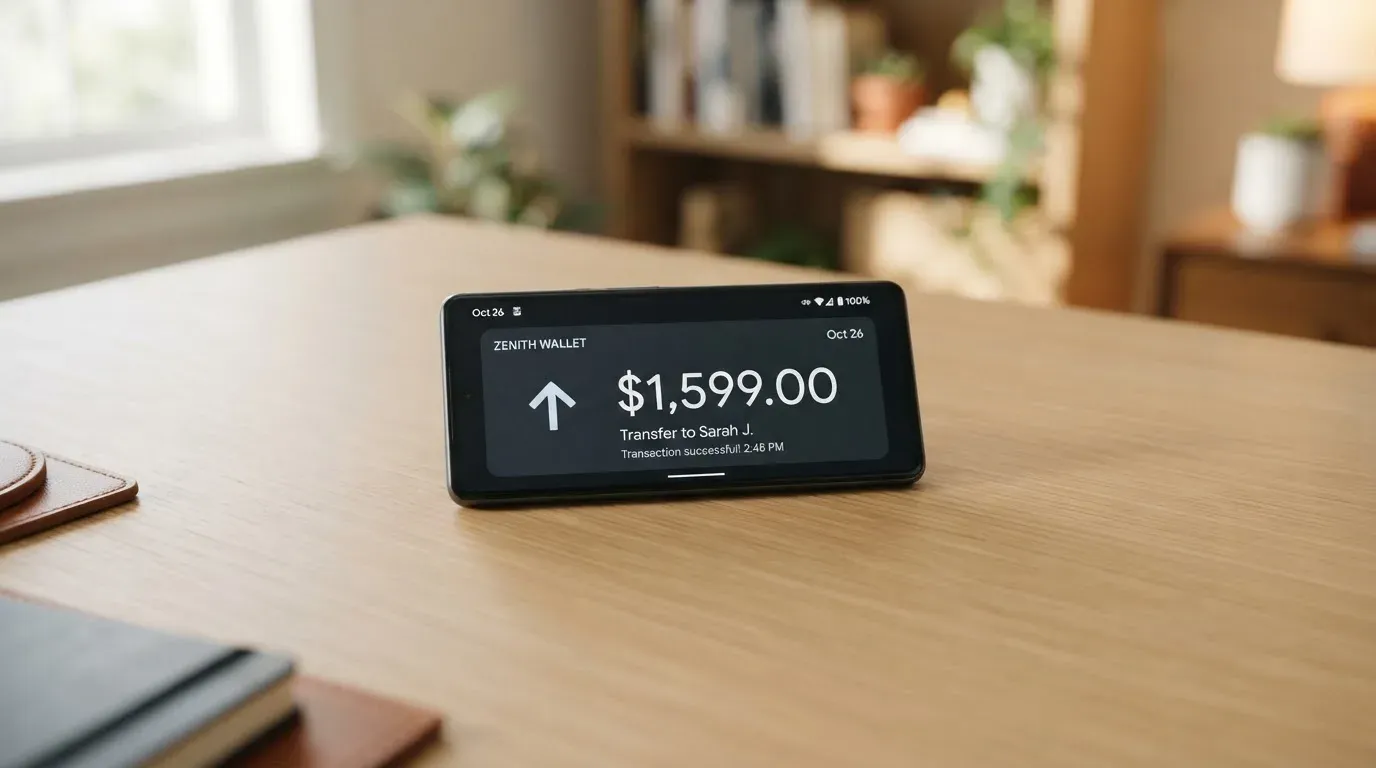
What exists is unofficial. A Coinepay promotional Substack from 2026 describes depositing USDT on the TRC20 or BSC network through the app’s Wallet > Deposit flow. Treat that as third-party material, not as the card’s confirmed terms — the card has not confirmed it on its own pages, and promotional write-ups are not contracts.
If you are considering funding that way, three general facts about this route are worth knowing before you act. First, network fees are charged by the blockchain, not by the card provider, so a deposit costs more than the amount you send. Second, transfers are irreversible: a deposit sent on a network the provider does not support, or to an address belonging to a different network, can be lost or need manual recovery with no guarantee attached. Third, USDT does exist on several networks, so sending the right token to the wrong chain is an easy mistake to make. None of these are specific complaints about Coinepay; they are properties of how the rails work.
The currencies part is also worth pausing on. The card states its currency is not stated, with a USD balance as the starting data point. If your balance is dollar-denominated and your deposit is USDT, you are exposed to the token’s price against the dollar until the moment of conversion, and stablecoins are not guaranteed to hold their peg — the name describes the aim, not an outcome. Tether describes USDT as a token built on multiple blockchains with reserves intended to back it one-to-one; that is the issuer’s own description of intent, not a guarantee given to you.
Paying With It Every Day
Day to day, this is a virtual card that spends a balance you have already loaded. The App Store listing describes advanced encryption technology for user data. The iOS app is published by Coinepay Limited, version 2.2.2 dated 28 September 2026, and Android is available on Google Play under io.coinepay.app with 5K+ downloads, updated 24 September 2026, plus an APK.
Everyday use is where this card scored lowest for me, at 3 out of 10, and the reason is simple: virtual Visa and Mastercard, and not much more. Whether you can load it into Apple Pay or Google Pay is not stated. Whether the card number works for recurring subscriptions, which is the main thing people want a virtual card for, is not stated. Whether there is any cash-out route is not stated, and with virtual cards only, an ATM is not the use case. Whether some merchant categories are blocked is not stated. There is no rewards programme described, no cashback, and no stated tier structure.
What the site does name is where it expects to be used: AI subscriptions, advertising and purchases abroad. Those are digital, cross-border, recurring and low-value — exactly the shape of spend that a virtual card handles without any of the missing features mattering. If your daily life is paying a software bill in dollars, this is a coherent product. If your daily life involves a physical card, a till, or a wallet you already have in your pocket, the missing pieces are not edge cases; they are the product.
What Can Go Wrong
The numbers you cannot see. This is the first risk and it is structural. Fees, exchange rates and limits live in the app. If a screen ever shows you a worse rate than you expected, you find out at the confirmation step, which is the last possible moment to change your mind.
Transaction review and approval. Transactions are subject to limits, review and approval by Coinepay and partner institutions. Combined with the right to request more information at any time, this means access can change after you have already deposited.
No published incident record, and no complaint record either. I found no official incident notices, and no Trustpilot or Reddit page for this brand in searches on 21 and 22 October 2026 — the results that came back were about CoinPayments, a different company, or generic virtual-card guides. That is not a clean bill of health. It is closer to an absence of track record, which cuts both ways: there is no pattern of complaints, and also no independent track record to lean on.
A young product. The app first appeared on the App Store on 6 December 2025, and no other dated card events were found. That is under a year of public life as of this review.
The company structure is disclosed but not verified. The User Agreement names World Card Ltd, headquartered in New York with Wyoming as parent, as the parent; Green Banking Services Ltd, Ontario, Canada, FINTRAC MSB #N300000924, as the operating entity that contracts with you; and Coinepay Pte. Ltd. in Singapore and Coinepay Limited in Hong Kong as liaison offices. A second FinCEN MSB registration, 31000321315556, is in the Coinepay Limited name. These are registrations the site claims; I did not check them in the registries. Note the shape of it: your contract is with a Canadian entity, while the brand and apps sit in Hong Kong and Singapore. That is not unusual in this category, but it tells you which legal relationship you actually have.
Security details are thin. The App Store listing claims advanced encryption technology. The custody model, whether two-factor authentication is available, and whether the card can be frozen instantly are not stated. Typical safeguards in this category are app-based 2FA, instant card freeze, spending limits, 3-D Secure confirmation and tokenised mobile wallets; you should assume none of them until you see them in the app.
Money movement on-chain is one-way. Blockchain transfers cannot be reversed. There is no chargeback on a deposit that went to the wrong network.
Programme risk is real in this category. Card programmes do close. Visa terminated its global agreements with FTX on 13 November 2022, and the FTX US debit card was wound down by its issuer. WaveCrest, a Visa issuer that supplied crypto card brands, was suspended by Visa in Europe in 2018, closing all its Visa programmes. Closures typically mean a notice period, then spending and loading stop, then you are asked to withdraw remaining balances — which is why a card that only exists virtually and only exists on one platform deserves particular respect before you load it.
If something goes wrong with a payment. Report unauthorised or incorrect transactions without undue delay. Disputes with merchants go to the merchant first; Coinepay then helps submit a chargeback under card network rules, and the outcome is decided by the issuer and the network, not by you. Refunds are credited according to the merchant’s and the network’s timing. The governing law is Ontario, Canada. Note what that chain means: you have no direct relationship with the issuing bank, and the decision is theirs.
Taxes are yours to work out. I am not giving tax advice and you should take your own, but the mechanics are public. Digital assets are treated as property, so exchanging them for goods or services generally produces a taxable gain or loss, measured in local currency at fair market value on the date of the transaction. Each card payment funded from crypto may therefore be a separate disposal. For personal holdings the result is a capital gain or loss, short-term if held a year or less.
What to Take Instead
These are the same kind of product, judged on the same criteria, so the comparison is fair.
Cardex — 5.6 / 10. This scores higher, and the reason is what it does publish. It says “One crypto card, 200+ countries,” it runs on VERVE, Visa, Mastercard and UnionPay, and it offers virtual and physical cards. Its App Store listing is Naira-focused, paying in Naira, and it funds from USDT, USDC and BTC wallets. On cost, the site claims real-time crypto-to-fiat conversion at the moment of payment and an “AI-Powered Conversion Rate” that scans global exchange rates and picks the best one as you spend. No fee percentage is stated. Note the gap: 200+ countries describes reach, and no country list or exclusions are published.
CardFlow — 4.9 / 10. Aimed squarely at Nigeria — “Nigeria’s smartest fintech card platform,” for “Nigerians and global users” — with no country list or exclusions stated. It is a virtual USD Mastercard, funded from Bitcoin, USDT, ETH or a Naira bank transfer. The one fee fact it publishes is a positive one: “Creating a virtual card is completely free.” Its monthly fee and transaction fees are not stated.
HyperCard — 4.7 / 10. A prepaid card with a balance in USD or EUR, funded by depositing crypto such as USDT, BTC or ETH in the app and converting to the card balance. Its App Store page says the card works in “more than 176 countries” — and that is acceptance, not eligibility, which is a distinction worth keeping in your head. The network is not stated on the App Store page, and neither are fees.
| Coinepay | Cardex | CardFlow | HyperCard | |
|---|---|---|---|---|
| Score | 5.2 / 10 | 5.6 / 10 | 4.9 / 10 | 4.7 / 10 |
| Card form | Virtual Visa, Mastercard | Virtual and physical | Virtual USD Mastercard | Prepaid, form not stated |
| Networks | Visa, Mastercard | VERVE, Visa, Mastercard, UnionPay | Mastercard | not stated on App Store page |
| Card currency | not stated; USD balance as starting data | Naira per listing | USD | USD or EUR |
| Funding described | nothing official; unofficial USDT on TRC20/BSC | USDT, USDC, BTC wallets | Bitcoin, USDT, ETH, Naira transfer | USDT, BTC, ETH in app |
| Published fees | none | none; conversion approach described | card creation free | none |
| Coins needed | 18+, not sanctioned, not in restricted jurisdictions | no list or exclusions stated | Nigeria-focused, no list | no list; 176+ countries is acceptance |
Where the alternatives beat it: Cardex and CardFlow both state their card currency and their funding assets, and CardFlow states that creating a card is free. Where Coinepay stands out is the multi-network card choice and the explicit, published statement of which regulated entities are on the hook for your contract — that detail is more transparent than any of the three on the Agreement page. What none of the four does well is publish transaction fees. That is a property of the category, not a failing of this card alone.
Who I Would Recommend It To
I would recommend this card to a specific person: you already hold USDT or a similar stablecoin, you pay for subscriptions or advertising abroad in dollars, you check the rate and fee in the app before each payment without resenting the extra step, and a virtual card is genuinely enough for your life. Under those conditions, the missing public numbers are annoying rather than dangerous, because you are verifying them yourself at the moment they apply.
I would not recommend it if any of these are true. You want to know what a payment costs before you commit to it. You need a physical card, an ATM, or a wallet you can use at a supermarket. You are putting meaningful money in and want a product with an independent public record — because there is not one yet. You are in a jurisdiction where you need certainty rather than “over 30 regions and users worldwide can register.” Or you are simply the kind of person who reads terms before signing up, and the terms here are four lines long where the others have seven.
My honest summary is that this is a competent, narrow product with a transparency problem rather than a competence problem. If you use it as the narrow thing it is, it works. If you are relying on the website to tell you what it will cost, it will not tell you.
Frequently asked questions
What is the Coinepay card?
The Coinepay card is a virtual payment card that spends from a crypto balance. The company issues virtual Visa and Mastercard cards through what it calls compliant banks, and several cards can sit under one account. The App Store description says virtual cards only, and no physical delivery is mentioned. The site names AI subscriptions, advertising and purchases abroad as intended uses.
How does the Coinepay card work?
You load a balance, and the card spends that balance — closer to a prepaid card than a bank debit card. Coins are converted and the card draws on the stored fiat value, so it cannot overdraw. The card currency is not stated, though a USD balance is given as the starting data. Exchange rates and fees are shown in the app before you confirm.
Is Coinepay a bank?
No — it does not present itself as one. The User Agreement names World Card Ltd as the parent, with Green Banking Services Ltd in Ontario, Canada as the entity that actually contracts with you, and liaison offices in Singapore and Hong Kong. Green Banking Services Ltd is stated as a FINTRAC MSB with number N300000924. These are registrations the site claims; I did not verify them.
Who owns Coinepay?
The User Agreement says World Card Ltd is the parent, headquartered in New York with Wyoming given as parent. Green Banking Services Ltd, Ontario, is the operating entity you contract with. Coinepay Pte. Ltd. in Singapore and Coinepay Limited in Hong Kong are liaison offices, and a second FinCEN MSB number, 31000321315556, is in the Coinepay Limited name.
Who can get the Coinepay card?
You must be 18 or older, not sanctioned, and not resident in or located in a jurisdiction where services are restricted under the AML/CTF Policy. Virtual-asset services are not available to residents of mainland China. The home page adds that users worldwide can register and that it covers over 30 regions, but no country list is published.
Does the Coinepay card require KYC?
Yes. Identity verification for individuals or business verification for companies is required before certain services, and the Agreement lets Coinepay request more information at any time. Beyond that, verification levels are not stated publicly, so you cannot tell in advance what unlocks at which stage or what documents you will need.
How much does the Coinepay card cost?
The card publishes no figures. Issuance, monthly fee, conversion, FX and ATM costs are not stated, and limits are shown only in the app before each transaction. What is stated: fees and rates appear in the app or are communicated before you confirm, merchants and networks may add their own, and the site advertises ultra-low transaction fees.
How do I top up the Coinepay card?
Officially the card does not say — no deposit methods, minimums or funding fees are published. Unofficial material from a Coinepay promotional Substack in 2026 describes depositing USDT on the TRC20 or BSC network via Wallet > Deposit. Treat that as third-party and unconfirmed. Remember network fees are charged by the blockchain, and transfers are irreversible.
Is the Coinepay card safe?
There is no published incident record and no Trustpilot or Reddit page for this brand — searches on 21 and 22 October 2026 returned a different company. The app first appeared on the App Store on 6 December 2025. The listing claims advanced encryption for user data, but custody model, two-factor authentication and instant freeze are not stated. Check those in the app yourself.
Can I add the Coinepay card to Apple Wallet?
The card’s public pages do not say. What is described is virtual Visa and Mastercard numbers, which is the necessary but not sufficient part — whether the provider supports tokenised mobile wallets is simply not stated either way. Before relying on it, look for wallet support in the app, and remember that tokenised numbers can be restricted by the issuer to specific channels.
Virtual card fees – cryptocardfacts
Content created by the «cryptocardfacts» team