
The euro crypto card with a self-custody wallet — good for daily spending, risky if you need a bank
 Available in US
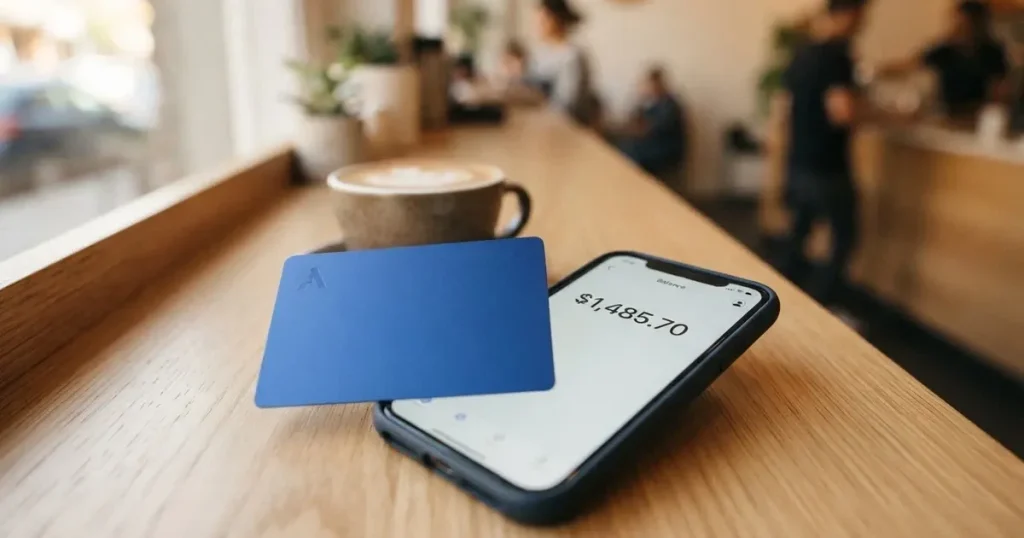
Deblock is a French company that gives you a Visa debit card, a euro current account and a self-custodial crypto wallet in one app, and it does not ask for the kind of income documents or long credit history that a mainstream bank asks for. That combination is genuinely unusual, and for the specific person who has been turned down by a regular bank, it is the whole reason to look at it. It is also, on the evidence I could read, a young regulated outfit with a thin public track record and a loud set of complaints about frozen money.
I scored it 6.4 out of 10. Not a bad card — a specific card with a specific job, done competently in the parts that are easy to do well (instant virtual cards, Apple Pay from day one, a free standard plan) and weak in the parts that decide whether you can trust it with your rent (account blocks, funds held, support that takes a week).
*The conditions described below are current as of October 28, 2026.*
Who this page is for: anyone, anywhere, who has trouble getting an ordinary bank card. Country and citizenship rules are explained as Deblock states them, so you can check your own situation against them.
The short verdict
Deblock is a 6.4 / 10 card. It scores highest on everyday use and lowest on exactly the two things that matter if you are choosing it because your bank turned you down: whether it will keep serving you, and whether the price is transparent.
| Criterion | Mark | Why |
|---|---|---|
| Who can get it | 5 / 10 | Not stated on the official pages I could read. Third-party sources say 18+, legal residence in the EEA, 30 countries listed; the US restricted, the UK and Switzerland not eligible |
| Cost | 7 / 10 | Standard is free and the cards are free; crypto buying and selling costs 1.99% on Standard; non-euro card payments free to 1,000 euros a month, then 0.5% on weekdays and 1% at weekends; ATM 1% after the free allowance |
| Top-up options | 6 / 10 | Not stated on the official pages. Third-party sources list BTC, ETH, SOL, USDC and others sold from a self-custody wallet into euro, plus SEPA, an external card and PayPal; networks not named |
| Reliability and complaints | 5 / 10 | Deblock SAS holds AMF licence A2025-001 and an ACPR e-money licence, bank code 17748. Trustpilot 4.4 from 9,393 reviews, but blocks and closures with funds held were reported in October 2026 |
| Everyday use | 10 / 10 | Virtual card in seconds, physical card too, Apple Pay and Google Pay from day one, ATM withdrawals |
The audience this suits is narrow and specific: an EEA resident who wants a euro account with a crypto wallet attached, who can hold the balance themselves and put in the small amount of effort that self-custody asks for. If that is you, the standard plan costs nothing to open and nothing to hold.
Who it does not suit: anyone who needs a card to work without fail for rent, wages or a subscription that must not lapse; anyone whose income is hard to document; anyone who expects deposit-guarantee protection on the euro balance, which this does not have; and anyone in the UK, Switzerland or most of the rest of the world outside the EEA.
Will they give you the card?
Deblock’s own pages, as far as I could read them, do not state the eligibility rules. That is worth saying plainly rather than dressing up. The public pages that could be read carry no statement of age, residence or country conditions.
What third-party sources report — unofficial, and not confirmed by Deblock’s public pages — is that applicants must be 18 or older and legally resident in the EEA, with 30 countries named: Austria, Belgium, Bulgaria, Croatia, Cyprus, Czechia, Denmark, Estonia, Finland, France, Germany, Greece, Hungary, Iceland, Ireland, Italy, Latvia, Liechtenstein, Lithuania, Luxembourg, Malta, Netherlands, Norway, Poland, Portugal, Romania, Slovakia, Slovenia, Spain, Sweden. The United States is described as restricted. The UK and Switzerland are described as not eligible. The rule is residence-based, not citizenship-based, in that reporting.
If you are outside the EEA, the answer is almost certainly no, and no amount of convincing paperwork changes it. If you are in the EEA but hold a residence in one country while living in another, that is exactly the situation where a written answer from support beats a third-party summary.
On the identity checks themselves: again, not stated on the pages I could read. Third-party reporting describes e-mail and phone verification, an identity document and video selfie, residential address, occupation, the purpose of the account, citizenship and source of funds, with the possibility of being asked for more later. Deblock also does not publish a table of limits per verification level, so what you can hold at each stage is not something I can tell you.
That combination — a documented set of checks, an undisclosed set of limits — is the practical shape of your risk. You can be approved and still be surprised later.
How to get it
The card itself is a Visa debit card. Deblock states that it is a direct Visa member, meaning it issues the cards under its own licence rather than through an intermediary bank. All of them are tied to the euro current account.
There are four card lines:
- Standard — free, the plain option.
- Premium Metal — 21 grams of stainless steel.
- LED Metal — the same weight class with lighting.
- Artist cards — designs in the NFT direction.
Alongside them sit virtual cards, described as created in seconds, and single-use “one-off” cards whose numbers expire after first use. On Standard you get one virtual card and three one-off cards.
The card choices are the strongest part of this offer, and I want to be clear that “everyday use” is the one criterion where Deblock scored a perfect mark rather than a near miss. Instant virtual cards matter most for someone who cannot wait for post, and the one-off card is a genuinely thoughtful answer to card-fraud fear.
One thing I could not pin down: Deblock says “delivery fees may apply” for the debit card. Which countries, how long, how much, and what a replacement costs — none of that is stated in the documents I read. If you need a physical card quickly, ask before you rely on it.
Fees: what it really costs
The free plan is free. That is the headline and it is true, but the number that should decide whether you keep money on the balance is the 1.99% on crypto buy and sell — because on Standard, every time you turn crypto into euros to pay for something, you pay a 1.99% fee.
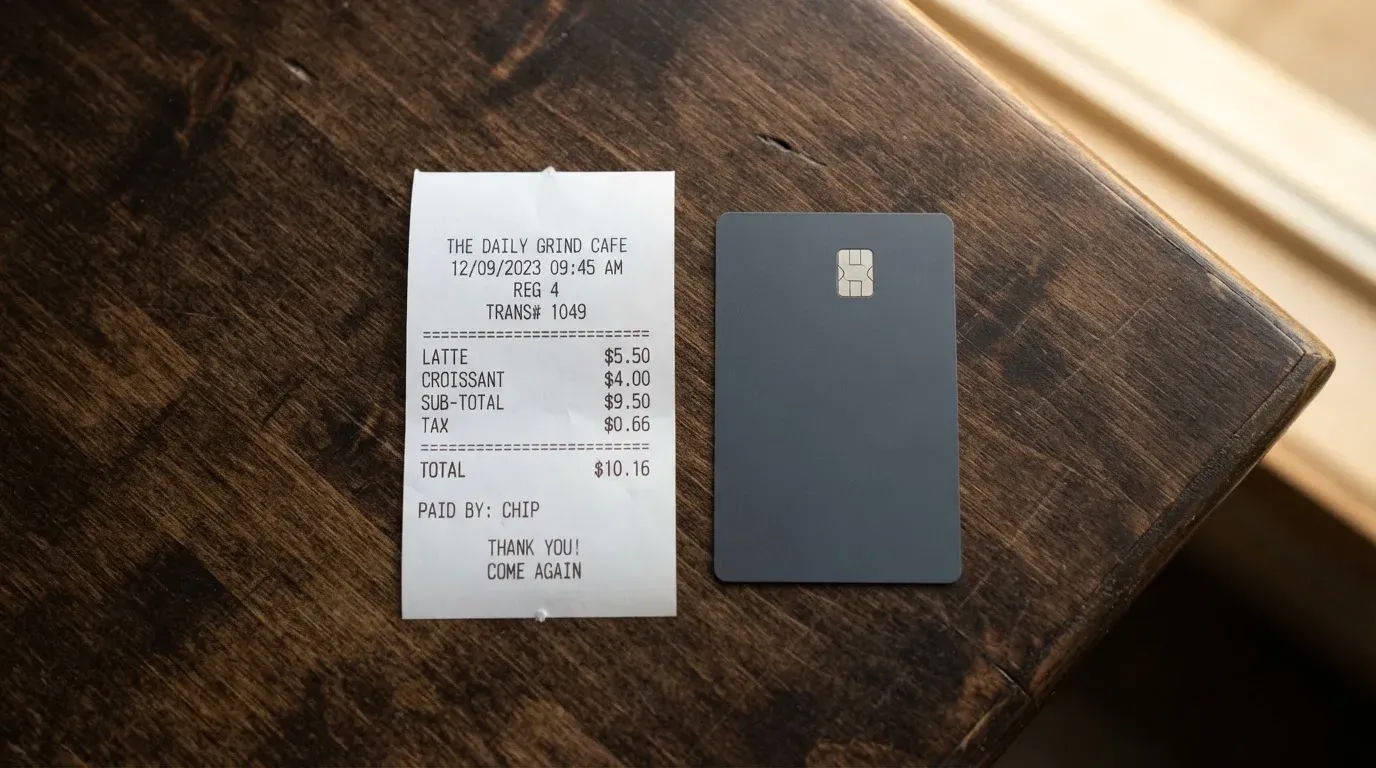
Deblock sells three plans:
- Standard — free. One virtual card, three single-use cards, one free peer-to-peer payment per year, no NFT card customisation, no cashback. Crypto buy/sell/swap 1.99%. ATM free for one withdrawal or 100 euros per rolling month.
- Premium — 14.99 euros a month, or 120 euros a year. Up to 10 virtual cards, NFT customisation, cashback up to 1%, ATM free for three withdrawals or 1,000 euros per rolling month, crypto buy/sell/swap 0.49%.
- Native — free, provided you have owned a Deblock NFT for at least 30 days. The same as Premium plus 0% crypto fees, 10 virtual cards and three peer-to-peer payments per year.
| Fee or limit | Standard | Premium | Native |
|---|---|---|---|
| Plan cost | Free | 14.99 euros/month or 120 euros/year | Free with a Deblock NFT held 30 days |
| Debit card provision | Free, “delivery fees may apply” | Same | Same |
| Virtual cards | 1 free | 10 free | 10 free |
| Single-use cards | 3 free | Not stated | Not stated |
| Crypto buy / sell / swap between chains / swap on same chain | 1.99% | 0.49% | 0% |
| Card payment in a non-euro currency | Free to 1,000 euros per calendar month, then 0.5% weekdays and 1% at weekends | Same | Same |
| In-app currency exchange | 0% | 0% | 0% |
| ATM, another bank’s euro-zone machine | Free to 1 withdrawal or 100 euros per rolling month, then 1% (min 1 euro) | Free to 3 withdrawals or 1,000 euros per rolling month, then 1% (min 1 euro) | Free to 3 withdrawals or 1,000 euros per rolling month, then 1% (min 1 euro) |
| ATM abroad | 0% FX, limit plan-dependent | Same | Same |
| Card top-up and PayPal top-up | Free to 2,000 euros per calendar month, then 0.5% | Same | Same |
| Funding another account | Free for 1 transaction or 1,000 euros per rolling month, then 1 euro + 2% | Then 1 euro + 1% | Then 1 euro + 1% |
| SEPA and instant SEPA transfers | Free | Free | Free |
| Cashback | Not included | Up to 1% | Up to 1% |
Two things in that table need unpacking, because both are ways people get surprised.
The foreign-currency line contradicts itself across Deblock’s own pages. The cards page says “Deblock doesn’t charge any FX fee on card payments abroad.” The fee schedule says Standard payments in a non-euro currency are free up to 1,000 euros per calendar month, then 0.5% on weekdays and 1% at weekends. A support request on Trustpilot in October 2026 asked Deblock for clearer fees. I would plan on the fee schedule, because that is the document with numbers in it. One unofficial report also says the 1,000-euro allowance ends on 11 November 2026 — single source, unconfirmed, but it is coming, so if you travel and spend in dollars, ask before November rather than after.
A 0.5% surcharge applies on all plans for transactions in merchant categories for financial services, money transfers, funding of prepaid accounts, crypto and quasi-cash, gambling and lotteries, and precious metals and jewellery. If you are someone whose money moves through gambling or crypto-adjacent merchants, that is a real, recurring cost the plan tier does not avoid.
Now, three everyday payments.
*Buying a weekly shop in euros, on Standard.* No conversion happens, so no FX fee. Nothing is charged for the card itself. This is the cleanest case the card has, and the reason the “everyday use” mark is 10.
*A holiday on a euro-zone street in another country, on Standard.* Same euro, no currency conversion, so the free non-euro allowance is not involved. This is where the free plan behaves exactly as advertised.
*A trip to the United States, spending euros.* Here the allowance runs. Up to 1,000 euros of non-euro card payments per calendar month is free on Standard; after that, weekdays cost 0.5% and weekends 1%. A hotel night on a Saturday costs 1% in fees. This is where Premium starts to look defensible, because the annual price buys lower crypto fees and more free ATM withdrawals, not cheaper travel.
Top up: how the balance gets filled
The card spends the euro current account balance. Everything you want to pay for has to arrive as euros first. Which coins and networks can be sold to fill it is not stated in the documents I read — a gap that matters more than it sounds, because blockchain transfers are irreversible.
Deblock’s own fee schedule lists card top-up and PayPal top-up (eligible regions), SEPA and instant SEPA transfers, receiving transfers, and peer-to-peer payments.
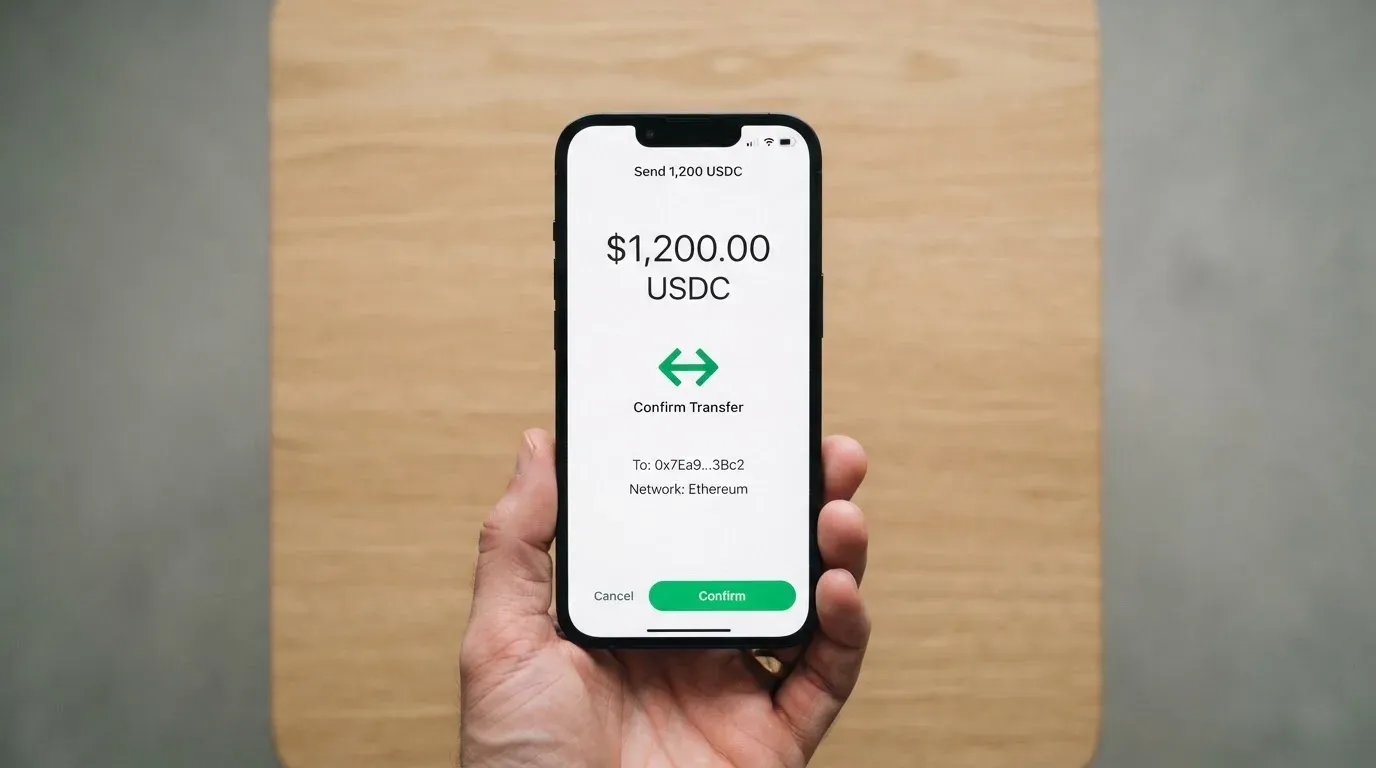
Third-party sources, unofficial and not confirmed by Deblock, describe the crypto route as follows: crypto — BTC, ETH, SOL, USDC and others — is sold from a self-custodial wallet into euro e-money before you spend it. That order matters. You are not paying a shop directly in crypto; you are converting first and spending euros second. Funding is also possible by SEPA to a personal IBAN, by an external card in your own name (EU or UK issuer), by PayPal, and by Deblock-to-Deblock transfers. The networks are not named anywhere I could find.
That missing list is the single most practical thing to ask support before you send anything. Sending on a network the provider does not support can mean the deposit is lost or needs manual recovery with no guarantee attached.
On the cost of filling the balance:
- Card top-up and PayPal top-up are free until 2,000 euros per calendar month, then 0.5%.
- SEPA and instant SEPA transfers are free.
- The minimum top-up is not stated.
Getting money back out is free in the ways that matter for daily life: SEPA transfers, instant SEPA and direct debit cost nothing on Standard, and ATM withdrawals are covered by the free allowance described above. Selling crypto into euros carries the 1.99% on Standard.
One item is not stated officially and I would want it in writing: what happens to the balance if you close the account. Third-party reports from October 2026 say fiat funds were held for a period after closure.
Paying with it every day
Mobile wallets are free on all plans and available “from day 1”, for both virtual and physical cards. For most people this is the feature they will use more than the plastic, because the moment of adding the card is the moment of friction in every online payment.
The rewards are modest and asymmetric. Cashback on card payments is not included on Standard; Premium and Native pay “up to 1%”. The currency of payout and the conditions are not stated, and “up to” is doing real work in that sentence.
The app ratings are worth a look with their grain of salt attached. On the iOS App Store, listed under the Poland storefront as “Deblock – Banking App”, the rating was 4.5 out of 5 from 22 ratings. Unofficial figures for Google Play put it at 4.7 from about 29,000 reviews and 500,000+ downloads. Twenty-two ratings tell you very little; the Google Play figures are the ones with any weight, and they are still third-party rather than something Deblock publishes.
Support is reachable: contact and FAQ pages, a public status page at status.deblock.com, and e-mail [email protected], which Deblock itself names in its Trustpilot replies. The site runs in English, French, German, Spanish, Italian and Portuguese.
One thing the pages I read do not cover: how chargeback disputes work. Nothing is stated about the process, the timelines or the reason codes. If you are going to keep a balance here — and people do — that is a gap worth raising in writing at the start.
What can go wrong
This is the section that pulls the score down, so I want to give it the most space.
Deblock is a young regulated company, not an old one. Deblock SAS is based in Lille, France. It is a crypto-asset service provider licensed by the AMF under number A2025-001 and an electronic money institution licensed by the ACPR, bank code (CIB) 17748. It issues the cards itself as a direct Visa member. Those are real licences in a real regime, and the fee schedule applies from 5 July 2026 to all clients regardless of when they joined. But a licence tells you the company is allowed to operate; it does not tell you how it will treat you in month eighteen.
The complaints are specific and they cluster. On Trustpilot, at the time of reading, the TrustScore was 4.4 from 9,393 reviews, 7,133 of them in the last 12 months, with 12% one-star, and the company replying to 25% of negative reviews. Within October 2026 alone, user reports describe accounts blocked or closed with funds held and a return date that moved, an account terminated without reason on 14 October, a 10-euro transfer shown as successful but not credited on 8 October, and requests for clearer fees on 14 October. Recurring themes: account blocks or closures with funds held, balance and transfer discrepancies, and support taking up to a week.
A 4.4 average over 9,393 reviews is not a disaster, and I want to be fair about that. But the complaints are not about fees being higher than advertised or a shop being rude. They are about money becoming unavailable while the company works out why, which is the one problem a card for people who cannot get alternatives cannot afford to have.
Deblock’s own answers to those reviews cite regulatory safety measures. Read that carefully rather than as reassurance: it means the holds and terminations are framed as compliance-driven. For you, the practical consequence is that you cannot always hurry them, and you should not plan around a specific return date.
The balance is e-money, not a bank deposit. Third-party reporting describes the euro balance as held with Deblock, safeguarded in segregated accounts, and not covered by a bank-deposit guarantee. That is the normal structure for an e-money institution, and it is why an EMI can offer services across the EU/EEA from a licence granted in one member state while not being your bank. But it means a different recovery path if things go wrong.
The self-custody part is a strength and a job. The wallet is reported to be self-custodial, with an exportable seed phrase, while the euro balance sits with Deblock — so you have one foot in each direction. That is the design, and it is why the card scored 10 on everyday use: the card does not need to be clever, because the conversion already happened. But a seed phrase of 12 to 24 words is the whole account, transfers are irreversible, a stolen key has no built-in recovery, and the network cannot freeze or return the funds. The historical record of custodians failing is long enough — Mt. Gox at roughly 350 million US dollars reported stolen between 2011 and 2014, Coincheck at about 400 million in 2018, Ronin Network at 625 million in 2022 — that “self-custody” as a selling point deserves to be read as *you are now the security perimeter*.
Frozen cards and lost card numbers. The one-off cards auto-expire after first use, which is good. A freeze control in the app and spending controls are not stated in the pages I read, and custody and two-factor authentication are not stated officially either, though the site’s navigation does list a “Self-custody” page. Standard safeguards in this category are app-based 2FA, instant card freeze, spending limits, 3-D Secure confirmation and tokenised mobile wallets — I could not confirm which of them Deblock actually has for you, so treat that list as a shopping list of things to check, not a description of what exists.
A cancelled benefit that was announced loudly. On 11 March 2026, the planned BLOCK token, airdrop, staking levels, fee discounts and card cashback of up to 10% were cancelled indefinitely, per third-party reporting. If you were drawn in by token economics, that part of the pitch is gone.
The general risk nobody mentions enough. A declined payment can leave a hold on your money for several days, typically up to seven. A card issued in one country can look “foreign” to a shop in another, because merchants can look up the issuing country and apply extra scrutiny — and some merchants decline prepaid or foreign-issued cards for exactly that reason. Address verification is generally unavailable for foreign-issued cards, which can cause declines in the US, Canada and UK. So even a card that works perfectly for you in Paris can fail at a hotel desk in Toronto, and it will not be Deblock’s fault.
And the last one, which is not Deblock’s fault but will land on you: in the US the IRS treats digital assets as property, so converting crypto into euros and spending them can be a taxable disposal. How that applies to you is a question for a tax professional, not for me.
What to take instead
If the thing you want is a card in euros with crypto attached and your situation is straightforward, Deblock is a reasonable pick. If any of the following is the real requirement — a card that has been stable for years, a physical card that arrives reliably, spend in dollars without an allowance running out — the alternatives below are worth reading side by side. Scores are from the same scale.
| Alternative | Score | Card | Plan cost | Foreign currency | Cashback |
|---|---|---|---|---|---|
| International Visa Card | 6.7 / 10 | U.S.-issued Platinum Visa, virtual; physical card “coming soon” | $5 one-time virtual issuance, no maintenance fee; Classic free, Pro $9.00/month, Max $19.00/month | Visa exchange rate + 2% FX fee; USD spending free on all plans | None stated |
| UNi Card | 6.1 / 10 | Multicurrency card on Mastercard, spends the UNi.Global balance | No annual fee; issuance fee not stated | No foreign transaction fee; conversion at live OTC rates | Spend-to-Earn up to 3% |
| Whop Cards | 5.2 / 10 | Visa, works anywhere Visa is accepted online and in stores; type and currency not stated | Page says “No extra fees”; no amounts listed | Not stated | 5% cashback at select merchants, currently Uber |
| Deblock | 6.4 / 10 | Visa debit, virtual and physical, euro account | Free / 14.99 euros monthly / free with NFT | Free to 1,000 euros a month then 0.5% weekdays, 1% weekends | Up to 1% on Premium and Native |
International Visa Card scores highest of the four and takes US dollars rather than euros. Its eligibility list is the longest exclusion list in the group: not available to residents or legal registrants of Belarus, mainland China, North Korea, Cuba, India, Iraq, Iran, Israel, Myanmar, Nepal, Nicaragua, Russia, Syria, Turkey, Ukraine, Venezuela and Vietnam, with FATF grey-list countries reviewed case by case. Purchases are blocked in North Korea, Cuba, Iran, Russia, Syria, Ukraine and Venezuela. The rule is by residence or registration; citizenship is not mentioned. It is also the only one of the four with no physical card — the page says “coming soon” — which is why it scored 6.7 rather than higher for a reader who needs plastic.
UNi Card is the cheapest-looking structure: no annual fee, no foreign transaction fee, assets converted at live OTC rates with “no hidden exchange fees”, and up to 3% cashback. What I could not establish is who gets one or how you fund it. Both are marked not stated. A card with excellent fee terms and no published eligibility is not something I would build a monthly arrangement around.
Whop Cards is aimed at a different user again — creators and sellers of digital goods, with cards issuable to team members. Consumer availability covers 31 US states, and unsupported consumer countries include Belarus, China (mainland), Cuba, Hong Kong, India, Iran, Iraq, Israel, Myanmar, Nepal, Nicaragua, North Korea, Russia, Syria, Turkey, Ukraine, Venezuela and Vietnam. It spends from a Whop balance where a pending balance becomes usable as soon as a payment arrives. The card currency and physical or virtual format are not stated, and neither are the fee amounts — “no extra fees” is a claim without numbers attached. The 5% cashback at select merchants, currently Uber, is the sharpest reward in this group and also the narrowest.
Who I would recommend it to
I would recommend Deblock to a person who is living in the EEA, who wants to be paid and spend in euros, who holds their own crypto rather than leaving it with an exchange, and who treats the balance as spendable cash rather than savings. Open the free Standard plan, test it with small amounts for a couple of months, and treat every figure on this page as something to re-verify — including the non-euro allowance, which one report says changes on 11 November 2026.
I would not recommend it as your only card if rent, wages or a subscription you cannot miss depend on it, and I would not recommend it at all without a second way to pay. The reason is not the fees and not the licence; it is that the October 2026 reports describe funds being held after closure, and for exactly the reader this page is written for, a held balance is not an inconvenience. It is the problem the card was supposed to solve.
The realistic verdict: for spending money you hold in euros, this is a good card, and the everyday-use mark of 10 is not exaggerated. For holding money, or for depending on a single card, it is a 5. The overall 6.4 is the honest average of those two truths.
Frequently asked questions
What is the Deblock card?
Deblock is a French financial service that combines a euro current account, a Visa debit card and a crypto wallet in one app. Deblock SAS is licensed by the AMF as a crypto-asset service provider (A2025-001) and by the ACPR as an electronic money institution (bank code 17748). It is a direct Visa member, meaning it issues the cards itself rather than through another bank.
Who owns Deblock?
Deblock is operated by Deblock SAS, a company based in Lille, France. It holds an AMF crypto-asset service provider licence and an ACPR electronic money institution licence, and it is a direct member of Visa for card issuing. Beyond that, the ownership structure is not detailed on the pages I was able to read.
Is Deblock a bank?
No, not in the sense you would want. It is an electronic money institution, which can issue e-money, payment cards and wallets but cannot lend. Your euro balance is e-money safeguarded in segregated accounts, not a bank deposit, so it does not carry bank-deposit guarantee protection. That distinction matters if this card becomes your main account.
Which countries can get a Deblock card?
Deblock’s public pages I could read do not state eligibility. Unofficial third-party reporting says 18+, legal residence in the EEA, with 30 countries named including France, Germany, Spain, Italy, the Netherlands, Portugal and Ireland. The United States is described as restricted; the UK and Switzerland are described as not eligible. The rule is residence-based, so check your own address rather than your passport.
How do I apply, and does it need KYC?
You apply in the app with an e-mail address and phone number. Deblock does not publish its identity-check procedure on the pages I could read, though third-party reporting describes e-mail and phone verification, an identity document, a video selfie, residential address, occupation, account purpose, citizenship and source of funds, with more information possibly requested later. Deblock also does not publish limits per verification level.
How do I top up the Deblock card?
The card spends the euro current account balance, so you fill that first. Deblock’s own fee schedule lists card top-up and PayPal top-up, SEPA and instant SEPA transfers, receiving transfers and peer-to-peer. Third-party sources also describe selling BTC, ETH, SOL, USDC and others from a self-custody wallet into euros. Networks are not named anywhere I found, so ask before sending.
What does it cost to use the Deblock card?
The Standard plan is free and the debit and virtual cards are free. Crypto buy, sell and swap costs 1.99% on Standard, 0.49% on Premium and 0% on Native. Card payments in a non-euro currency are free to 1,000 euros per calendar month on Standard, then 0.5% on weekdays and 1% at weekends. ATM withdrawals are free to one withdrawal or 100 euros per rolling month on Standard, then 1%.
Can I add the Deblock card to Apple Wallet?
Yes — Apple Pay and Google Pay are free on all plans and available from day one, for both virtual and physical cards. This is the strongest part of the offer for most people, since the virtual card is described as created in seconds. Nothing is stated about blocked merchant categories, though several categories carry an extra 0.5% surcharge.
Is the Deblock card safe?
The euro balance is safeguarded but is not a bank deposit with deposit-guarantee coverage, and reports from October 2026 describe accounts blocked or closed with funds held for a period. The crypto wallet is reported to be self-custodial with an exportable seed phrase, which removes provider risk but makes you responsible for the key. Use the one-off cards where offered, and keep the balance small.
Why were the BLOCK token and 10% cashback cancelled?
According to third-party reporting, on 11 March 2026 Deblock cancelled indefinitely the planned BLOCK token, airdrop, staking levels, fee discounts and card cashback of up to 10%. This is separate from the cashback that remains in the Premium and Native plans, which is up to 1%. If you were attracted by the token economics, that part of the offer is gone.
App and neobank card fees – cryptocardfacts
Content created by the «cryptocardfacts» team